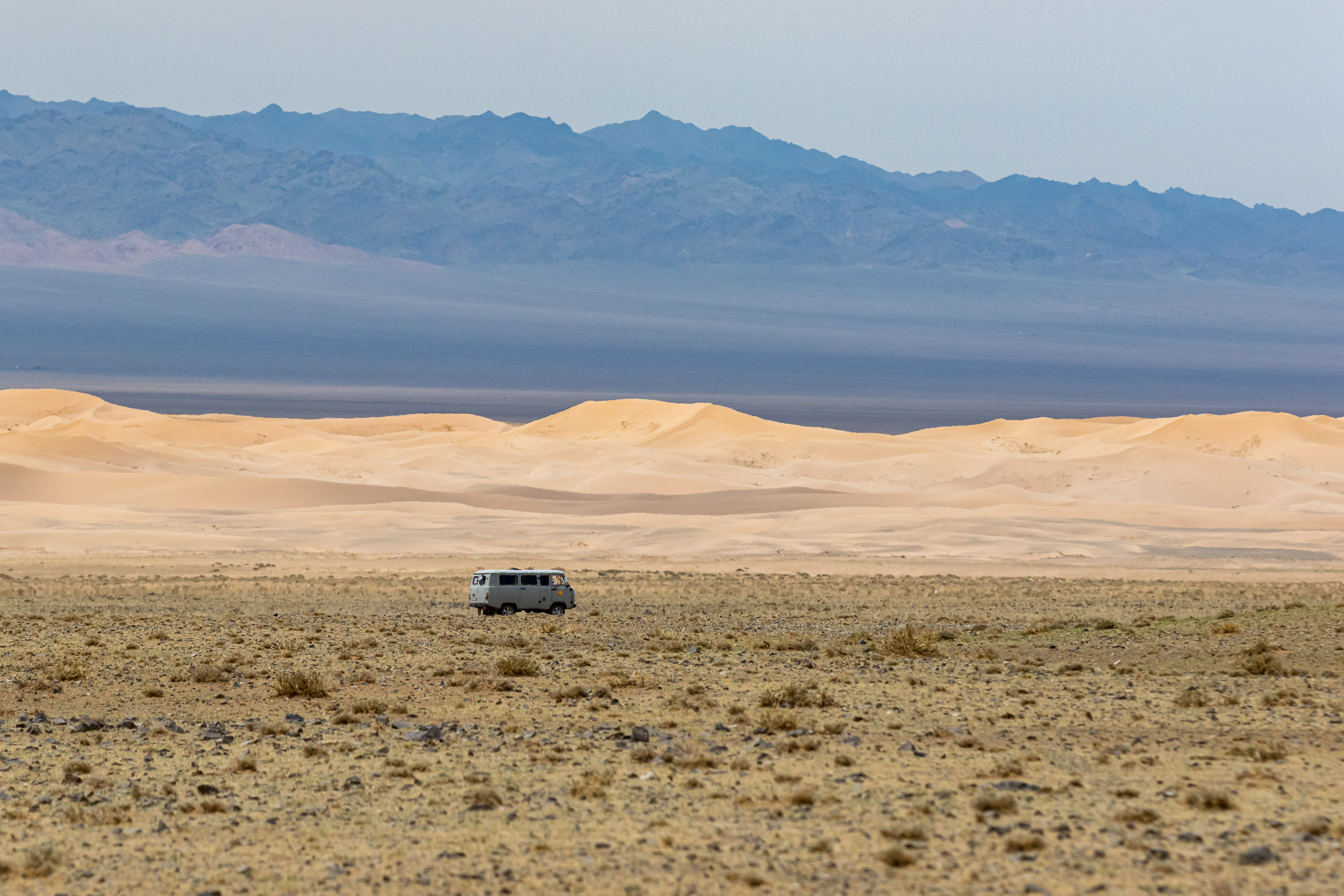
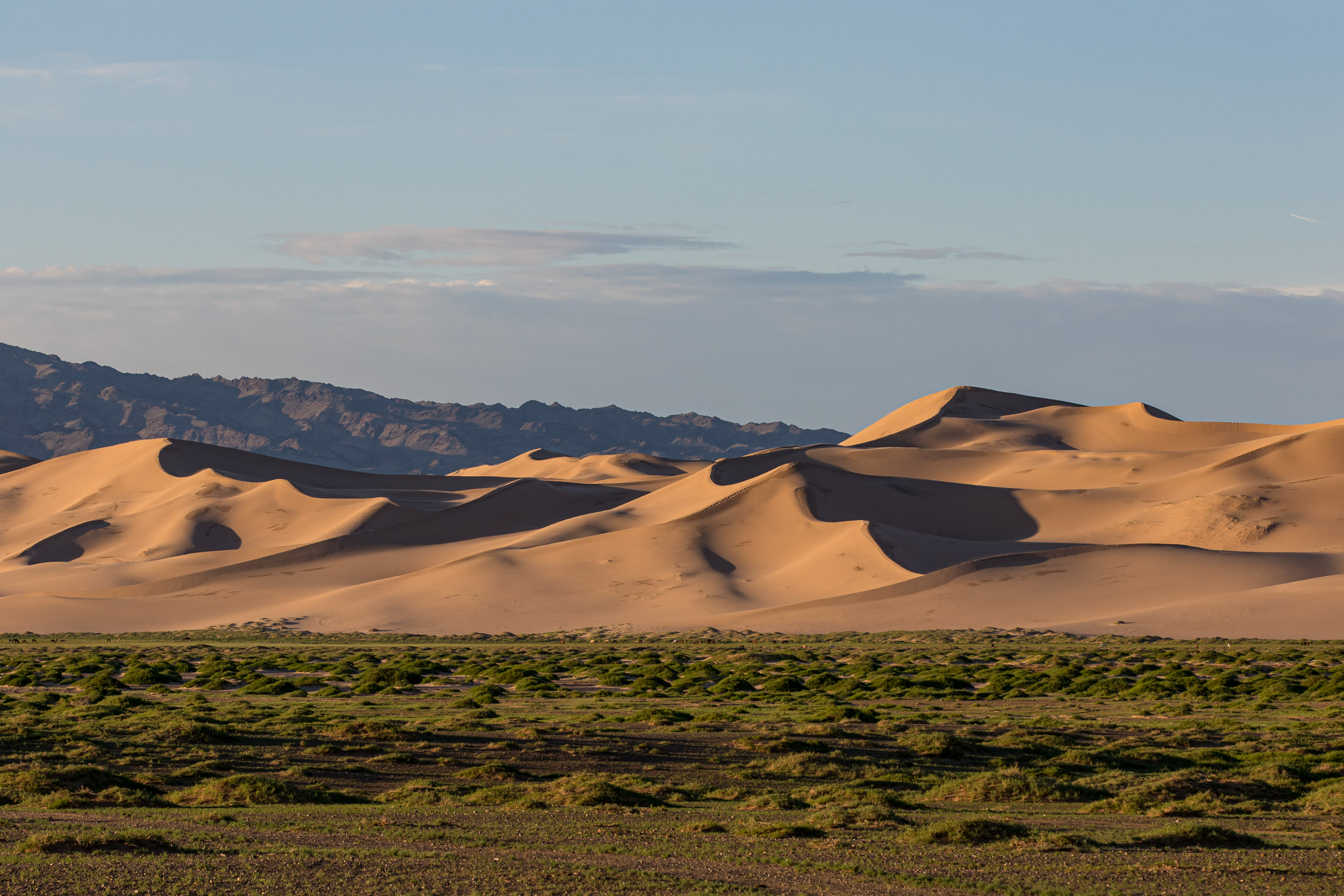
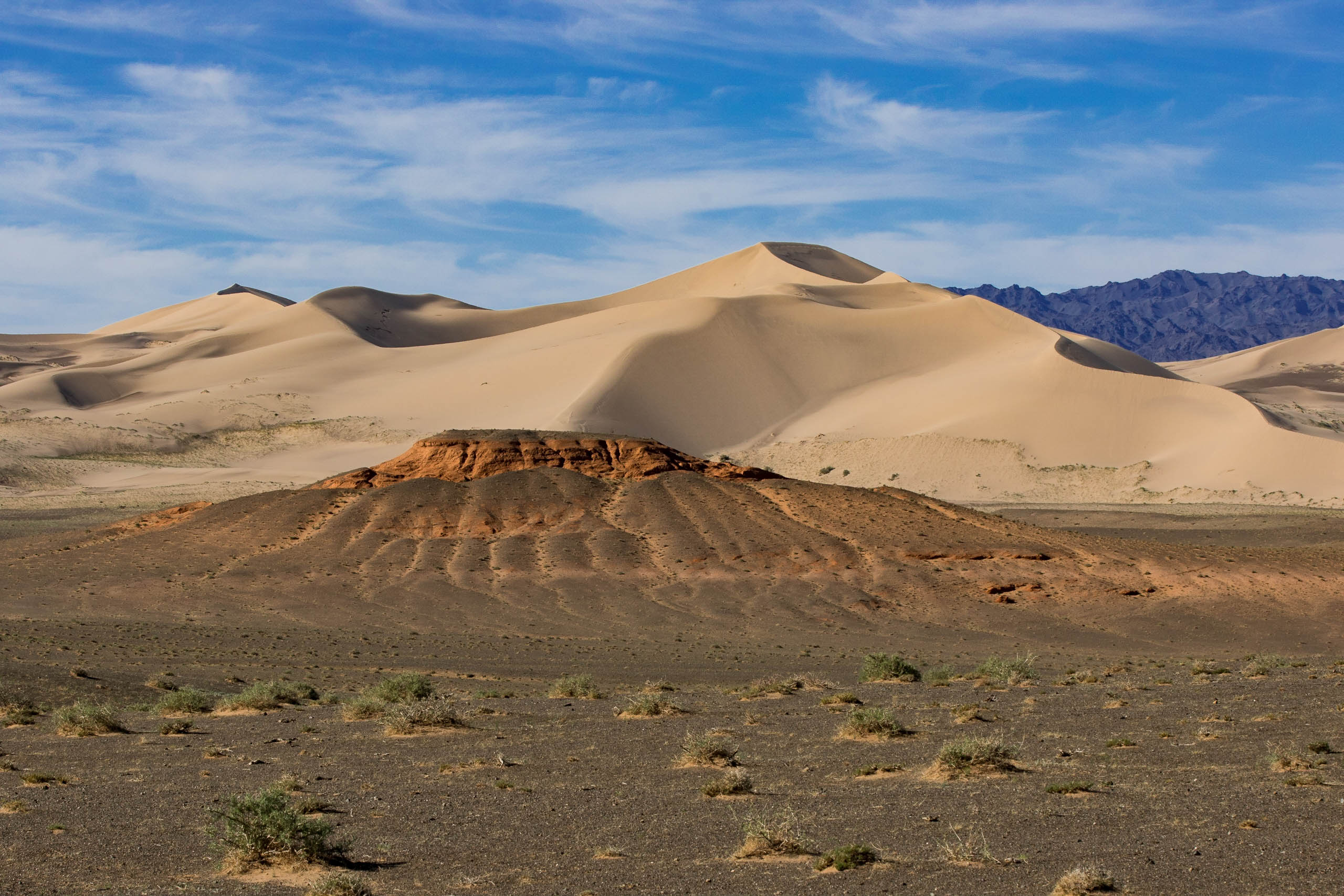
After a few hours of driving west from Yoliin Am, the landscape gradually changed. Vegetation thinned, the terrain became drier, and eventually the first golden ridges appeared on the horizon. Just before noon we arrived at Khongoryn Els, home to some of the largest sand dunes in Mongolia.
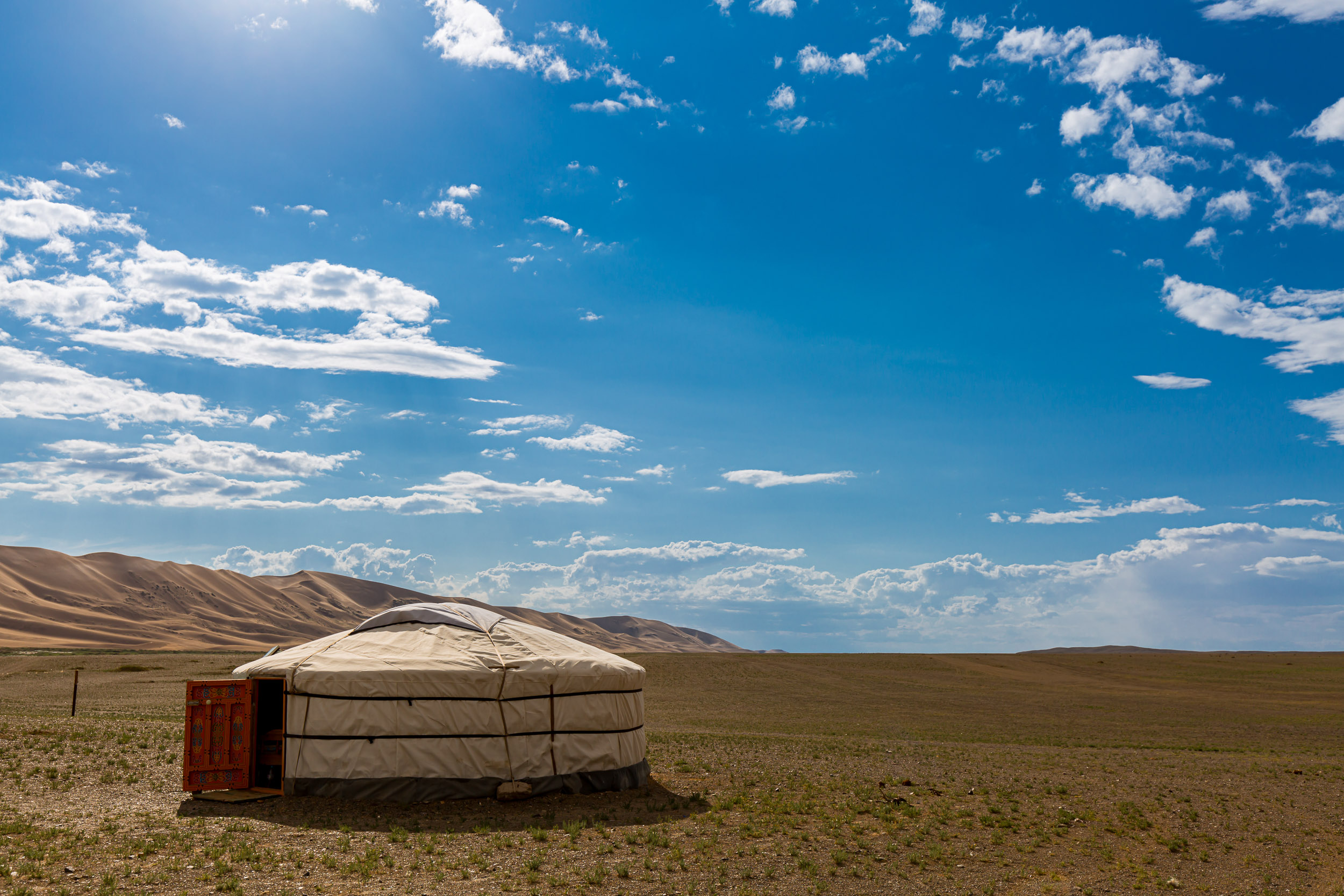
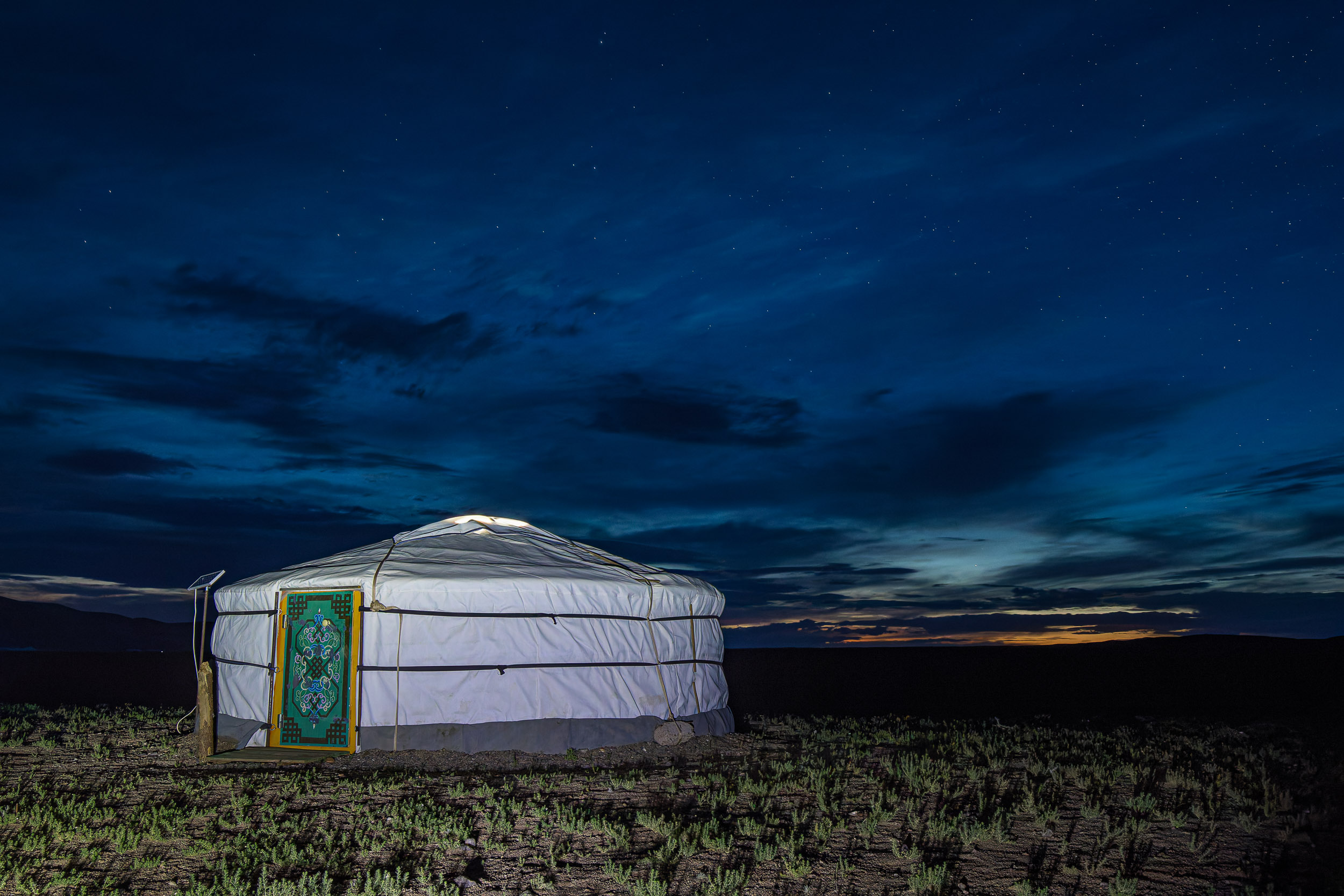
We would spend two nights here — first in a traditional ger at the edge of the dunes, and then deeper in the Gobi Desert under the open sky.
The Singing Dunes
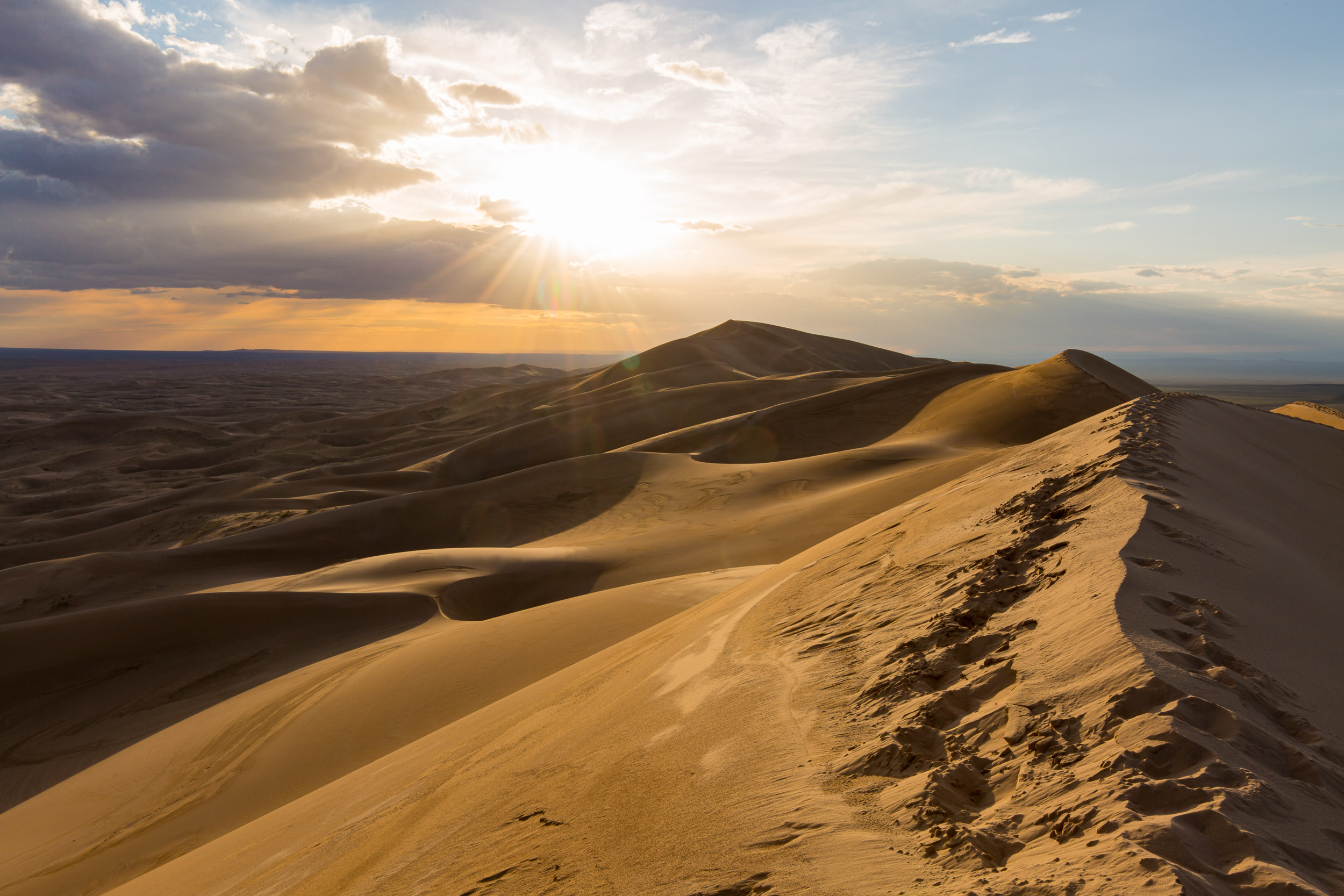
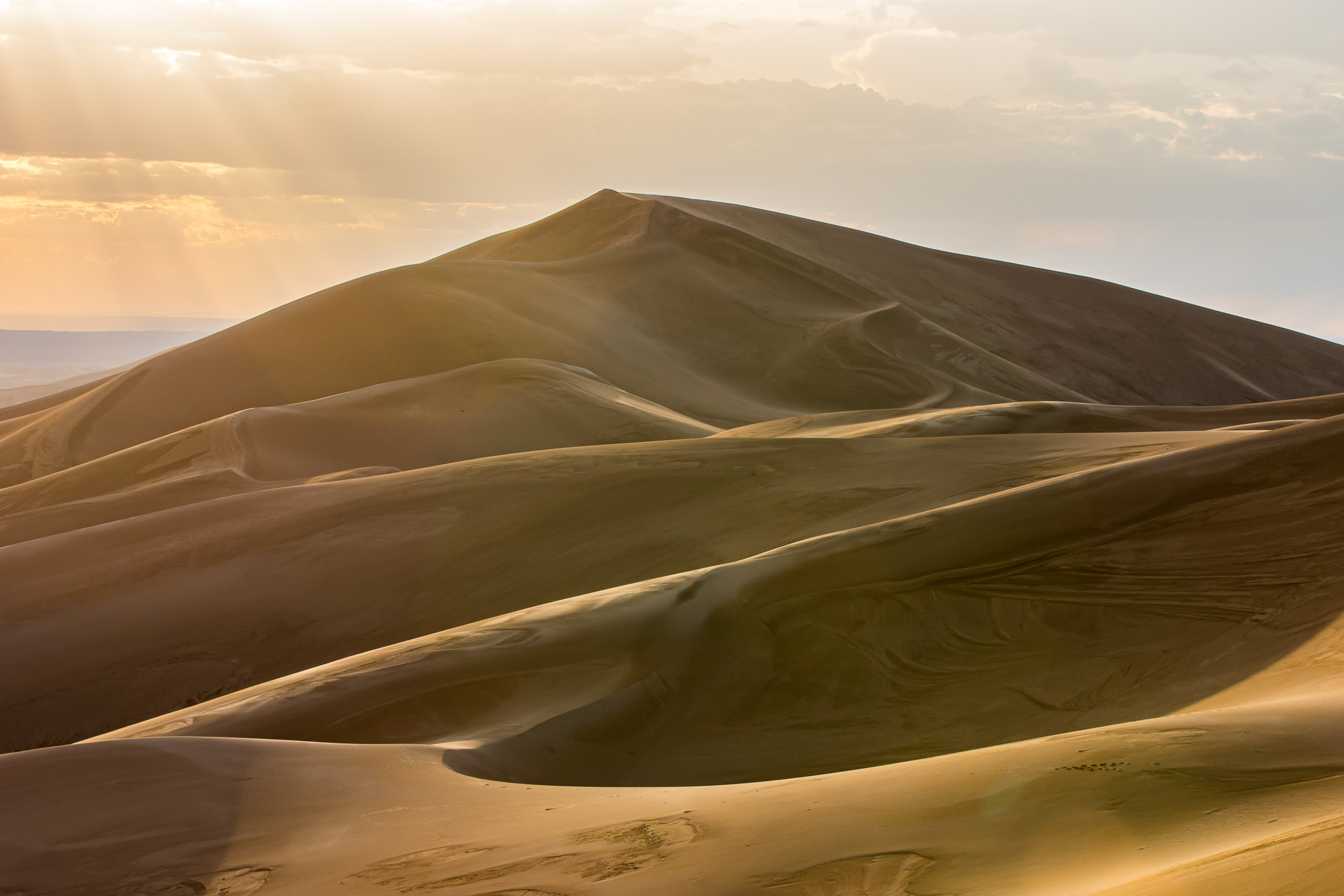
Khongoryn Els is often called the “Singing Dunes,” named after the low, vibrating sound the sand can produce when moved by wind or shifting footsteps. The dunes stretch for nearly 100 kilometers and rise up to 300 meters high, forming a dramatic wall of sand against the flat desert plain.
Despite its harsh appearance, the Gobi is not entirely lifeless. A short annual rainy season feeds underground water sources, making parts of the region surprisingly habitable for those who understand its rhythms. Our nomadic host had set up his gers right at the edge of the dunes — further into the desert than anyone else nearby.
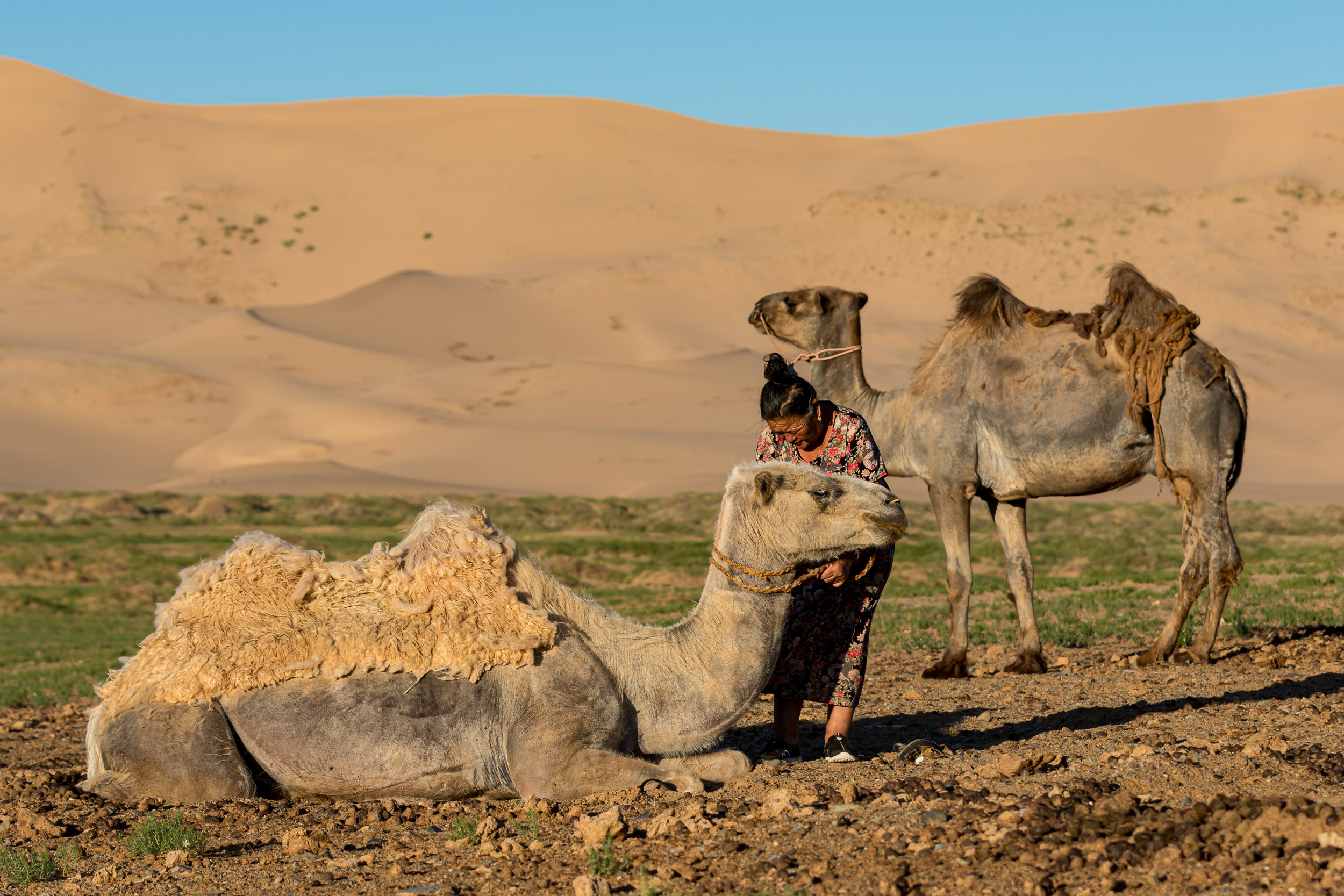
Camel Herders at the Edge of the Desert
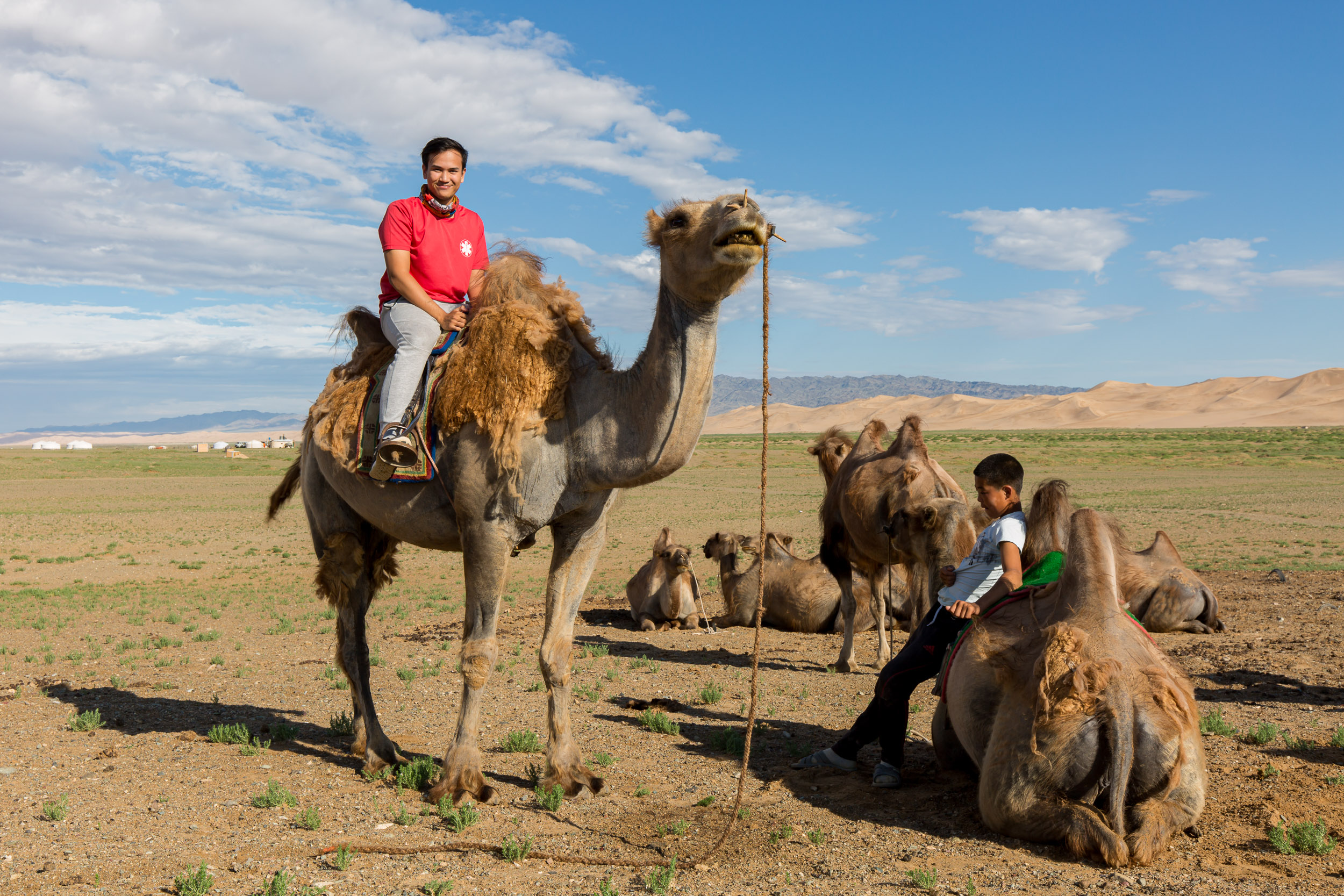
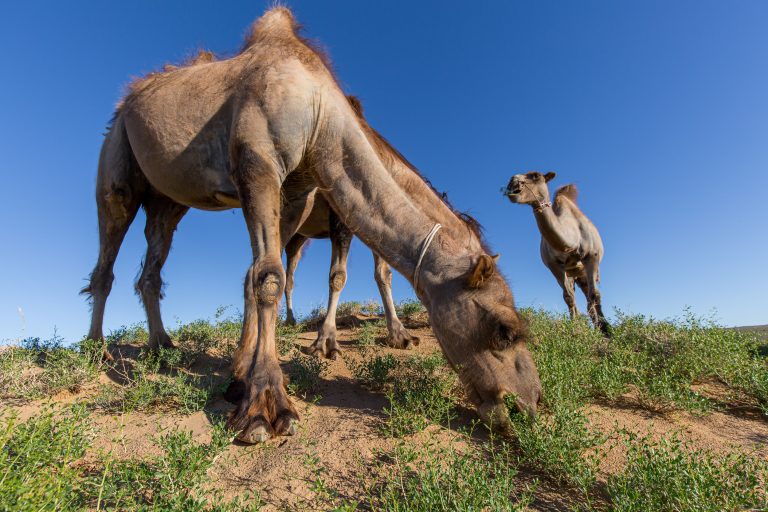
That afternoon we joined our host for a camel ride across the barren landscape. The camels were still semi-wild; each had to be mounted carefully before we slowly set off across the sand.
Later in the day, as the sun began its long descent, we climbed one of the highest dunes nearby. From below they had seemed manageable, but the ascent proved far steeper than expected. With every step forward, the sand slid half a step back. Reaching the summit required hands as much as feet — but the panoramic view across endless ridges of gold made the effort worthwhile.
That evening, deep in the Gobi Desert, ended with a wide horizon glowing in soft desert light.
Early Light and Free-Roaming Camels
The next morning I woke before sunrise. The evening before, I had seen our host gather and tie the camels near the camp. I hoped they would be released at dawn — perfect conditions for photographs in the early light.
As the sun rose, the desert slowly came alive. Watching the camels move freely across the sand, silhouetted against soft morning tones, was one of those quiet moments that define a journey.
Before leaving the dunes, we climbed them once more — this time without urgency, simply to feel the sand and take in the vastness one last time.
Wild Camping in the Gobi Desert
Later that day we drove deeper into the Gobi Desert to spend the night truly in the middle of nowhere. Our host accompanied us — the Gobi is no place to risk getting stuck or lost. The terrain is rough, with deep, fine sand that can easily trap a vehicle.
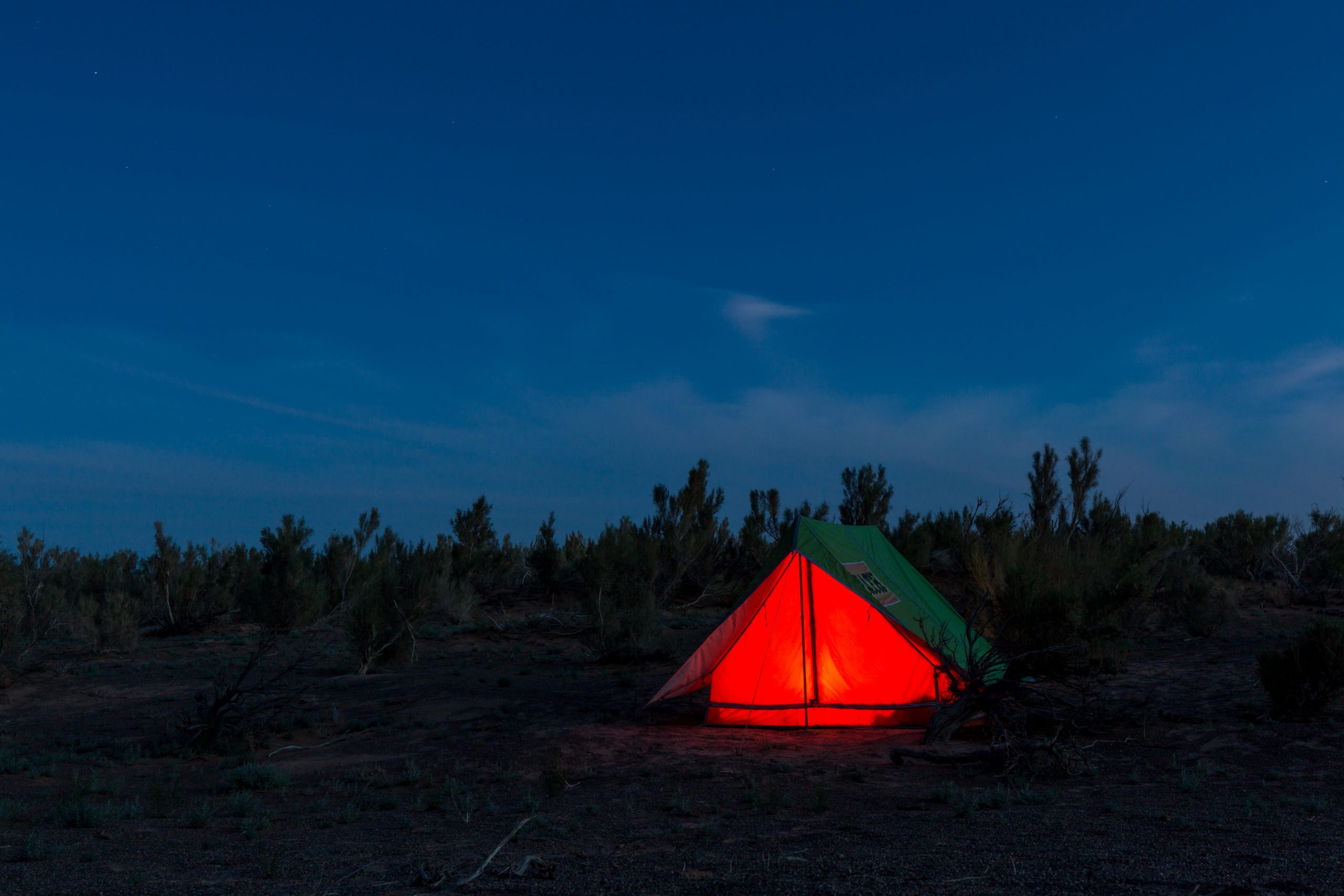
He guided us past a small oasis, usually fed by groundwater, though dry this season, and showed us striking rock formations where eagles often nest. Eventually we reached a sheltered valley that offered protection from desert winds — the perfect place to camp.
The afternoon passed quietly: cards on the sand, local vodka shared between us, and plenty of laughter as our host quickly learned the rules — and how to bend them.
That night we slept under a vast desert sky. Occasionally, we could hear wild camels “singing” to each other in the distance — a deep, resonant sound I will not forget.