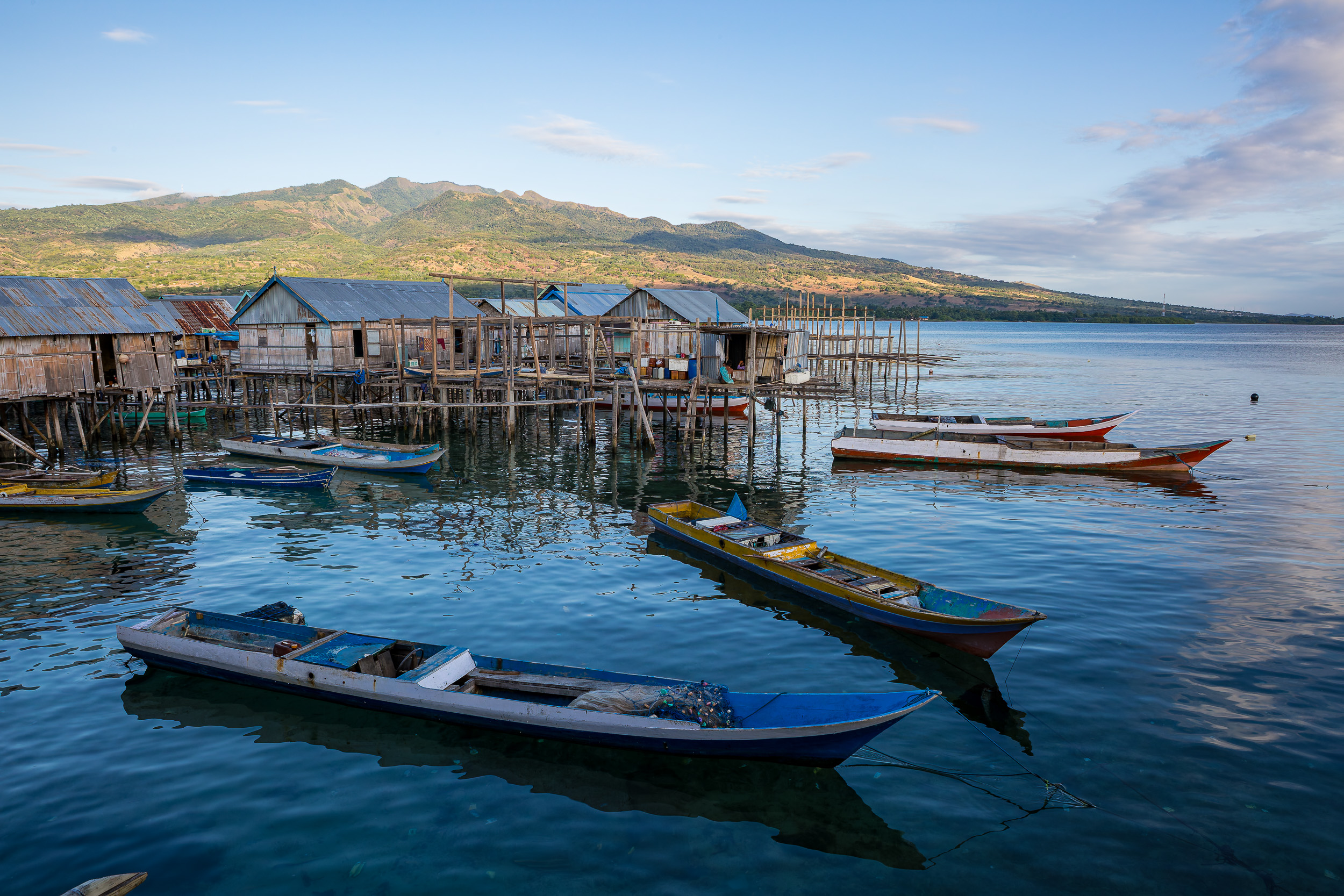
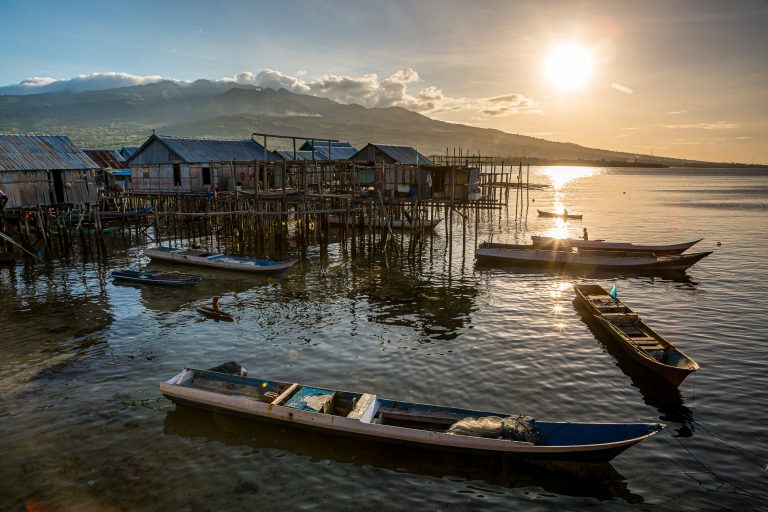
Wuring is a traditional fishing village located just west of Maumere on the northern coast of Flores Island in Indonesia. Built partly over shallow coastal waters, the settlement is home to Bugis and Bajo communities who live in wooden stilt houses extending into the Bay of Maumere.
With the volcanic slopes of Mount Egon rising in the background, Wuring combines maritime life, traditional architecture and dramatic landscape. Fishing boats, wooden jetties and tidal waters shape the rhythm of daily life in the village, creating one of the most distinctive coastal scenes in eastern Indonesia.
The fishing village Wuring, near Maumere in Eastern Flores.
The Village and Its People
Wuring is inhabited primarily by Bugis and Bajo fishing communities, groups historically known across Indonesia for their seafaring traditions.
Many families depend on small-scale fishing in the waters of the Flores Sea, using wooden boats designed for local conditions. Unlike the large phinisi schooners associated with the Bugis of Sulawesi, the boats built in Wuring are smaller working vessels used for daily fishing along the coast.
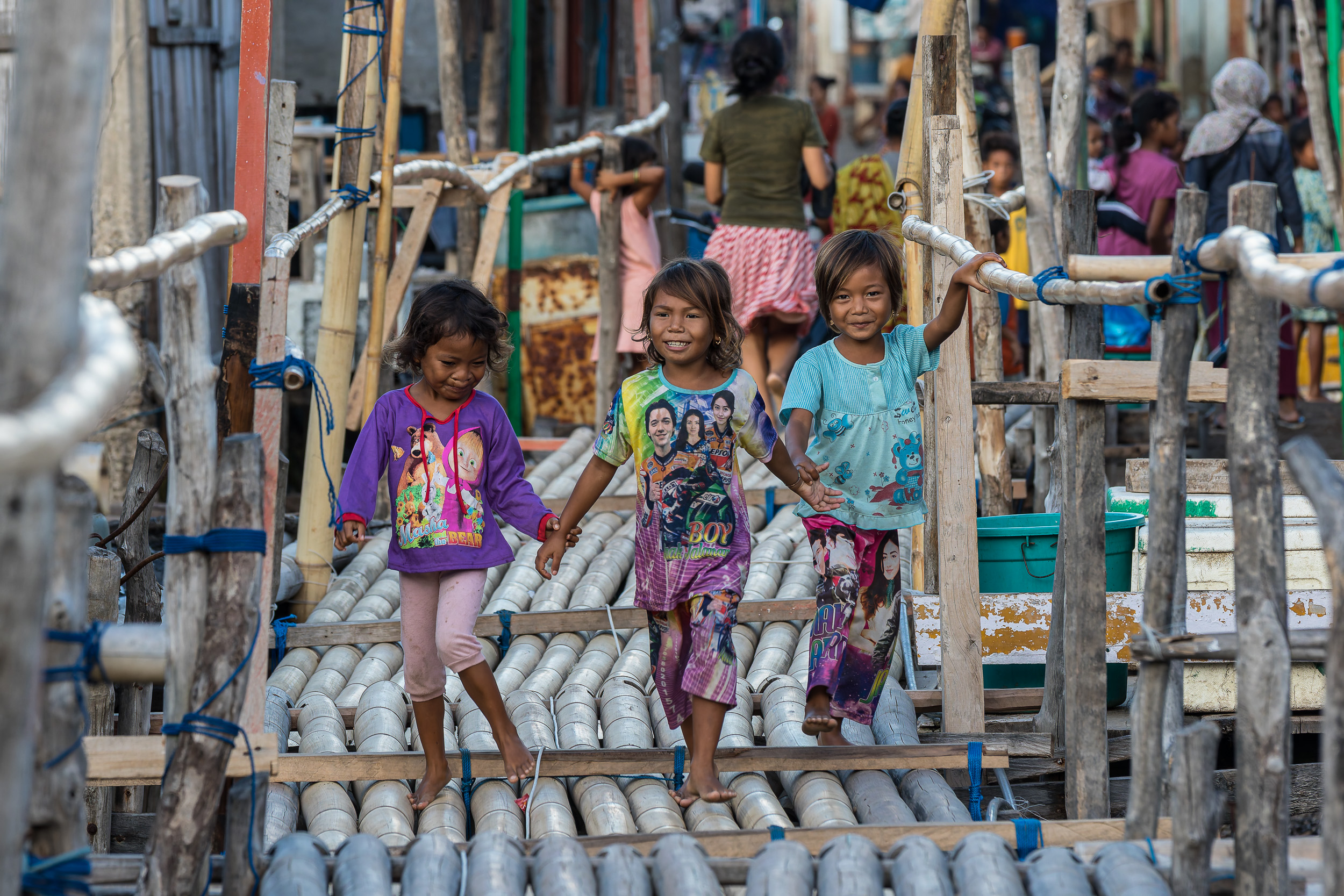
Daily life revolves around the tides. Nets are repaired along the wooden walkways between houses, boats are prepared for the next fishing trip, and the narrow jetties connecting the stilt houses form the social heart of the settlement.
The 1992 Tsunami
In December 1992, a powerful earthquake off the northern coast of Flores triggered a devastating tsunami that affected much of the Maumere region. Wuring was among the communities heavily impacted.
After the disaster, many residents relocated to nearby Nangahure, but a significant number of Bugis and Bajo families chose to rebuild their homes in Wuring and continue their traditional fishing livelihoods.
Today the village remains an important cultural and economic centre for these coastal communities.
Fishing and Coastal Trade
Fishing remains the backbone of Wuring’s economy. Early in the morning and again in the late afternoon, boats leave and return with their catches from the surrounding waters.
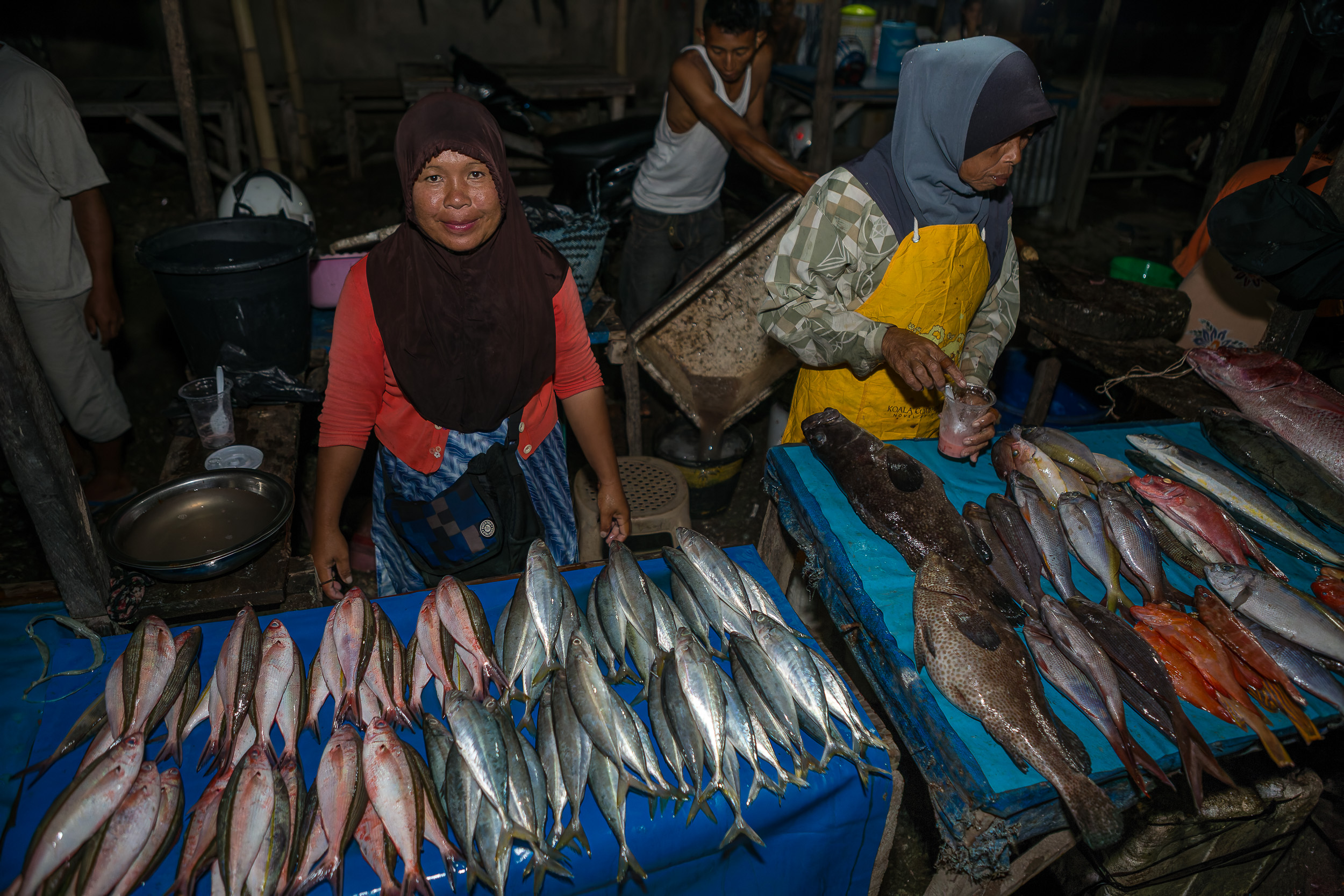
Women from inland villages often travel to Wuring to trade agricultural produce for fresh or salted fish. These exchanges connect the fishing communities of the coast with farming villages in the interior of Flores.
The small markets around the harbour area become particularly lively during the afternoon when boats return and fish are sorted and sold.
Photography and Atmosphere
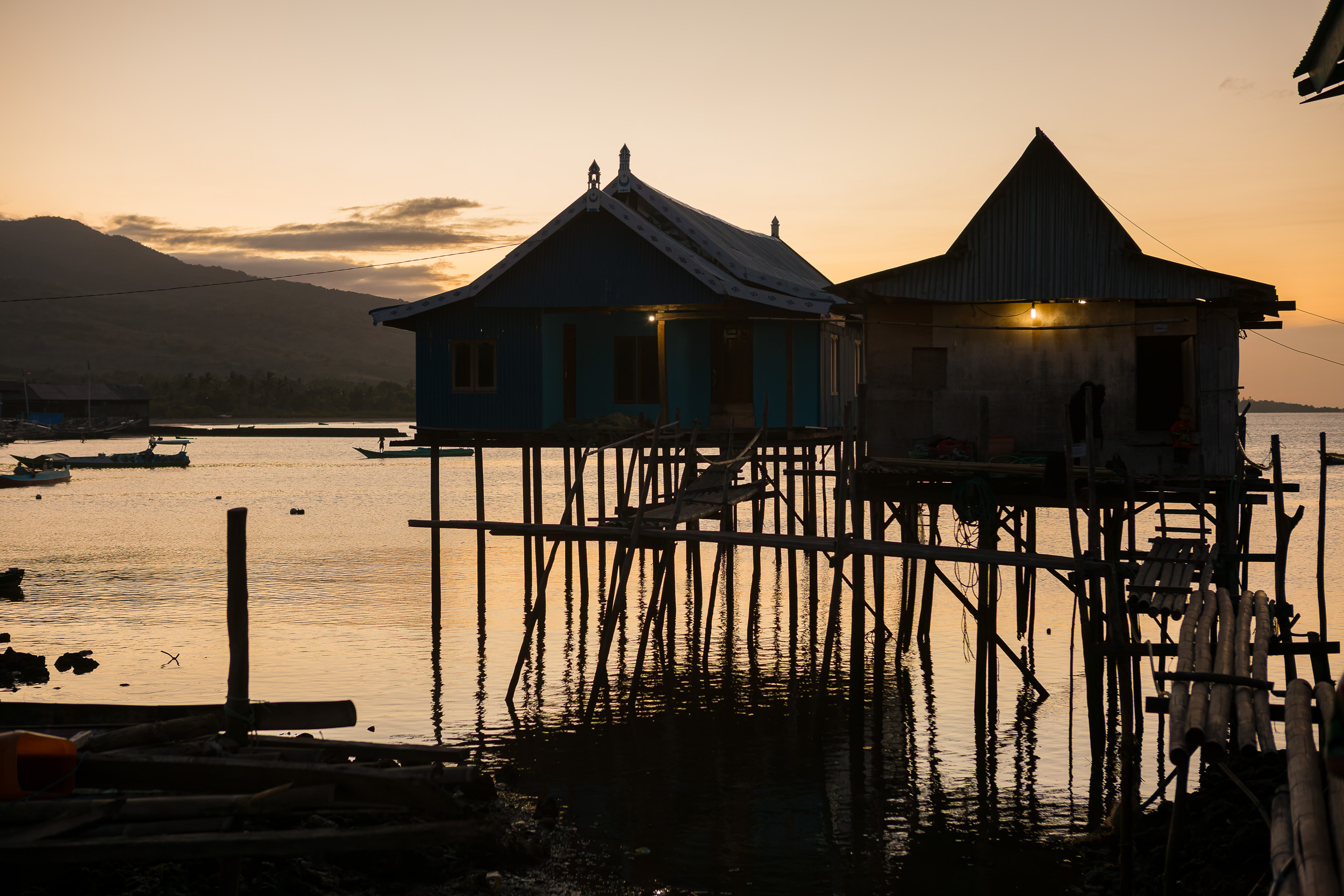
Wuring is especially atmospheric at sunrise and late afternoon, when the light reflects off the water beneath the houses and boats move through the bay.
From the shoreline, rows of wooden stilt houses stretch out across the shallow water, while Mount Egon forms a dramatic volcanic backdrop to the scene.
The village is generally welcoming to visitors, but as always it is respectful to ask before photographing people closely.
Visiting Wuring
Wuring lies about four kilometres west of Maumere along the main coastal road and can easily be reached by car or motorbike.
The harbour and market area become most active in the late afternoon and early evening, when fishing boats return and trading takes place along the wooden walkways.
Maumere itself offers accommodation, restaurants and access to some of the best dive sites in the Bay of Maumere.
Location
Kelimutu is located in central Flores, Indonesia, between the towns of Ende and Maumere.