Mbaru Niang Cone Houses in the Manggarai Highlands
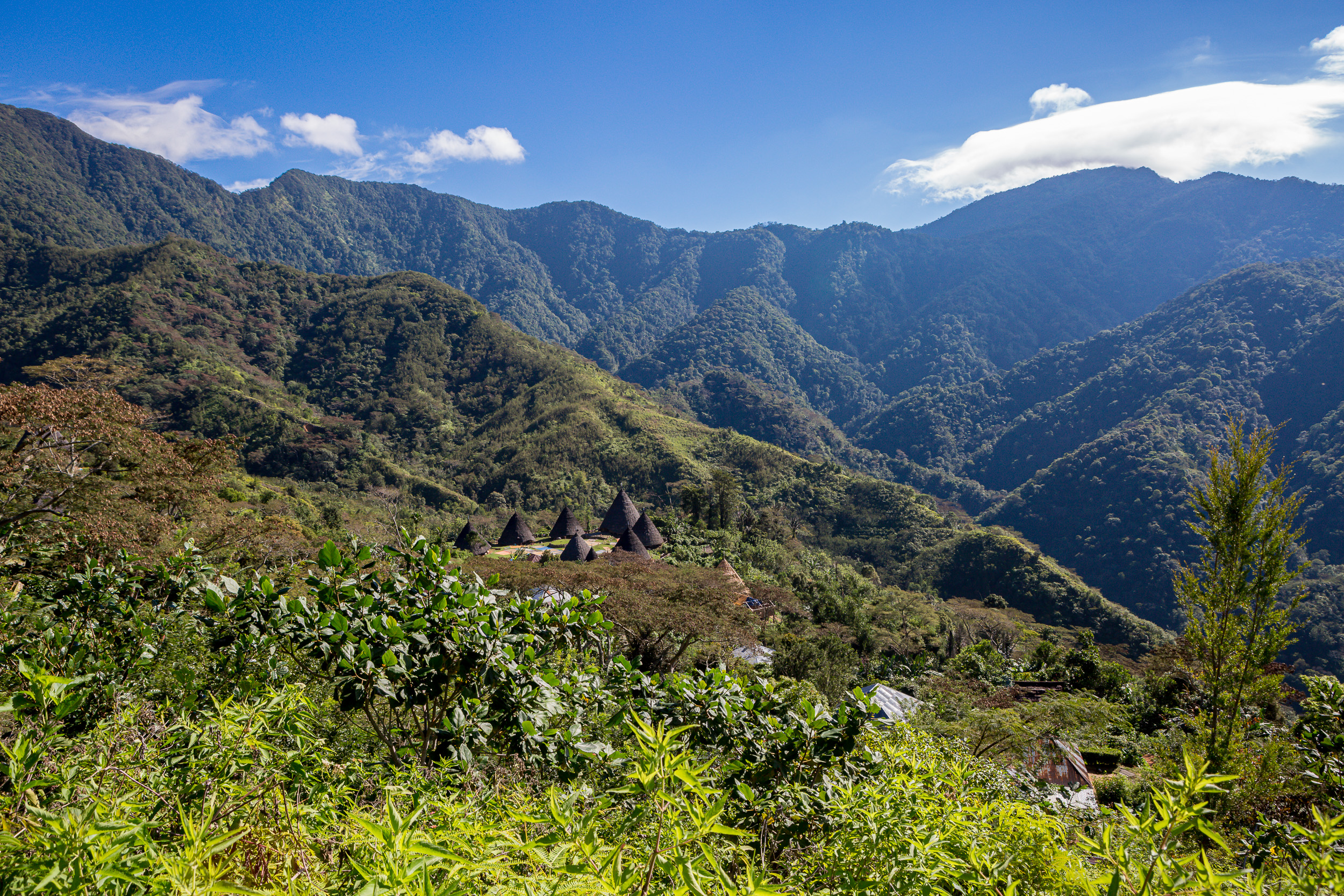
Hidden deep in the mountains of western Flores, Wae Rebo is one of Indonesia’s most remarkable traditional villages. Surrounded by rainforest and accessible only by a three-hour hike from the nearest road, the village lies high in the Manggarai Highlands at about 1,100 metres above sea level.
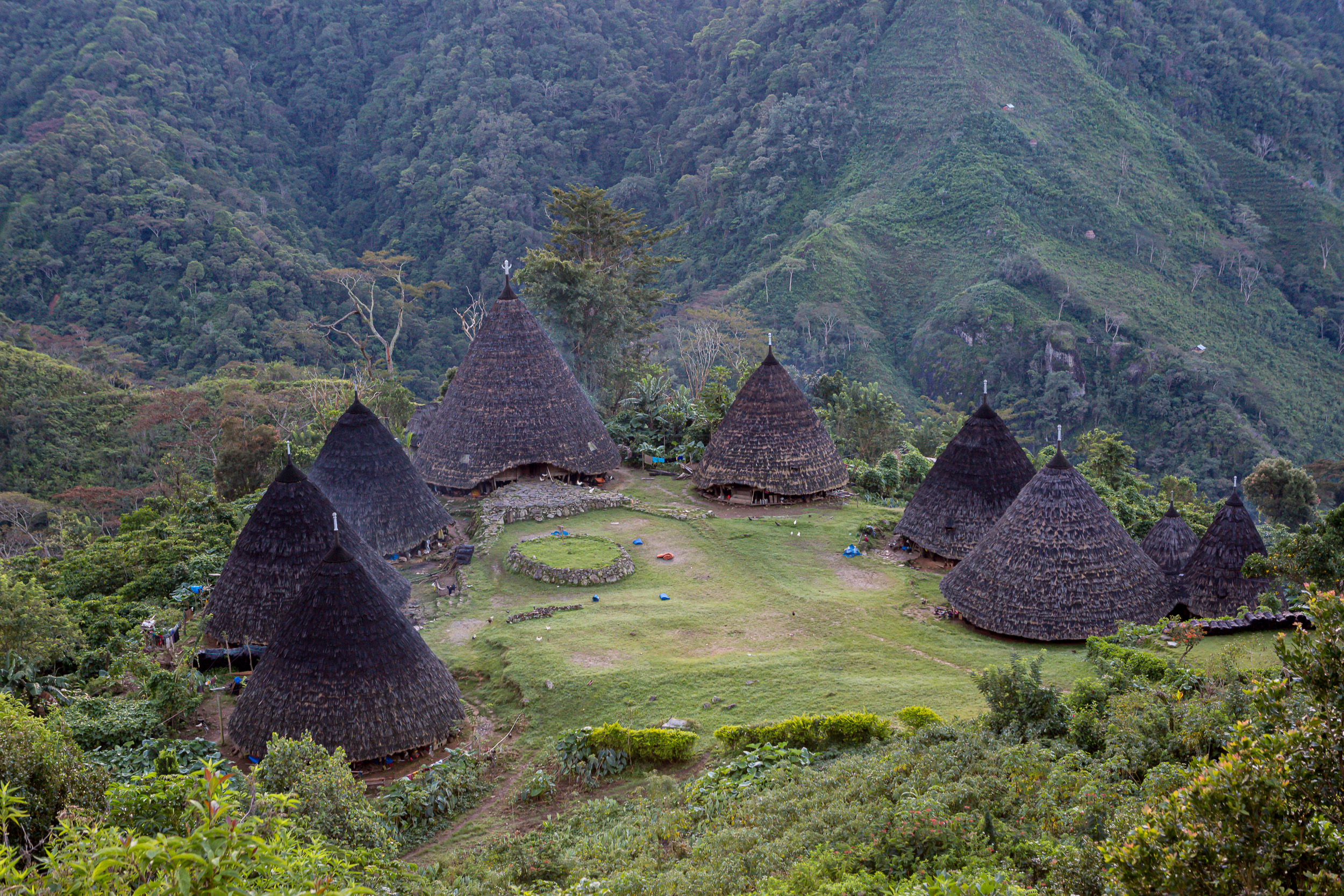
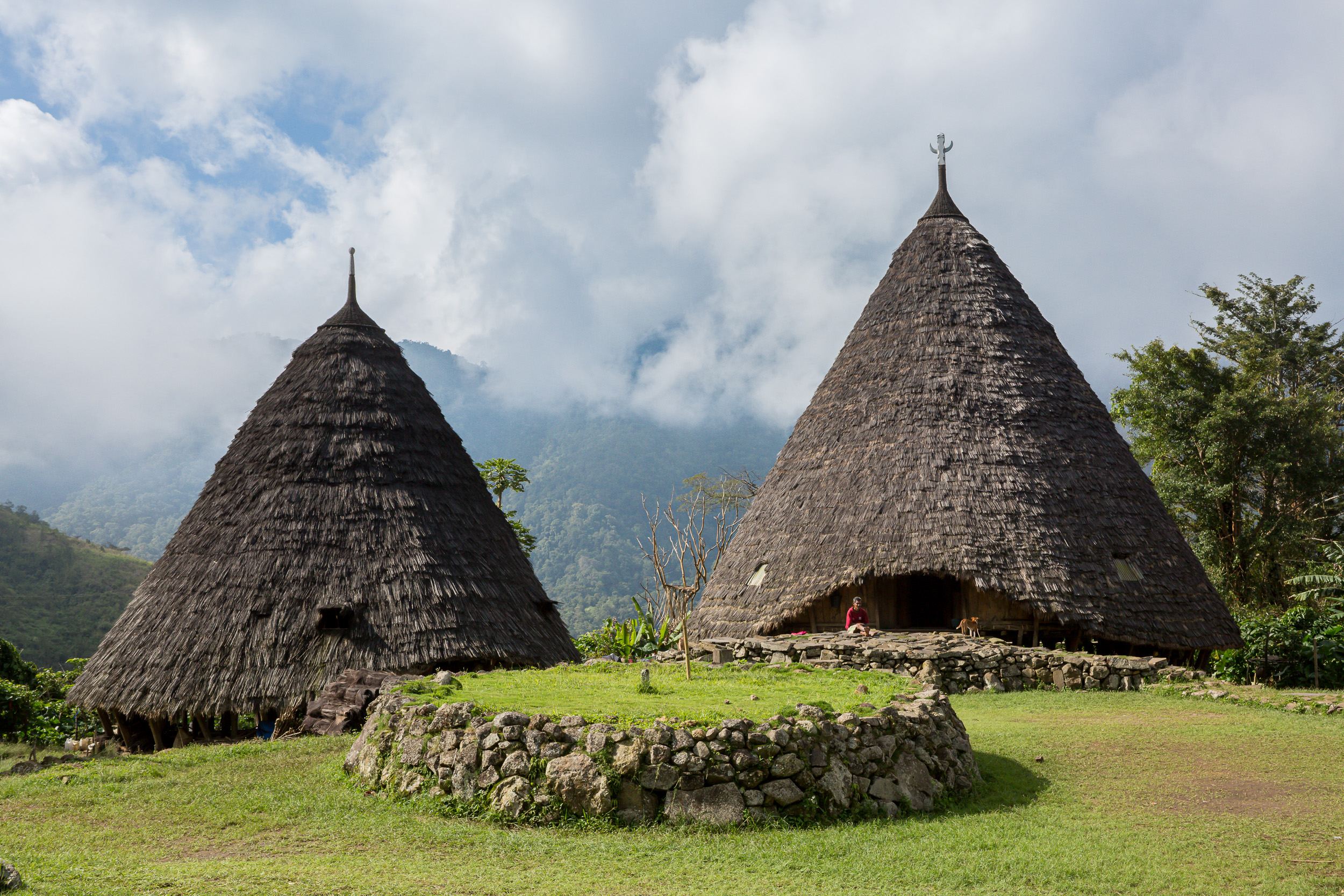
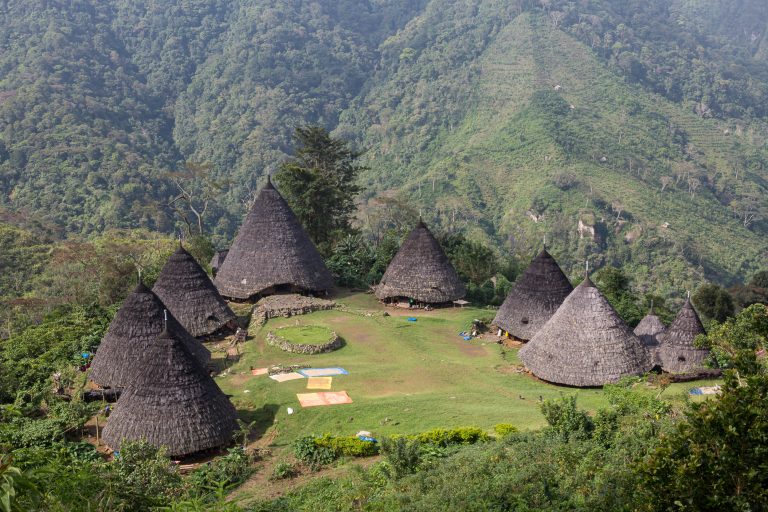
Wae Rebo is famous for its extraordinary conical houses known as Mbaru Niang. Arranged around a central courtyard, these tall thatched structures form one of the most distinctive traditional village landscapes in Indonesia and represent an important cultural heritage of the Manggarai people.
The Mbaru Niang Houses
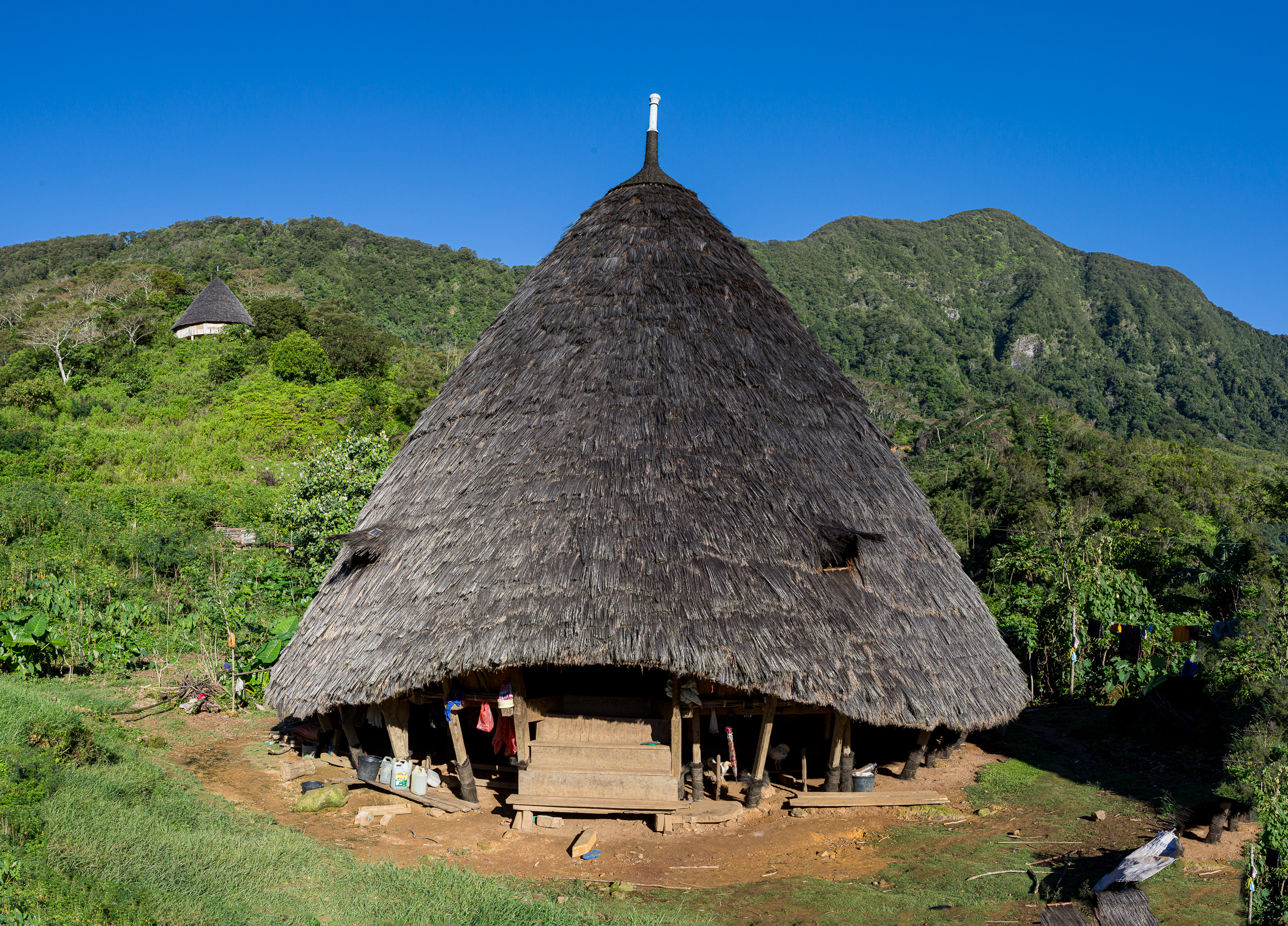
The circular Mbaru Niang houses are the architectural centre of life in Wae Rebo. Built using wood, bamboo and thick layers of palm-fibre thatch, the houses rise in a steep conical shape that protects the interior from heavy mountain rains.
Each house contains five levels, each with a specific purpose within the household.
Lutur (Tent) – the ground floor used as the main living space
Lobo – storage for food and daily household goods
Lentar – storage for seeds reserved for the next planting season
Lempa Rae – emergency food reserves
Hekang Kode – the sacred upper level where offerings for ancestors are placed
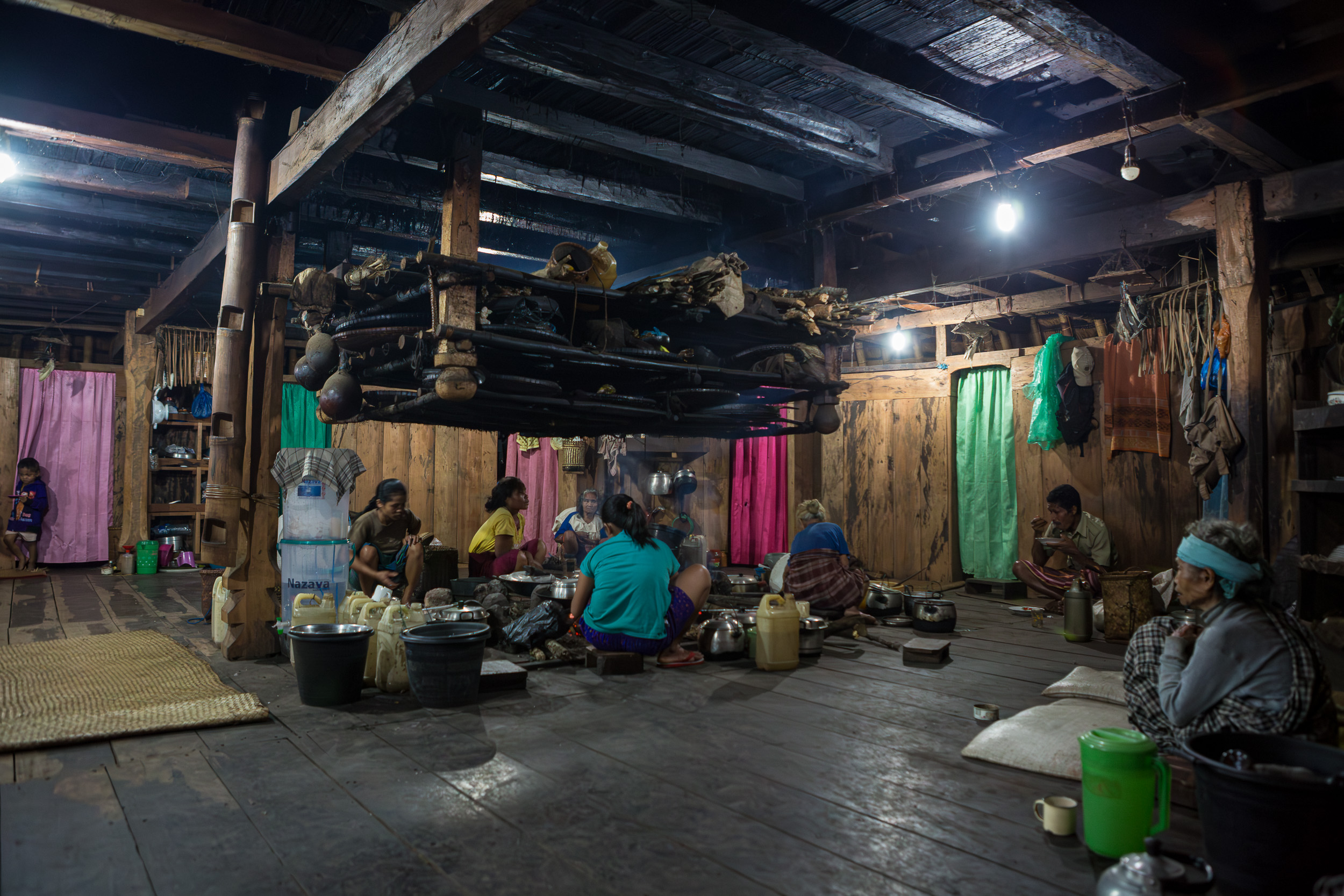
A hearth occupies the centre of the ground floor, and a central wooden pole supports the high roof structure.
One of the houses functions as the ceremonial house, where sacred drums and gongs are kept and where clan rituals are performed.
Village Layout and Manggarai Tradition
Wae Rebo is organised as a circular settlement where the houses face inward toward a central ceremonial space. This layout reflects traditional Manggarai concepts of community, ancestry, and shared responsibility.
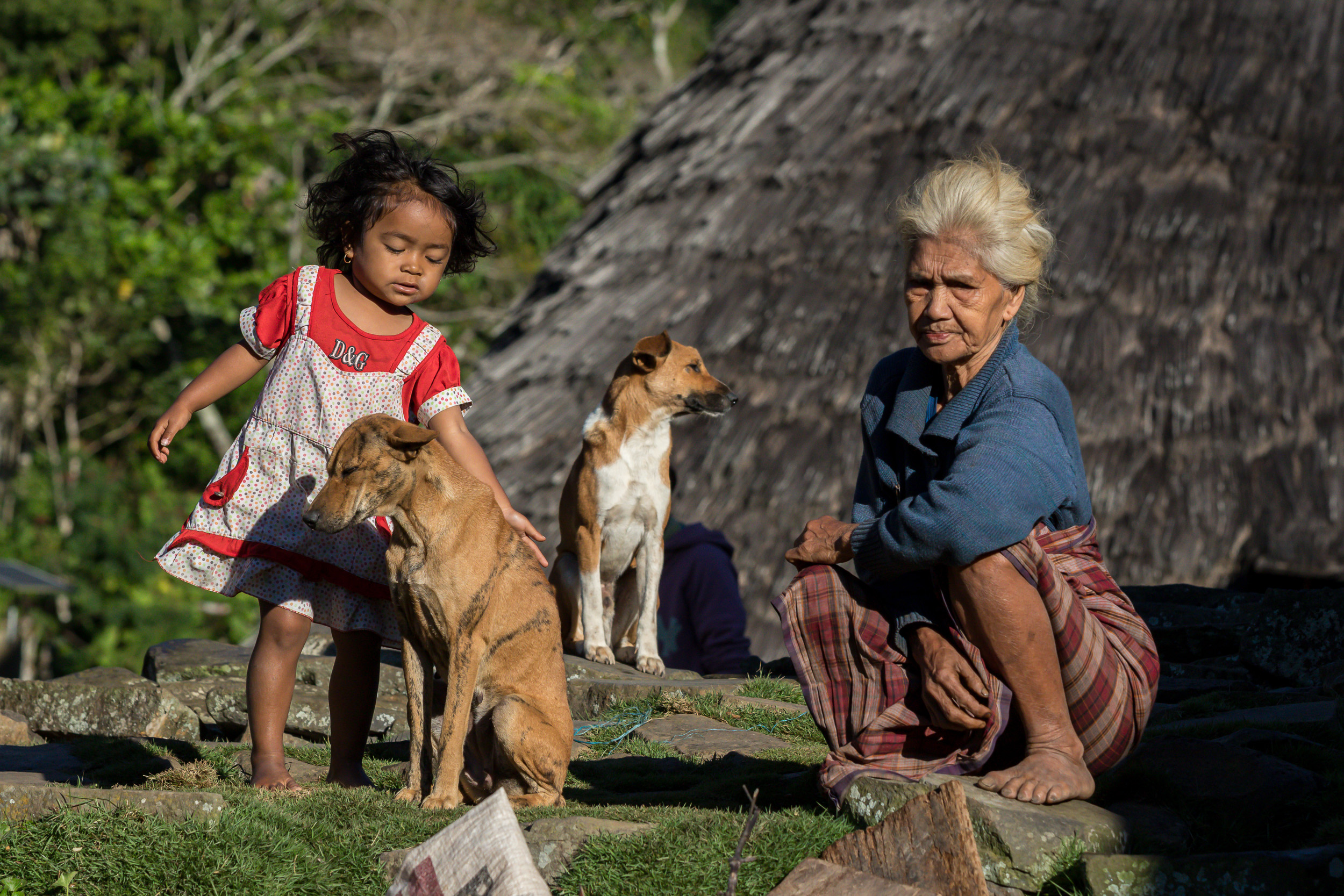
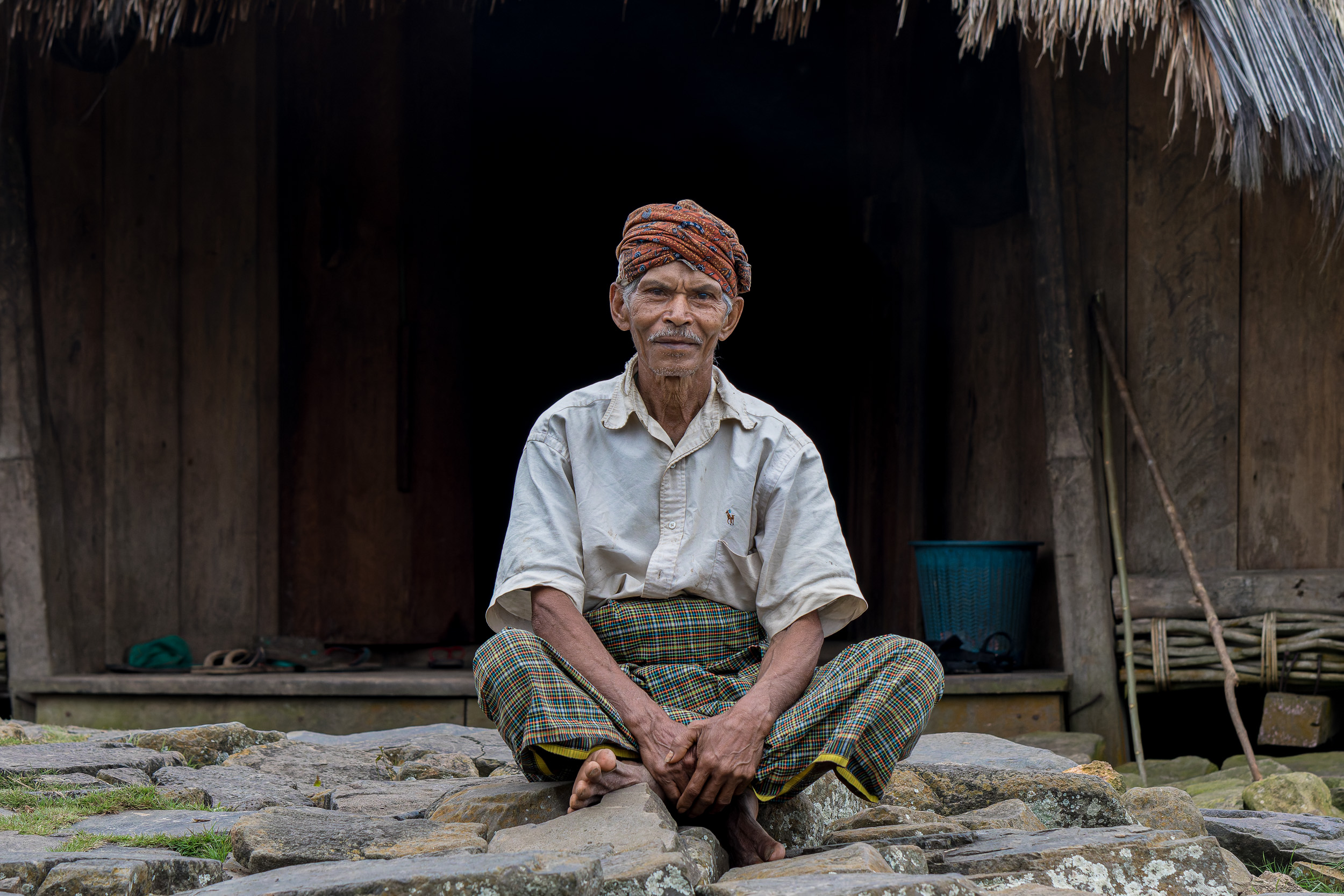
The village is home to several clans whose members maintain the houses collectively. Important rituals and communal gatherings take place in the central courtyard, reinforcing the social and spiritual bonds between families and their ancestors.
UNESCO Recognition
In 2012 Wae Rebo received the Award of Excellence in the UNESCO Asia-Pacific Heritage Awards for Cultural Heritage Conservation.
The award recognised the successful community-driven restoration of the Mbaru Niang houses, preserving traditional building techniques and cultural practices while allowing the village to remain a living community.
Life in Wae Rebo
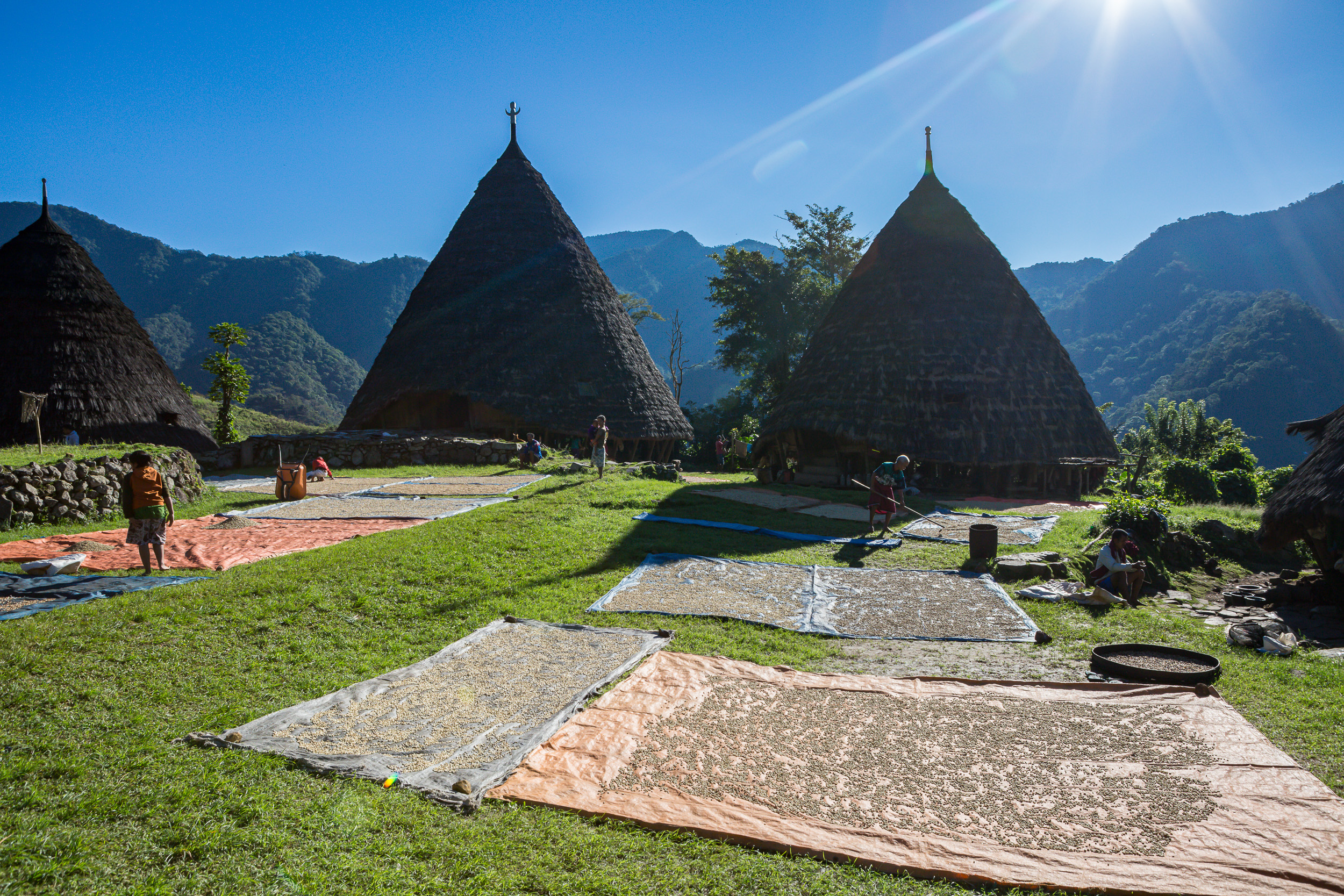
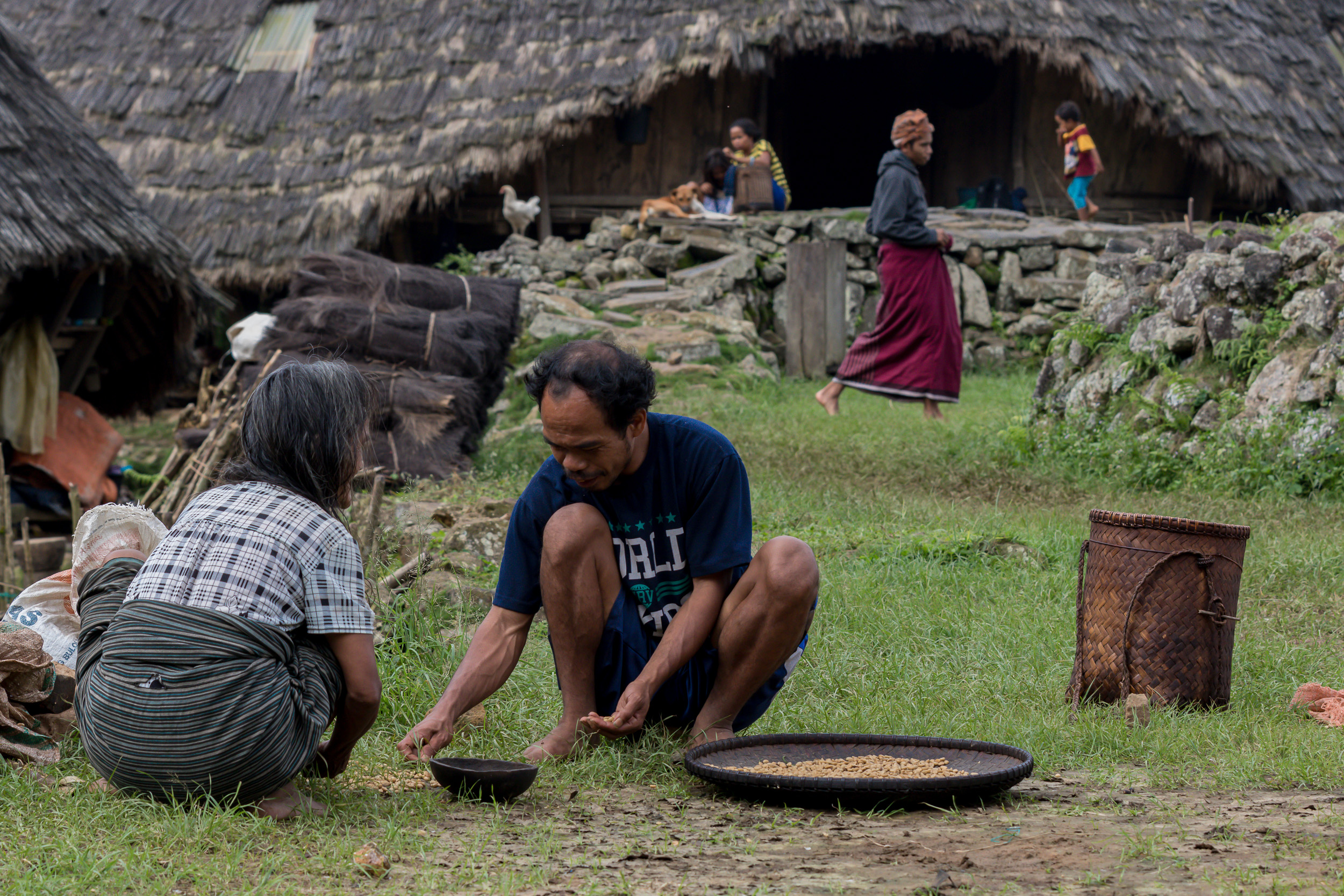
Most residents of Wae Rebo depend on coffee cultivation and small-scale agriculture. Gardens and coffee plantations surround the village, and daily life follows the rhythms of planting and harvest seasons.
Women often weave traditional Manggarai textiles, while coffee beans are dried and processed in the village before being transported to markets in the lowlands.
Visitors staying overnight are welcomed inside the Mbaru Niang houses, where sleeping mats are arranged around the central hearth and meals are shared communally.
The Trek to Wae Rebo
Reaching Wae Rebo requires a three-hour hike from Denge village. The trail climbs through rainforest and passes streams, bamboo groves and tropical vegetation.
The final approach opens into a high mountain clearing where the cluster of conical houses appears dramatically against the surrounding forested hills.
For many visitors, the trek itself forms an essential part of the experience.
Visiting Wae Rebo
Most visitors travel first to Denge village, which serves as the starting point for the hike.
From Ruteng the journey to Denge takes roughly 2.5–3 hours by car via the southern Manggarai highlands.
Local guides are usually arranged in advance, and overnight stays include meals with host families in the village.