Terraced landscapes shaped by water, light, and the Subak system
In the highlands of Tabanan, the rice terraces of Jatiluwih unfold across the slopes of Mount Batukaru. Here, agriculture is not only a means of cultivation, but a system of relationships — between water, land, and community.
Recognised as part of UNESCO’s World Heritage listing, Jatiluwih represents one of the most intact expressions of Bali’s traditional irrigation culture. Yet beyond its recognition, it remains an actively worked landscape, shaped daily by those who cultivate it.
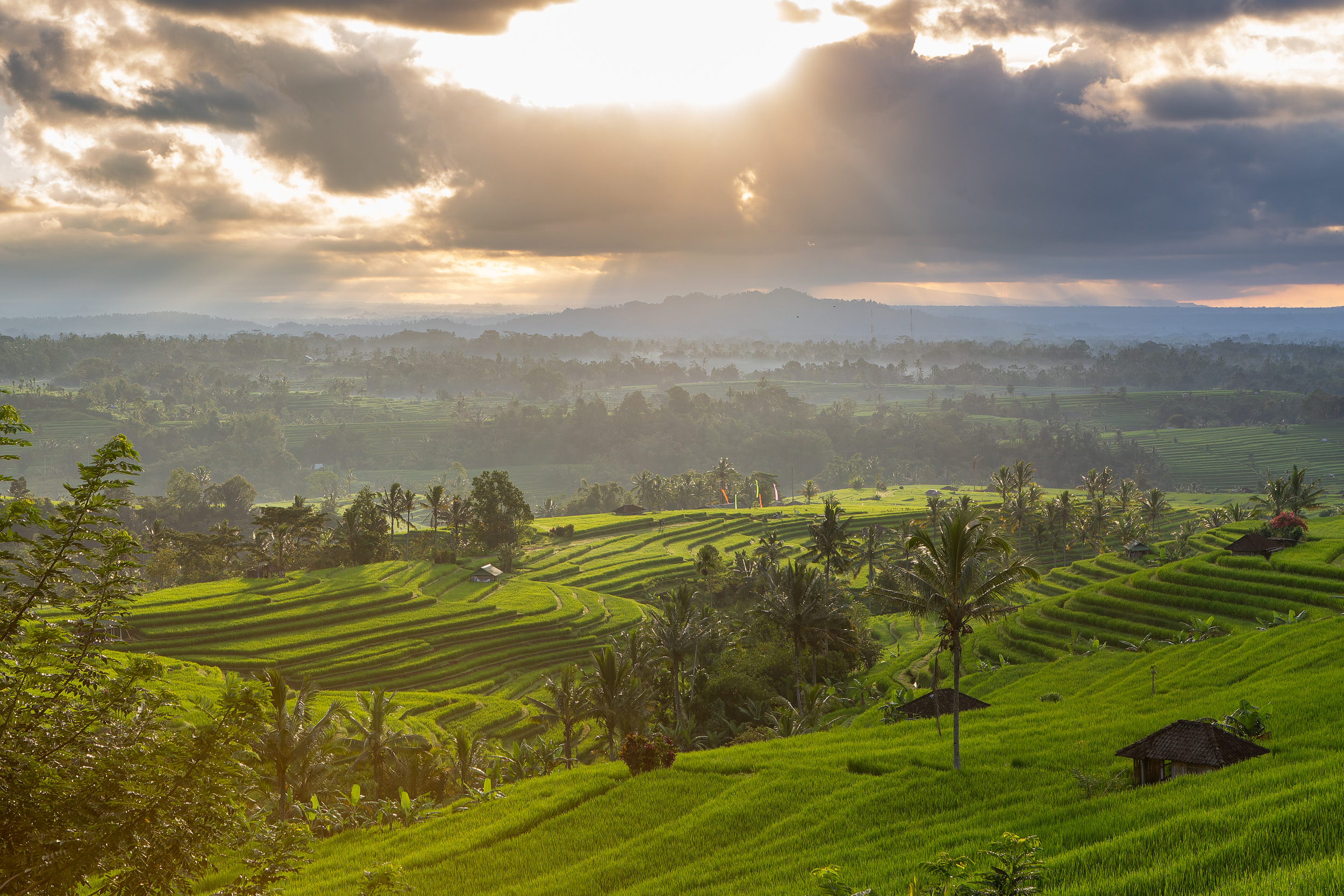
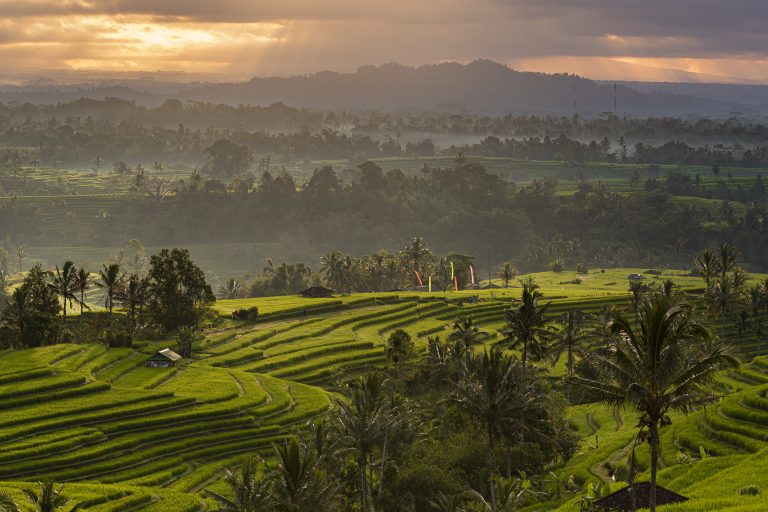
The vast terraced rice fields in Jatiluwih, in the highlands of Bali
A Landscape Shaped by Subak
At the core of Jatiluwih lies the Subak system — a cooperative method of water management that has guided rice cultivation in Bali for centuries.
Water flows from mountain sources through a network of canals, temples, and shared distribution points, regulated collectively by farmers. This system is not purely technical; it is deeply connected to ritual and cosmology, where water is understood as both a practical necessity and a sacred element.
The terraces themselves are a direct result of this system. Their layered structure follows the contours of the land, creating a landscape that is both functional and visually beautiful.
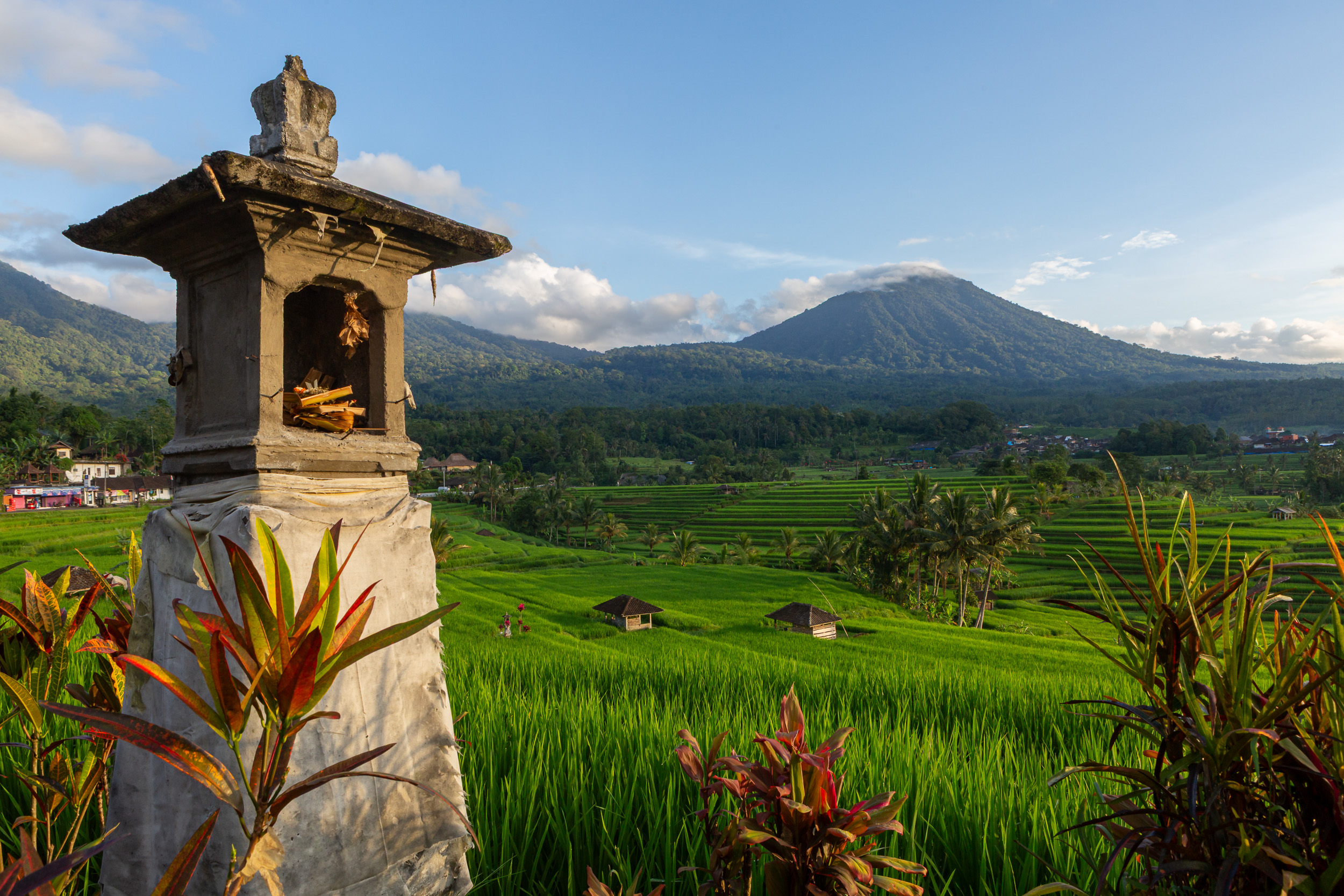
A small temple in the rice fields of Jatiluwih, dedicated to the Subak
Rhythm, Season, and Light
Jatiluwih is not a static landscape. Its appearance shifts continuously with the agricultural cycle.
Fields move from flooded mirror-like surfaces to bright green growth, and eventually to the golden tones before harvest. Light interacts differently with each stage — reflecting, diffusing, or flattening the terraces into graphic patterns.
This constant transformation defines the experience of the place. No single moment represents Jatiluwih; it exists in cycles, shaped by time as much as by terrain.
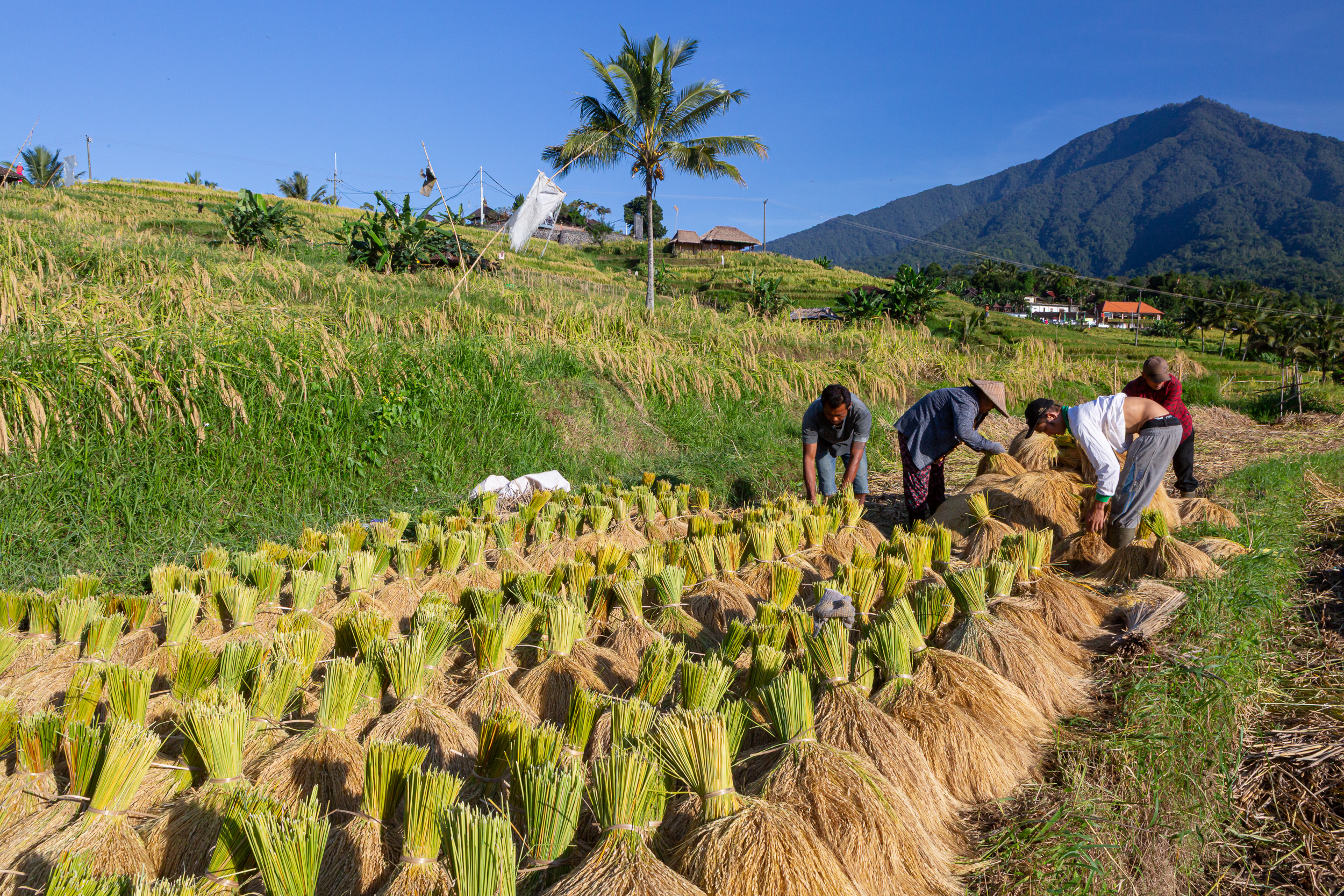
Traditional rice harvest in the Jatiluwih rice fields in central Bali
The Creative Scarecrows
Amid the ordered geometry of the terraces, small human-like figures appear — scattered across the fields, quietly watching over the crops.
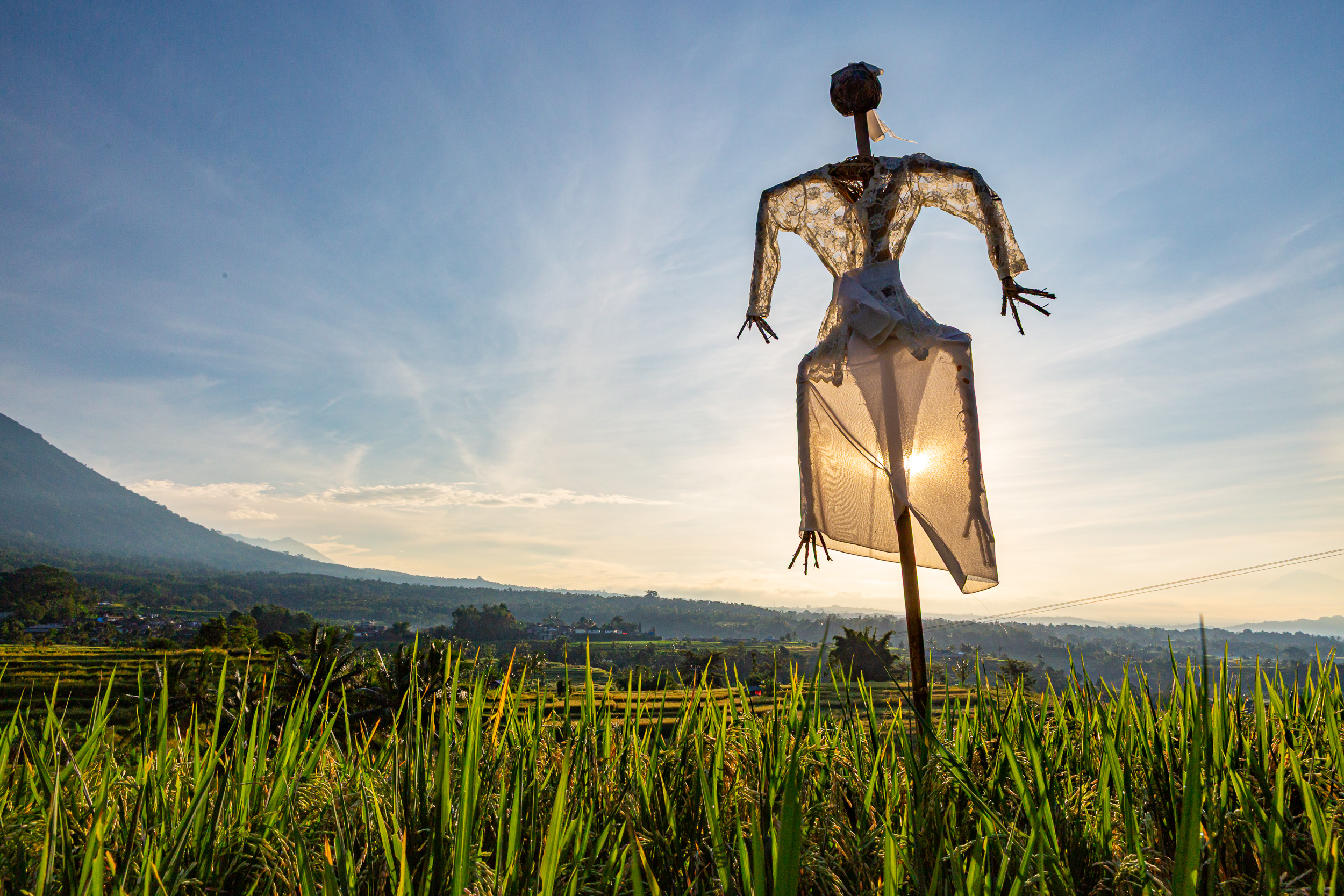
These scarecrows, built from simple materials, often take on unexpected and expressive forms. Some resemble human silhouettes dressed in everyday clothing, while others are assembled with improvised features, giving them a distinct personality. Their purpose is practical, yet their presence introduces a layer of creativity into the landscape.
They stand as subtle markers of human presence — not only as farmers, but as individuals leaving small, imaginative traces within a highly structured agricultural system.
A scarecrow in the rice fields of Jatiluwih
A Living Cultural Landscape
Unlike many landscapes that are preserved or staged, Jatiluwih remains actively cultivated.
Farmers continue to work the land using methods shaped by generations of knowledge. The Subak system is not maintained as heritage alone, but as a functioning framework that sustains both agriculture and community life.
This continuity is what defines Jatiluwih. It is not a relic of the past, but an evolving landscape where tradition and daily practice remain inseparable.
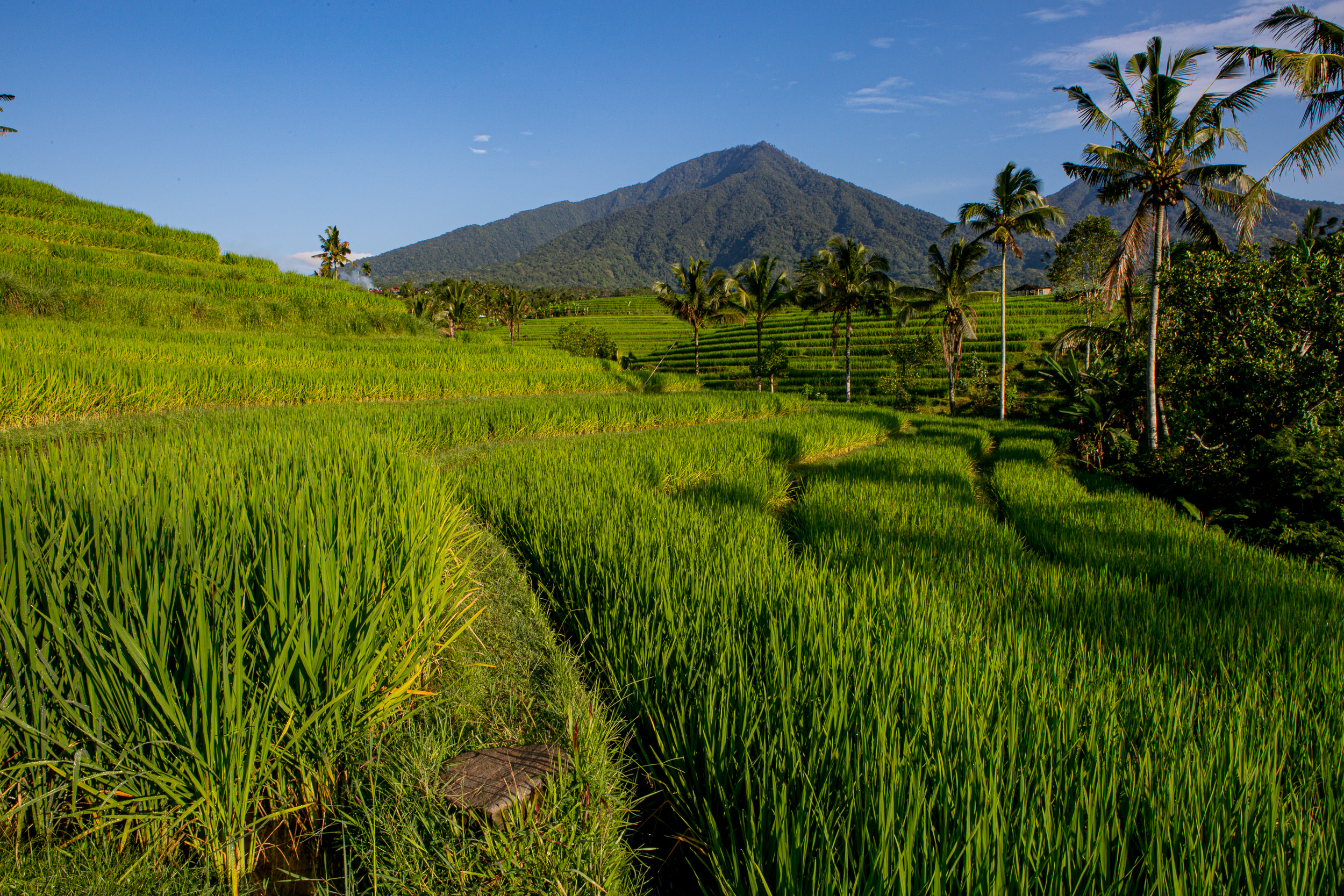
Green rice fields in Jatiluwih, Bali
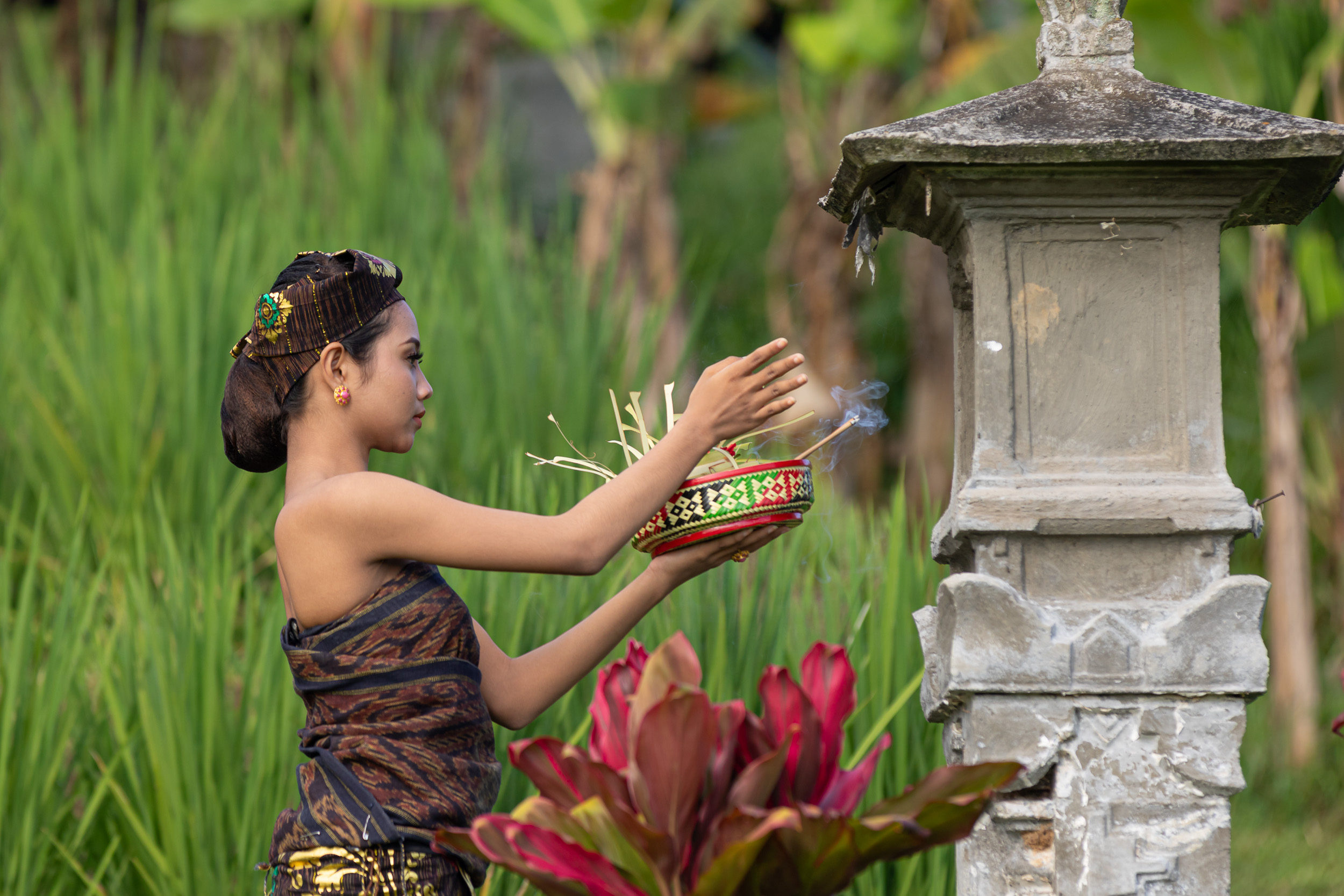
A girl making offer in a small subak temple in the rice fields of Jatiluwih
Exploring Jatiluwih Through Photography
This story offers a broader context for understanding Jatiluwih as a cultural and agricultural system.
The gallery linked from this page focuses on the visual experience of the terraces — patterns, light, seasonal variation, and the presence of the scarecrows within the fields.
Together, they form a way of seeing the landscape not only as scenery, but as a living structure shaped by water, ritual, and human interaction.
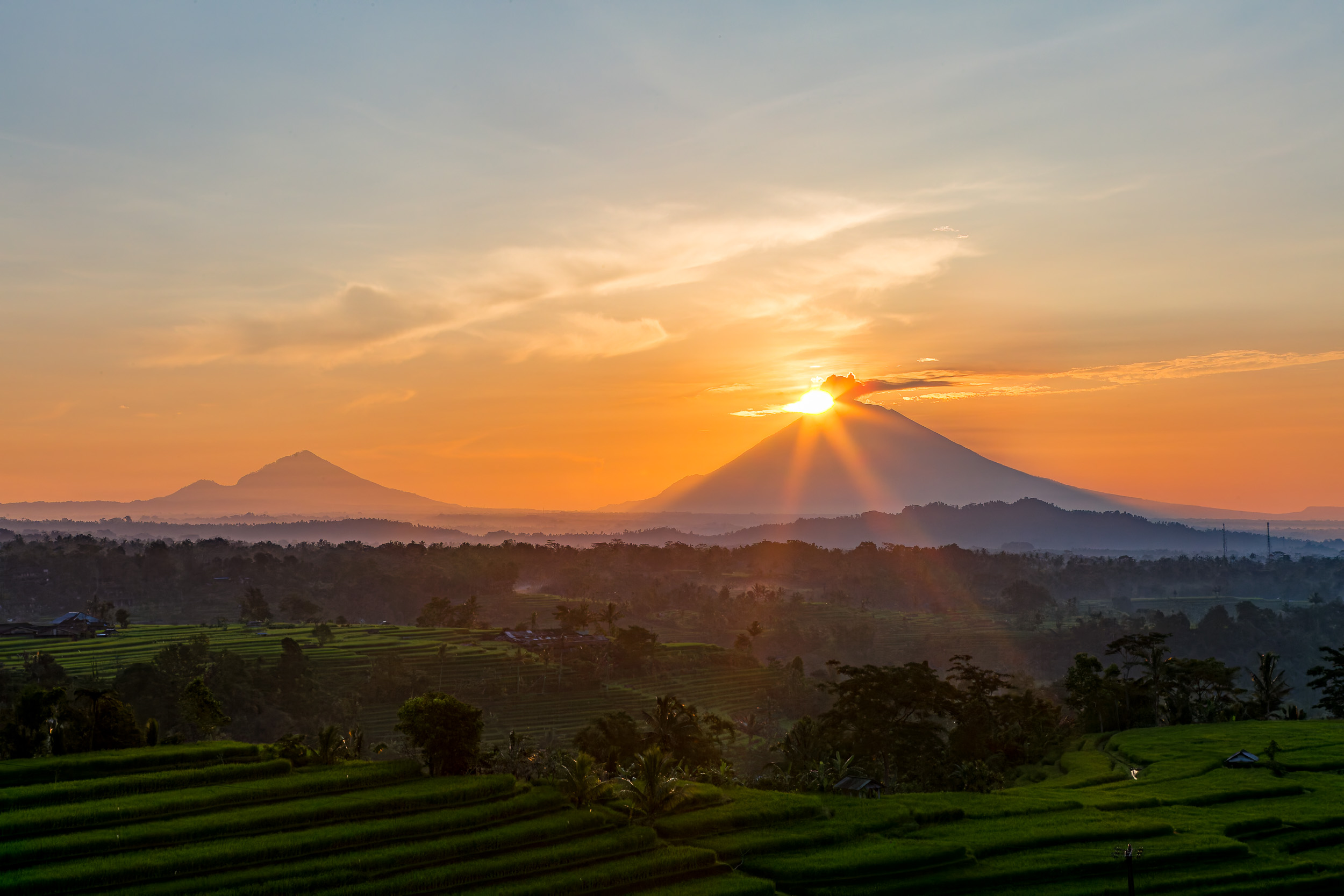
Sunrise over the terraced rice fields of Jatiluwih in central Bali
Explore the Photo Gallery
A curated visual collection from Jatiluwih Rice Terraces Bali