In Tana Toraja, funeral ceremonies are among the most important events in Toraja society.
Known as Rambu Solo, these ceremonies mark the transition of the deceased into the afterlife. They are not held immediately after death, but often months or years later, when families are prepared to organise them.
Rambu Solo is both a ritual obligation and a social event, involving extended families, entire communities, and significant resources. It is one of the central practices that define life in Tana Toraja, where ritual and social structure remain closely connected.
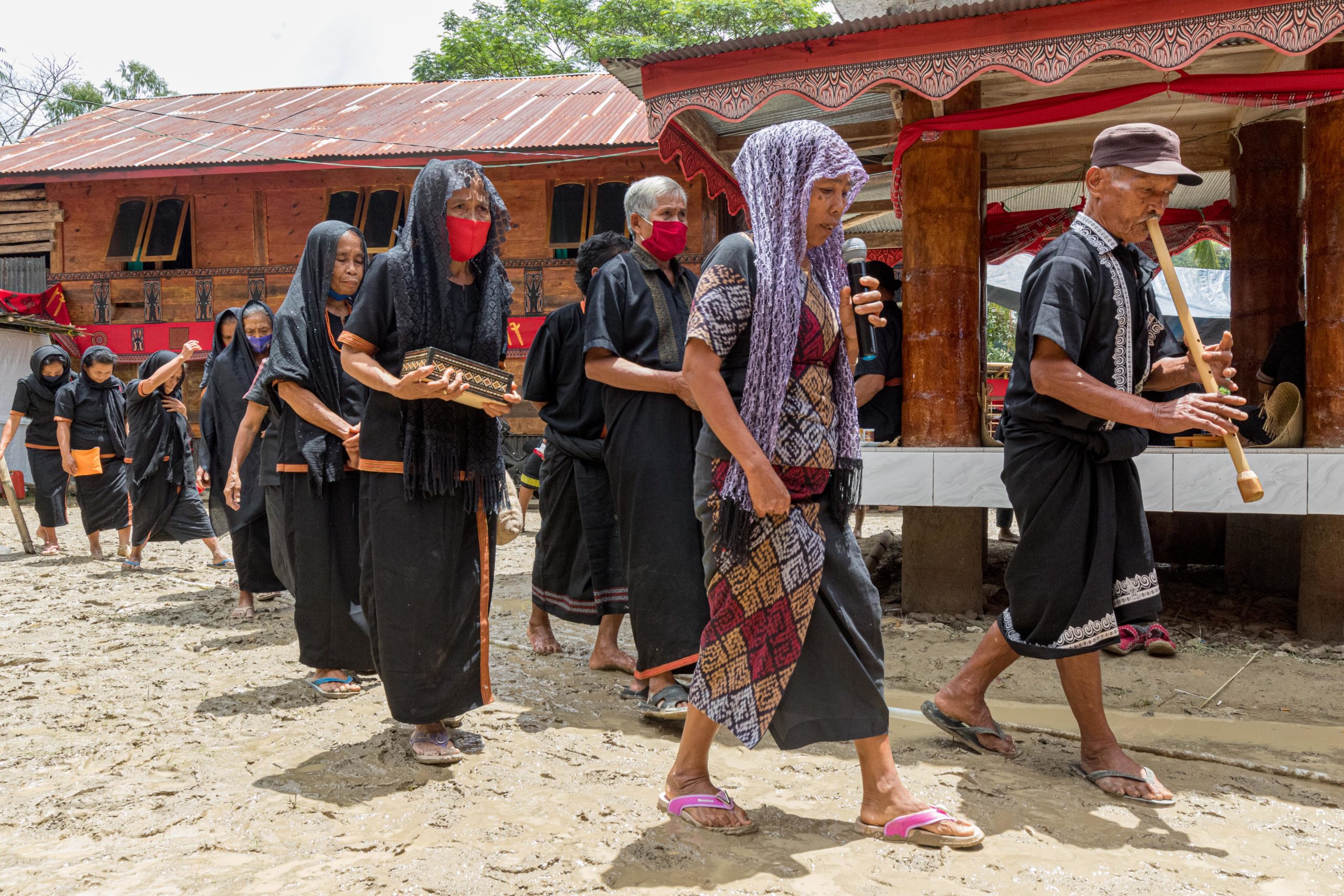
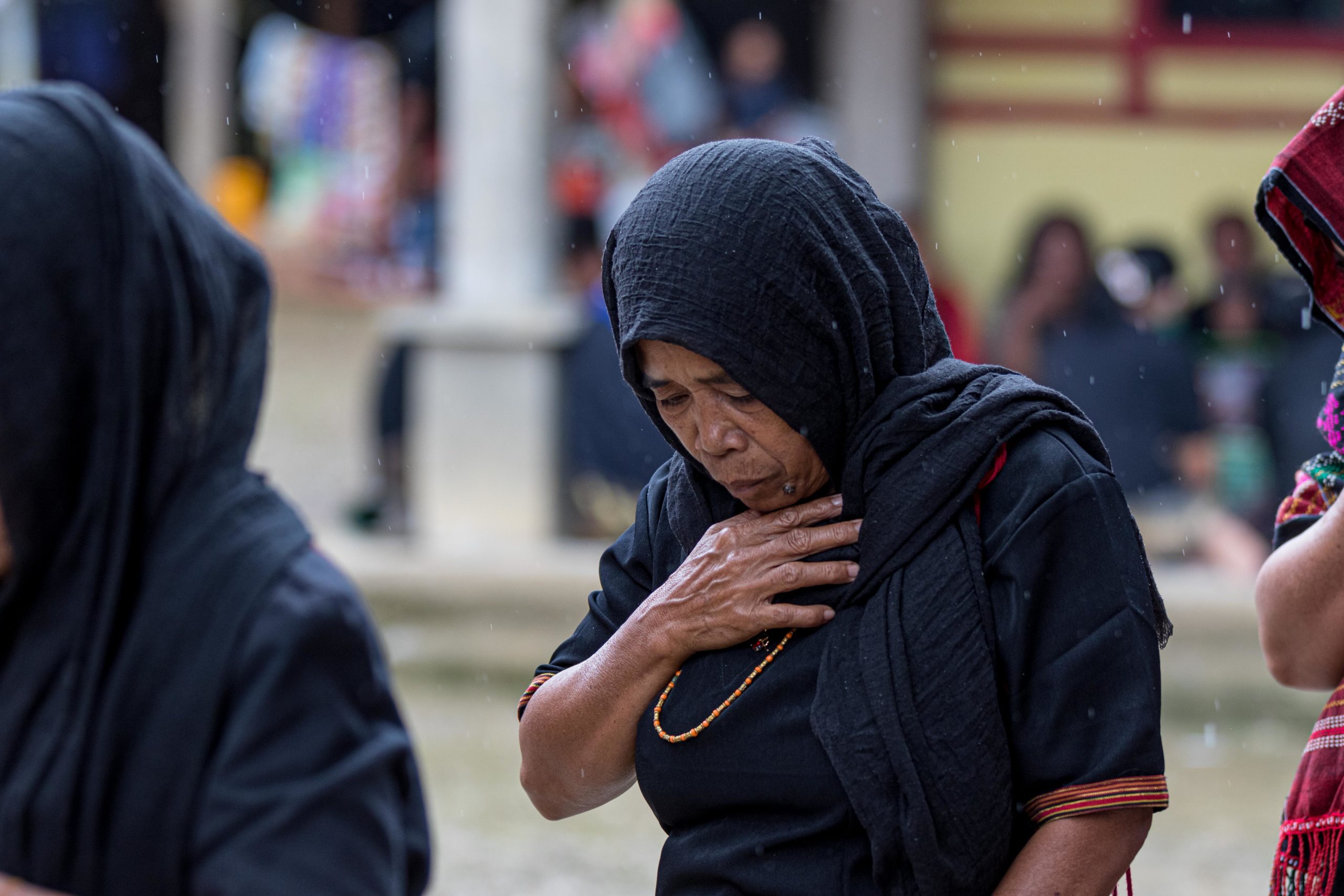
Visitors arriving at a Rambu Solo funeral ceremony in Tana Toraja, Sulawesi, Indonesia
Preparing for the Ceremony
Preparation for Rambu Solo can take years.
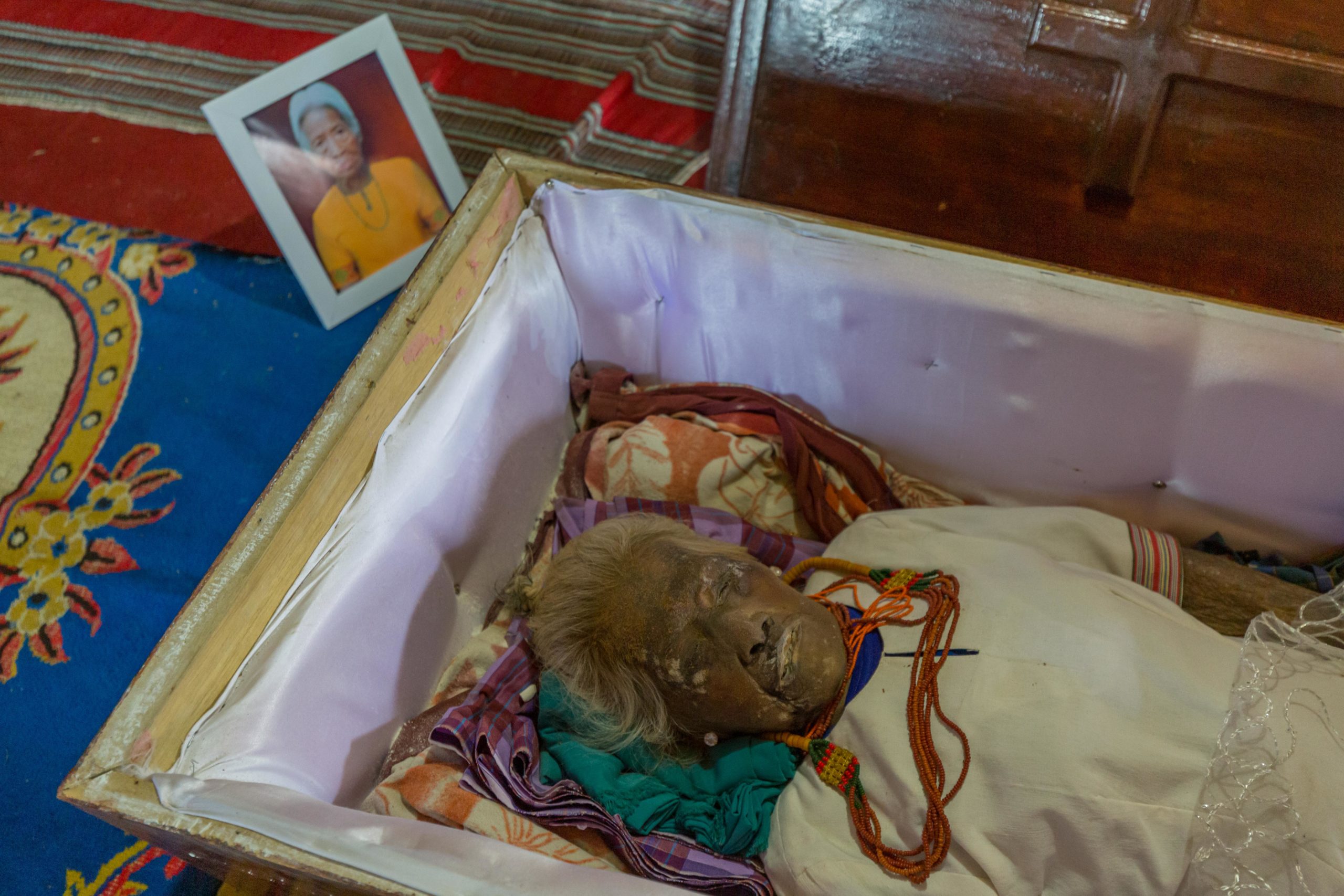
During this time, the deceased is often kept within the family home and treated as part of daily life. The delay allows families to gather the financial means and coordinate the participation of relatives.
The ceremony itself reflects not only belief, but also social structure and status.
The deceased are often kept at home for years, before the funeral.
Ceremony and Structure
Rambu Solo ceremonies take place over several days.
Temporary structures are built to host guests, and large numbers of people gather to attend. The sequence of events follows established patterns, including processions, speeches, and ritual acts.
Each stage has meaning, contributing to the transition of the deceased within Torajan cosmology.
Guests arrive at the temporary pavilion built for the duration of Rambu Solo.
Buffalo and Sacrifice
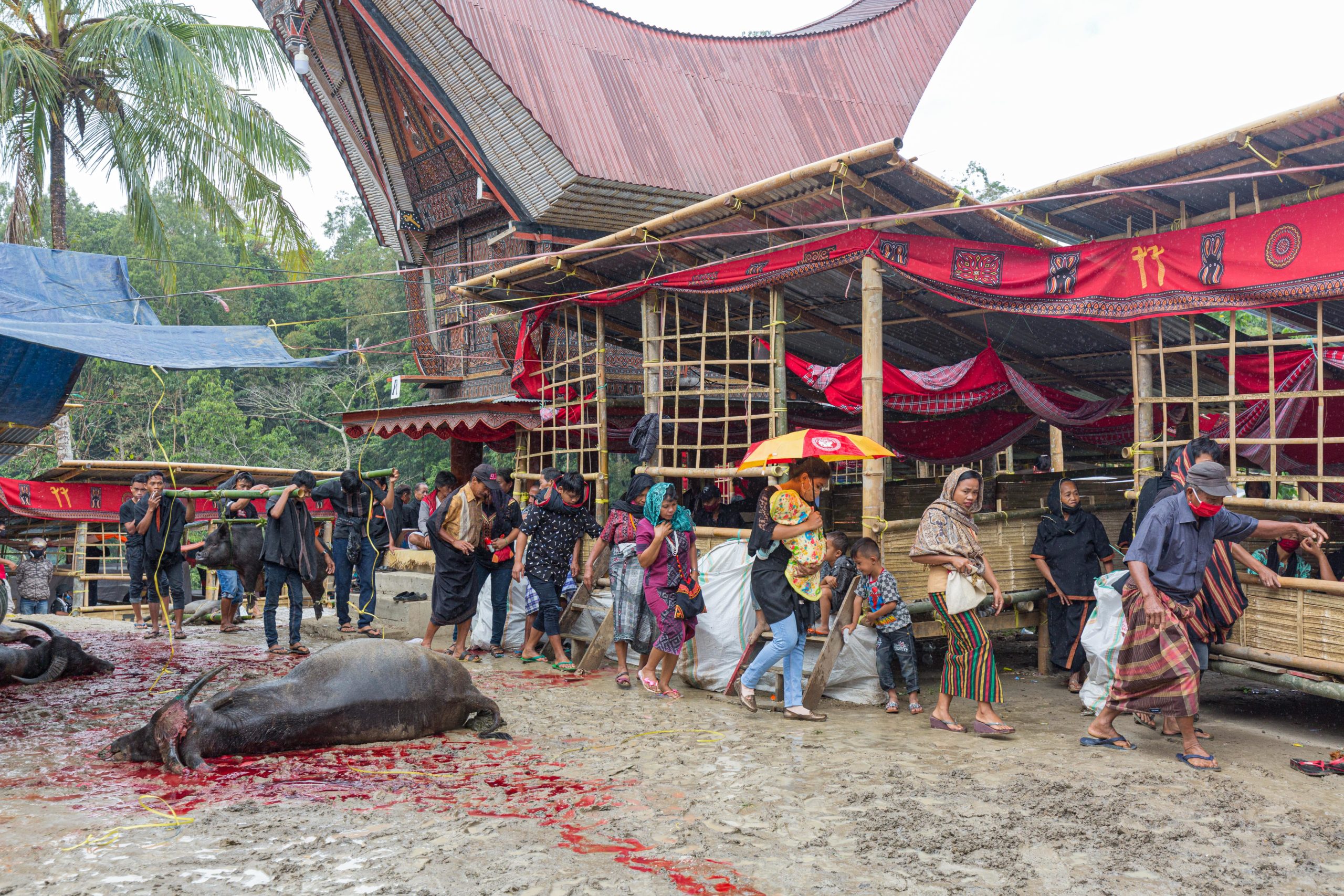
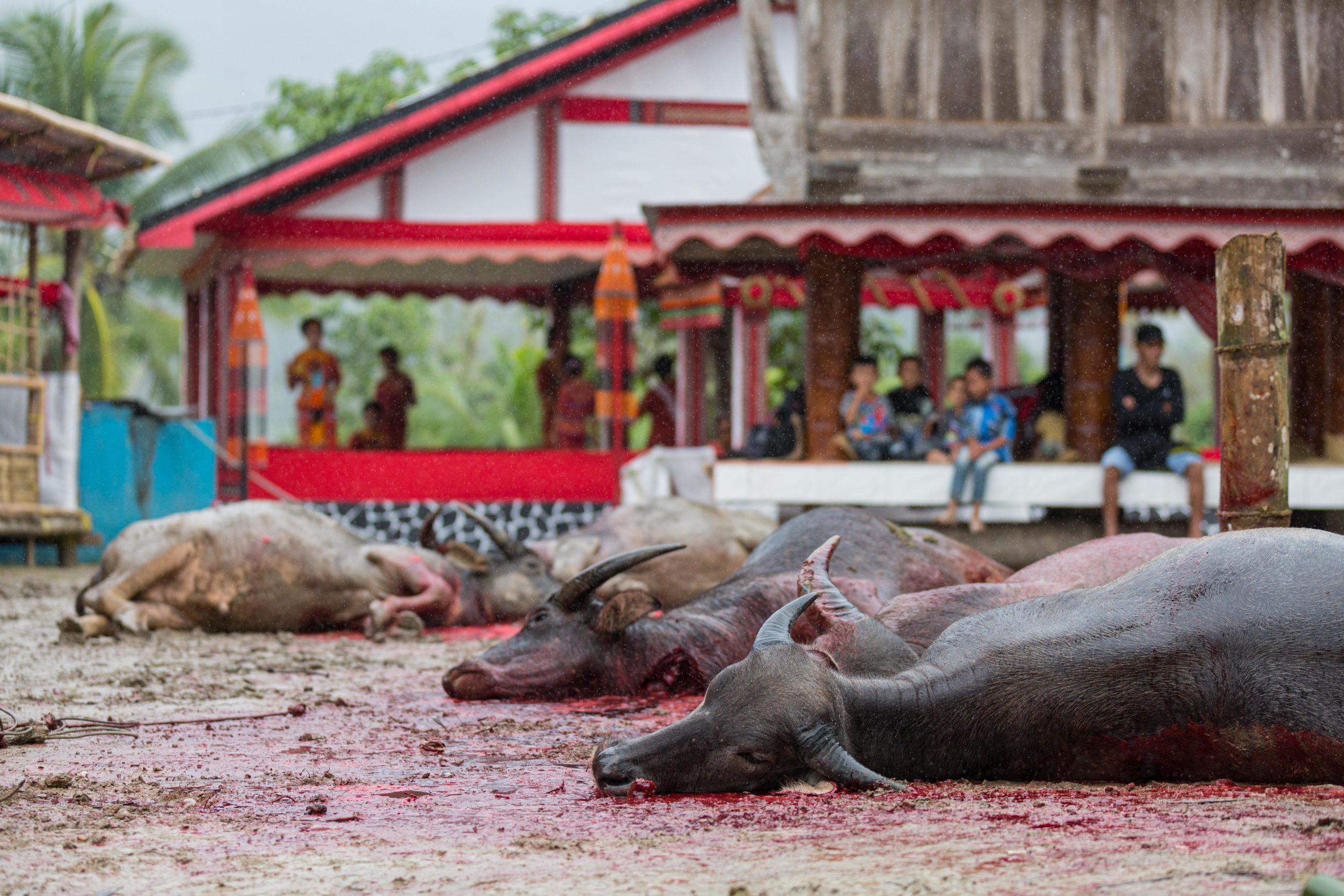
A central element of Rambu Solo is the sacrifice of water buffalo and pigs.
The number and type of buffalo indicate the status of the deceased and their family. Among them, the highly valued Tedong Bonga holds particular significance. Pigs are also an important part of the ceremony, with large numbers brought in by family members and guests as contributions. In major ceremonies, this can amount to dozens or even hundreds of animals.
These sacrifices are not symbolic alone — they are essential to the ritual process and the journey of the deceased, as well as expressions of social ties and obligation within the community.
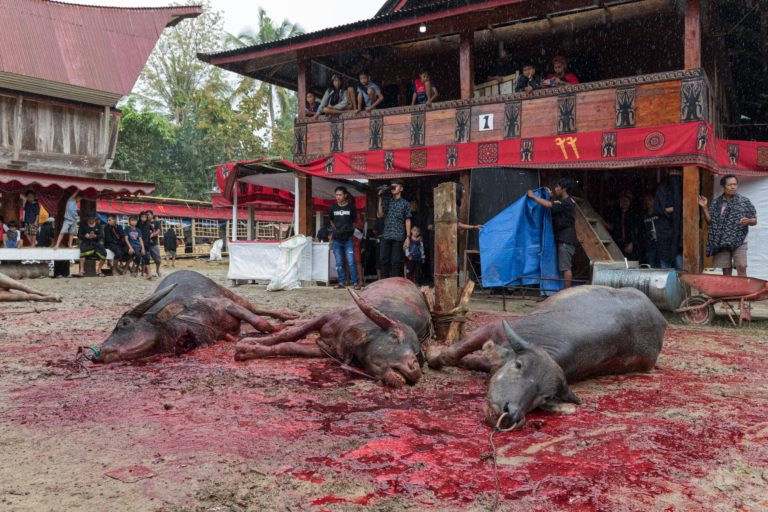
Many buffaloes are sacrificed during a Rambu Solo ceremony.
Community and Obligation
Rambu Solo is not a private event.
Families, neighbours, and extended networks participate, contributing time, resources, and presence. Attendance reinforces social bonds and obligations that extend beyond the ceremony itself.
The event becomes a collective expression of community structure.
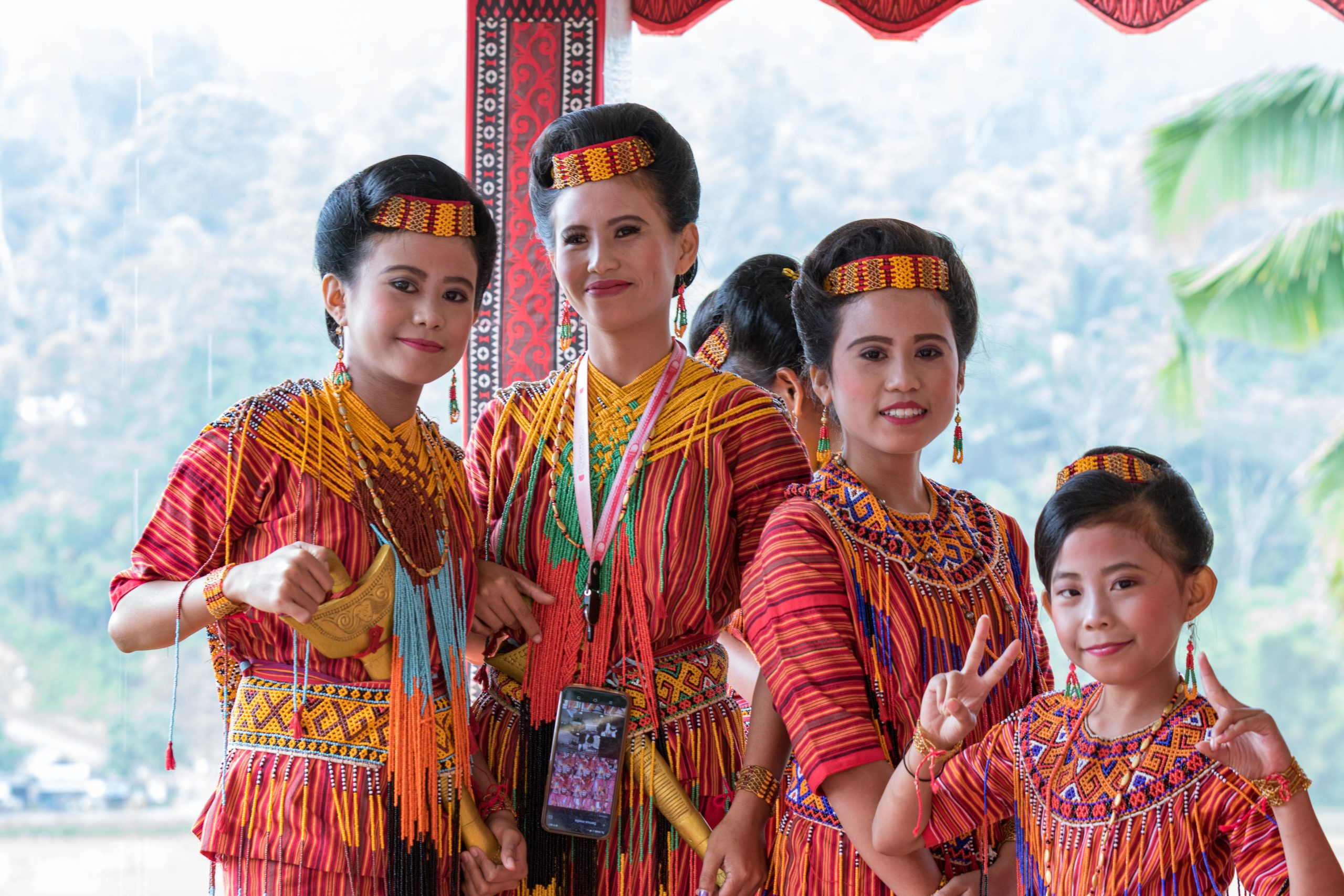
Family members dressed up to welcome visitors.
Photographing Rambu Solo
The below linked gallery documents different moments within Rambu Solo ceremonies, focusing on structure, participation, and atmosphere.
Rather than isolating individual events, the images reflect the broader rhythm of the ceremony and the people involved.
Rambu Solo is one of the defining elements of Tana Toraja, within a wider network of rituals and traditions explored in the main story.
Explore the Photo Gallery
A curated visual collection from Rambu Solo – Tana Toraja