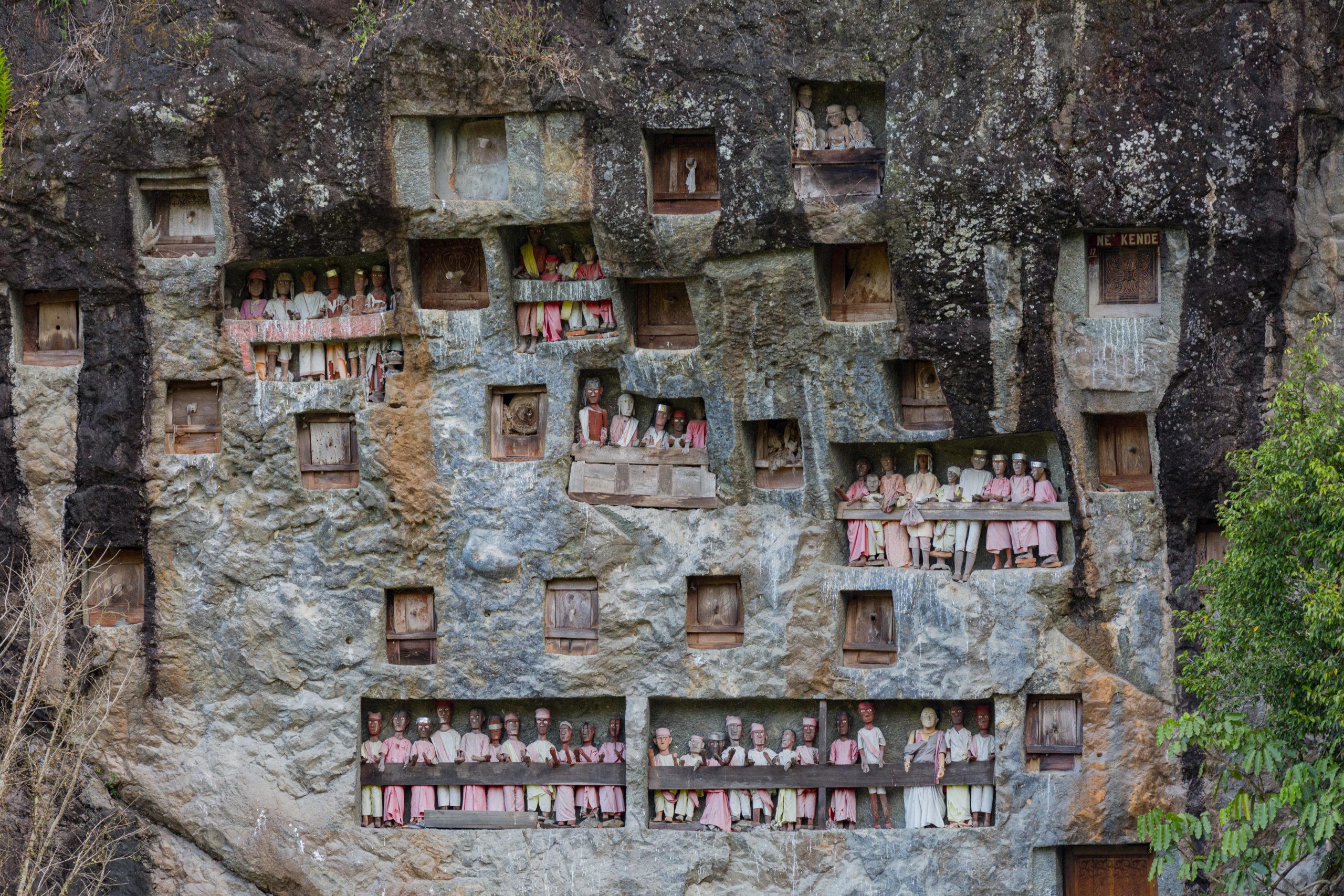
In Lemo, burial sites are carved directly into vertical rock faces, forming one of the most recognisable landscapes of Tana Toraja.
As part of the broader cultural landscape of Tana Toraja, Lemo reflects how burial practices are integrated into daily life and the surrounding environment.
Rows of openings cut into the cliff hold coffins, while wooden effigies — known as tau tau — stand on balconies overlooking the valley. The site combines natural rock formations with constructed elements, creating a layered structure that is both functional and symbolic.
Rock cliff graves in Lemo, in the Toraja highlands of Sulawesi
Cliff Graves
At Lemo, graves are not placed in the ground, but carved into the rock.
Each opening represents a burial chamber, often used by families over generations. The placement within the cliff reflects both practical and cultural considerations, positioning the deceased within the landscape rather than separating them from it.
The result is a vertical arrangement of graves, visible from a distance and integrated into the natural environment.
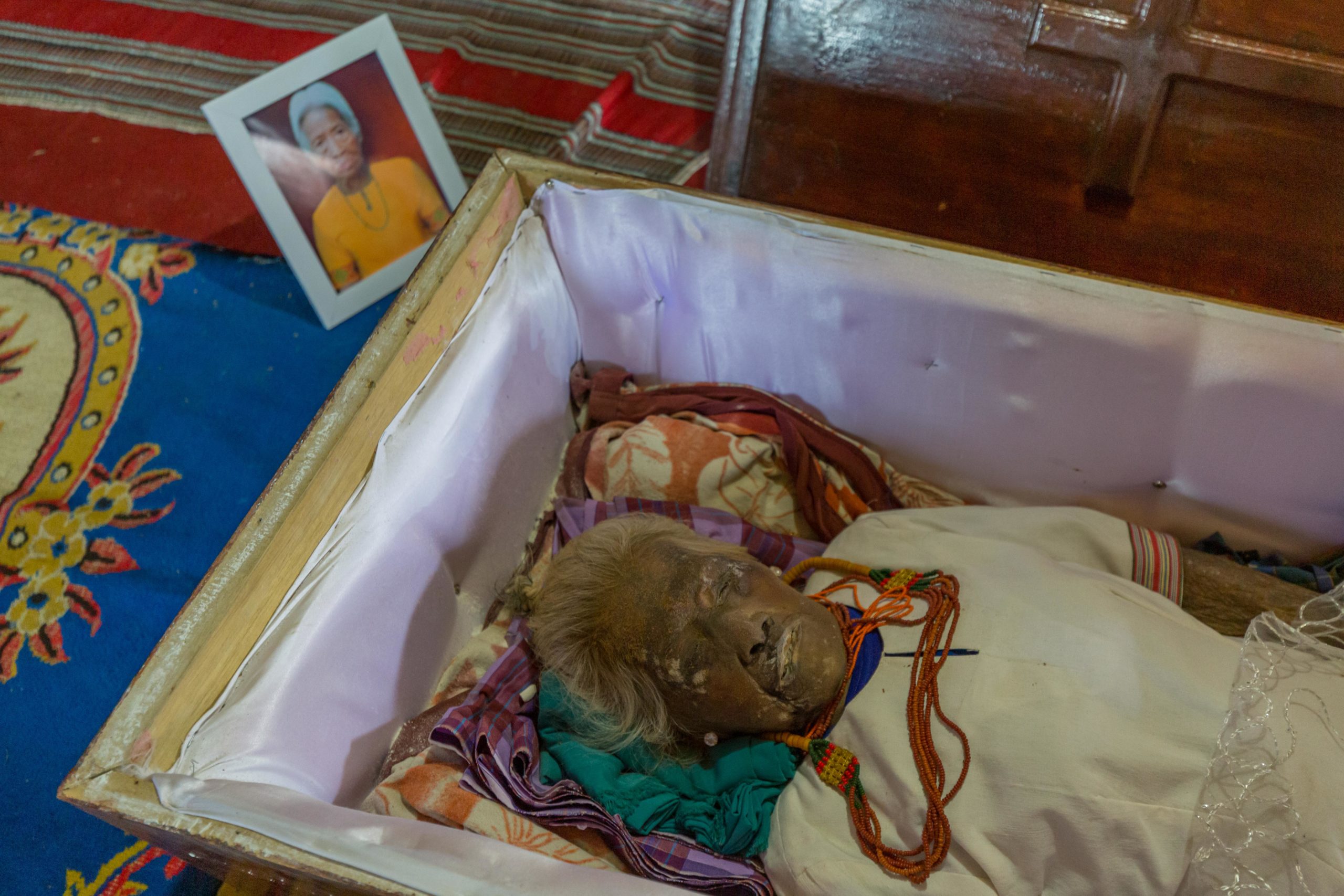
The deceased are often kept at home for years, before the funeral.
Tau Tau Effigies
In front of many of the graves stand tau tau — carved wooden figures representing the deceased.
These effigies are positioned on small balconies, facing outward. Their presence gives the cliff a human dimension, as if the ancestors continue to observe the world of the living.
The level of detail and number of tau tau often reflect status and family resources.
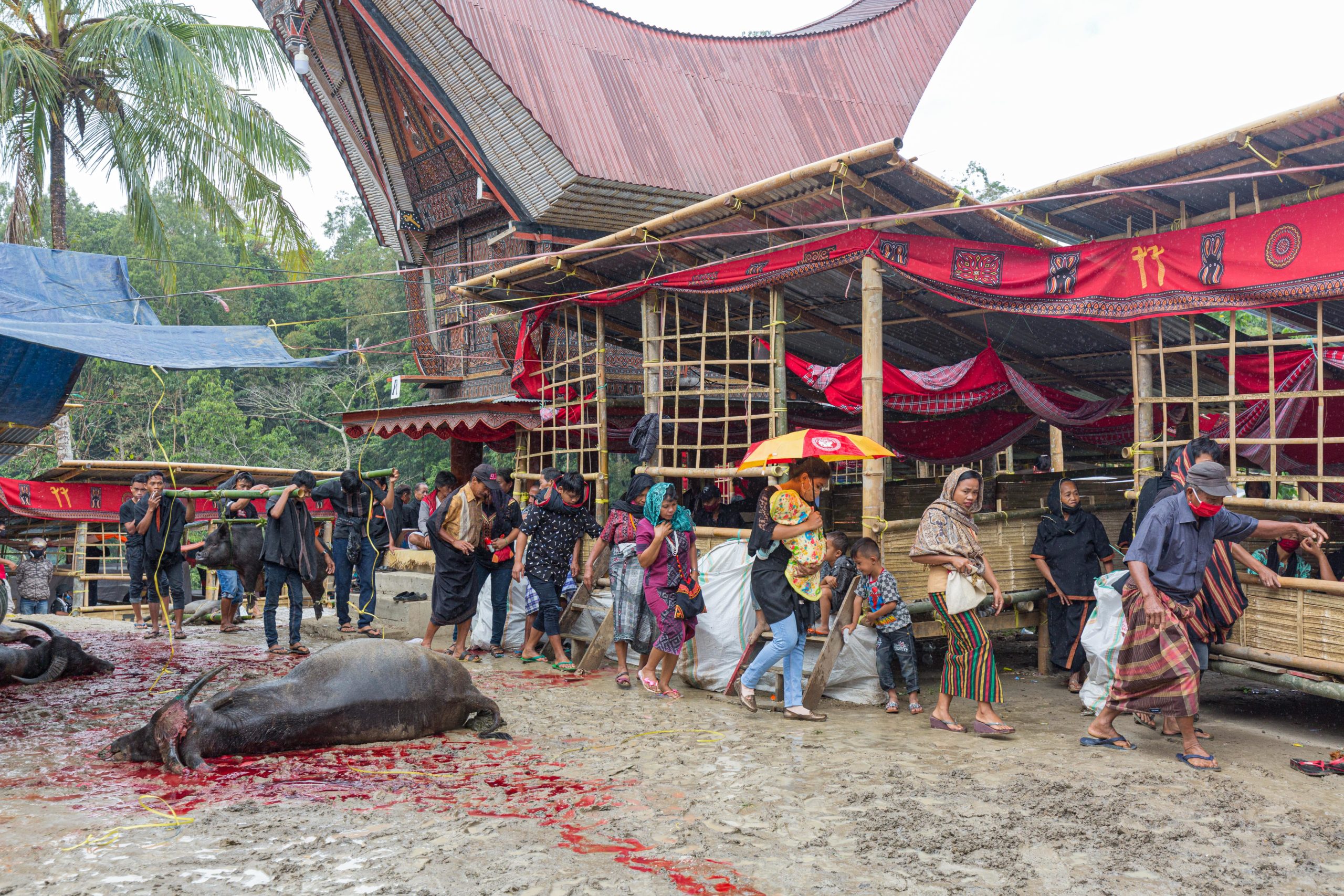
Guests arrive at the temporary pavilion built for the duration of Rambu Solo.
Visibility and Presence
Unlike hidden burial sites, Lemo is openly visible.
The graves and effigies are part of the everyday landscape, encountered alongside roads, fields, and villages. This visibility reflects a broader perspective in Toraja culture, where the dead remain present within daily life.
The site is not separated from the living world, but exists within it.
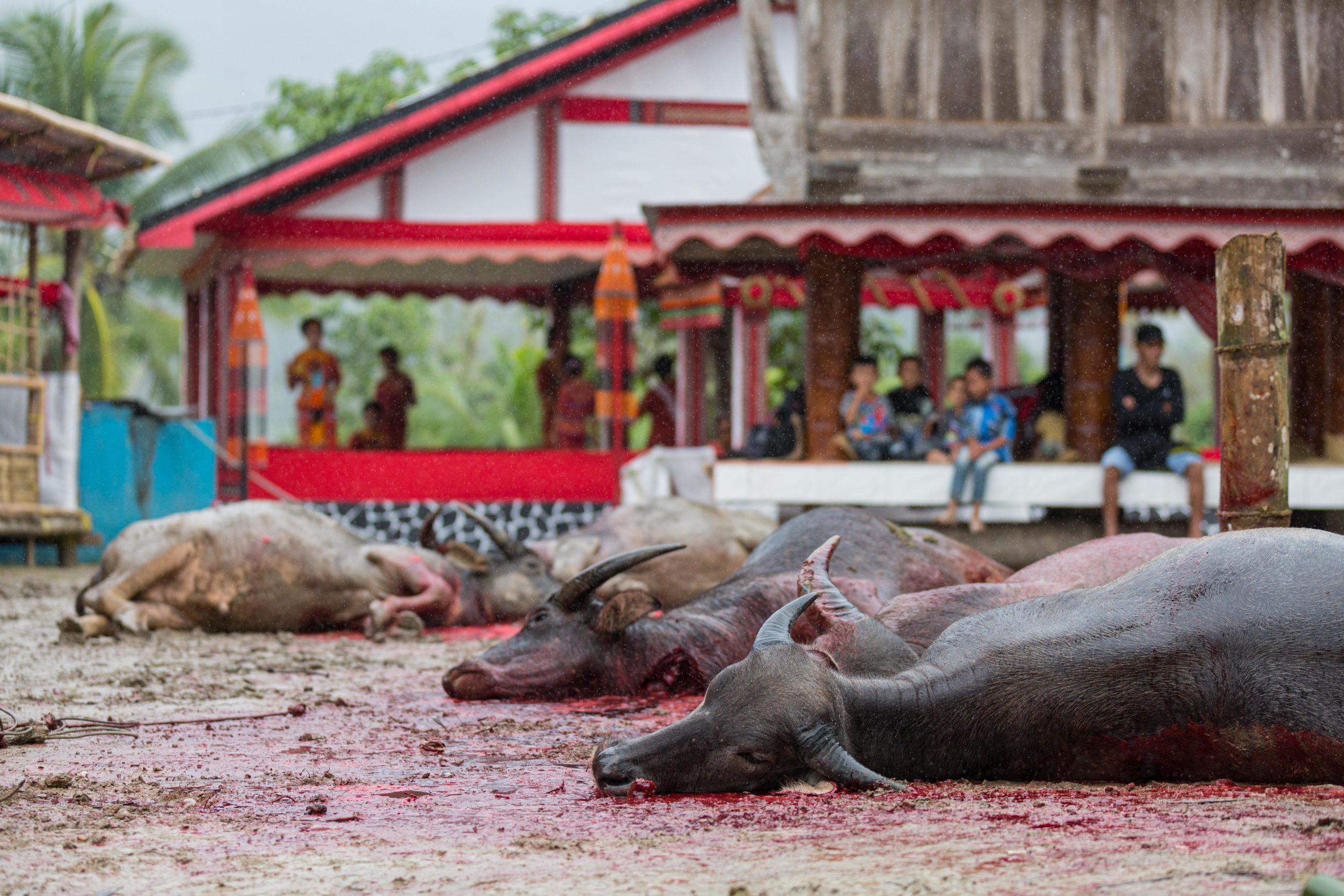
Many buffaloes are sacrificed during a Rambu Solo ceremony.
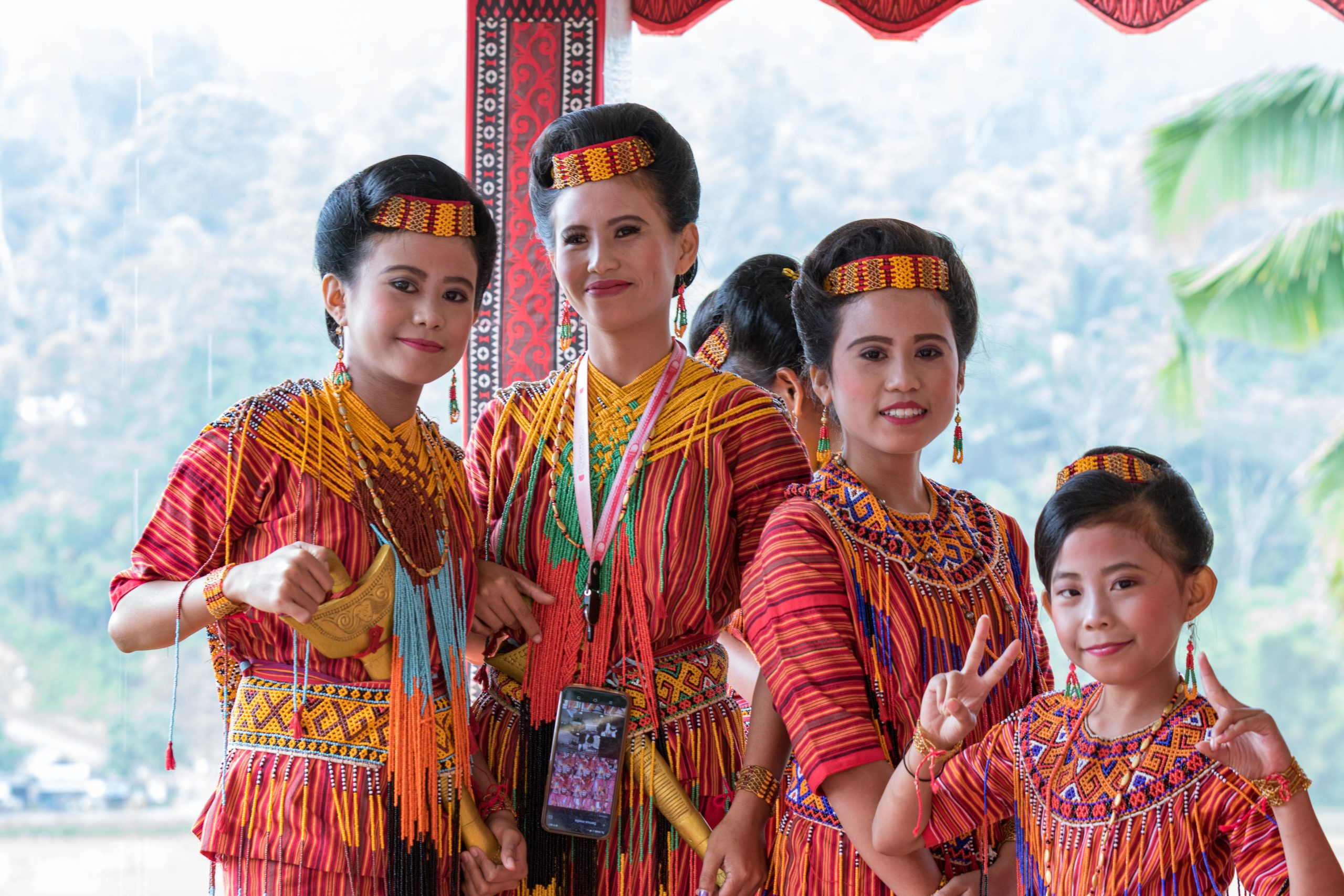
Family members dressed up to welcome visitors.
Photographing Lemo
This gallery focuses on structure and repetition — the rhythm of carved openings, the placement of tau tau, and the relationship between cliff, light, and surrounding space.
Rather than isolating individual elements, the images explore how the site functions as a whole.
This location forms part of the wider cultural landscape of Tana Toraja, where burial sites, rituals, and villages are closely connected.
Explore the Photo Gallery
A curated visual collection from Lemo – Tana Toraja