At Londa, burial practices take place in and around a limestone cliff in Tana Toraja.
As part of the broader cultural landscape of Tana Toraja, the site includes several elements: tau tau displayed on a wooden balcony, older hanging coffins on the rock face, and more recent burials located inside the cave. The suspended coffins outside are among the oldest at the site, while many of the coffins inside the cave are of more recent origin, often with simpler, modern shapes.
Together, these elements reflect how burial practices have changed over time within the same location.
Londa cave burial site with hanging coffins
Tau Tau and Cliff Face
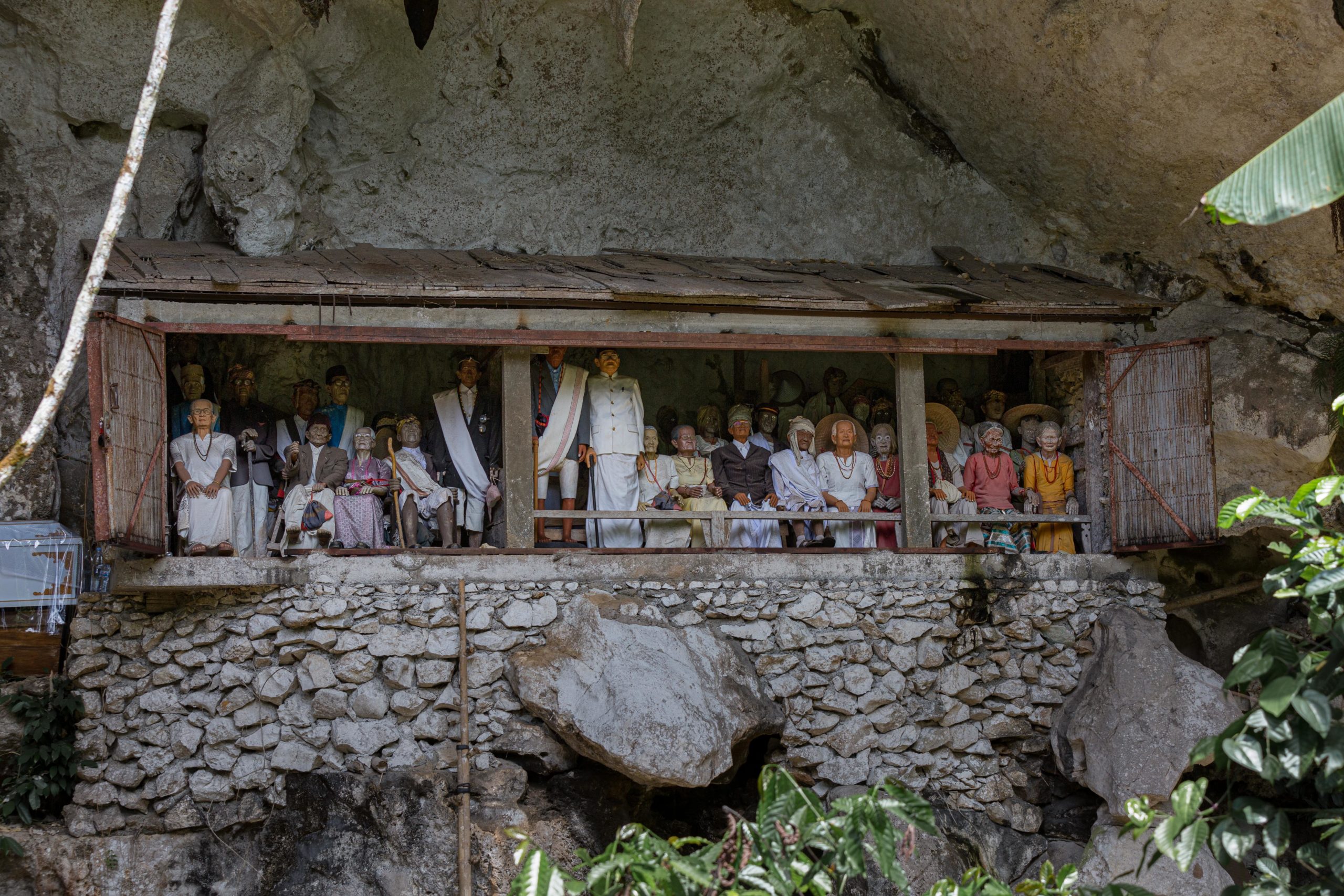
Before entering the cave, the most visible feature is the large wooden balcony fixed to the rock face.
This structure holds numerous tau tau — carved wooden effigies representing the deceased — placed side by side and facing outward. They overlook the surrounding area and make the burial site clearly visible within the landscape.
Tau tau effigies outside the cave of Londa in Tana Toraja
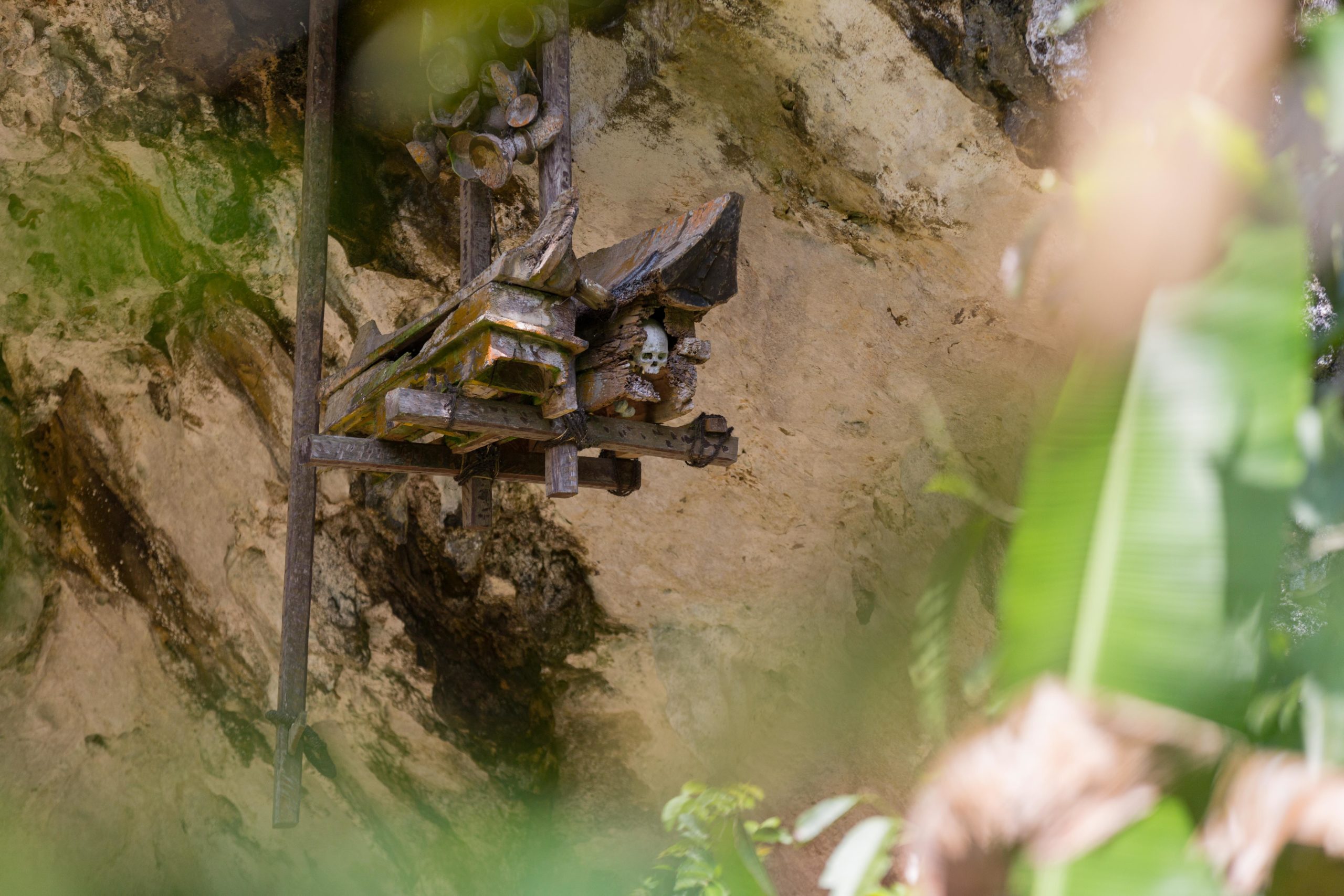
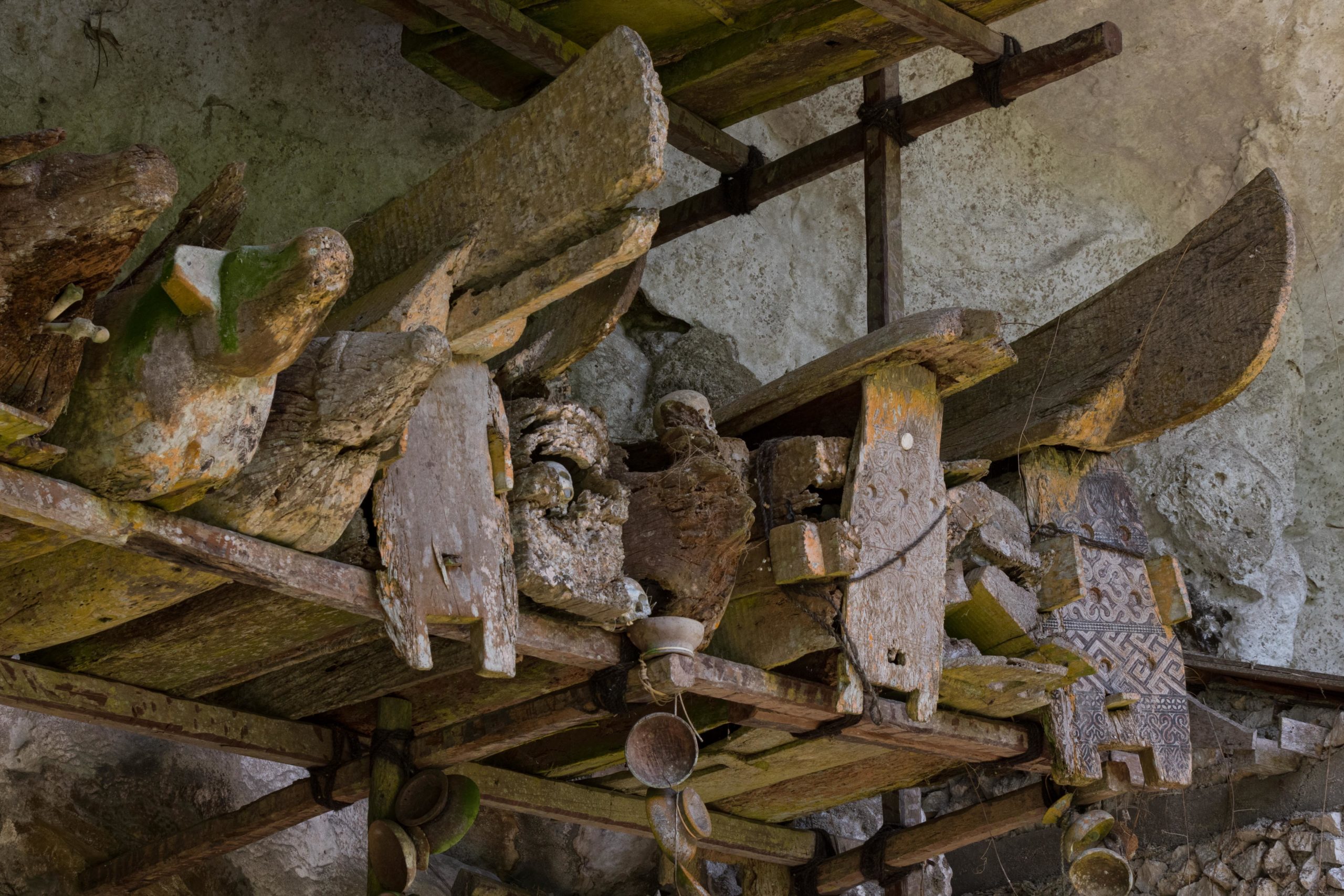
Along the same cliff, older wooden coffins are suspended on beams and poles. Many of these are heavily weathered, with some partially collapsed. Several are carved in the shape of buffalo or pigs, while others show carved patterns typical of Toraja decoration.
These elements represent earlier burial practices and remain in place even as they deteriorate.
Hanging coffins at the cave burial site of Londa in Tana Toraja
Entering the Cave
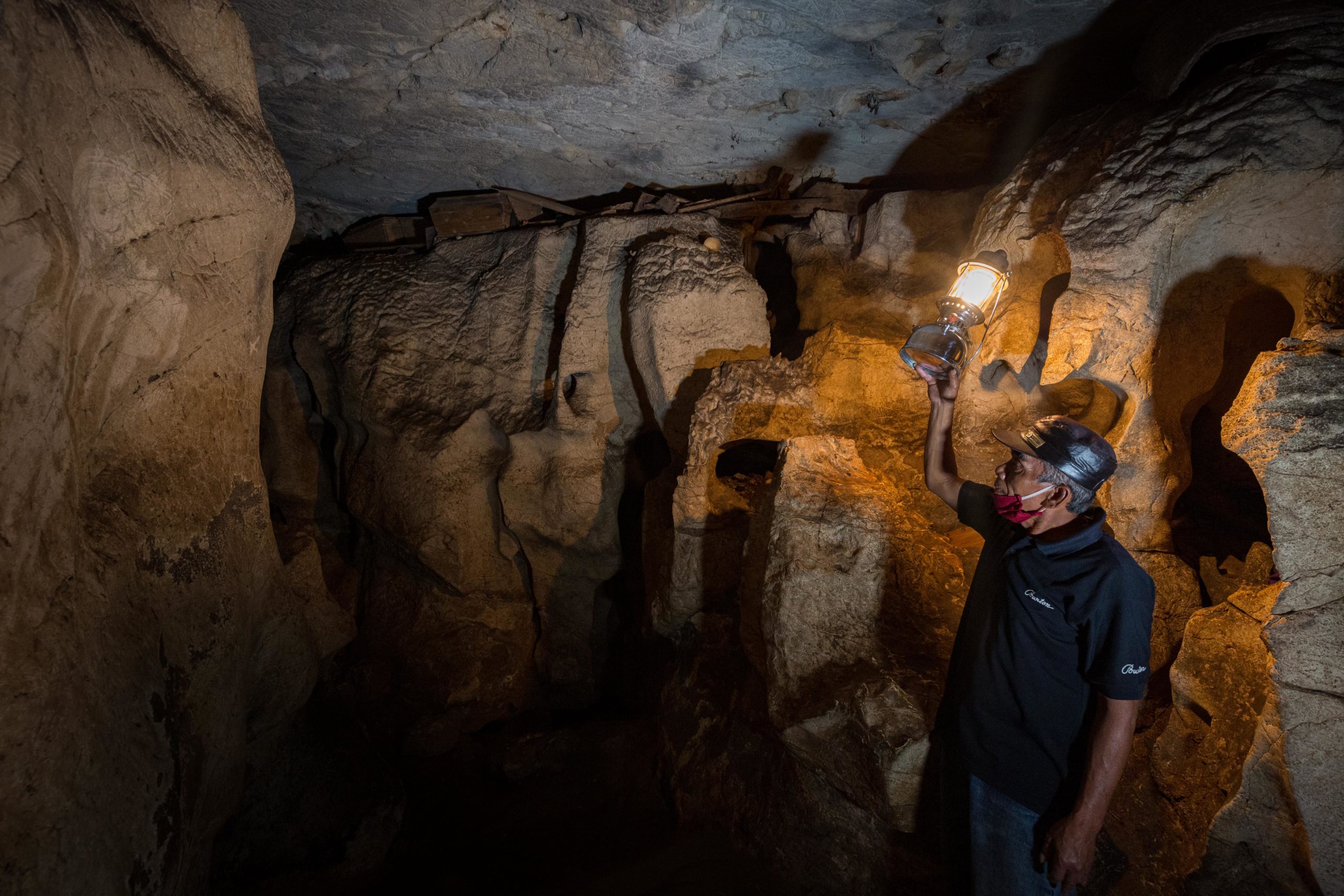
The cave is accessed through a narrow opening at the base of the cliff.
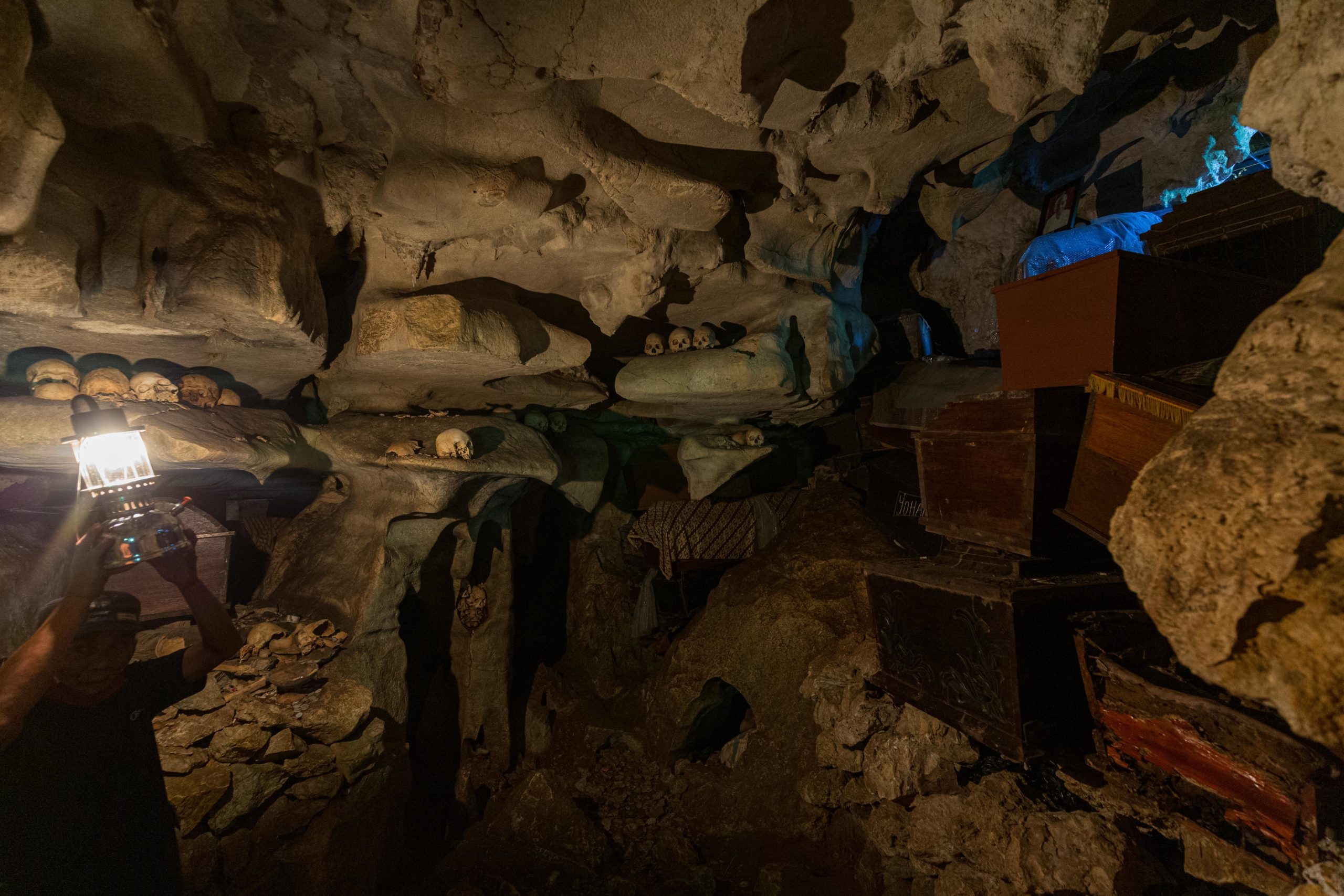
Inside, the space extends into a series of chambers. Coffins are placed on ledges and along the walls, following the available rock formations. Some are suspended, while others rest directly on the stone.
The cave has developed gradually over time, with new burials added alongside older ones.
Entering the caves of Londa in Tana Toraja
Coffins and Human Remains
Within the cave, coffins are often stacked on top of each other, creating dense layers in certain areas. Many of the older coffins have deteriorated, with wood breaking down and structures collapsing.
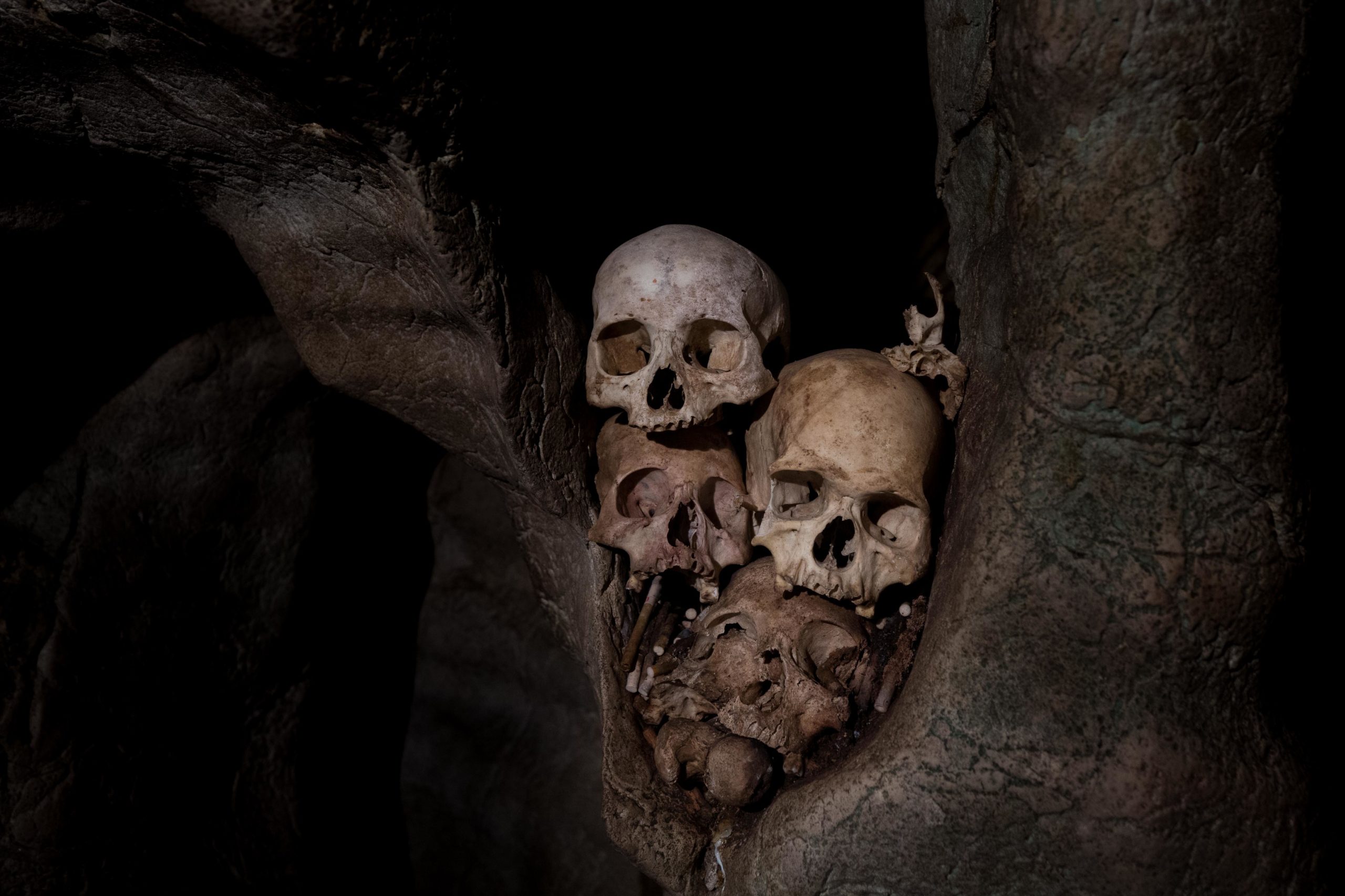
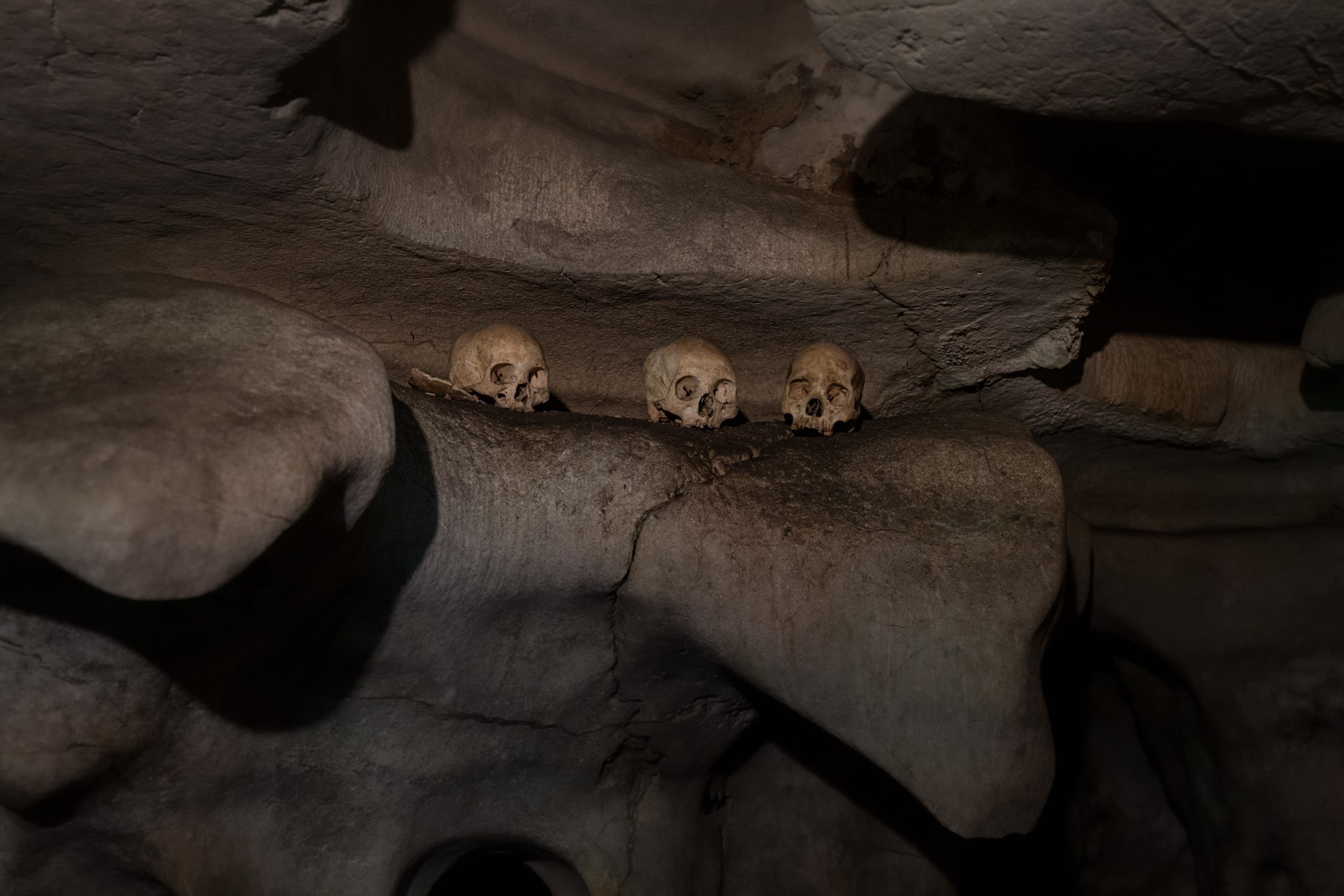
As a result, human remains are visible. Skulls and bones that fall from damaged coffins are commonly collected and placed on nearby ledges inside the cave.
Personal items are sometimes present, but the site is not arranged or maintained in a formal way. It reflects long-term use rather than preservation.
Inside the cave of Londa in Tana Toraja, with coffins and skulls
Space and Conditions
Light inside the cave is limited, and most areas are only partially illuminated.
Movement is constrained by uneven ground and the placement of coffins. The environment requires slow navigation and close attention to surroundings.
Compared to open-air sites, the experience is more enclosed and focused on detail rather than distance.
Human skulls and bones in the cave burial site of Londa in Tana Toraja
Photographing Londa
The following gallery focuses on structure, condition, and spatial relationships — from the exterior cliff with tau tau and hanging coffins to the interior arrangement of burials.
Londa is one of several sites that form the broader cultural landscape of Tana Toraja, where burial practices remain part of the physical environment.
Explore the Photo Gallery
A curated visual collection from Londa – Tana Toraja