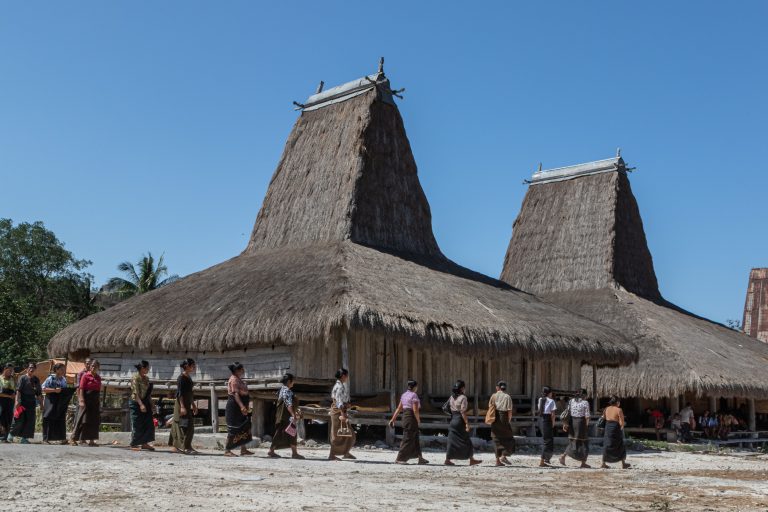
In October 2015 I was fortunate — and very privileged — to attend a royal funeral ceremony in the traditional East Sumba village of Praiyawang, about 70 kilometres east of Waingapu, Sumba’s largest town.
It was one of those moments where photography becomes secondary to simply witnessing something extraordinary.
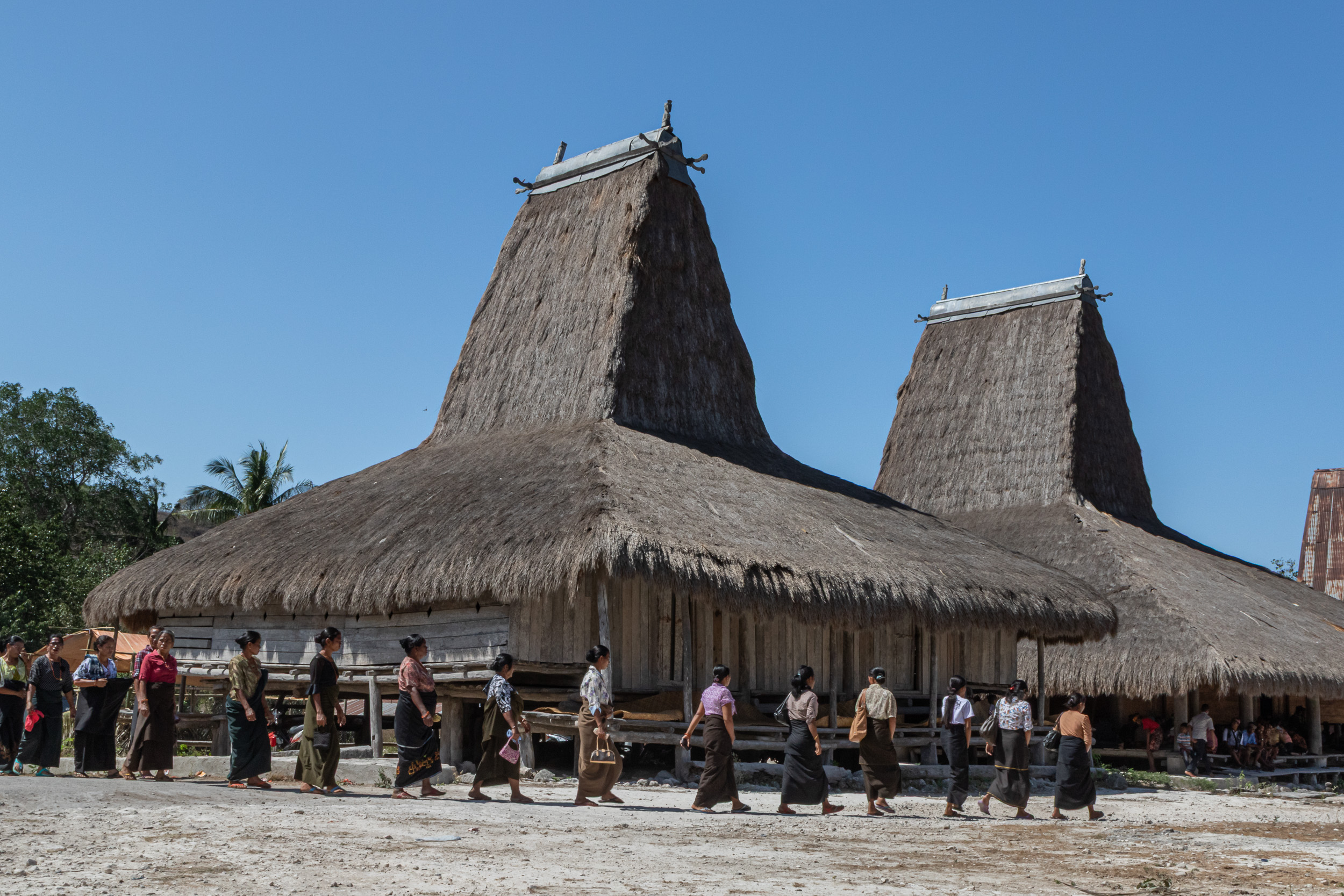
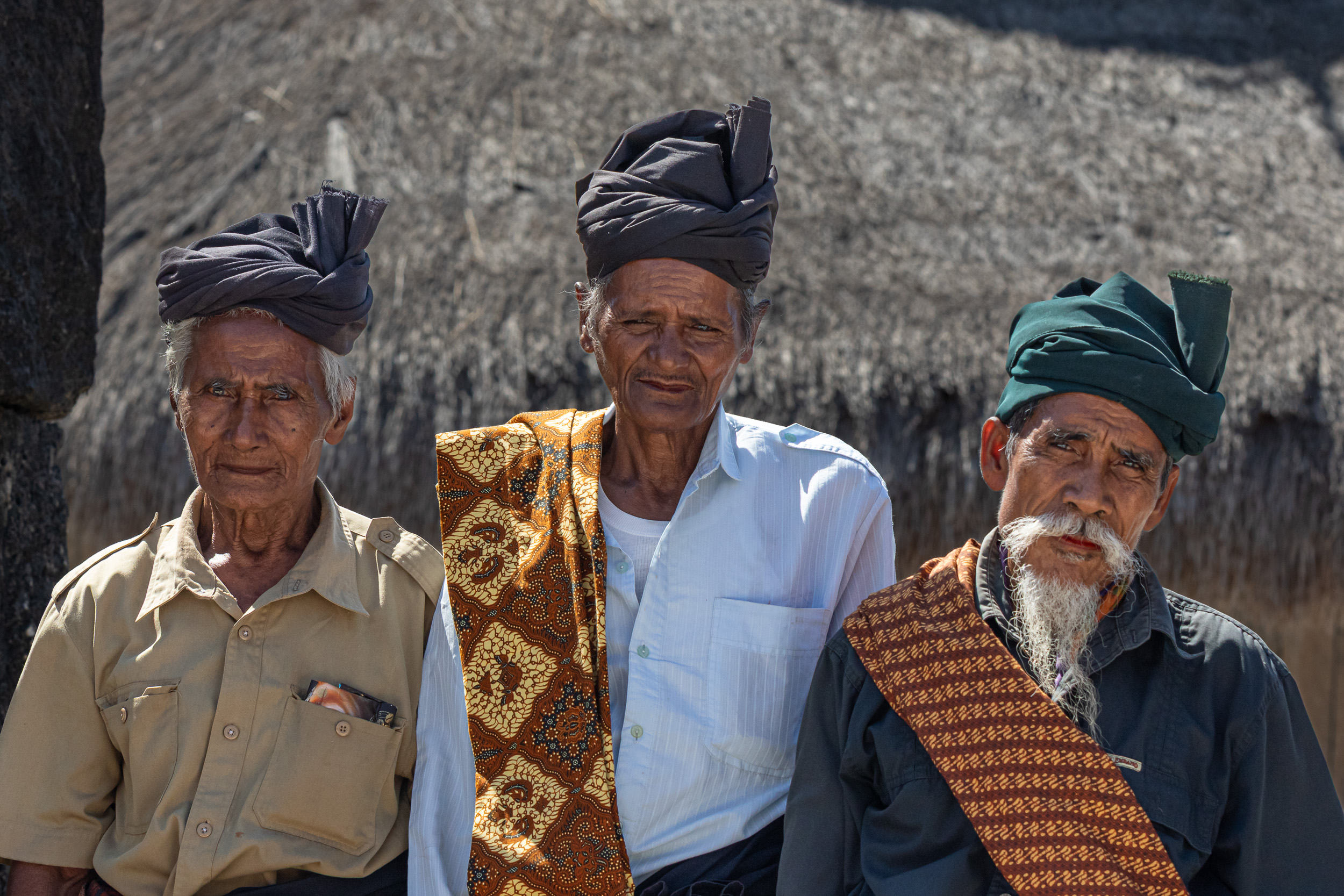
An invited clan is entering the village to pay respect.
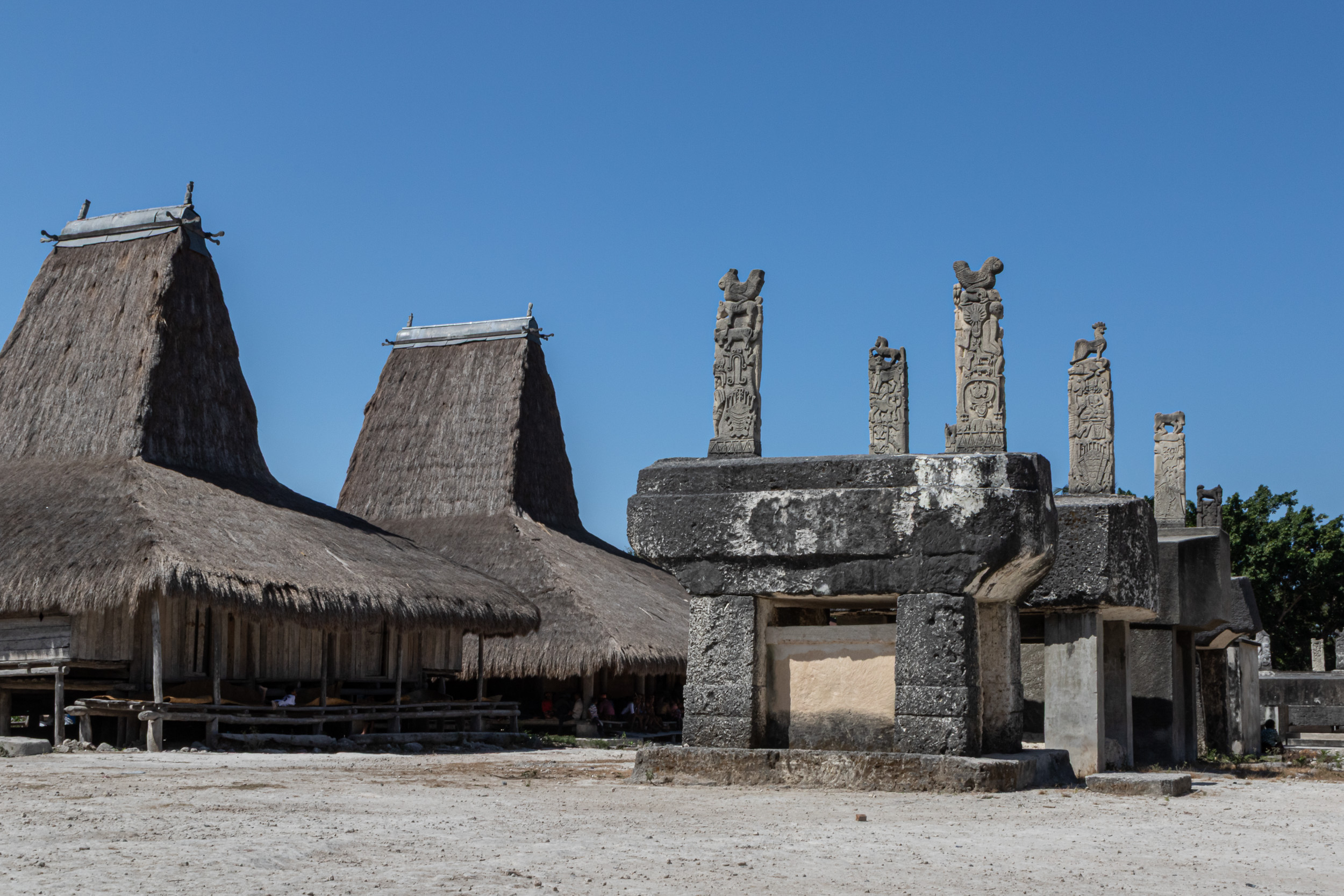
Sumba, an island in eastern Indonesia, is one of the few places in the world where megalithic burial traditions are still practiced today. Massive stone tombs remain central to village life and are still used during important ceremonies such as funerals.
Many of these traditions are believed to date back thousands of years and remain closely connected to Marapu, the ancestral belief system of the Sumbanese people.
Megalithic Tombs and Ancestral Traditions
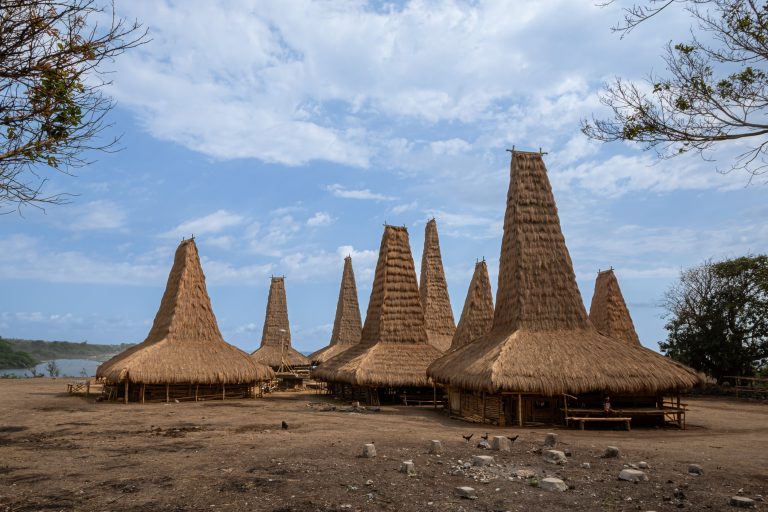
Traditional Sumbanese villages are often built on hilltops or ridges, both for protection and for spiritual reasons. At the centre of the village lies an open courtyard containing megalithic tombs and sacrificial altars, surrounded by houses with tall pointed Marapu roofs.
These stone tombs are among the most distinctive features of Sumba’s cultural landscape.
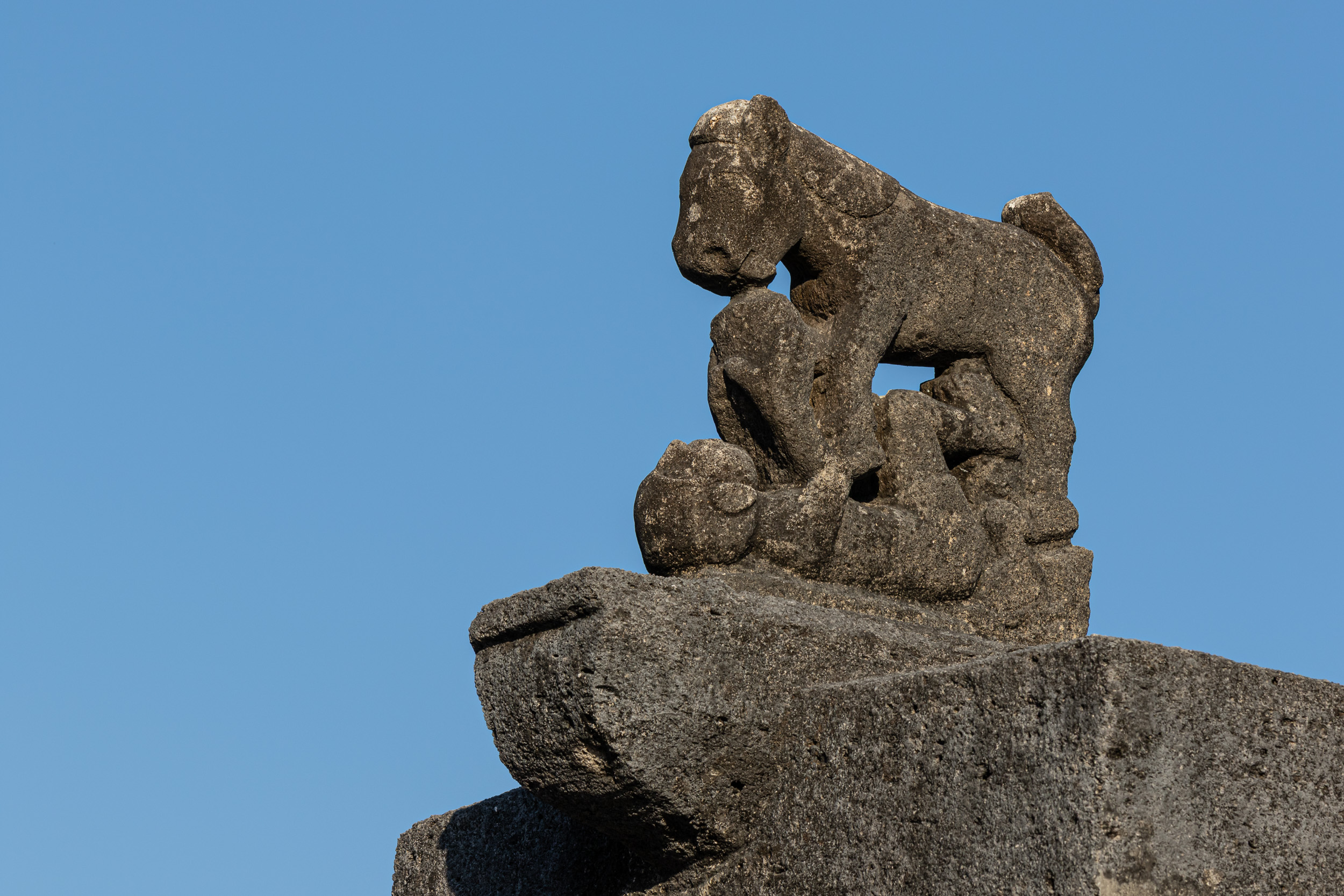
Each tomb consists of a massive stone slab placed above the burial chamber, often weighing several tons. Some burial chambers are carved from single blocks of limestone, while others consist of smaller chambers beneath individual stone covers.
The size and decoration of a tomb reflect the importance of the family. Many stones are carved with symbolic figures and scenes connected to the life of the deceased and their journey into the world of the ancestors.
According to Marapu belief, life in the physical world is temporary. After death the spirit continues its existence in Praing Marapu, the spiritual realm of the ancestors, who are believed to watch over the living.
A Gathering of Clans and Families
For a royal funeral, family members and neighbouring clans travel from far away to attend the ceremony.
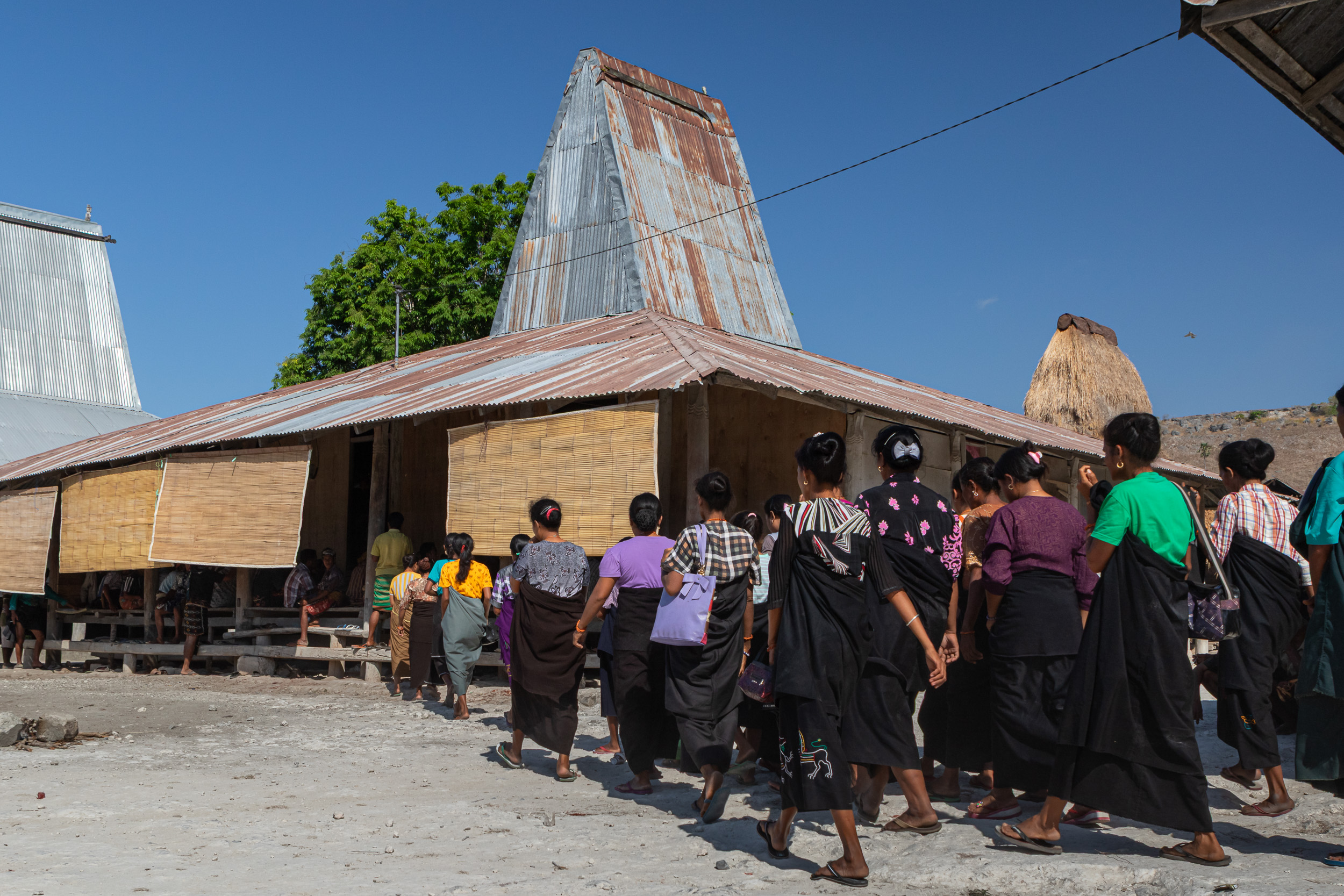
Groups arrive throughout the day, gathering in the village courtyard to mourn the deceased and pay their respects. Funerals are among the most important social and spiritual events in Sumbanese life, bringing together relatives, neighbours and entire communities.
Neighboring clans arrive to pay their last respect at the royal funeral in Eats Sumba.
Historically Sumbanese society was divided into nobles, commoners and slaves, known as Maramba, Kabihu and Ata. Although the formal caste system no longer exists, these social distinctions still influence ceremonial life, especially during funerals of noble families.
Animal Sacrifices and Ritual Offerings
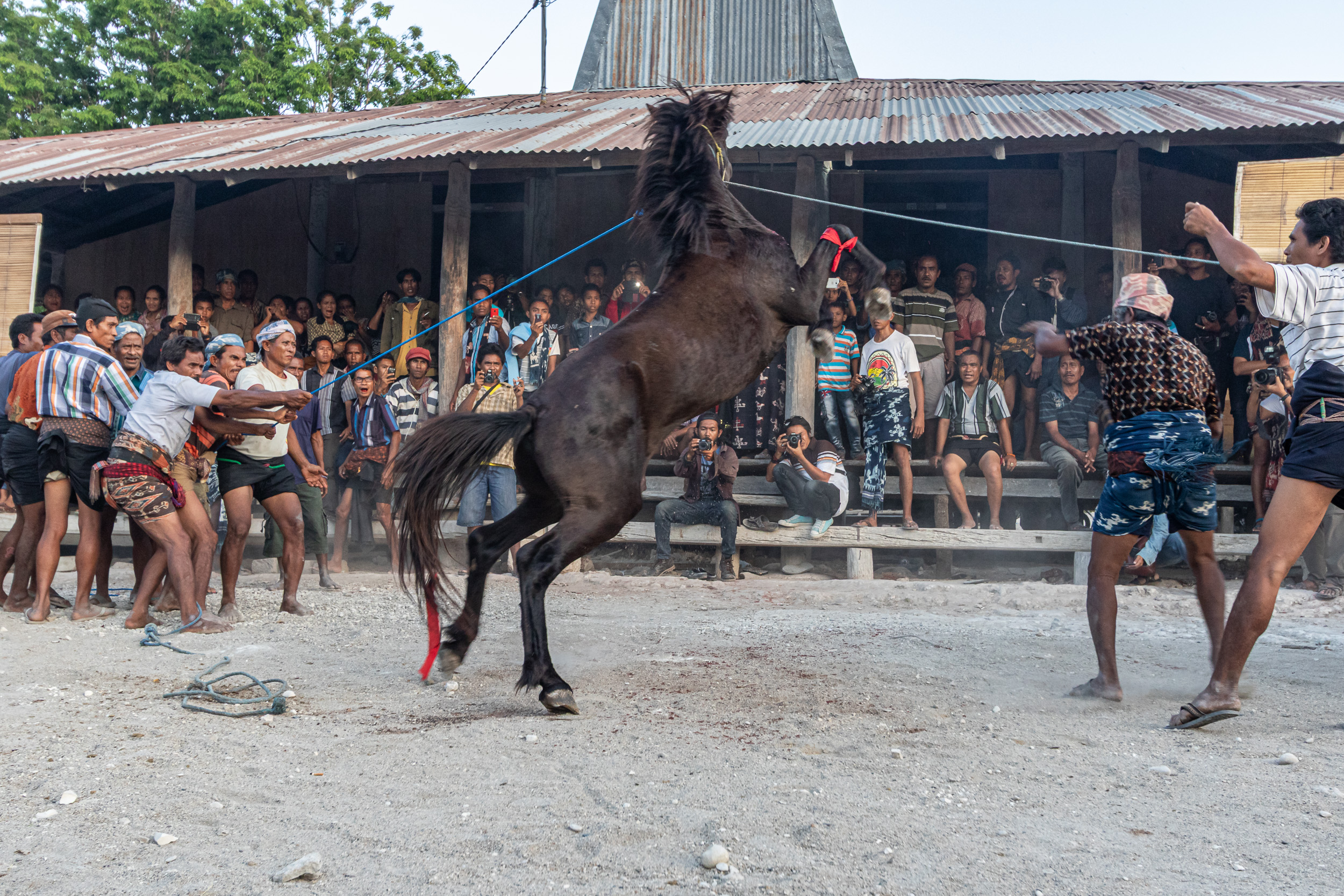
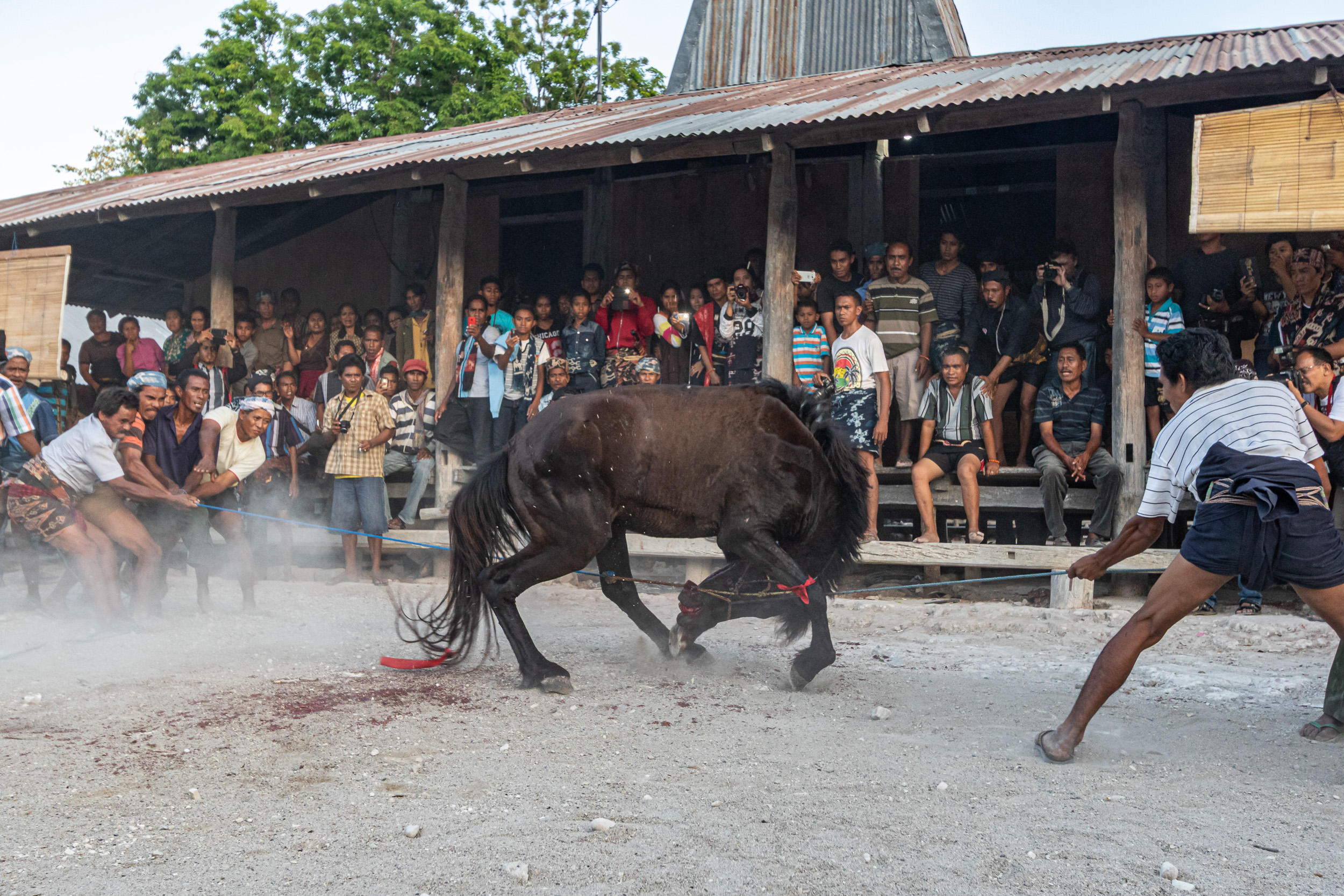
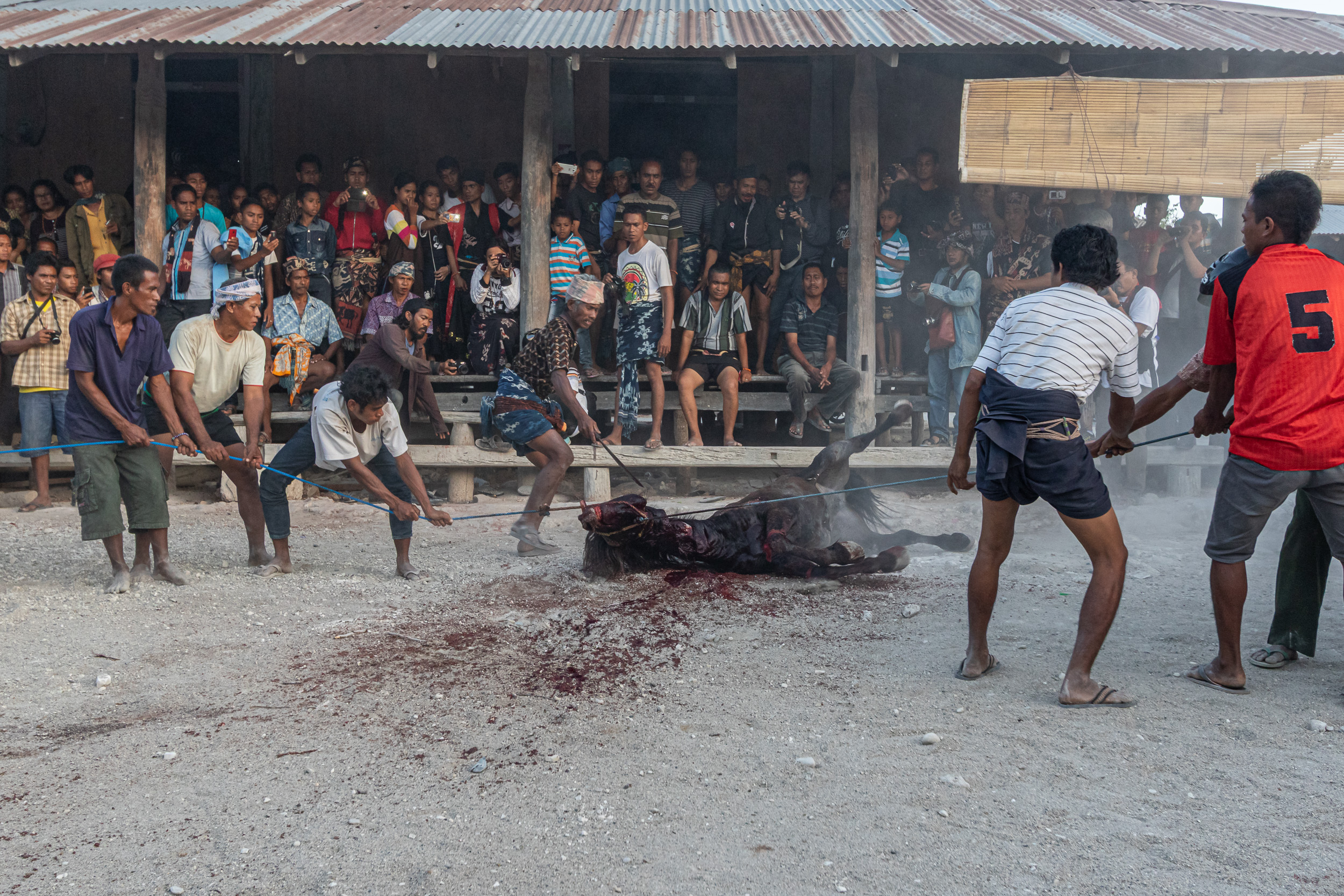
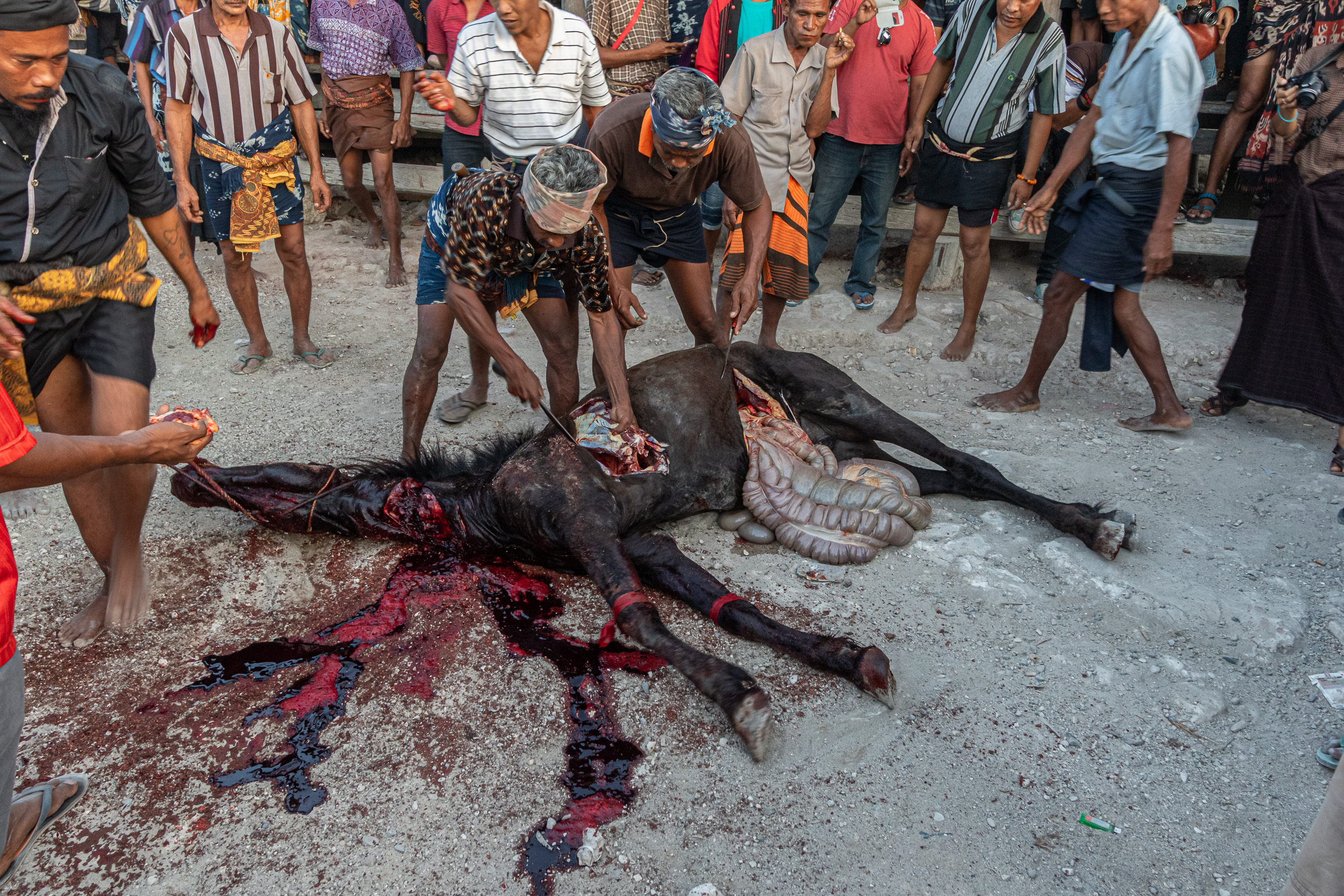
Animal sacrifices form an essential part of the ceremony.
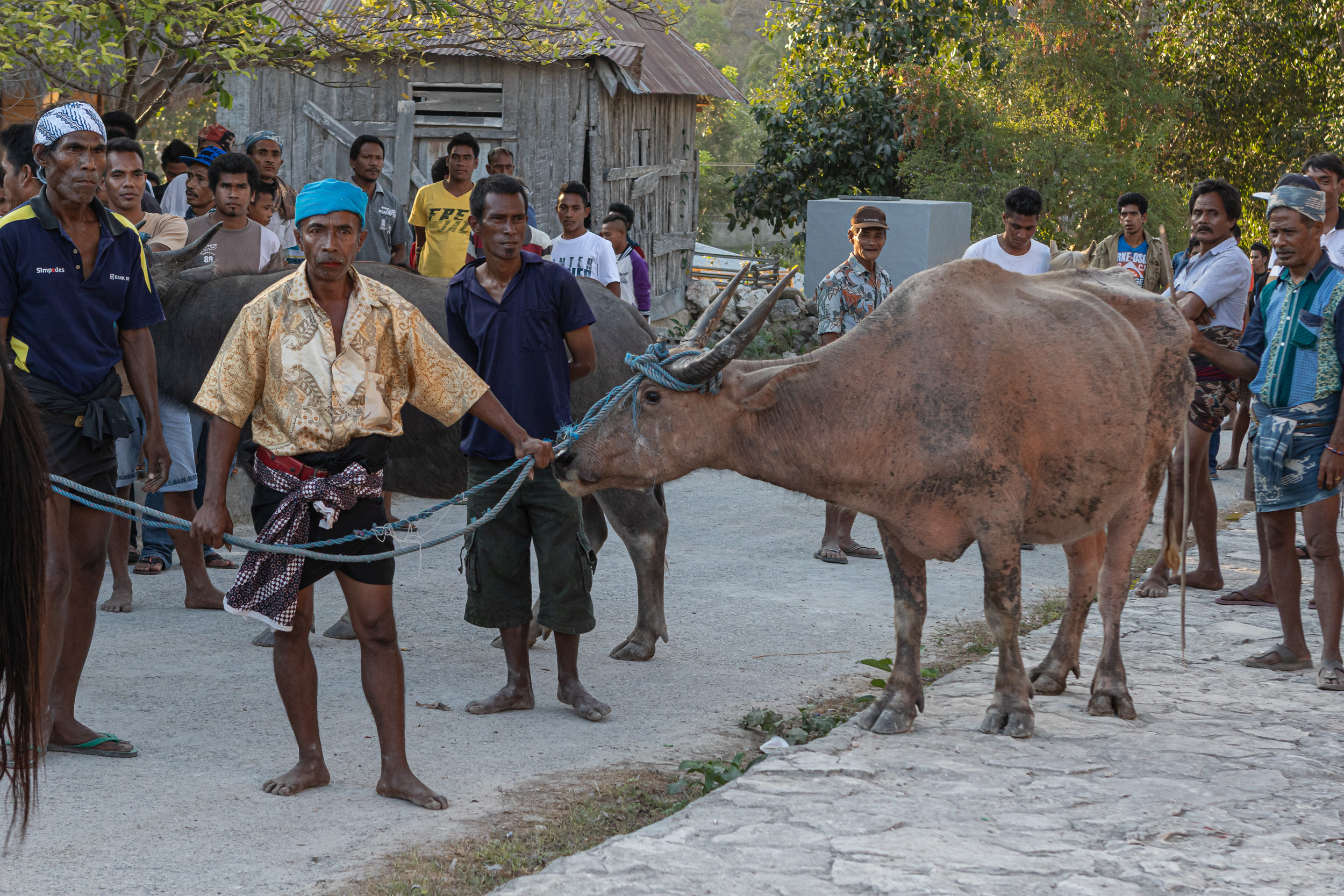
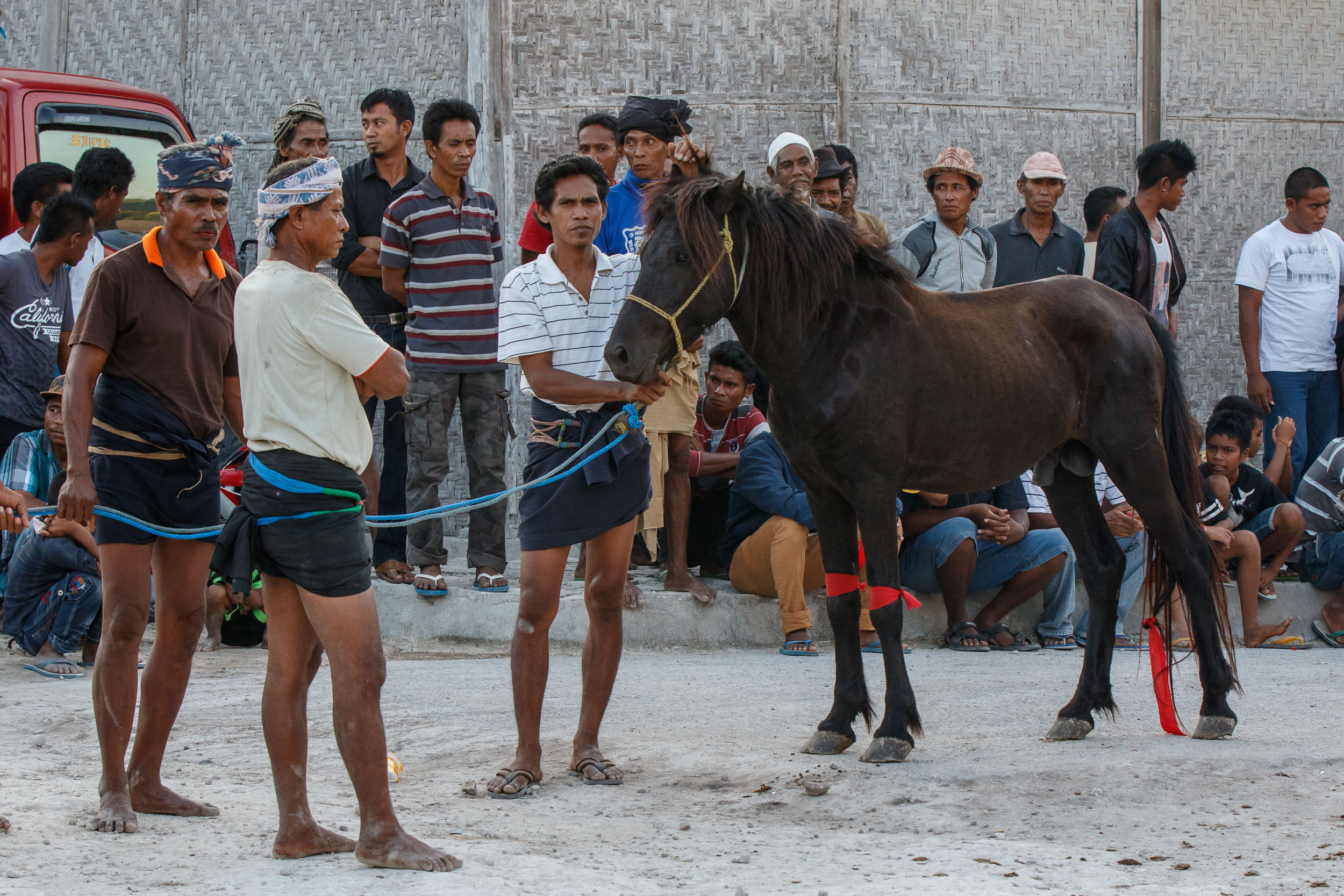
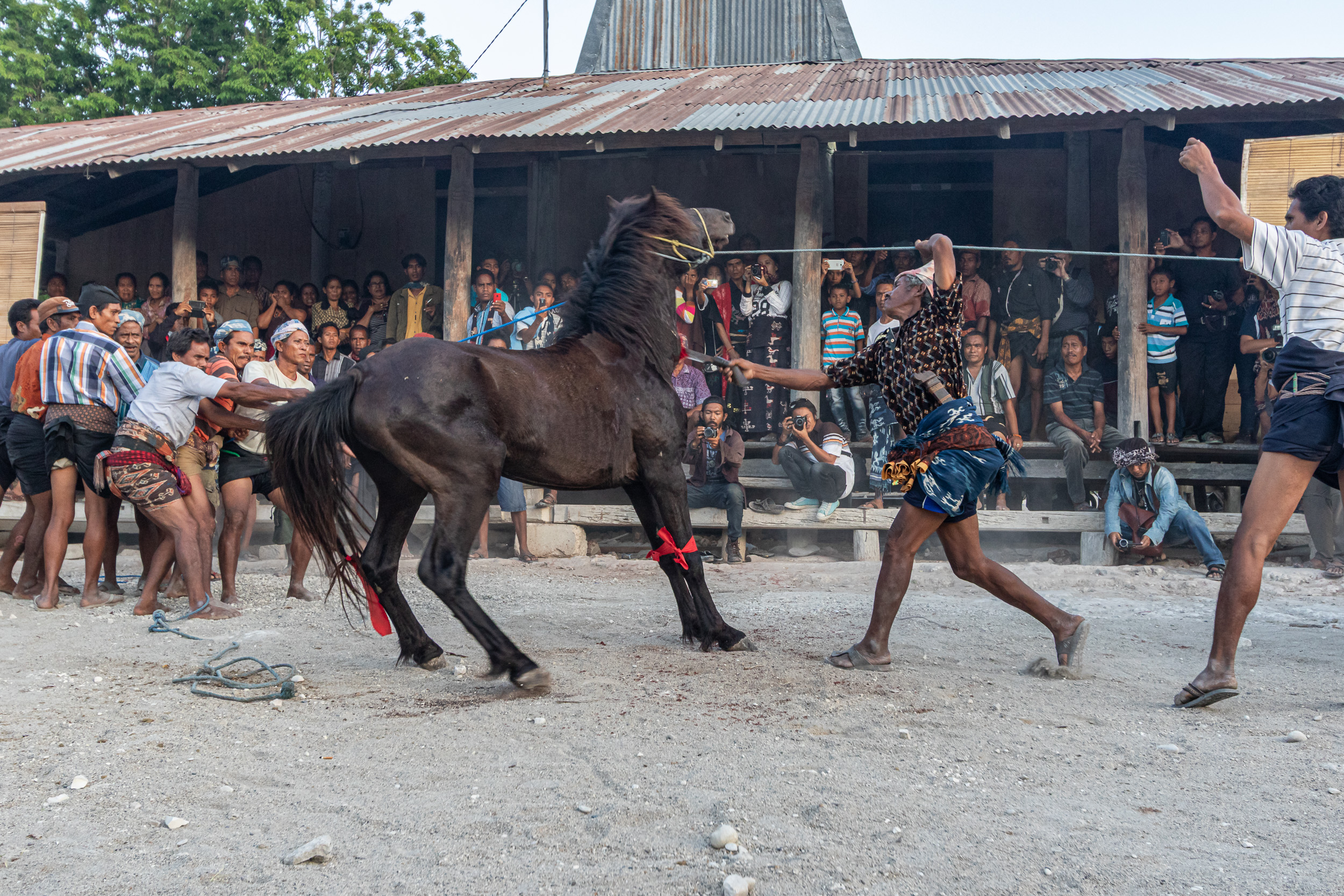
Offerings include chickens, pigs and water buffalo, but the most prestigious sacrifice is that of a horse. The blood of the sacrificed animals symbolizes life and fertility. In Marapu belief, blood flowing into the earth strengthens the land and ensures prosperity and good harvests.
Dogs, however, are never used as sacrificial animals, although they are sometimes eaten and given as gifts in everyday life.
Outside the house where the deceased is kept, preparations were underway for the sacrifices. A horse and a water buffalo were brought forward while hundreds of villagers gathered to witness the ritual.
During my travels in Indonesia I had seen many animals sacrificed — buffalo, goats, pigs and even dogs — but witnessing the sacrifice of a horse was a first for me.
WARNING
When scrolling through the photographs, you may encounter increasingly graphic images showing the sacrifice of the horse.
Some viewers may prefer to skip these images.
Reading the Signs of the Ancestors
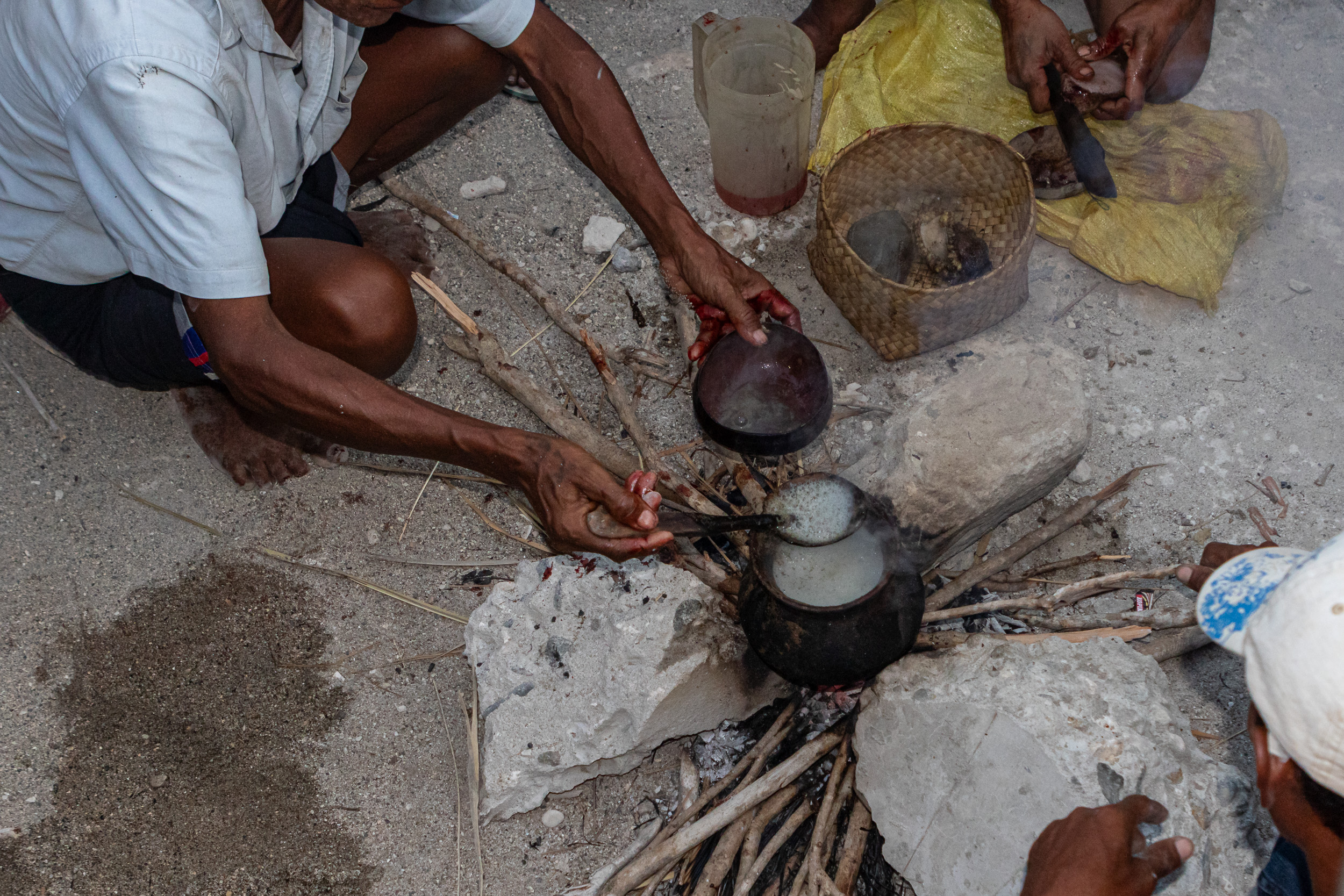
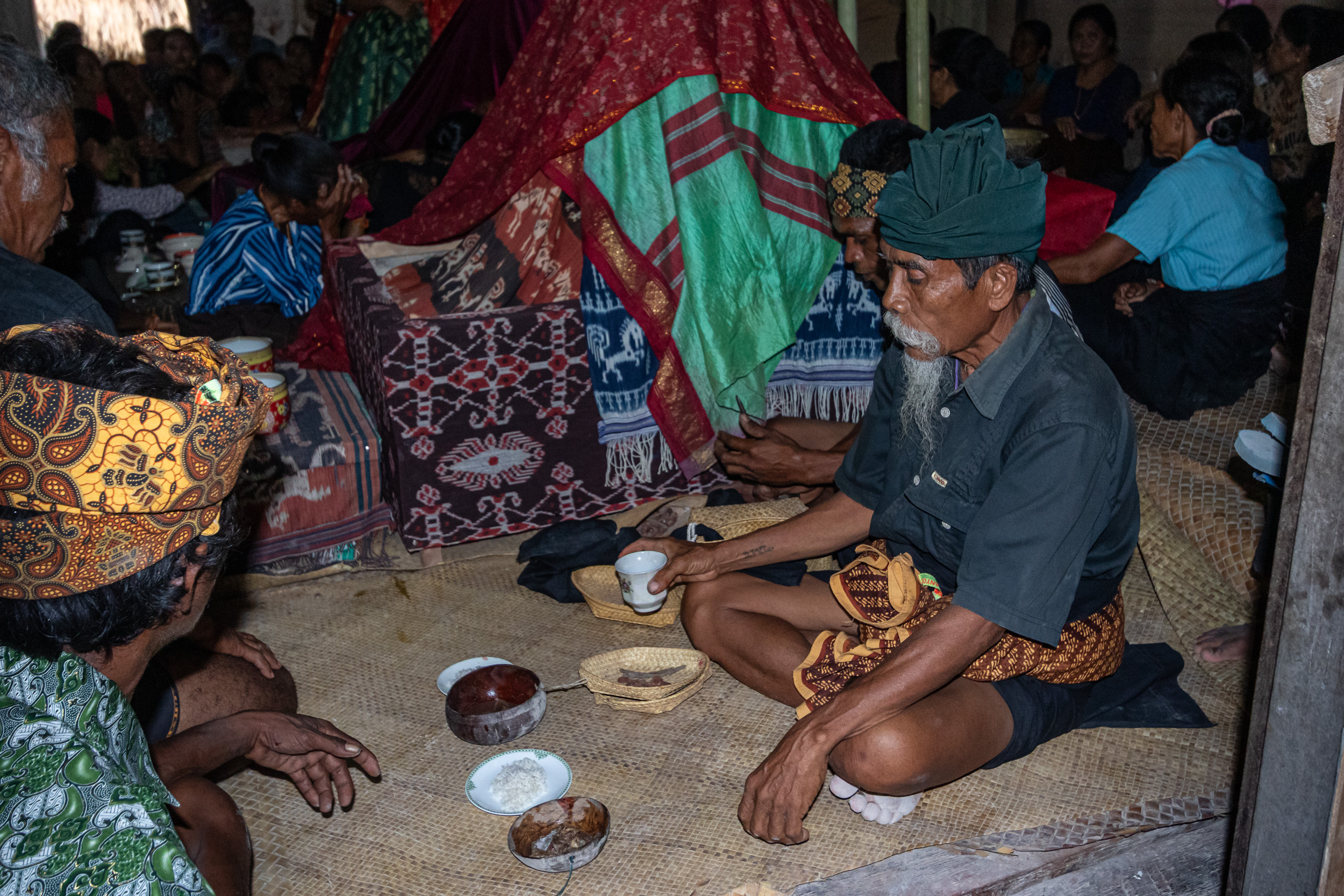
After the animals are sacrificed, certain organs — particularly the heart and liver — are examined by the Rato, the spiritual leader of the community.
From these organs the Rato interprets signs about the future: the success of the harvest, the wellbeing of the community, and other events that may lie ahead. Such divination forms an important part of many Marapu ceremonies.
Through these rituals, the living seek guidance from the ancestors and reassurance that harmony between the spiritual world and the human world is maintained.
A ritual soup is made from the organs of the sacrificed horse.
The Final Journey to the Megalithic Tomb
In East Sumba the body of the deceased is placed in the coffin curled like a baby in the womb. This position symbolizes rebirth into the spiritual world.
The coffin remains open during the ceremony and is covered with richly woven ikat textiles, one of the most valued cultural expressions of Sumba.
A rato priest reading the horse's organs for any omens.
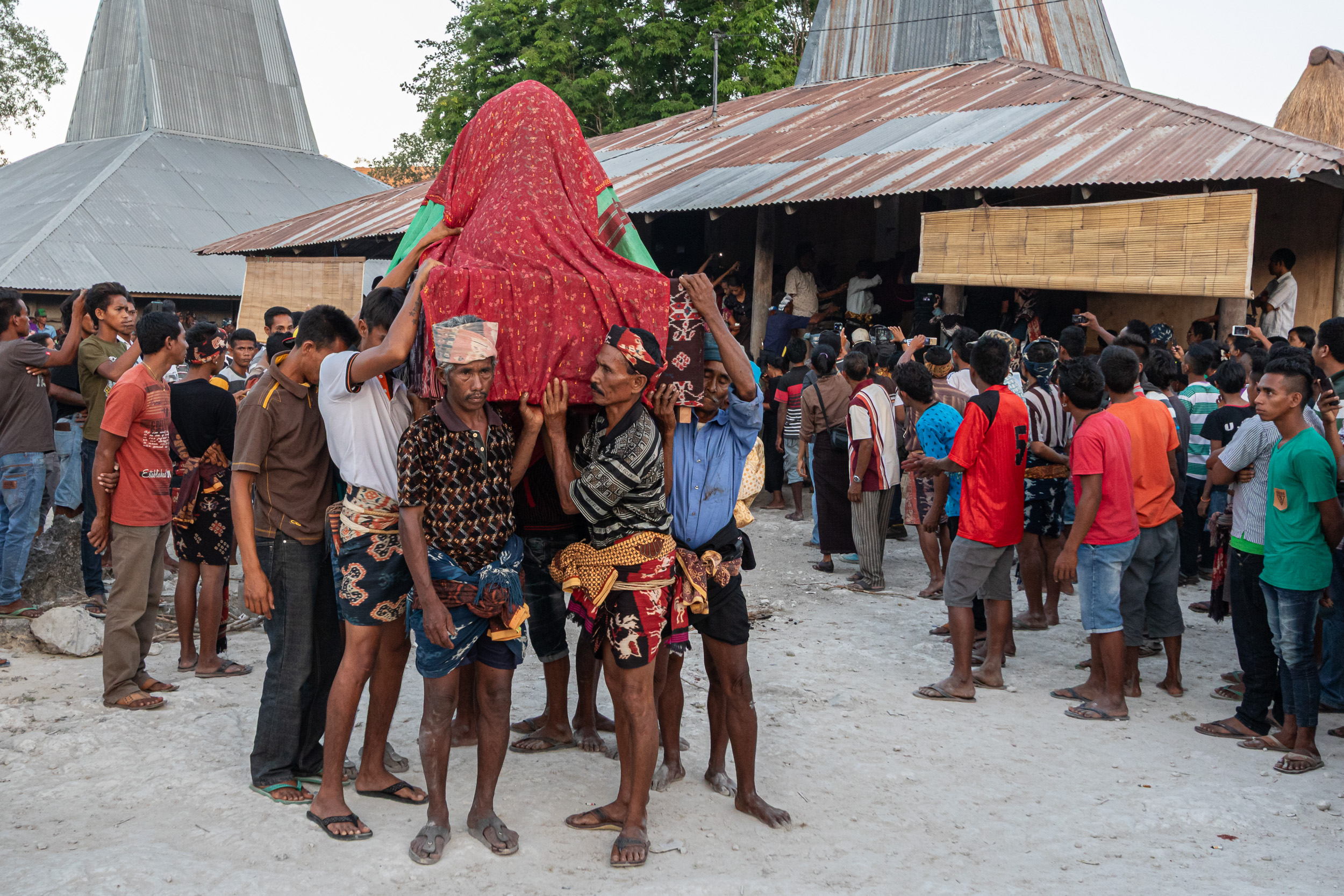
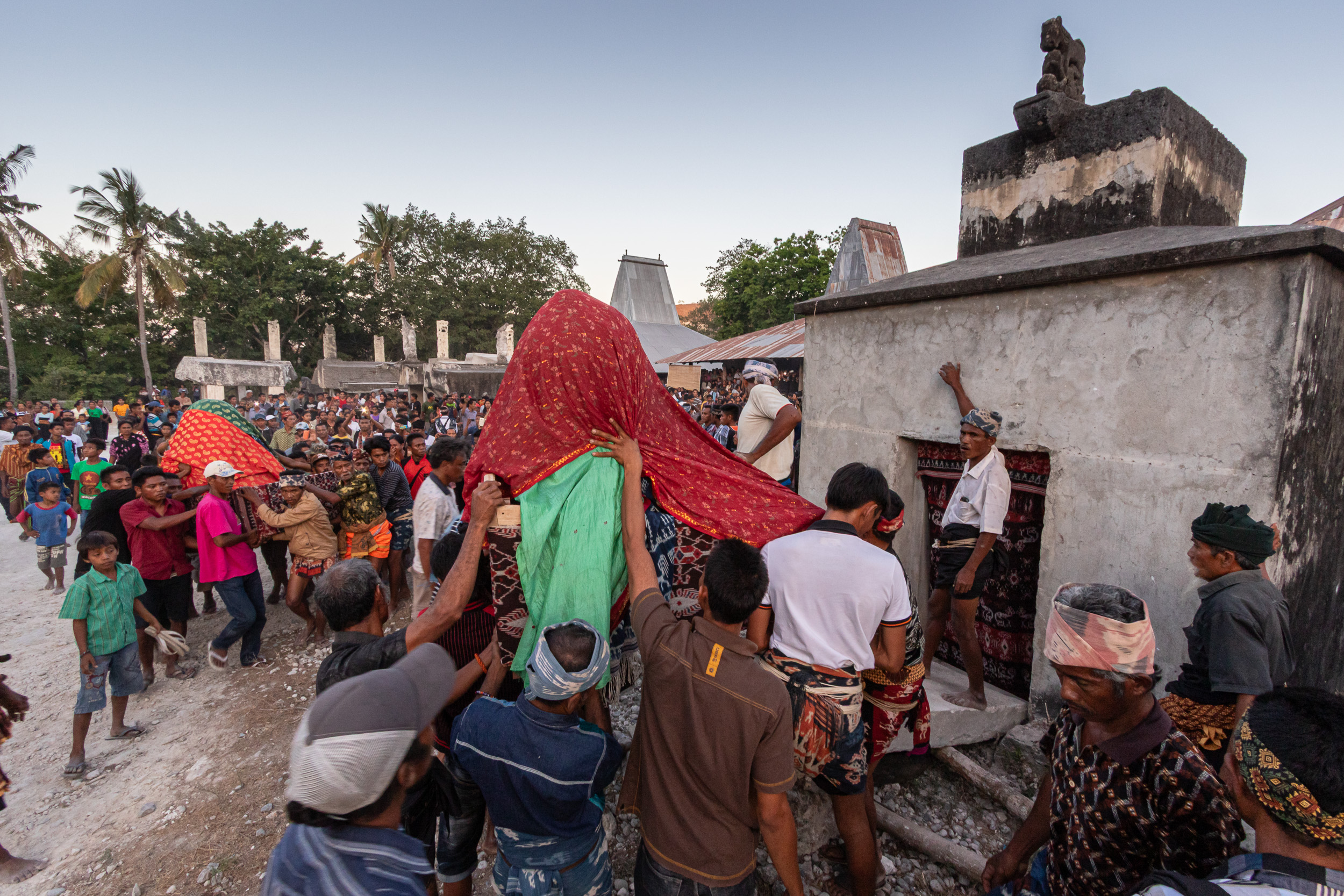
After the Rato performs the final rites, the coffin is carried from the house toward the megalithic tomb.
Under the watchful eyes of hundreds of mourners, the body is placed inside the stone tomb together with traditional textiles, gongs and other ritual gifts.
With this final act, the deceased joins the ancestors and begins the journey into the world of Praing Marapu, “Marapu heaven”.
Clan members bring the deceased to its family grave.
Explore the Photo Gallery
A curated visual collection from Royal Funeral – East Sumba