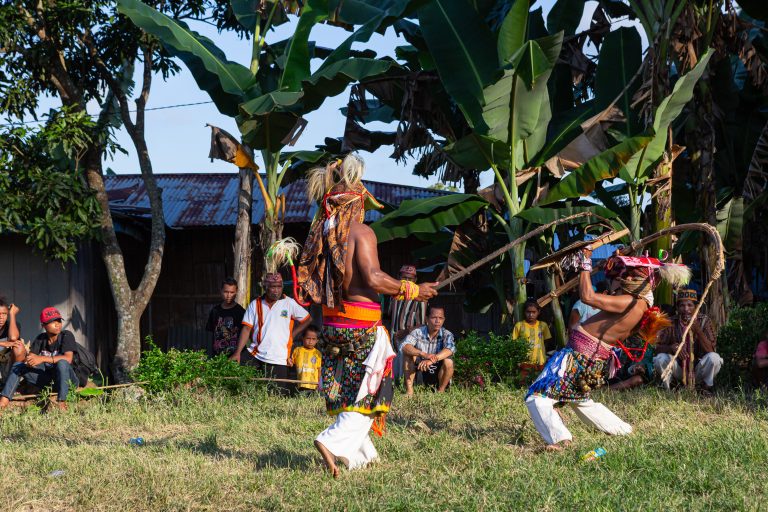
Caci is a traditional whip-fighting ritual practiced by the Manggarai people of western Flores. More than a spectacle, it is a ceremonial performance deeply connected to agriculture, masculinity, and ancestral belief.
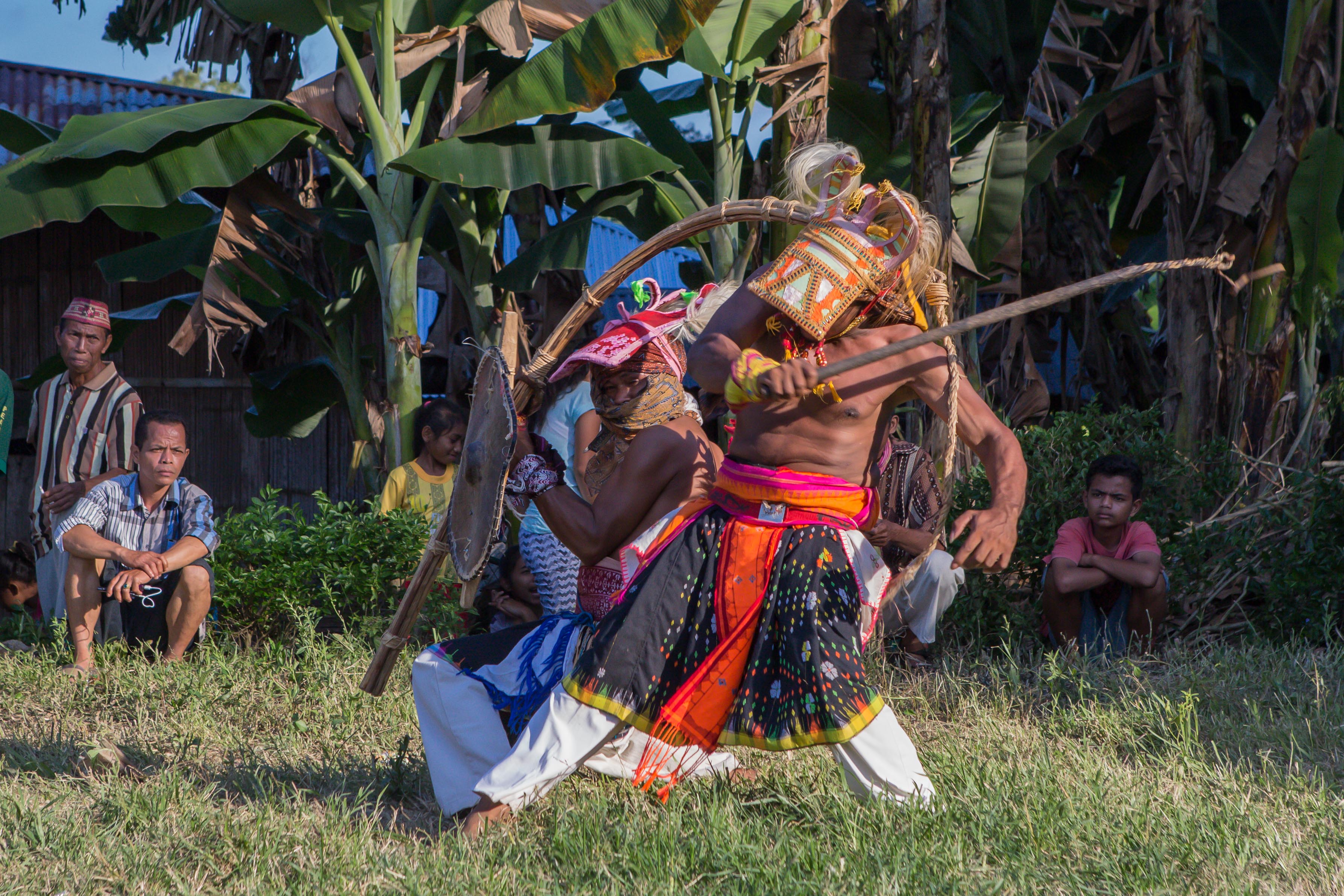
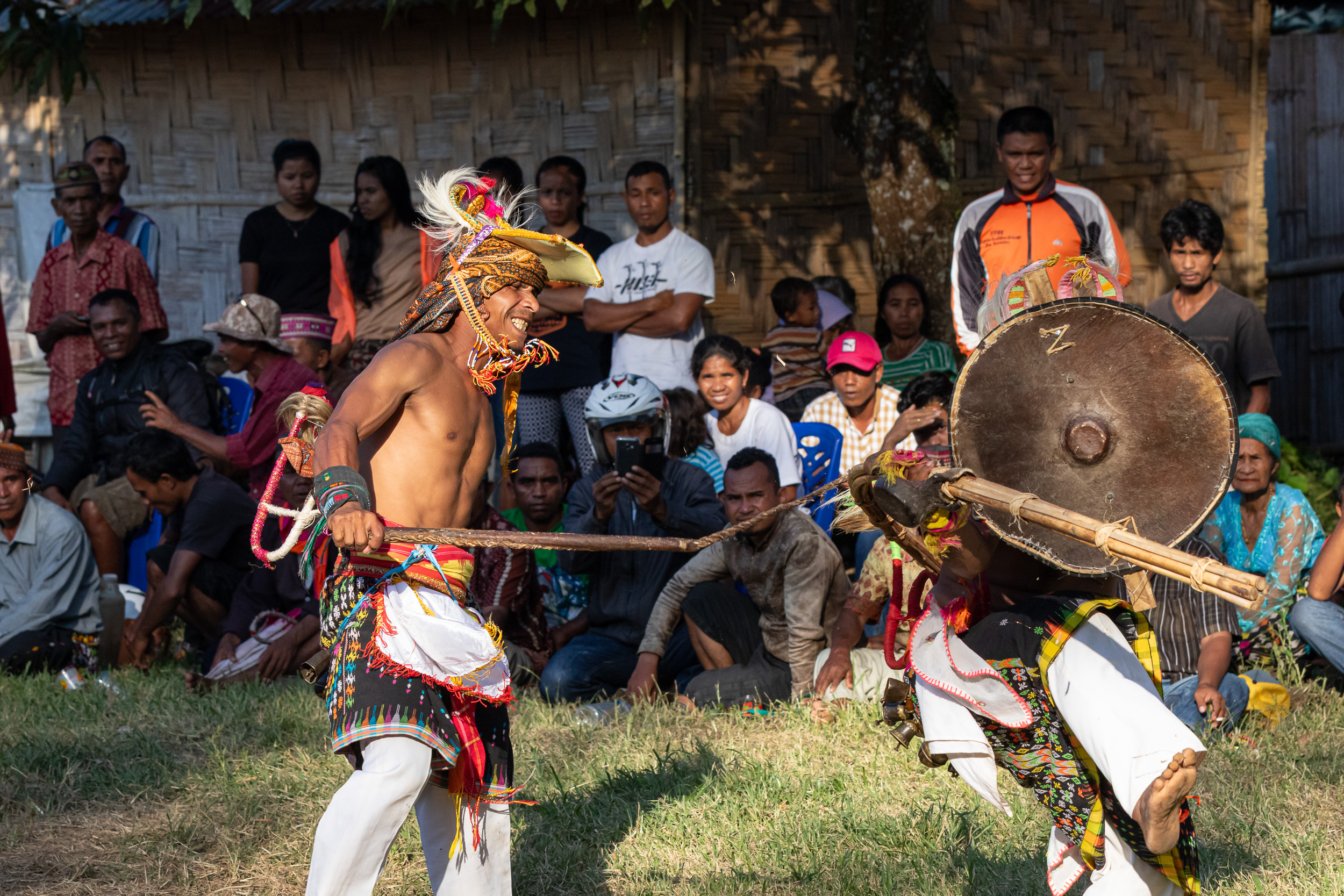
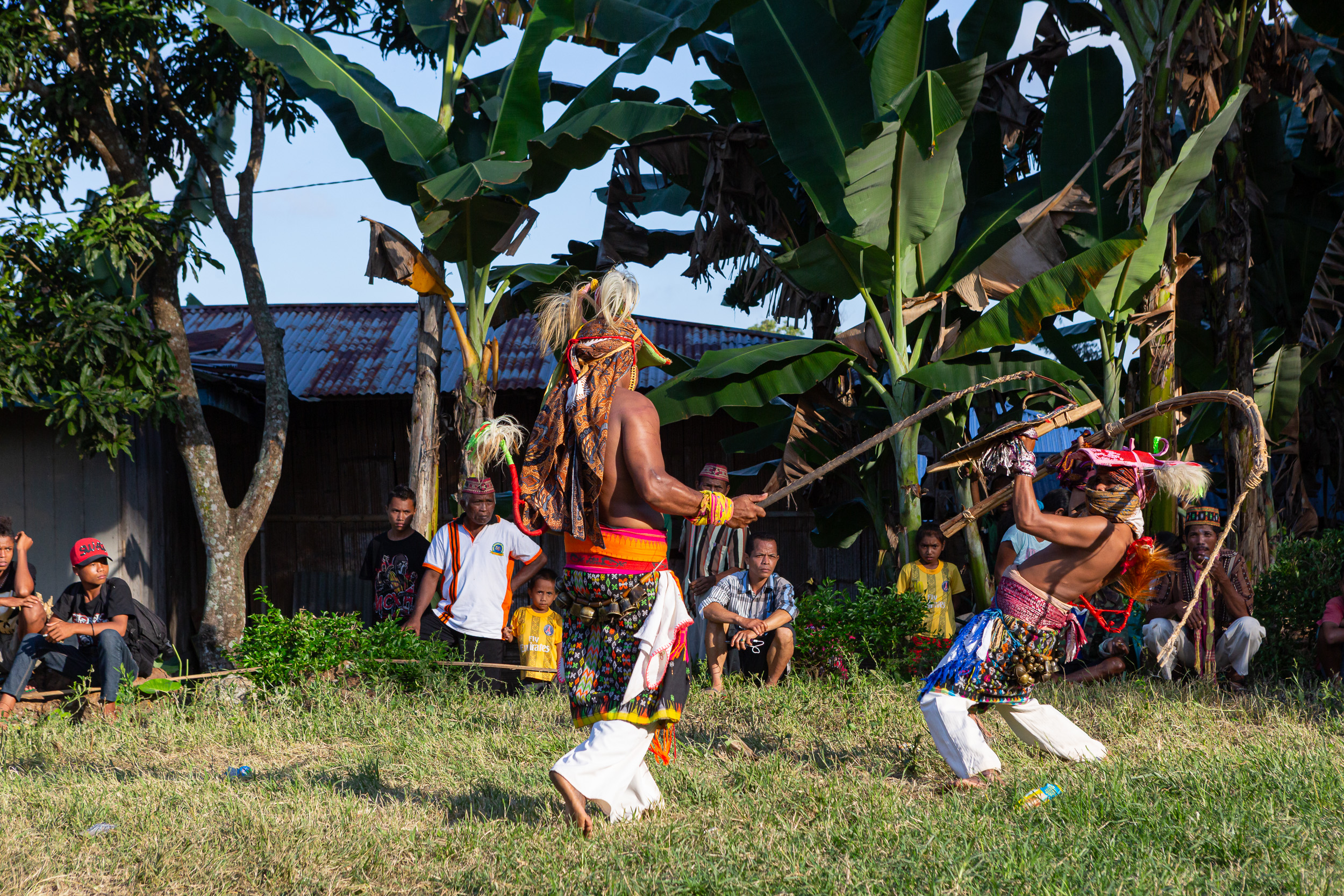
Two men face each other in ritual combat: one acts as the attacker, wielding a long rattan whip, while the other takes the role of defender, protecting himself with a shield and stick. The duel combines choreography, music, and symbolism, making Caci one of the most distinctive cultural traditions of Flores.
Symbolism and Equipment
Every element used in Caci carries symbolic meaning within Manggarai cosmology.
The whip, made of braided rattan with a leather-covered handle, represents the male principle — the sky, the father, and masculine power.
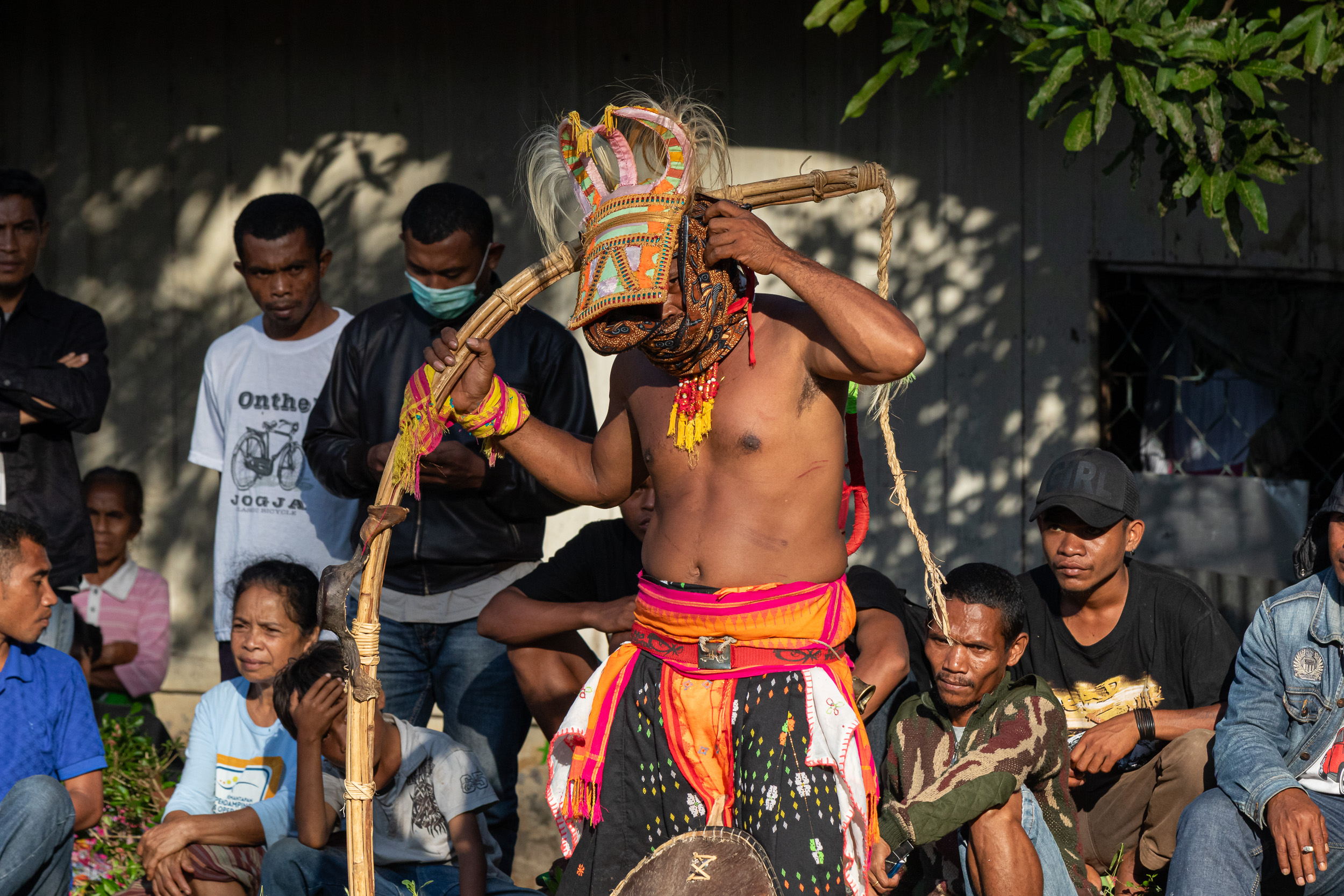
The round shield, traditionally made from bamboo, rattan, and buffalo hide, represents the female principle — the earth and the womb.
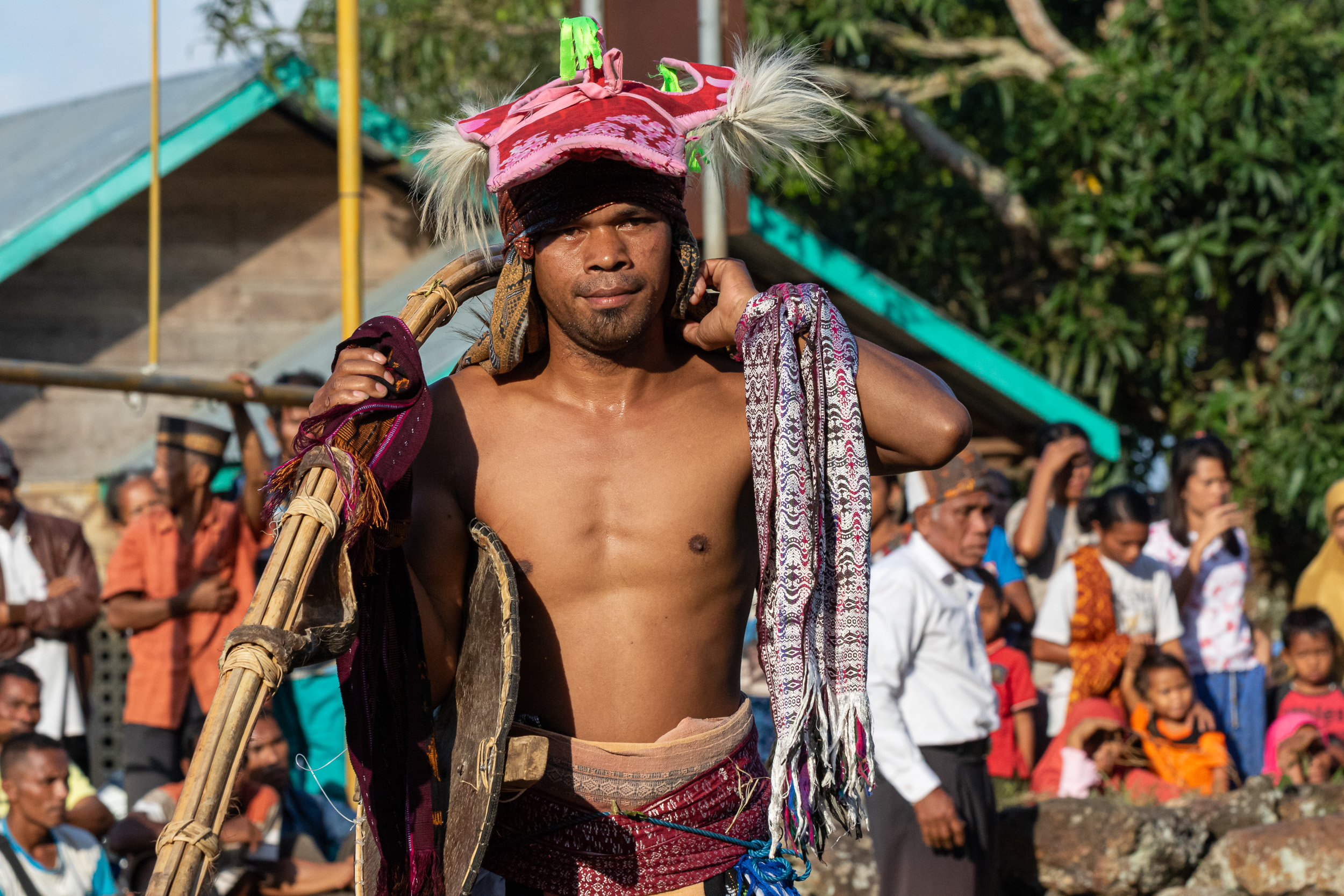
When the whip strikes the shield, the encounter symbolically unites these male and female forces. This union reflects the Manggarai understanding of fertility and life, where balance between sky and earth ensures agricultural abundance.
Costume and Protective Gear
Caci fighters wear distinctive ceremonial attire.
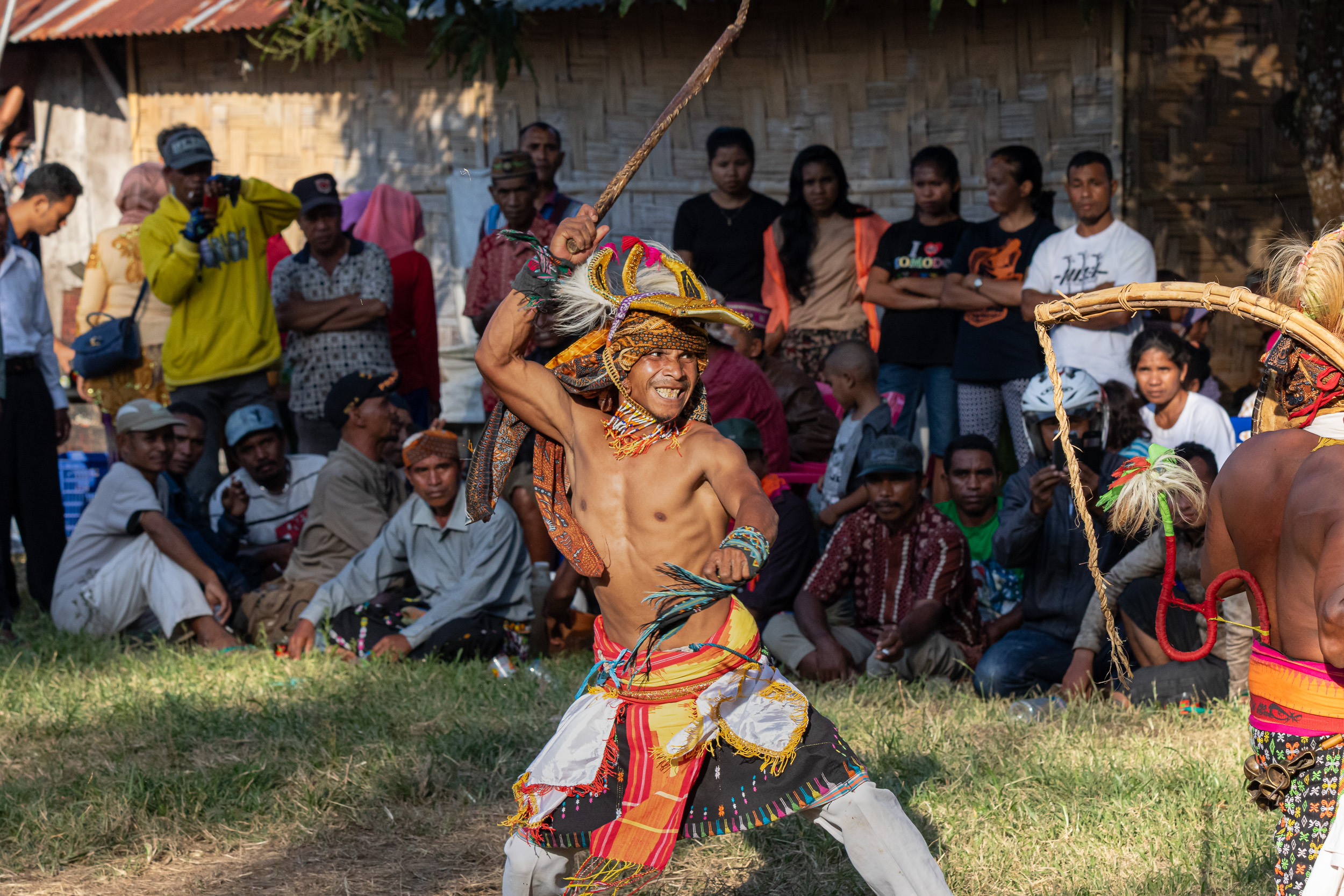
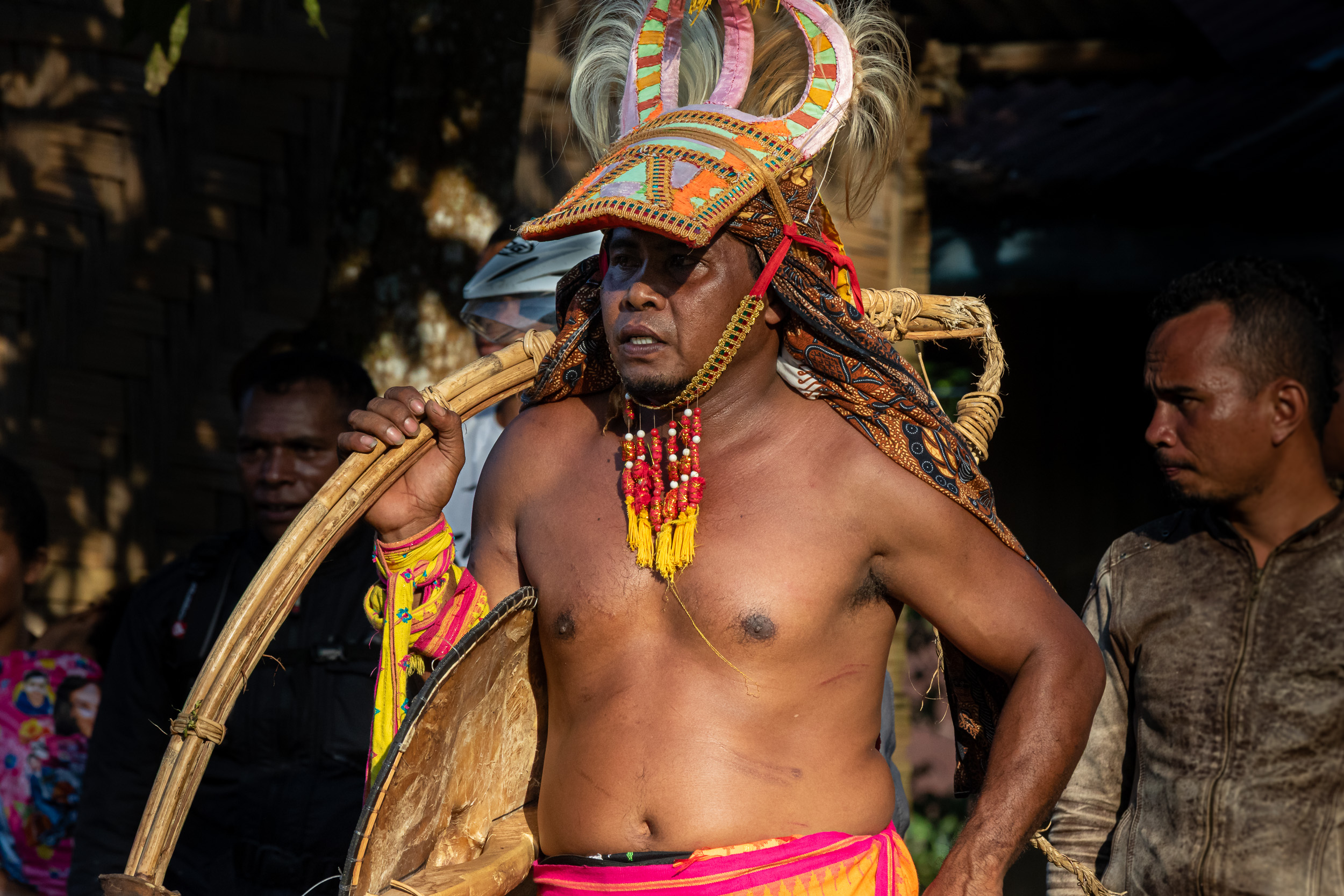
Their heads are covered with masks wrapped in cloth and goat hair, often decorated with two horns symbolizing the strength of the water buffalo. The masks protect the face while also representing power and warrior identity.
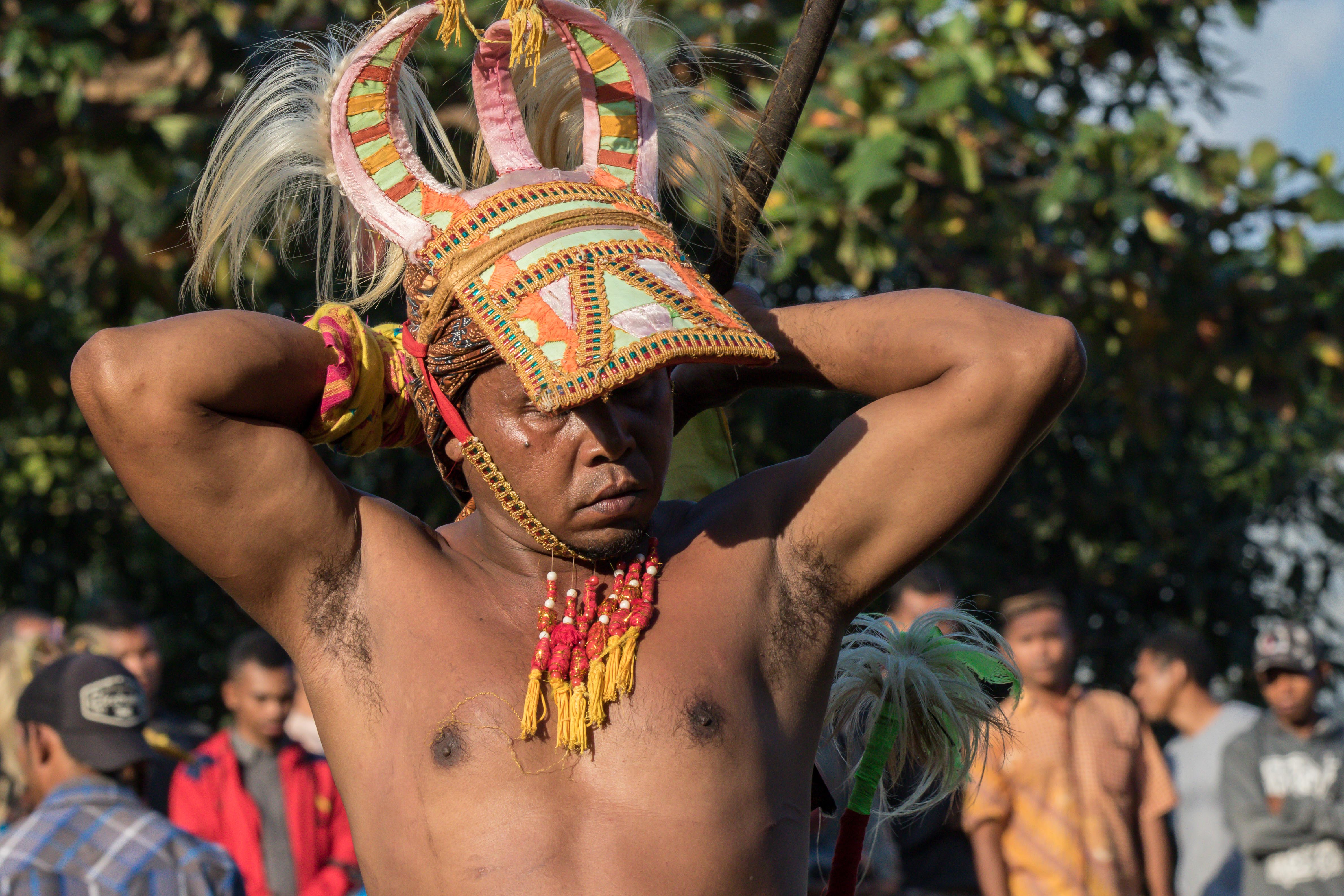
Around their waist and ankles, the fighters wear belts of small bells that jingle as they move, adding rhythm to the performance.
The upper body remains bare, leaving the chest and back exposed to the whip strikes. Fighters also carry a short defensive stick in the left hand to help deflect the whip.
The Duel
Before the fight begins, the two opponents circle each other while musicians play drums and gongs, building tension among spectators.
The attacker lashes the whip toward the defender’s body while the defender attempts to block the strike using shield and stick.
After each strike, the roles are reversed.
A duel usually consists of four rounds, after which a new pair of fighters enters the arena.
Victory is not determined simply by whether a blow lands. Where the whip strikes carries symbolic meaning.
A hit to the face or head results in defeat.
A strike across the back is often interpreted as a positive sign, symbolizing a good harvest in the coming year.
Ritual Meaning
Despite its theatrical appearance, Caci also has a ritual and sacrificial function.
Blood shed during the fight is considered an offering to the ancestors. In return, the spirits are believed to grant fertility to the land and prosperity to the community.
Caci was traditionally performed during Penti, the Manggarai New Year ceremony marking the end of the agricultural cycle and the beginning of a new one.
Performances could last several days, accompanied by music, ritual preparations, and animal sacrifices.
Cultural Role
Historically, Caci served several social purposes within Manggarai society.
The ritual allowed young men to demonstrate courage and physical strength. It also functioned as a way to resolve tensions between villages and to reaffirm alliances during major ceremonies such as harvest celebrations, weddings, and funerals.
Today Caci is still performed during traditional festivals and cultural events across western Flores, particularly around Ruteng and the Manggarai Highlands.
Although modern tourism has brought new audiences, the ritual remains closely tied to Manggarai identity and ancestral tradition.