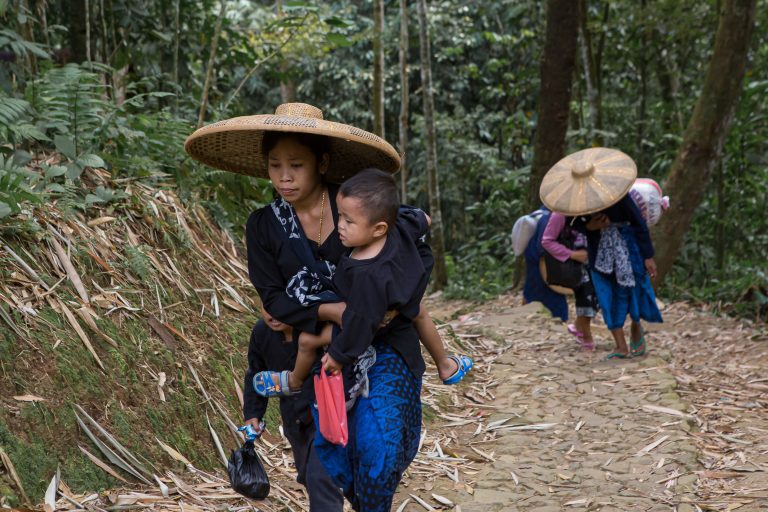
Indigenous Sundanese Community Living by Ancient Traditions
Less than three hours from Jakarta, hidden in the forested hills of Banten Province, lives one of Indonesia’s most remarkable traditional communities.
The Baduy people, who call themselves Kanekes, are an indigenous Sundanese group whose way of life has changed very little for centuries. Their homeland covers roughly 50 square kilometres of hills and forest near Rangkasbitung, where more than 10,000 Baduy live in small villages connected by footpaths.
What sets the Baduy apart from most other communities in Indonesia is their strict rejection of modern technology and outside influence. Electricity, vehicles, phones, and modern tools are largely forbidden. Instead, the Baduy maintain a lifestyle guided by ancestral rules, spiritual beliefs, and a deep connection with the surrounding forest landscape.
The Kanekes Homeland
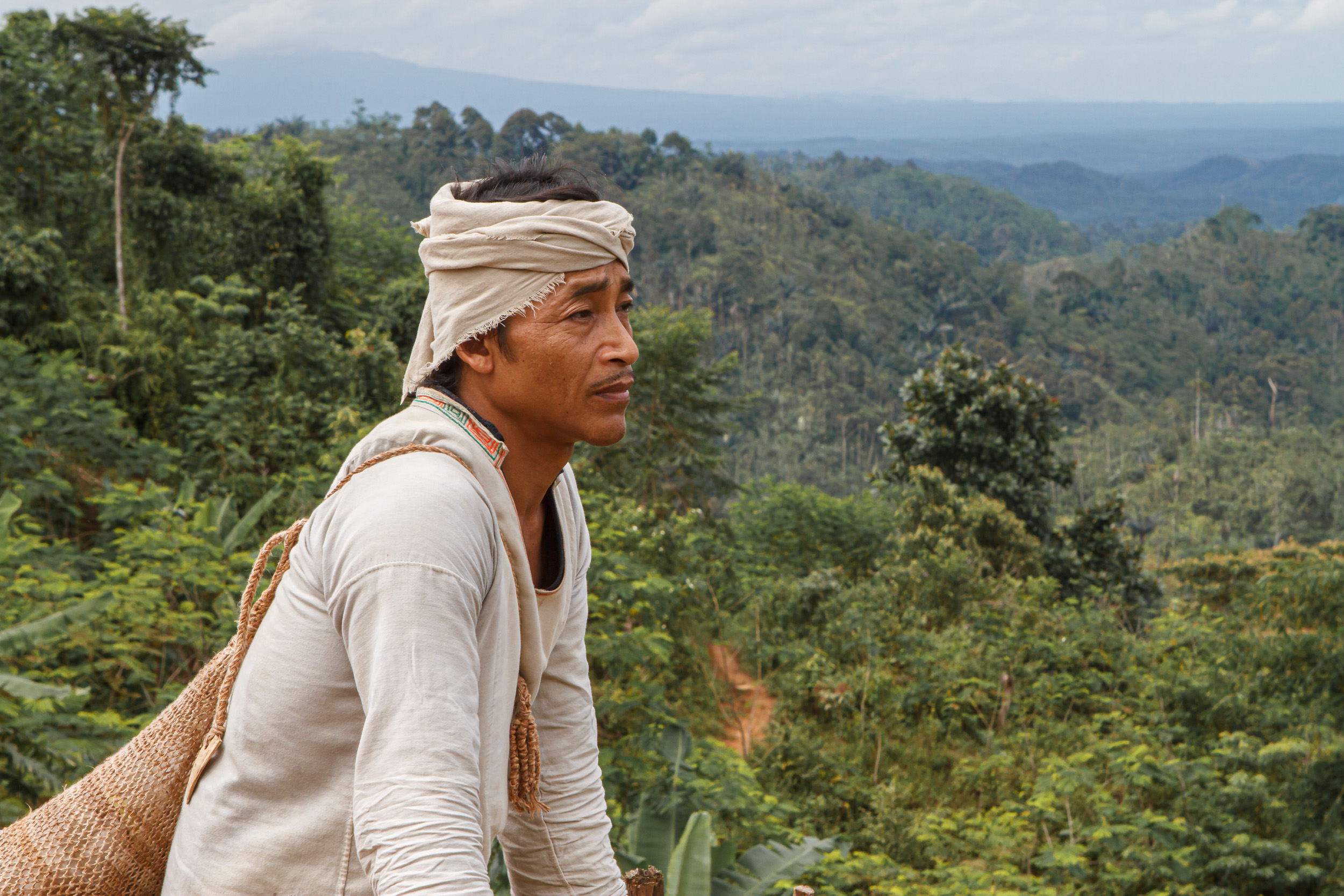
The Baduy territory lies in the mountainous interior of Banten, west of Jakarta. The landscape consists of forested hills, rivers, and small agricultural clearings connected by narrow trails.
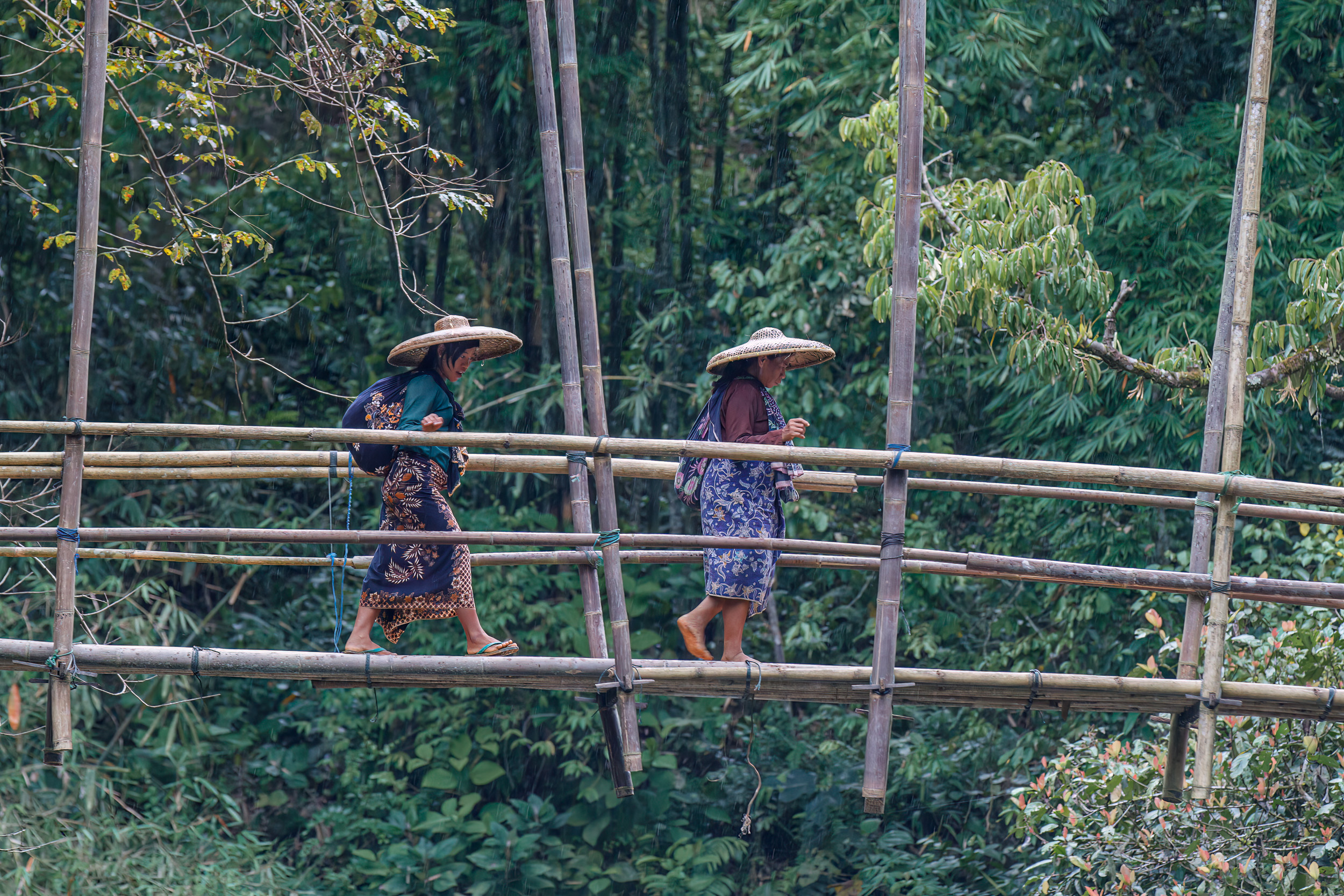
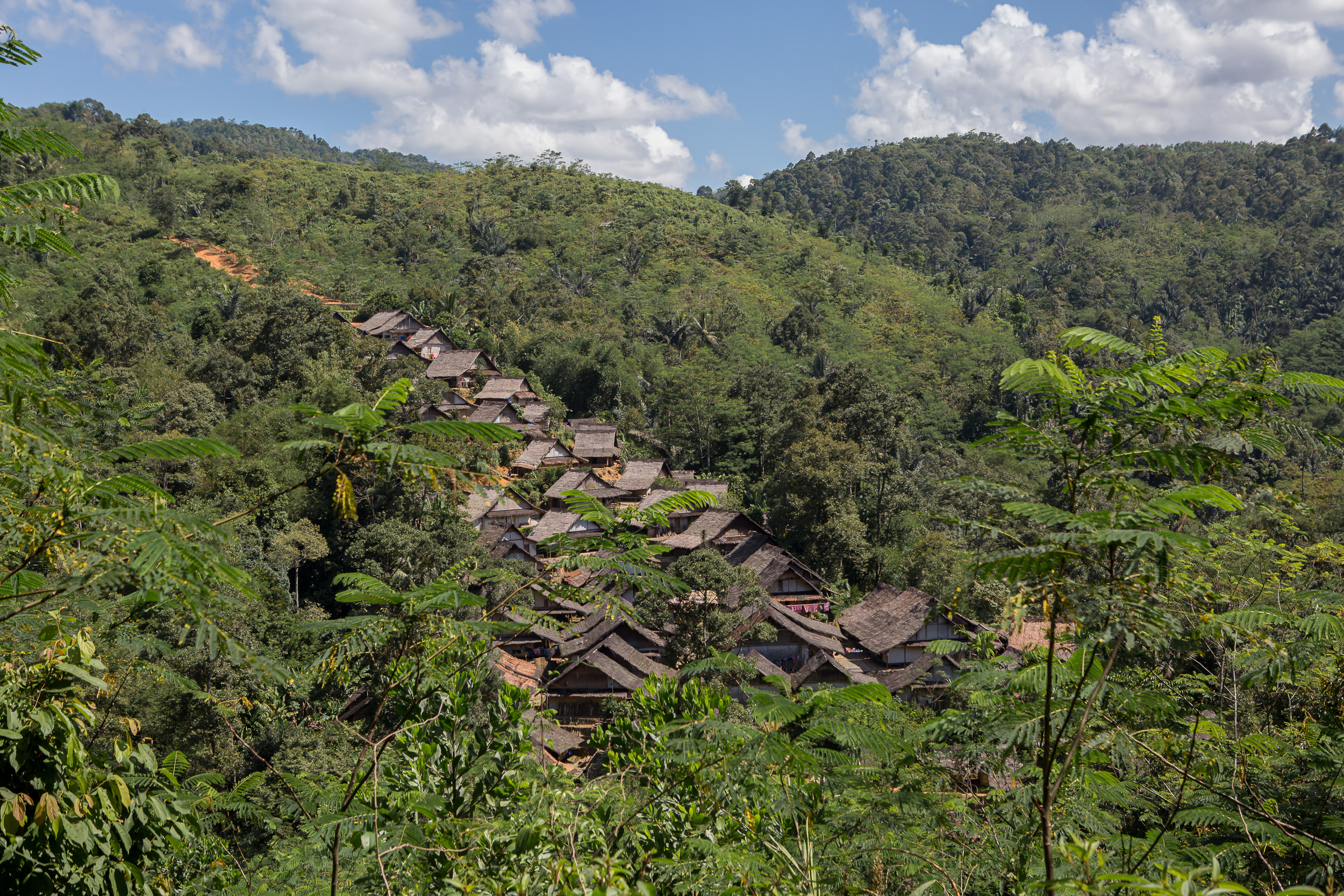
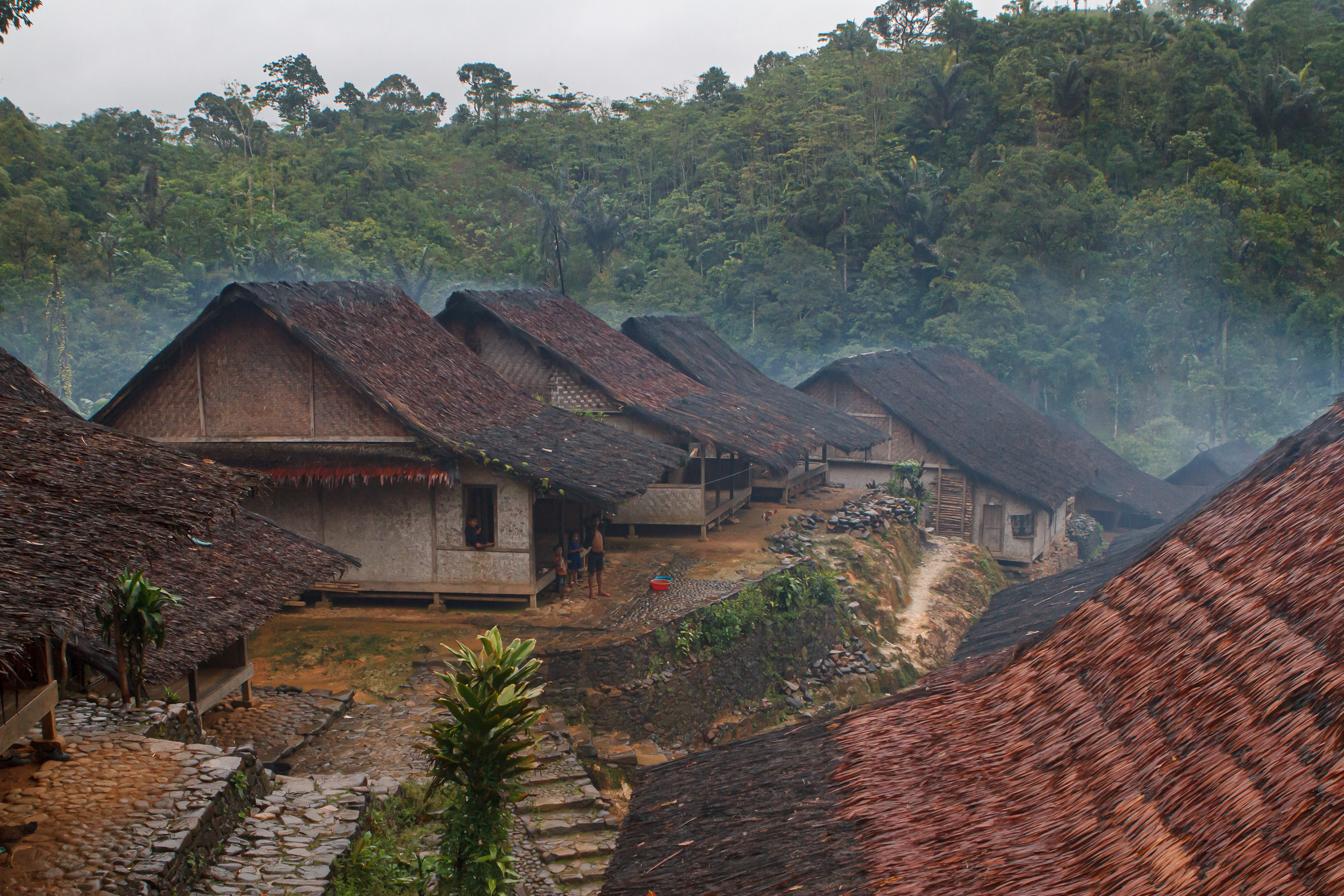
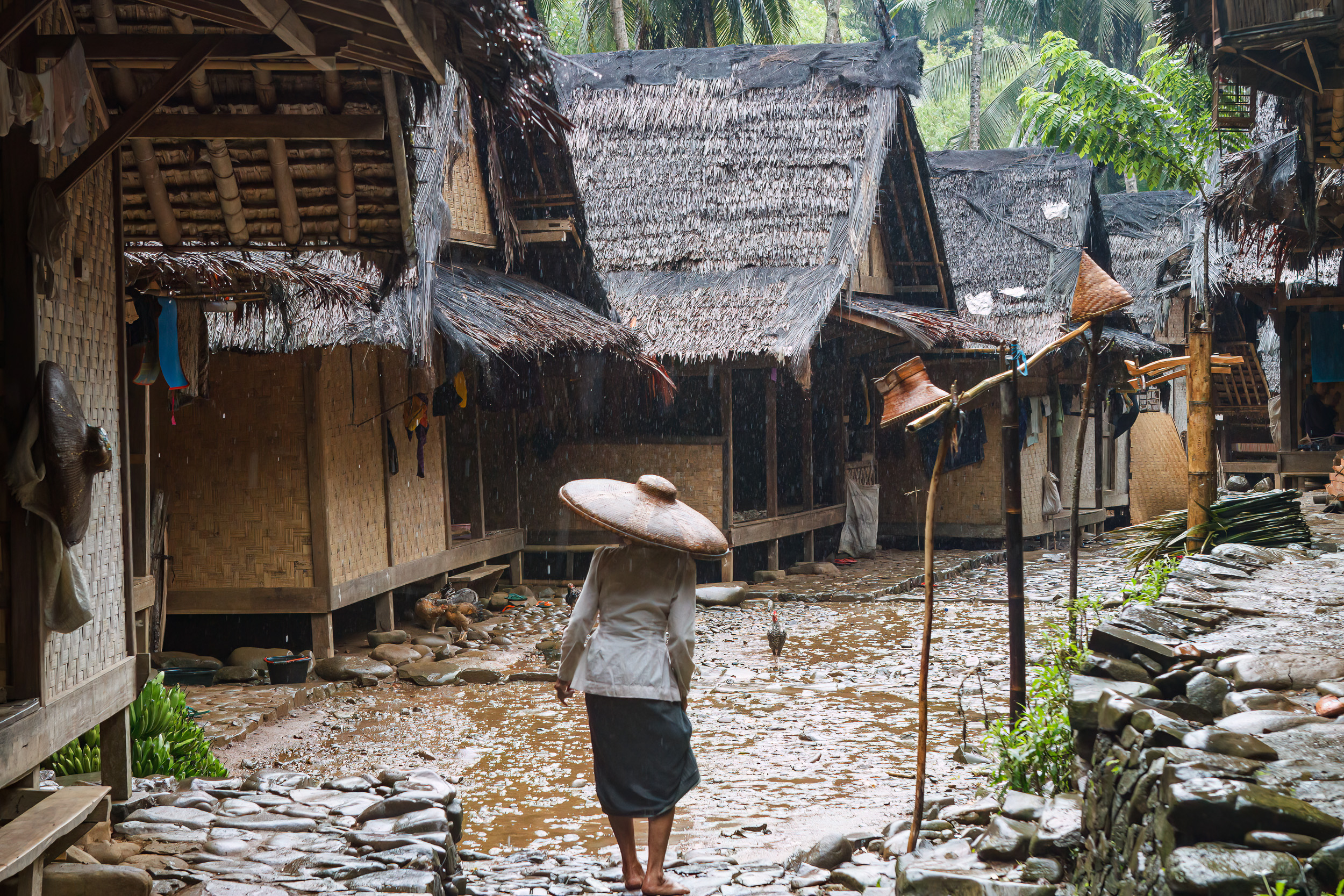
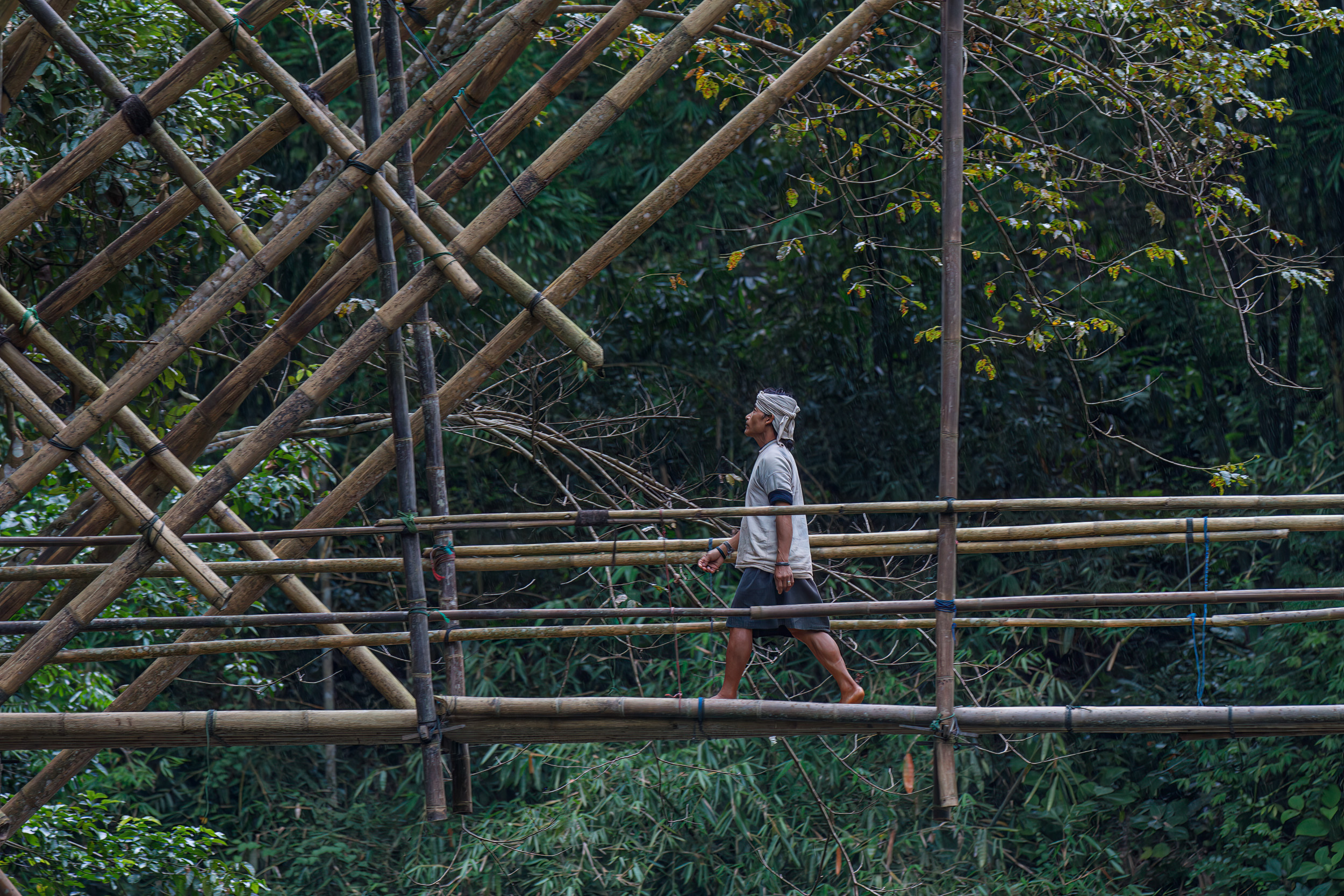
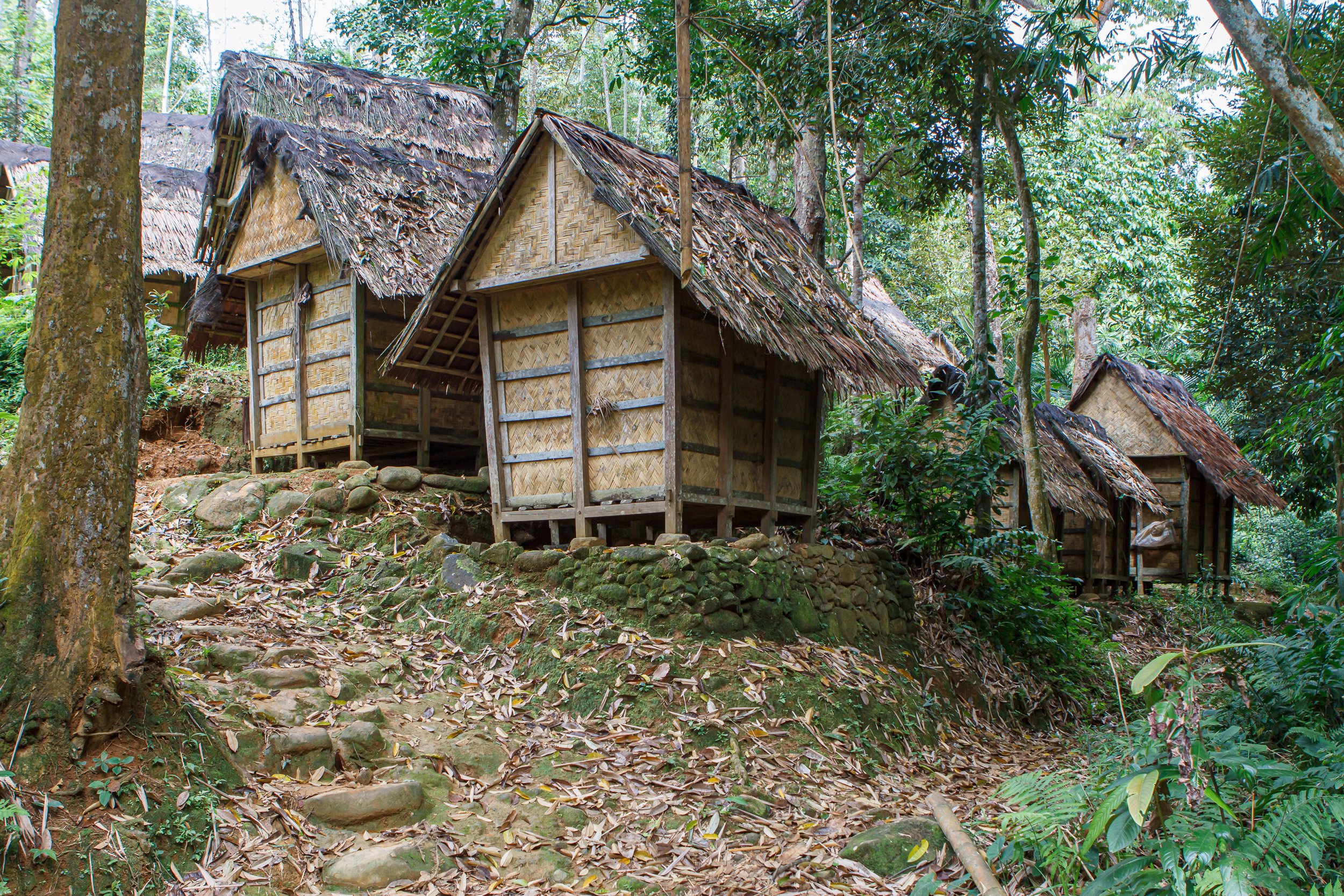
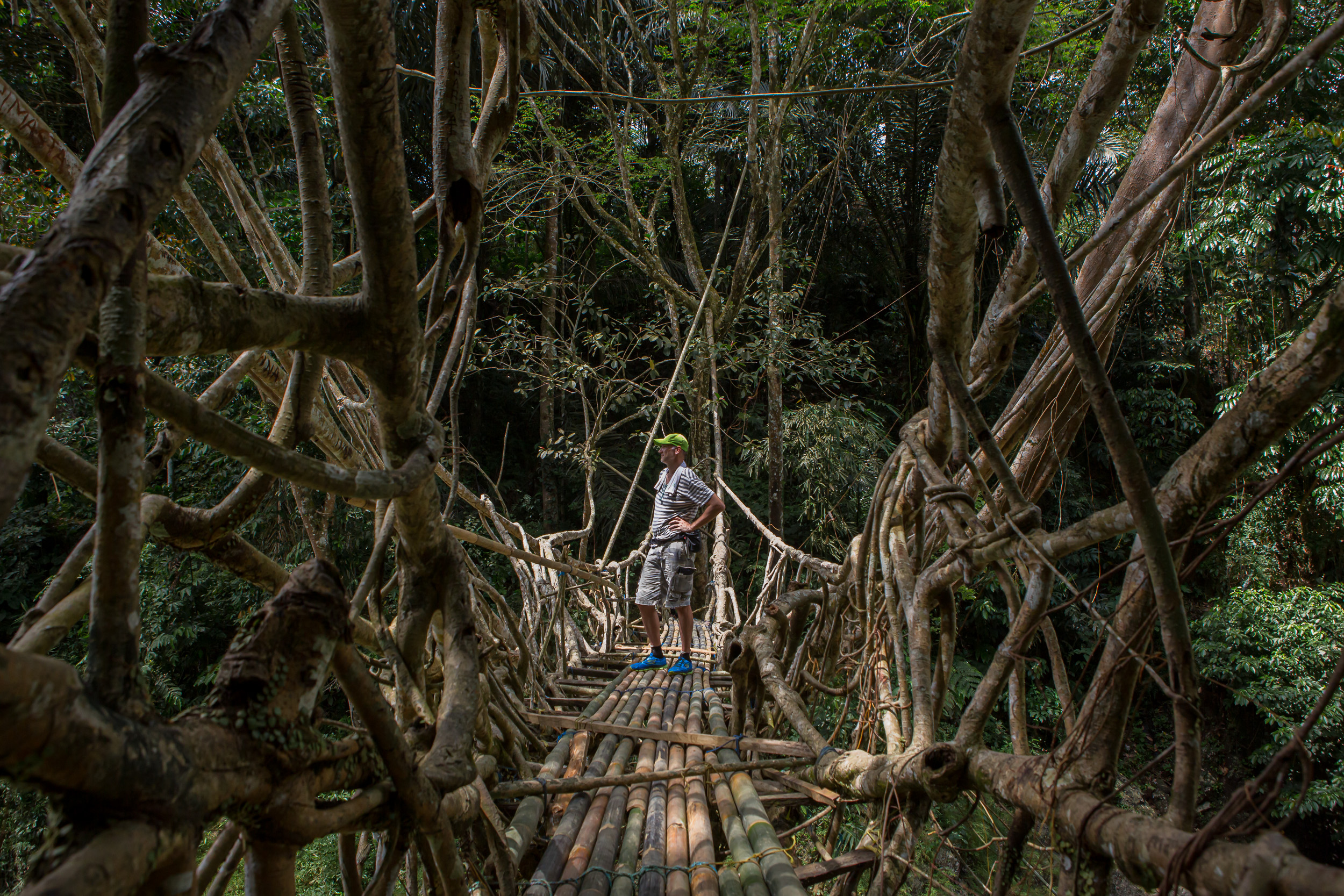
Villages are built from bamboo, wood, and palm leaves, with houses raised slightly above the ground and arranged along the hillsides. Footpaths and bamboo bridges connect settlements across the valleys.
The village of Cicakal coming to life early in the morning.
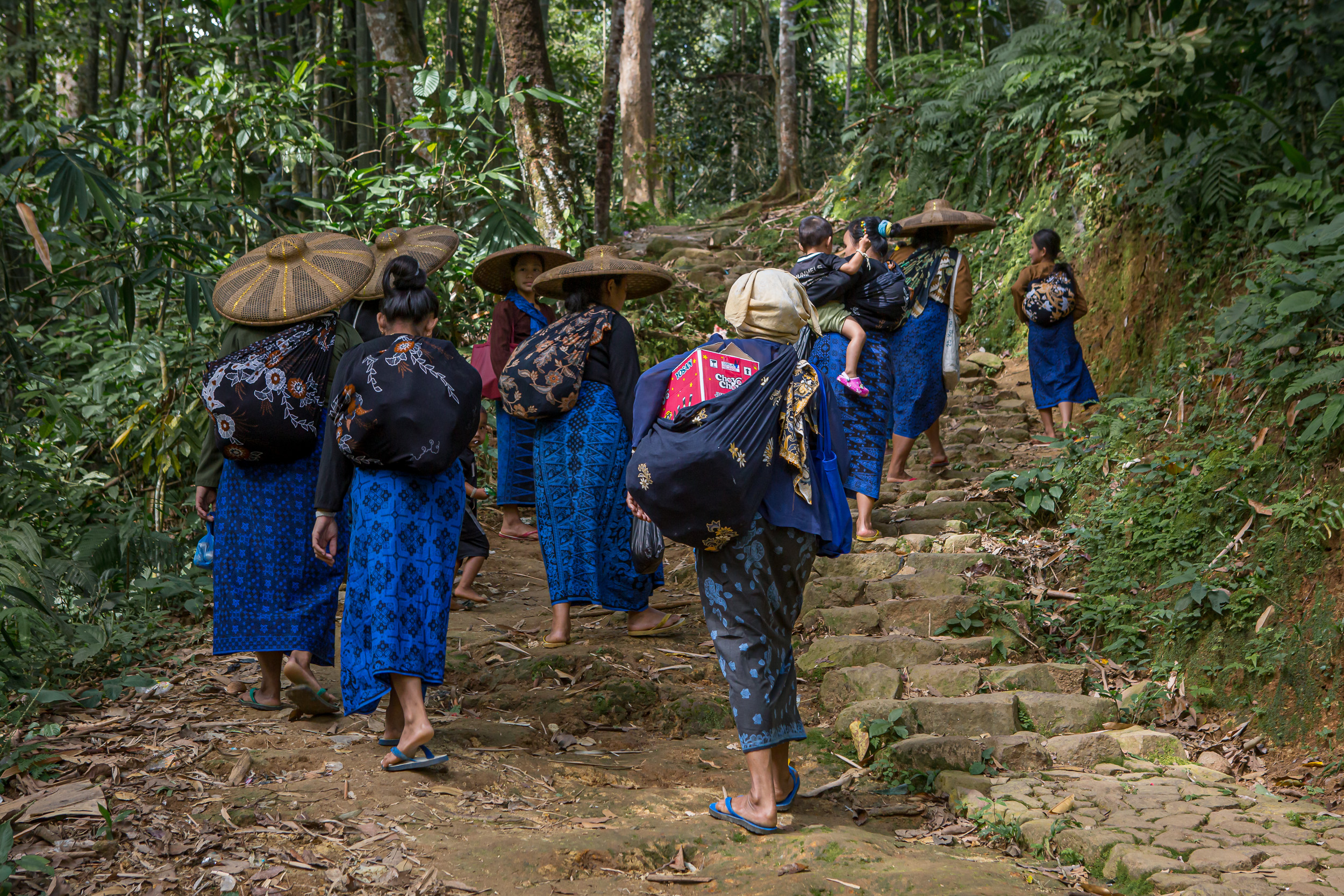
Transportation inside Baduy territory is traditionally on foot only. Visitors entering the region must also walk, often several hours between villages.
This isolation has helped preserve the Baduy way of life for generations.
Beliefs and Spiritual Life
The Baduy follow a belief system often described as Sunda Wiwitan, an ancient form of animism deeply rooted in Sundanese culture.
Their spiritual worldview centers on respect for nature and the spirits of the ancestors. Maintaining balance between humans, the forest, and the spiritual world is considered essential for the survival of the community.
Many rules governing Baduy life originate from this belief system. These include strict taboos against harming nature, adopting modern technology, or altering traditional customs.
Although elements of Hindu, Buddhist, and Islamic influence have appeared over time, ancestral beliefs remain the core of Baduy spiritual life.
Gajeboh village.
Taboos and Traditional Law
Baduy society follows an extensive set of rules known as pikukuh, which regulate everyday behaviour.
Among the most important taboos are prohibitions against:
using modern transportation
adopting modern technology
altering traditional agricultural practices
wearing modern clothing
cutting down forest areas outside designated fields
Wet-rice agriculture (sawah) is traditionally forbidden, and the Baduy instead practice ladang farming, cultivating dry rice and other crops without chemical fertilizers or modern tools.
These restrictions are intended to preserve both spiritual harmony and environmental balance.
Inner and Outer Baduy
The Baduy community is divided into two main groups.
Baduy Dalam (Inner Baduy)
The Baduy Dalam represent the most traditional group. Roughly 400 people live in three sacred villages located in an area known as Tanah Larangan, the forbidden territory.
These communities follow the strictest interpretation of Baduy customs. They wear simple white and indigo clothing, walk barefoot, and avoid almost all contact with modern society.
Visitors are not permitted to stay overnight in these villages.
Baduy Luar (Outer Baduy)
The Baduy Luar form the majority of the Baduy population and live in surrounding villages that act as a buffer zone between the inner territory and the outside world.
While they still follow traditional customs, the Baduy Luar maintain slightly more contact with neighbouring communities. Some modern items have gradually appeared in these villages, although many traditional restrictions remain in place.
Visitors usually stay in Baduy Luar villages when travelling through the region.
Culture and Daily Life
Daily life in Baduy villages revolves around agriculture, weaving, and community activities.
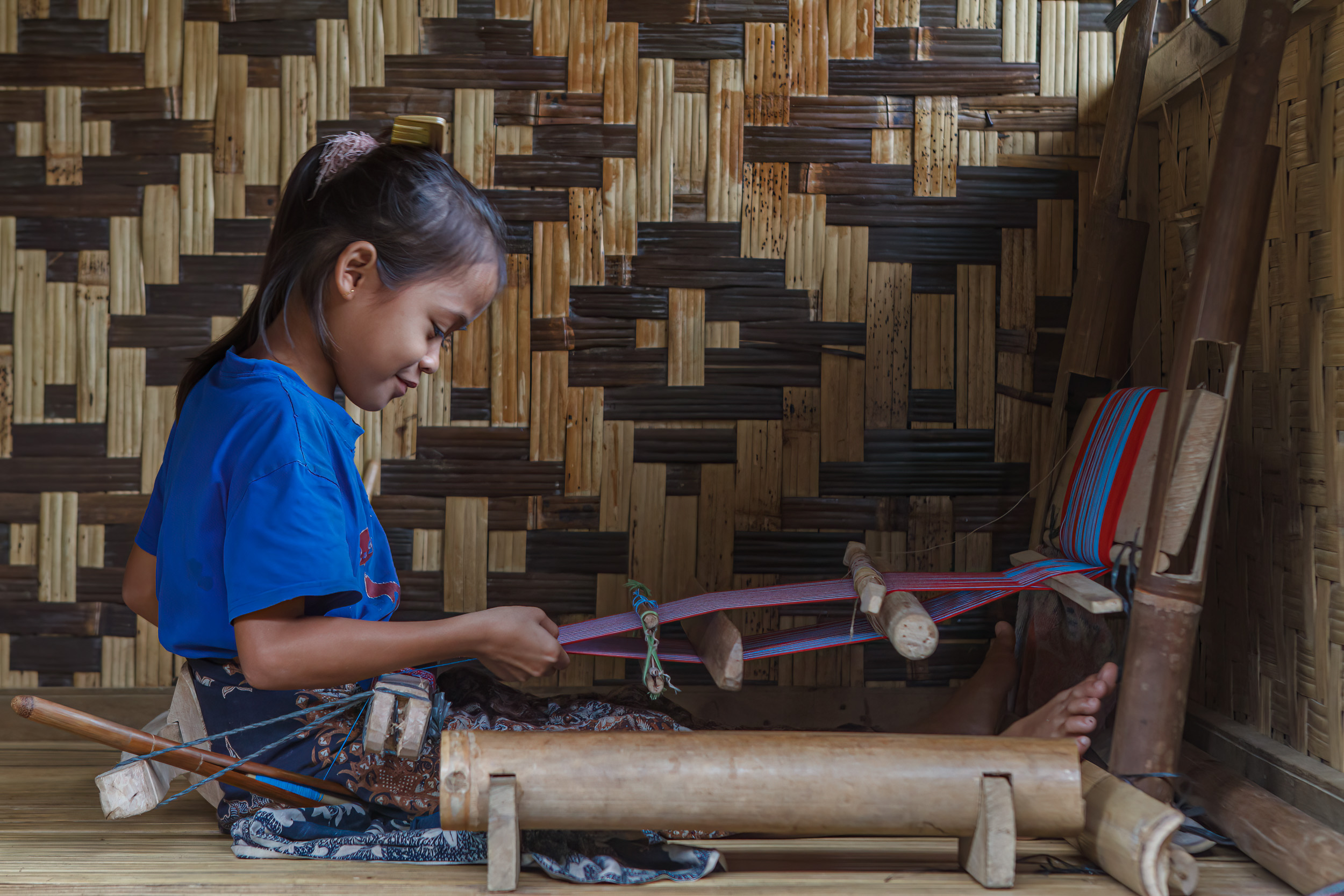
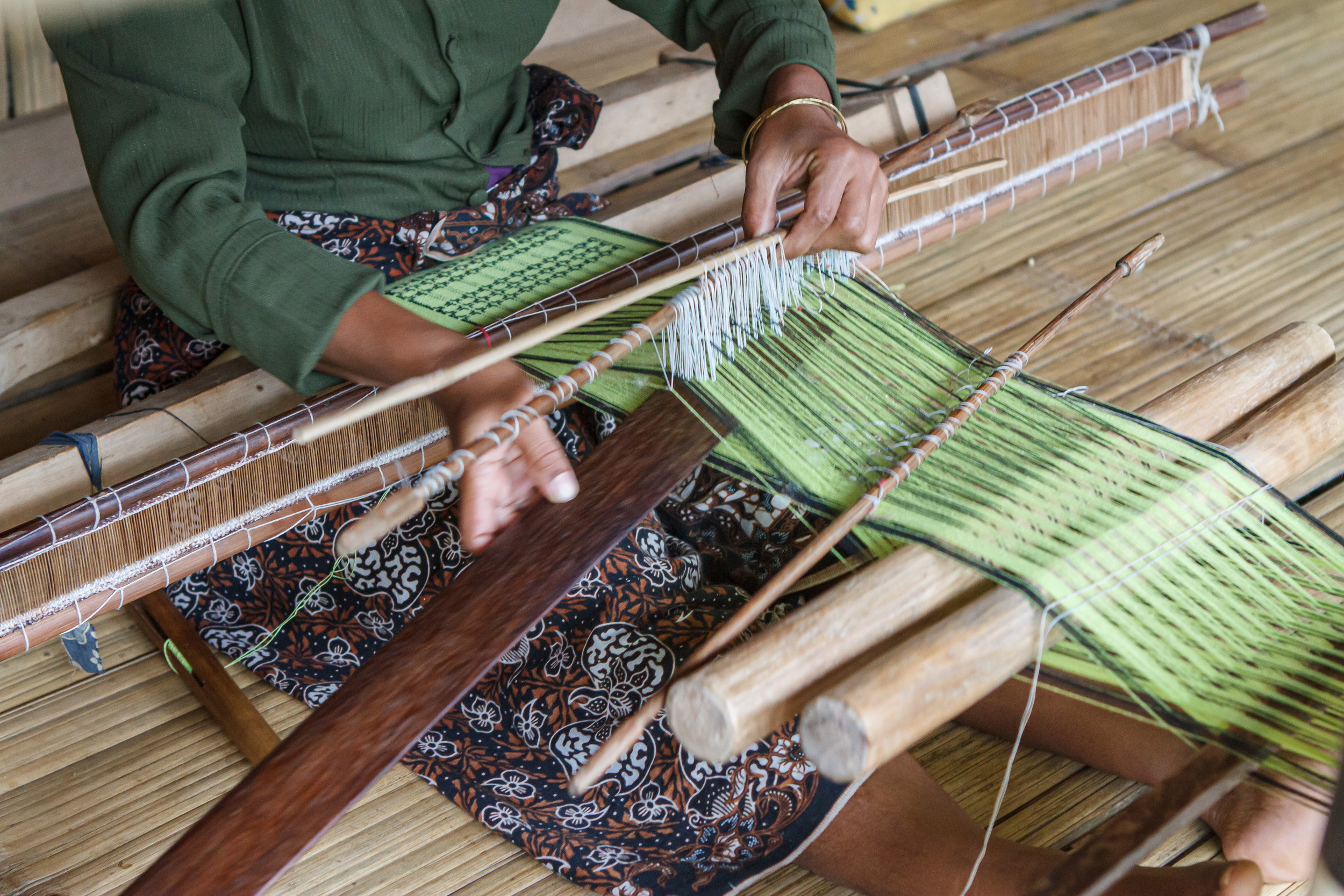
Families cultivate rice, cassava, and other crops on terraced hillsides using traditional methods. Women weave cloth on simple looms, producing textiles used for clothing and ceremonial purposes.
Traditional music and dance remain important parts of Baduy culture. Instruments such as the angklung bamboo ensemble reflect their Sundanese heritage.
Despite their proximity to one of the world’s largest metropolitan areas, the Baduy continue to maintain a lifestyle shaped by ancestral traditions rather than modern influences.
Rice barns. Every family has 3 or 4 barns.
Weaving and Traditional Textiles
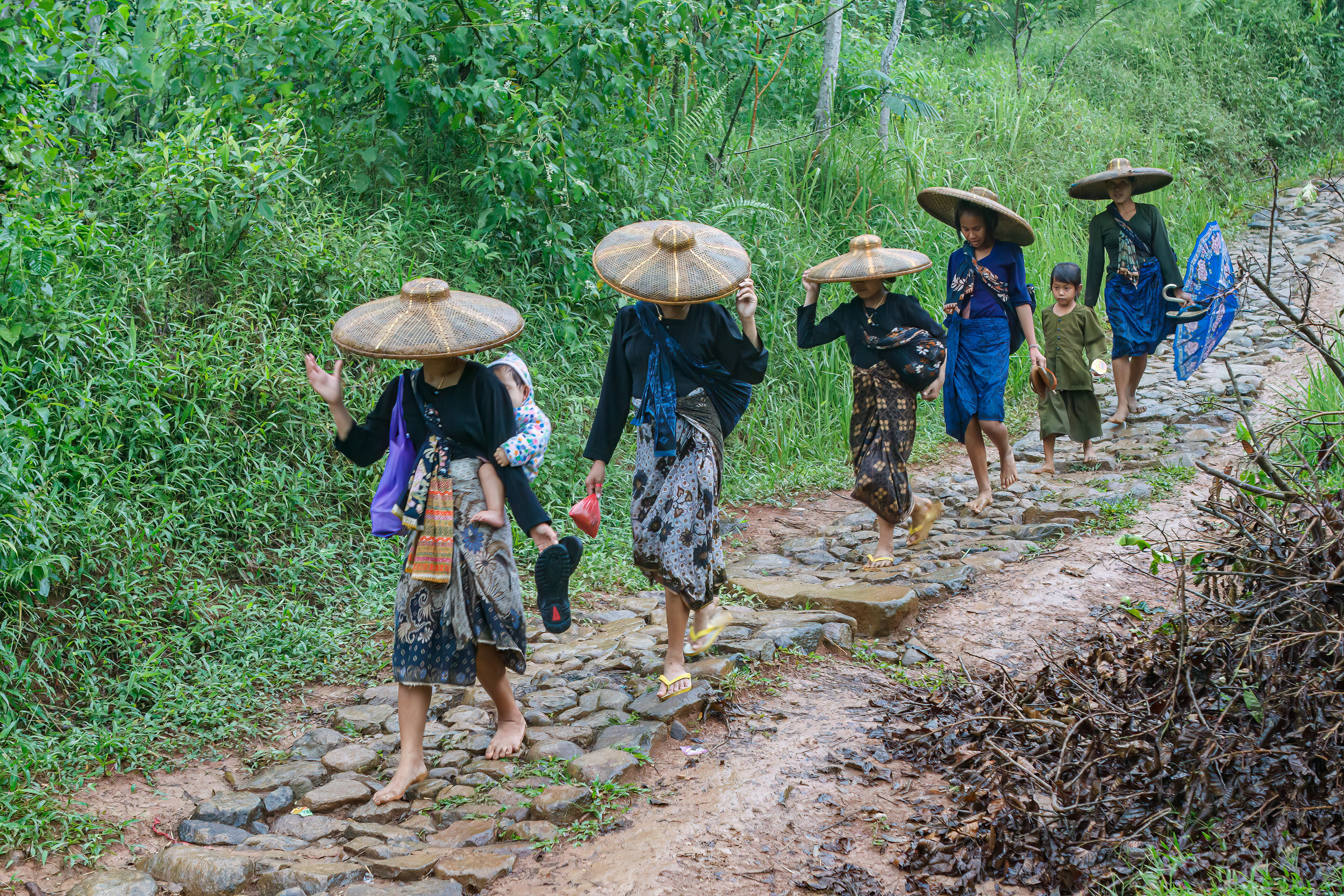
Weaving is an important part of daily life in Baduy communities. Women produce hand-woven cloth using simple backstrap looms, creating textiles that are used for clothing and ceremonial purposes. The fabrics are traditionally dyed in deep indigo tones using natural plant dyes, giving Baduy garments their distinctive blue-black colour.
In the Baduy Dalam villages, clothing is deliberately simple: white shirts and dark woven cloth symbolise purity and adherence to ancestral rules. In the surrounding Baduy Luar communities, textiles are more varied and often include darker indigo patterns and woven belts.
These textiles are not produced as commercial handicrafts but primarily for household use and cultural identity, reflecting the Baduy commitment to maintaining traditional ways of life.
Visiting the Baduy
Travelling to the Baduy territory usually begins from Rangkasbitung, followed by a drive to the village of Ciboleger, which serves as the main gateway to the Baduy area.
From there, visitors continue on foot along forest paths connecting the villages.
Overnight stays are typically arranged in Baduy Luar villages, where visitors can experience traditional life and hospitality.
Respect for local customs is essential. Photography is generally allowed in outer villages but not permitted in the inner Baduy settlements.
Explore the Photo Gallery
A curated visual collection from Kanekes – The Baduy of West Java