A rare temple purification ceremony in one of Bali’s oldest sanctuaries
At the ancient Pura Samuan Tiga temple in Bedulu, near Ubud, I was fortunate to witness a rare and elaborate temple ceremony known as Karya Agung Panca Wali Krama.
This major purification ritual had last been held roughly twenty years earlier, and preparations for the ceremony had taken more than six months. For over thirty days the temple became the centre of an extraordinary series of rituals, processions, dances, and offerings, drawing devotees from across Bali.
The name Pura Samuan Tiga literally means “Temple of the Meeting of the Three”, most likely referring to the Hindu Trinity. It is considered Bali’s third most important temple, after Pura Besakih and Pura Ulun Danu Batur.
Some of the rituals are even new to the younger Balinese themselves and the full ceremony continued for more than 30 days.
A Temple Filled with Devotion
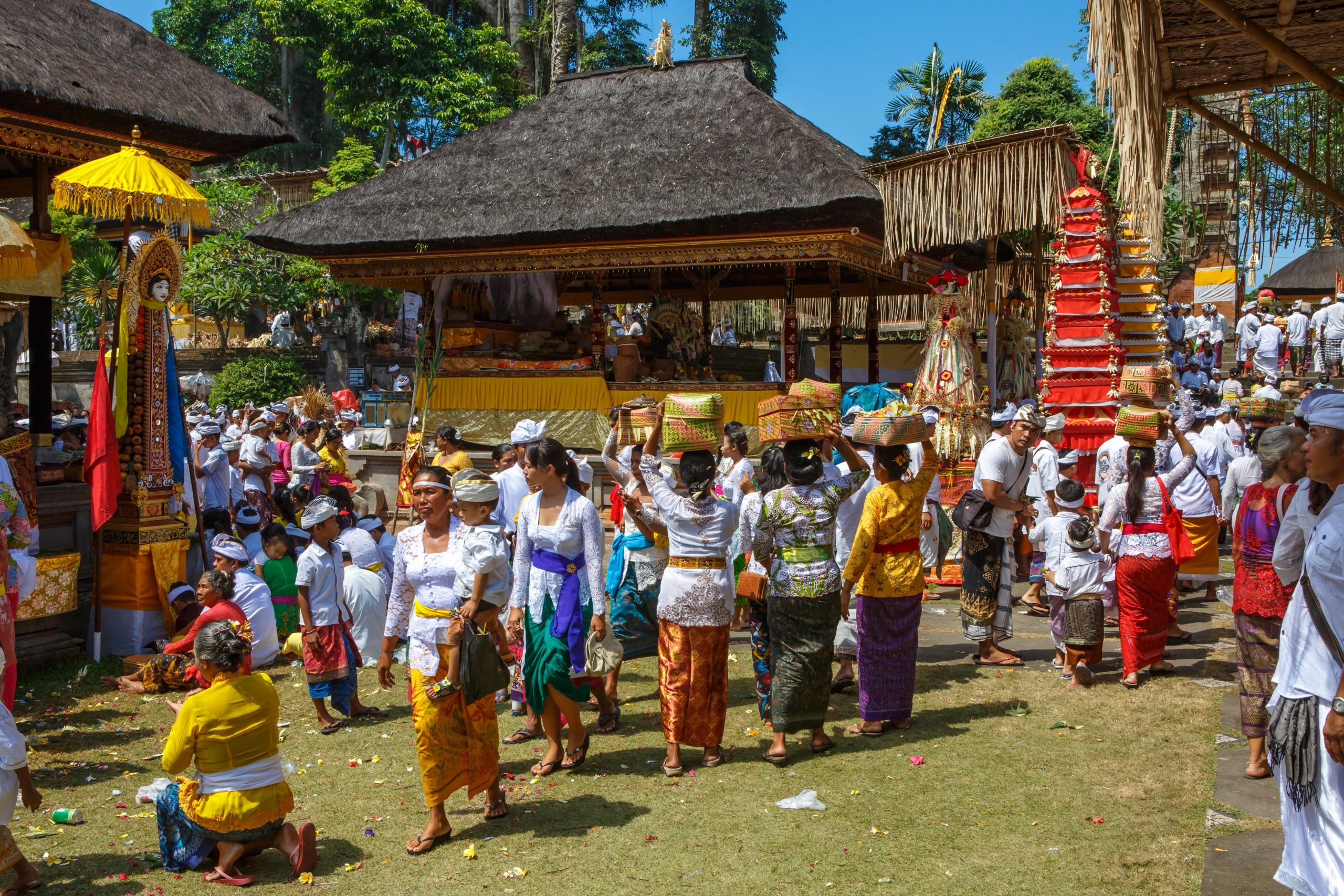
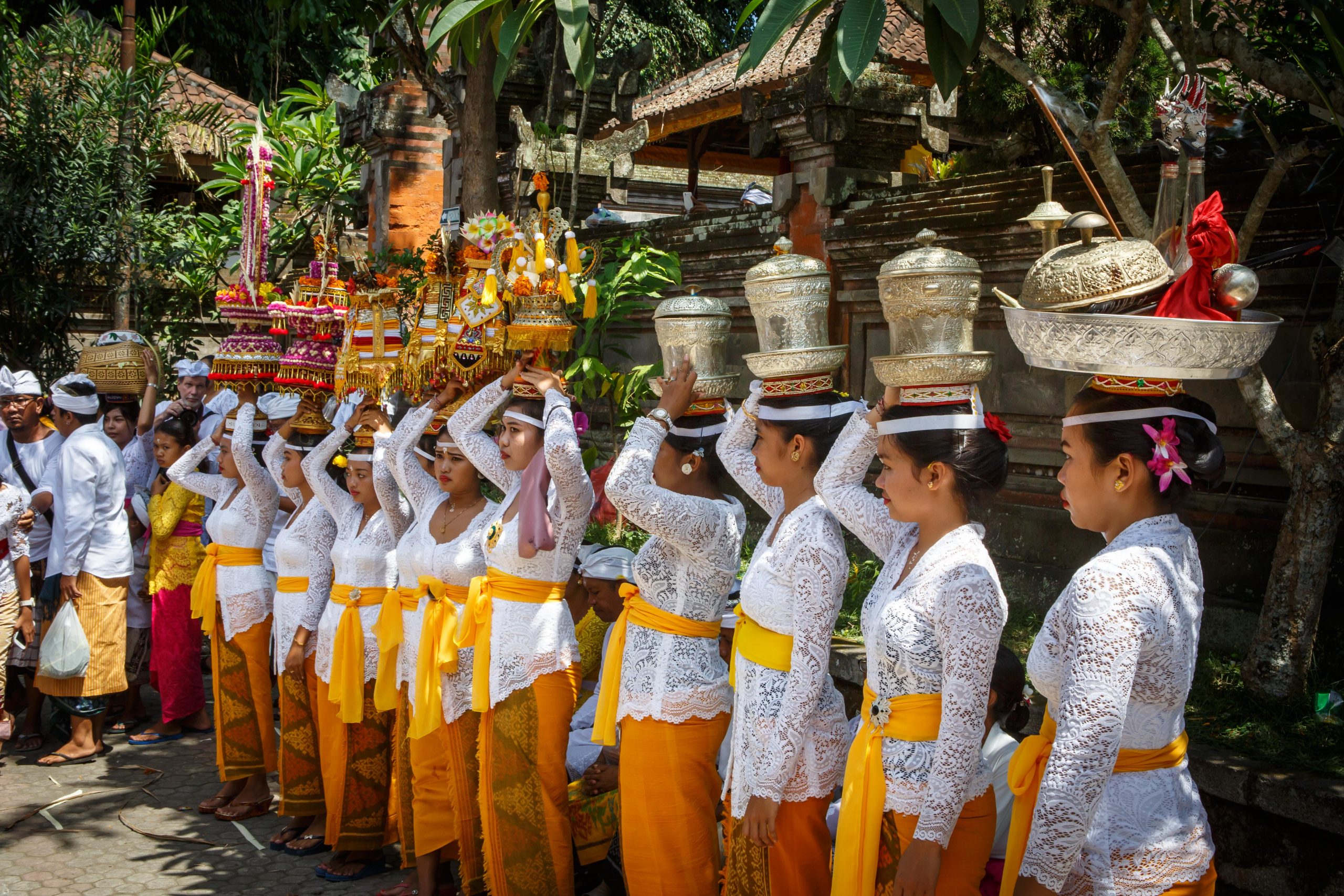
During the ceremony, devotees from villages across Bali gather at the temple to pray and present offerings.
People come from all over the island to pray and offer at this temple.
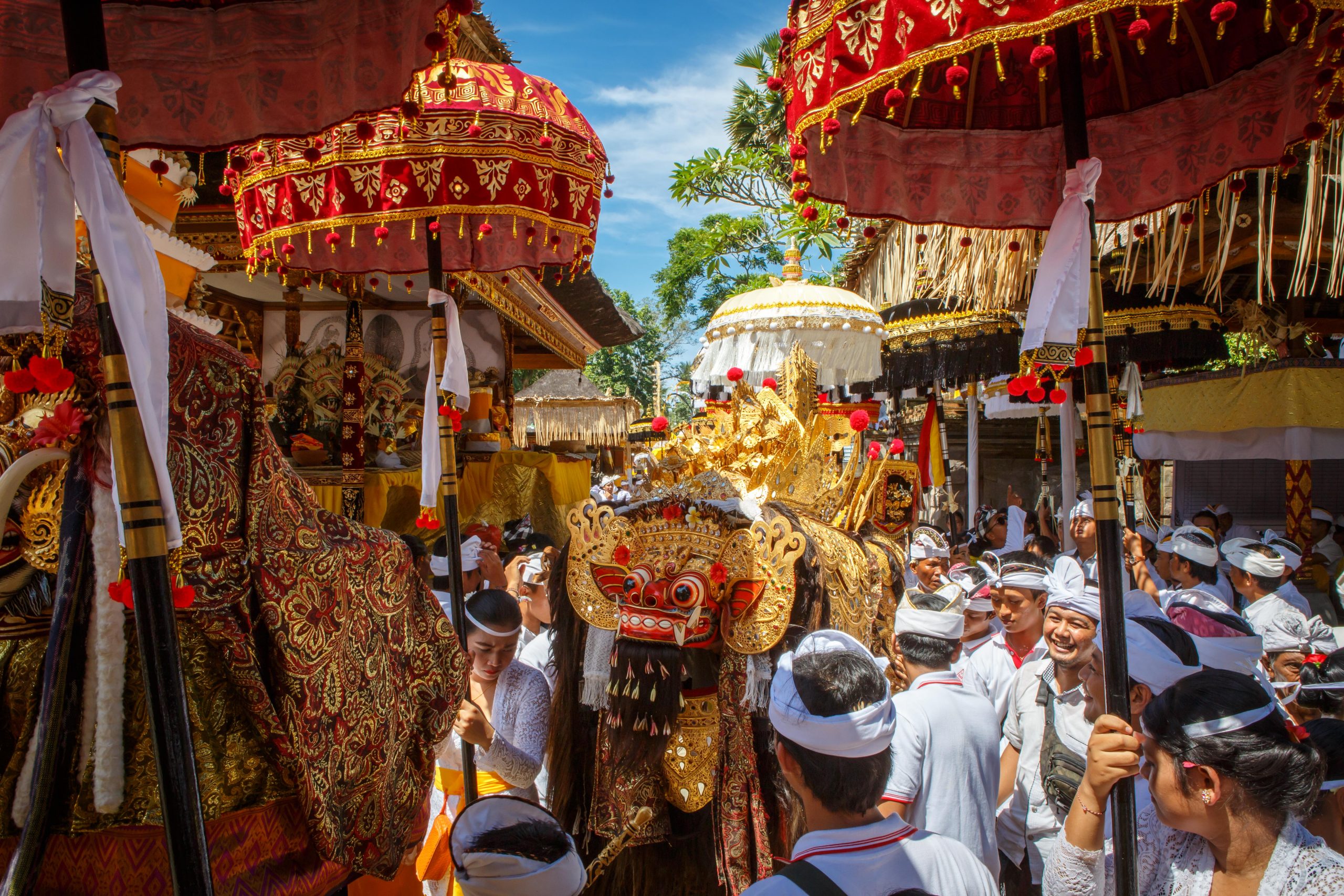
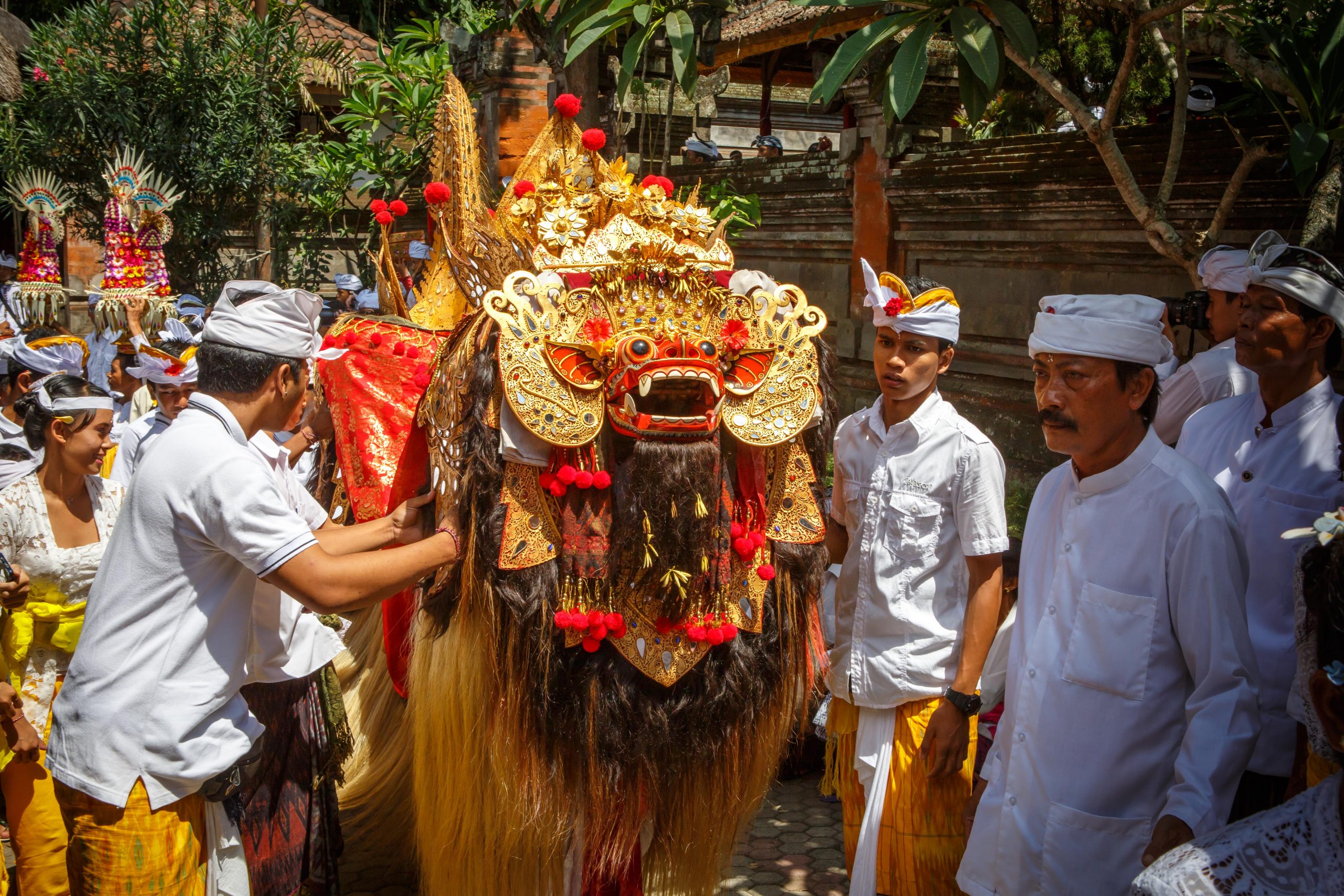
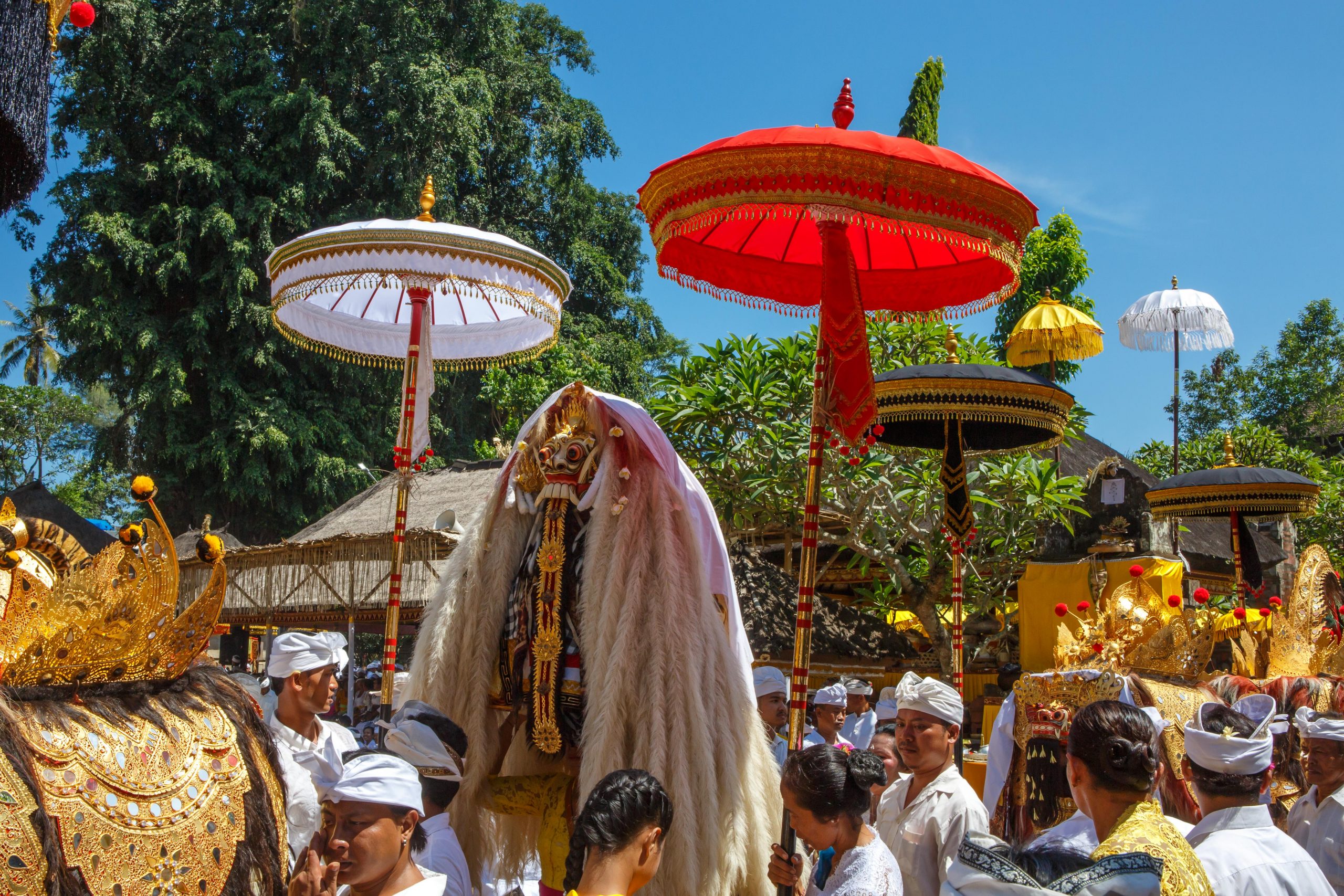
Sacred objects from different temples are brought to Pura Samuan Tiga for purification. These include pratima (sacred palanquins), the mythical Barong, protector of the community, and the fearsome Rangda, the queen of dark spirits in Balinese mythology.
Each village takes its turn presenting its sacred objects in elaborate processions through the temple courtyards.
A barong is brought into the temple grounds.
Ritual Dances and Processions
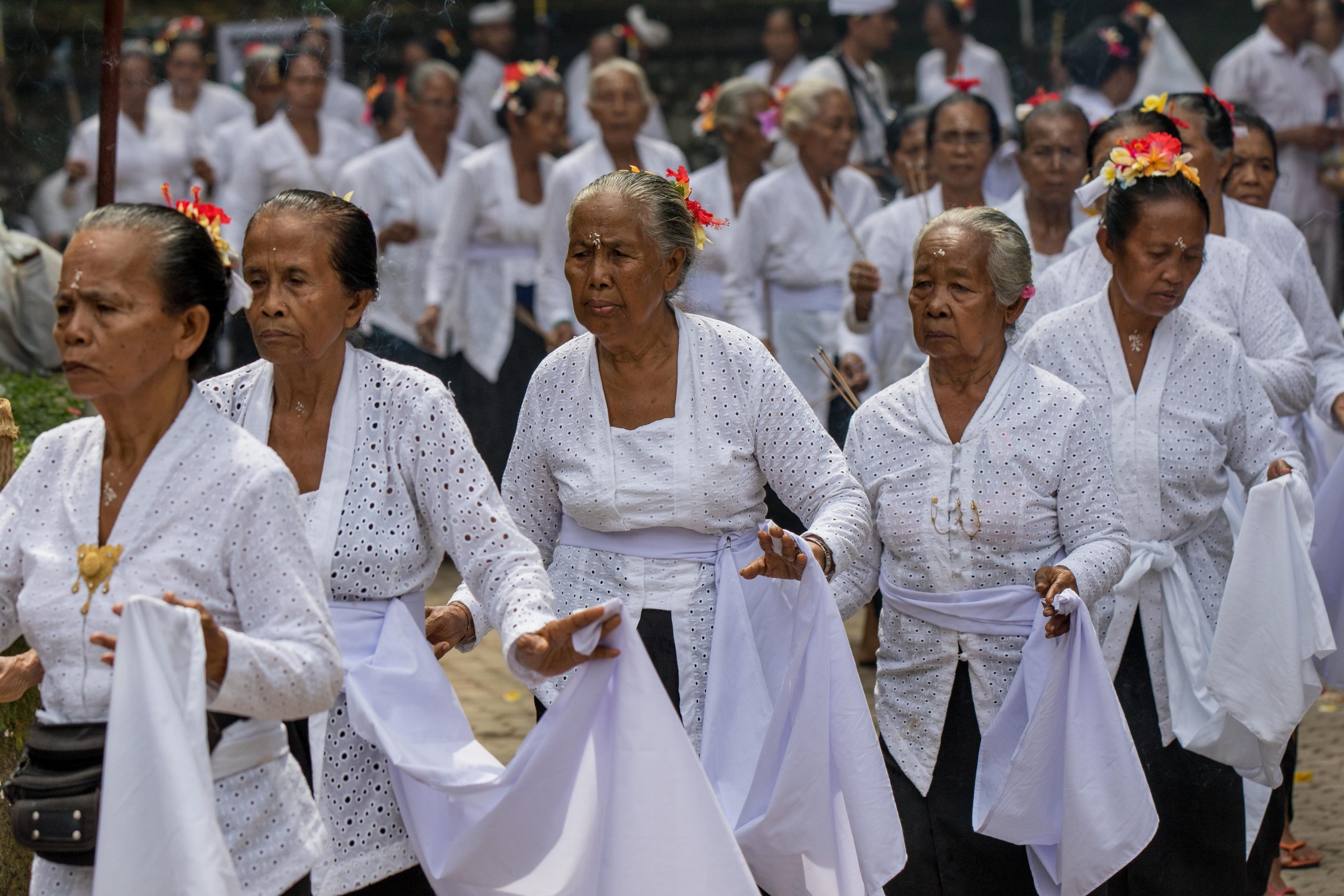
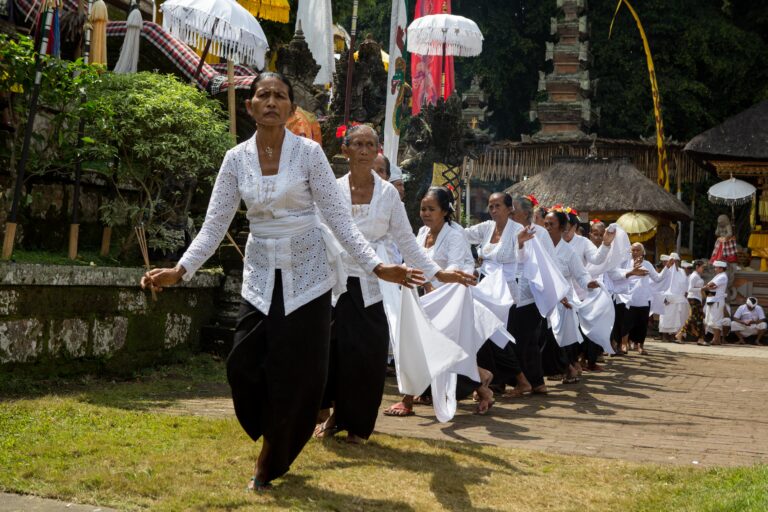
Among the most beautiful ceremonies is the Nampyog dance, in which sixty female devotees — known as permas — hold hands while slowly circling the temple’s middle courtyard in a gentle swaying movement.
The Nampyog, also referred to as the Sutri Dance. It is performed three times.
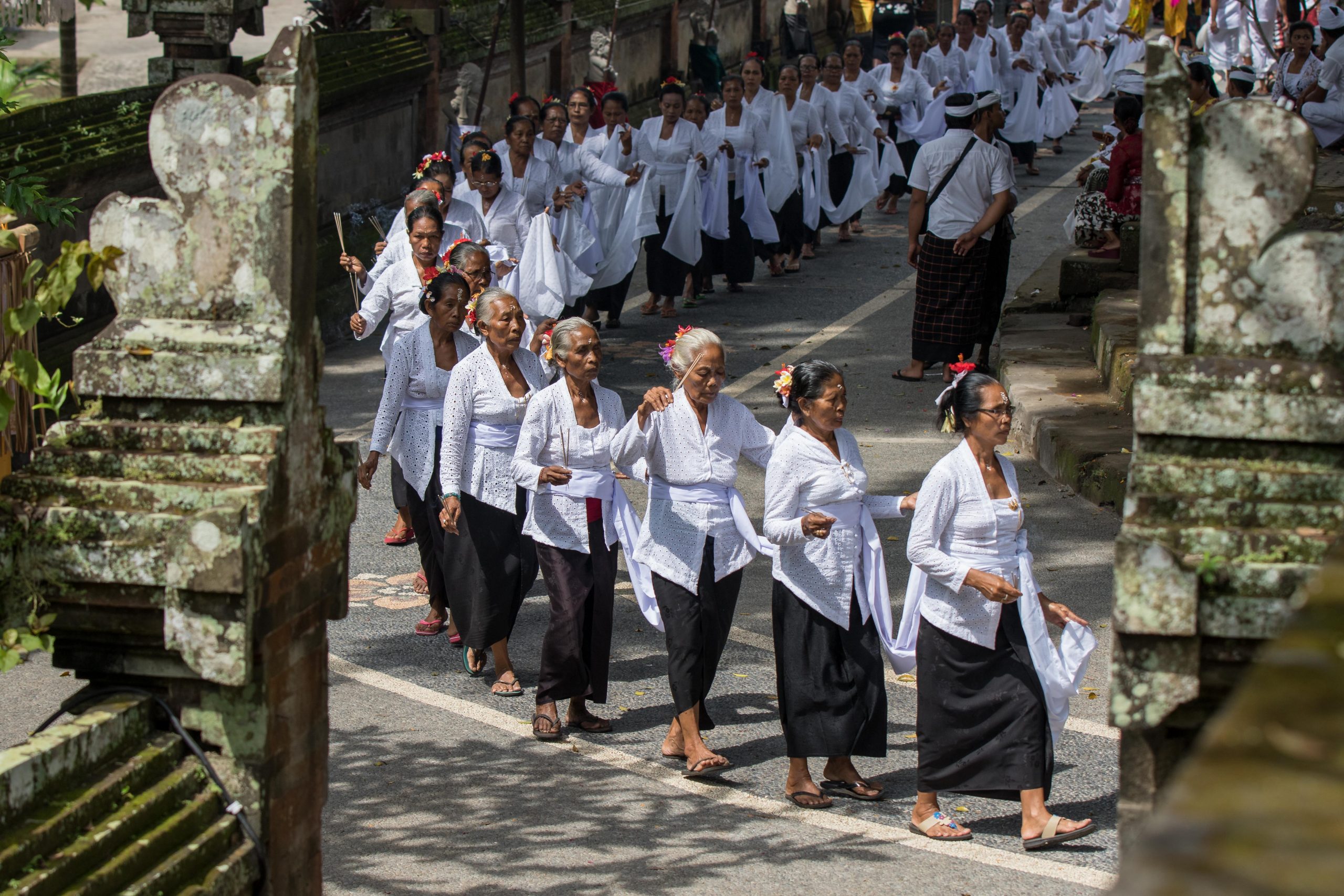
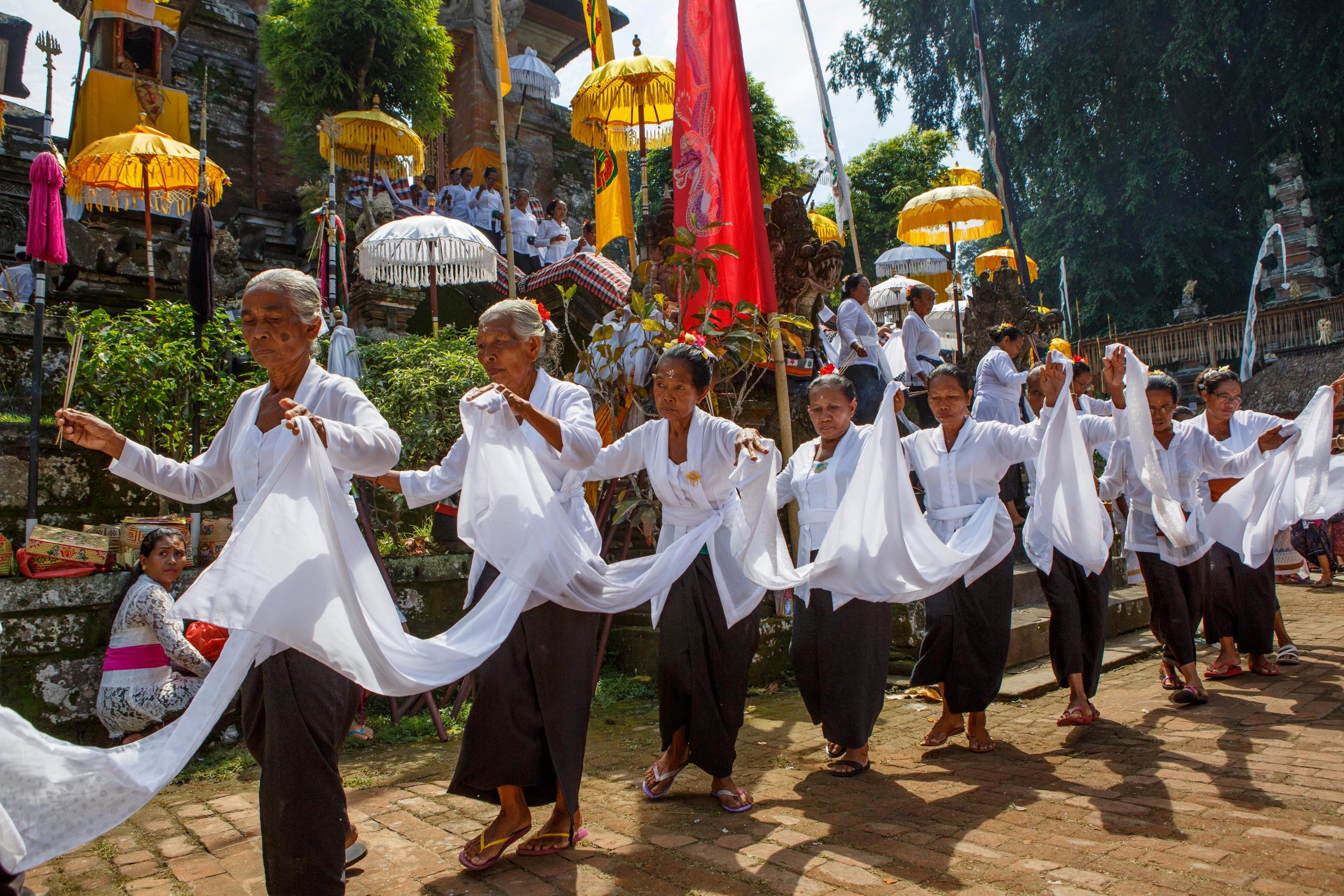
The dance is followed by Ngober Nyambung, a rarely seen procession where the women link themselves together using long white shawls tied around their waists.
Ngober Nyambung.
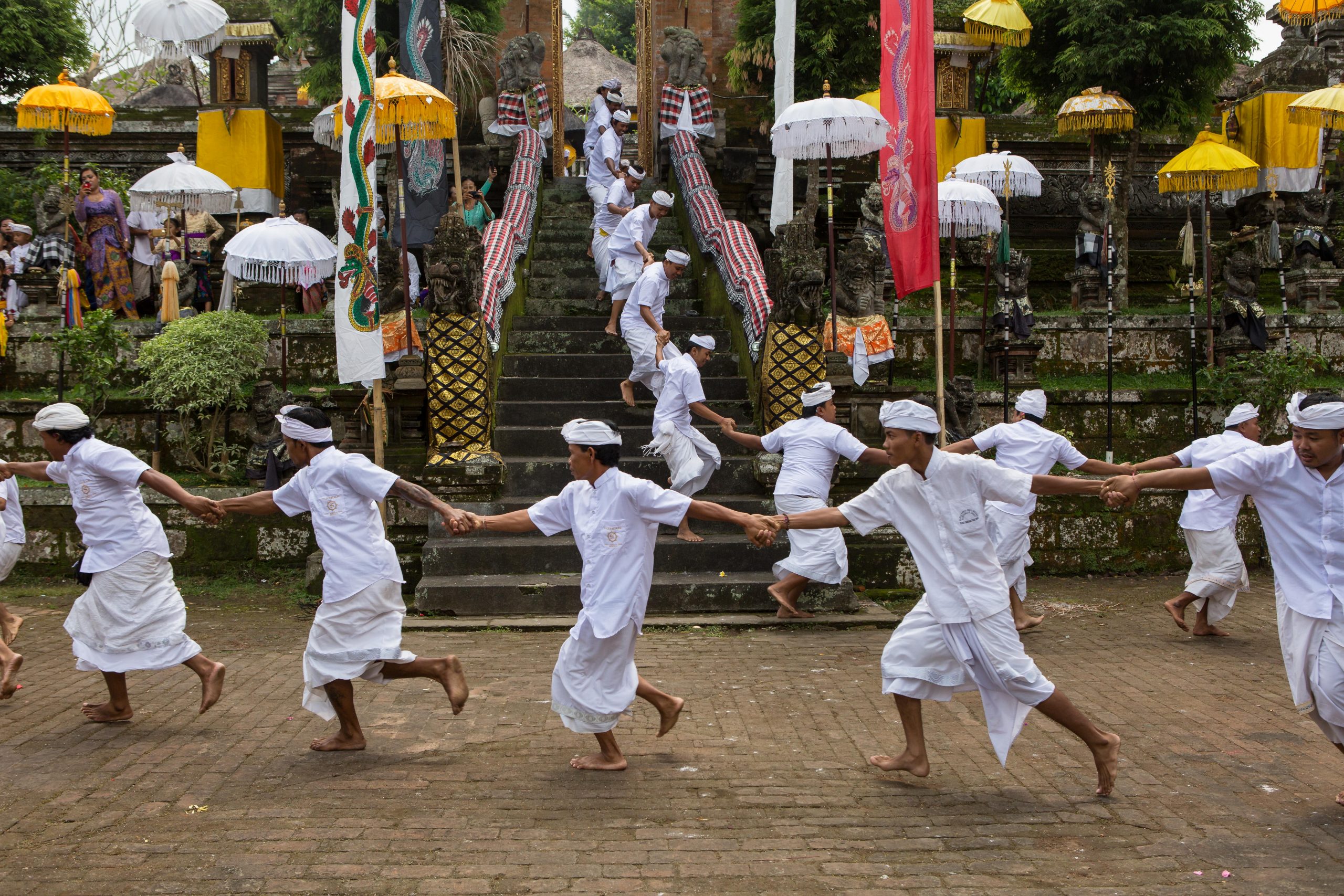
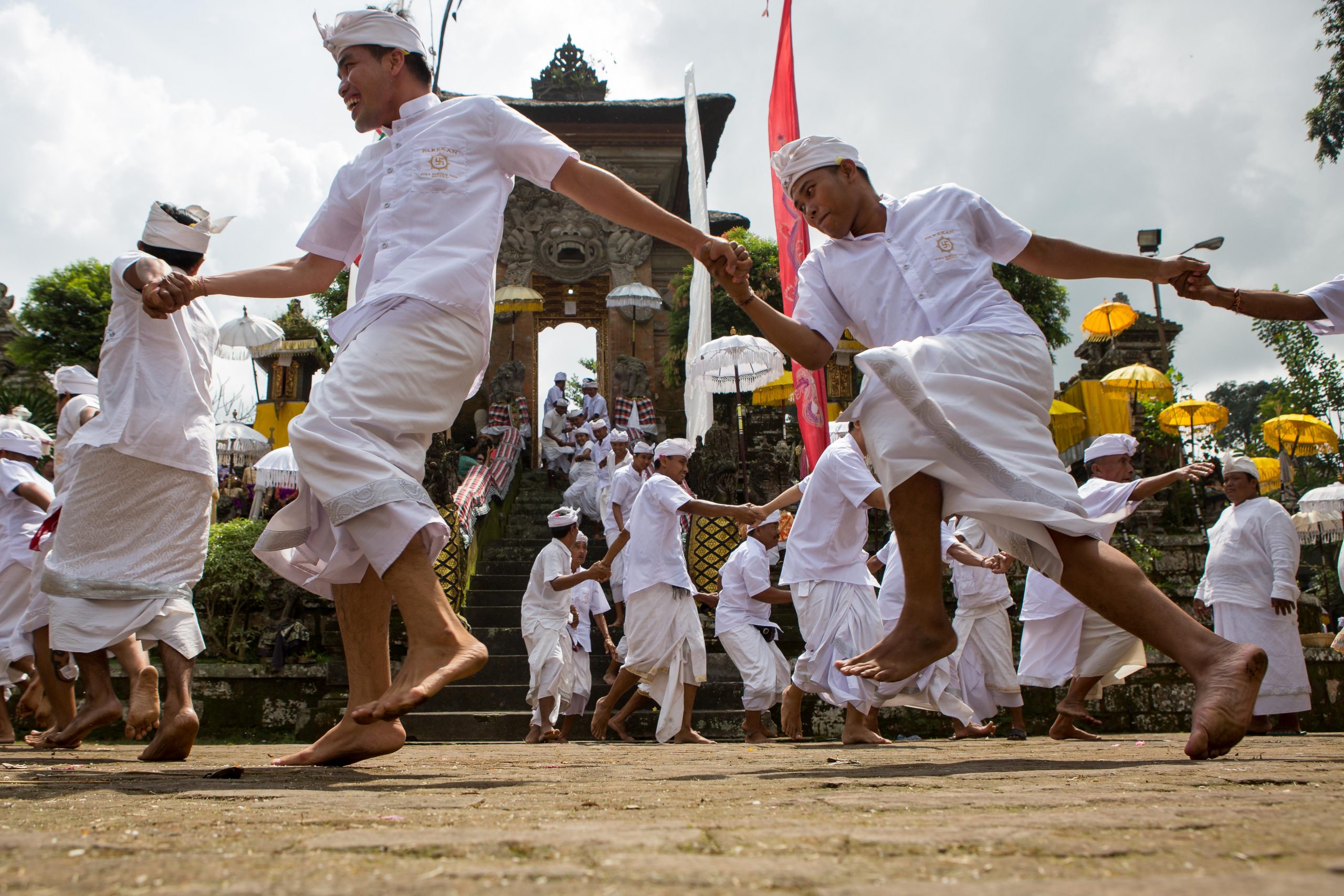
Another dramatic ritual is Ombak-ombakan, during which 360 male devotees (parekan) circle the temple courtyard while shouting and moving in waves, symbolically cleansing the temple grounds before the next ceremony begins.
Ombak-ombakan.
As they circle around the temple’s courtyard, the men are letting out cries as if possessed.
Siat Sampian – The Coconut Leaf War
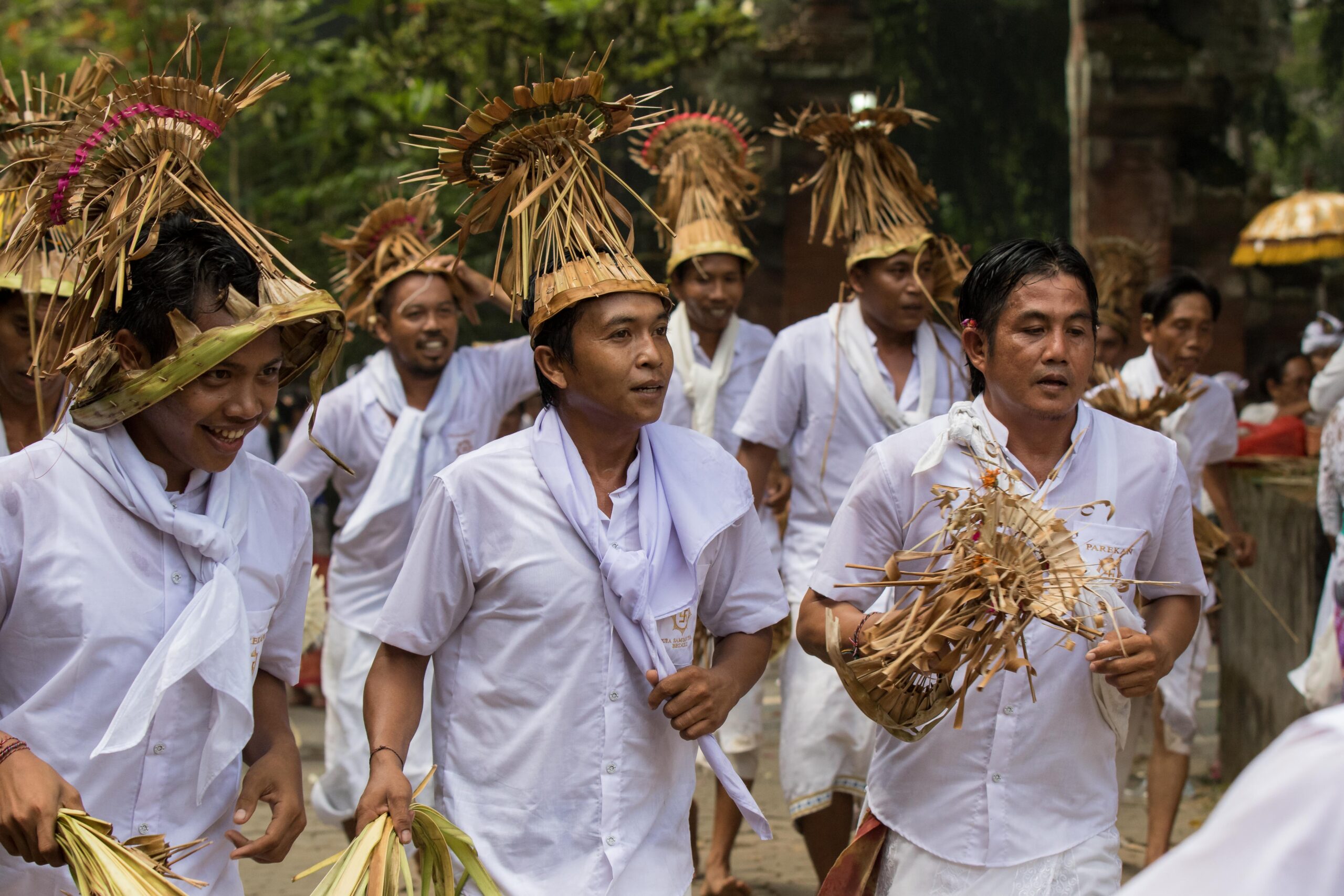
One of the most unusual rituals of the ceremony is Siat Sampian, or the sampian war.
Male devotees use young coconut leaves to stage a symbolic battle representing Rwa Bhineda, the Balinese concept of balance between opposing forces — good and evil, order and chaos.
In this ritual, the victor symbolises Dharma, while the defeated represents Adharma.
Siat Sampian.
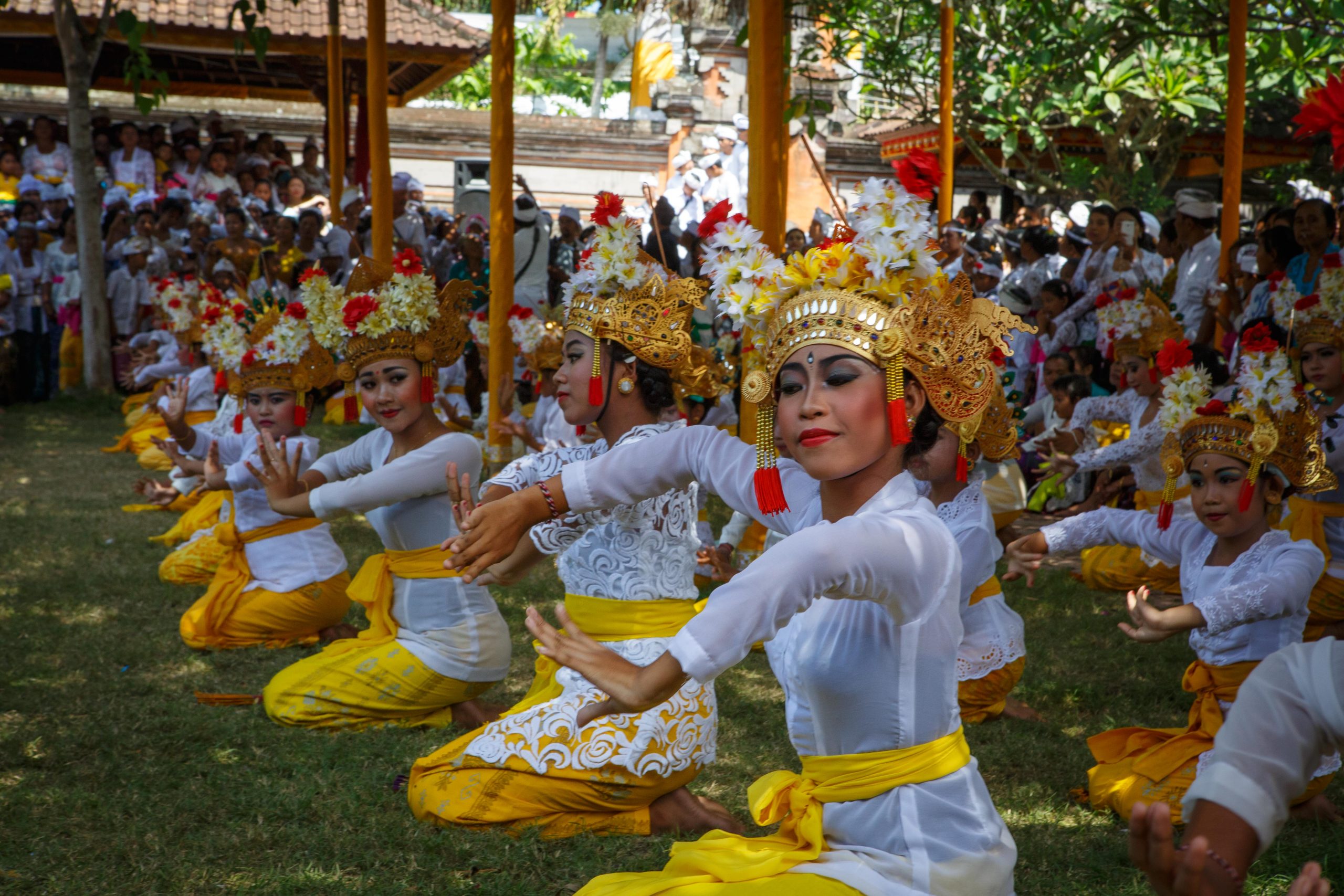
A traditional Legong Kupu-Kupu, or Butterfly Legong dance, to entertain guests as well as devotees.
Barong and Rangda
Central to Balinese mythology is the eternal struggle between Barong, the leader of the forces of good, and Rangda, the terrifying queen of dark spirits.
Barong, often depicted as a lion-like creature, protects the community, while Rangda commands an army of witches known as leyak. Their mythical battle symbolises the constant balance between opposing forces that lies at the heart of Balinese spiritual life.
Barong.
Rangda.
Explore the Photo Gallery
A curated visual collection from Pura Samuan Tiga – Ubud, Bali