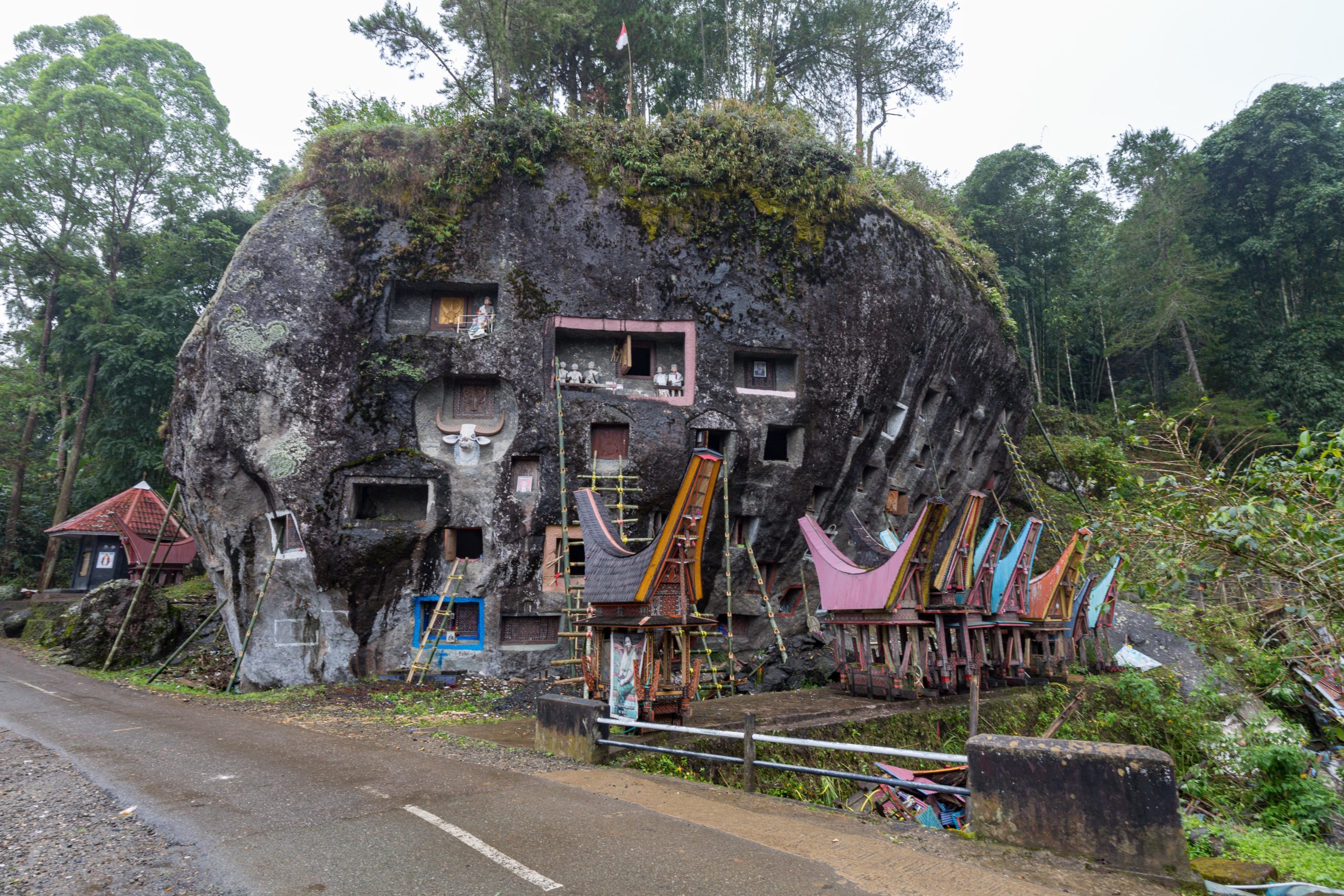
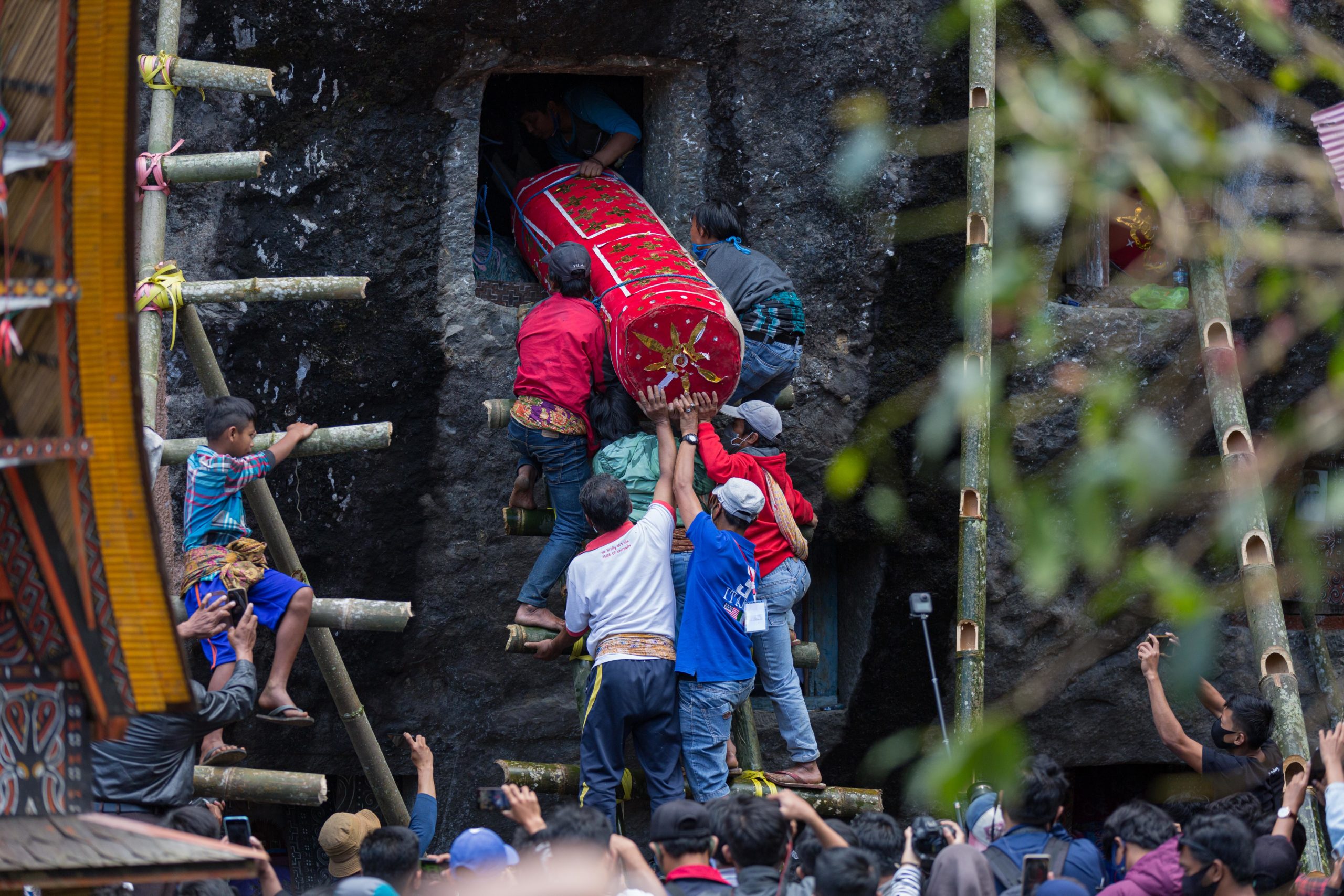
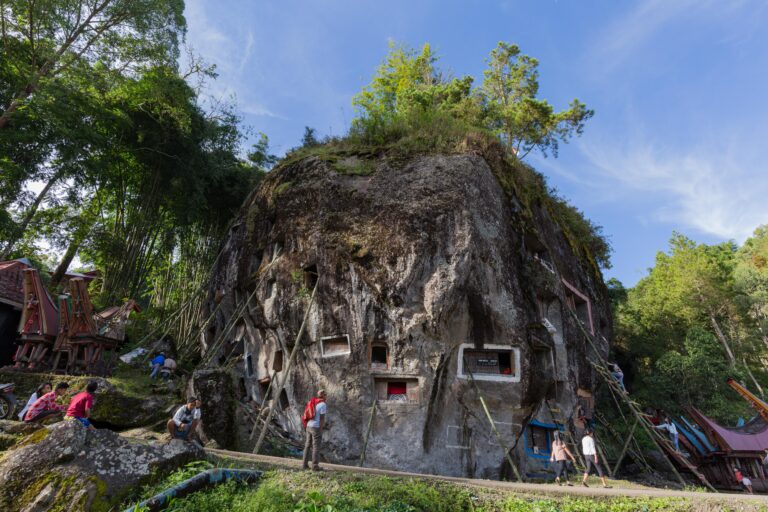
At Lo’ko Mata, burial chambers are carved directly into a large natural rock in Tana Toraja.
As part of the broader cultural landscape of Tana Toraja, the site represents a different approach to burial, where the rock itself is hollowed out to create enclosed spaces for the deceased.
Unlike cliff or cave sites, Lo’ko Mata is defined by freestanding stone formations, each containing one or more family graves.
The rock graves at Lo'ko Mata in Tana Toraja, South Sulawesi
Rock-Cut Chambers
At Lo’ko Mata, large boulders are carved internally to form burial chambers.
Openings are cut into the rock, often rectangular, and closed with wooden doors. Behind these doors, coffins and remains are placed within the hollowed interior. Each chamber is typically used by a family, sometimes over multiple generations.
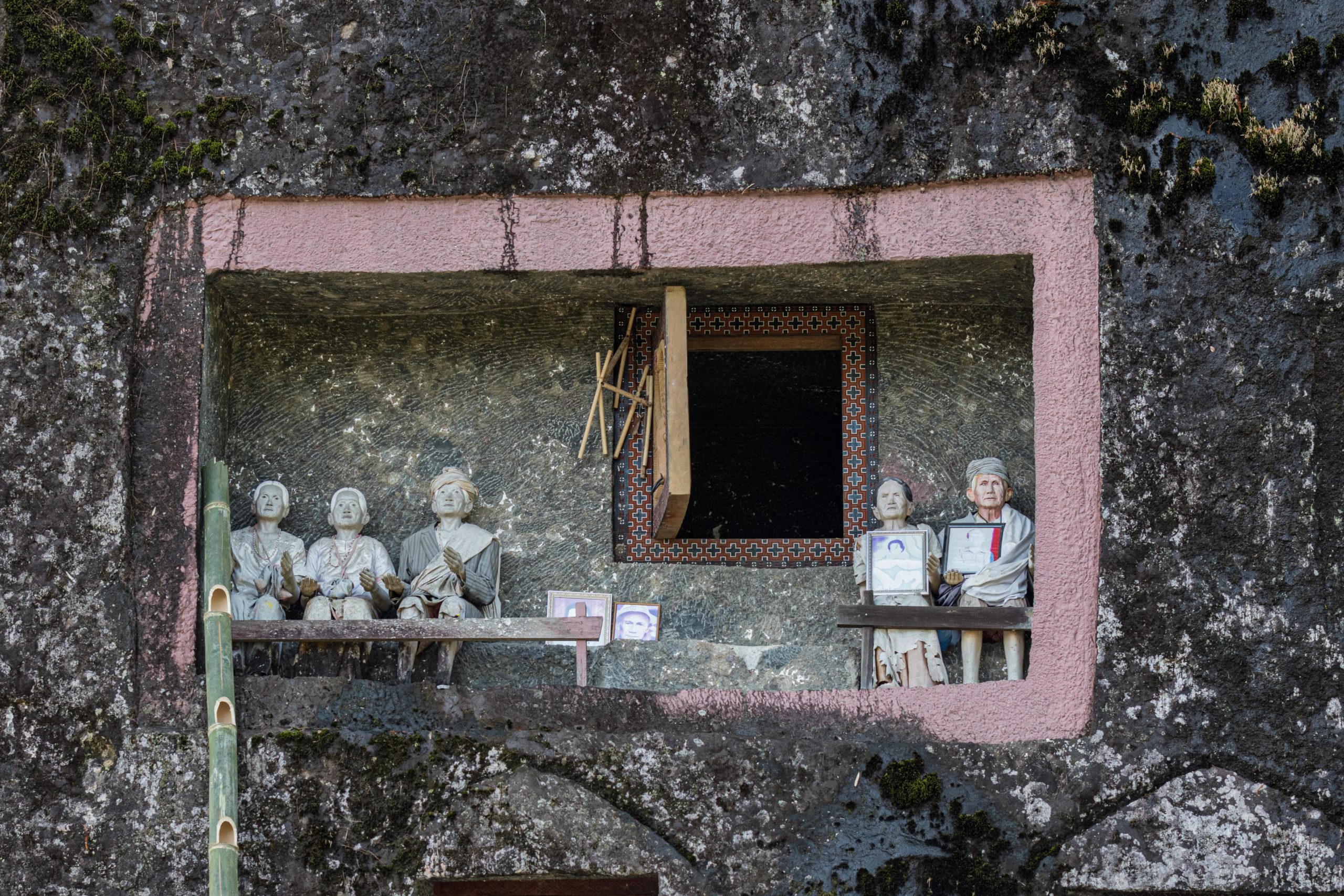
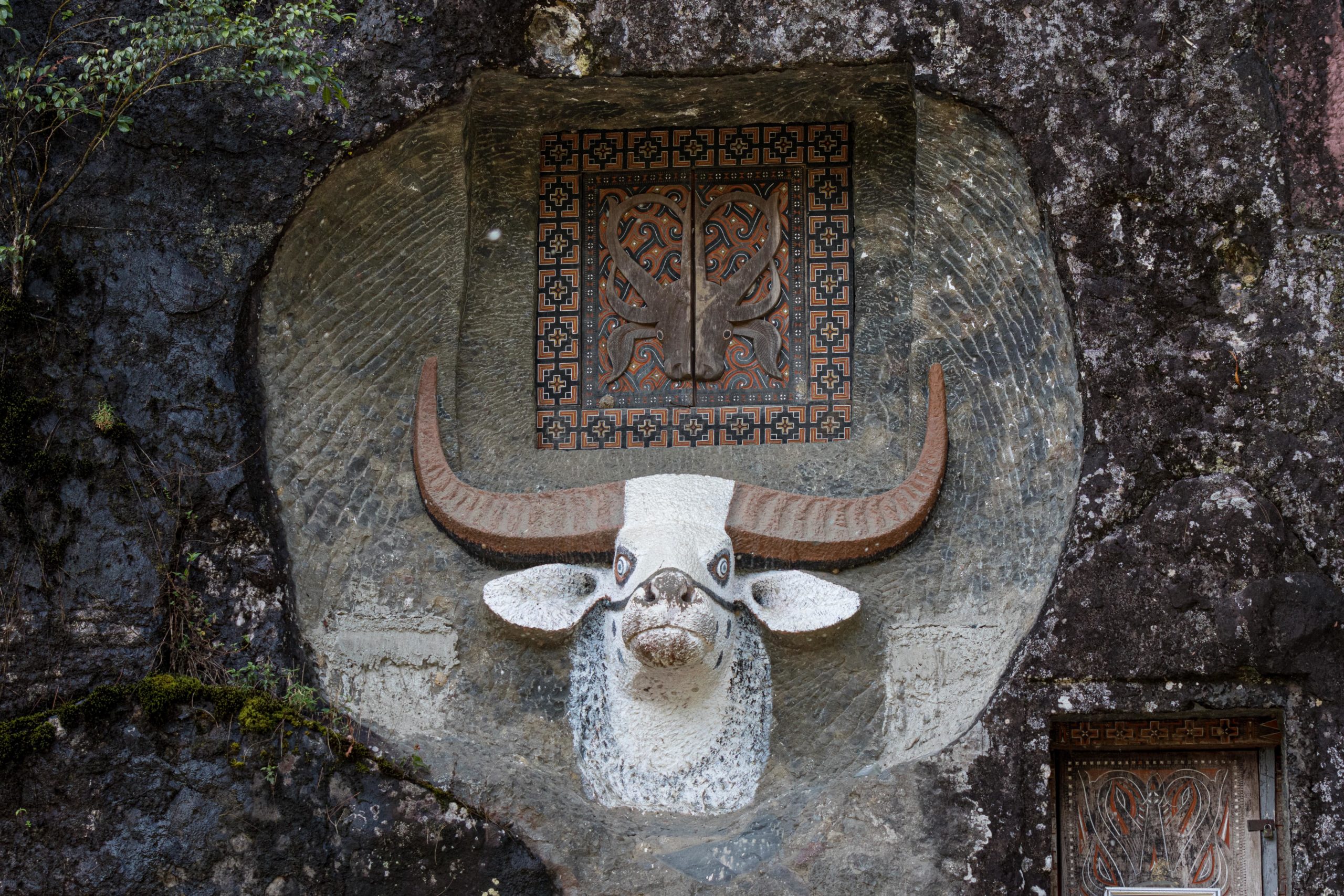
Some of the rock faces include a small carved balcony beside the opening, where tau tau are placed, extending the presence of the deceased to the exterior. In other cases, decorative elements are carved directly into the stone, including buffalo figures positioned below the entrance.
Tau tau effigies at a rock grave in Lo'ko Mata in Tana Toraja
Structure and Layout
The site consists of multiple stone formations, each functioning as a separate burial location.
Some rocks contain several chambers, while others hold only one. The entrances vary in size and placement, depending on the shape of the boulder and the space available inside.
Compared to Lemo and Londa, the layout is more compact and contained, with each unit clearly defined by the rock itself.
A rock grave at Lo'ko Mata in Tana Toraja
Doors and Condition
Many of the chamber openings are closed with wooden doors, some of which are carved or decorated in a style consistent with Toraja patterns.
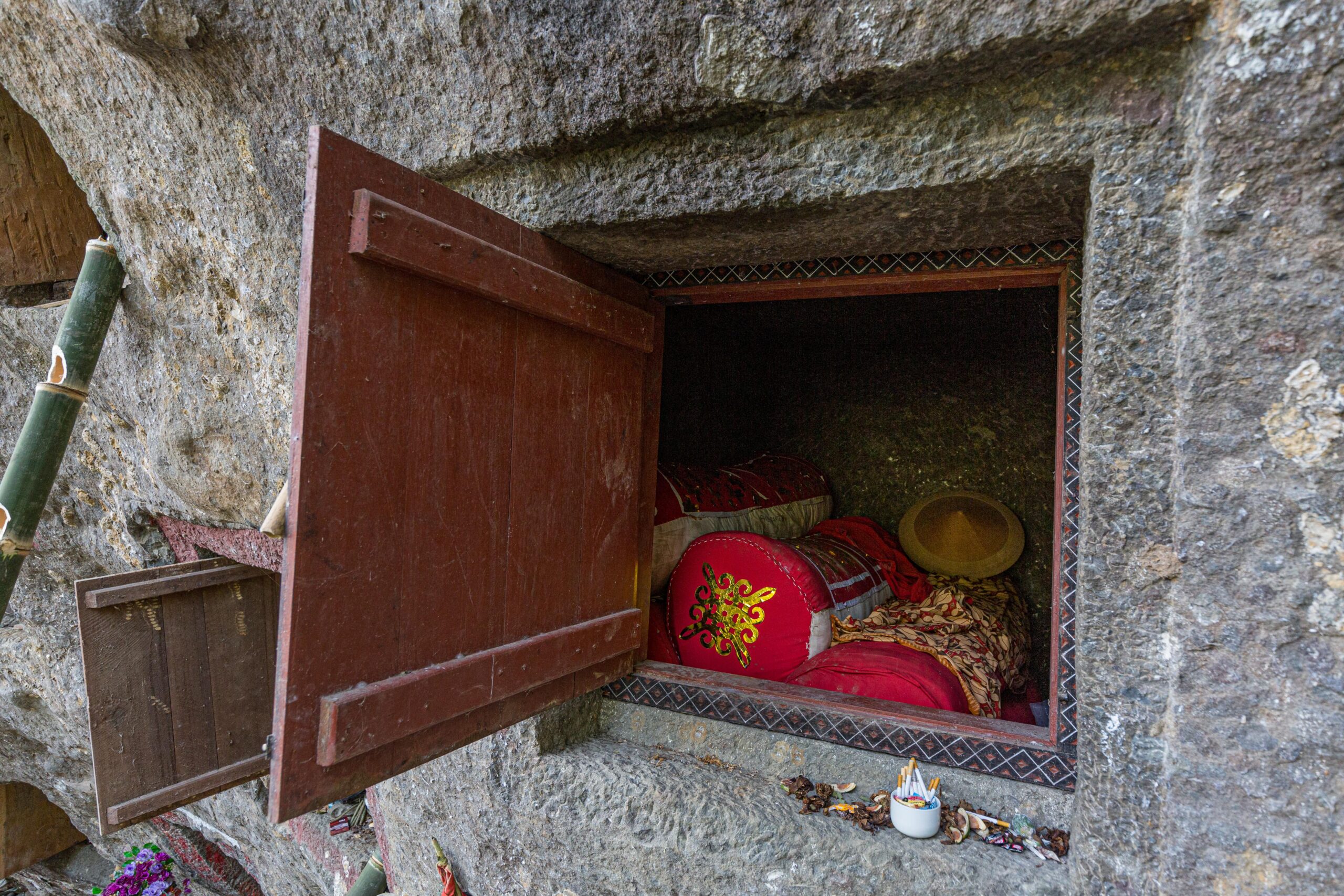
Over time, these doors deteriorate or are replaced, and in some cases remain partially open. This reveals the interior space and its contents, though visibility is limited.
The condition of each chamber varies, reflecting age, use, and exposure.
Coffins in a rock grave at Lo'Ko Mata, in the highlands of Tana Toraja
Relationship to the Landscape
Unlike cliff graves, which are vertical, or cave burials, which extend inward, Lo’ko Mata is defined by isolated rock forms within the landscape.
The burial chambers are contained within these natural structures, creating a more enclosed and individualised setting.
The site remains part of the surrounding environment, located among vegetation and village land rather than separated from it.
A coffin is placed in a rock grave at Lo'ko Mata
Photographing Lo'ko Mata
The following gallery focuses on form and structure of the rock graves at Lo’ko Mata — the relationship between carved openings, stone surfaces, and the surrounding landscape.
The images explore how each rock functions as a distinct burial space within the wider context of Tana Toraja.
Explore the Photo Gallery
A curated visual collection from Lo’ko Mata – Tana Toraja