Warrior Tradition and Harvest Ritual in West Sumba
Pasola is one of the most dramatic traditional ceremonies on the Indonesian island of Sumba. During this ritual battle, hundreds of horsemen ride across open fields and throw wooden spears at one another in a spectacular display of courage, skill and tradition.
Although it may look like a chaotic battlefield to outsiders, Pasola is in fact a sacred ritual deeply rooted in the Marapu belief system, the ancestral religion of the Sumbanese people. The ceremony is performed to maintain harmony between humans, nature and the ancestral spirits, and to ensure a successful agricultural season.
At the heart of Pasola lies the belief that blood spilled during the battle fertilizes the earth, bringing prosperity and good harvests to the community.
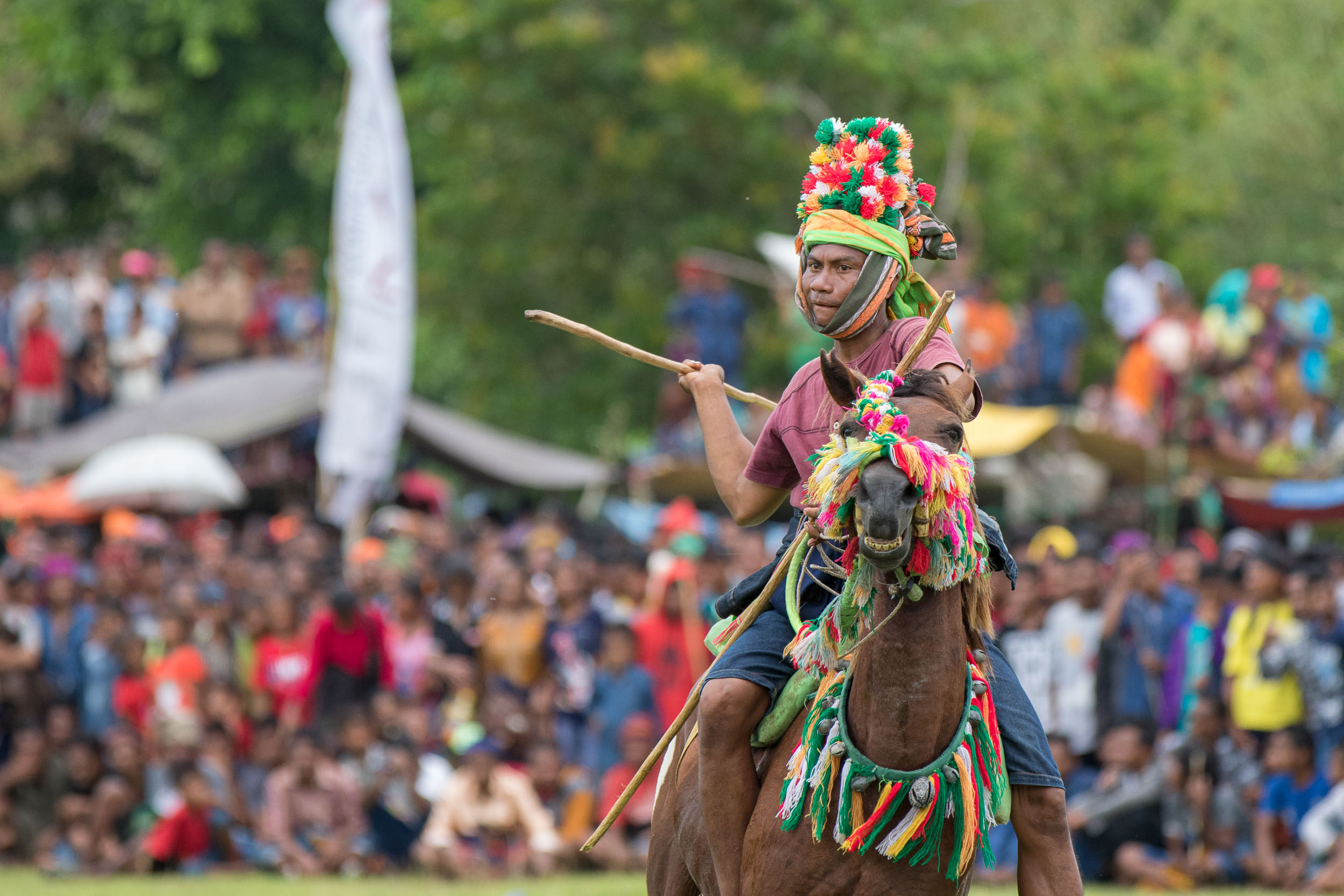
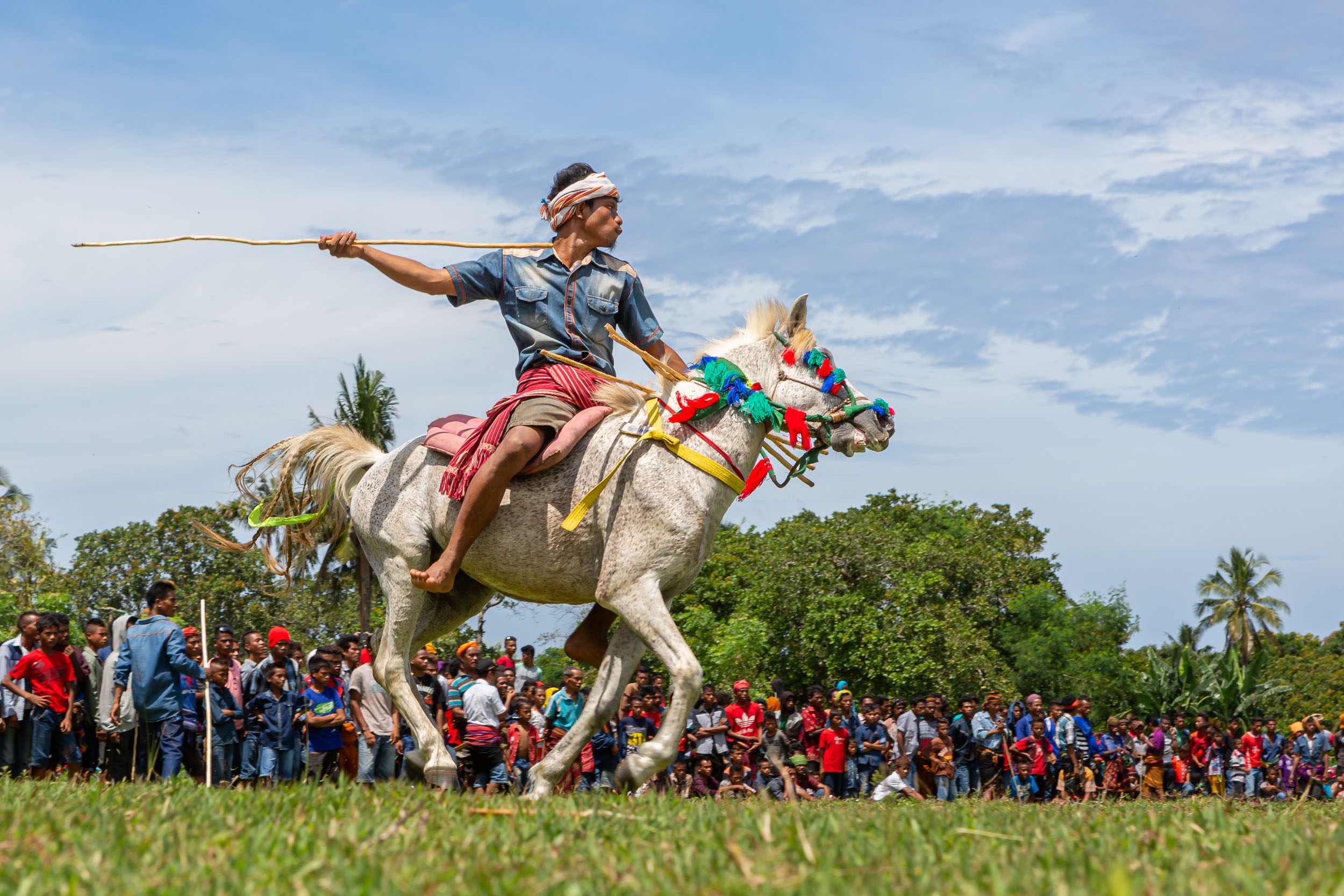
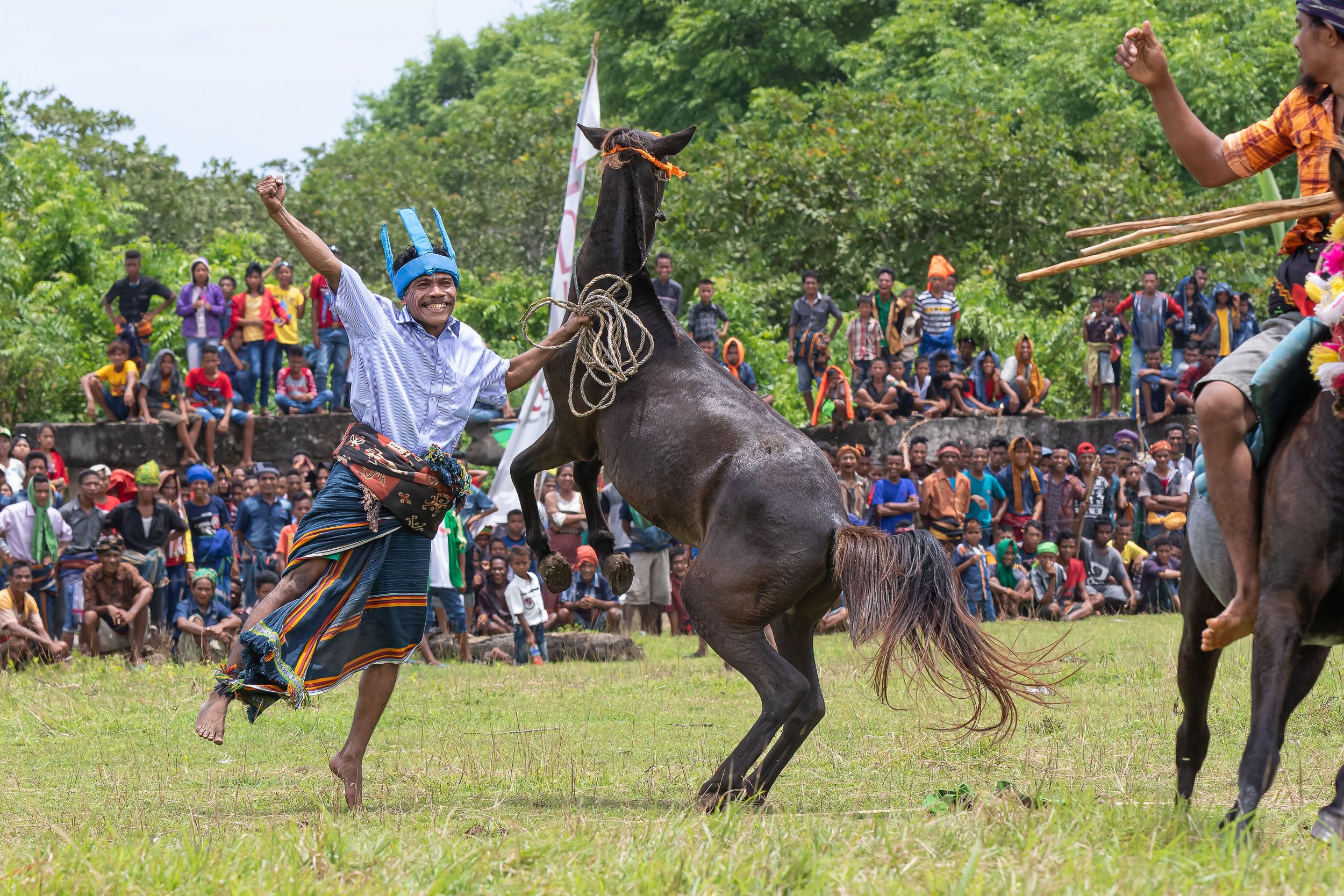
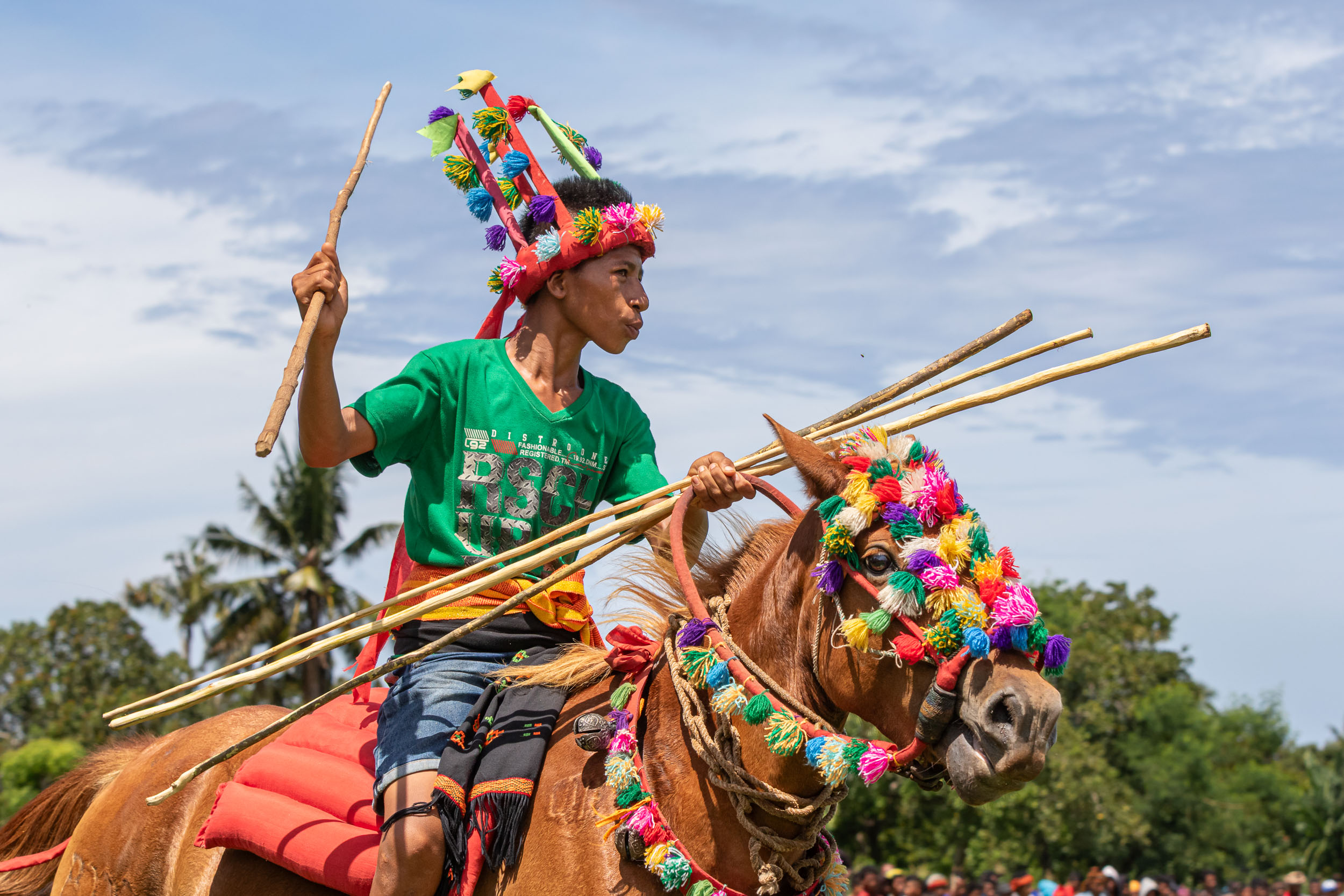
A Pasola rider ready to throw a wooden spear at the opposing team.
Ritual Origins of Pasola
The word Pasola derives from the Sumbanese word sola, meaning spear.
According to local tradition, the ritual evolved from conflicts between neighbouring villages that were later transformed into a ceremonial battle governed by ritual rules. One widely told legend speaks of a noblewoman who fell in love with a man from a rival village. The conflict that followed between the two communities eventually gave rise to the ritualized battle that is performed today.
Over time the violent conflicts of the past were transformed into a ceremony that symbolically expresses conflict, reconciliation and the balance between the spiritual and physical worlds.
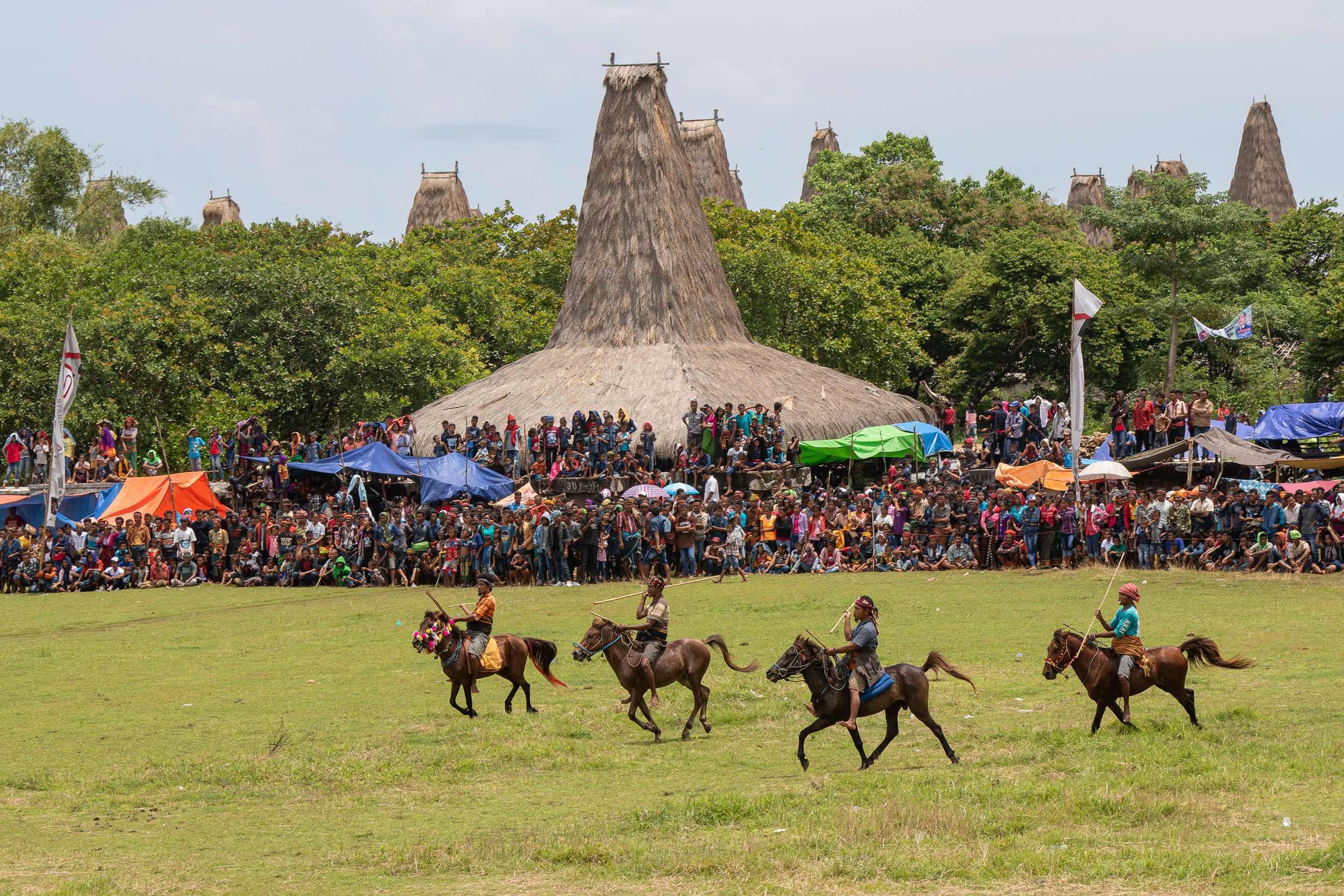
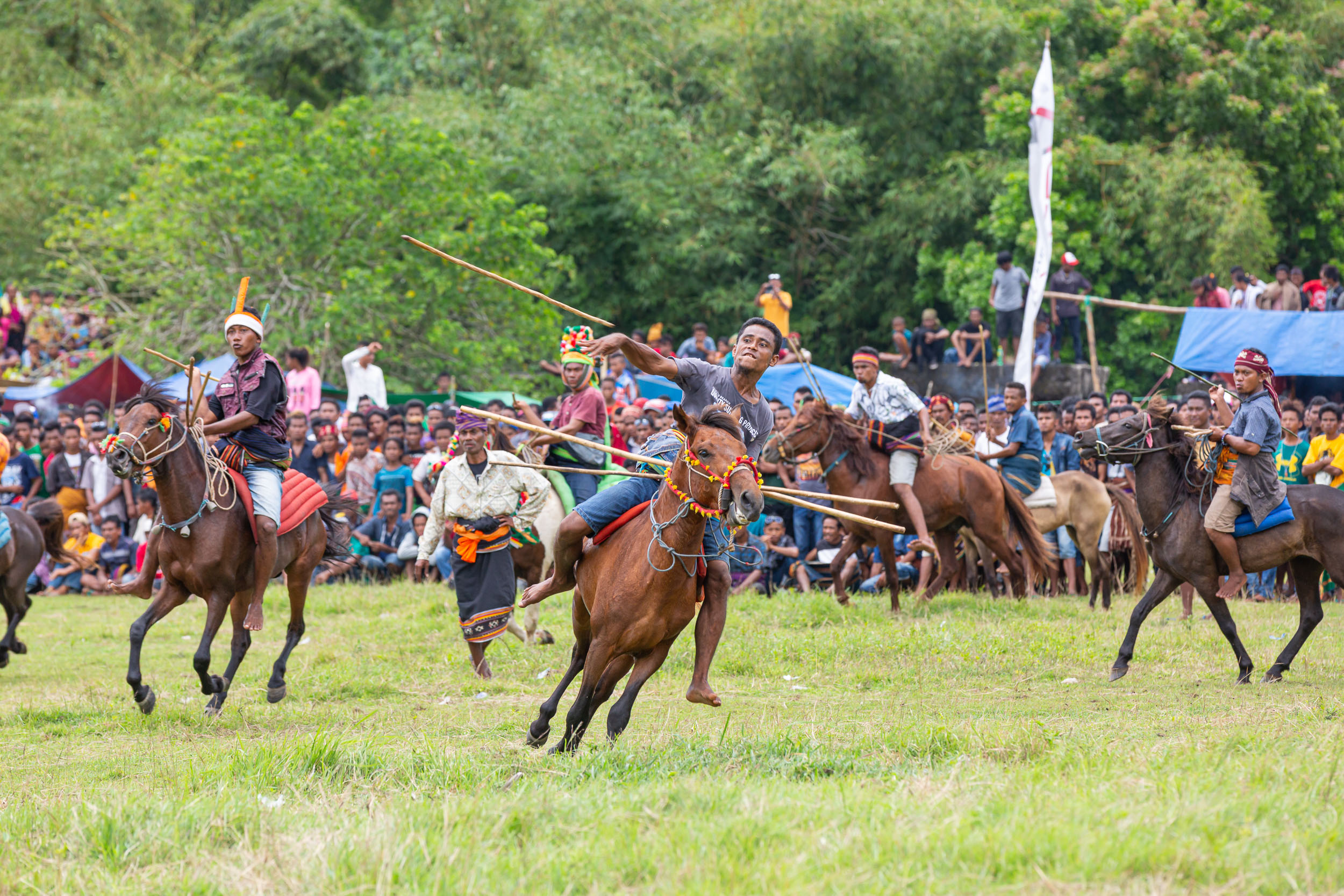
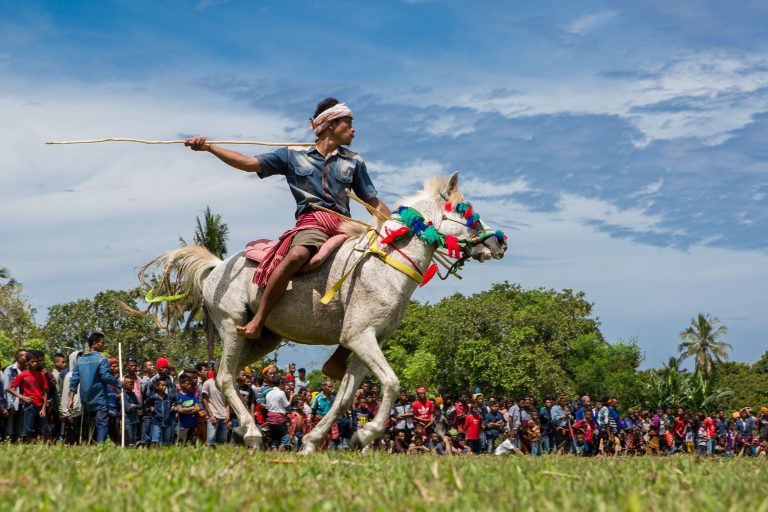
Thousands of spectators gathering around the Pasola field as riders charge across the field.
The Sacred Month: Wula Nyale
Pasola does not take place on a fixed calendar date.
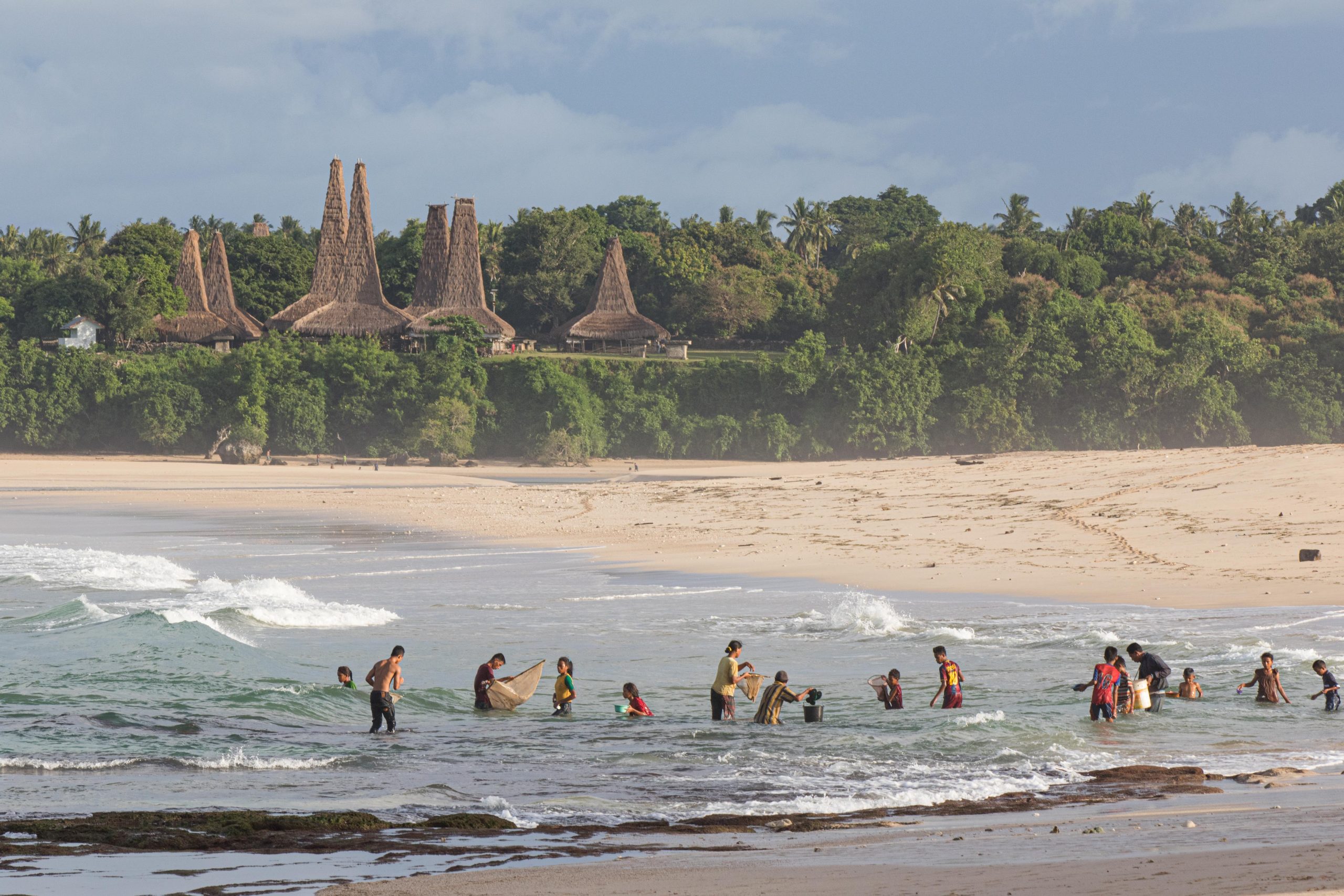
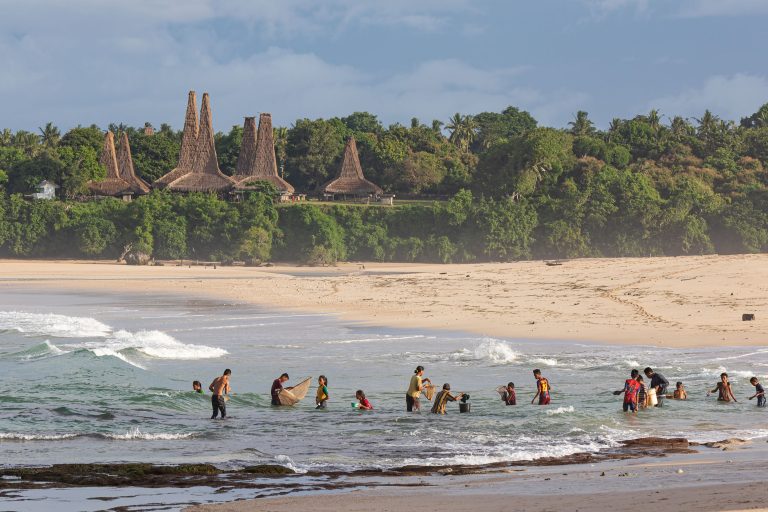
Instead, the timing of the ceremony is determined by the appearance of Nyale sea worms, which emerge along the coast of West Sumba once each year.
In some regions, particularly Wanokaka, the weeks leading up to Pasola are known as Wula Nyale, the sacred month of Nyale. During this period the community observes a number of ritual taboos intended to maintain spiritual balance.
These taboos may include:
avoiding the colour red, which is believed to attract violence or misfortune
avoiding loud noises such as drumming or shouting
refraining from certain agricultural activities
not parking boats on the beach so that the Nyale can arrive undisturbed
These restrictions reflect the belief that the community must maintain harmony with the spirits before the Pasola ceremony can take place.
Searching for the Nyale
Shortly before Pasola, the Rato, the ritual priests of the Marapu religion, gather along the coast before dawn.
Their task is to observe the arrival of the Nyale sea worms. The appearance of the worms is interpreted as a sign from the ancestors that the Pasola ceremony may proceed.
The priests carefully study the colour, size and abundance of the Nyale, interpreting these signs as omens for the coming agricultural year.
A large and healthy appearance of the worms may predict prosperity and good harvests, while unusual patterns may be interpreted as warnings of drought or crop failure.
Preparations in the Villages
Once the Nyale ritual has confirmed that Pasola may take place, preparations begin in the villages.
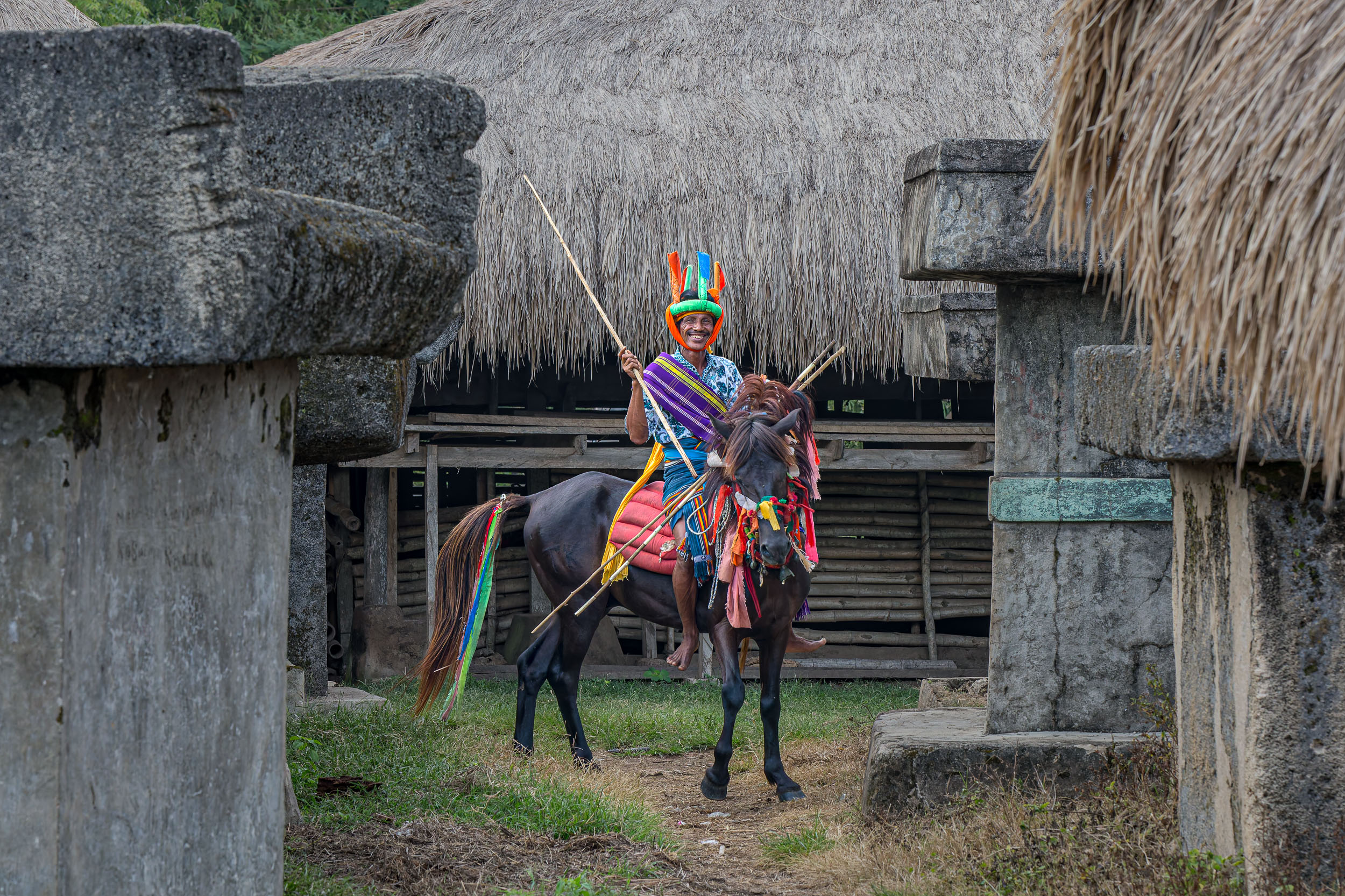
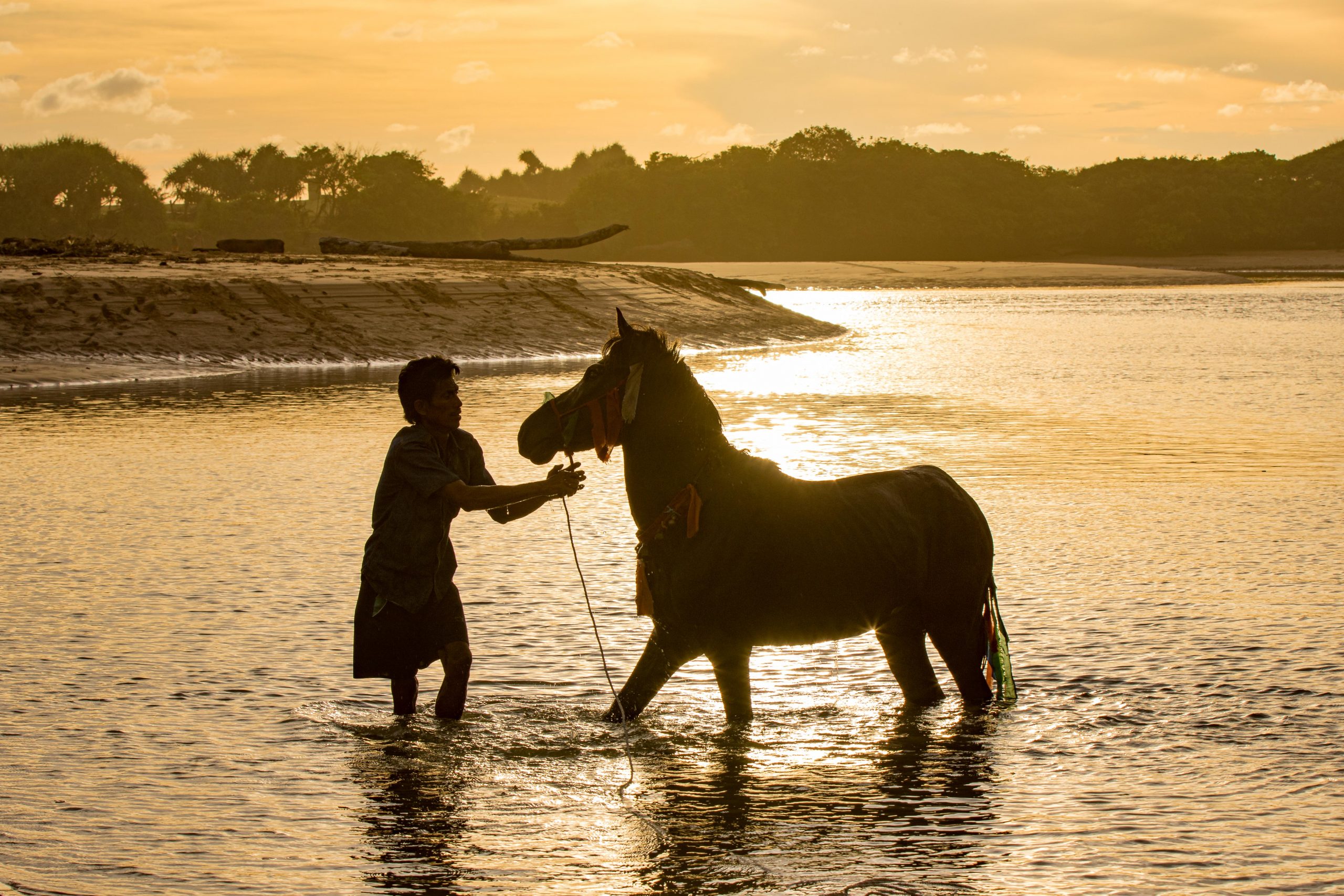
Young men prepare their horses and practice riding and spear throwing. The horses themselves are an important part of Sumbanese identity, and the small but strong Sumba horses are famous for their endurance and agility.
Pasola rider preparing his horse and wooden spears in the village before the ritual battle begins.
In some communities, young men also participate in Pajura, a traditional form of boxing that tests courage and physical strength before the Pasola battle.
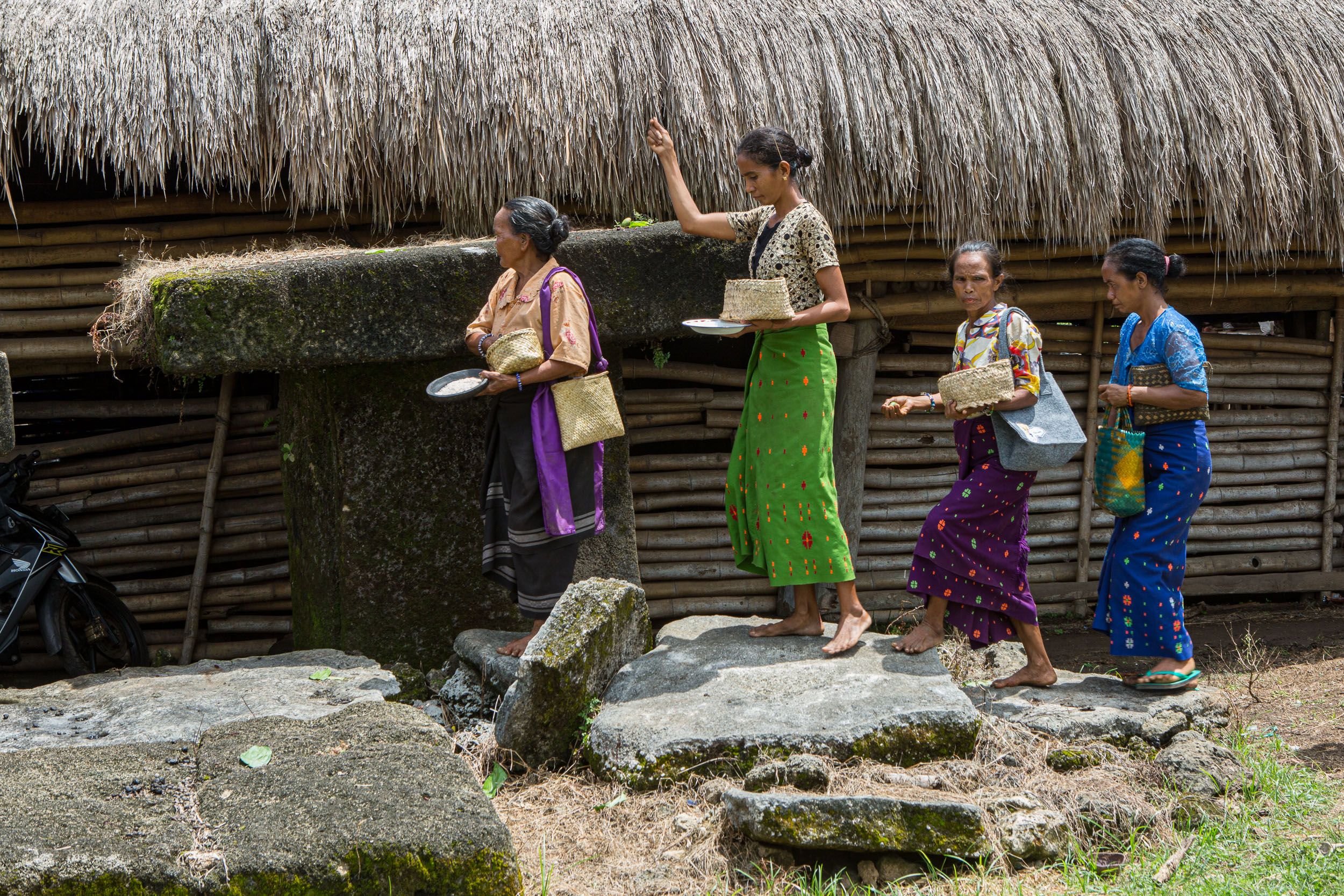
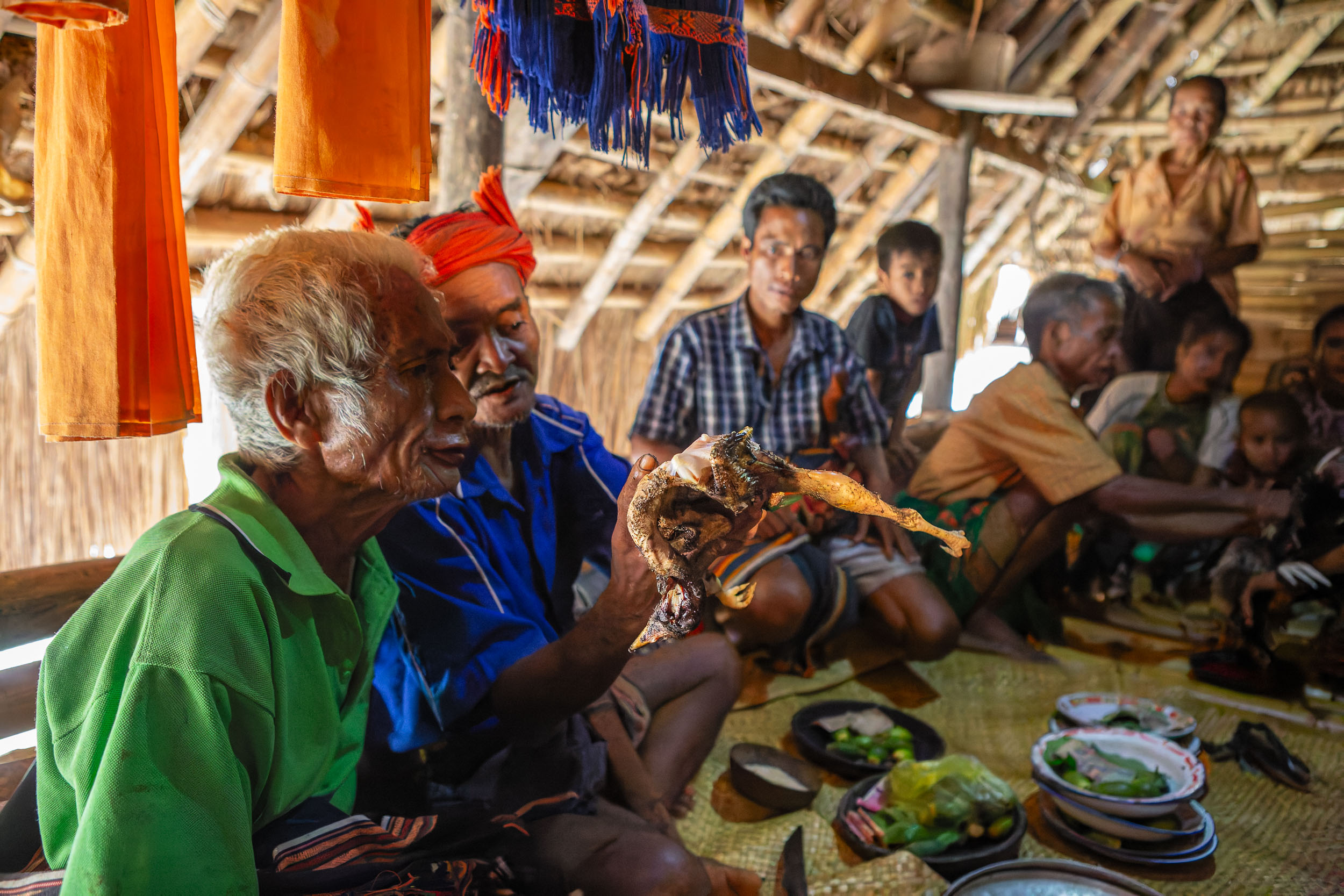
Offerings are made to the ancestral spirits, often involving the sacrifice of animals such as chickens. These offerings ask the ancestors for protection for the riders and the community.
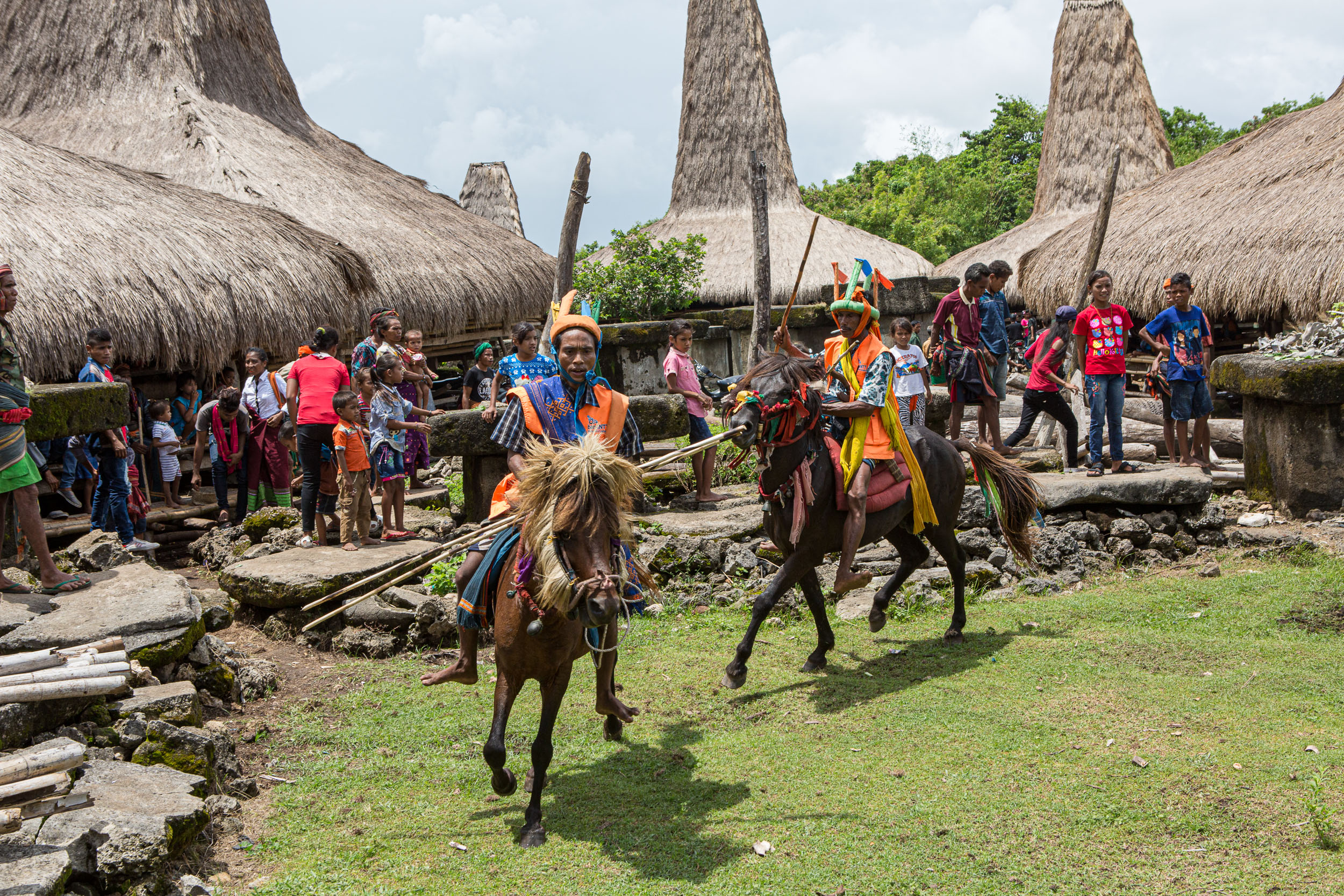
Horsemen gathering with their clans before riding to the Pasola battlefield.
The Pasola Battle
On the day of the ceremony, hundreds of horsemen gather on wide open fields near coastal villages such as Kodi, Wanokaka, Lamboya and Gaura.
The riders wear traditional Sumbanese textiles wrapped around their waists and ride bareback, without saddles. Each participant carries several wooden spears about 1.5 metres long.
At a signal from the elders, groups of horsemen charge toward one another at high speed across the field.
As they pass, the riders hurl their spears at opposing teams while skillfully dodging incoming attacks. The battle is intense, fast-moving and physically demanding.
Today the spears are blunt wooden sticks, but injuries still occur and riders occasionally fall from their horses.
Blood and Fertility
In traditional belief, blood spilled during Pasola is not considered an accident but a necessary sacrifice to the earth.
The blood nourishes the soil and ensures fertility for the coming agricultural season.
In earlier times the spears used during Pasola had sharp tips, and serious injuries or deaths were more common. Even today, when someone is wounded, it may be interpreted spiritually as the consequence of past wrongdoing or imbalance.
Importantly, revenge outside the Pasola arena is strictly forbidden.
The battle must remain within the ritual context.
Pasola in the Modern Era
In recent decades Pasola has attracted increasing numbers of visitors from across Indonesia and abroad. Large crowds gather around the battlefield, and the atmosphere can sometimes become highly charged.
Tensions occasionally arise between opposing groups of riders and spectators who want the fighting to continue longer or become more intense.
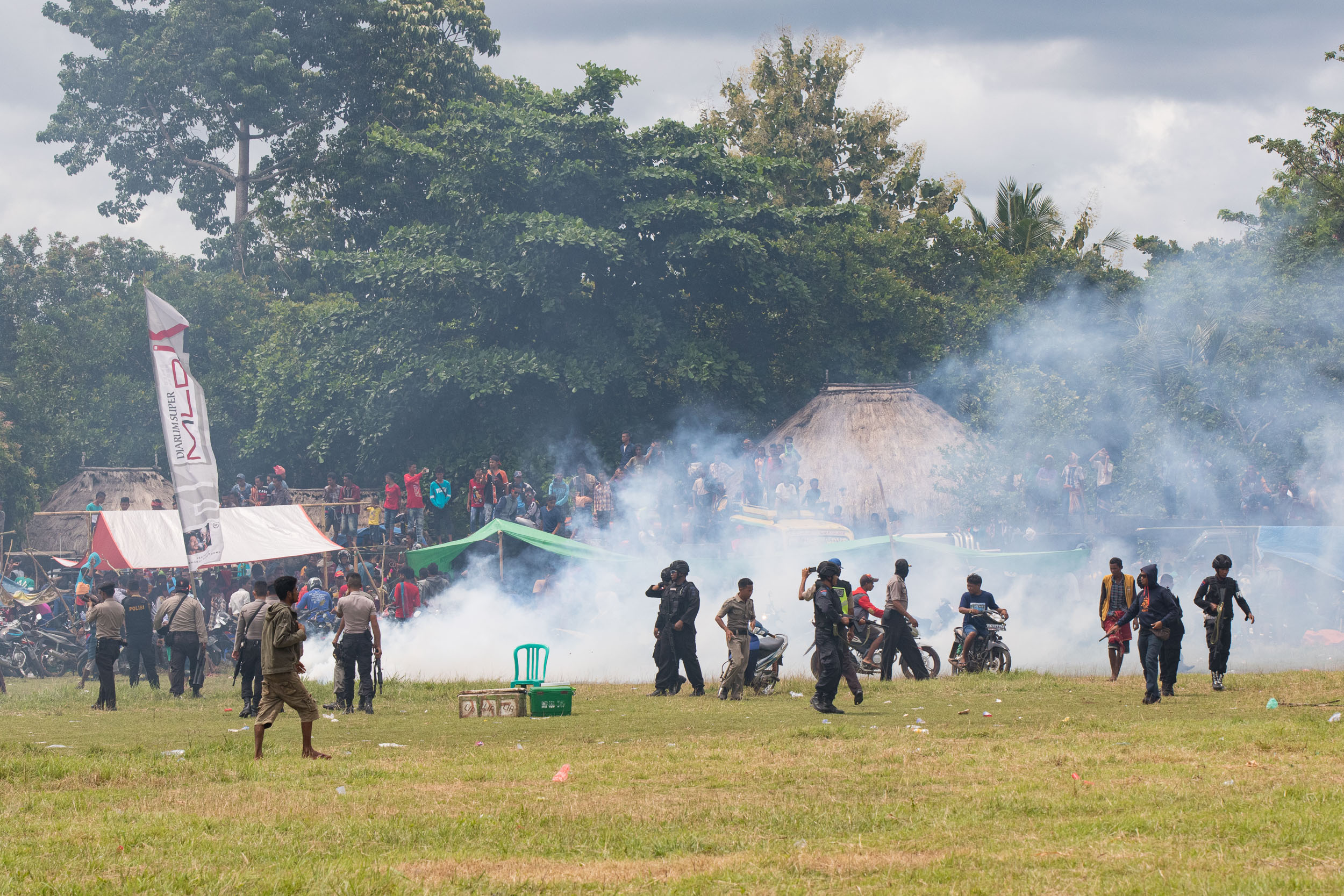
When rival supporters enter the field or conflicts begin to escalate, police and security forces may intervene to restore order. In some cases riot police have used tear gas to disperse crowds and prevent clashes between supporters of different villages.
Despite these challenges, local elders and priests continue to emphasize that Pasola remains fundamentally a sacred ritual rather than a sporting event.
Rituals After the Battle
When the priests determine that the battle has satisfied the ancestral spirits, the ceremony comes to an end.
The Rato enter the field to signal the end of the fighting, often in the late afternoon.
Final prayers and offerings are performed to honour the ancestors and secure blessings for the agricultural season.
Despite the intensity of the battle, opposing villages often participate in ritual reconciliation, leaving behind any animosity that occurred during the fight.
The blood shed during Pasola — whether from human wounds, sacrificial animals, or even the sweat of horses and riders — is believed to have fulfilled its purpose of nourishing the land.
Pasola and the Cycles of Life
Pasola is not an isolated event but part of a larger ceremonial cycle that links nature, agriculture and spiritual belief.
The ritual begins with the appearance of the Nyale sea worms, continues with the Pasola battle itself, and ends with ceremonies that prepare the community for the planting season.
For the Sumbanese people, Pasola remains one of the most powerful expressions of their cultural identity and their enduring relationship with the Marapu ancestral world.