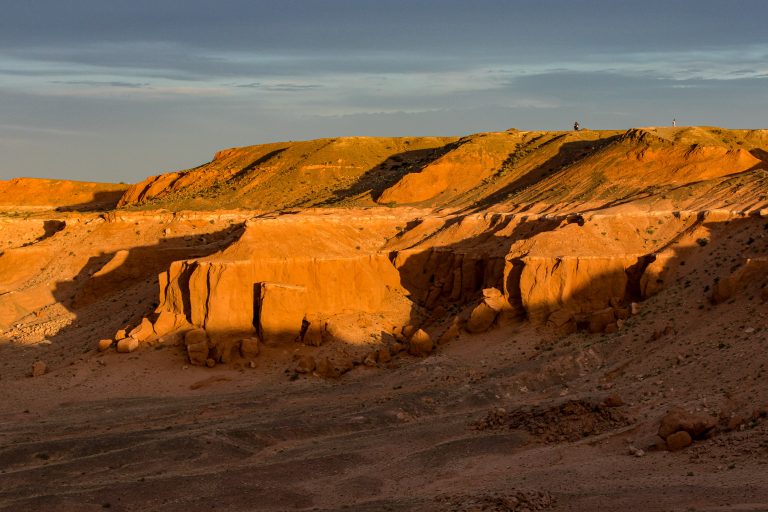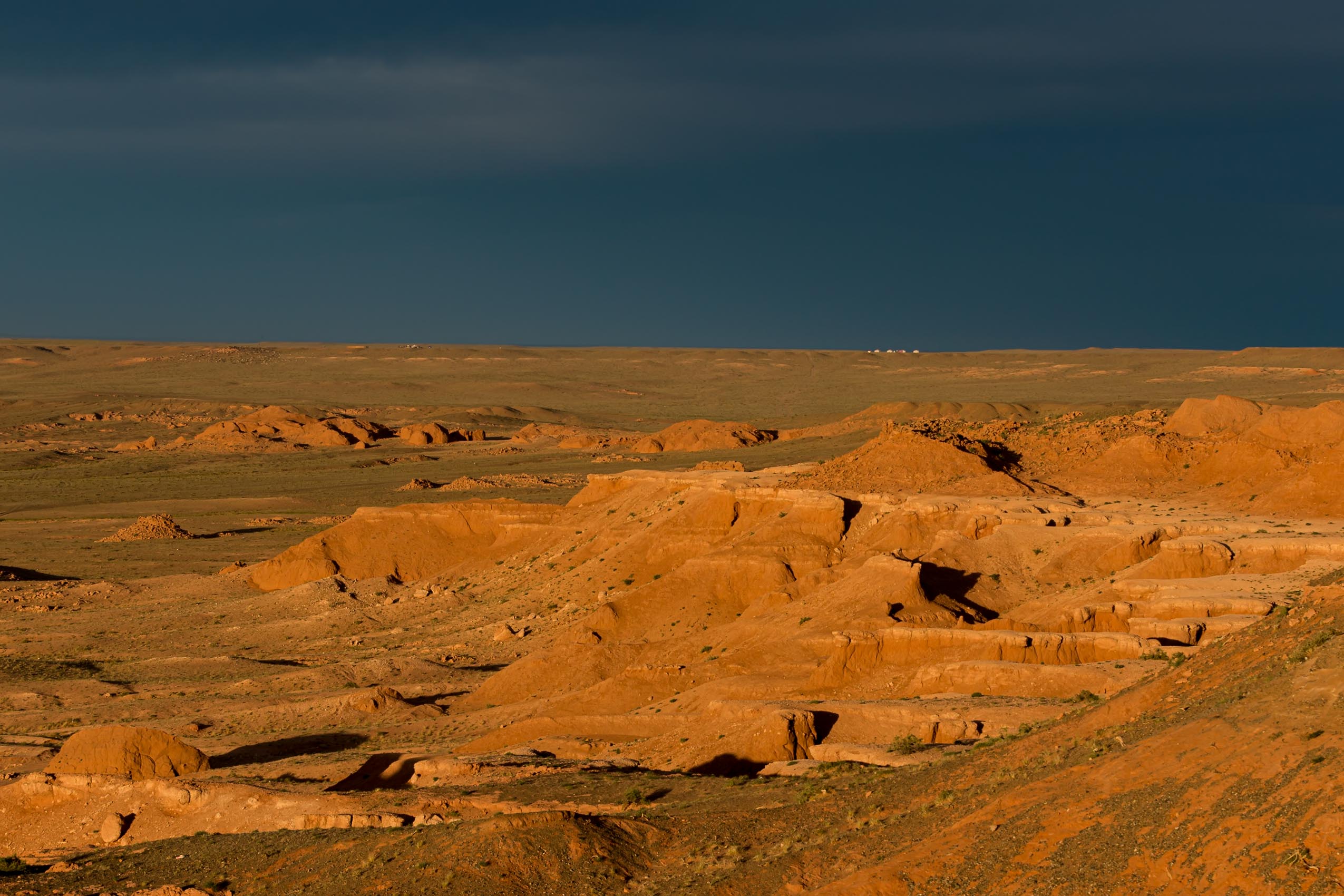
Flaming Cliffs in Mongolia’s Gobi Desert
Day 6 of 17 – Mongolia Road Trip
After saying goodbye to our hosts in the deep Gobi, we began the long drive north. Around three hours later, we reached our first stop — the Khavtsgait Petroglyphs — before continuing another five hours toward the famous Flaming Cliffs of Bayan Zag.
By the time we arrived near sunset, the desert light had already begun its transformation.
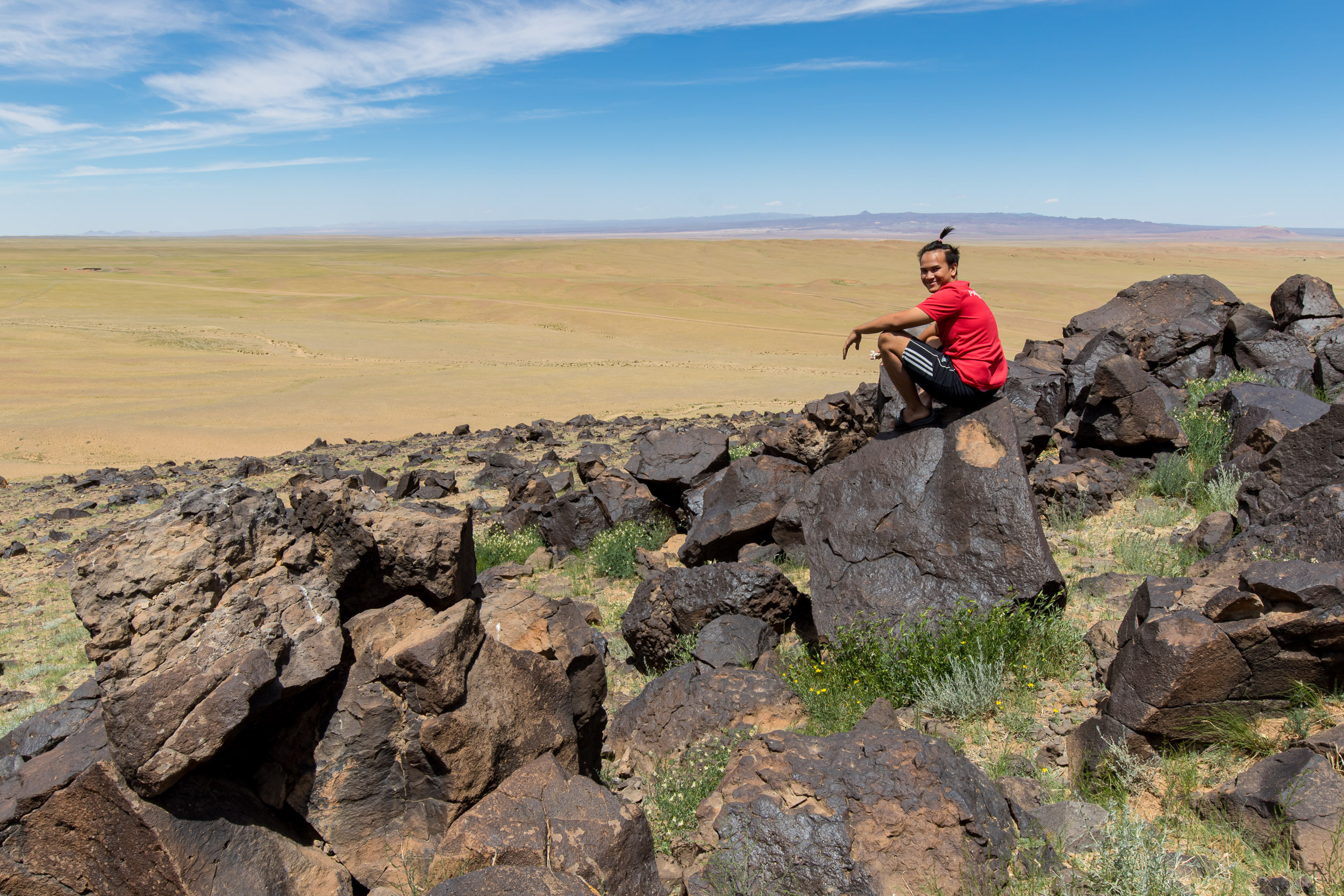
The Khavtsgait Petroglyphs
Carved into scattered rock faces across a wide hilltop, the Khavtsgait Petroglyphs date back between 8000 BC and 3000 BC. Most depict animals — ibex, deer, and other wildlife that once roamed the region in far greater numbers.
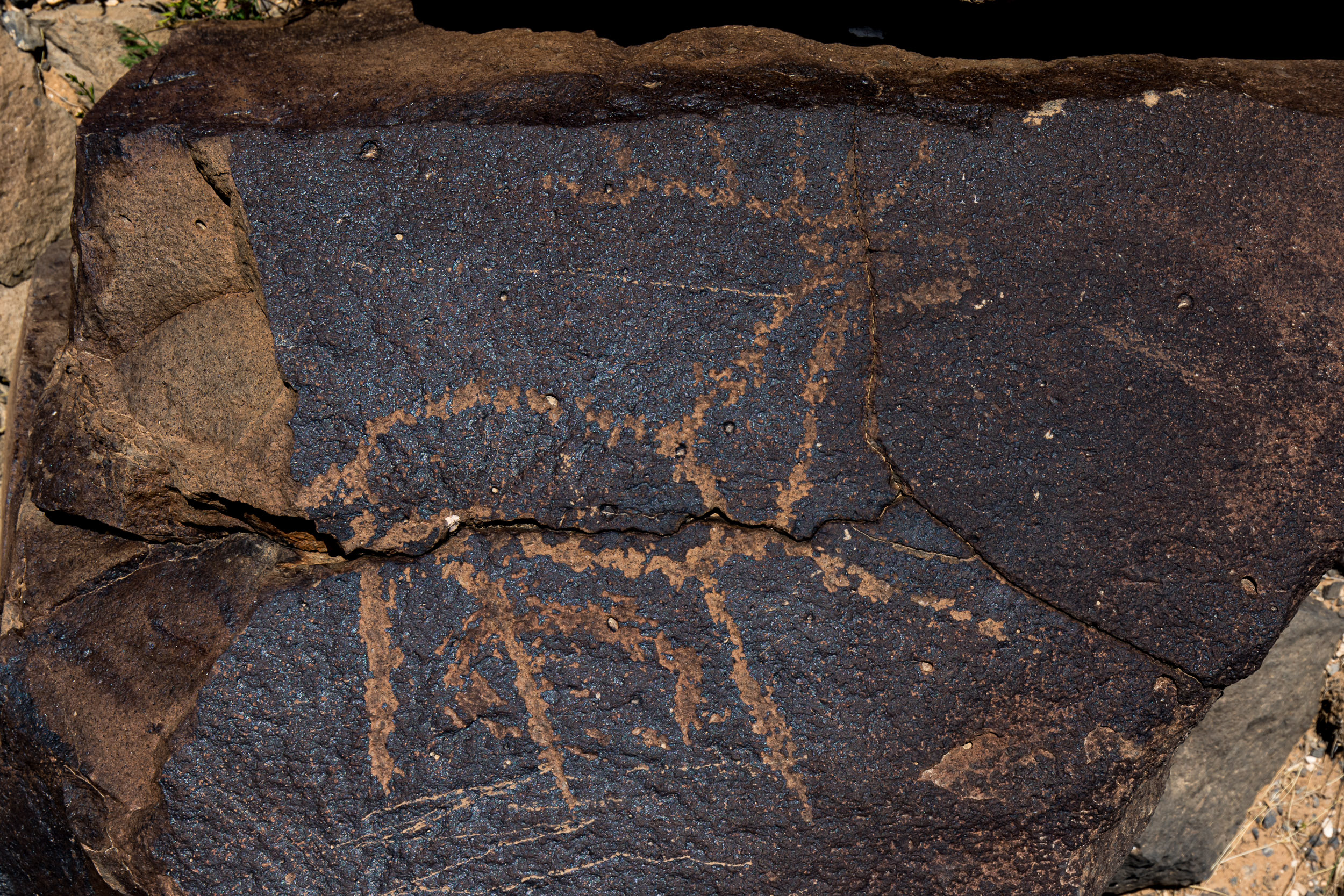
Walking among these ancient carvings felt like stepping into a distant human past. It was a welcome pause from the long drive, and a reminder that the Gobi has been inhabited far longer than its emptiness suggests.
Where Dinosaur Eggs Were Discovered
Bayan Zag is one of Mongolia’s most significant paleontological sites. In the 1920s, expeditions led by American explorer Roy Chapman Andrews uncovered the first scientifically recognized dinosaur eggs here — a discovery that changed our understanding of prehistoric life.
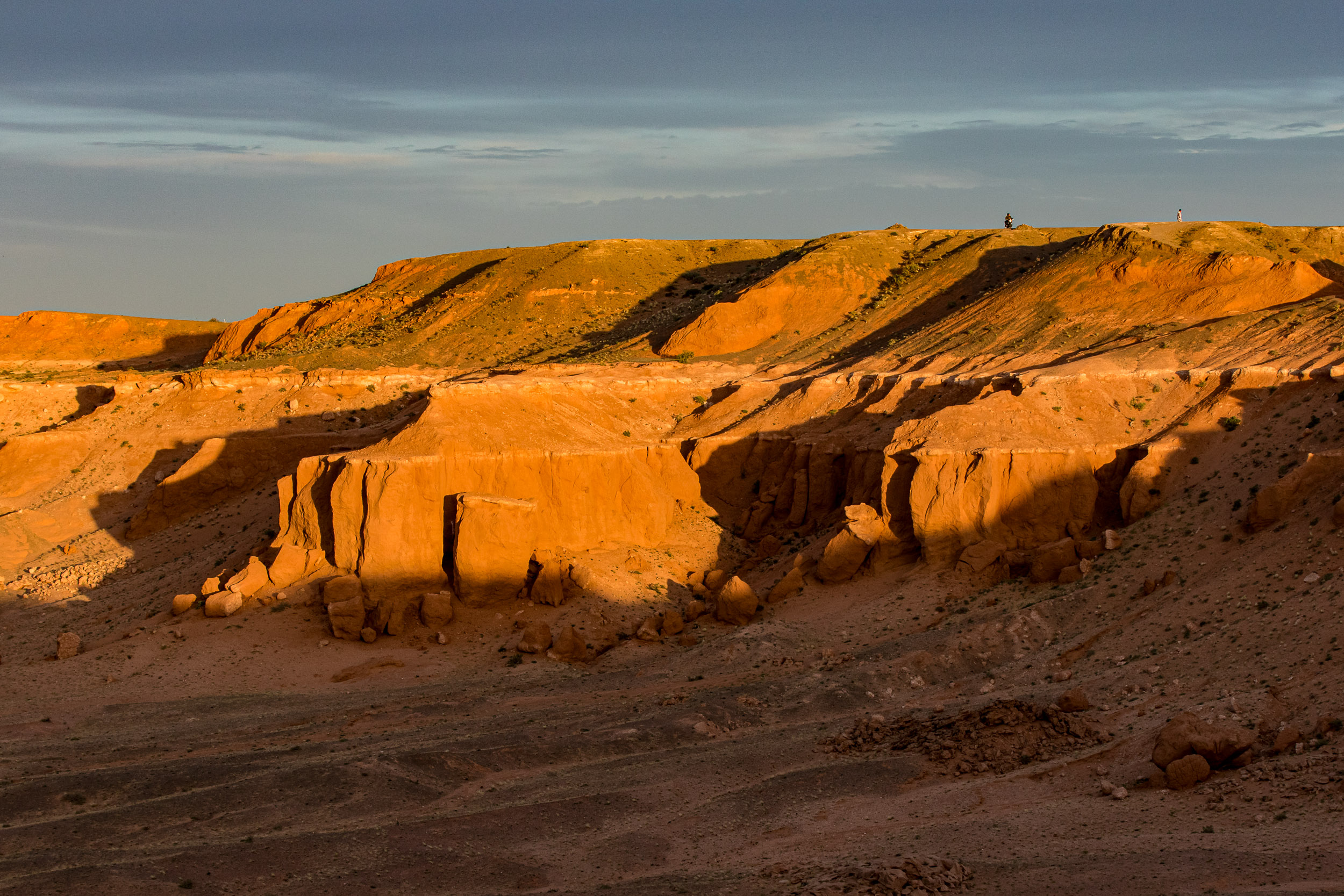
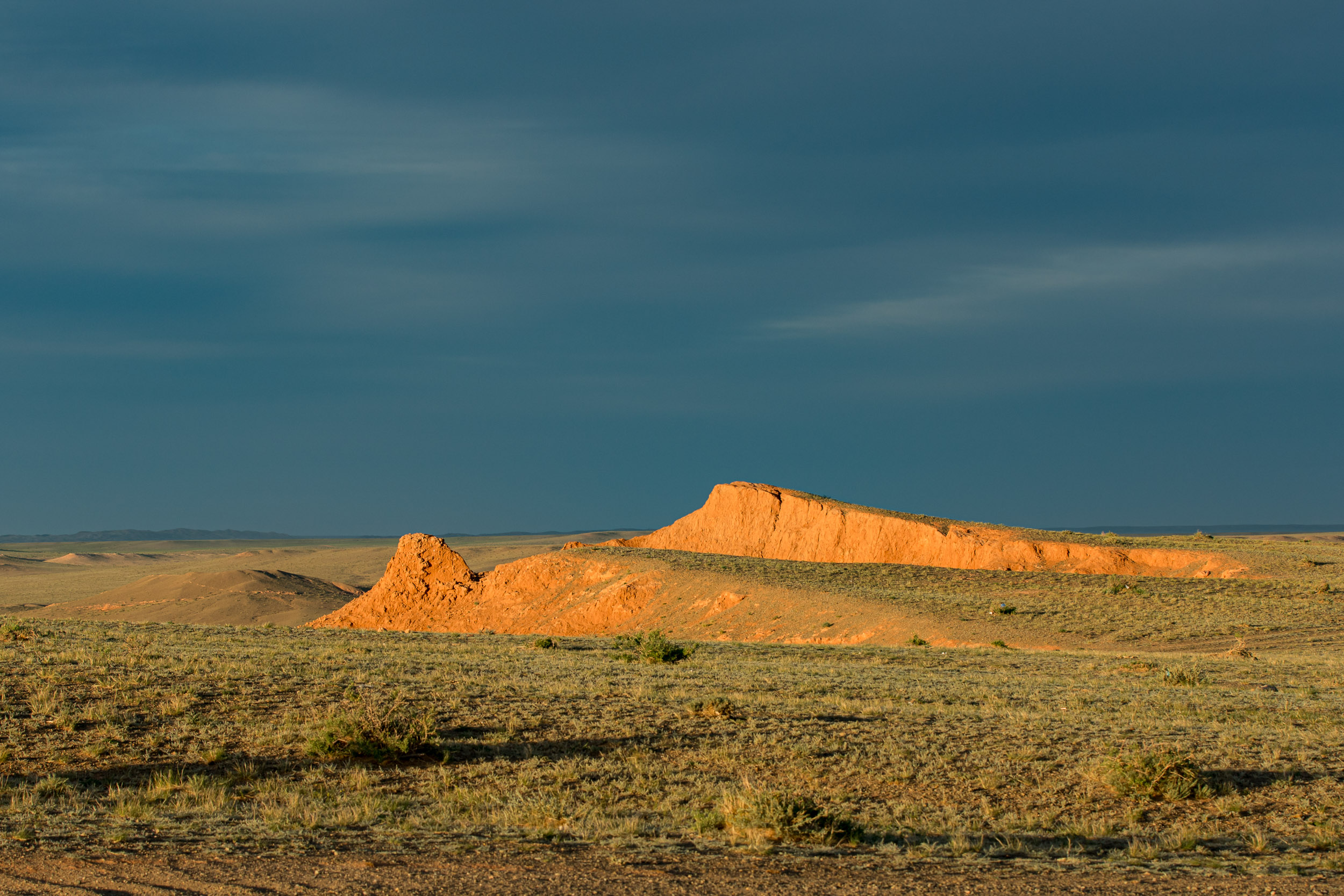
The cliffs themselves are formed of bright ochre-red sandstone. During sunset, they glow intensely, as if lit from within. It was this fiery appearance that earned them the name “Flaming Cliffs.”
Standing at the edge of the escarpment, with layers of red rock dropping into the desert below, it is easy to imagine how such extraordinary fossils were preserved here for millions of years.
A Misstep at the Flaming Cliffs
Talking about fire… The place left more than a visual impression on me, burning permanent marks on my legs!
While focusing intently on framing a photograph near the cliff edge, I lost my balance. As my camera slipped from my hands, instinct took over — I lunged forward and caught it mid-air. Only then did I realize the ground ahead was much lower than where I came from…
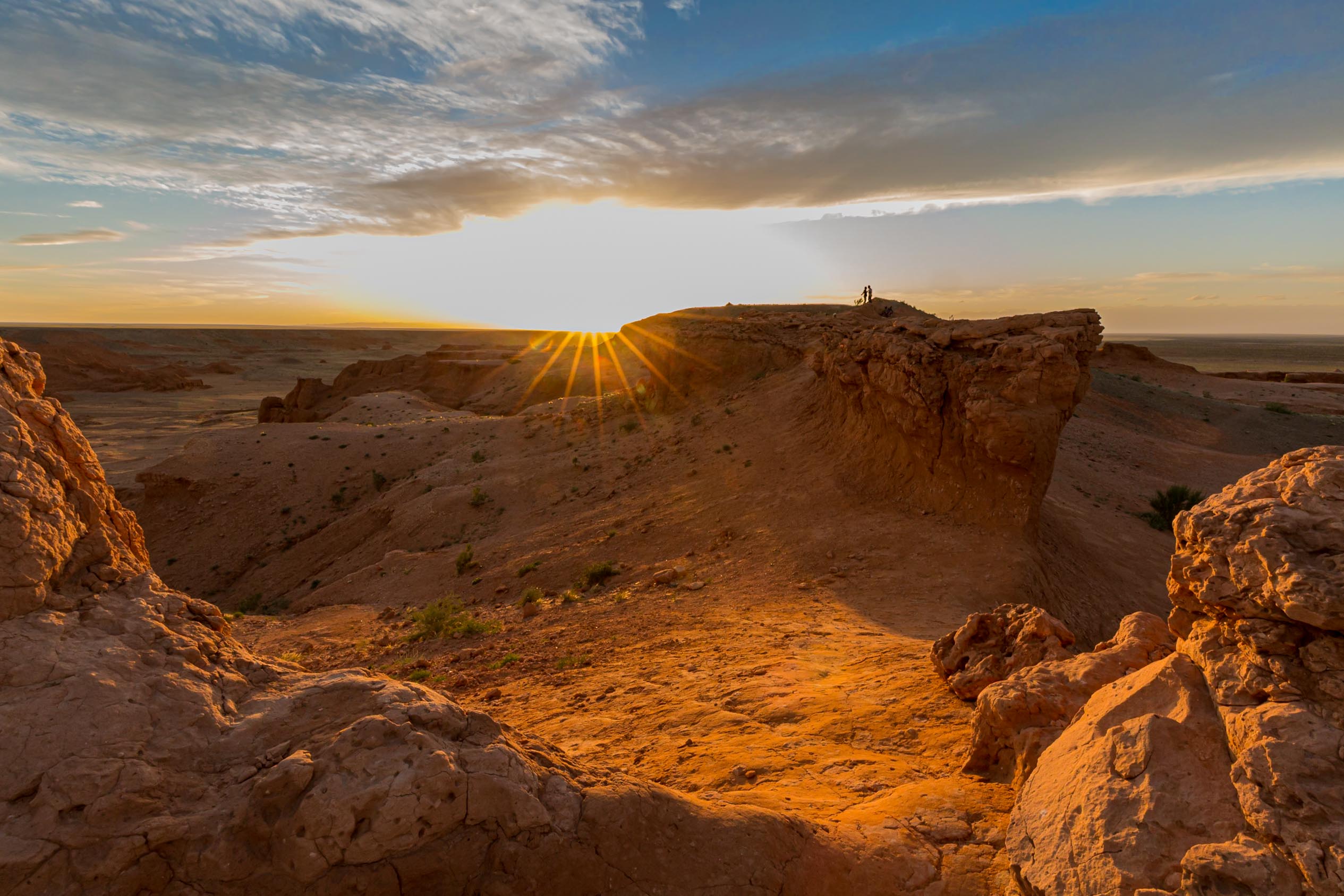
The landing was hard. I slid down loose gravel, collecting bruises and abrasions along the way. The camera survived. My legs carried the marks for a while longer…
Sometimes photography demands more than patience.
A Night at a Tourist Ger Camp
Unlike other parts of the Gobi, there were no nomadic families living nearby at this time of year. Our only option was a tourist ger camp close to the cliffs.
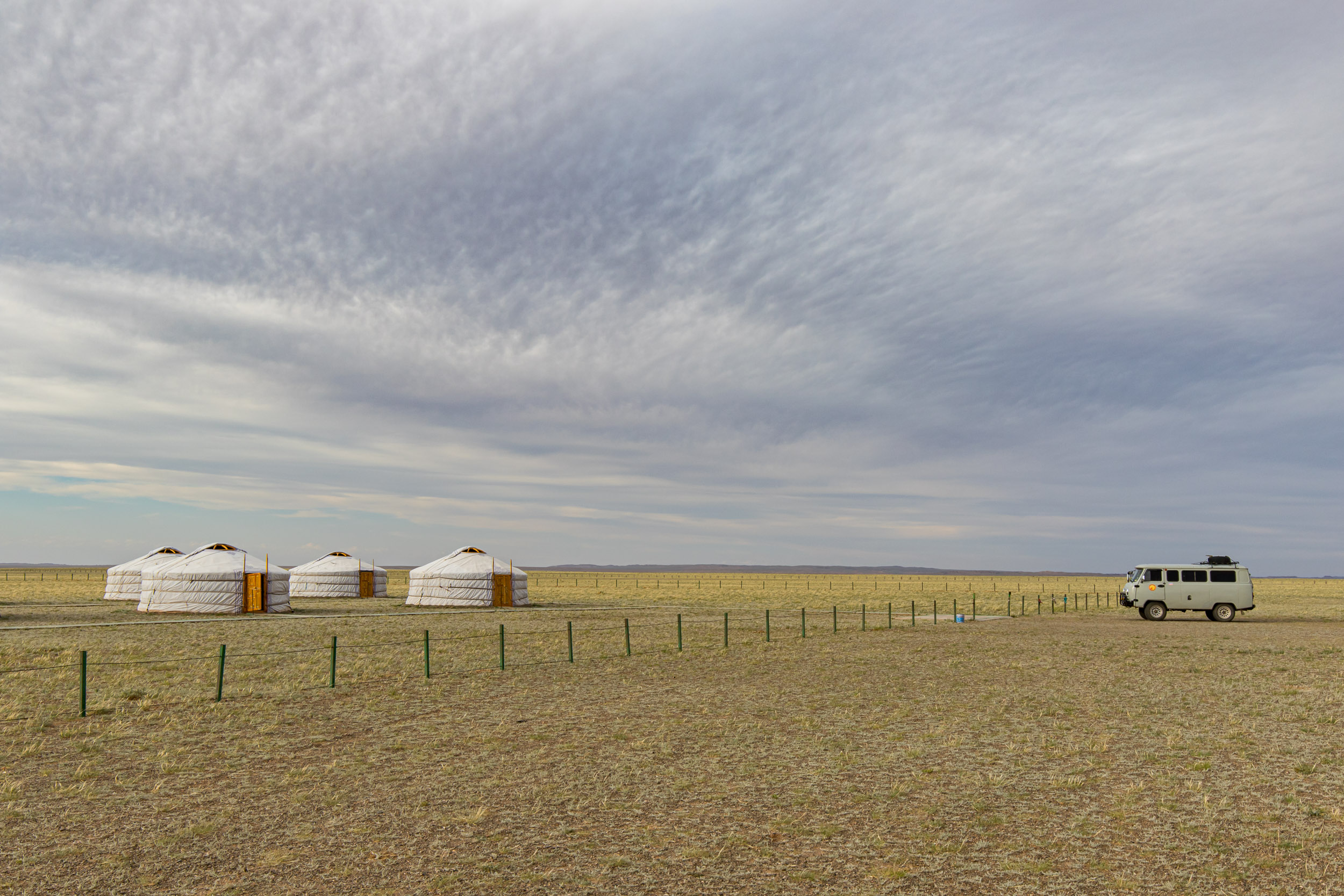
While these camps lack the authenticity and atmosphere of staying with local families, they offer a certain level of comfort — proper beds, clean facilities, and a warm meal after a long day in the desert.
After days of remote camping and nomadic hospitality, it felt like a brief return to structure before continuing our journey north.