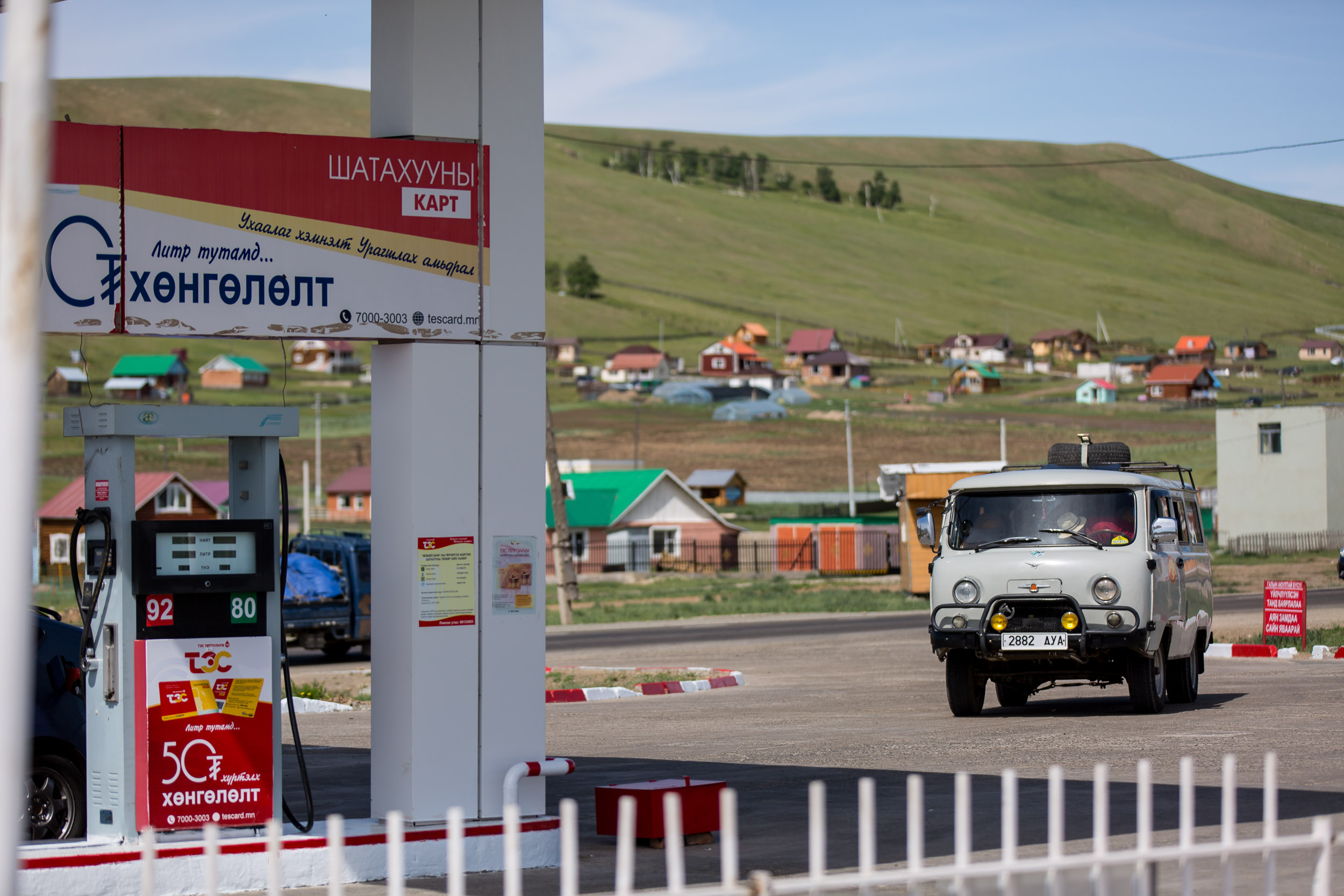
We left Ulaanbaatar around 8 a.m., eager to see Mongolia beyond the capital. As the city gradually disappeared behind us, the landscape opened into wide grasslands stretching toward a distant horizon. It did not take long before we encountered our first nomadic families, their large herds of goats, horses and camels scattered across the steppe.
After a full day on the road, we arrived at Tsagaan Suvarga around 16:30, just as the light began to soften across the desert plains.
On the road from Ulaanbaatar to Tsagaan Suvarga
Driving Across the Steppe to Tsagaan Suvarga
The journey south is part of the experience. Paved roads slowly give way to rougher tracks, and settlements become increasingly sparse. The land feels open in every direction, with no clear borders between road and pasture.
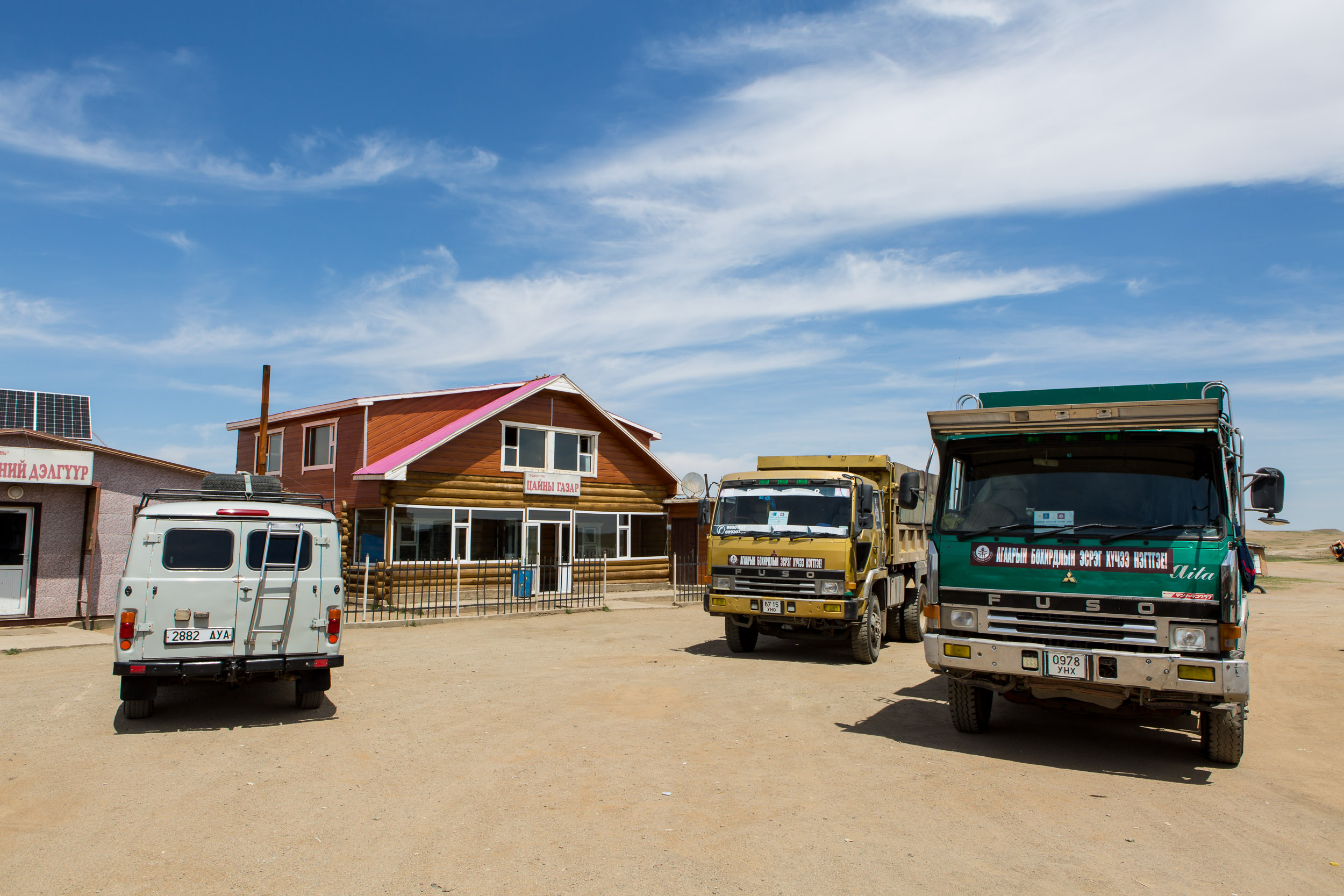
Lunch break in the only basic road side restaurants
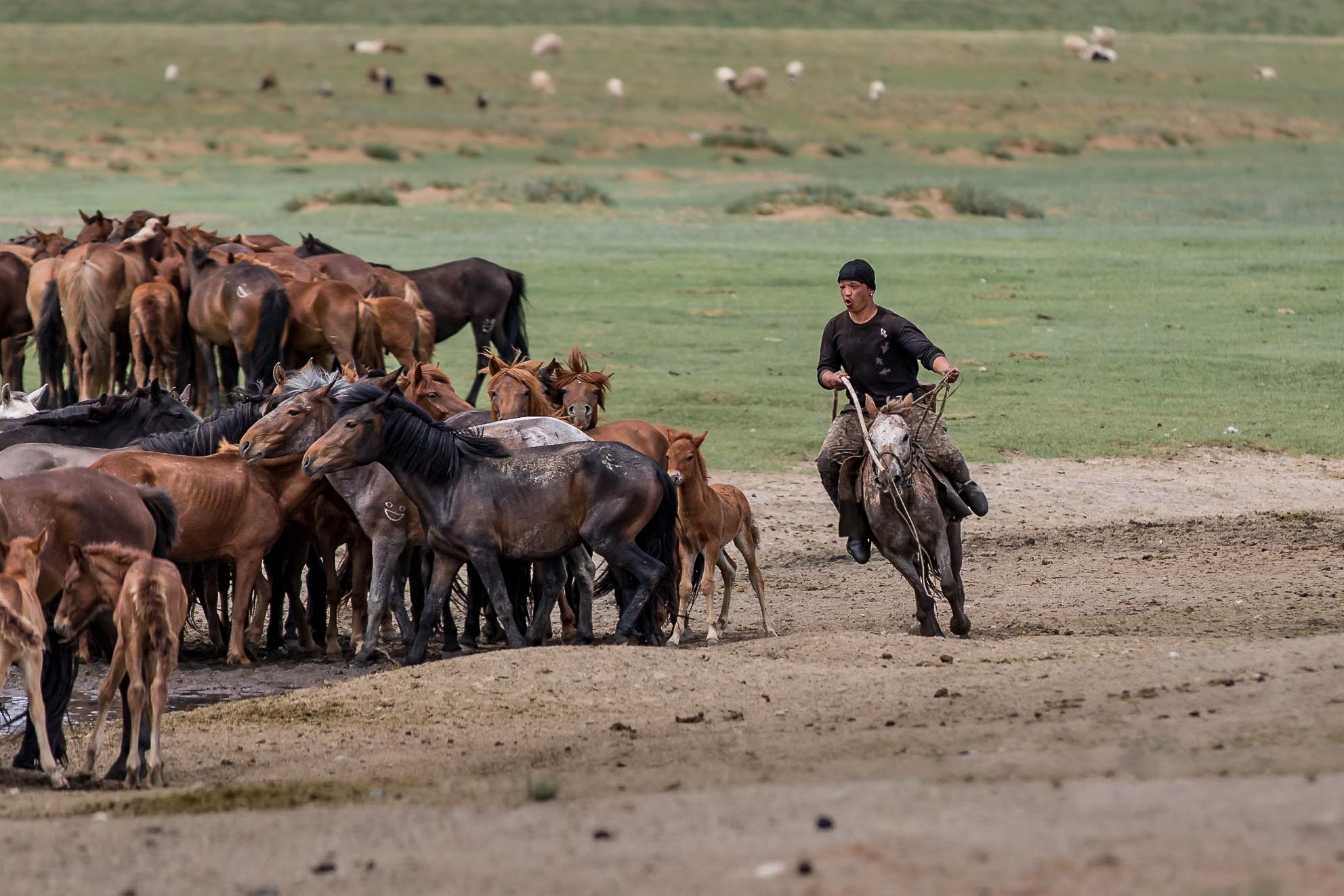
Along the way we stopped near a horse farmer tending his animals in the open plain. Encounters like this feel natural and unplanned — a quiet glimpse into rural Mongolia, where daily life remains closely tied to land and livestock.
Tsagaan Suvarga — The White Stupa Cliffs
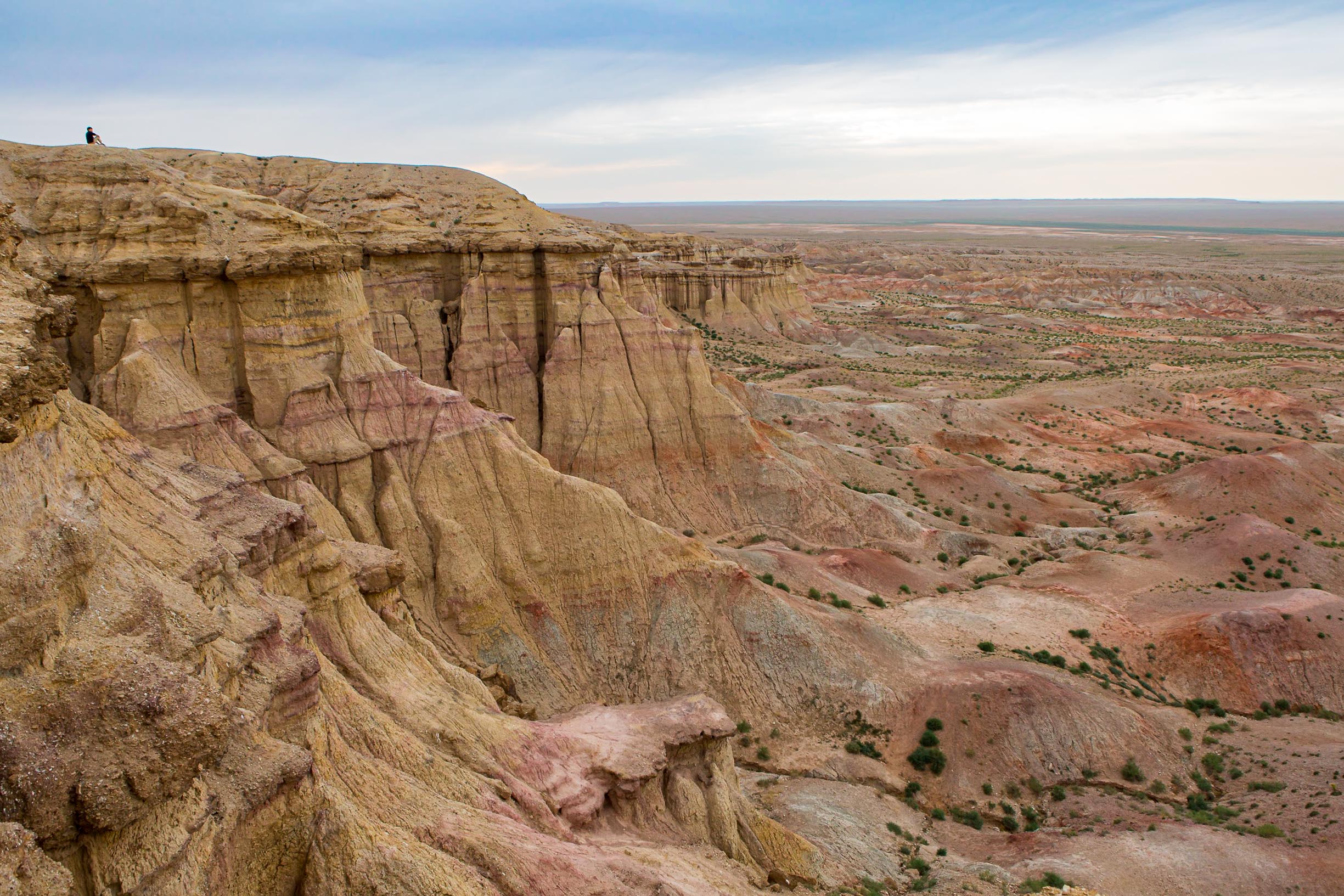
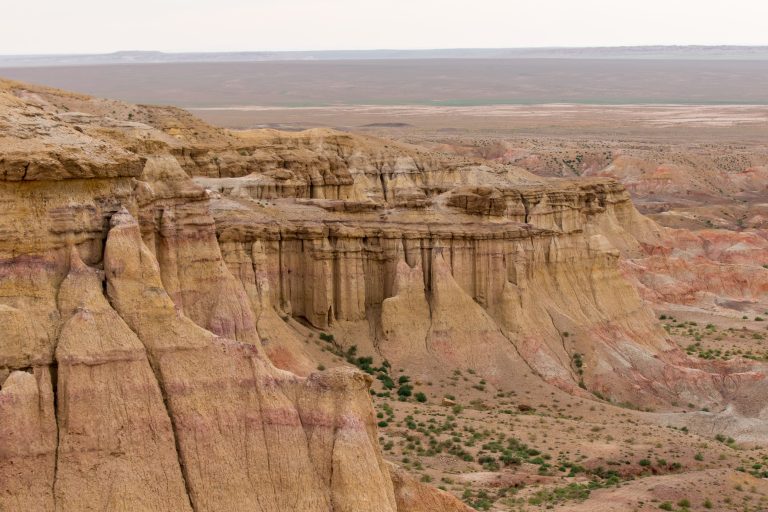
Tsagaan Suvarga stretches roughly 400 meters in length and rises up to 60 meters high. Formed by ancient sediment deposits and shaped by erosion, the cliffs reveal layers of white, orange and rust-colored rock. From a distance, the formation resembles a giant stupa, which gives the site its name.
Because the surrounding terrain remains largely flat, the cliffs appear almost unexpectedly — a long, sculpted wall rising from the desert.
An Ancient Seabed Beneath the Gobi
Few visitors realize that Tsagaan Suvarga was once part of an ancient seabed. Millions of years ago, this region lay beneath water, where layers of sediment slowly accumulated and compressed over time. The visible bands of color reflect these geological processes.
Occasionally, small fossil fragments can still be found embedded in the rock — subtle reminders of a distant past that contrasts sharply with the dry landscape of today.
Sunset at the Edge of the Gobi
As evening approached, the cliffs transformed under the lowering sun. The pale rock absorbed the warm light, deepening the reds and accentuating the layered formations.
After a long day of driving, standing at the edge of Tsagaan Suvarga felt like a reward — a powerful introduction to the scale and raw beauty of Mongolia.
A First Night in a Mongolian Ger
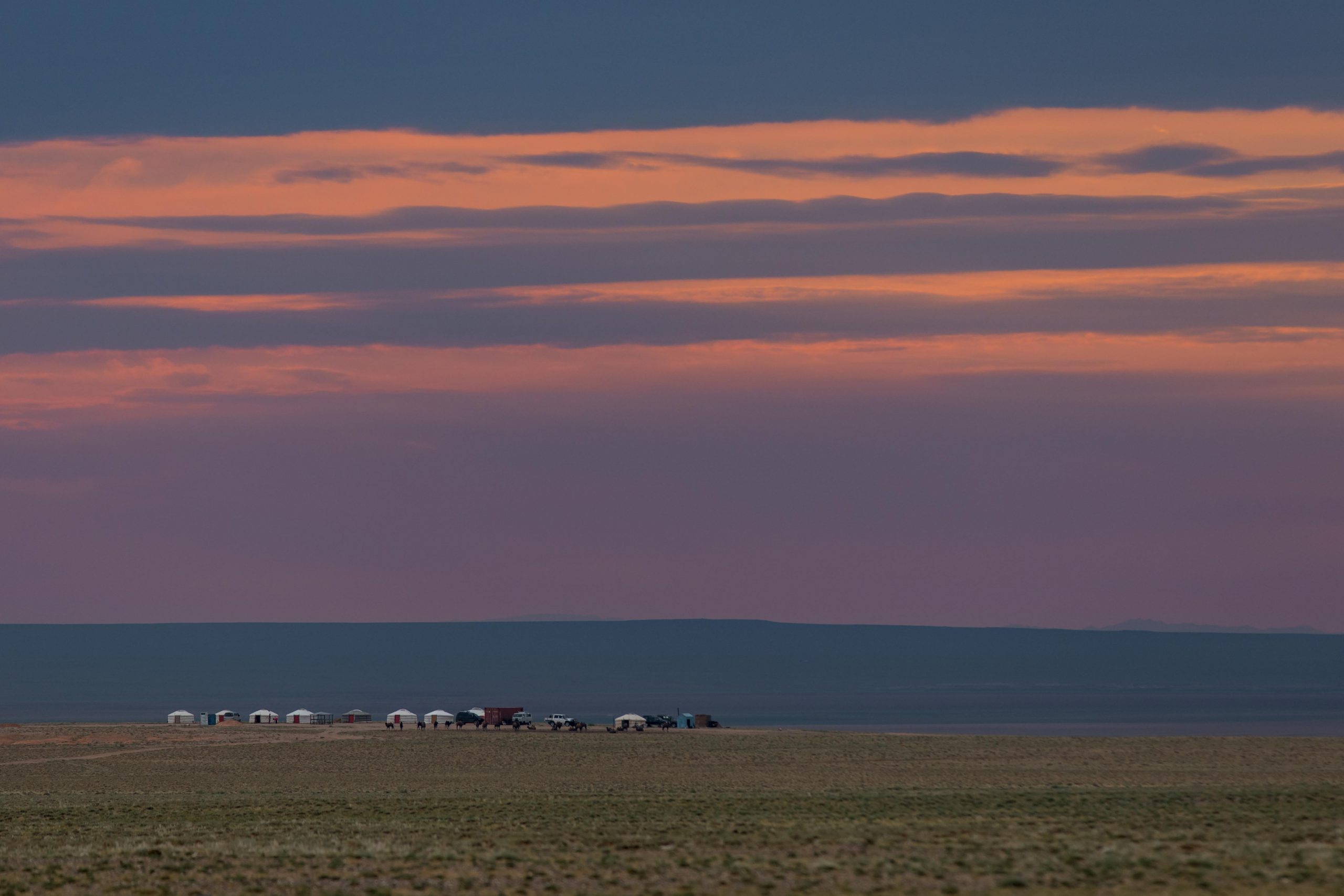
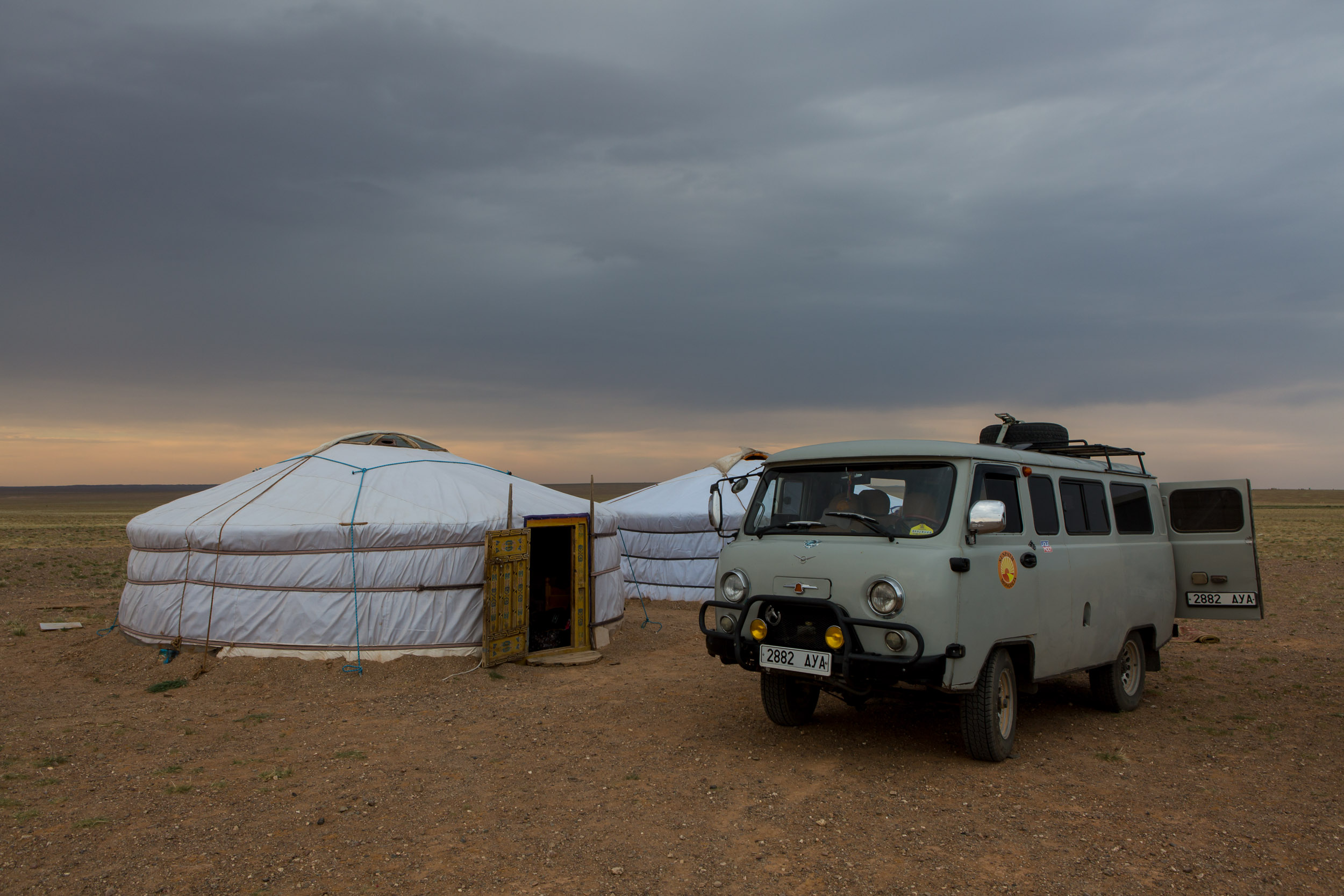
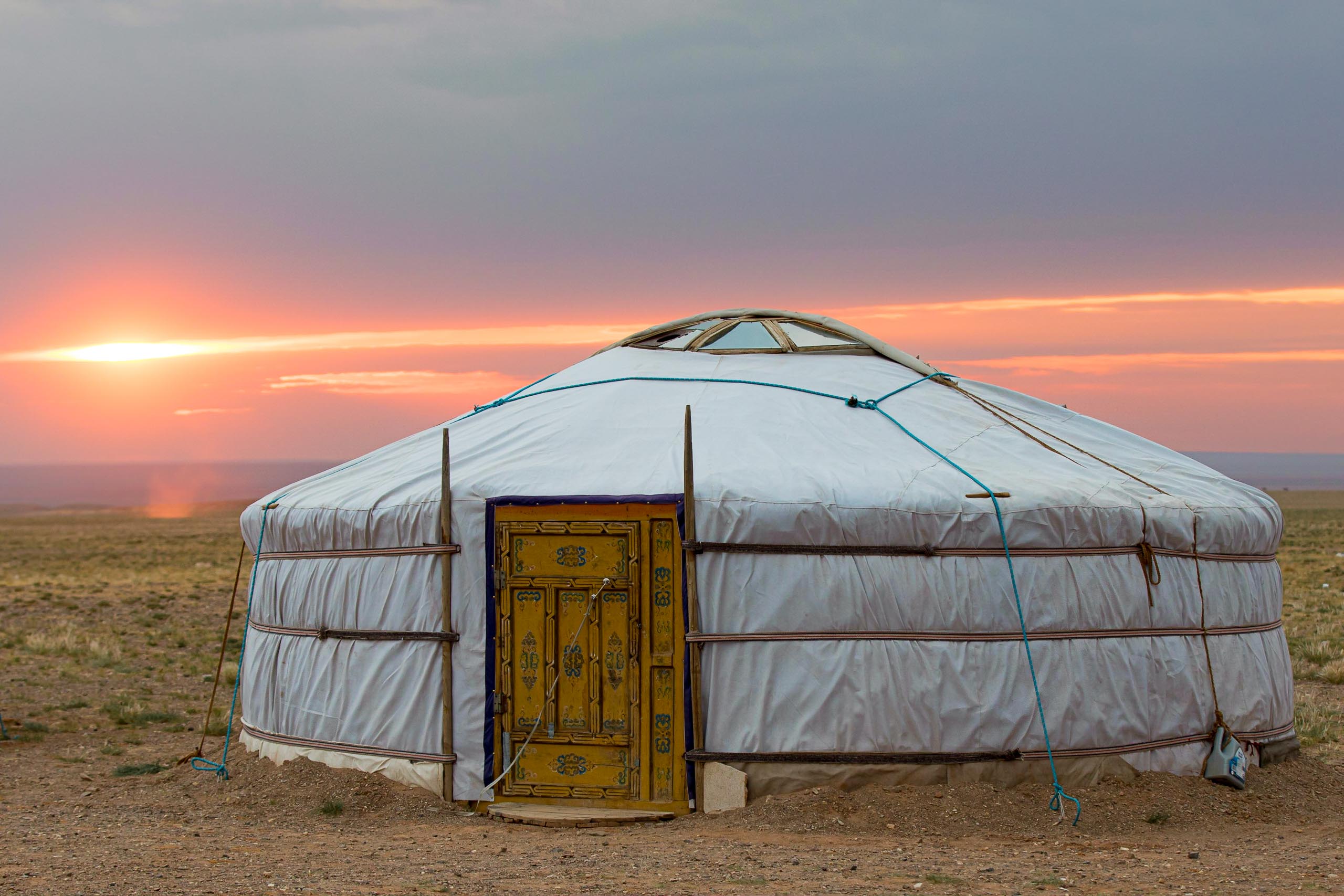
We settled with a local family living near the cliffs, spending our first night in a traditional ger. The circular felt tent, simple from the outside, felt warm and welcoming inside.
We were greeted with traditional hot milk and later shared noodles with goat meat for dinner. It was a straightforward meal, but one that marked the true beginning of our overland journey through Mongolia.
The next morning, we continued west toward Yoliin Am, where the landscape would shift once again.