Ritual, landscape, and traditions in South Sulawesi
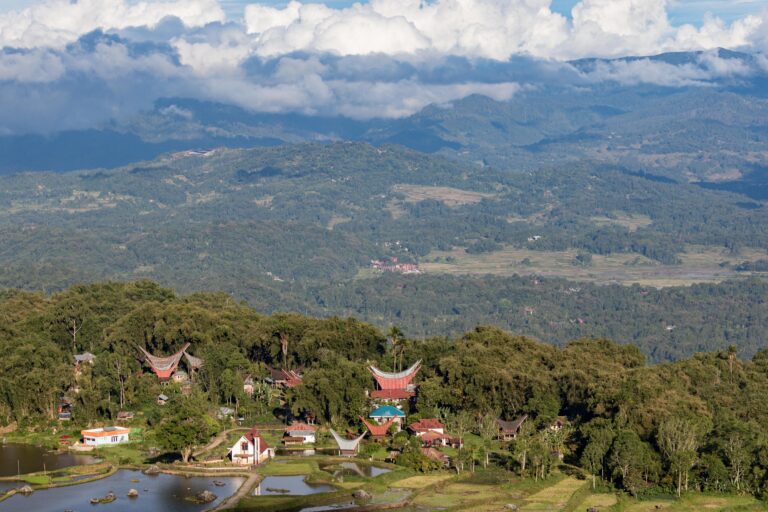
Tana Toraja is a highland region in the northern part of South Sulawesi, Indonesia, located several hours’ drive from Makassar. The area is defined by mountain landscapes, rice fields, and scattered villages connected by winding roads.
Tana Toraja is best known for its strong cultural traditions, particularly those related to death and funeral ceremonies. In Toraja society, death is not treated as a single event, but as a process that unfolds over time and continues through multiple rituals
This story looks at Tana Toraja through that context — as a place where ritual, landscape, and daily life are closely connected, and where traditions continue to shape how communities live and remember their dead.
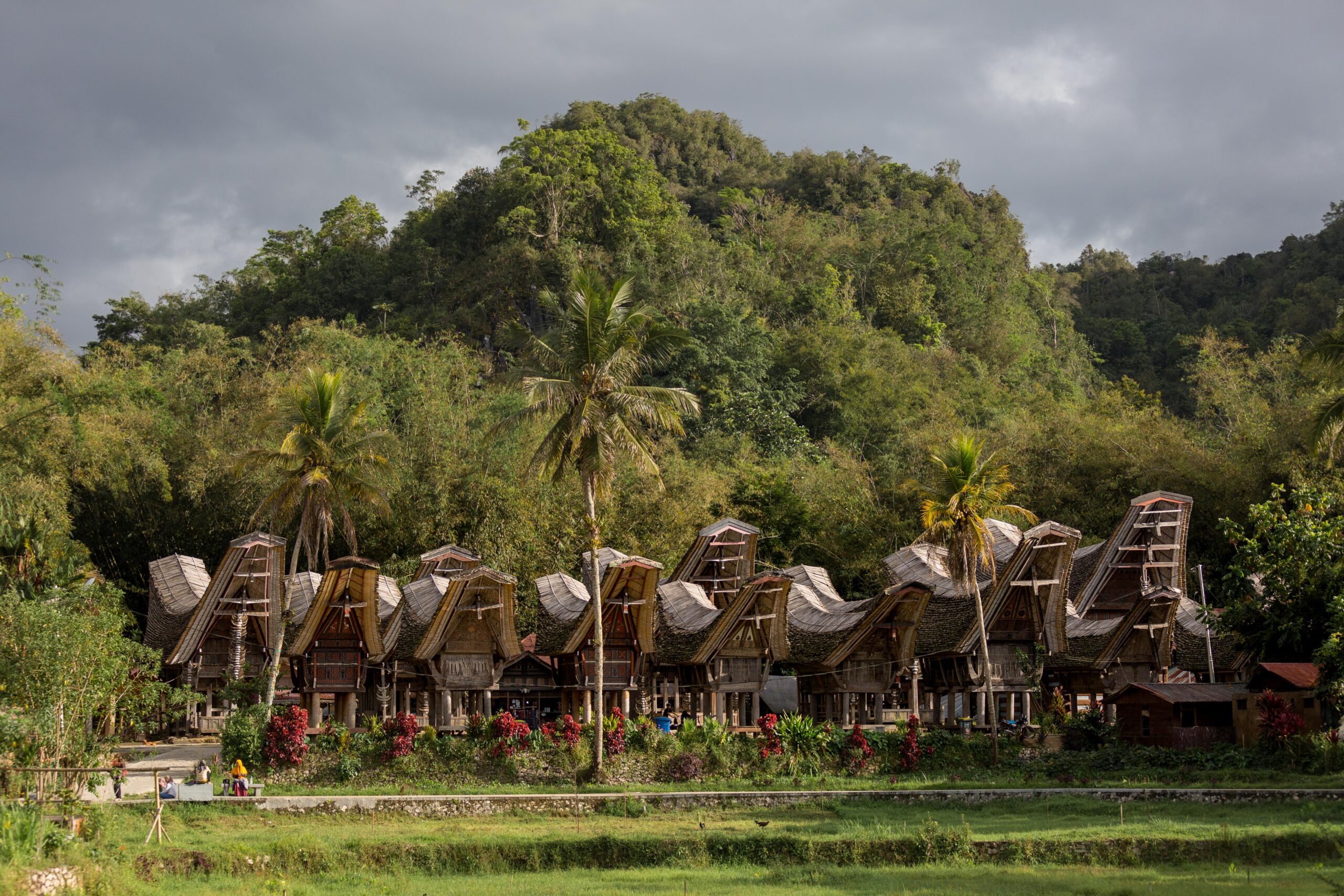
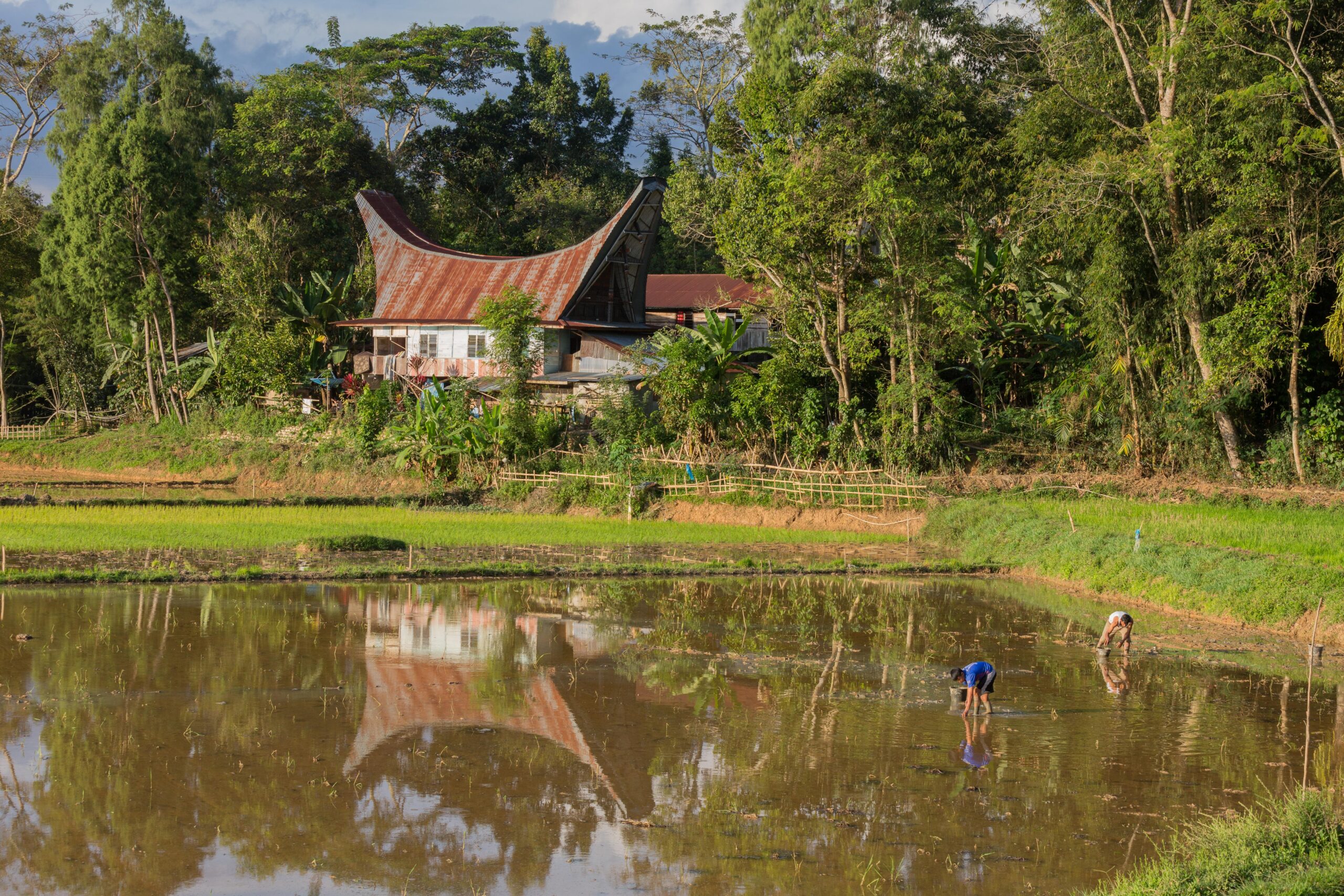
A traditional village with Tongkonans in Tana Toraja, South Sulawesi.
Tongkonan — Houses of Ancestry
In Tana Toraja, social and ancestral identity is centred around the traditional houses known as Tongkonan.
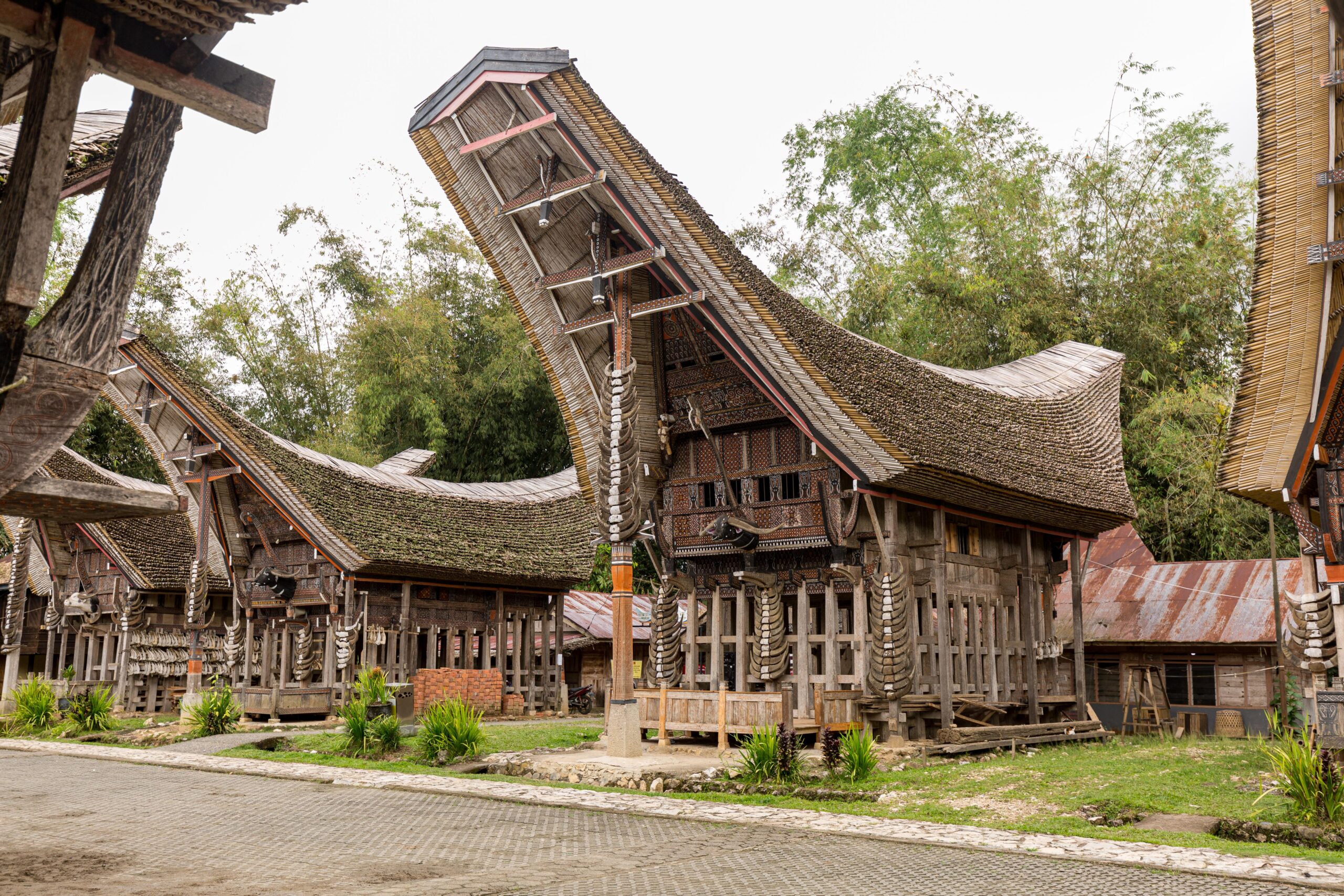
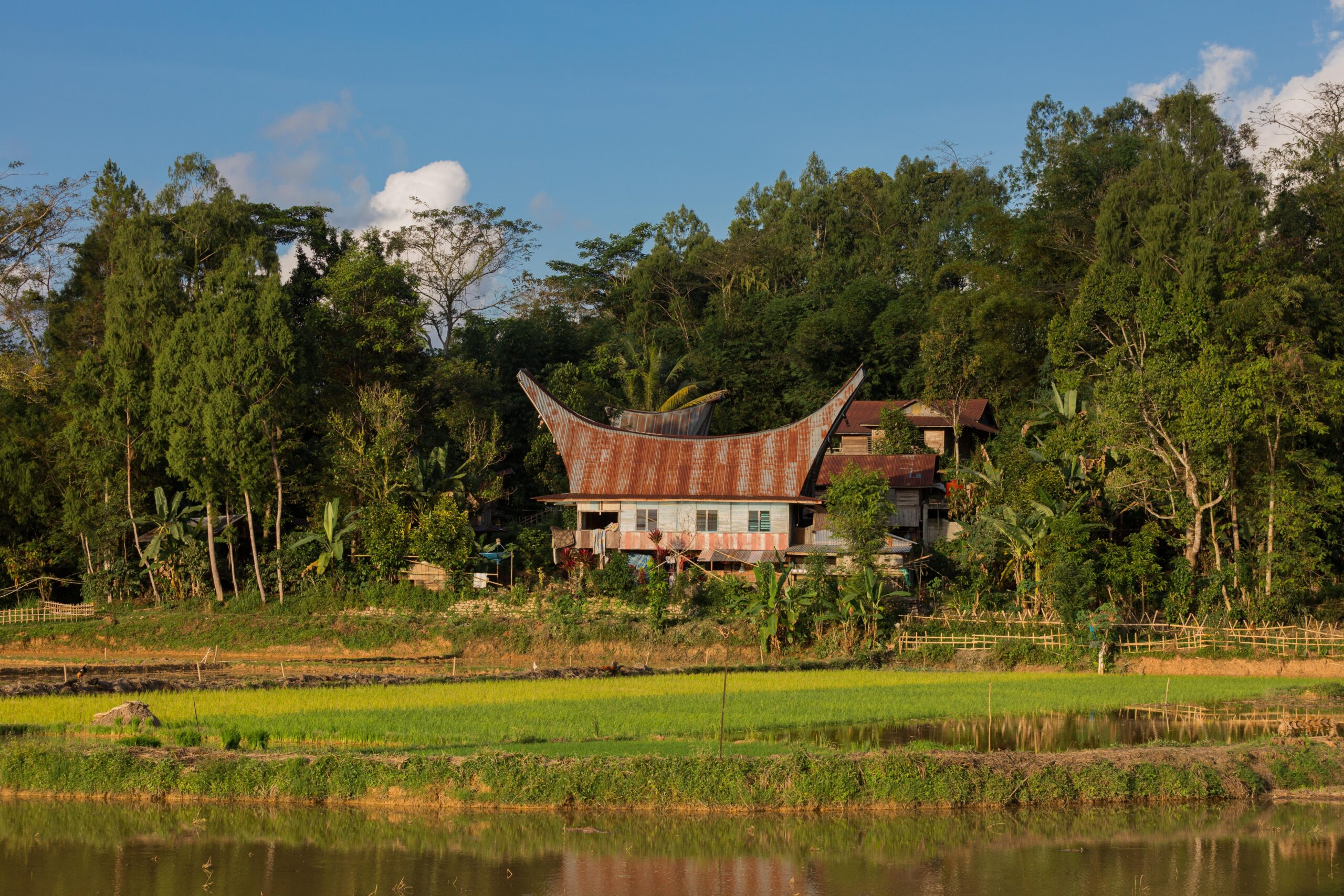
With their distinctive curved roofs, these structures are more than homes. They represent lineage, identity, and connection to ancestors. Each Tongkonan belongs to a family line and plays a role in ceremonial life.
Villages such as Kete Kesu offer a glimpse into this structure, where rows of Tongkonan face rice barns in a symbolic arrangement reflecting balance and continuity.
Villages such as Kete Kesu are explored in more detail in a separate story focused on architecture and daily life.
Tongkonan, traditional Toraja houses in Ke'te Kesu', Tana Toraja
A Culture Shaped by Ritual
In Toraja society, ceremonies are central to social and spiritual life.
The most significant of these are the elaborate funeral rites, known as Rambu Solo — explored in more detail in a dedicated story.
These ceremonies are not only acts of mourning, but expressions of status, family, and community obligation.
Preparation can take years. During this time, the deceased is often kept within the family home, symbolically present as part of daily life.
When the ceremony finally takes place, it becomes a multi-day event involving extended families, entire villages, and complex sequences of ritual acts.
The structure and scale of these ceremonies are explored further in the Rambu Solo story, focusing on the sequence of events and the role of the community.
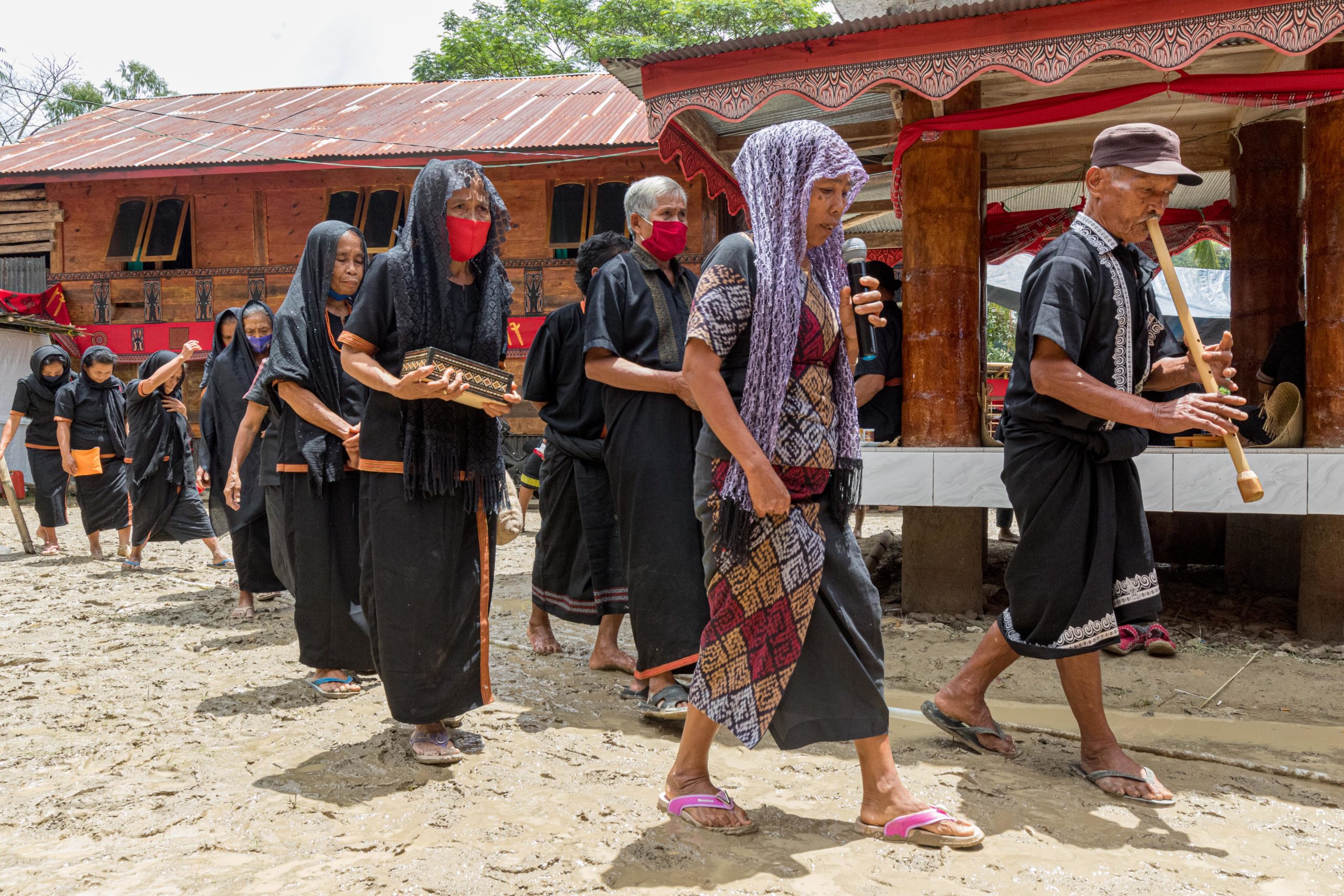
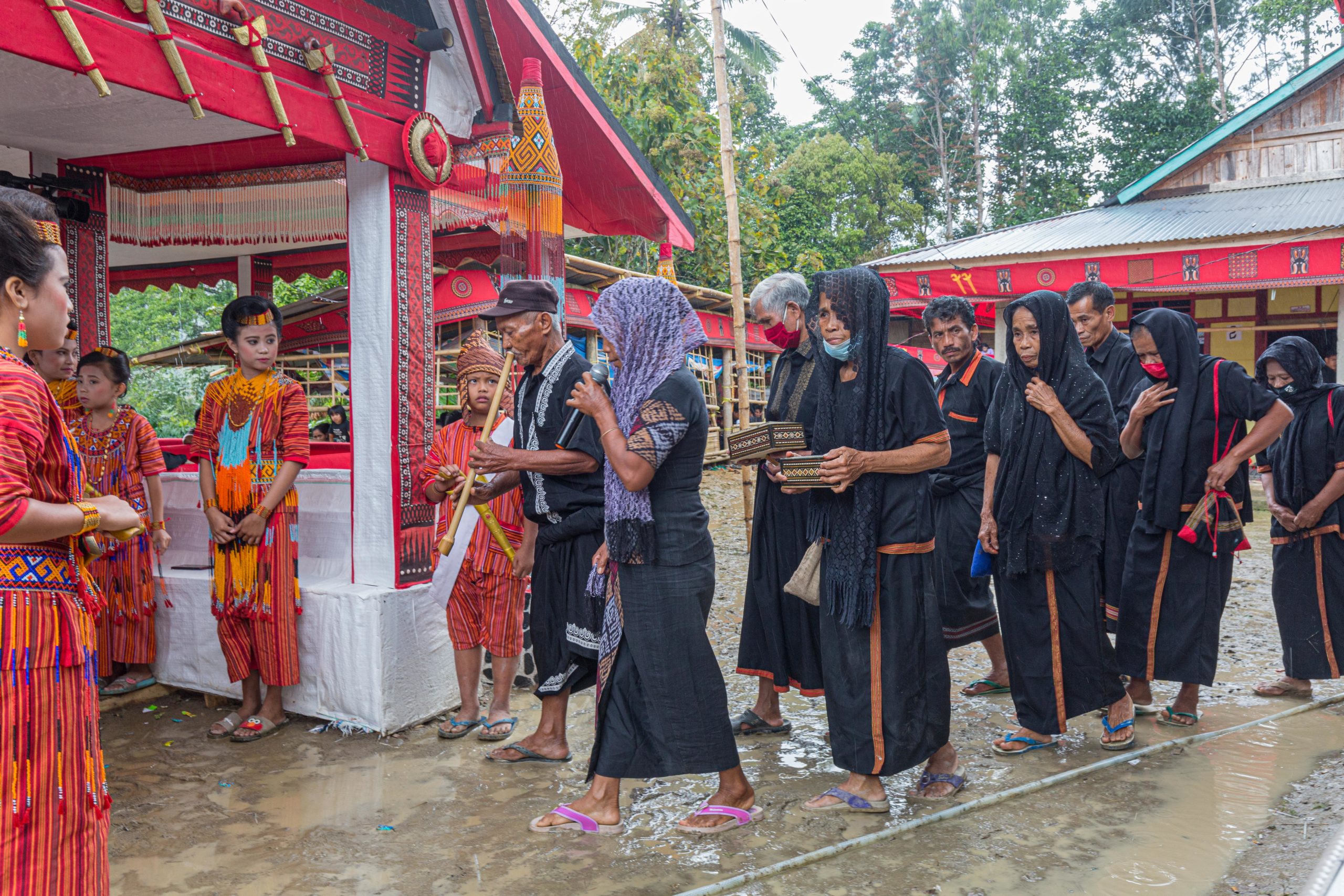
Visitors arriving at a Rambu Solo funeral ceremony in Tana Toraja, Sulawesi, Indonesia
These practices do not end with the funeral. In some communities, relationships with the dead continue through later rituals, reinforcing the ongoing presence of ancestors in daily life.
Buffalo, Status, and Sacrifice
Water buffalo play a central role in Toraja ritual life.
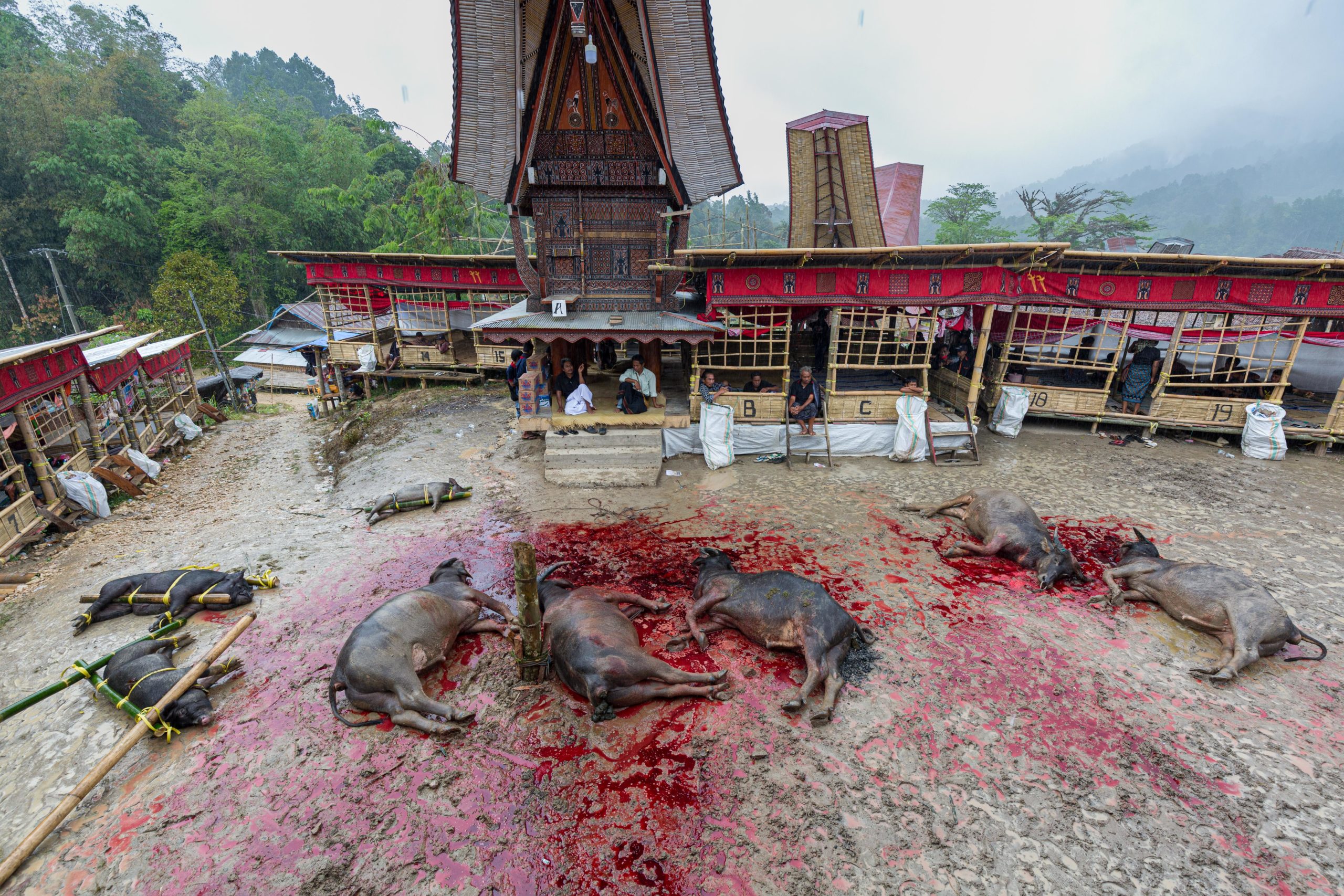
During Rambu Solo ceremonies, buffalo are sacrificed as part of the transition of the deceased into the afterlife. The number and type of buffalo reflect the status of the family and the importance of the ceremony.
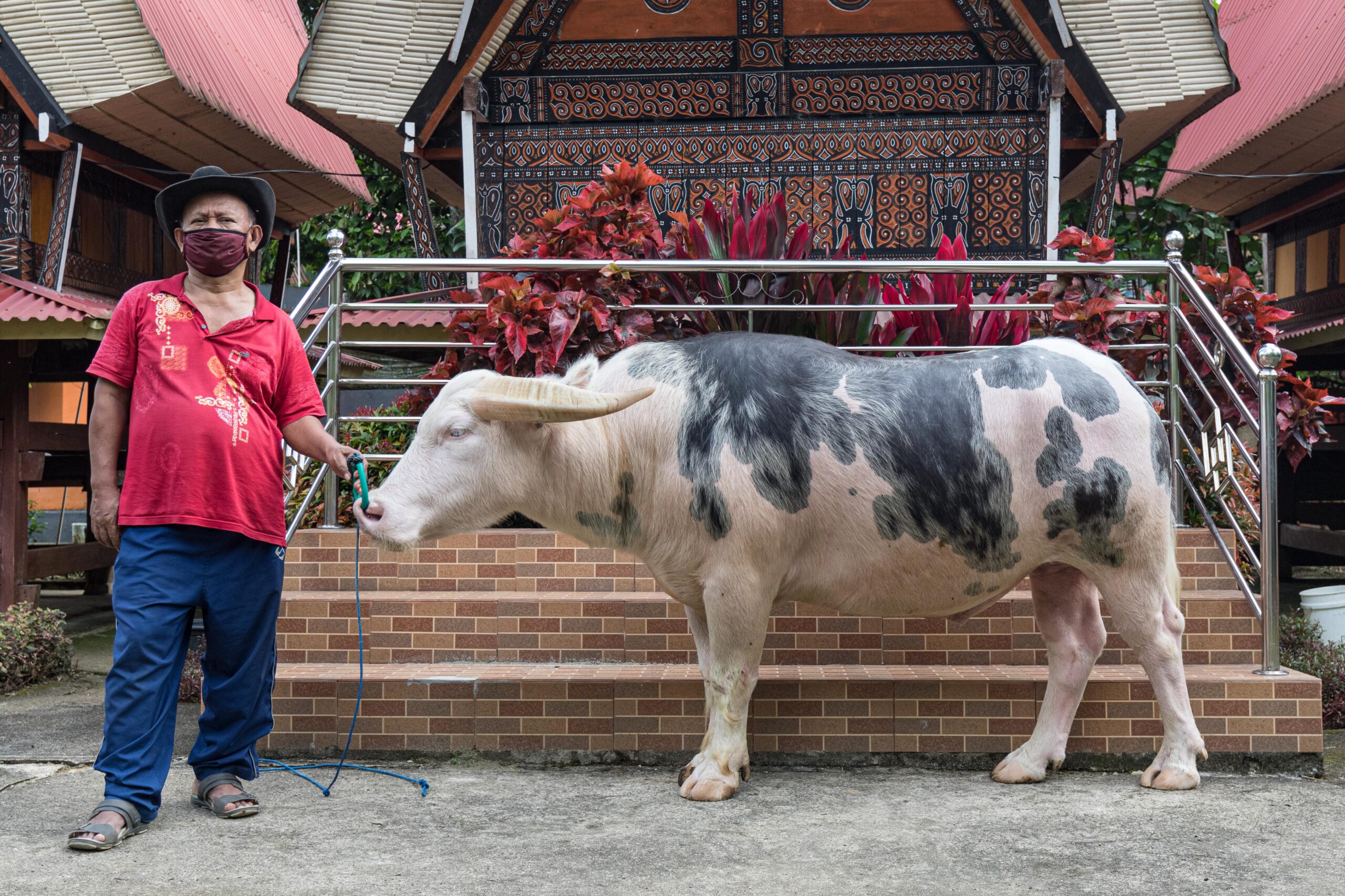
The most rare and highly valued buffalo is the Tedong Bonga, a sacred albino buffalo.
The funeral rituals are complex and deeply symbolic, forming an essential part of Torajan cosmology and belief.
Tedong Bonga, a sacred albino buffalo in Tana Toraja
Ma’nene — Caring for the Dead
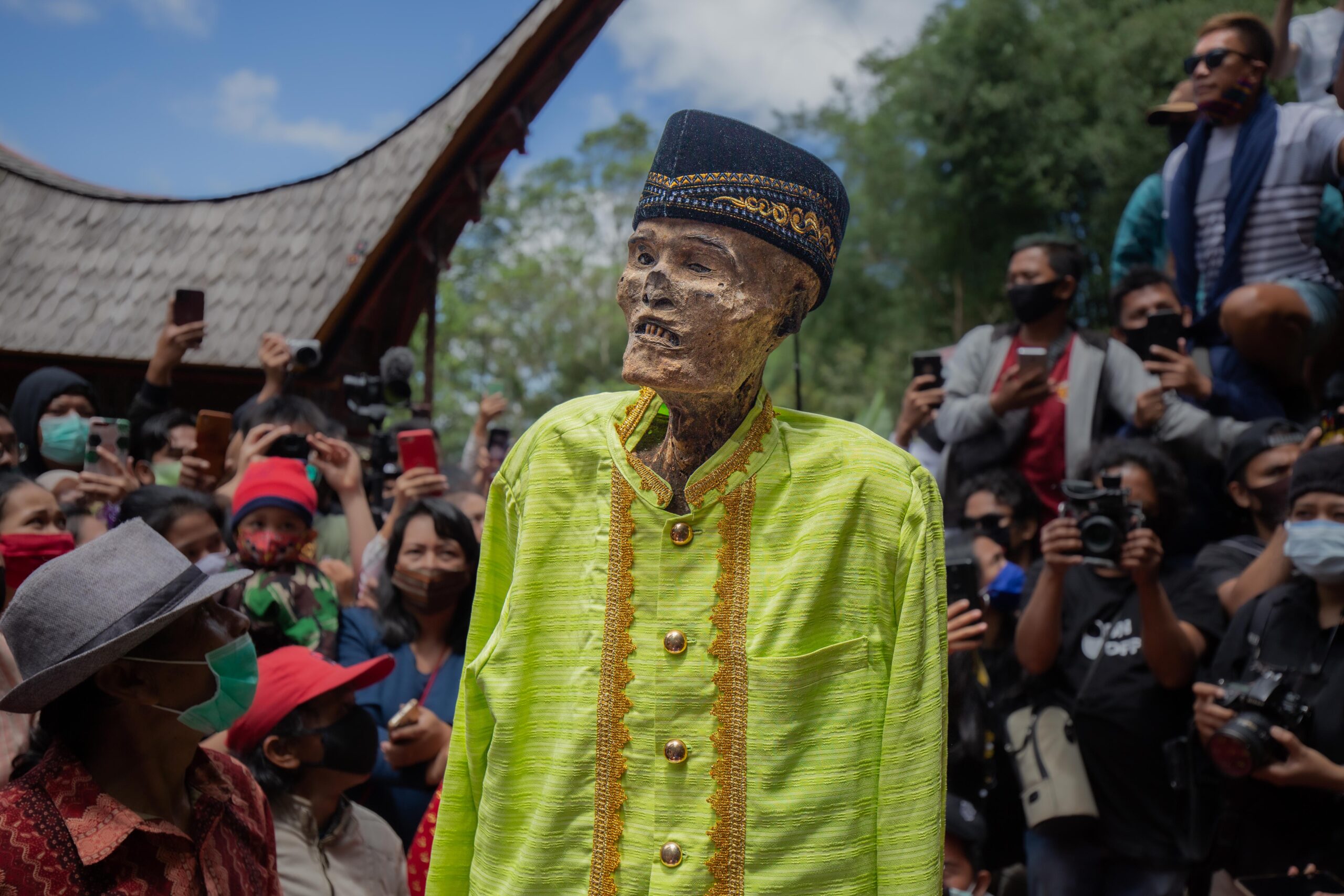
In parts of Tana Toraja, families take part in a ritual known as Ma’nene, in which the bodies of deceased relatives are exhumed, cleaned, and dressed in new clothing.
The ritual takes place periodically, often after the harvest, and is understood as a way of maintaining a relationship with ancestors rather than revisiting loss. Family members gather to care for the remains, repair coffins, and spend time together at burial sites.
Rather than being seen as unusual, Ma’nene is part of a broader continuity in Toraja culture, where the boundary between the living and the dead remains present and acknowledged.
A more detailed account of this practice can be found in the Ma’nene story, focusing on the interaction between families and their ancestors.
The mummified body is dressed in new cloths and reunited with the living
The Landscape of Death
Across Tana Toraja, the landscape itself reflects this relationship with death.
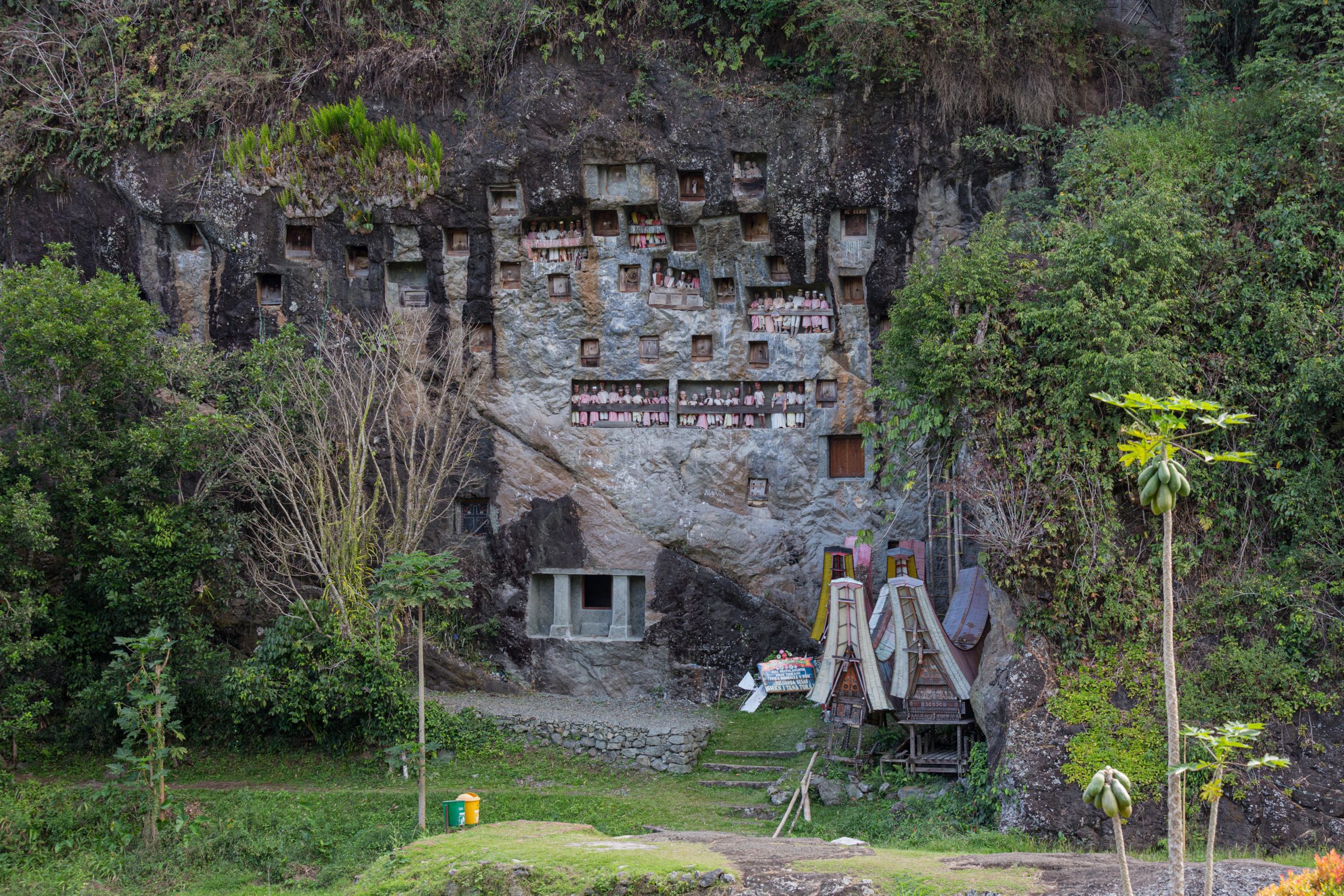
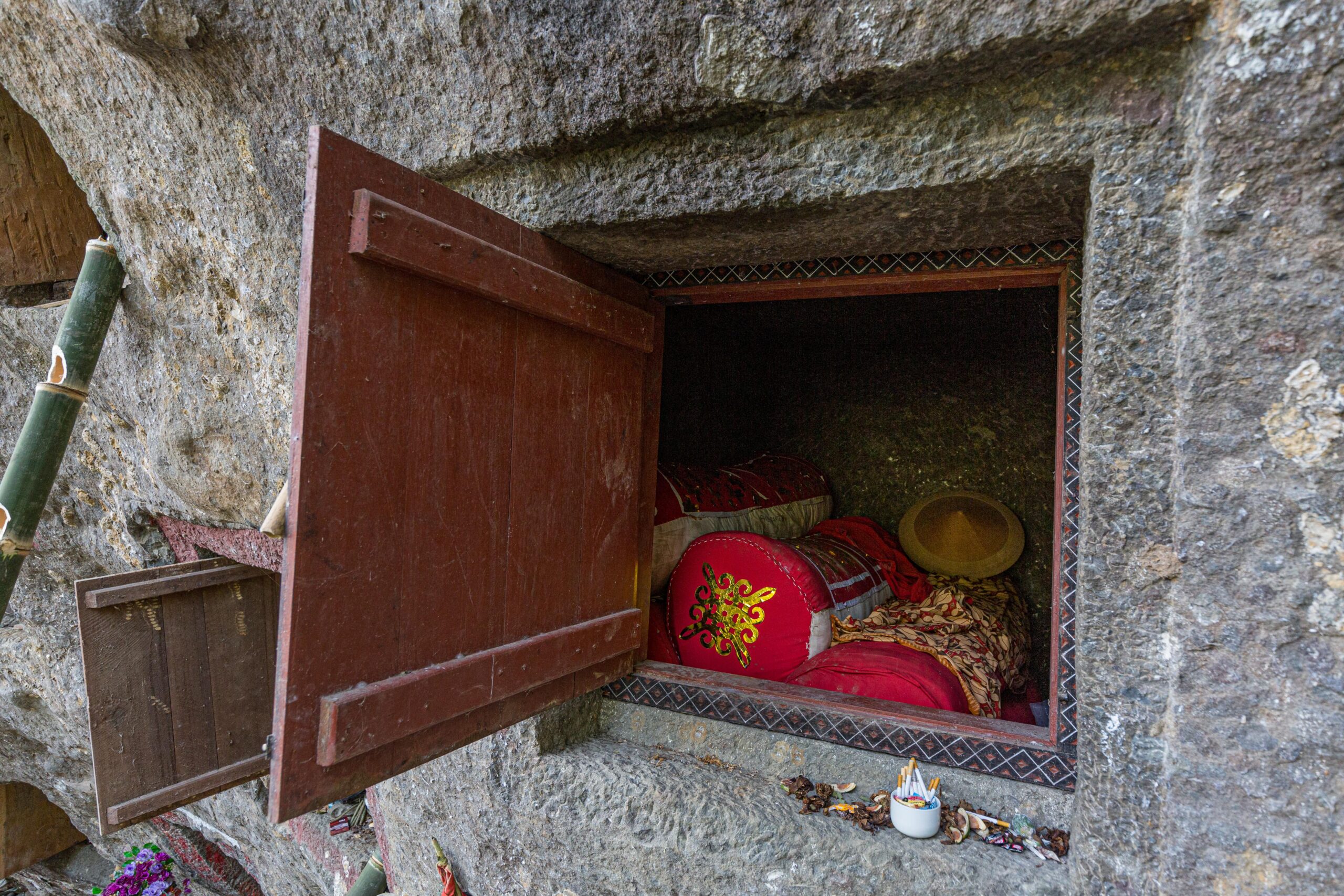
Cliffs, caves, and rock faces serve as burial sites, where the deceased are placed in carved openings or suspended in wooden coffins. Effigies known as tau tau stand on balconies overlooking the valley, representing those who have passed.
Tau tau effigies overlooking the valley near Lemo in Tana Toraja.
Sites such as Lemo and Londa show how burial practices are embedded in the landscape. These locations are explored further in separate stories, focusing on their setting and role within Toraja traditions.
They are not isolated monuments, but part of the everyday environment — visible, present, and continuously acknowledged.
Coffins in a rock grave at Lo'Ko Mata, in the highlands of Tana Toraja
Ceremony and Time
Time in Tana Toraja follows a different rhythm. Funeral ceremonies do not take place immediately after death, but when families are ready — financially and socially — to carry them out properly. This delay extends the presence of the deceased within daily life, sometimes for months or years.
When ceremonies begin, they unfold over several days, with sequences of ritual that include processions, offerings, and communal gatherings.
Rather than a single event, these ceremonies are part of an ongoing cycle of connection between the living and the dead.
Rambu Solo, a traditional funeral ceremony in Tana Toraja
A Living Tradition
Despite increasing exposure to tourism, Toraja remains a living cultural landscape.
Ceremonies continue to be performed according to tradition, not staged for visitors but carried out as part of community life. Participation is local, and meaning remains rooted in belief systems that have evolved over generations.
This continuity defines Toraja. It is not preserved as history — it is practiced in the present.
Exploring Tana Toraja Through Photography
The stories and galleries linked from this page explore different aspects of Toraja life. Funeral ceremonies are documented in the Rambu Solo story, while the Ma’nene ritual story offers a more intimate perspective on the relationship between families and their ancestors. Other locations, including Kete Kesu, Lemo, and Londa, are explored through separate visual narratives focusing on architecture and burial landscapes.
Explore the Photo Gallery
A curated visual collection from Tana Toraja – South Sulawesi