Orkhon Valley UNESCO Landscape in Central Mongolia
Day 8 & 9 of 17 – Mongolia Road Trip
We left Ongiin Khiid around 7am and would not reach the heart of the Orkhon Valley until late afternoon. The long drive north included a simple roadside lunch and countless stops as the scenery slowly transformed.
Nomads, grazing herds, wildlife along the tracks — the journey itself became part of the experience.
And then the landscape changed completely.
From Dry Steppe to Green Valley
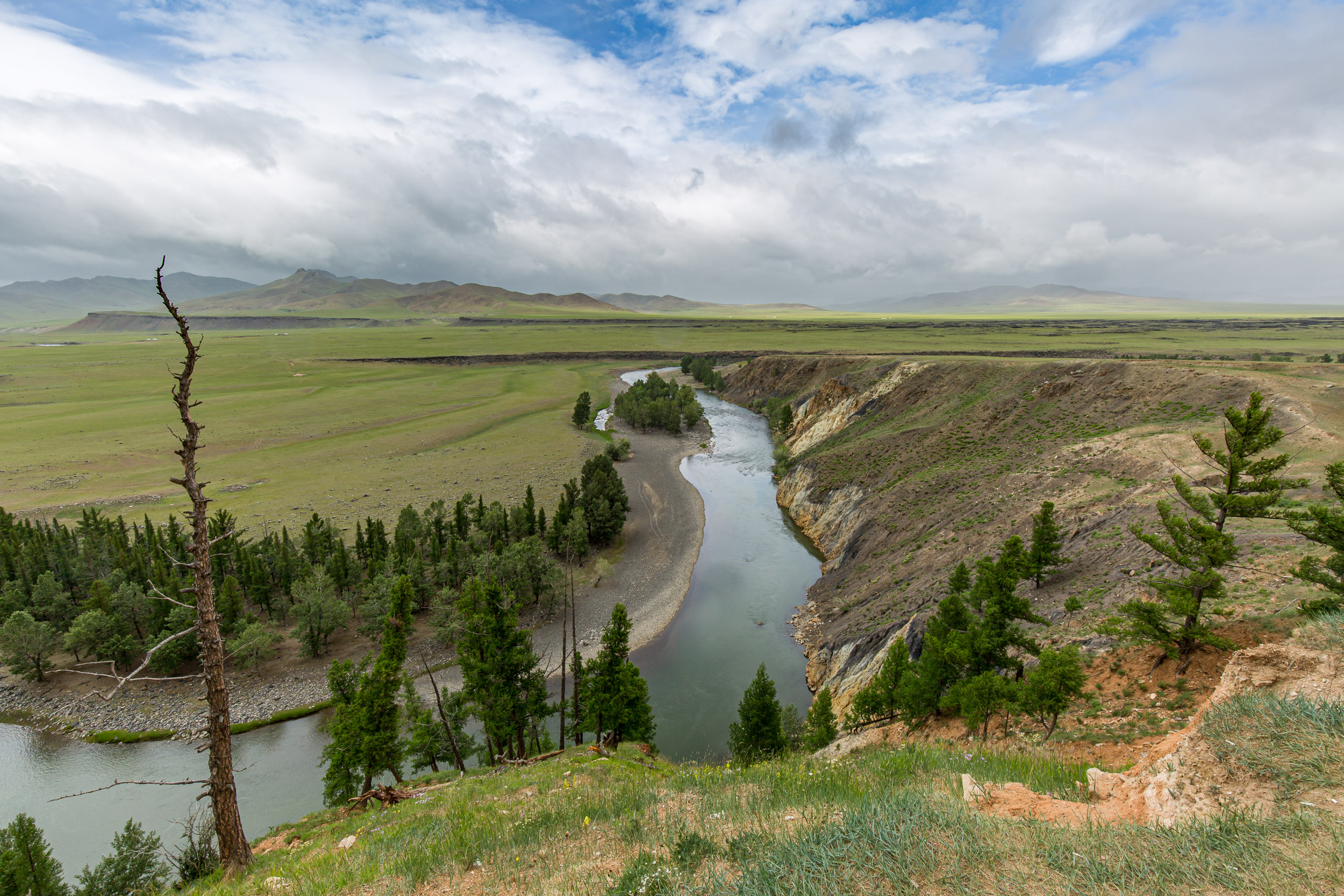
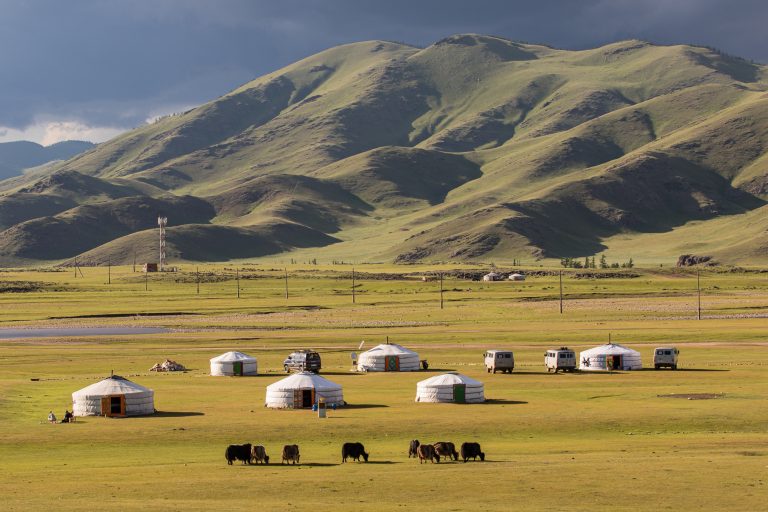
This was the most dramatic shift in scenery so far. We left the dry, open steppe of central Mongolia behind, crossed a fog-covered mountain range, and descended into the Orkhon Valley — a surprisingly lush and green landscape.
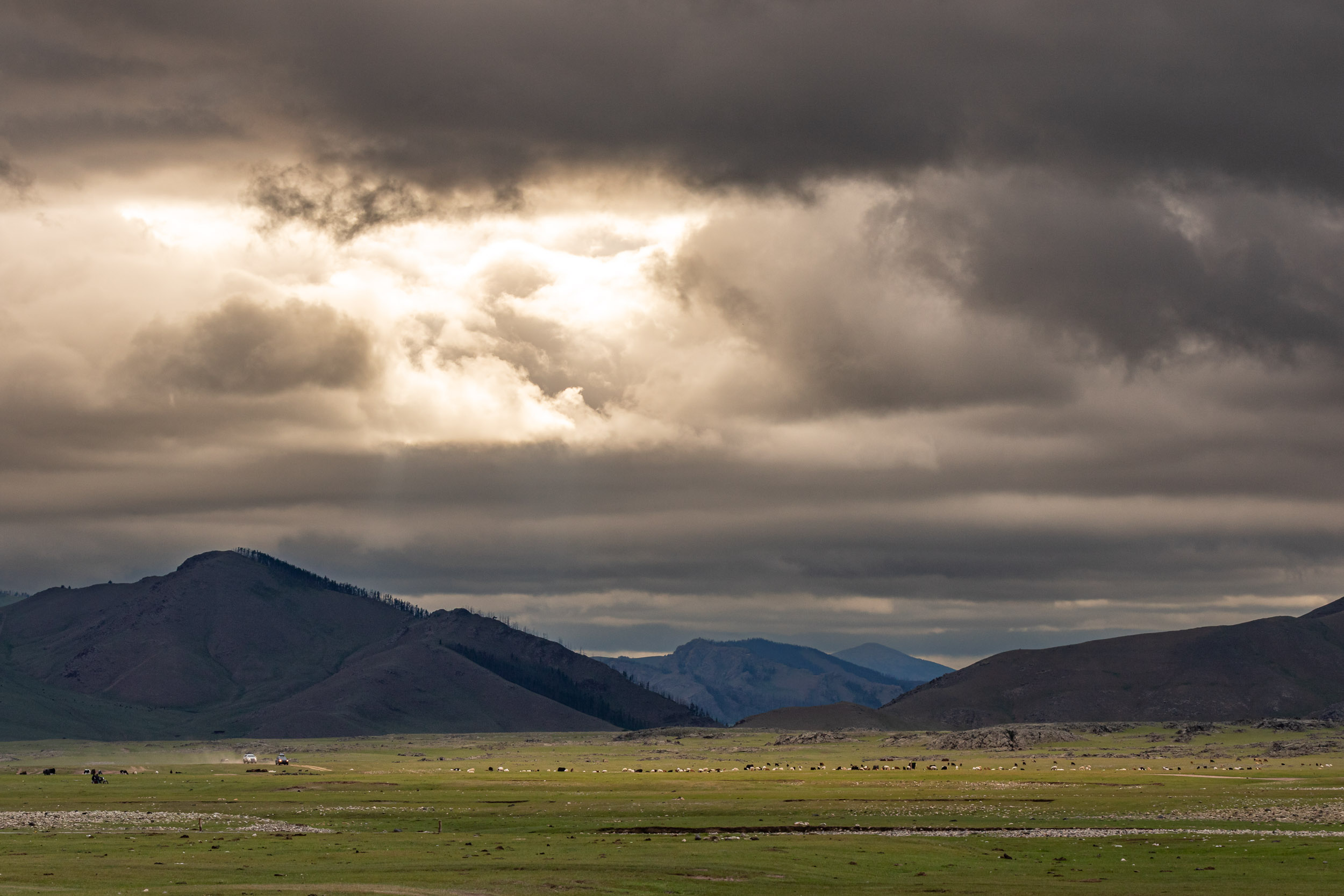
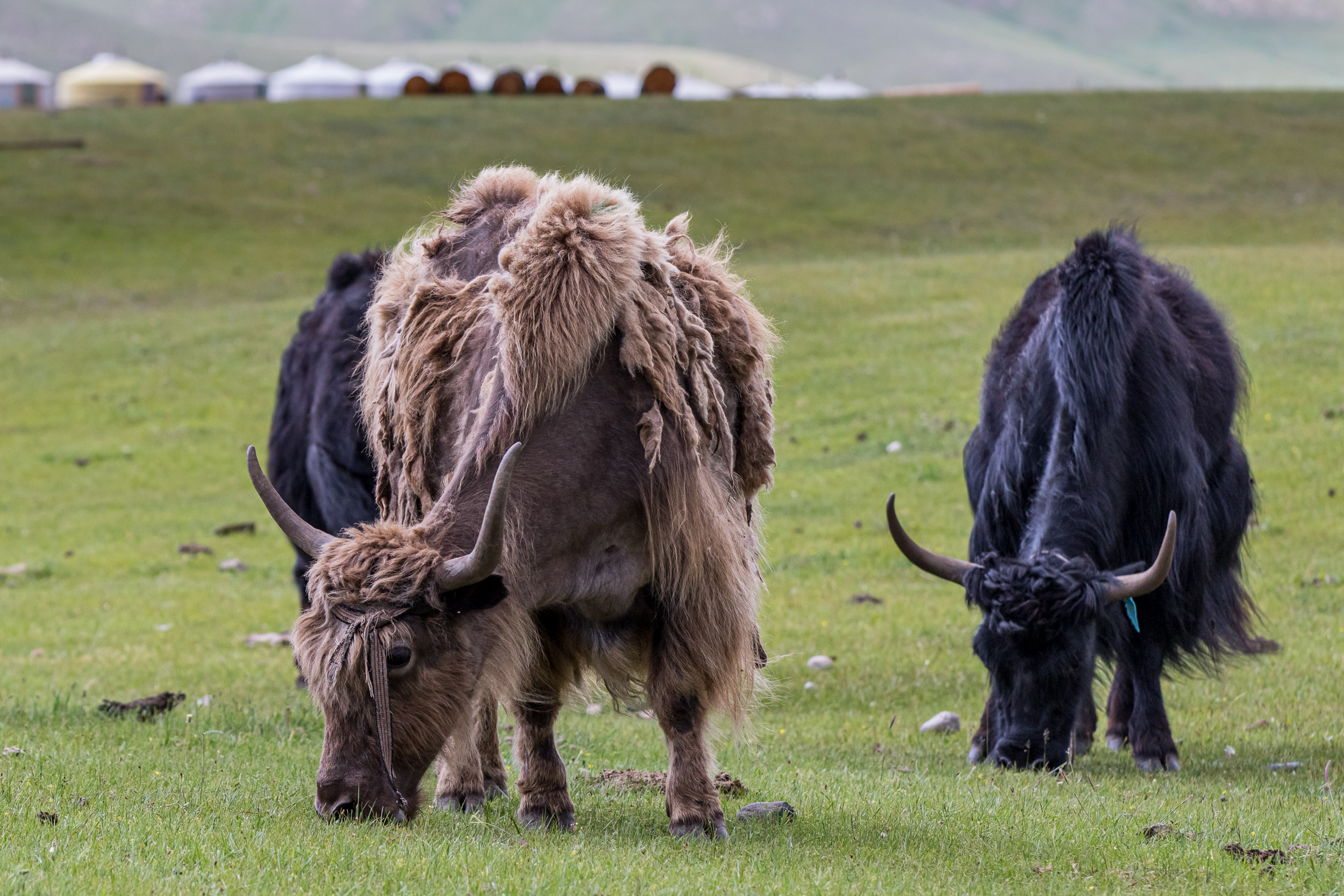
Often covered in mist and low clouds, the valley feels almost alpine compared to the Gobi. Rain showers are common, and the grasslands remain fertile throughout the year. It is ideal pasture for goats, yaks and horses, which explains why many nomadic families settle here seasonally.
The Orkhon Valley is also a UNESCO World Heritage Site, recognized for its cultural significance and long history of nomadic civilization.
Nomadic Hospitality in the Valley
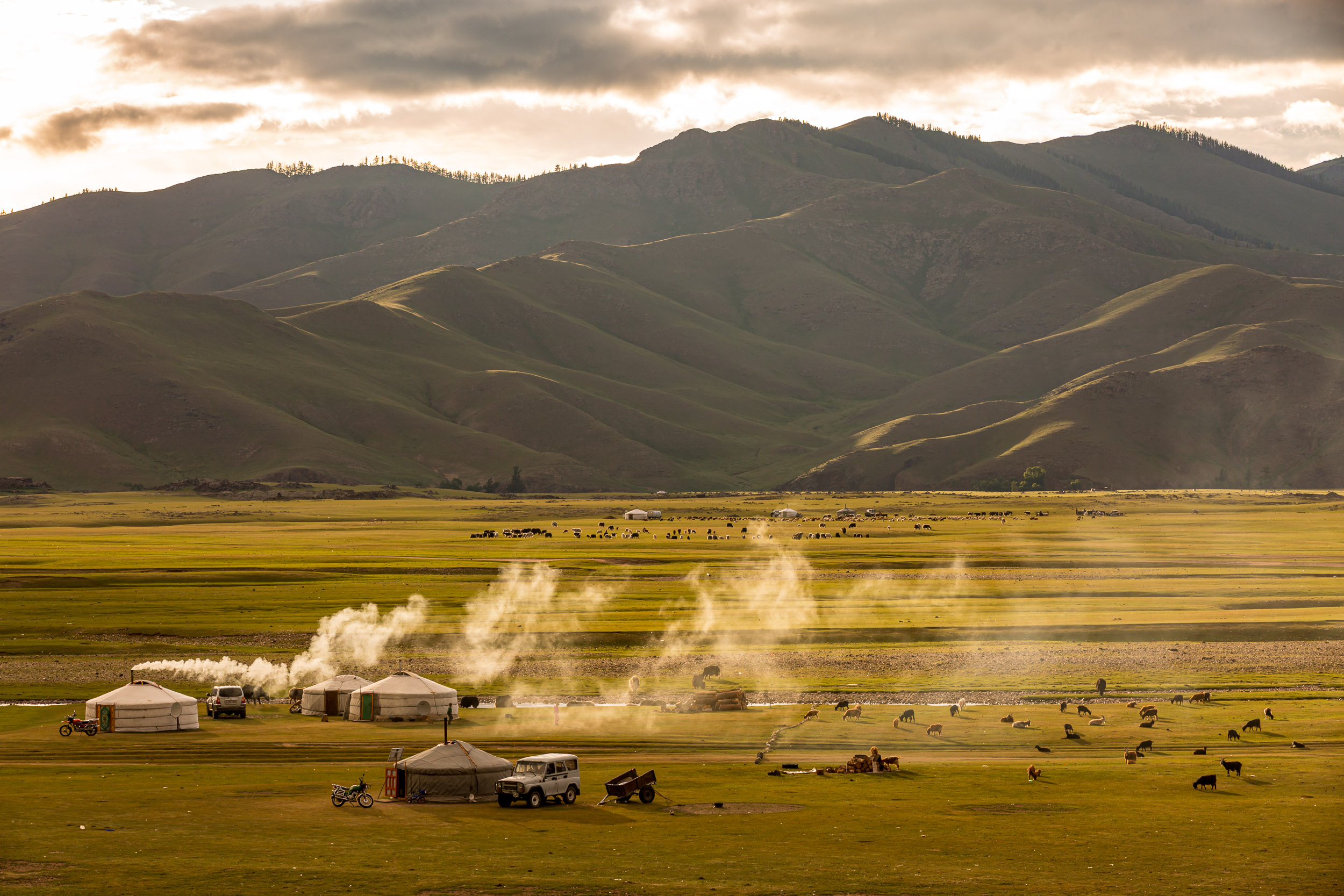
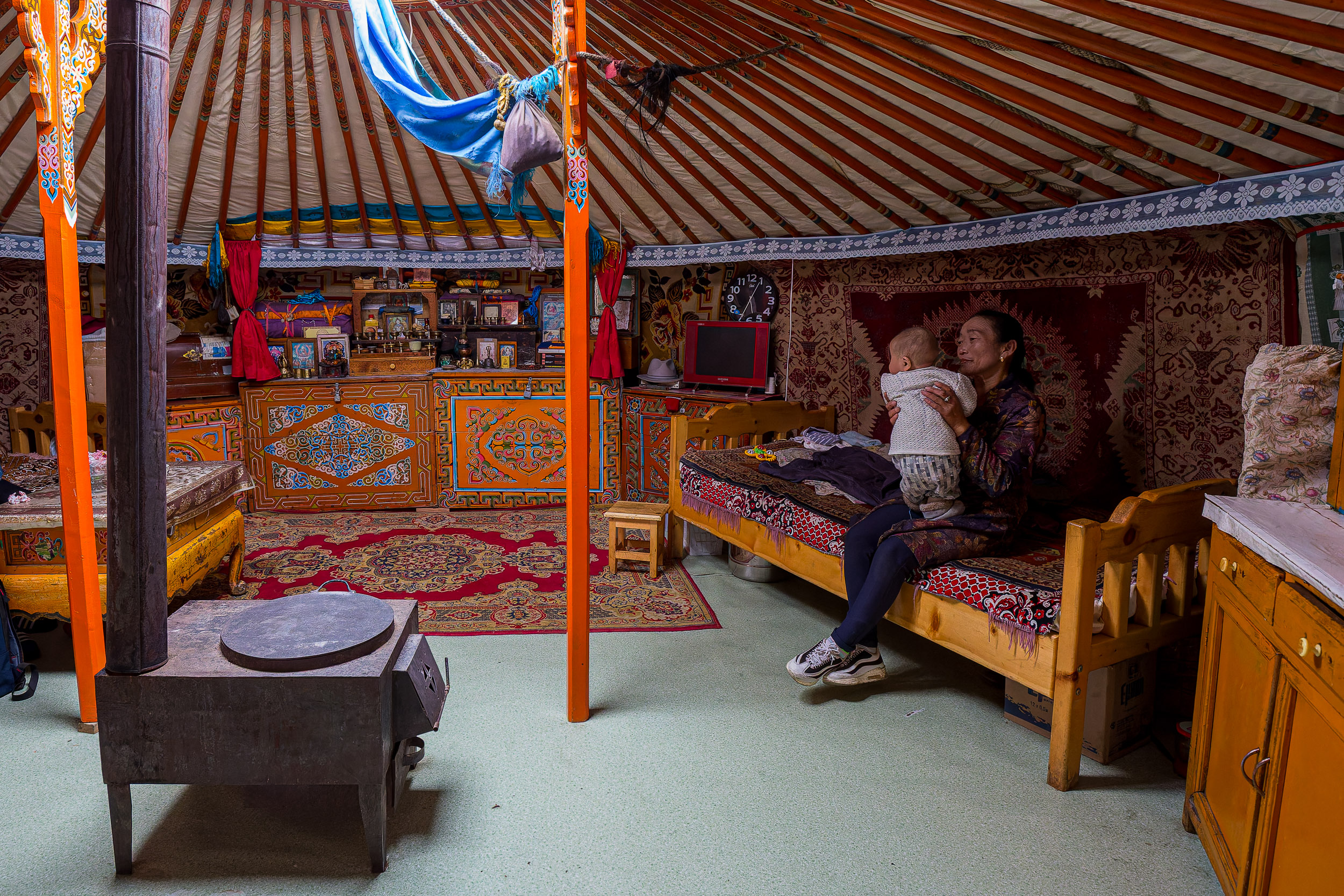
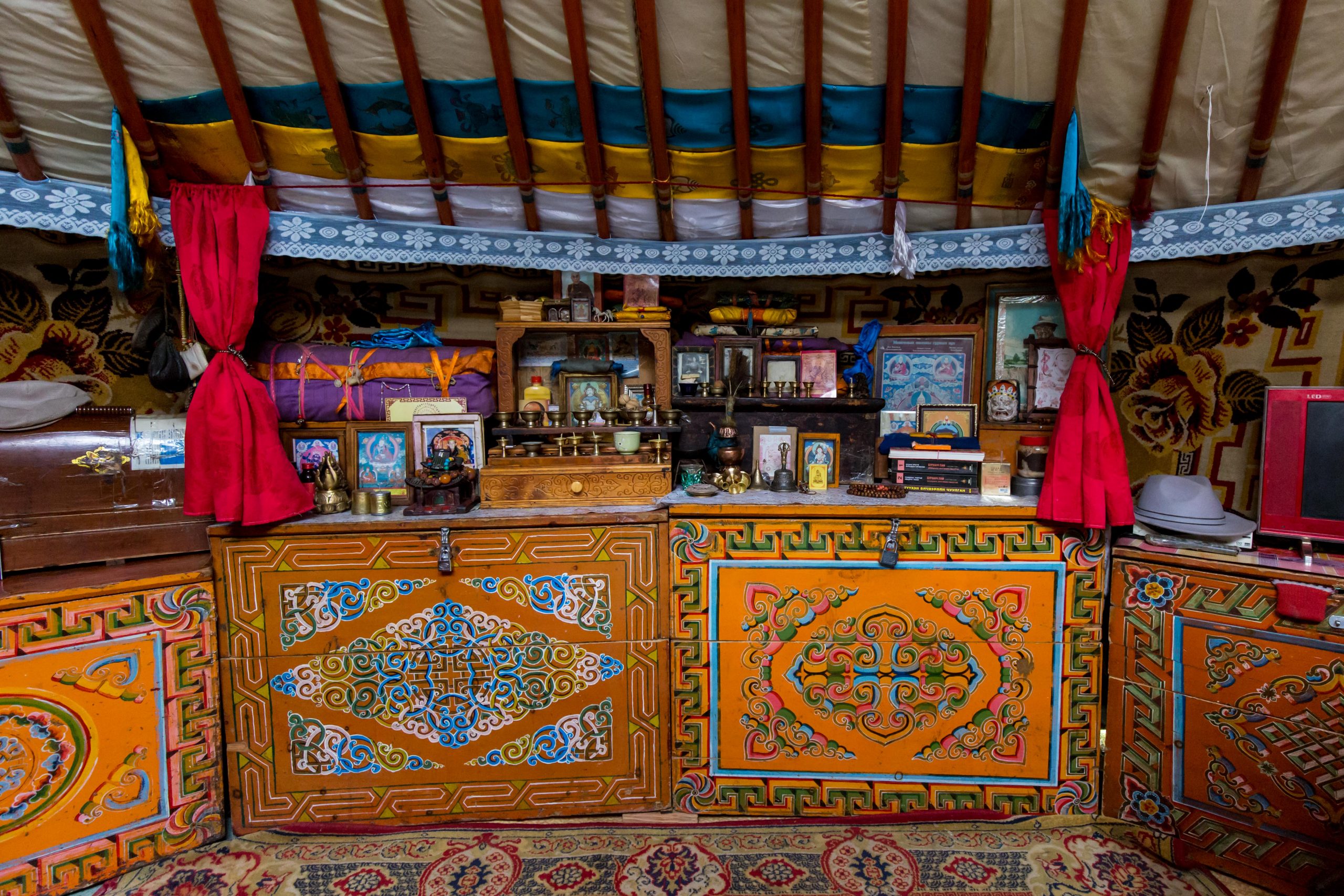
We stayed with a friendly family living right in the middle of the valley. As always, we were welcomed into their ger with warm milk tea and local snacks.
Soon after came airag — fermented horse milk — a traditional summer drink and a favorite among Mongolian men. Slightly sour and lightly alcoholic, it is an acquired taste but part of the authentic nomadic experience.
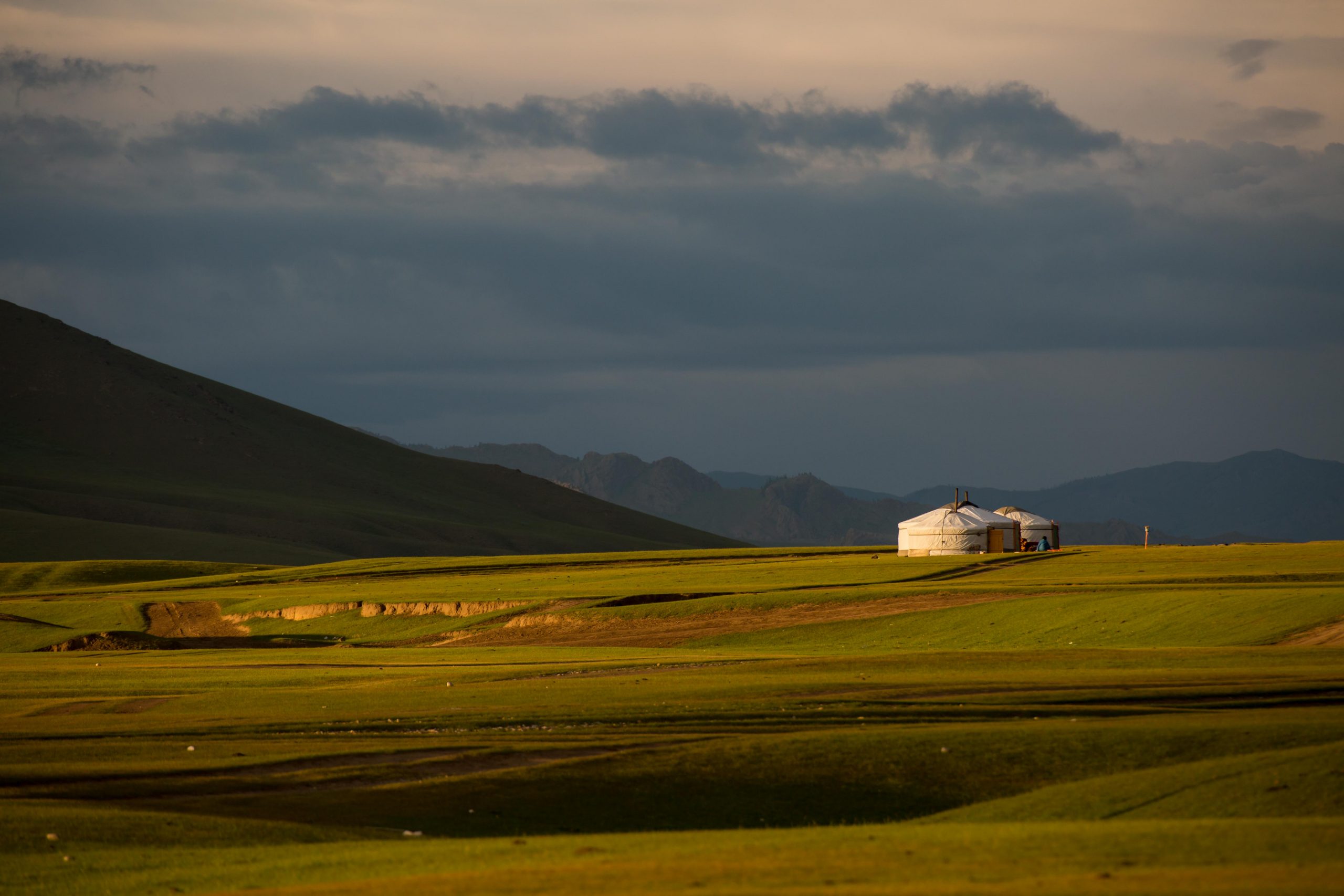
The surrounding hills were still covered in original pine forest. Mongolian law prohibits large-scale logging, and while small amounts of wood are used locally, the valley retains a largely untouched feel.
That evening I walked through the hills as the sun slowly set, casting golden light over the rolling grasslands.
Morning Life: Milking Yak and Horses
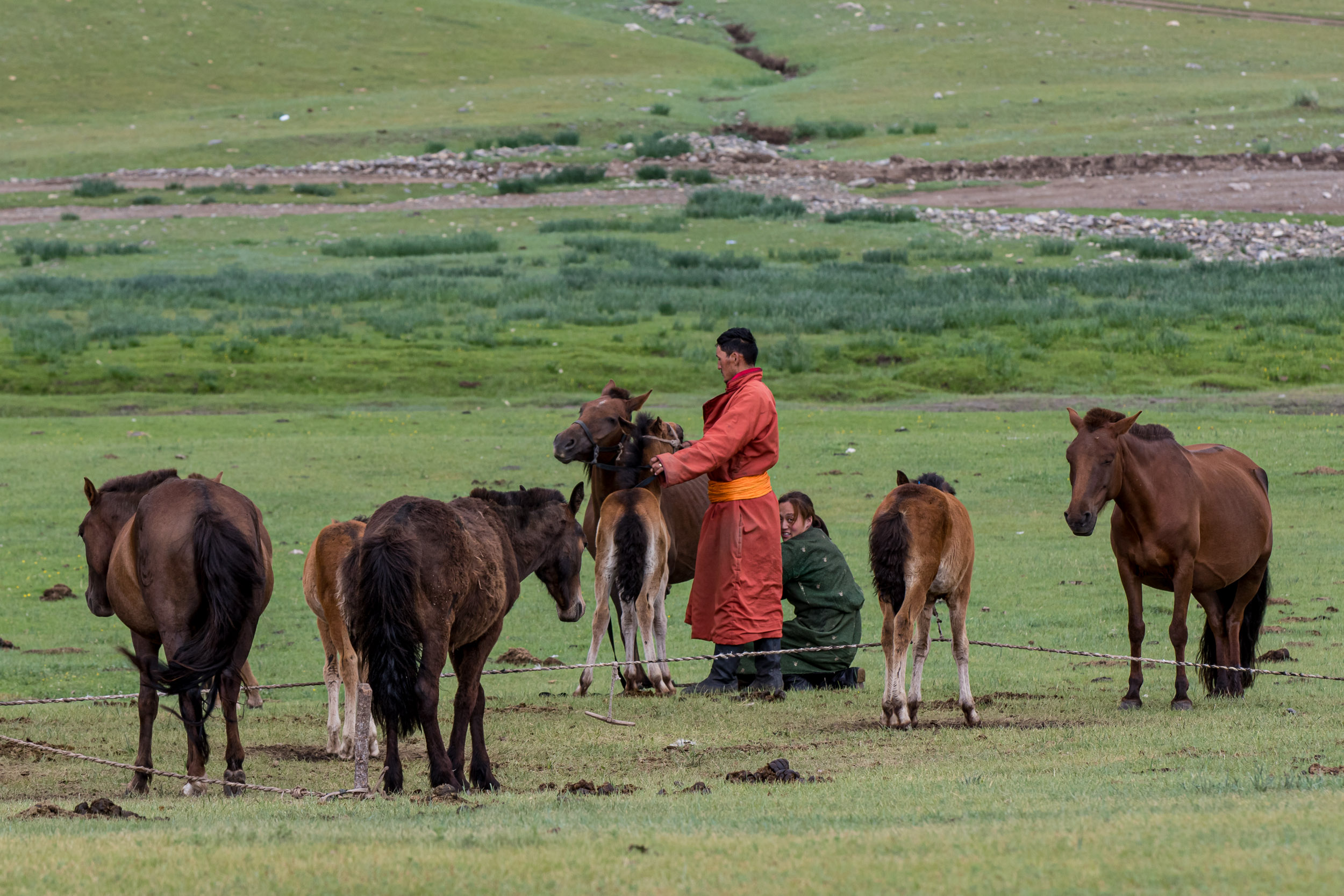
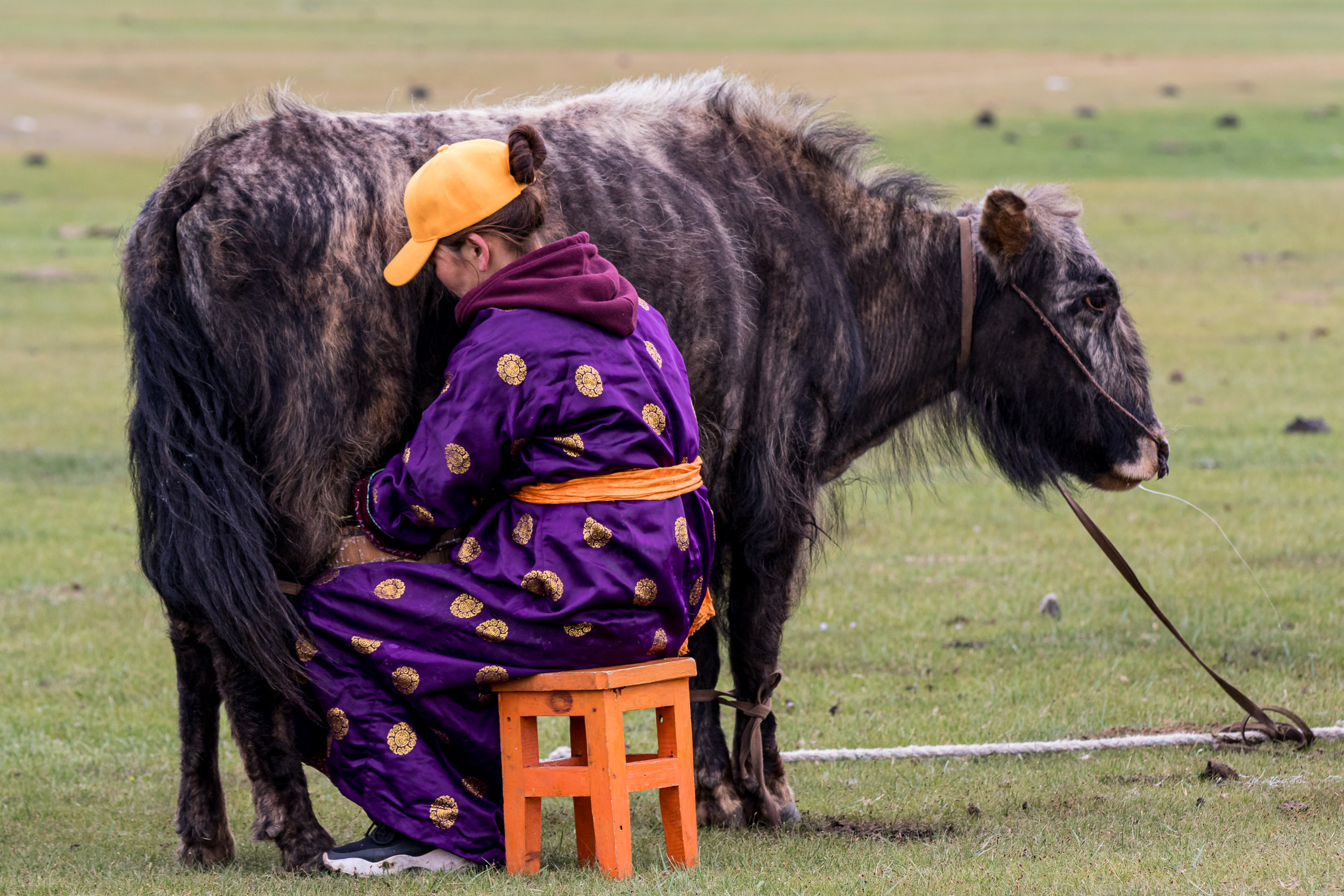
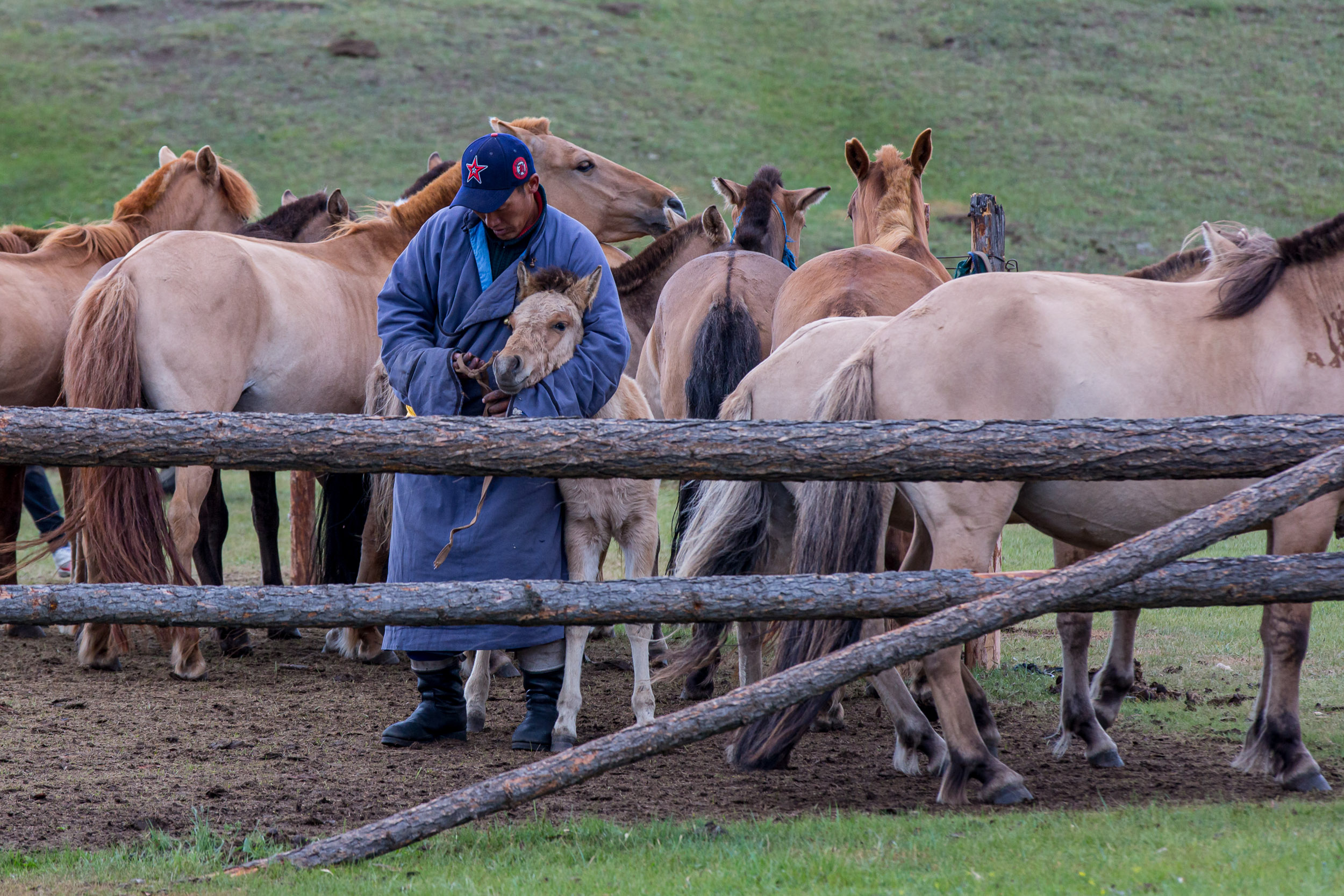
The next morning began with the rhythm of daily nomadic life. Yaks were milked early, their milk used for butter, warm drinks, yoghurt (tarag), and sometimes distilled into arkhi — milk vodka.
Horses were also milked during this season, the milk fermented into fresh airag.
Watching these routines offered insight into a lifestyle that has changed little over generations.
Exploring on Horseback
The Orkhon Valley is best explored on horseback — although Mongolian horses make that an adventure in itself. They are semi-wild and strong-willed. You don’t really choose your horse; the horse chooses you. If you’re lucky, the ride is smooth.
From horseback, the vastness of the valley feels natural and uninterrupted — rolling hills, river bends, grazing animals stretching into the distance.
Orkhon Waterfall
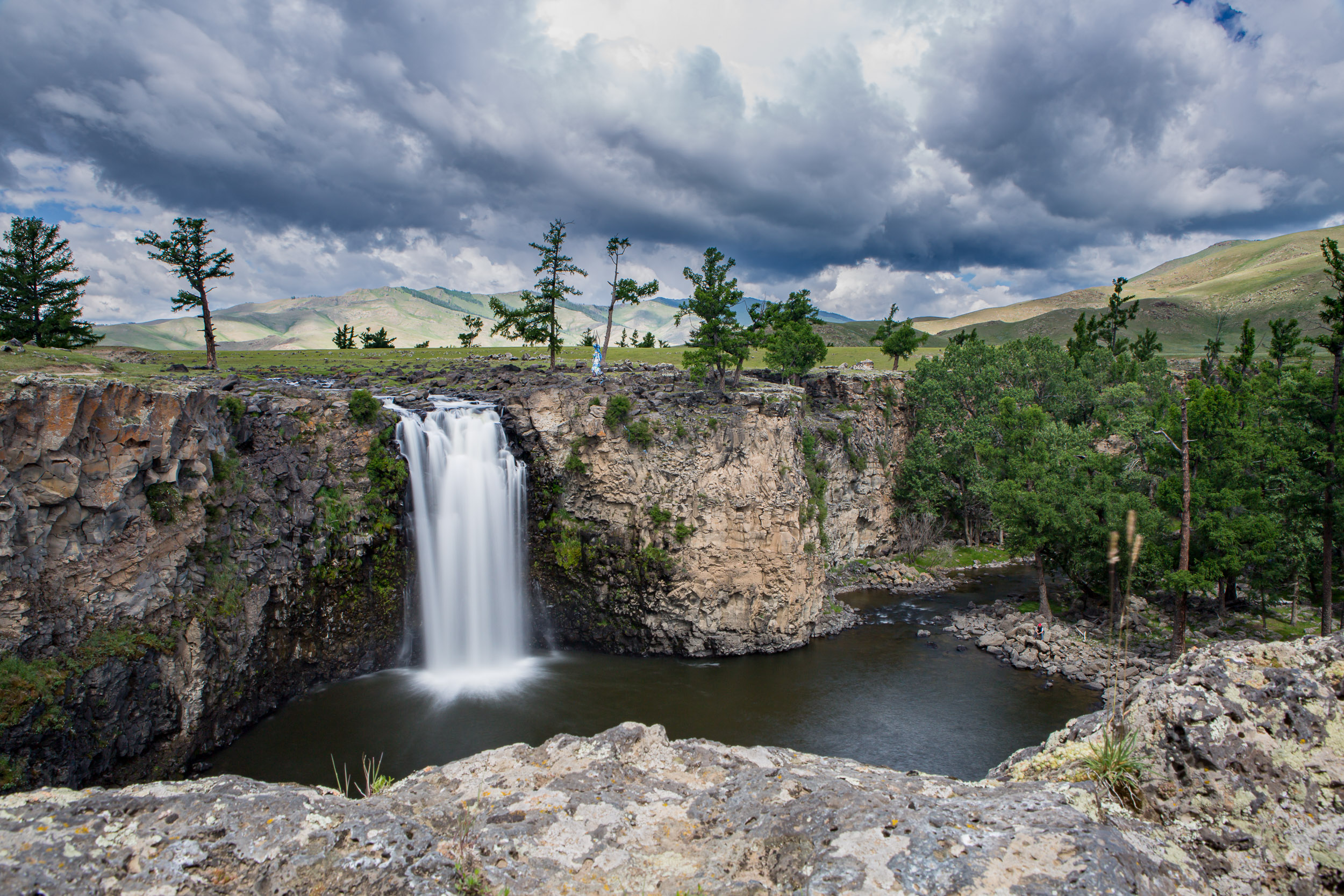
Our first stop was the Orkhon Waterfall, formed around 20,000 years ago through volcanic eruptions and earthquakes. Water plunges into a dark basalt canyon carved by ancient geological forces — a striking contrast to the soft green hills surrounding it.
From there we continued riding along the Orkhon River, gradually moving deeper into the valley.
That evening, once again, I wandered alone through the hills, watching the valley glow under the last light of day.
Explore the Photo Gallery
A curated visual collection from Orkhon Valley and surroundings