Bajawa is a hill town in the central highlands of Flores and the capital of the Ngada region. Located between 1,100 and 1,500 metres above sea level, it is one of the coolest towns on the island and surrounded by forested mountains and volcanic landscapes.
The town serves as the cultural centre of the Ngada people, whose traditional architecture, ritual life and village structure remain strongly preserved in the surrounding highlands. From Bajawa, travellers can explore several of Flores’ most remarkable traditional villages, including Bena, Gurusina, and Wogo.
With its cooler climate, scenic surroundings and strong cultural traditions, Bajawa is one of the most interesting places to experience the cultural landscape of central Flores.
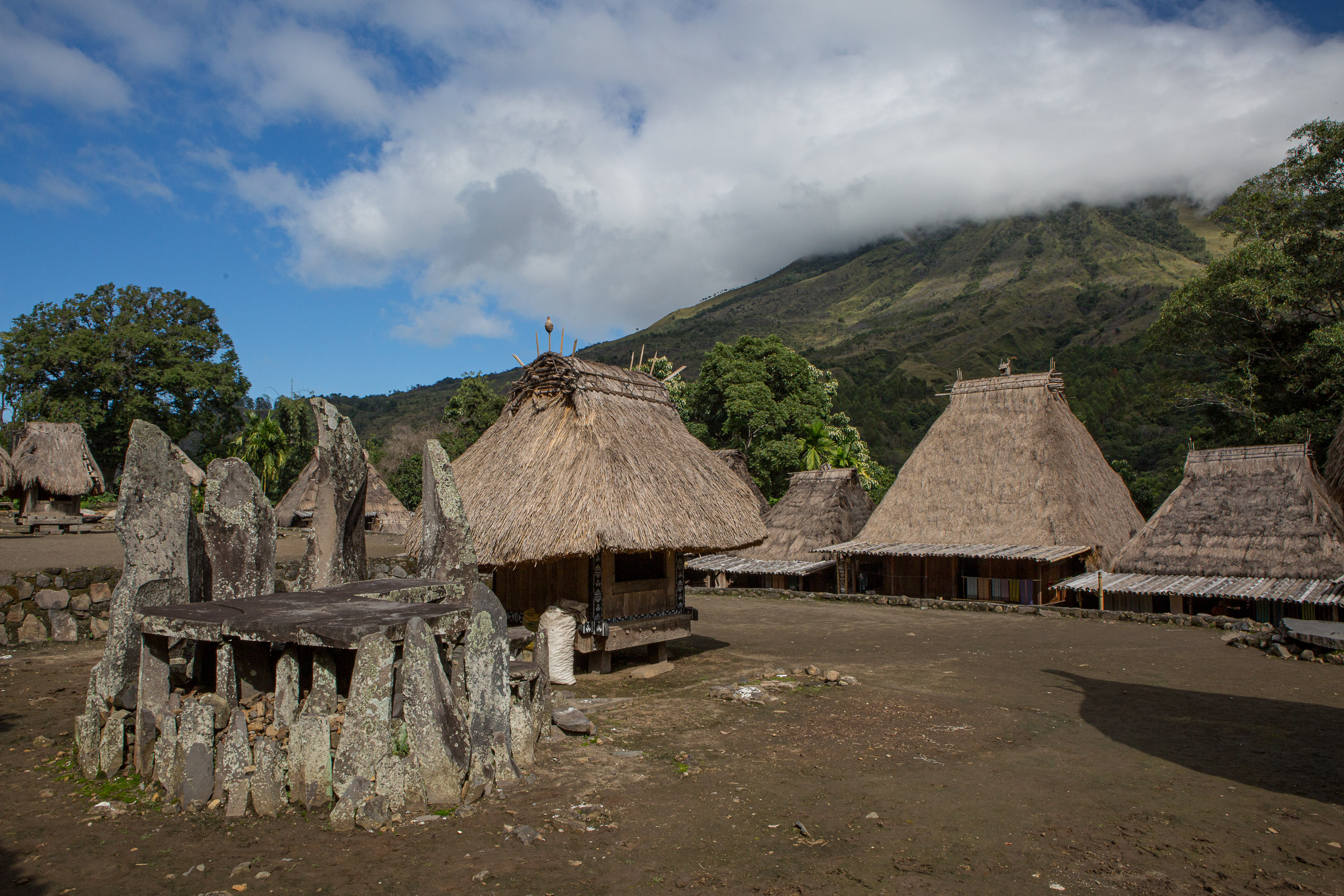
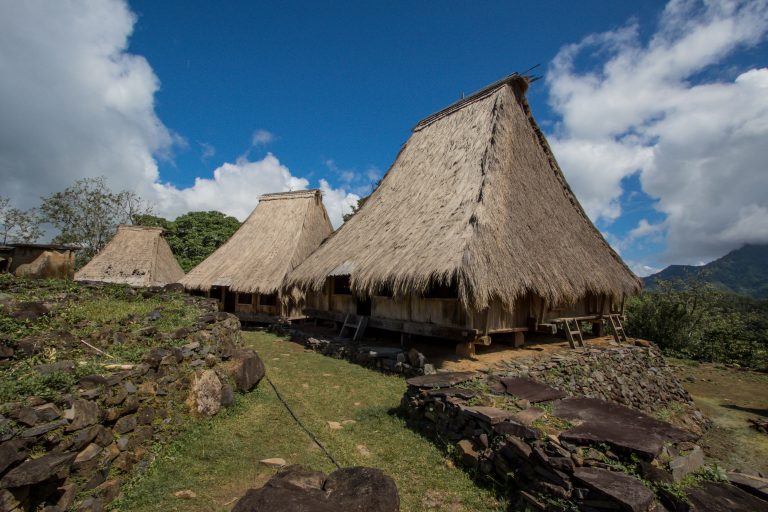
Central courtyard with Ngadhu, Bhaga and megalithic stones in a traditional Ngada village near Bajawa.
Bajawa as a Cultural Hub
Bajawa functions as the main gateway to the traditional villages of the Ngada region. Villages such as Bena, Gurusina, and Wogo are located in the hills surrounding the town and remain important centres of Ngada culture.
Unlike museum-style heritage sites, these villages are living communities where ancestral houses, clan shrines and ceremonial spaces remain part of daily life. Ritual traditions, livestock keeping and weaving continue alongside modern influences.
For most visitors, Bajawa serves as the logistical base from which to explore these traditional settlements scattered across the highlands.
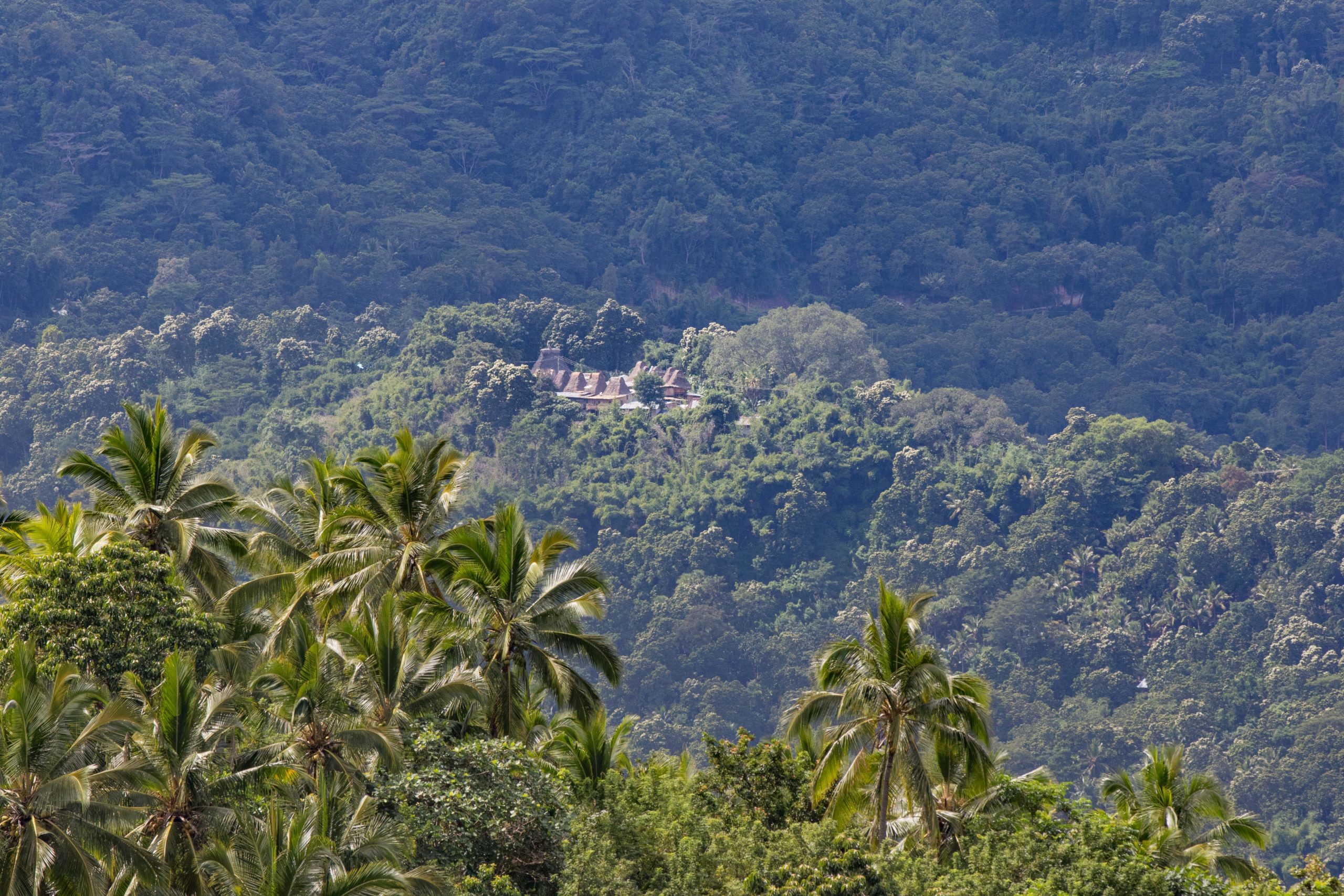
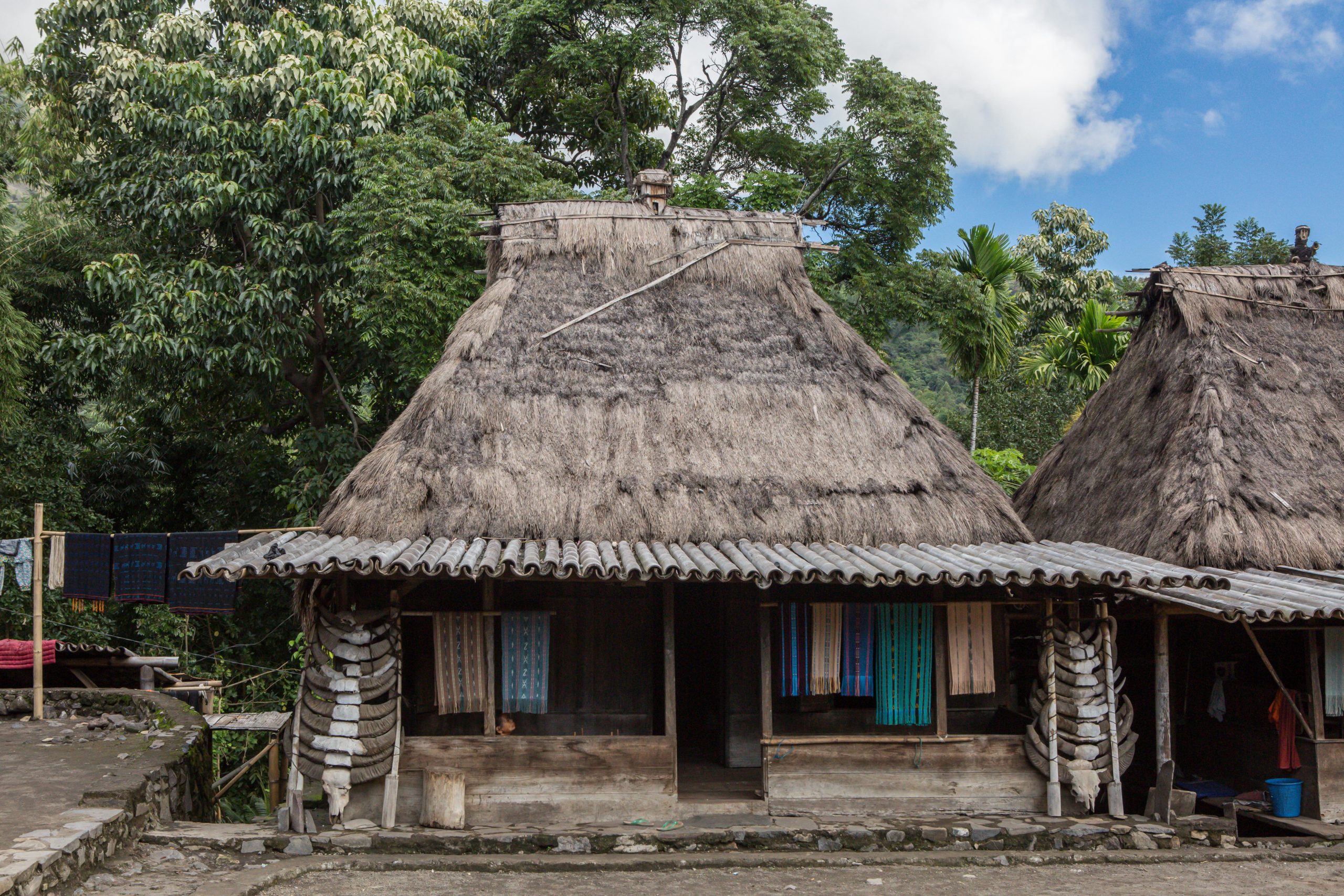
A remote traditional village in the Ngada highlands of Bajawa, central Flores.
Traditional Ngada Village Layout
Traditional villages of the Ngada people follow a distinctive spatial layout that reflects clan structure, ancestor worship and ritual life. Most villages are built along a central open courtyard surrounded by rows of traditional houses belonging to different clans. The courtyard serves as the ceremonial heart of the village and is the place where rituals, meetings and communal gatherings take place.
Two important sacred structures stand in this central space: the Ngadhu and the Bhaga.
The Ngadhu is a tall wooden pole with a small thatched roof, representing the male ancestral line of a clan. It serves as a ritual totem and a symbolic gathering point during ceremonies.
Ngadhu ritual totems, representing the male ancestral line of a clan.
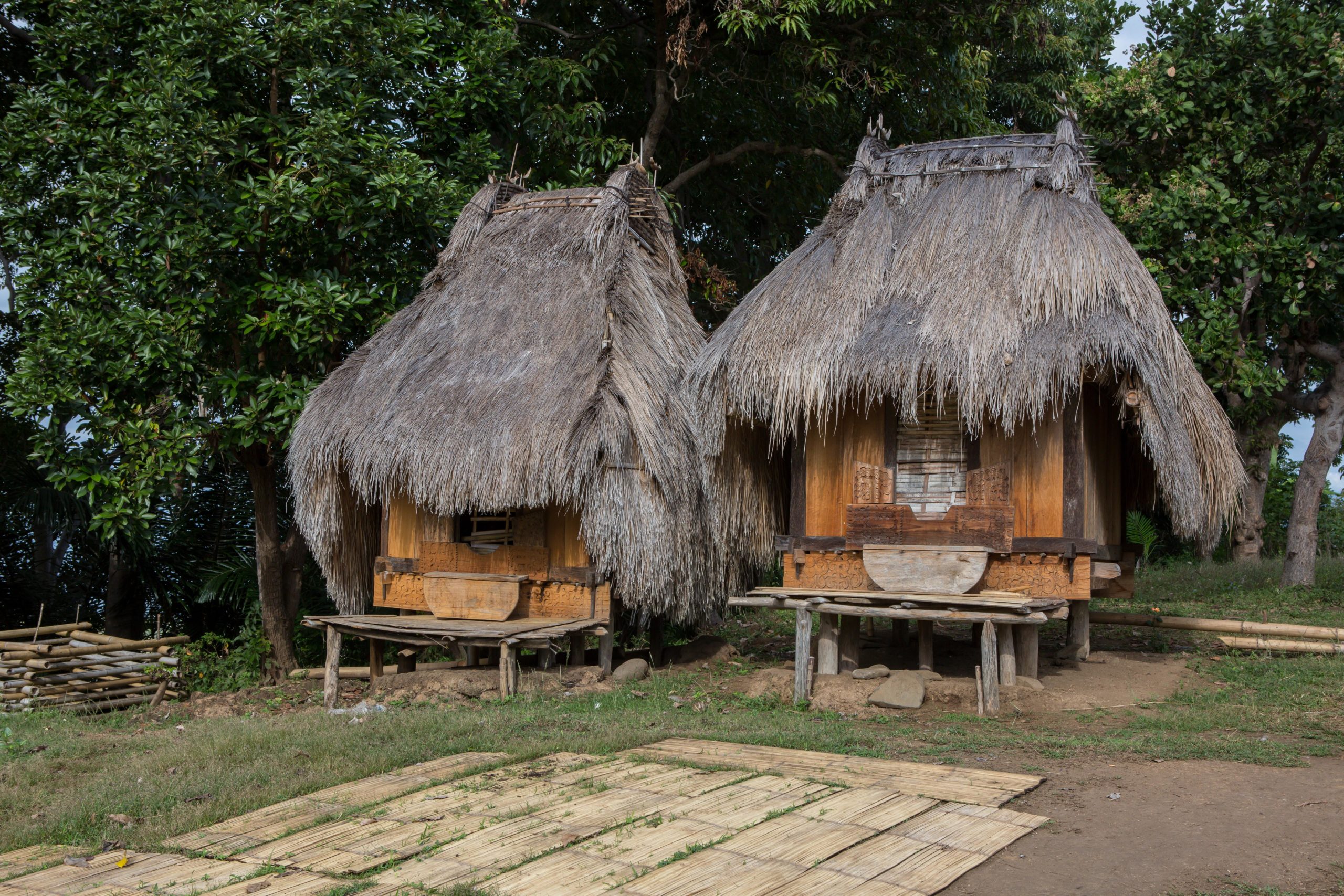
Opposite the Ngadhu stands the Bhaga, a small wooden shrine that represents the female ancestral line. Bhaga structures resemble miniature traditional houses and symbolise the womb or ancestral home of a clan’s founding mother.
Each clan within a village maintains its own Ngadhu–Bhaga pair, placed in the central courtyard as sacred symbols of lineage and continuity. During ceremonies such as the Reba New Year festival, these structures become the focal point of ritual activities honouring ancestors and reaffirming clan identity.
Bhaga ancestral shrine representing the female lineage in a traditional Ngada village near Bajawa.
Together, the Ngadhu and Bhaga reflect the matrilineal traditions and ancestral worldview of the Ngada people, and they form one of the most recognisable features of traditional villages such as Bena and Gurusina near Bajawa.
Clan Houses and Roof Symbols
Traditional Ngada houses are also distinguished by symbolic decorations placed along the ridge of the roof. These wooden ornaments identify the ritual status of each house within the clan structure.
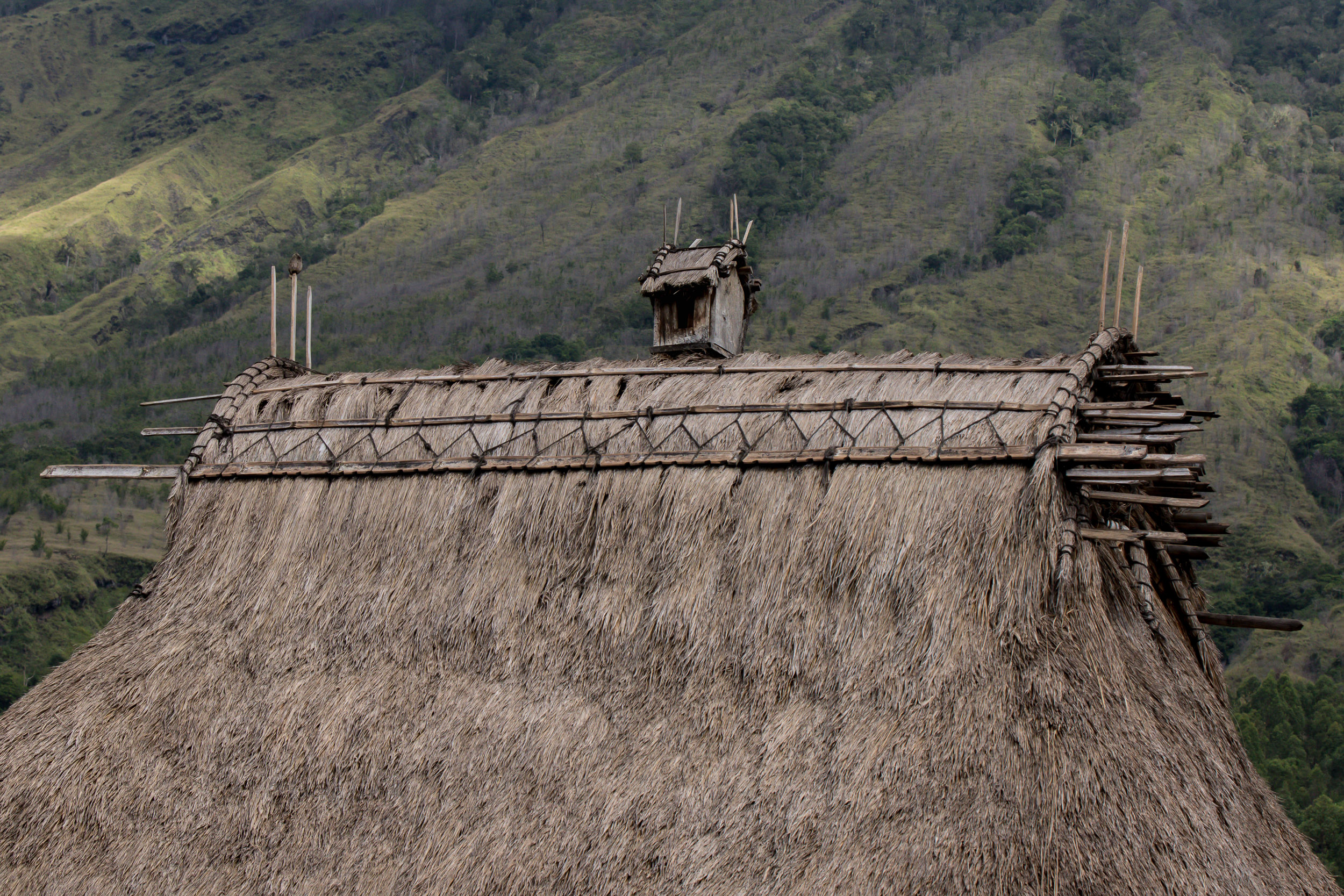
The Sa’o Saka Pu’u, or origin house of a clan, is marked by a small miniature house placed on the roof ridge, symbolising the ancestral “mother house” from which the lineage descends.
Miniature house ornament identifying the Sa’o Saka Pu’u origin house.
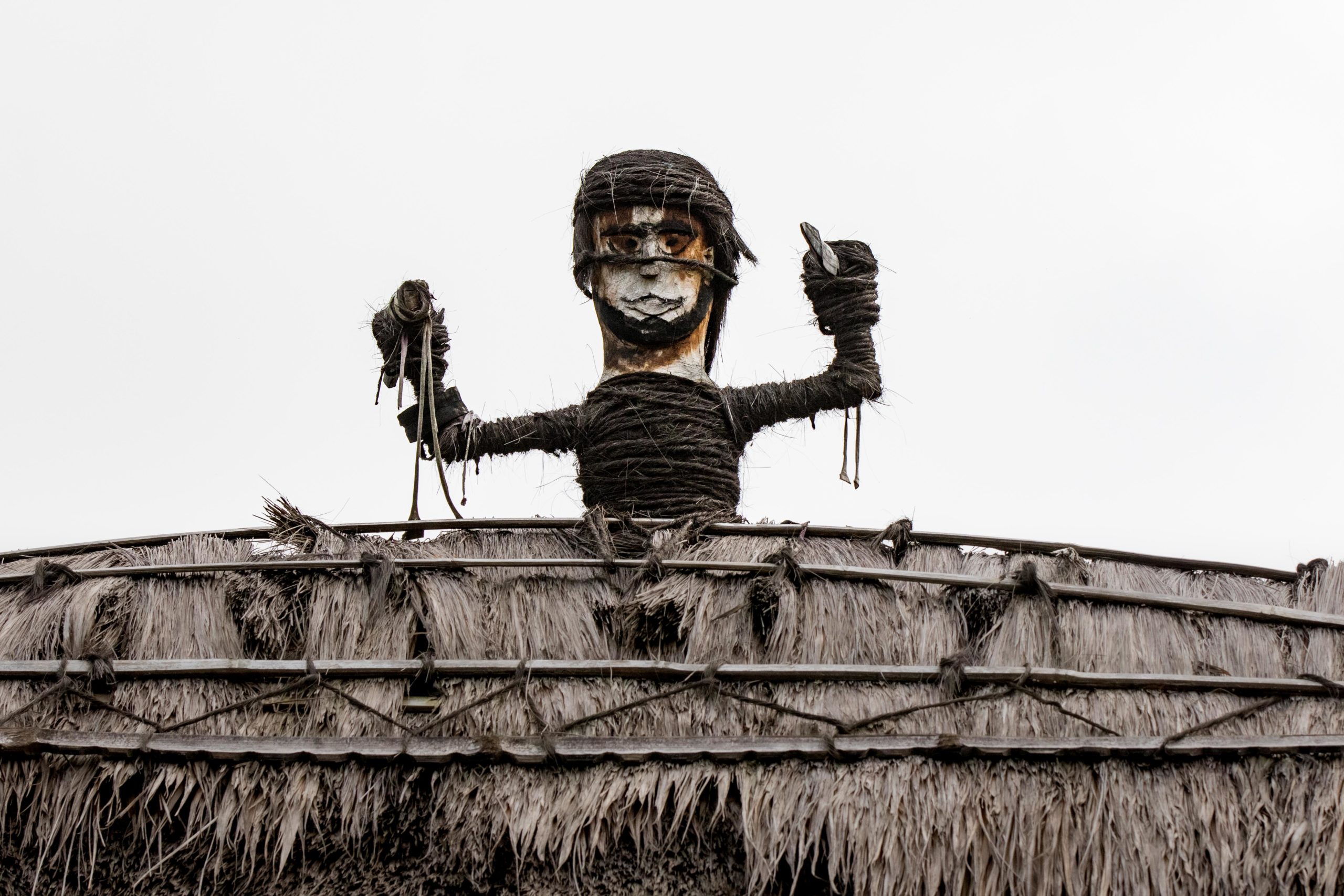
At the opposite end of the clan lineage stands the Sa’o Saka Lobo, the youngest house. Its roof is marked by a small male figure, representing the male descendants who symbolically protect the clan.
Male rooftop figure marking a Sa’o Saka Lobo clan house.
Other houses in the village, known as Sa’o Kaka, do not carry these ornaments. They serve as supporting family houses within the broader clan network.
These rooftop symbols make it possible to read the social structure of a Ngada village directly through its architecture.
Megaliths and Ancestral Rituals
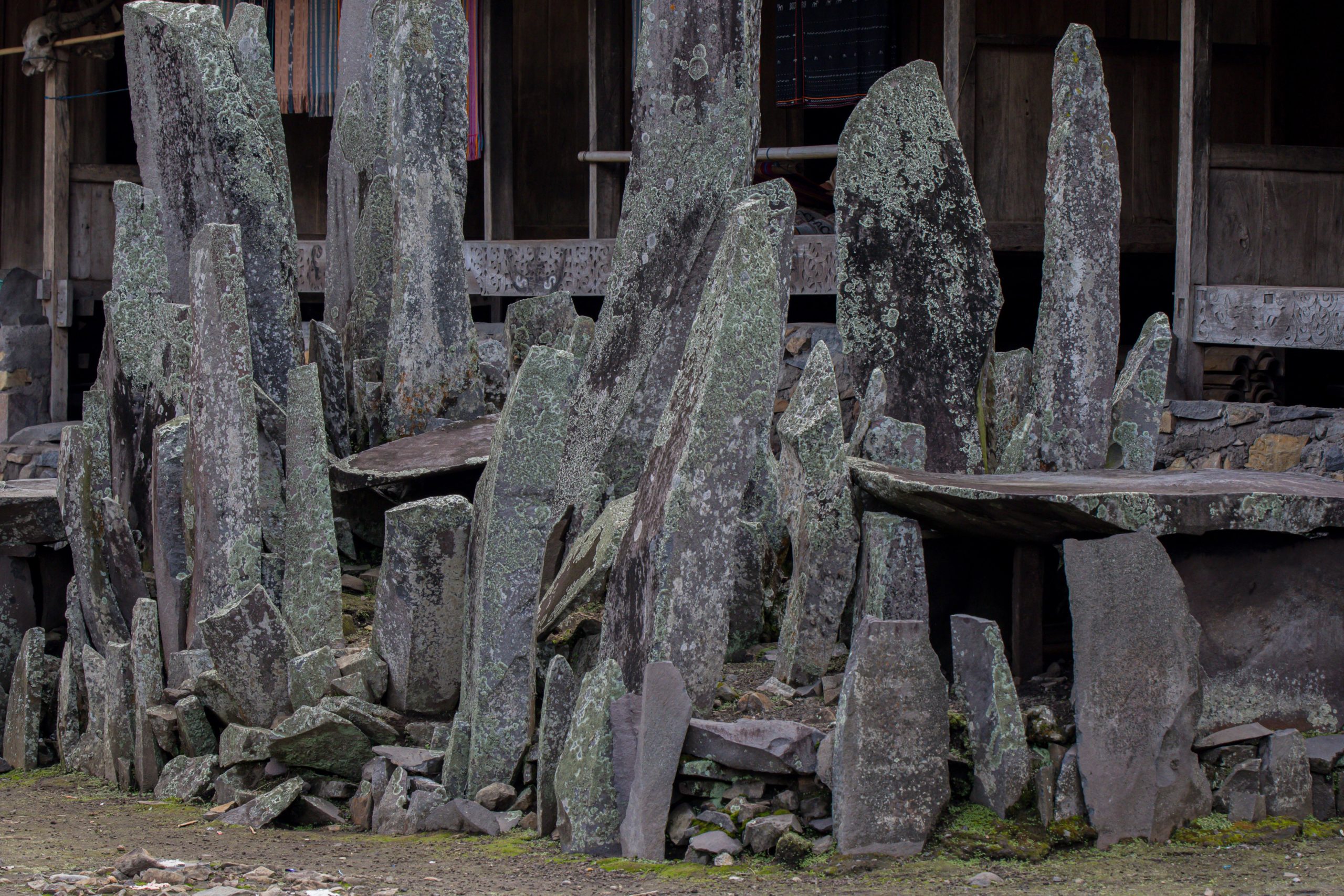
Another distinctive feature of Ngada villages is the presence of megalithic stone structures in the central courtyard. These stones form an important part of the ritual landscape and represent the connection between the living community and the ancestral world.
Large stone altars are used during ceremonies and animal sacrifices, which traditionally serve as offerings to the ancestors. Through these rituals, villagers believe they maintain harmony between the human world and the supernatural realm.
One of the most recognisable stone formations is the lenggi, a pile or arrangement of flat stones that functions as a communal court. Here representatives of the different clans gather to discuss village matters and resolve disputes according to traditional adat law.
Lenggi stone court where clan leaders traditionally resolve disputes in Ngada villages of central Flores.
These megalithic elements, together with the Ngadhu and Bhaga clan shrines, form the ceremonial centre of Ngada villages such as Bena, Gurusina, and Wogo near Bajawa. The courtyard therefore acts not only as a physical gathering space but also as the symbolic heart of community life, where social order, ancestral worship and ritual traditions intersect.
Ceremonial Life in the Ngada Highlands
The Ngada highlands host several important cultural events throughout the year.
One of the most significant ceremonies is Reba, the traditional Ngada New Year celebration. This thanksgiving ritual takes place across multiple villages and involves extended ceremonial activities, music and offerings to ancestors.
Another traditional event is Sagi, a ritual form of boxing that usually takes place between May and July. These fights are not staged performances but part of ceremonial gatherings connected to village traditions. The exact timing varies and is determined locally.
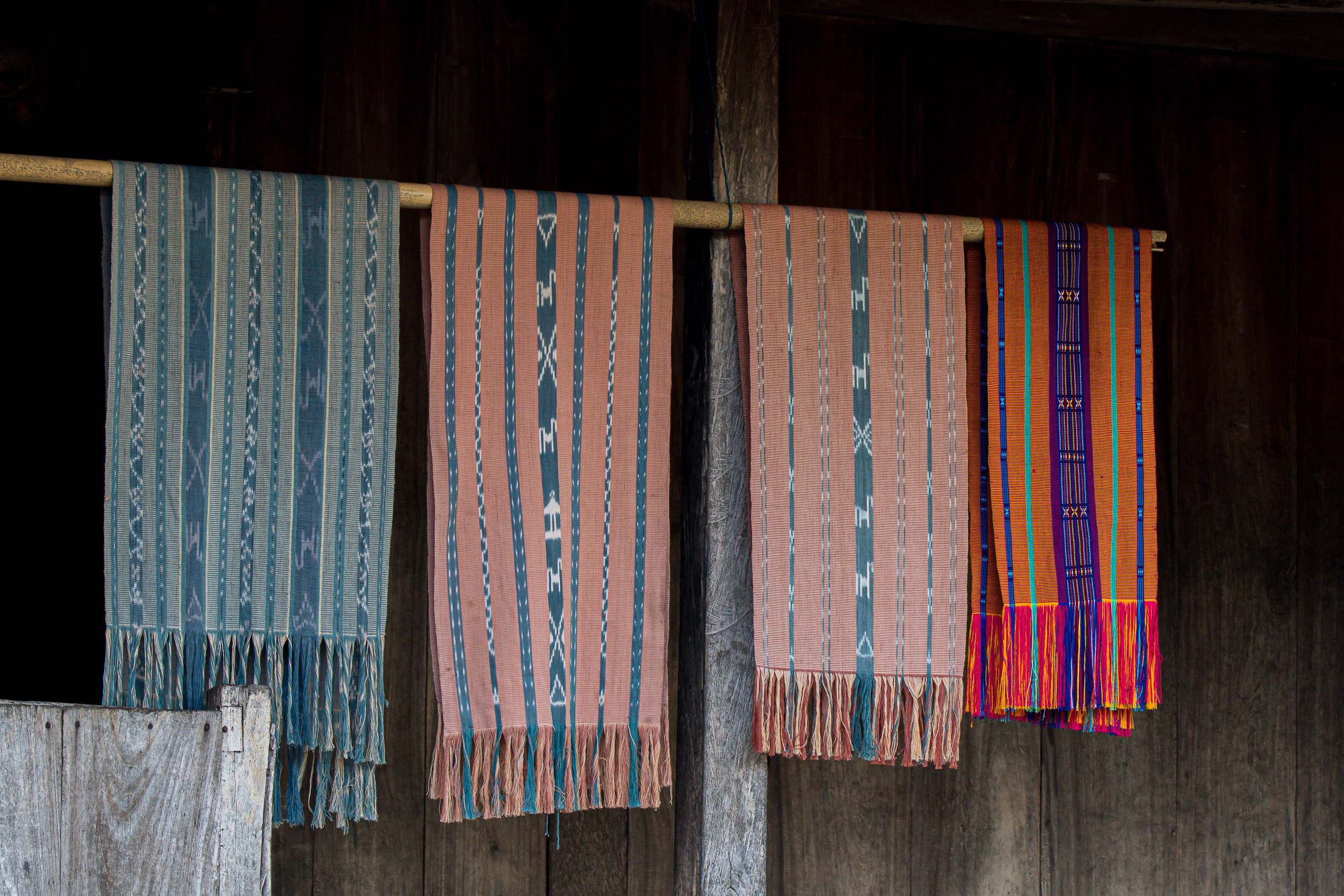
Traditional ikat textile of the Ngada culture in Bajawa.
Landscape and Hiking
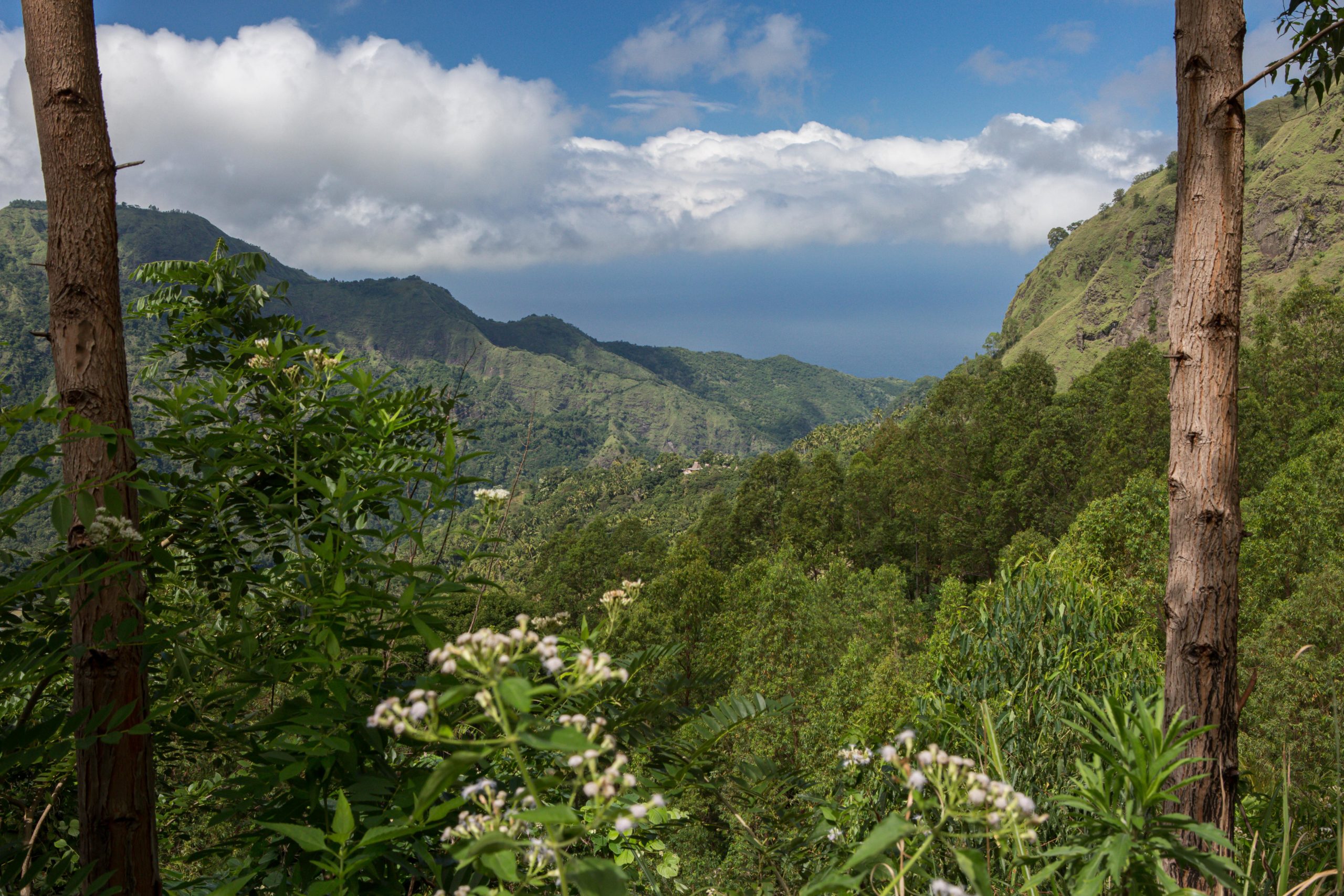
The mountainous landscape around Bajawa offers excellent opportunities for hiking. Ancient footpaths connect villages through plantations, forested slopes and cultivated valleys.
Several volcanic landscapes lie nearby:
• Mount Inerie, the dominant cone-shaped volcano south of Bajawa • Wawo Muda, a colourful crater field formed during a 2001 eruption • Various geothermal areas and hot springs created by volcanic activity beneath the region
The cooler temperatures of the Ngada highlands make Bajawa one of the most comfortable areas for trekking on Flores.
Hot Springs and Natural Sites
Several geothermal hot springs can be reached within a short drive from Bajawa.
Malanage Hot Springs is the most popular, where hot volcanic water flows into a mountain stream surrounded by tropical forest.
Smaller hot spring pools can also be found along the road toward Bena village.
Waterfalls and forested valleys throughout the region add to the natural diversity of the Ngada highlands.
Visiting Bajawa
Bajawa lies along the Trans-Flores Highway between Ruteng and Ende.
The town offers guesthouses, small hotels and local restaurants, and serves as the best base for visiting the surrounding villages and volcanic landscapes.
Because many ceremonies follow traditional calendars, the best way to learn about local events is simply to ask residents or guesthouse owners upon arrival.
Explore the Photo Gallery
A curated visual collection from Bajawa – Ngada Highlands