Ngada ancestral architecture and megalithic shrines near Bajawa
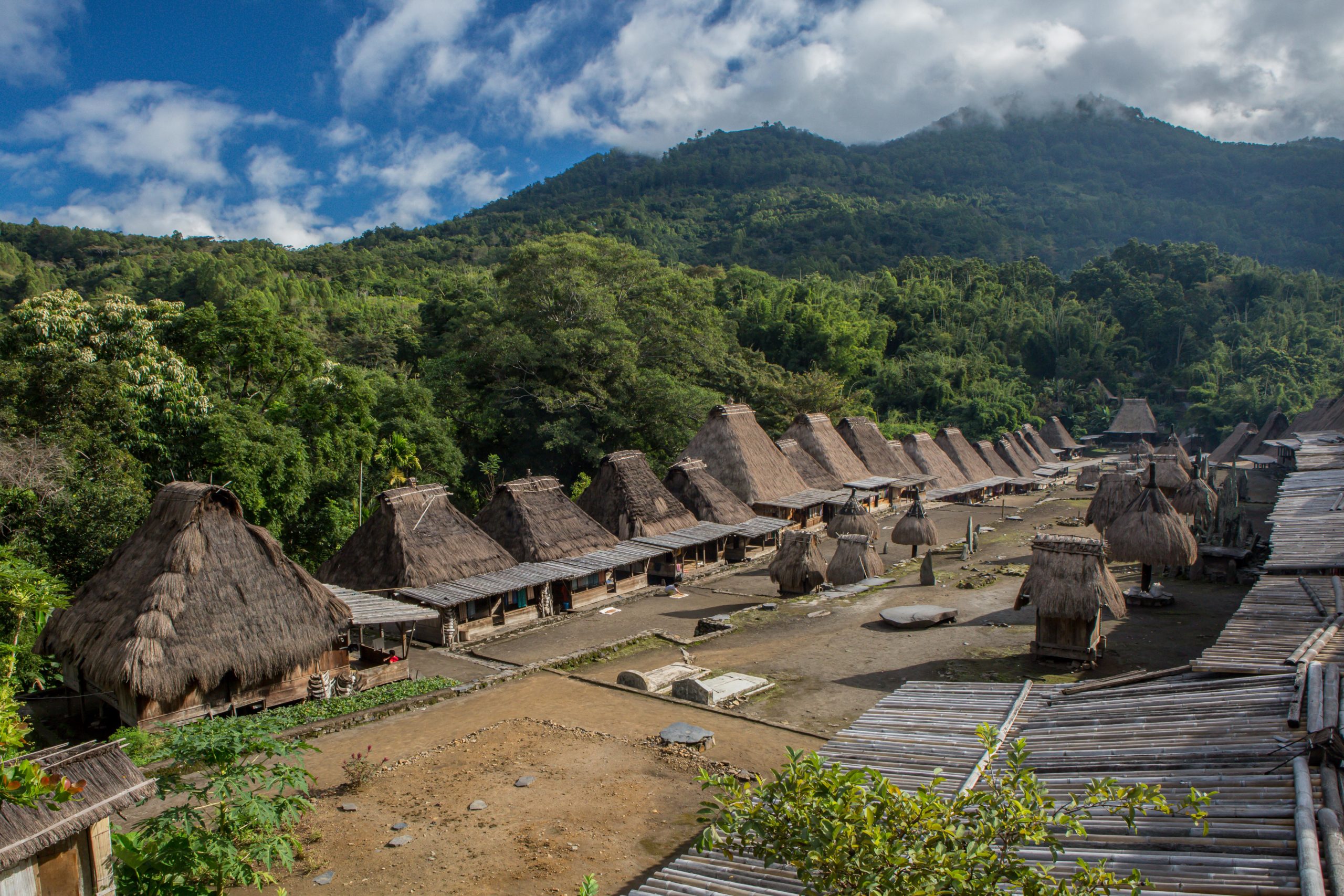
Bena is the most famous traditional village of the Ngada region in central Flores. Located about 13 kilometres south of Bajawa at the foot of Mount Inerie, the village is one of the most remarkable examples of preserved Ngada architecture and ceremonial space in Indonesia.
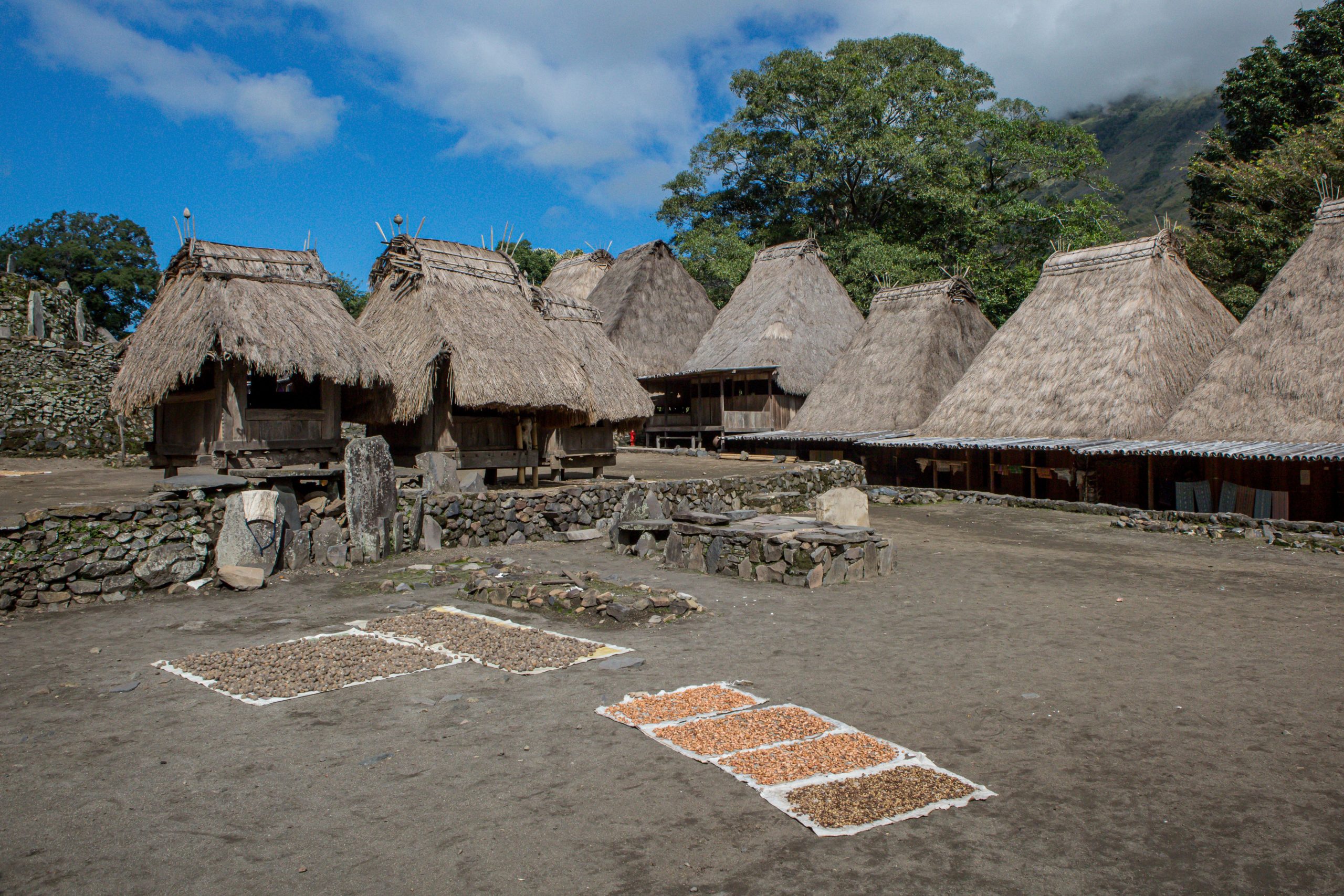
The settlement stands on a narrow ridge overlooking the Savu Sea and consists of two parallel rows of traditional houses facing a central ceremonial courtyard. Within this courtyard stand ancestral shrines and megalithic stone structures that reflect the deep spiritual traditions of the Ngada people.
Although Bena receives visitors, it remains a living village where traditional customs, weaving and ritual practices continue alongside everyday life.
Traditional Ngada houses lining the ridge of Bena village near Bajawa, Flores.
Village Structure and Clan Shrines
The layout of Bena reflects the traditional social structure of the Ngada people. Houses belonging to different clans are arranged along the ridge, facing the central courtyard that functions as the ceremonial heart of the village.
In this courtyard stand the paired clan shrines known as Ngadhu and Bhaga, which represent the male and female ancestral lines of each clan.
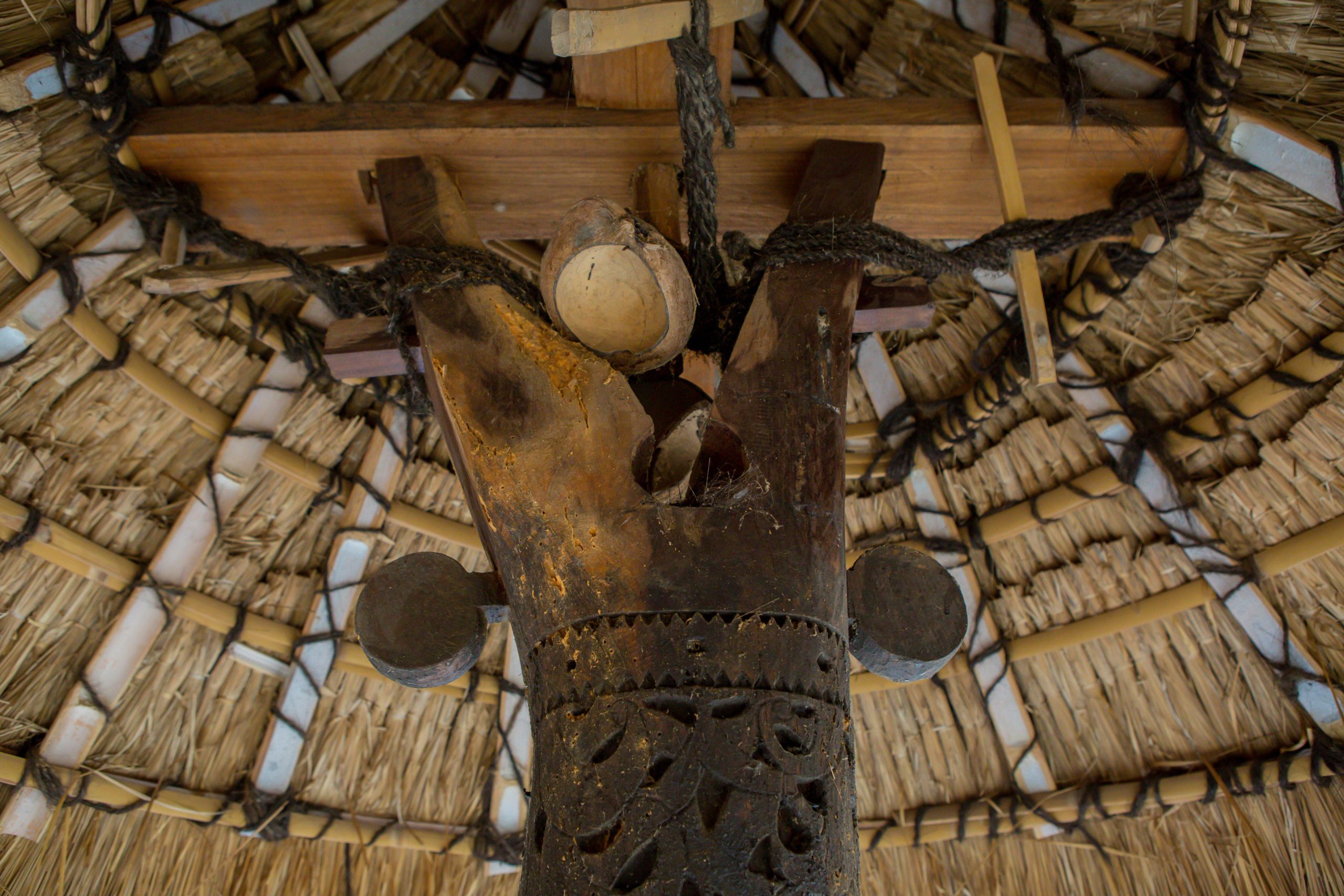
The Ngadhu is a tall wooden pole topped with a small thatched roof. Carved from a single tree trunk, it symbolises the male ancestor of a clan and often features carved warrior figures.
Ngadhu clan shrine representing the male ancestral line in Bena village, Flores.
Opposite the Ngadhu stands the Bhaga, a miniature house-like shrine representing the female ancestor. The Bhaga symbolises the womb or origin of the clan and serves as the sacred place where offerings are made during rituals.
Each clan maintains its own Ngadhu–Bhaga pair within the ceremonial courtyard, making the centre of the village a symbolic landscape of ancestral lineage.
Bhaga ancestral shrine symbolising the female lineage in Bena village near Bajawa.
Rooftop Symbols and Clan Houses
One of the most distinctive features of Ngada architecture is the symbolic decoration placed on the ridge of traditional houses.
These rooftop ornaments identify the ritual status of each house within the clan system.
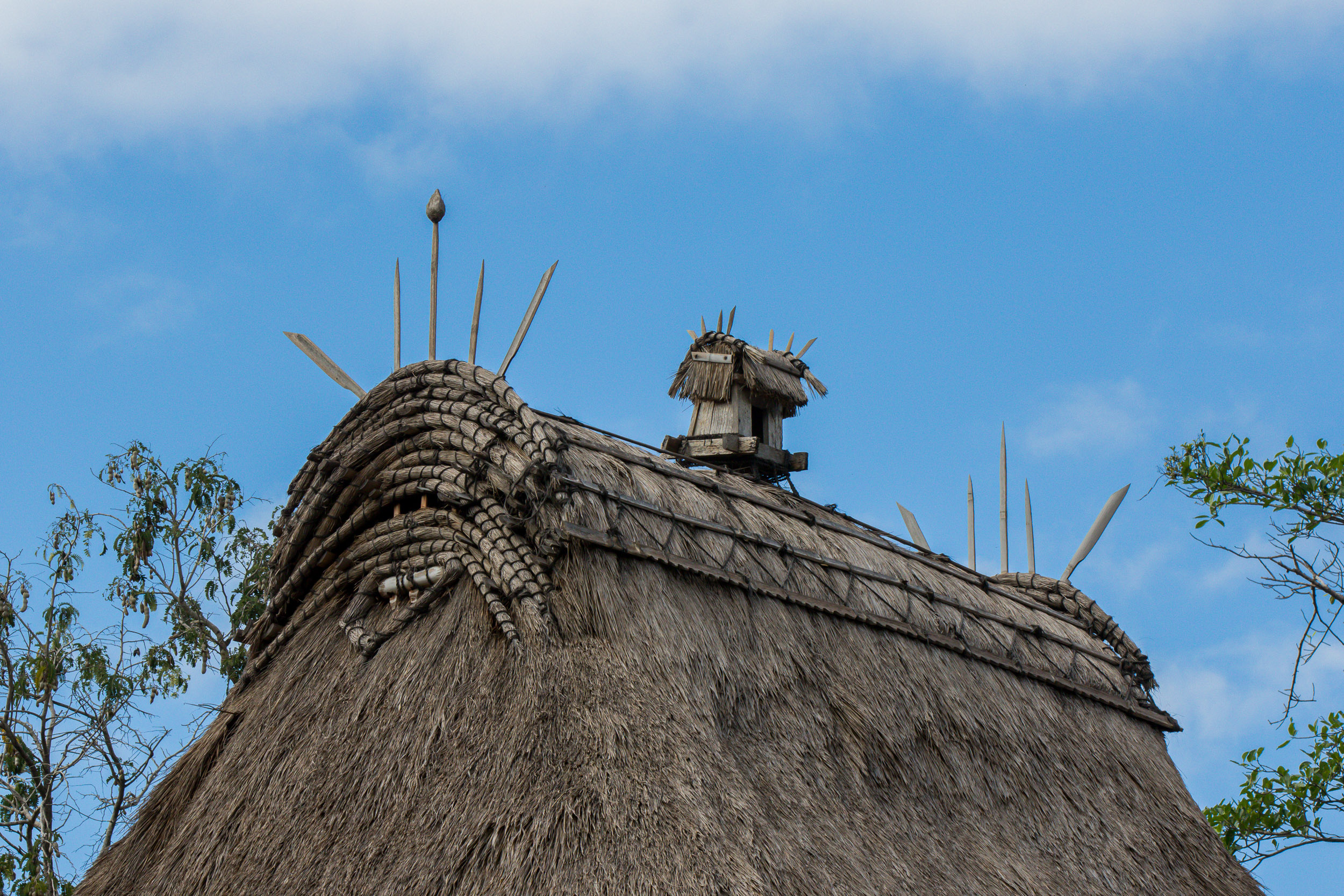
The Sa’o Saka Pu’u, the origin house of a clan, is marked by a miniature house placed on the roof ridge. This symbol represents the ancestral “mother house” and reflects the matrilineal traditions of Ngada society, where lineage is often traced through the female line.
Miniature house ornament identifying the Sa’o Saka Pu’u origin house in Bena village.
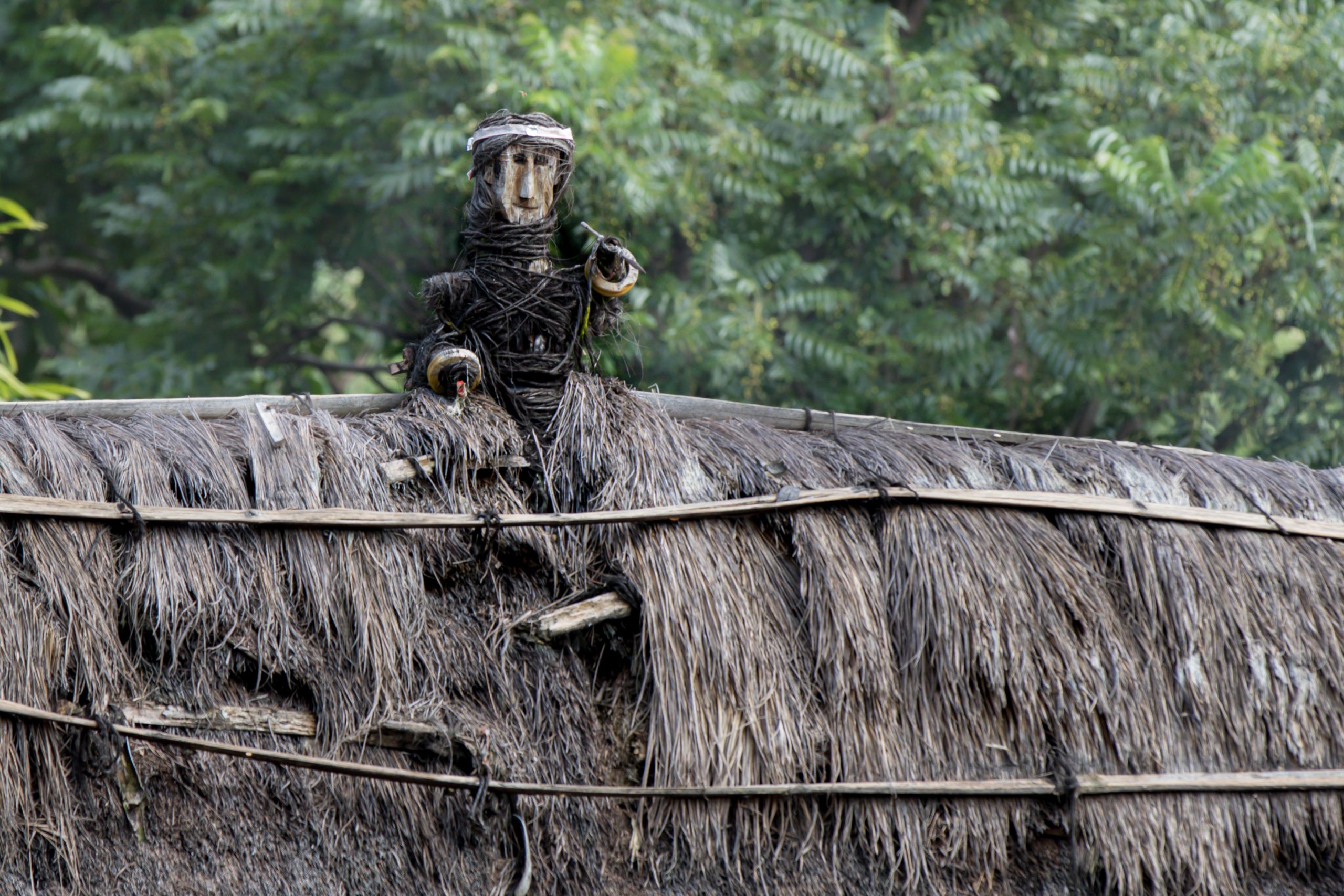
At the other end of the lineage stands the Sa’o Saka Lobo, the youngest house of the clan. Its roof is decorated with a small male figure, often depicted holding weapons. This figure symbolises the male descendants and their role as protectors of the clan.
Male rooftop figure marking the Sa’o Saka Lobo clan house in Bena village.
Other houses within the village, known as Sa’o Kaka, do not display rooftop ornaments and serve as supporting houses for extended family members.
Together, these symbols transform the architecture of the village into a visual map of clan structure and ancestry.
Megalithic Traditions
Bena is also known for its striking megalithic stone structures, which form an important part of the village’s ritual life.
Large flat stones serve as ceremonial altars used during rituals and animal sacrifices offered to the ancestors. These offerings traditionally maintain harmony between the living community and the ancestral world.
One distinctive stone formation is the lenggi, a stacked arrangement of flat stones that historically functioned as a communal court where representatives of the clans gathered to resolve disputes according to adat law.
Megalithic stone altar in the ceremonial courtyard of Bena village.
The facades of many houses are decorated with water buffalo horns and pig jaws, trophies from past ceremonies that indicate family prestige and participation in ritual events.
Weaving and Daily Life
Despite its popularity with visitors, Bena remains a living community.
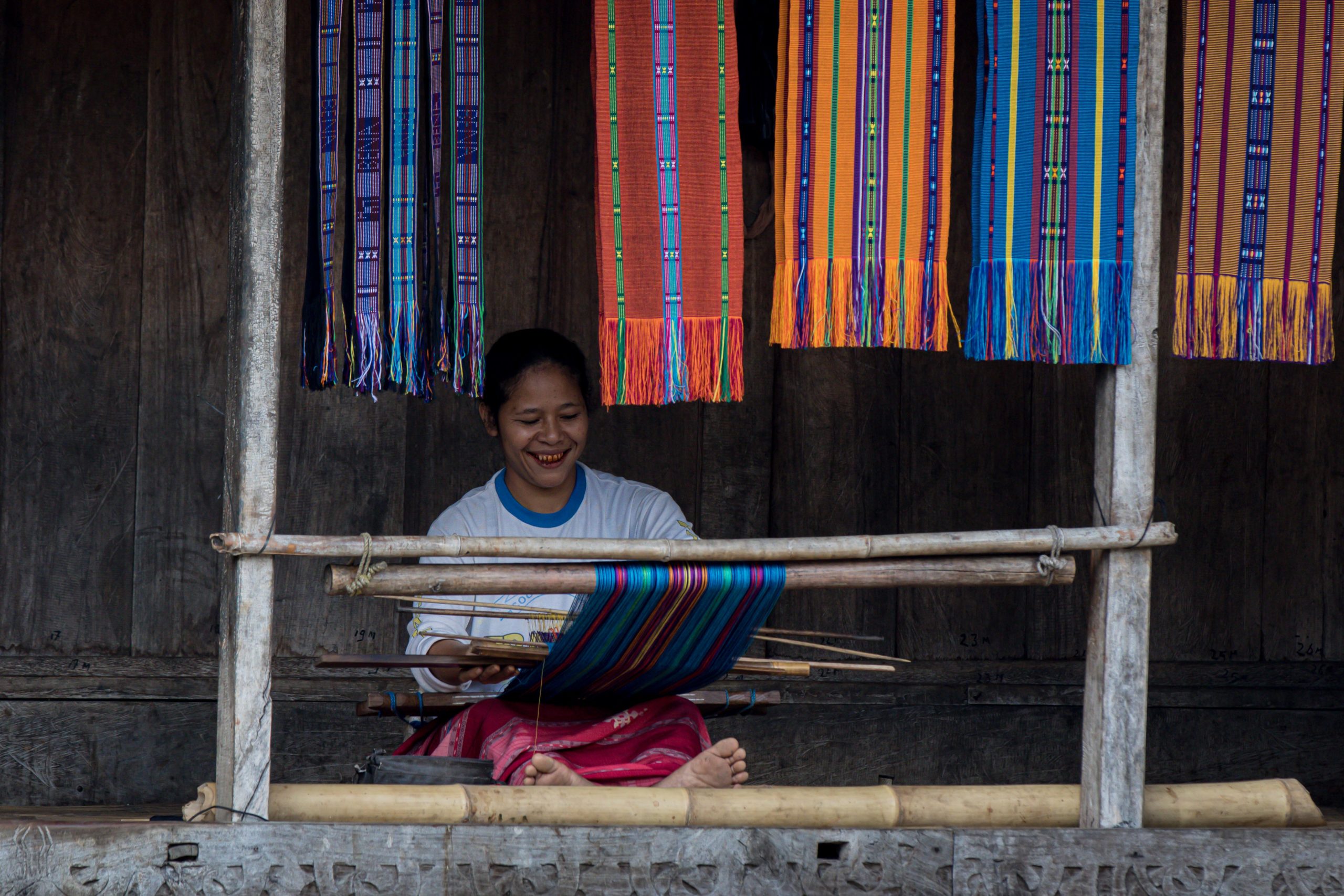
Women can often be seen weaving traditional Ngada ikat textiles on wooden looms placed on the verandas of the houses. These textiles carry cultural meaning and frequently incorporate symbolic patterns, animals, and clan motifs.
Ngada woman weaving traditional ikat textile on a backstrap loom in Bena village, Flores.
Livestock such as pigs and chickens roam freely through the village, and daily life continues around the ceremonial structures that define the settlement.
Landscape and Surroundings
Bena lies on the southern slopes of Mount Inerie, the dominant volcano of the Ngada highlands. The village’s ridge-top location offers wide views across cultivated hills and toward the Savu Sea.
The surrounding region contains several other traditional villages connected by ancient footpaths through bamboo forests and plantations.
Bena is surrounded by bamboo forest.
Popular hiking routes from Bena lead to Gurusina and Tololela, allowing visitors to explore the wider cultural landscape of the Ngada highlands.
Visiting Bena
Bena is located approximately 13 kilometres south of Bajawa and is easily reached by road via the Trans-Flores Highway.
Most visitors combine a visit to Bena with nearby Ngada villages, volcanic landscapes, or the hot springs located along the road between Bajawa and the southern coast.
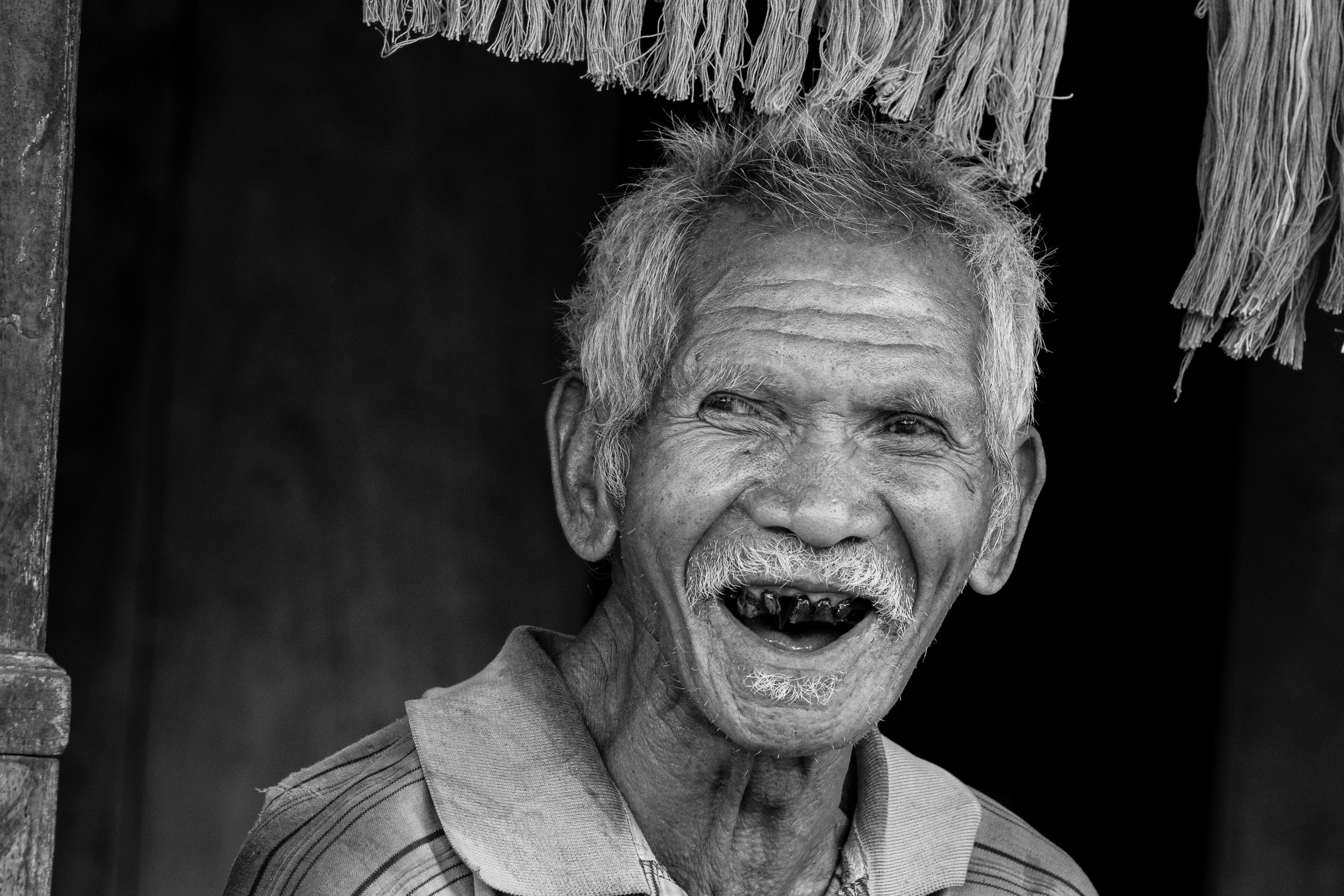
A betel nut chewing man in Bena.
Explore the Photo Gallery
A curated visual collection from Bena Traditional Village