Gurusina is a traditional Ngada village located south of Bajawa in the highlands of central Flores. Less visited than nearby Bena, it offers a quieter setting to observe Ngada architecture and the clan structure that shapes village life.
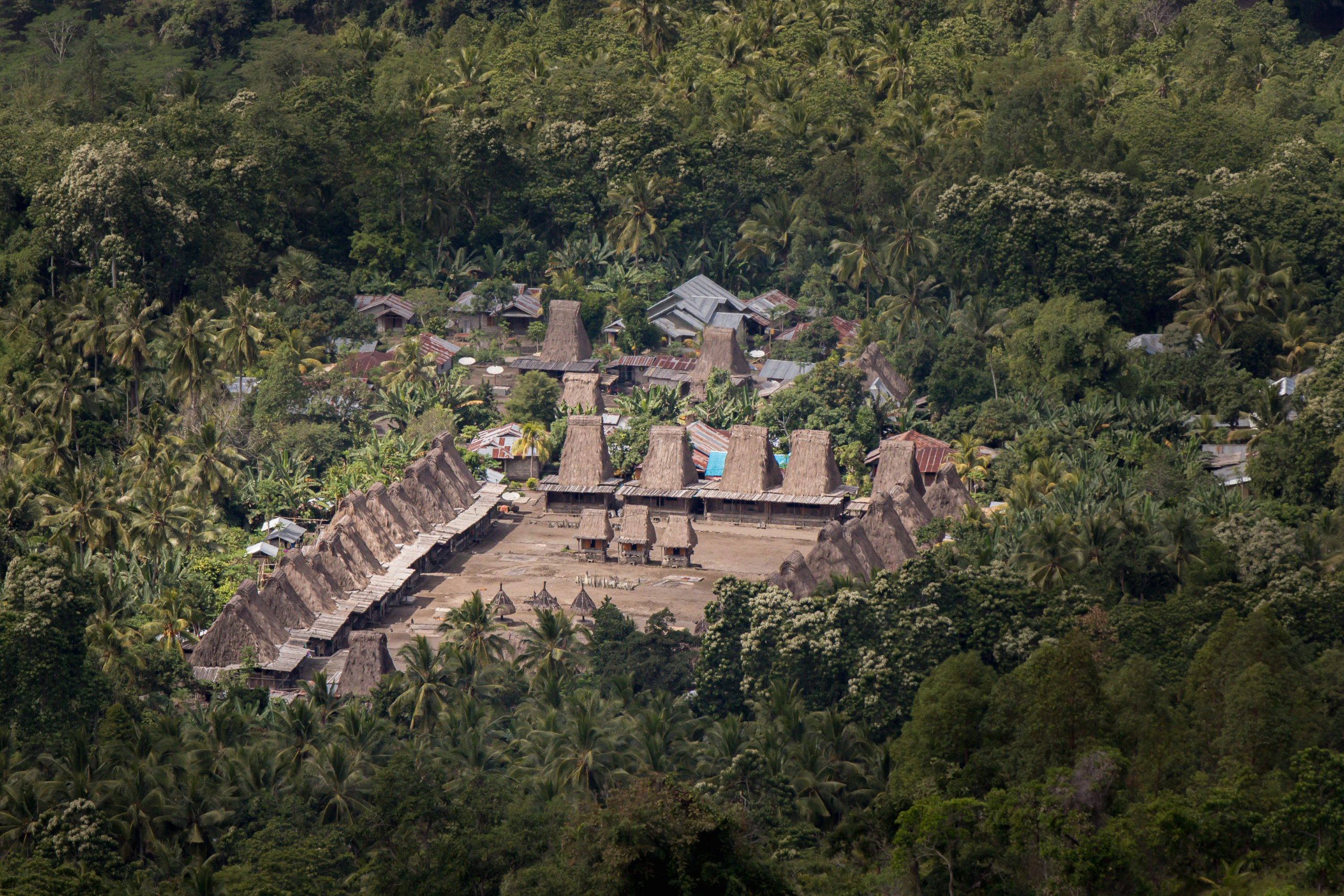
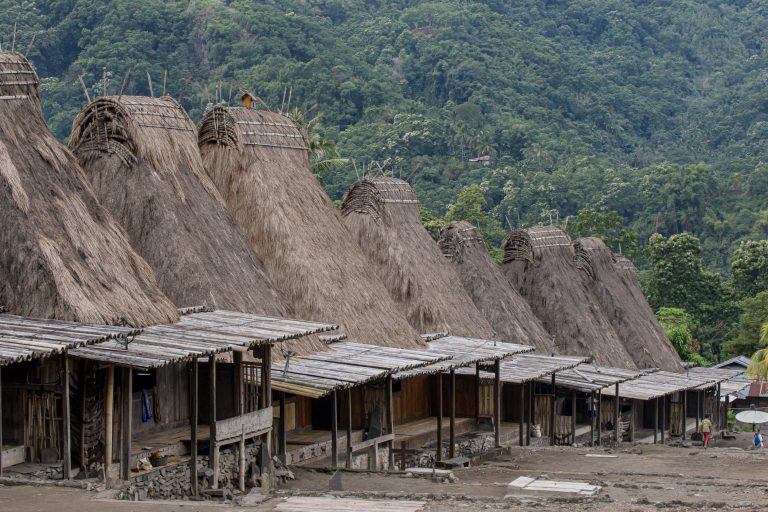
The settlement is arranged around a wide central courtyard framed by thatched clan houses and ancestral shrines. Like other villages of the Ngada region, Gurusina reflects a cultural landscape where architecture, ritual traditions and social organisation are closely connected.
Traditional Ngada clan houses surrounding the ceremonial courtyard of Gurusina village near Bajawa, Flores.
Village Structure and Clan System
Gurusina was founded in the early twentieth century by families migrating from surrounding highland areas. Today the village consists of several clans, each maintaining ceremonial houses and ancestral shrines according to Ngada adat law.
Each clan traditionally possesses several important structures:
Sao pu’u – the “trunk house”, representing the origin of the clan
Sao lobo – the “tip house”, symbolically the youngest house of the lineage
Ngadhu – a tall wooden shrine representing the male ancestor
Bhaga – a miniature house-shaped shrine representing the female ancestor
These structures are arranged around the central courtyard, which forms the ceremonial heart of the village.
In the courtyard stand the ture lenggi, megalithic stone altars used during ritual gatherings and ceremonial offerings to the ancestors.
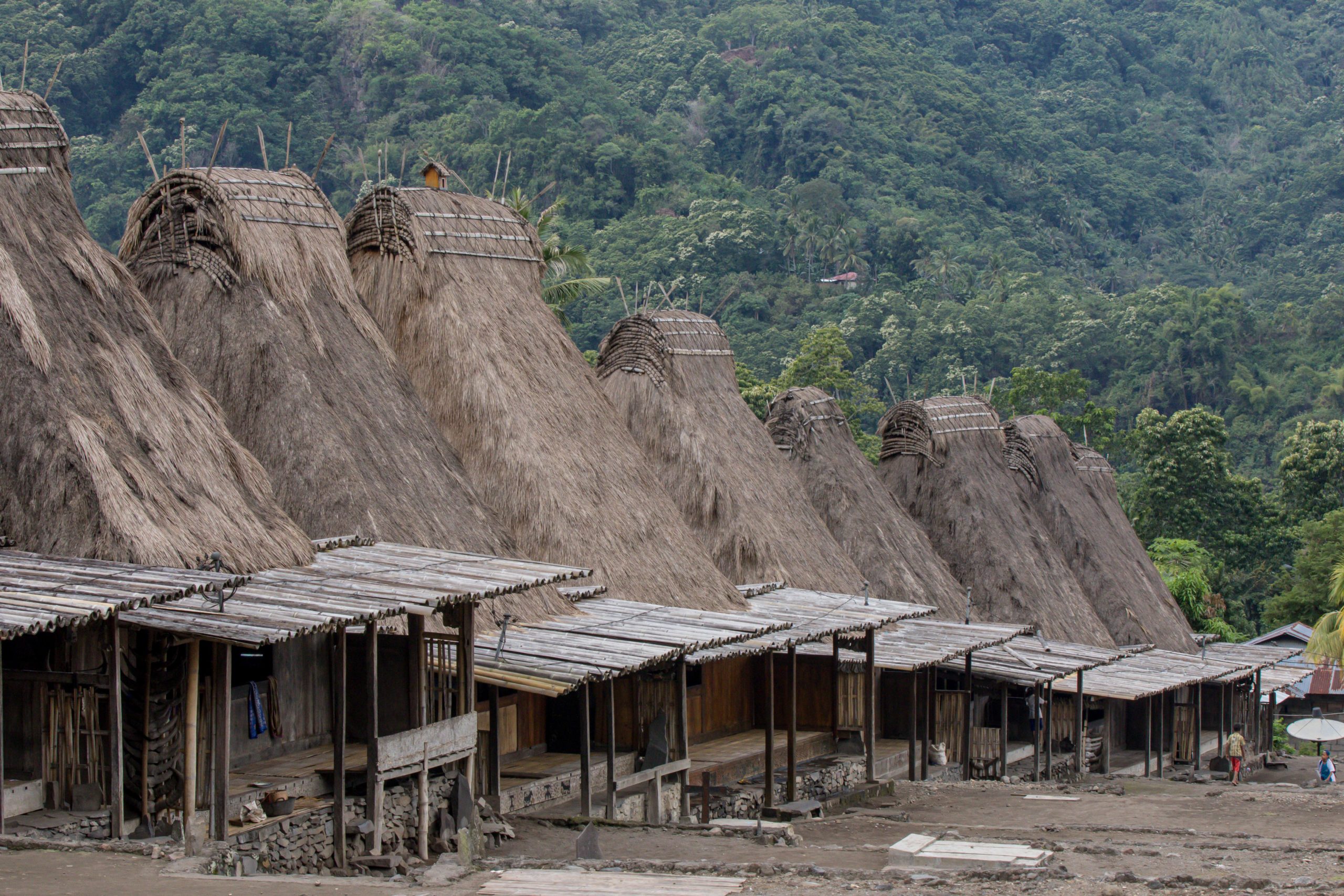
Ngadhu and Bhaga clan shrines representing the male and female ancestral line in Gurusina.
Fire and Reconstruction
In 2018, Gurusina was almost entirely destroyed by a large fire that swept through the village. Most of the traditional houses were lost.
Since then the community has gradually rebuilt the village using traditional architectural forms and materials. The reconstruction reflects the resilience of Ngada cultural traditions, where rebuilding a village is not only a practical process but also a ritual reaffirmation of ancestral ties.
Today Gurusina continues to function as a living village where traditional architecture and daily life coexist.
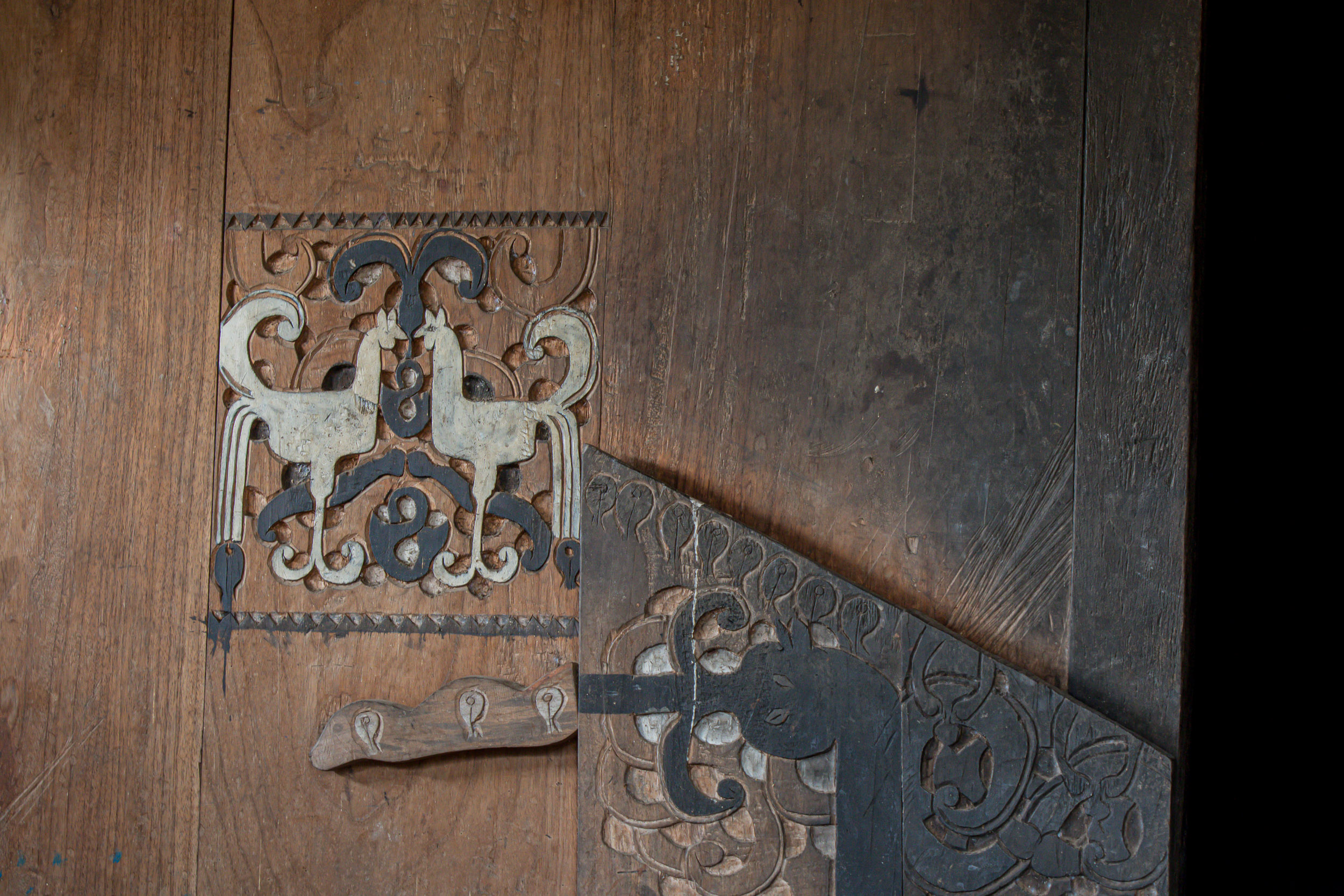
Old woodcarvings on a traditional house, now lost to the fire.
Agriculture and Daily Life
Most families in Gurusina depend on small-scale agriculture in the surrounding hills.
Common crops include corn, cassava, bananas, coconut, coffee, cloves, candlenut and cocoa. Livestock such as pigs and chickens also play an important role in ceremonial life.
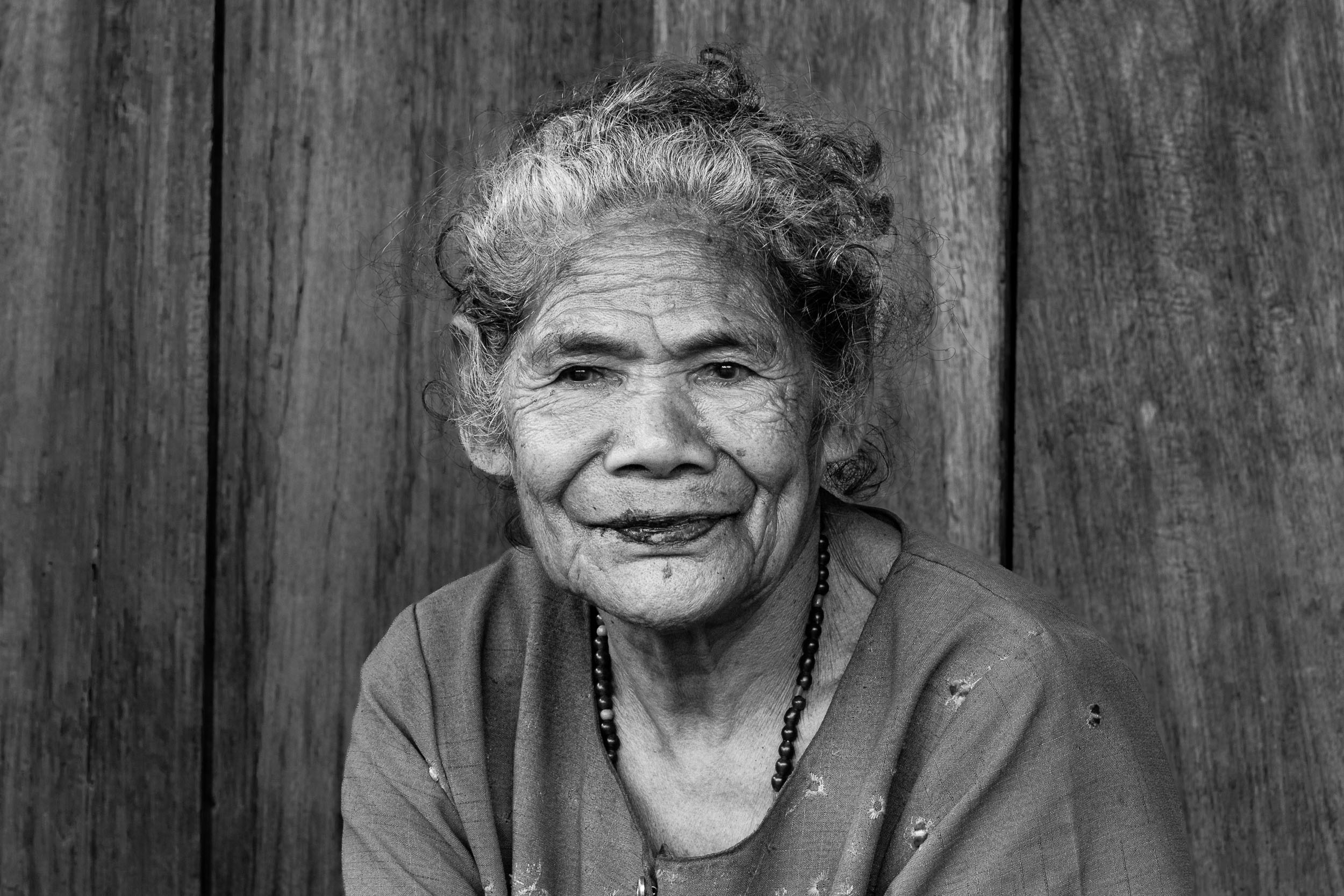
Women continue to weave traditional Ngada ikat textiles using wooden looms. These textiles remain an important expression of cultural identity and are often worn during ceremonies and festivals.
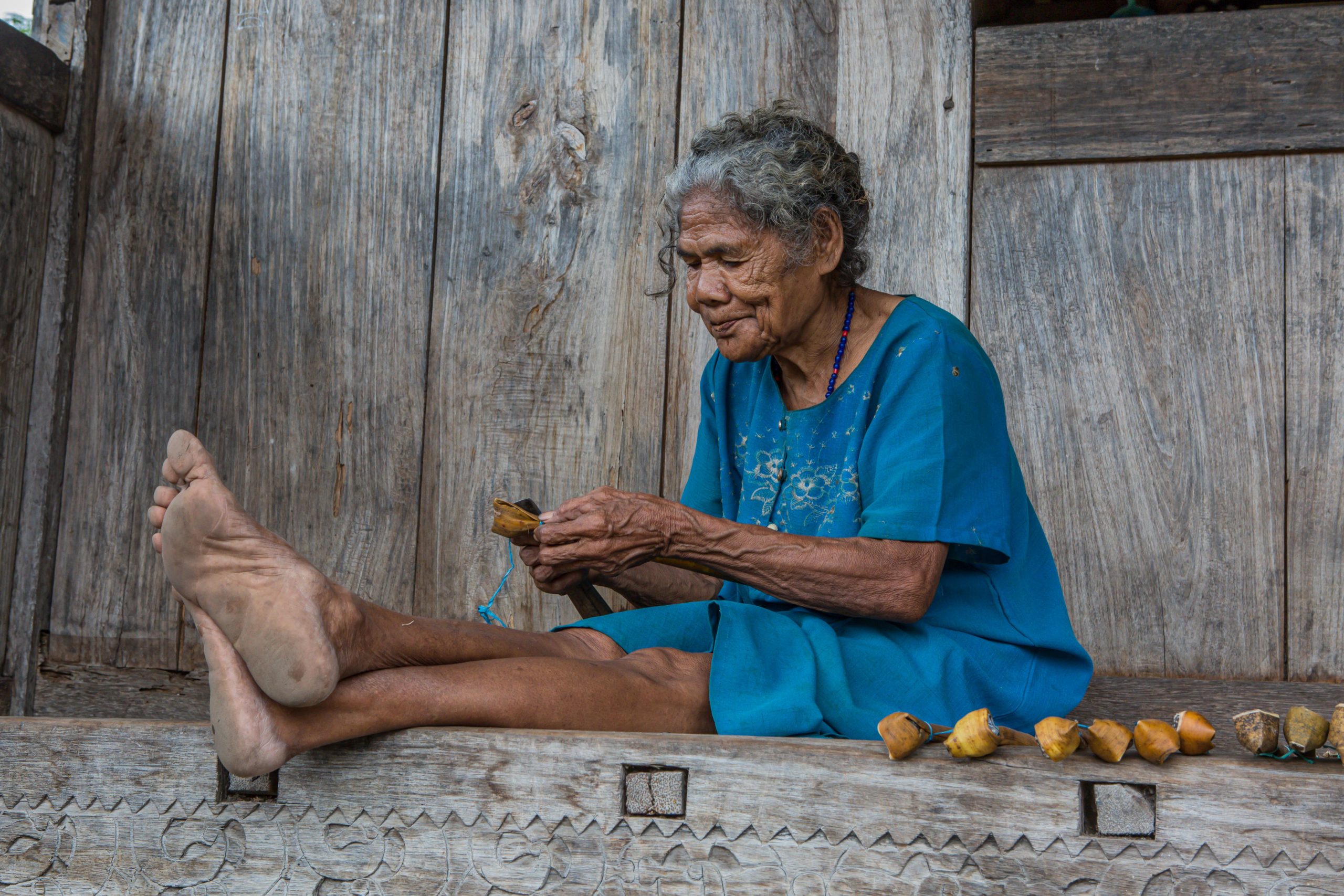
A woman preparing candle nut (kemiri) for offerings.
Hiking and Surroundings
Gurusina can be reached by road from Bajawa, but many visitors combine the visit with a hike through the surrounding highlands.
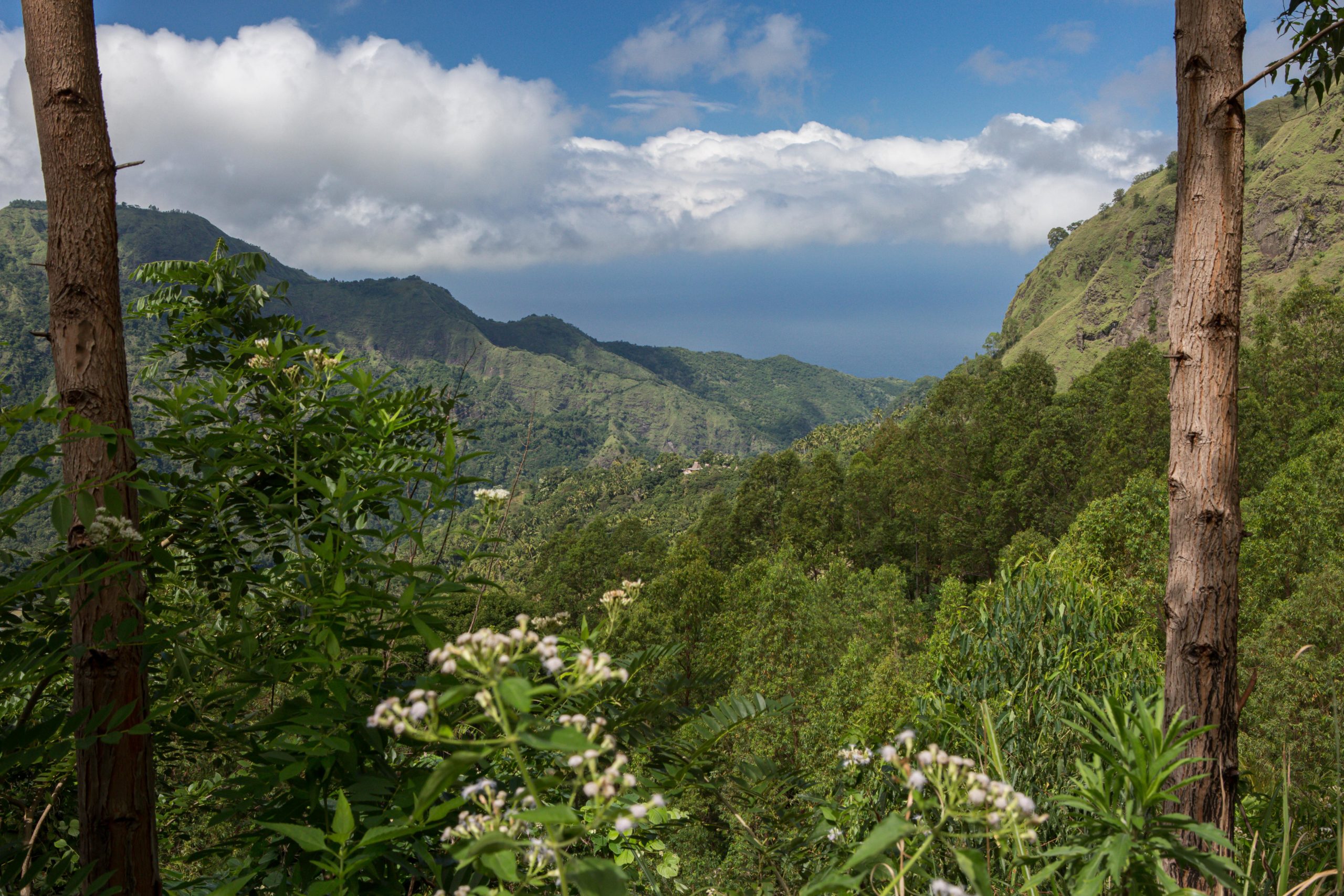
A popular route connects Bena, Tololela and Gurusina, passing through bamboo forest, plantations and cultivated hillsides. Along the trail there are wide views toward the southern slopes of Mount Inerie, the dominant volcano of the Ngada region.
Visiting Gurusina
There are no formal tourist facilities in Gurusina. Visitors normally stay in Bajawa, which offers accommodation and transport options to the surrounding villages.
The village is best visited respectfully and without rushing, allowing time to observe daily life and the architecture that reflects the traditions of the Ngada people.
Explore the Photo Gallery
A curated visual collection from Gurusina Traditional Village