High in the mountains of northeast Bali lies the vast volcanic Batur caldera. At its centre rises Mount Batur, while the southeastern part of the caldera is filled by Lake Batur. On the eastern shore of the lake stands Trunyan, one of the few remaining villages of the Bali Aga, communities whose traditions predate the arrival of Hindu culture in Bali.
The Bali Aga are considered descendants of the island’s earliest inhabitants. Their cultural traditions developed long before the arrival of the Hindu kingdom of Majapahit from Java around the fourteenth century, and many rituals preserved in Bali Aga villages reflect elements of this older spiritual world.
One of the most remarkable surviving rituals in Trunyan is the Barong Brutuk, a sacred performance and dance by young unmarried men of the village during important temple ceremonies.
The Barong Brutuk Ritual
The Barong Brutuk ritual is performed during the Ngusaba Desa ceremony and the Odalan anniversary celebrations of the village temple, Pura Ratu Pancering Jagat. The ceremony follows the ancient Balinese calendar and takes place during the fourth moon, Purnama Sasih Kapat, occurring once every two years.
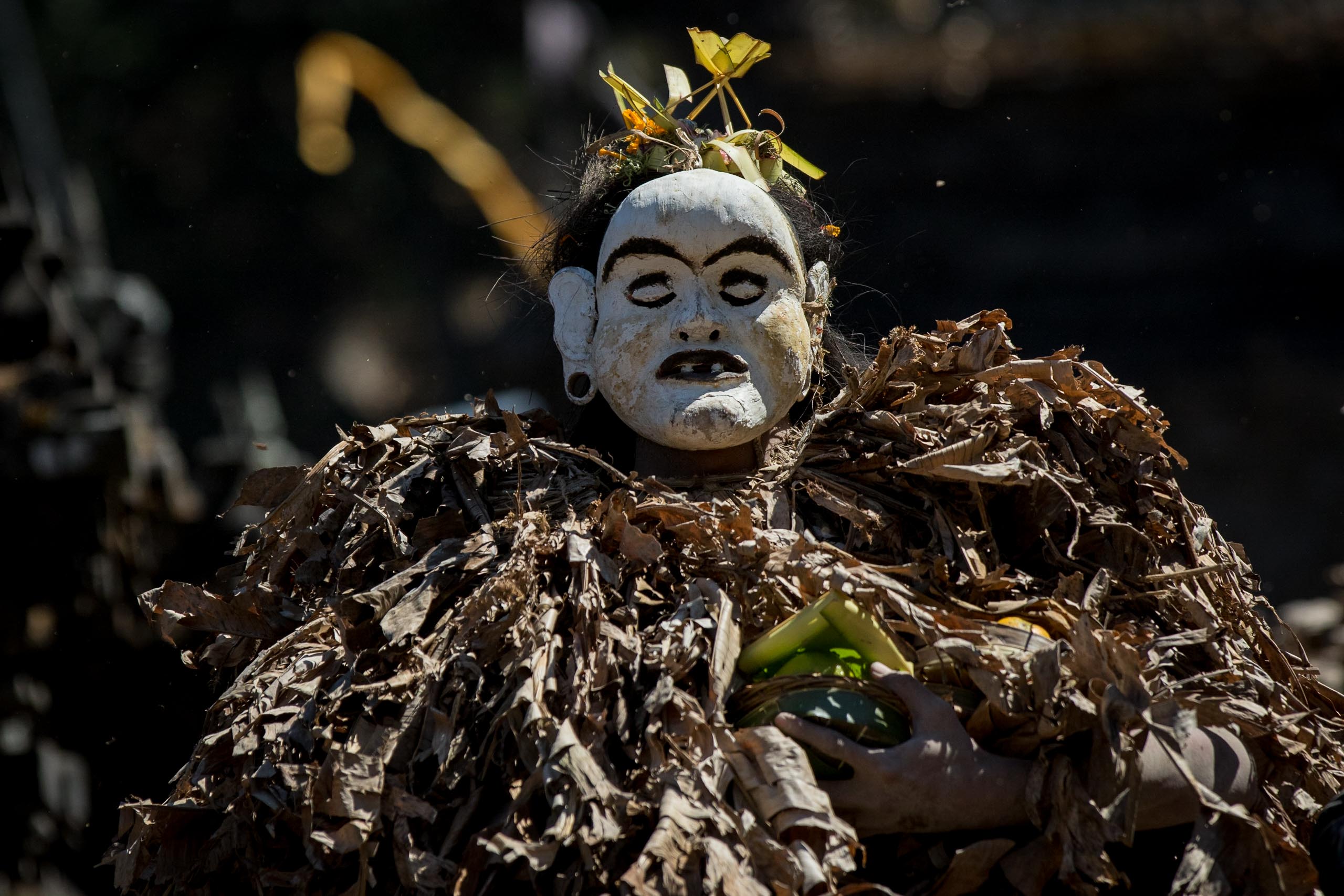
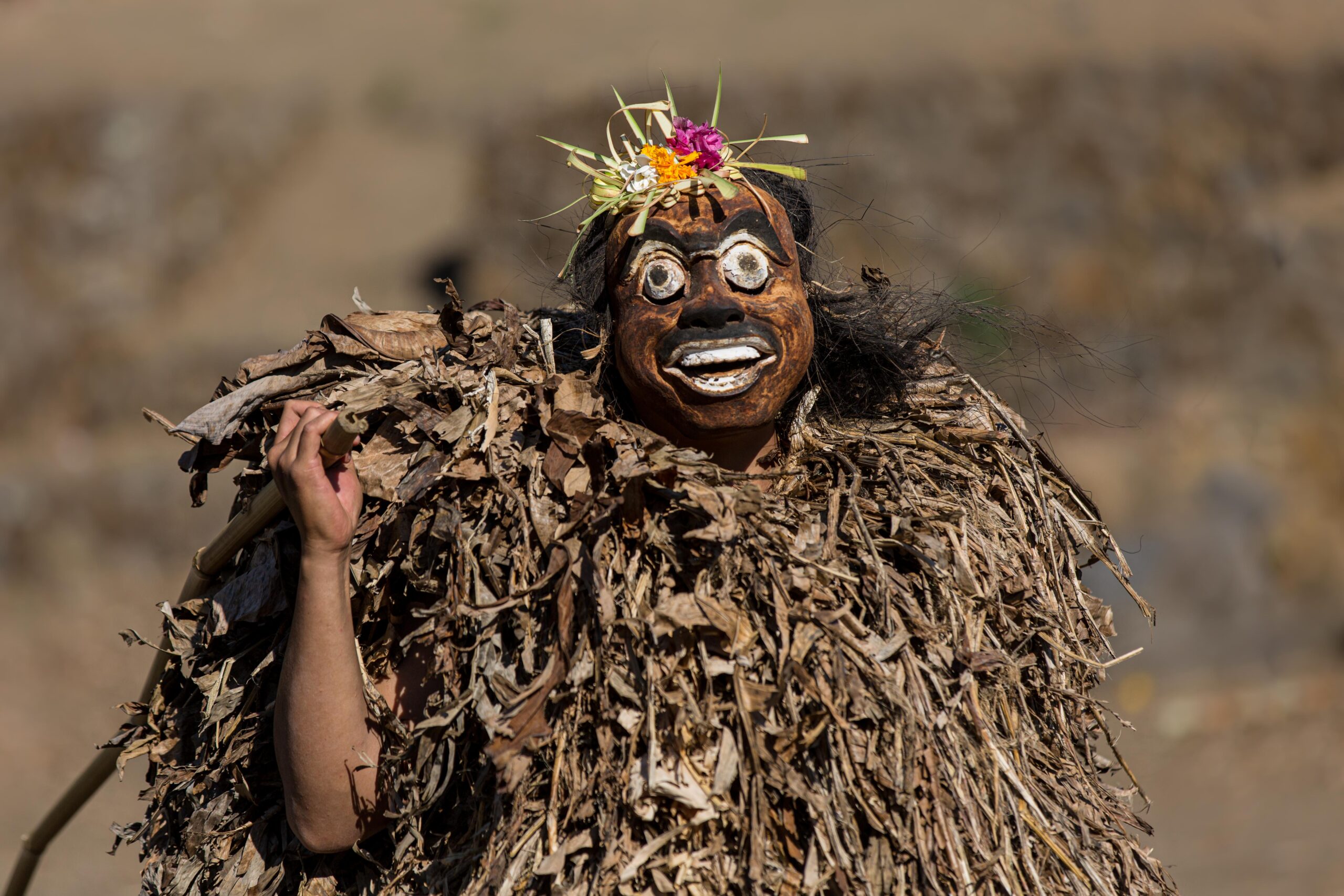
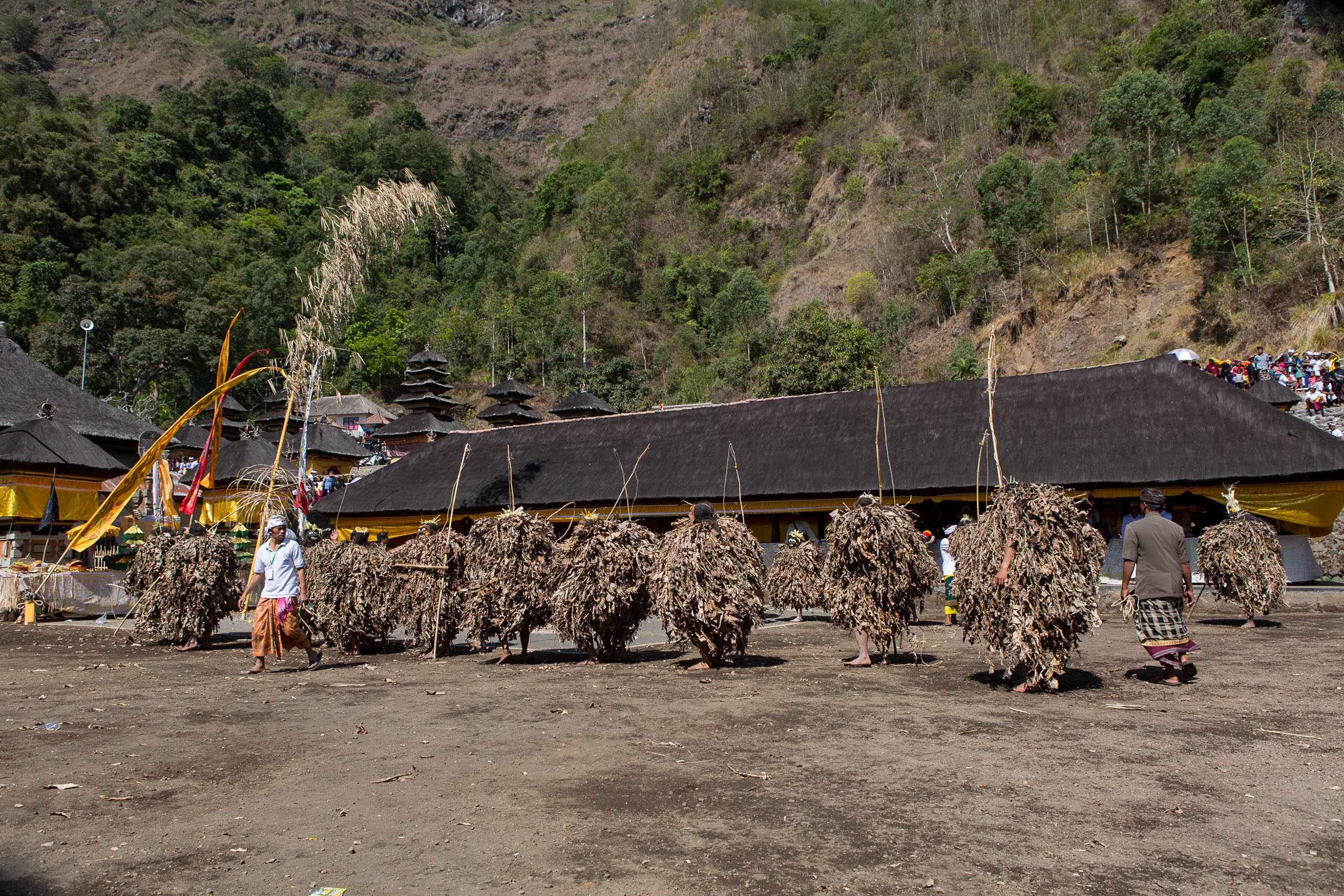
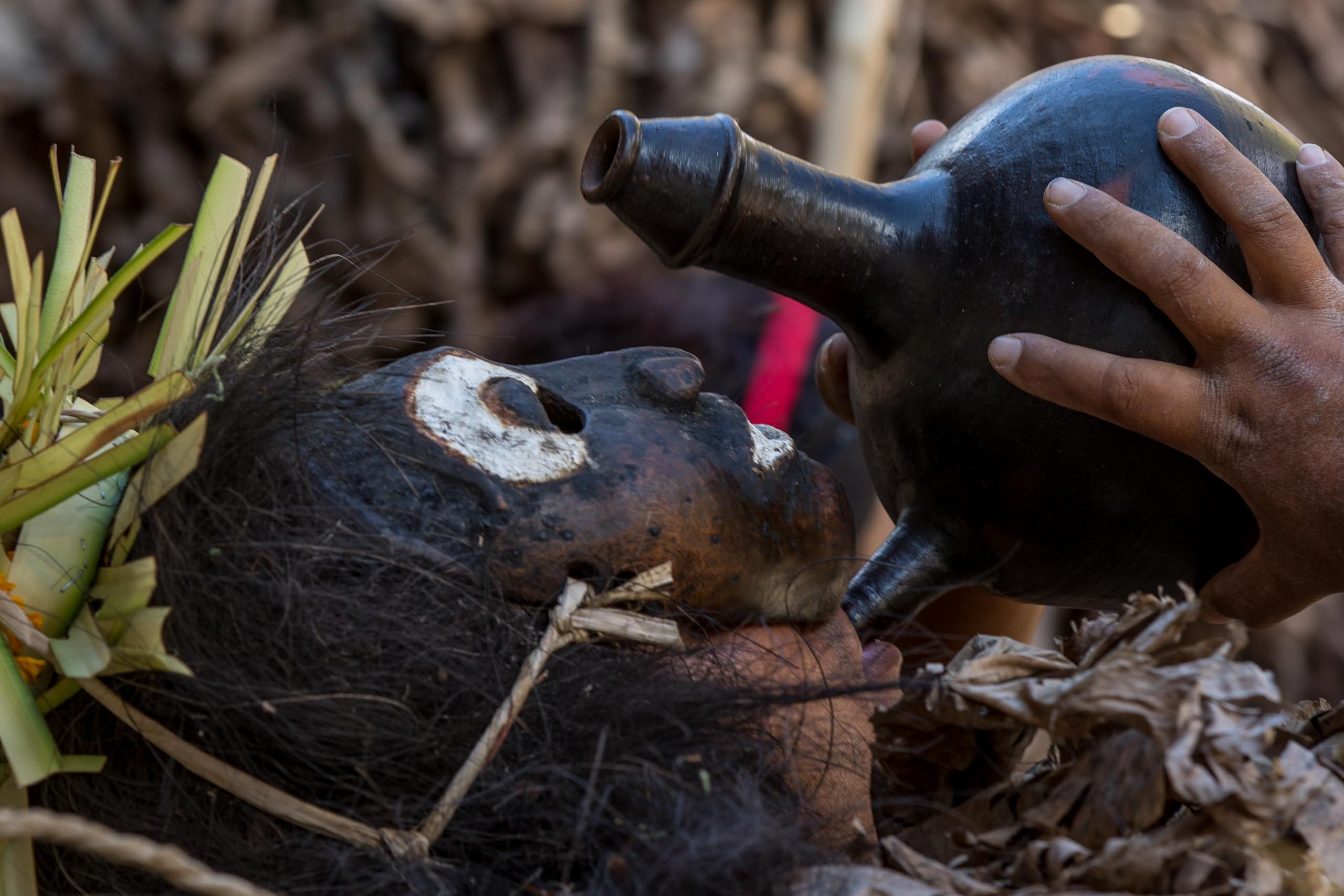
During the ritual, young bachelor men of the village impersonate the Brutuk, ancient characters associated with early Balinese mythology. The performers wear striking costumes made entirely from natural materials: a full-body dress of dried banana leaves, a wig made from the dark fibres of the sugar palm, and an ancient mask carved from coconut.
Barong Brutuk dancer wearing a traditional costume made of dried banana leaves during the sacred ritual in Trunyan village, Bali.
These costumes give the Brutuk figures a wild and almost primal appearance, emphasising the ritual’s deep connection with Bali’s pre-Hindu traditions.
Traditional Barong Brutuk mask worn during the sacred Bali Aga ceremony at Pura Ratu Pancering Jagat in Trunyan.
Forty-Two Days of Preparation
Participation in the Barong Brutuk ceremony requires strict preparation.
The chosen young men spend 42 days in seclusion inside the village temple, where they undergo ritual purification. During this period they must follow strict rules: they are forbidden to interact with women, drink alcohol, gamble or engage in worldly distractions. Instead they devote their time to prayer, ritual preparation and the learning of ancient songs and mantras known as Kidung.
Part of the preparation involves collecting banana leaves from the nearby village of Pinggan. These leaves are dried and woven into the costumes used during the ceremony. The dried leaves (keraras) are carefully knitted together with ropes made from banana tree fibres to form a skirt attached to a corset of banana leaves worn around the neck and waist.
Traditionally the performers wore simple underwear made from banana fibre rope beneath the costume, although today this is often replaced by a sarong.
A young man prepares the banana-leaf costume used during the Barong Brutuk ritual in the Bali Aga village of Trunyan near Lake Batur.
The Characters of the Brutuk
Traditionally 21 masks are used in the ceremony, representing different figures within the ancient social hierarchy.
Among these characters are four nobles:
Rajah Brutuk, the king
Ratu Brutuk, the queen
Kakak Sang Ratu, the queen’s sister
Patih, the prime minister and older brother of the queen
The remaining characters represent followers and attendants serving the nobles.
Together they recreate an ancient mythological court within the sacred space of the temple.
Ritual Performance in the Temple
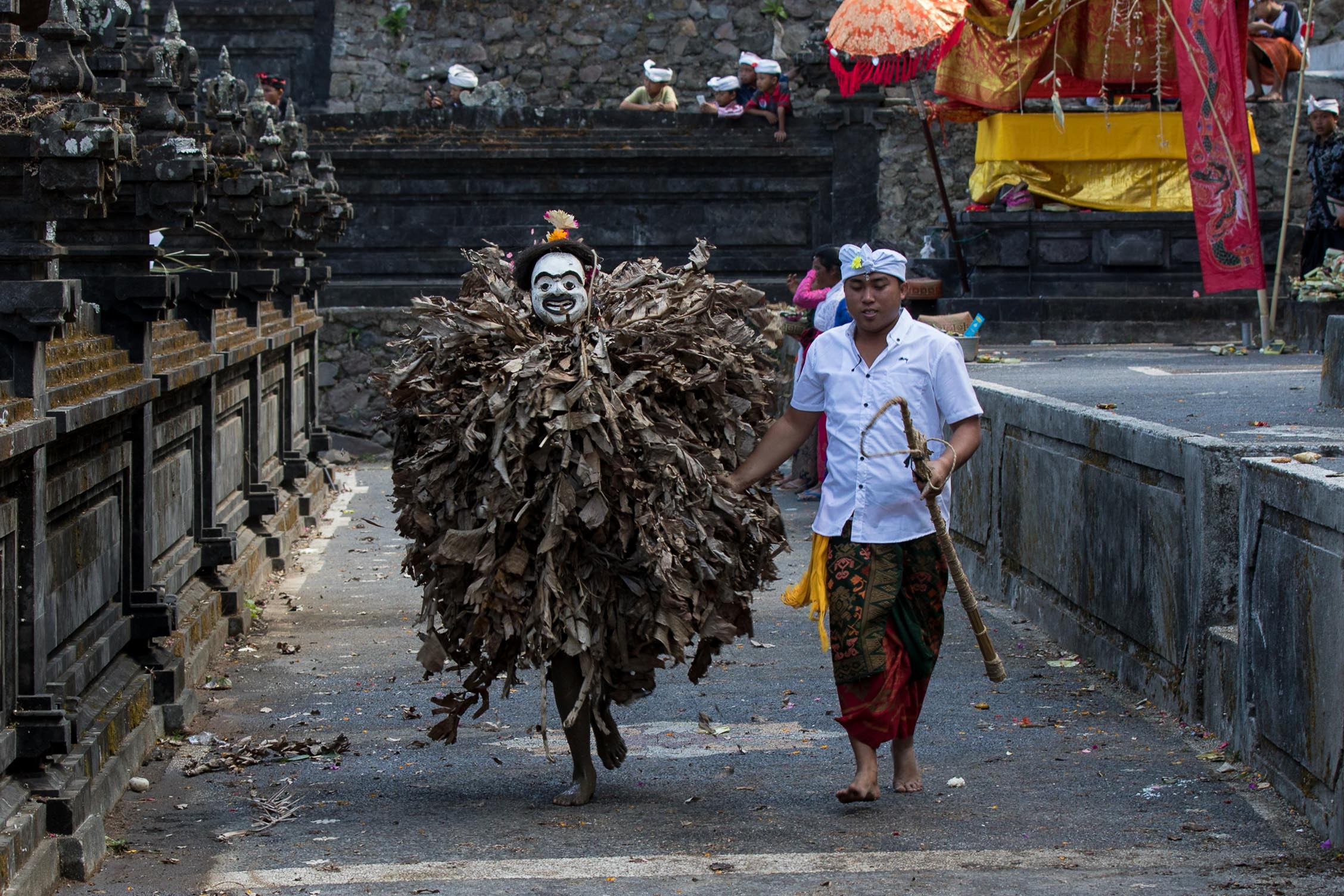
The ceremony begins when the Brutuk disciples enter the temple courtyard and circle the walls of the main temple compound three times.
Spectators gather around the courtyard and attempt to steal pieces of the dried banana leaves from the dancers’ costumes. The Brutuk defend themselves with whips, striking at those who come too close. Despite the apparent chaos, the ritual follows a strict traditional order.
The dried banana leaves are considered powerful symbols of fertility and protection. Villagers keep the leaves in their homes as a form of blessing, and later spread them in their rice fields during planting season in the hope of ensuring a good harvest.
The Appearance of the Noble Brutuk
Later in the ceremony the four noble figures enter the temple courtyard.
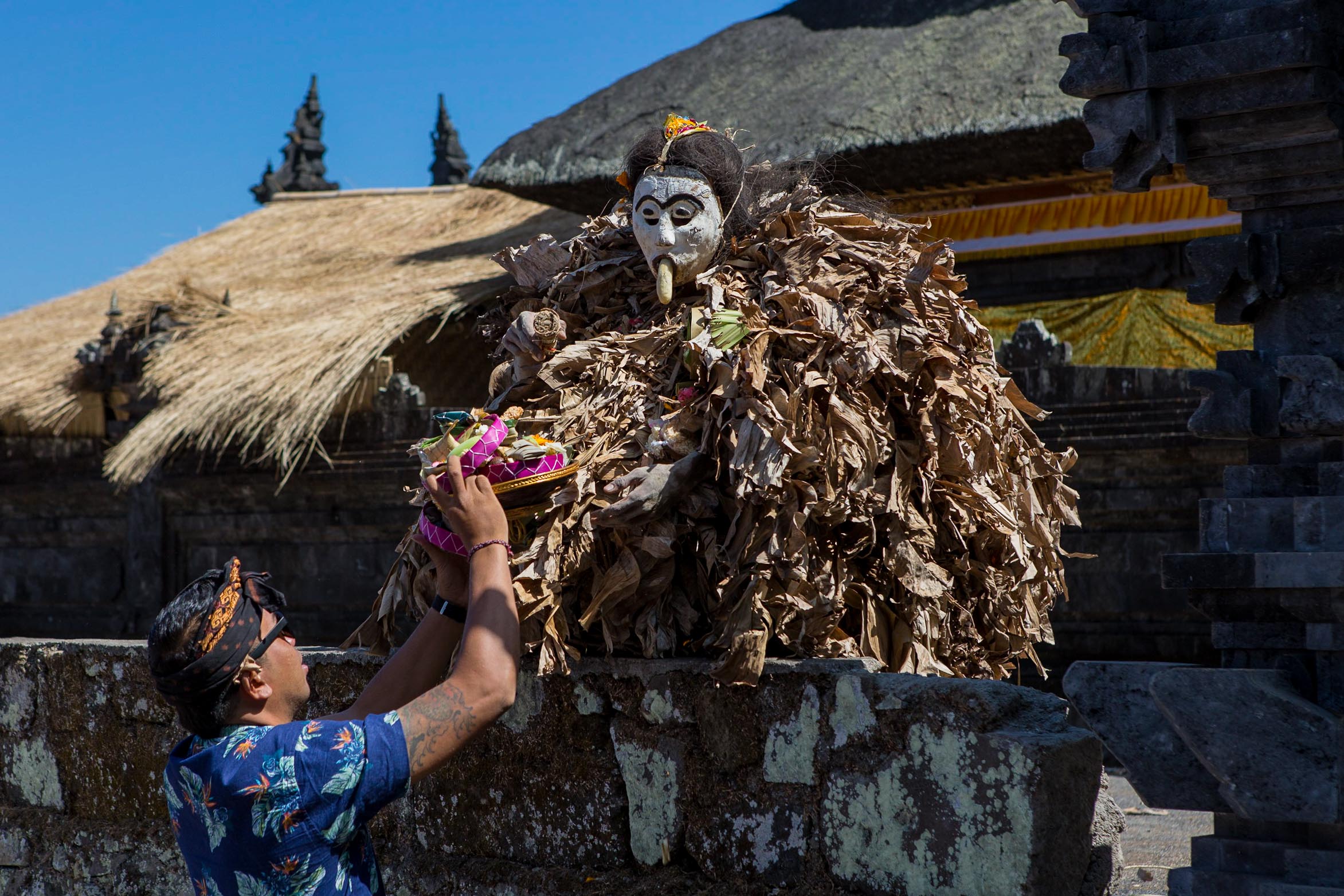
A priest approaches them to present offerings and recite prayers for the well-being of the village. The nobles then circle the temple three times before joining the other Brutuk dancers.
Their costumes are distinguished by decorations of young palm leaves and flowers, marking their elevated status within the ritual hierarchy.
The nobles have their hair decorated with young palm leaves and flowers.
Blessings, Whips and Fertility
As the ceremony progresses, the Brutuk begin to move more energetically through the temple courtyard. Spectators approach them with offerings of fruit, cakes and other gifts.
When a Brutuk accepts an offering, he may gently tap the person on the head with his whip. This gesture is considered a form of blessing.
Blessings from the queen, Brutuk Ratu.
Later in the day the whip strikes become more vigorous. In local belief, the lashes can provide healing (tamba) and spiritual protection. Some villagers even call out to the Brutuk to strike them, shouting phrases such as:
“Ratu! Meriki Ratu!” — “Queen! Here, queen!” or “Malih Tu! Nunas Tamba!” — “Again, queen! Give medicine!”
Children and adults alike sometimes tempt the Brutuk dancers in hopes of receiving these symbolic blessings.
Barong Brutuk dancer swinging a ritual whip as spectators attempt to steal banana leaves believed to bring fertility and protection.
This is the first time I got whipped…!
The Ritual Courtship Dance
Toward the end of the ceremony the Brutuk dancers perform the final sequence of rituals.
Pairs of dancers enter the centre of the temple courtyard and perform a dance mimicking the movements of wild jungle fowl, with the male courting the female. The dance symbolises fertility and the continuation of life.
Barong Brutuk dancers performing inside the temple courtyard of Pura Ratu Pancering Jagat in the Bali Aga village of Trunyan.
After completing the dance, each pair removes their banana-leaf costume. The final pair to perform is the king and queen Brutuk.
When their dance concludes, the young men run from the temple to the shore of Lake Batur, plunging into the water for a final ritual cleansing.
The Masks Return to the Temple
Once the ceremony ends, the sacred masks are collected by the elders of the village and returned to the inner sanctuary of Pura Ratu Pancering Jagat.
There they remain stored until the next Barong Brutuk ceremony, two years later.