Water buffalo racing traditions in Jembrana Regency
In the rice-growing landscapes of West Bali, the regency of Jembrana is famous for one of the island’s most distinctive cultural traditions: Makepung, the traditional water buffalo races.
Originally introduced by Madurese migrants who settled in the region, the races developed as a way to celebrate the end of the rice harvest. Today Makepung has become a festive sporting event that attracts large crowds of villagers and visitors.
The races take place on improvised circuits laid out across dry dirt tracks in harvested rice fields near the town of Negara, where teams of water buffalo pull lightweight two-wheeled carts known as cikar, originally adapted from wooden ploughs used in agriculture.
The name Makepung comes from the word kepung, meaning “to chase”, reflecting the competitive nature of the race.
Teams and Competition
The competitors are divided into two large racing clubs representing the two sides of Jembrana:
Eastern Division (east of the Ijo Gading River) – represented by the colour red
Western Division (west of the river) – represented by the colour green
Each race heat usually involves three pairs of buffaloes competing on the same track.
Because the narrow dirt circuits make overtaking extremely difficult, judges determine the starting positions before the race begins, deciding which team starts first, second or third.
Racing Speed and Techniques
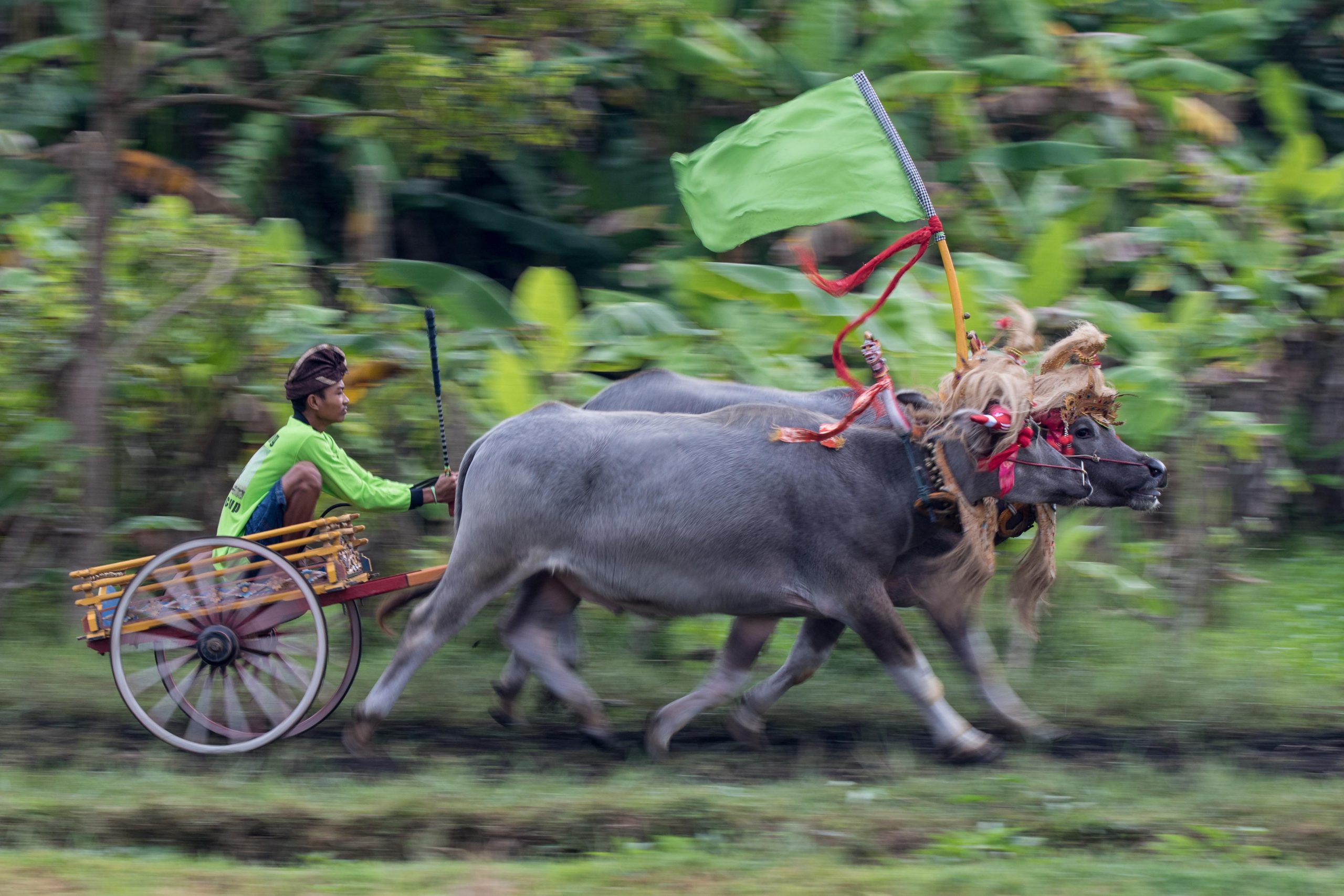
Despite their normally calm nature, the powerful buffaloes can reach surprisingly high speeds, sometimes approaching 60 km per hour on the dirt tracks.
To encourage speed, jockeys twist the buffaloes’ tails and use whips during the race. Traditionally some whips include small metal spikes, a controversial practice that has drawn criticism from animal welfare organisations but remains part of the traditional competition.
Decorated Buffaloes and Carts
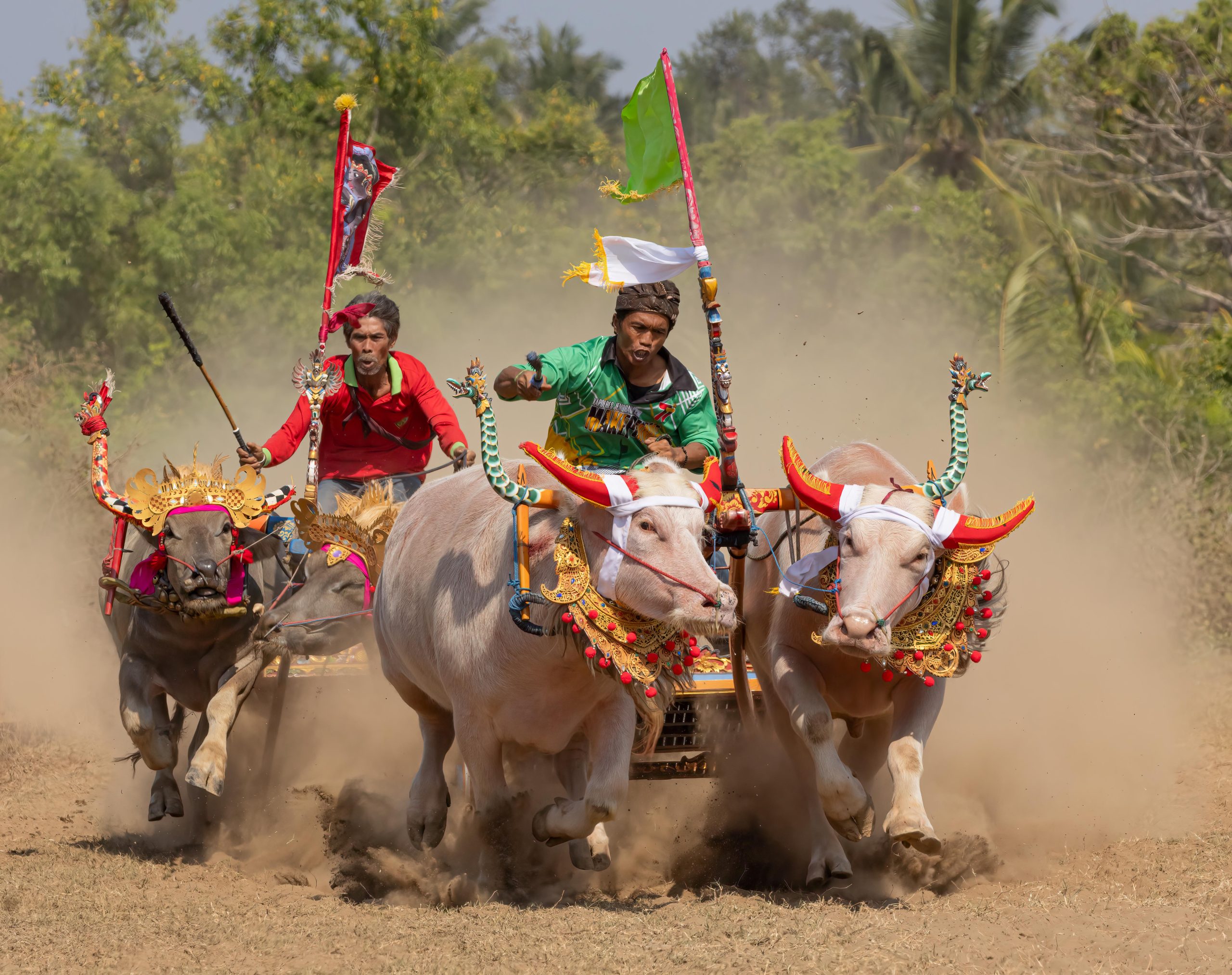
Beyond speed, Makepung is also known for its colourful spectacle.
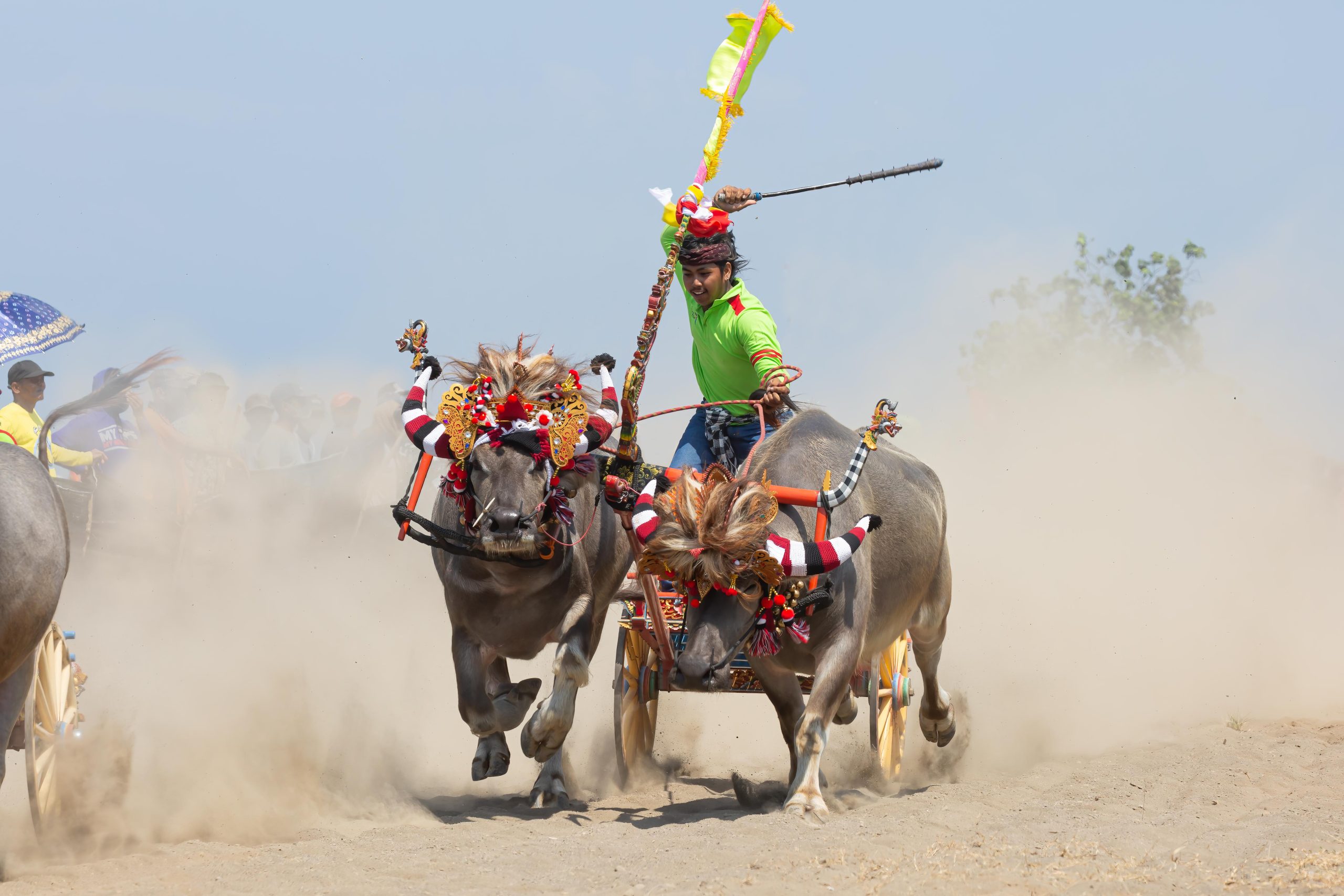
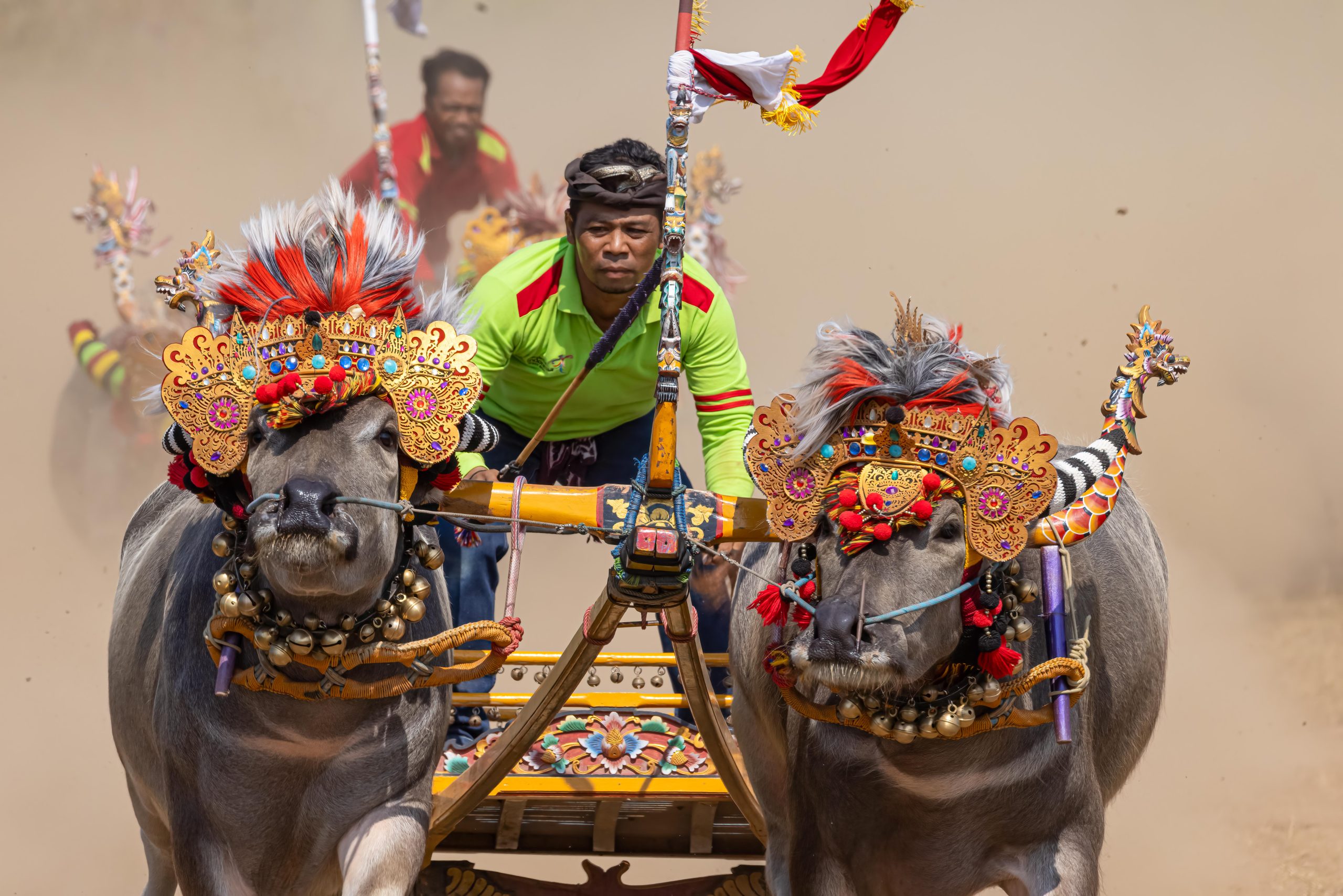
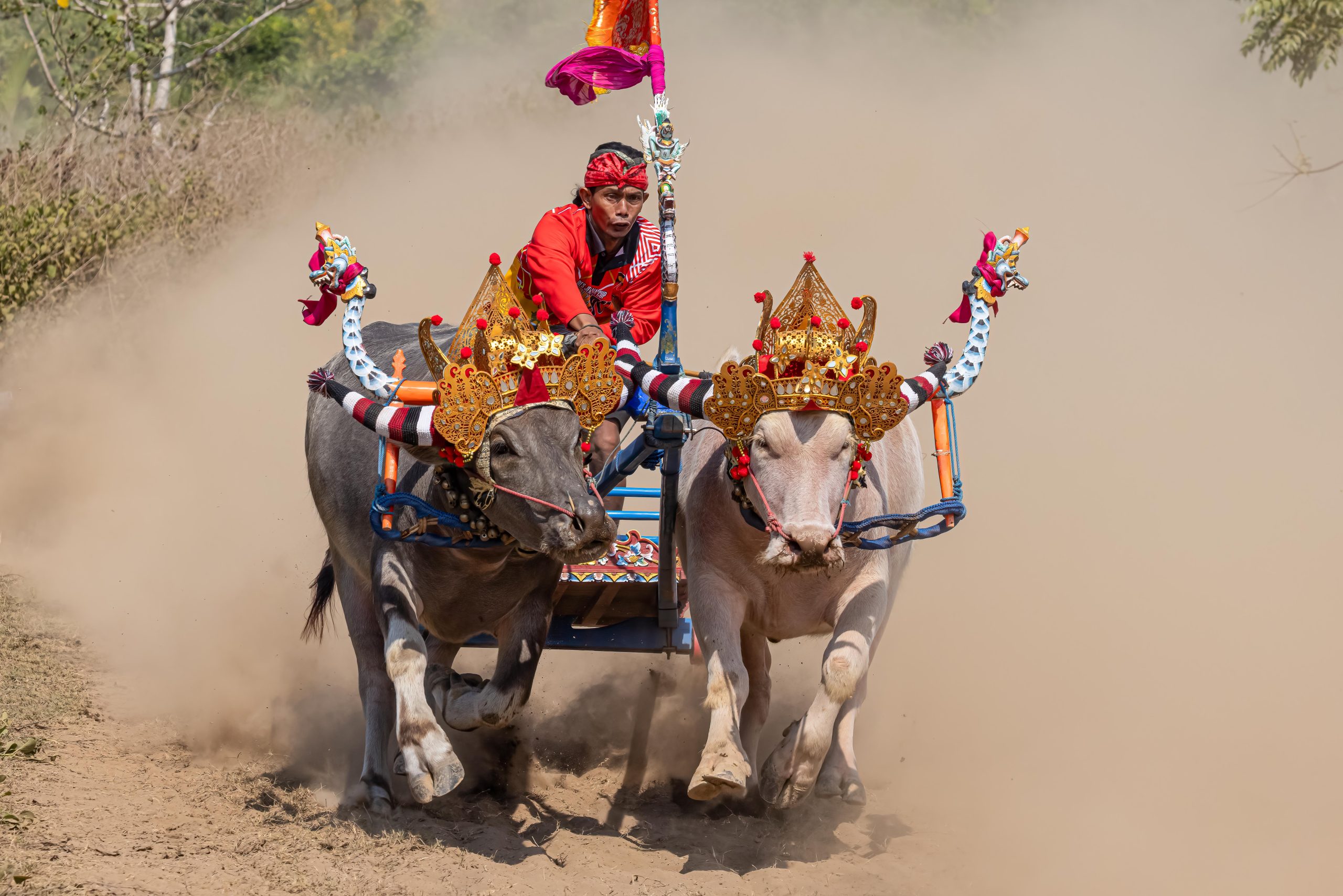
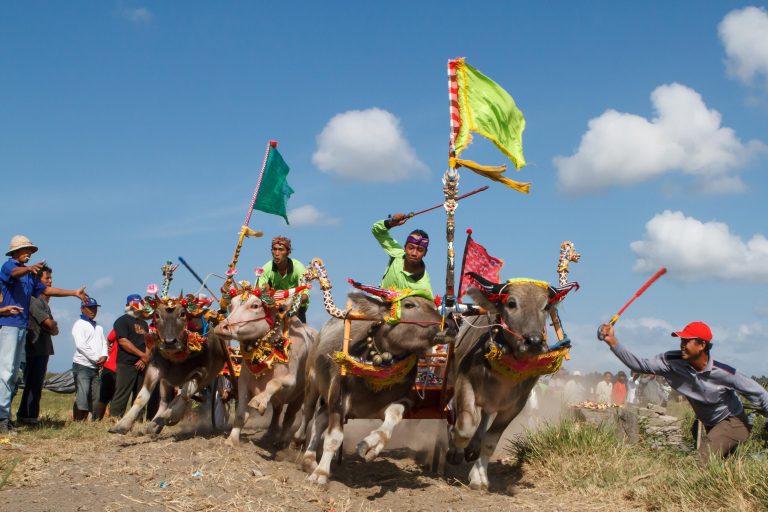
The buffaloes are often elaborately decorated with ornaments, harnesses and fabrics, transforming the racing teams into vibrant displays of colour and craftsmanship.
Makepung buffaloes are colorfully decorated.
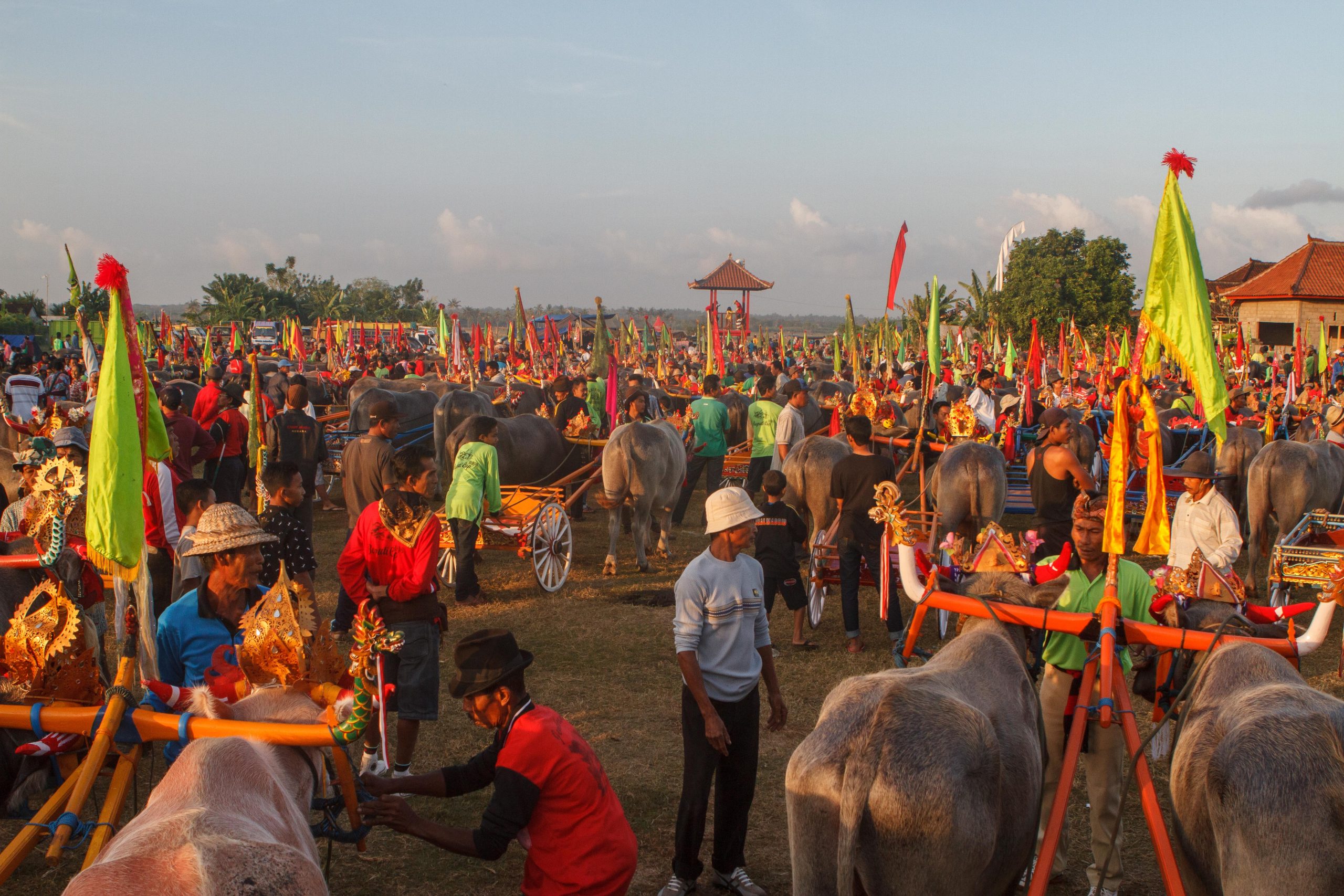
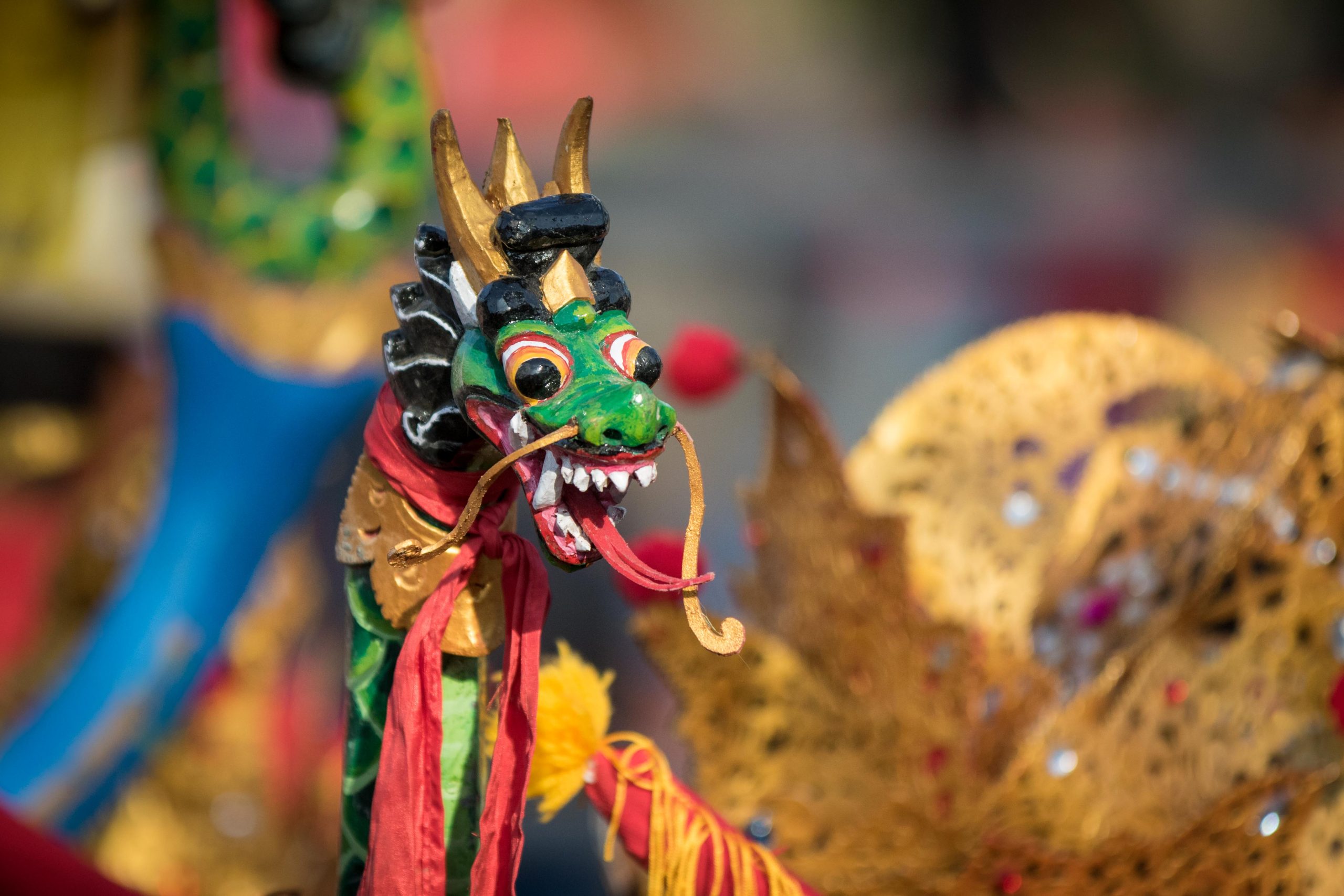
The carts themselves are equally striking. Many are beautifully carved and adorned with traditional woodwork, antique bells and colourful flags, making the event as much a visual celebration as a sporting competition.
In addition to the races, buffaloes may also compete in “best-dressed” competitions, where the most impressive decorations are rewarded.
Traditional Makepung cart decorated with wood carvings in West Bali.
Prestige and Value
Although prize money for Makepung races is relatively modest, winning teams gain significant prestige within the local community.
Successful buffaloes can dramatically increase in value, sometimes reaching hundreds of millions of Indonesian rupiah. The animals become symbols of pride for their owners and villages.
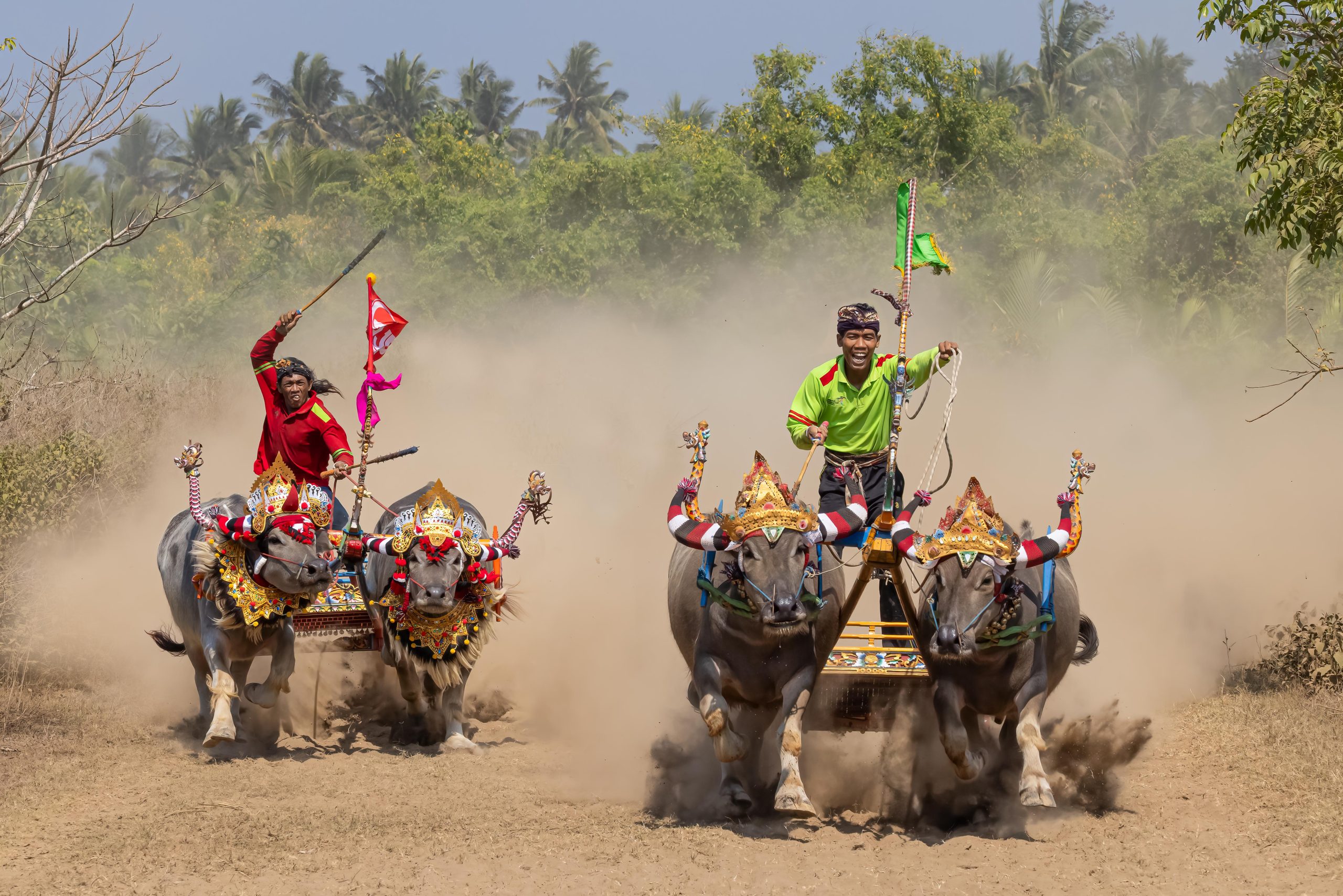
Makepung racing teams charging across the dirt track near Negara during the traditional buffalo races of West Bali.
Throughout the season, many races serve as qualifying competitions leading toward the most prestigious events of the year, including:
The Regent’s Cup
The Governor’s Cup, which traditionally closes the racing season
Racing Locations
Most Makepung races take place on circuits around Negara in Jembrana Regency.
The temporary tracks are usually built on dry rice fields after harvest, creating fast dirt surfaces that allow the buffaloes to reach high speeds.
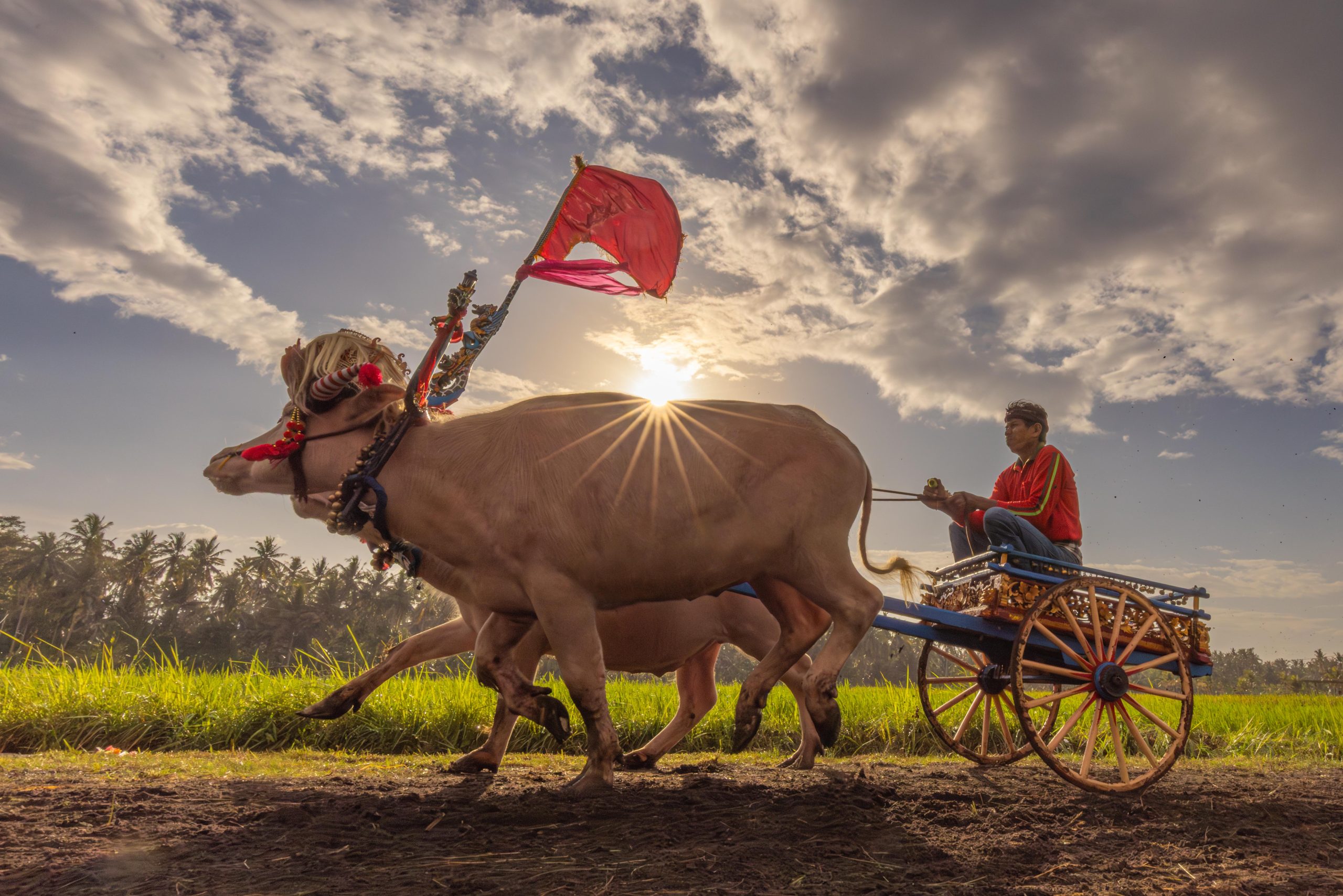
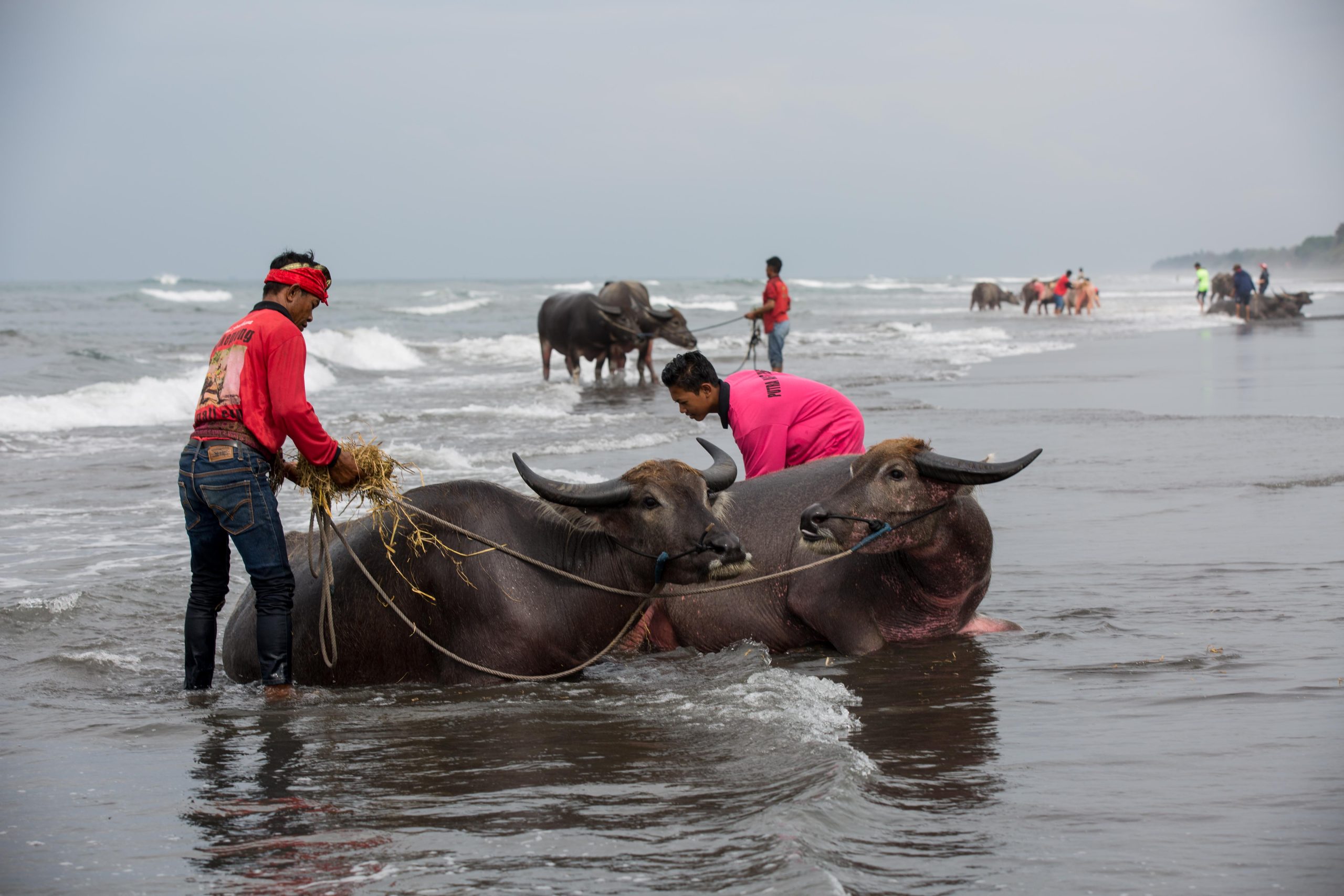
Some circuits are located close to the coast, where the sea breeze and open landscapes create particularly dramatic racing scenes.
Buffaloes enjoying a bath in the ocean after the bull races.
Makepung Calendar 2026
Note: all circuits are located around Negara in the Jembrana Regency, West Bali. Locations may change depending on field conditions.
Sunday, 28 June: Makepung Bhayangkara Cup 2026 – Circuit All In One (Pengambengan)
Sunday, 12 July: Delod Berawah
Sunday, 26 July: Kaliakah
Sunday, 9 August: Samblong
Sunday, 23 August: Makepung Festival – Sang Hyang Cerik
Sunday, 6 September: Delod Berawah
Sunday, 20 September: Kaliakah
Sunday, 4 October: Samblong
Sunday, 18 October: Sang Hyang Cerik
Sunday, 1 November: Delod Berawah
Makepung Lampit:
Around mid to end of November (subject to the start of rice planting): Kaliakah
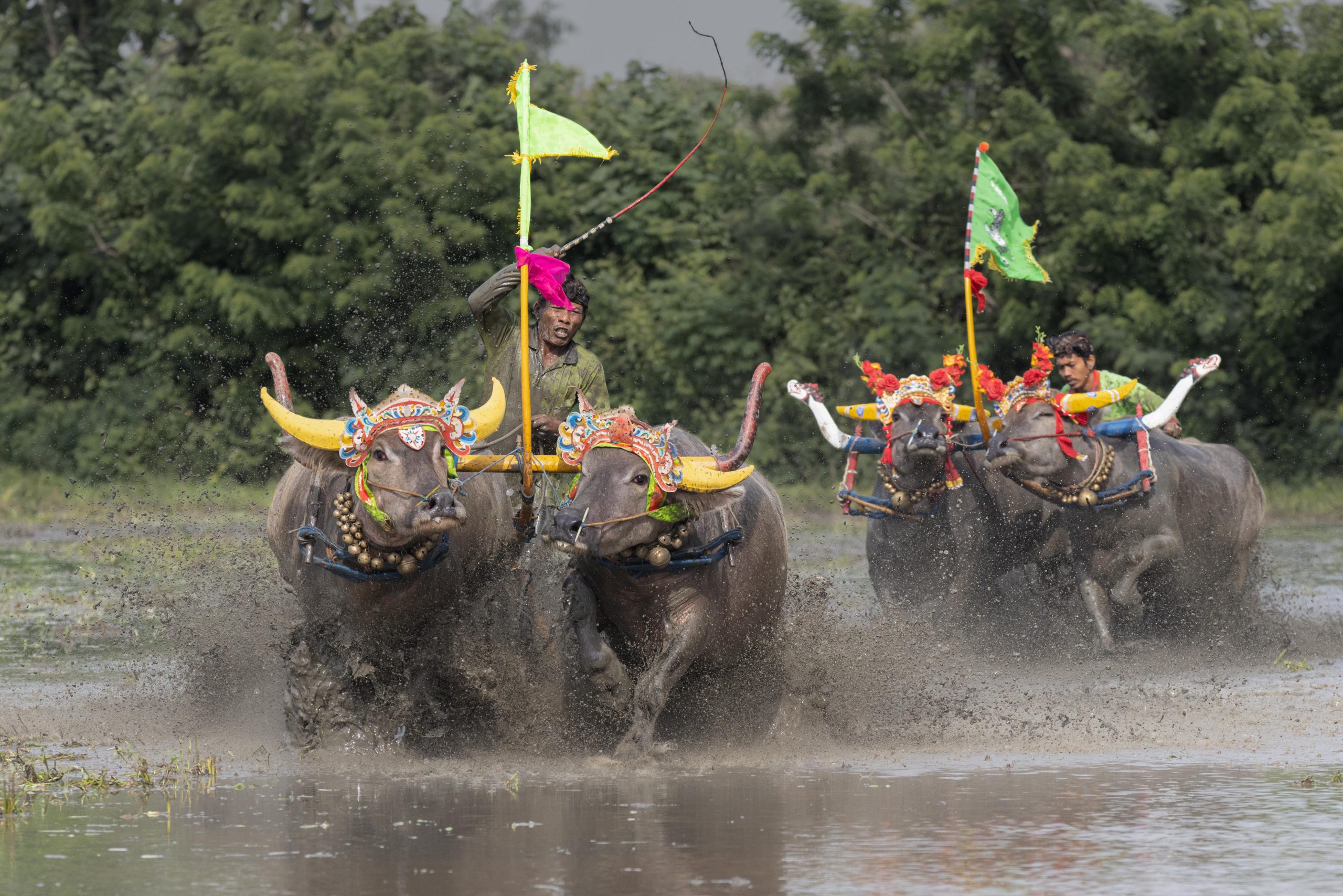
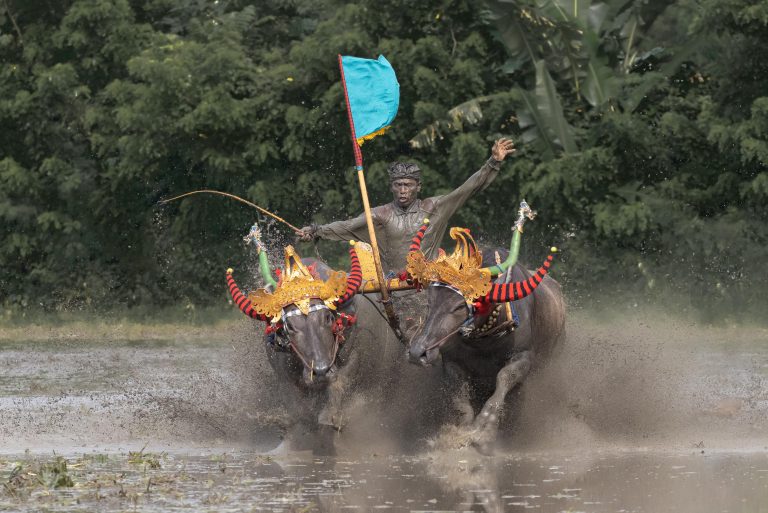
Buffaloes charging through the muddy rice fields during the Makepung Lampit races in Jembrana, West Bali.
Makepung Lampit – Racing Through Wet Rice Fields
In addition to the regular Makepung races held on dry tracks after the harvest, Jembrana also hosts a special event known as Makepung Lampit.
Unlike the standard races, Makepung Lampit takes place on wet rice fields at the beginning of the planting season. The carts are replaced by simple wooden ploughs, and the buffaloes race while pulling the plough through the muddy fields.
The spectacle is quite different from the fast races of the dry season. Buffaloes and jockeys become covered in mud as they splash through the flooded fields, creating a lively and often chaotic atmosphere.
Makepung Lampit is usually held once a year around November, depending on the start of the rice planting season. The event marks the transition from the harvest celebrations of Makepung to the beginning of the agricultural cycle.
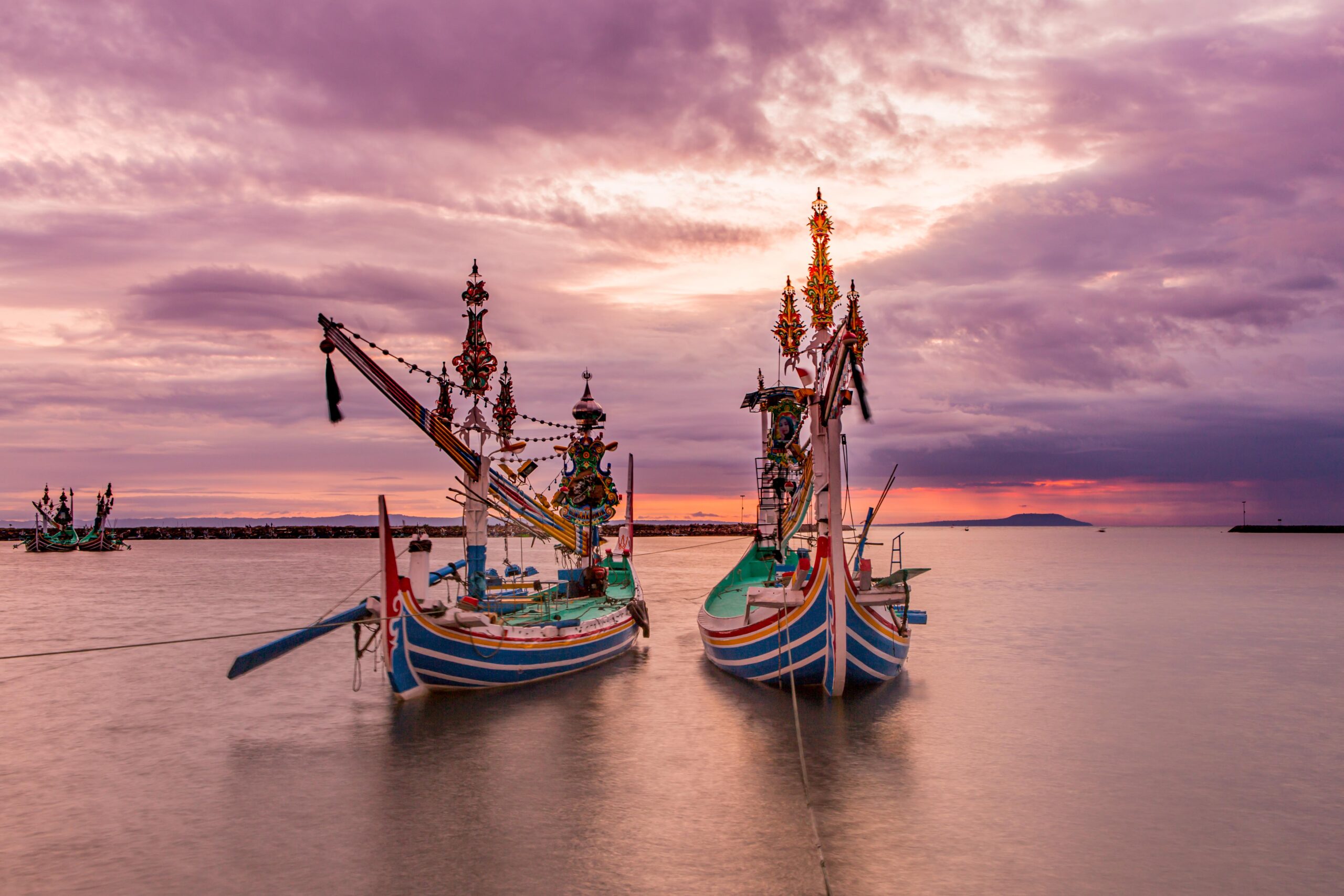
Traditional fishing boats in the harbour of Pengambengan, West Bali.
The Coast of Jembrana
Many Makepung circuits lie close to the coast of Jembrana Regency, where traditional fishing communities and harbours form part of the region’s rural landscape.
One of the most interesting nearby locations is Pengambengan Harbor, a busy fishing port west of Negara where colourful fishing boats and daily fish markets reveal another side of life in West Bali.
Together with the Makepung races, these coastal communities illustrate how agriculture, fishing and local traditions continue to shape everyday life in Jembrana.
Explore the Photo Gallery
A curated visual collection from Makepung – Bull Races in West Bali