Marapu culture, megalithic tombs and traditional villages
Sumba Island is one of Indonesia’s most culturally distinctive destinations, known for its megalithic tombs, traditional villages and the ancient Marapu belief system. Located in eastern Indonesia among the Lesser Sunda Islands, Sumba remains one of the few places where prehistoric traditions continue to shape everyday life.
Across the island, towering thatched houses rise above village courtyards filled with massive stone graves, while horses roam the dry savanna landscapes that define much of Sumba’s scenery. Ritual ceremonies, ancestral traditions and intricate ikat textiles remain deeply woven into the cultural identity of the Sumbanese people.
Although roughly twice the size of Bali, Sumba has a population of fewer than 700,000 inhabitants. The island’s largest town is Waingapu in East Sumba, but much of the island remains rural, with communities living in traditional villages scattered across hills and valleys.
For photographers and travellers, Sumba offers a rare glimpse into one of Indonesia’s most visually striking cultural landscapes.
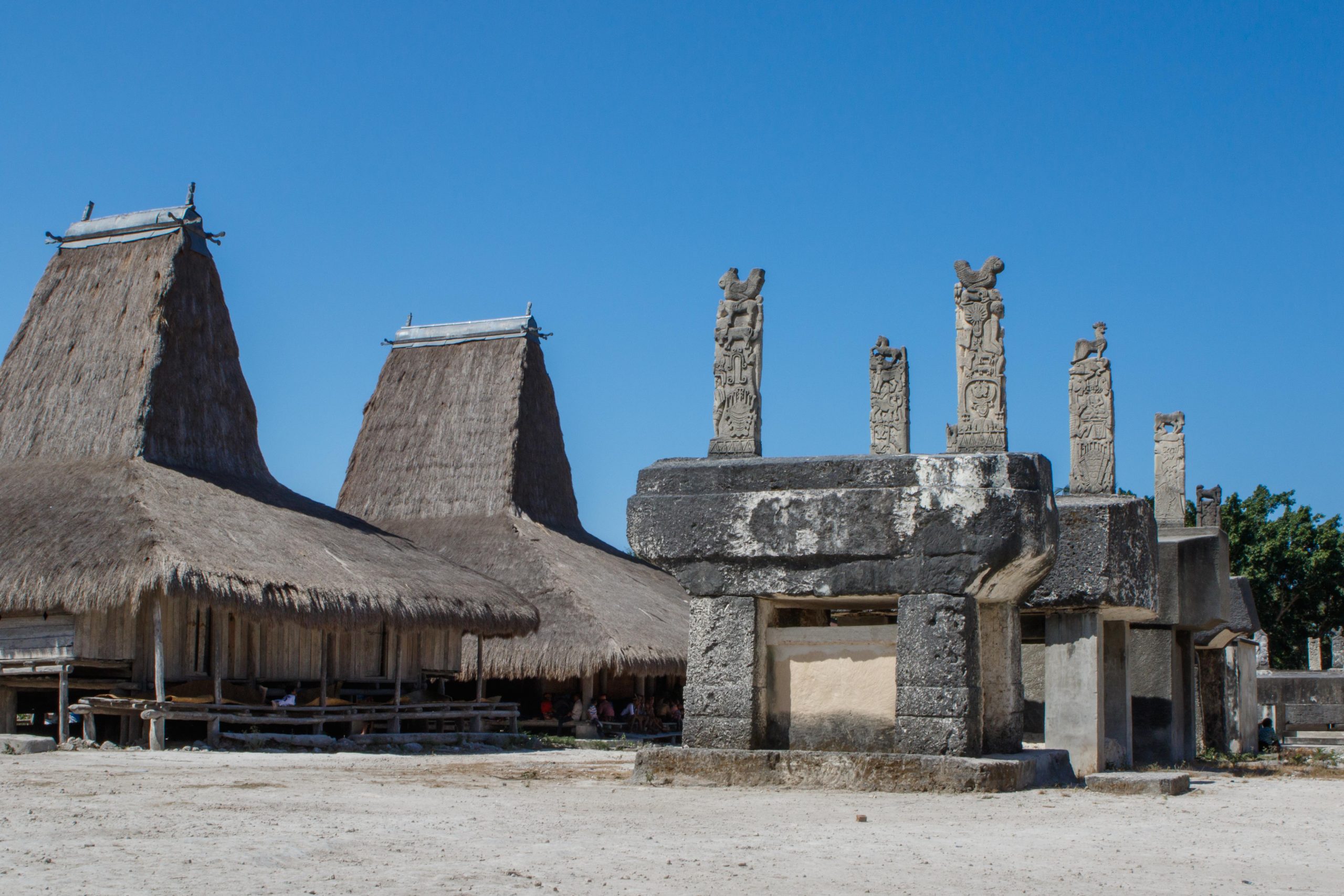
Megalithic stone tombs in a traditional Sumbanese village courtyard.
Landscapes of Sumba Island
Unlike many Indonesian islands dominated by volcanic mountains, Sumba is shaped mainly by limestone hills and dry savanna landscapes.
Large parts of the island are covered by alang-alang grasslands, particularly in the north and east where the climate is extremely dry. Only in valleys and along rivers can agriculture be practiced.
Farmers grow crops such as maize, cassava and vegetables, while livestock — including Sumba horses, Brahman cattle, water buffaloes, pigs and poultry — forms an essential part of rural life.
The western and southern parts of the island are somewhat greener and more fertile, with patches of remaining forest along mountain slopes and river valleys.
Dry savanna landscapes and limestone hills of eastern Sumba.
Water and Daily Life
Access to water remains one of the greatest challenges for many communities on Sumba.
During the long dry season many streams disappear completely, forcing villagers to rely on wells or distant water sources. In some regions families must walk several kilometres each day to collect water for drinking, cooking and livestock.
Daily life in a traditional Sumba village often revolves around access to water.
Society and Social Structure
Traditionally Sumbanese society was divided into three social groups:
Maramba – the nobility
Kabihu / Kabthu – commoners
Ata – slaves
Although the system is no longer formally practiced, social hierarchy still plays a role in many communities, particularly in East Sumba, where noble families often retain traditional titles and social influence.
West Sumba tends to be more ethnically diverse and socially mixed.
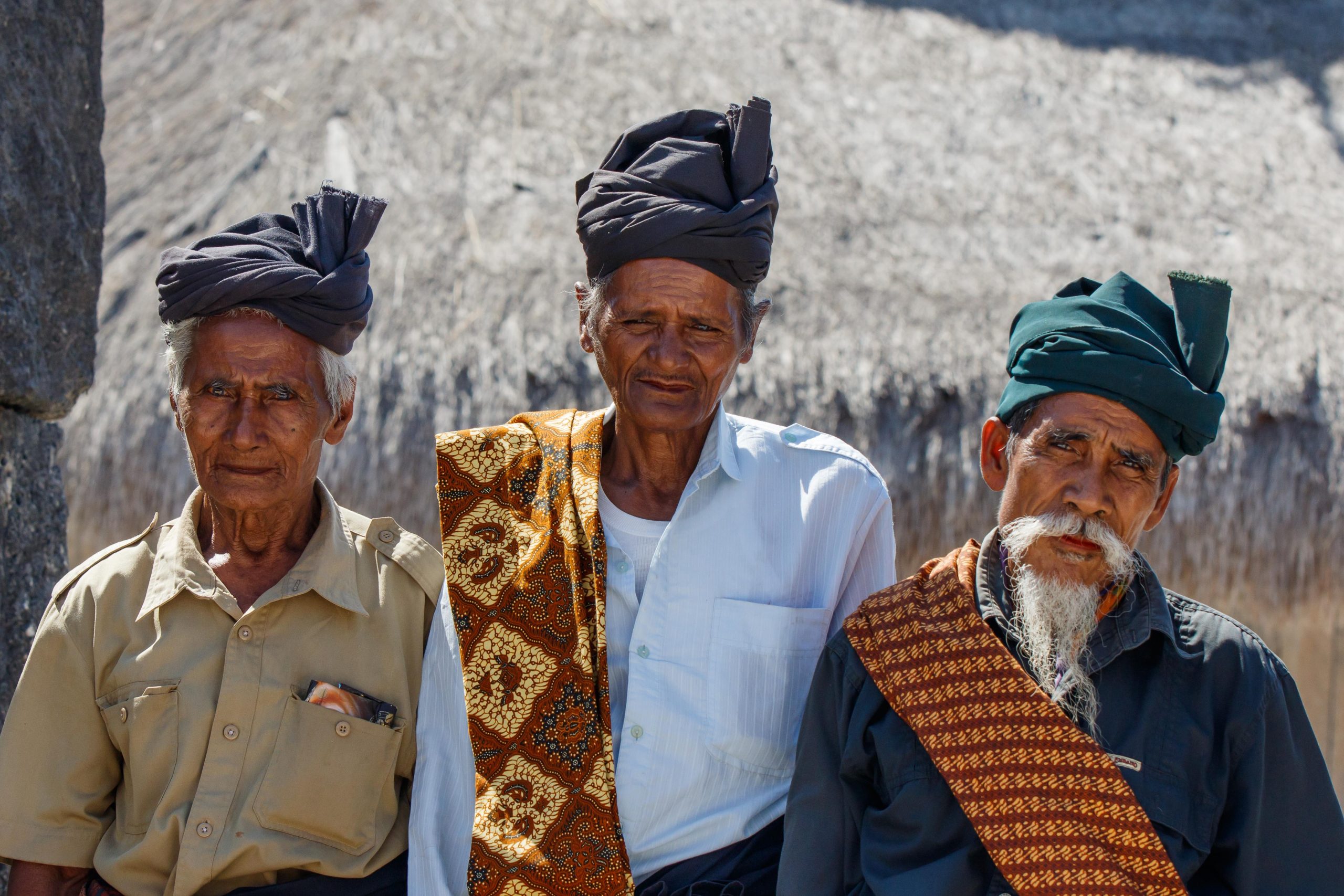
Sumbanese noblemen wearing traditional ceremonial dress in East Sumba.
Marapu Religion
One of the most distinctive cultural aspects of Sumba is the Marapu religion, an indigenous belief system centred on ancestral spirits and the spiritual balance between the living world and the afterlife.
Today roughly 25–30% of the population still practices Marapu, while the majority of Sumbanese are Christian and small Muslim communities exist along the coast.
According to Marapu belief, life in the human world is temporary, while the spirit continues its journey in the Praing Marapu, the spiritual world of the ancestors.
Traditional Villages of Sumba
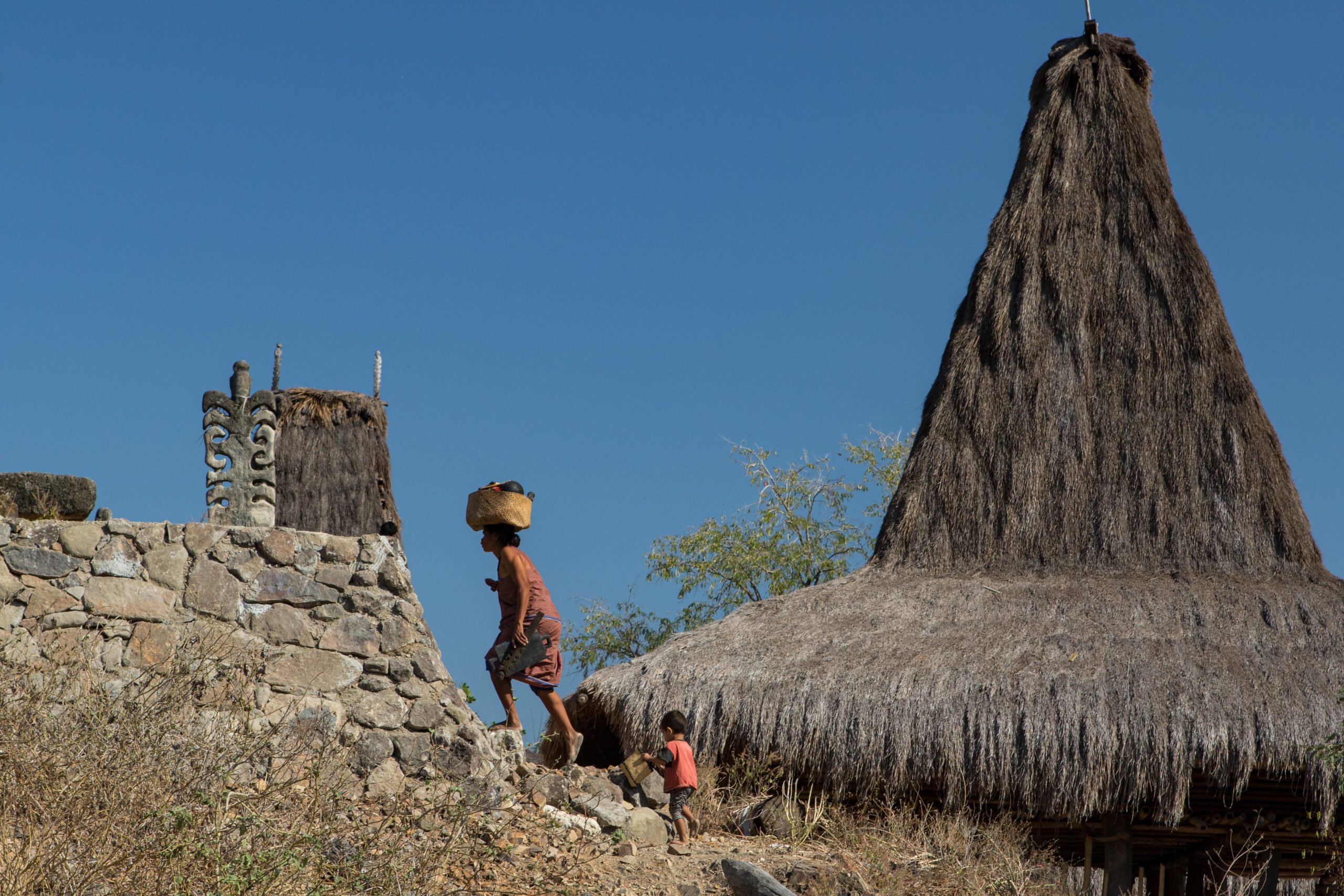
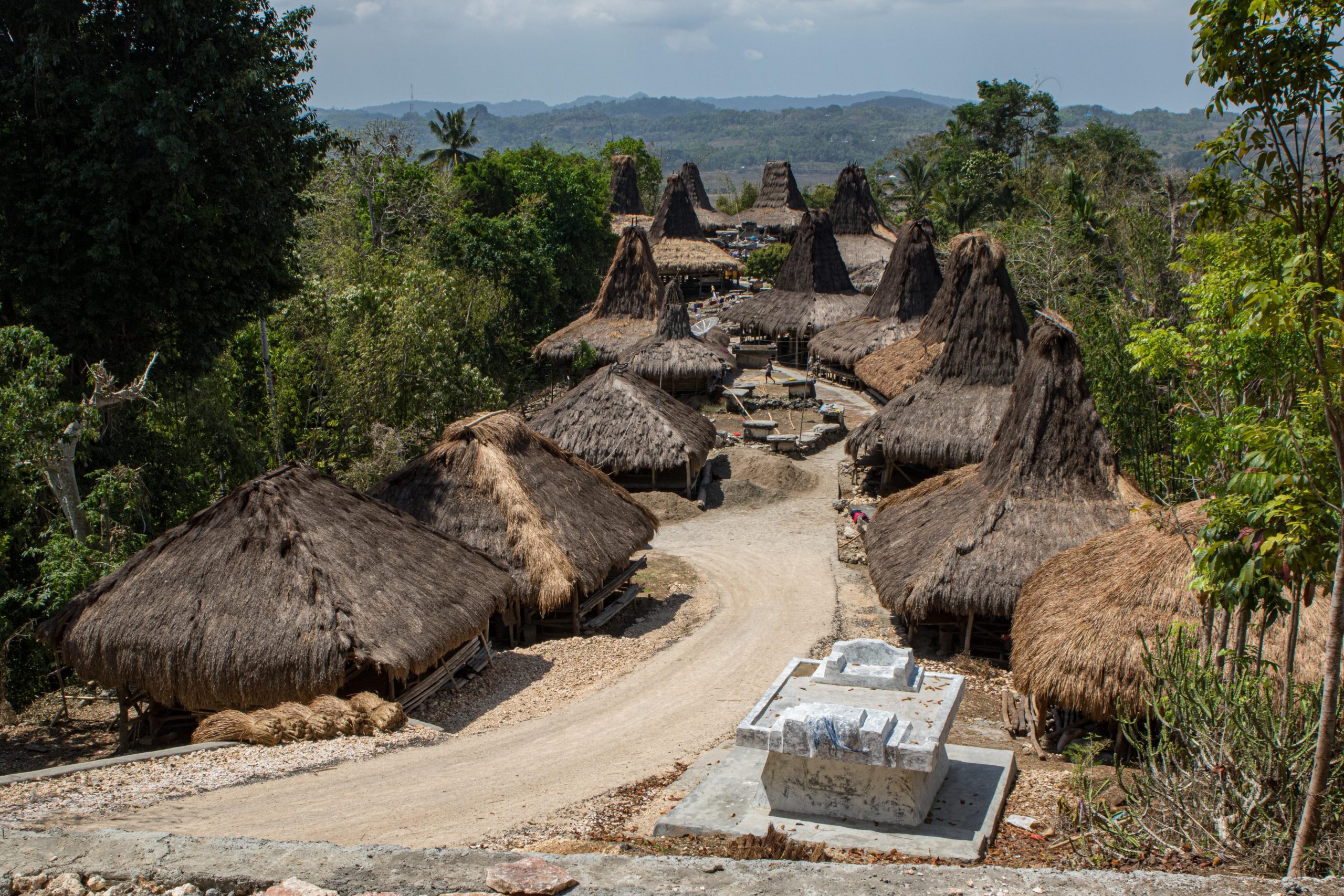
Traditional Sumbanese villages are usually built on hilltops or elevated ridges, historically for protection from enemies and spiritually to remain closer to the ancestors. Many villages are surrounded by stone walls with two gates, marking the entrance and exit of the settlement.
Traditional hilltop village with Marapu houses and megalithic tombs in Sumba.
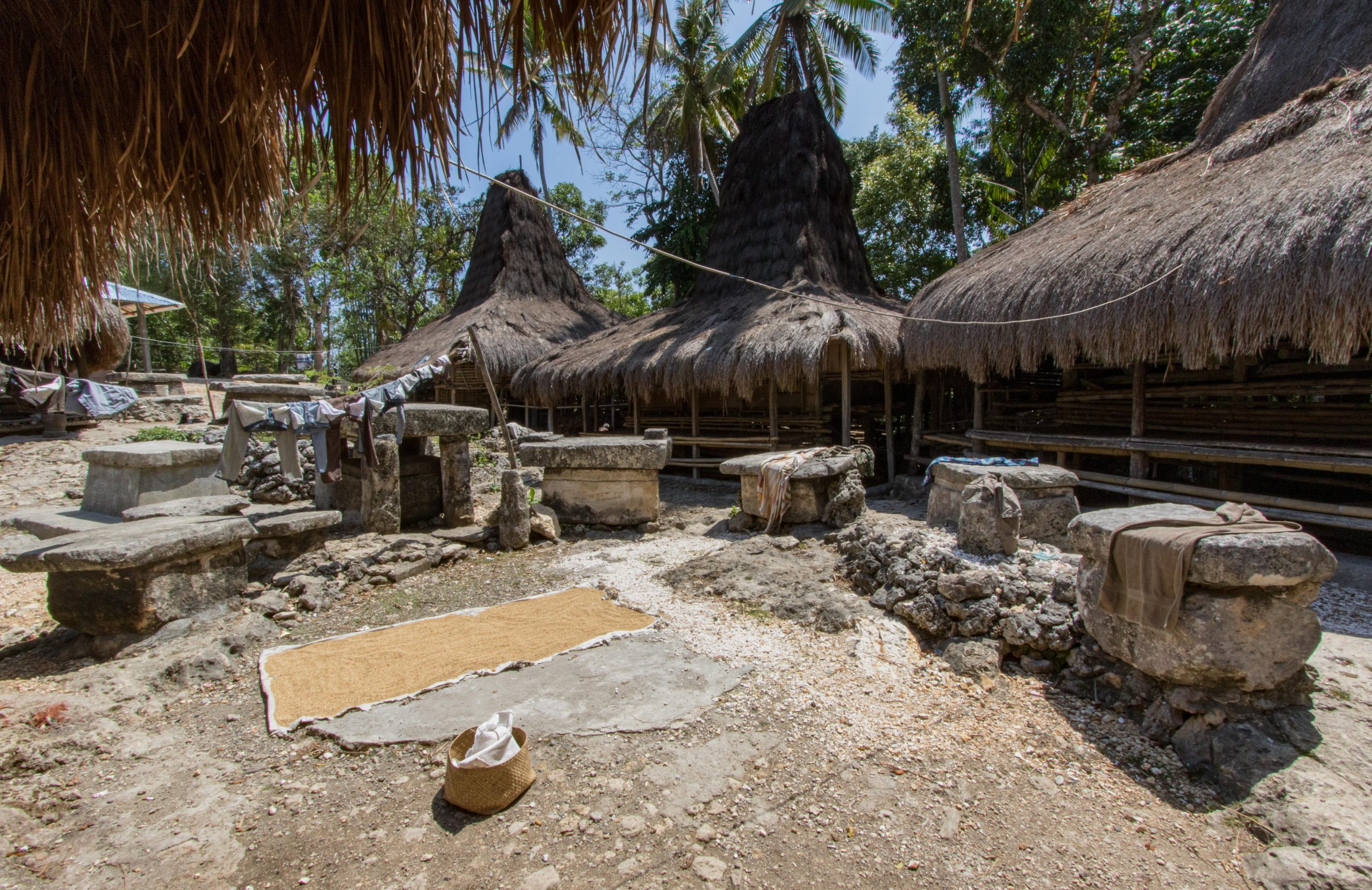
At the centre of the village lies an open courtyard containing megalithic tombs and sacrificial altars (Kateda). Around this central space stand the traditional houses of the clan, arranged either in a circle or in two parallel rows. The courtyard functions as the ceremonial heart of the village, where rituals, meetings and communal gatherings take place.
Central courtyard of a Sumba village surrounded by clan houses and ancestral tombs.
Most villages are inhabited by members of the same clan (Kabisu), although sometimes two clans share a settlement, each occupying its own clearly defined area. Every clan maintains a clan house (Rumah Adat) where ancestral spirits are believed to reside and sacred heirlooms are kept.
Traditional Marapu Houses
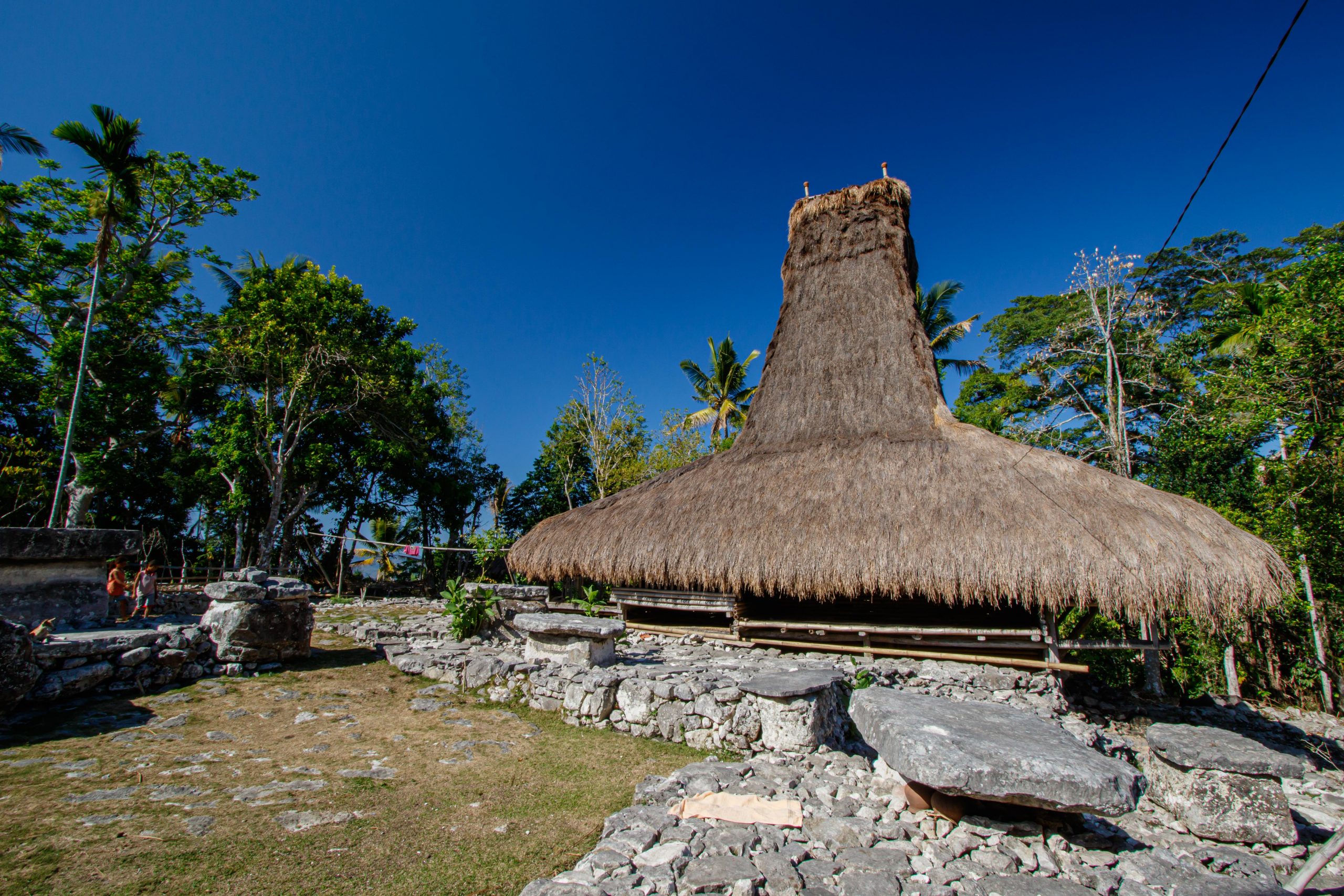
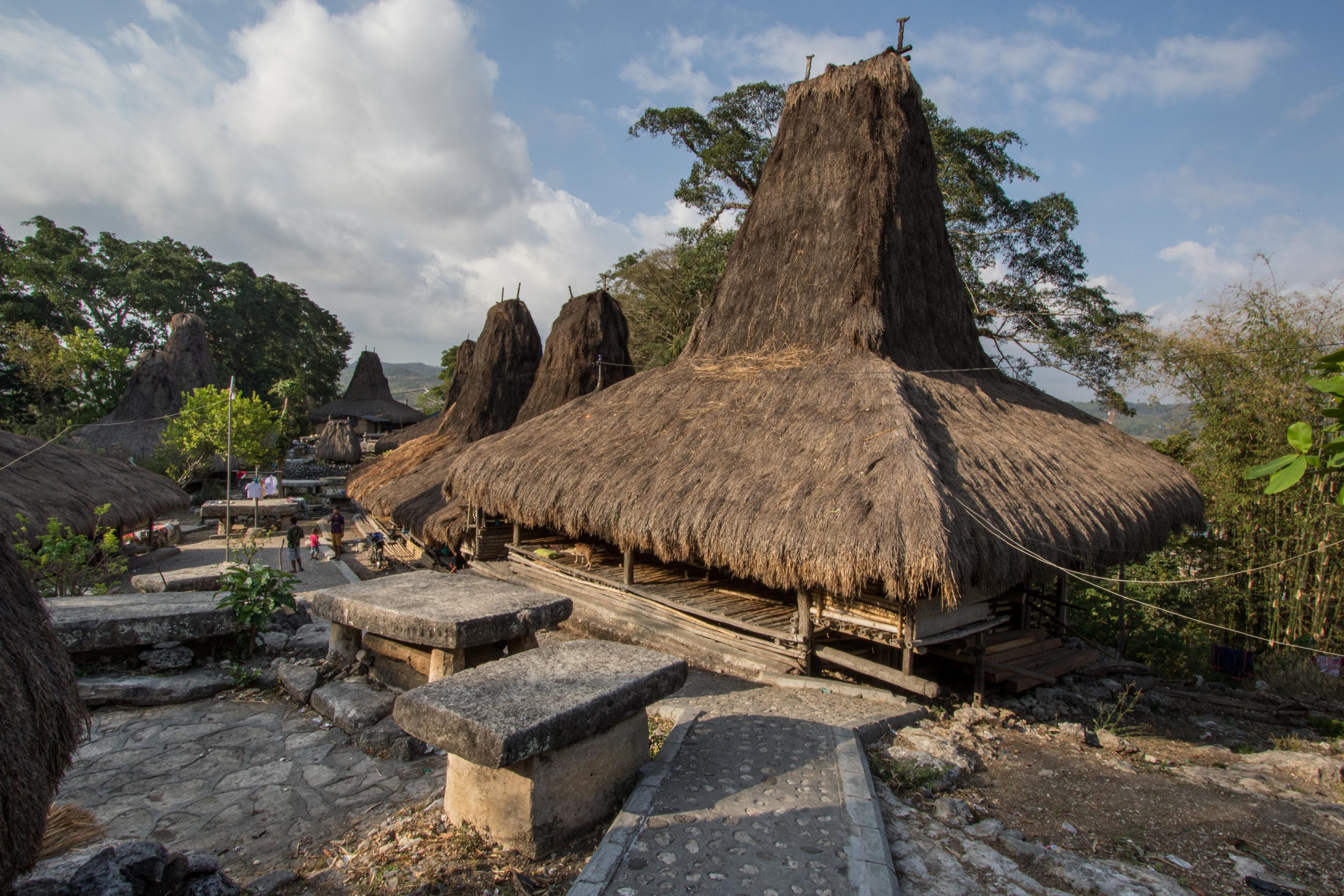
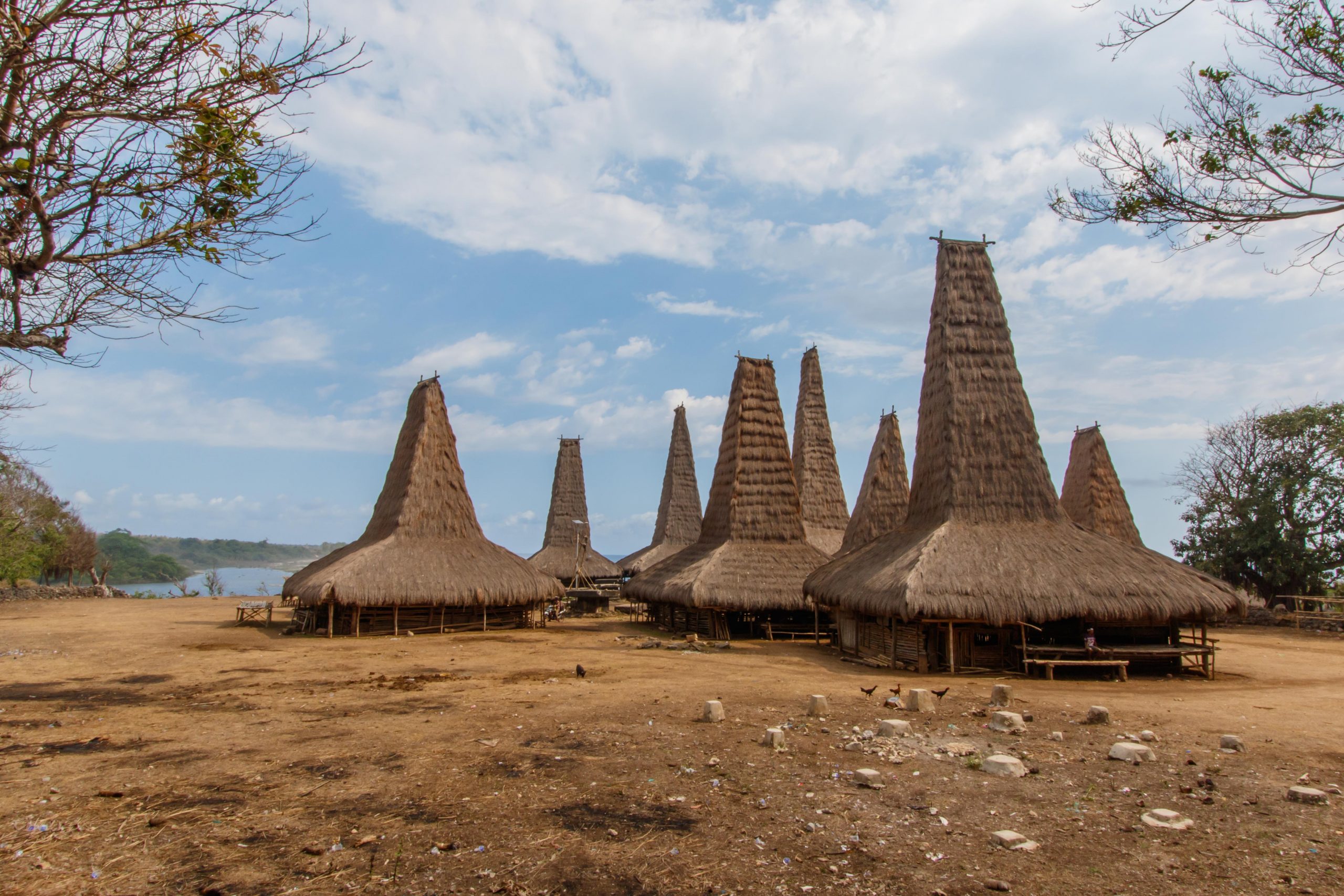
The traditional houses of Sumba, known as Uma Bokulu or Uma Mban, are immediately recognisable by their towering pointed roofs, which can reach heights of twenty to thirty metres. These dramatic roofs dominate the village skyline and are one of the most distinctive architectural forms in Indonesia.
Traditional Sumbanese houses with towering thatched Marapu roofs.
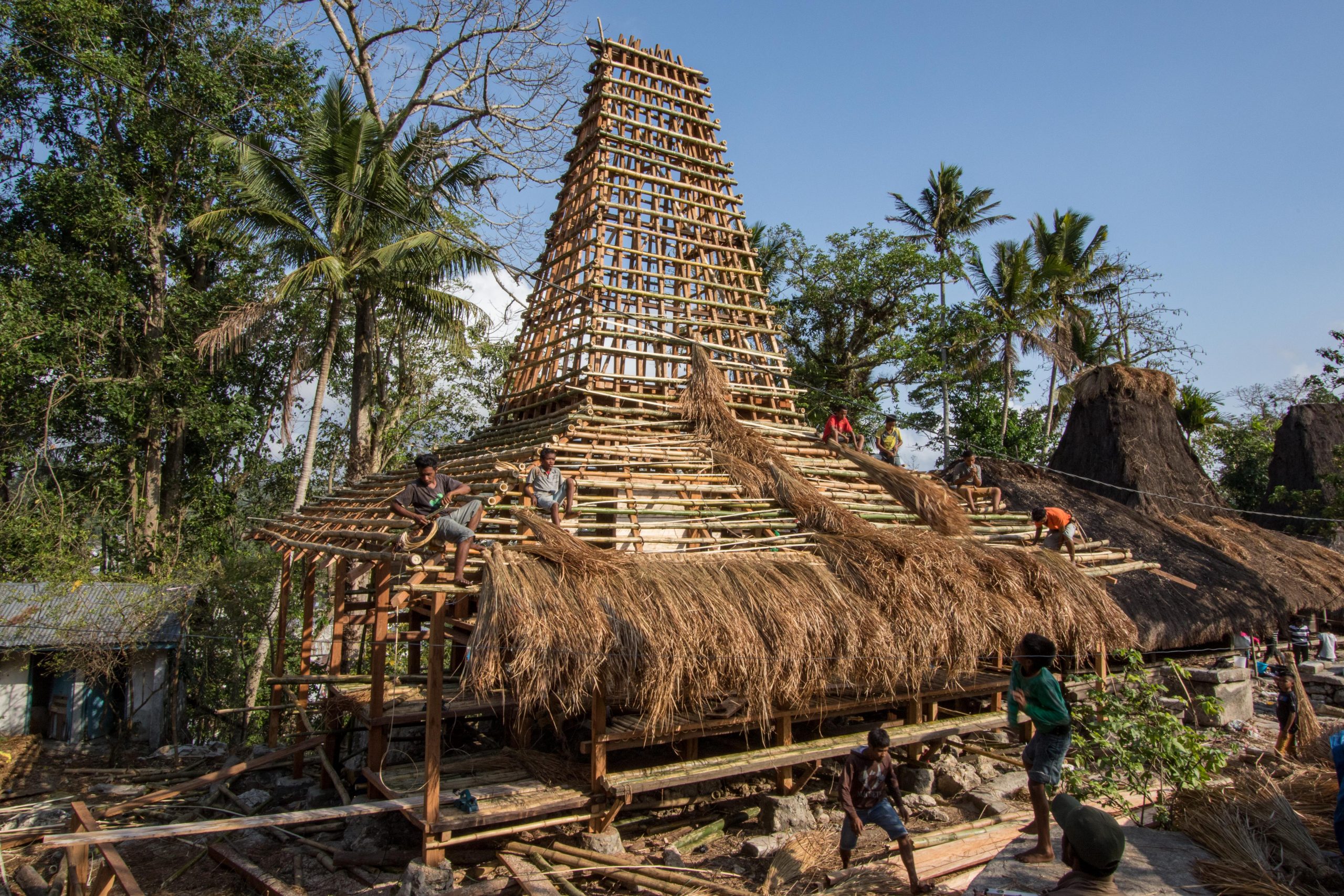
The roofs are traditionally thatched with alang-alang grass or sometimes with leaves of the lontar palm. Besides protecting the house from heavy rains and tropical heat, the steep roof shape also functions as a natural ventilation system: smoke from the central hearth rises upward and escapes through the roof structure, helping cool the interior.
Attaching alang-alang grass to the towering roof of a traditional Marapu house in Sumba.
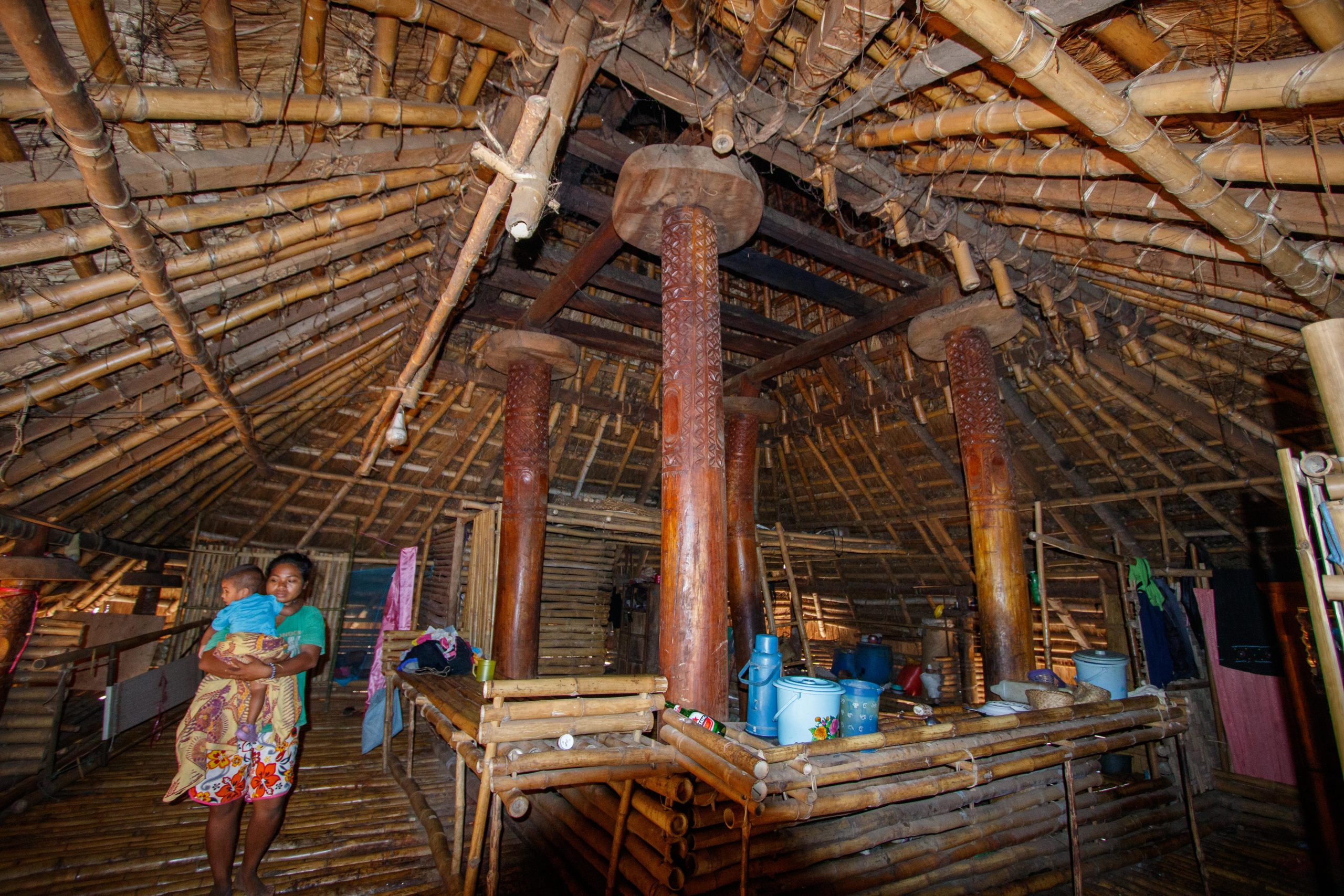
Structurally, the house is built around four main wooden pillars, representing the four cardinal directions. These pillars form the symbolic and architectural core of the house. Around them are rings made of wood or stone representing Lingga and Yoni, ancient fertility symbols that also serve a practical function by preventing animals such as rats from climbing the pillars to reach stored food and seeds.
Inside the house, the fireplace lies at the centre, symbolising the sun and forming the heart of family life.
Interior of a traditional Marapu house showing the four central pillars, bamboo floor and walls, and the tall roof structure.
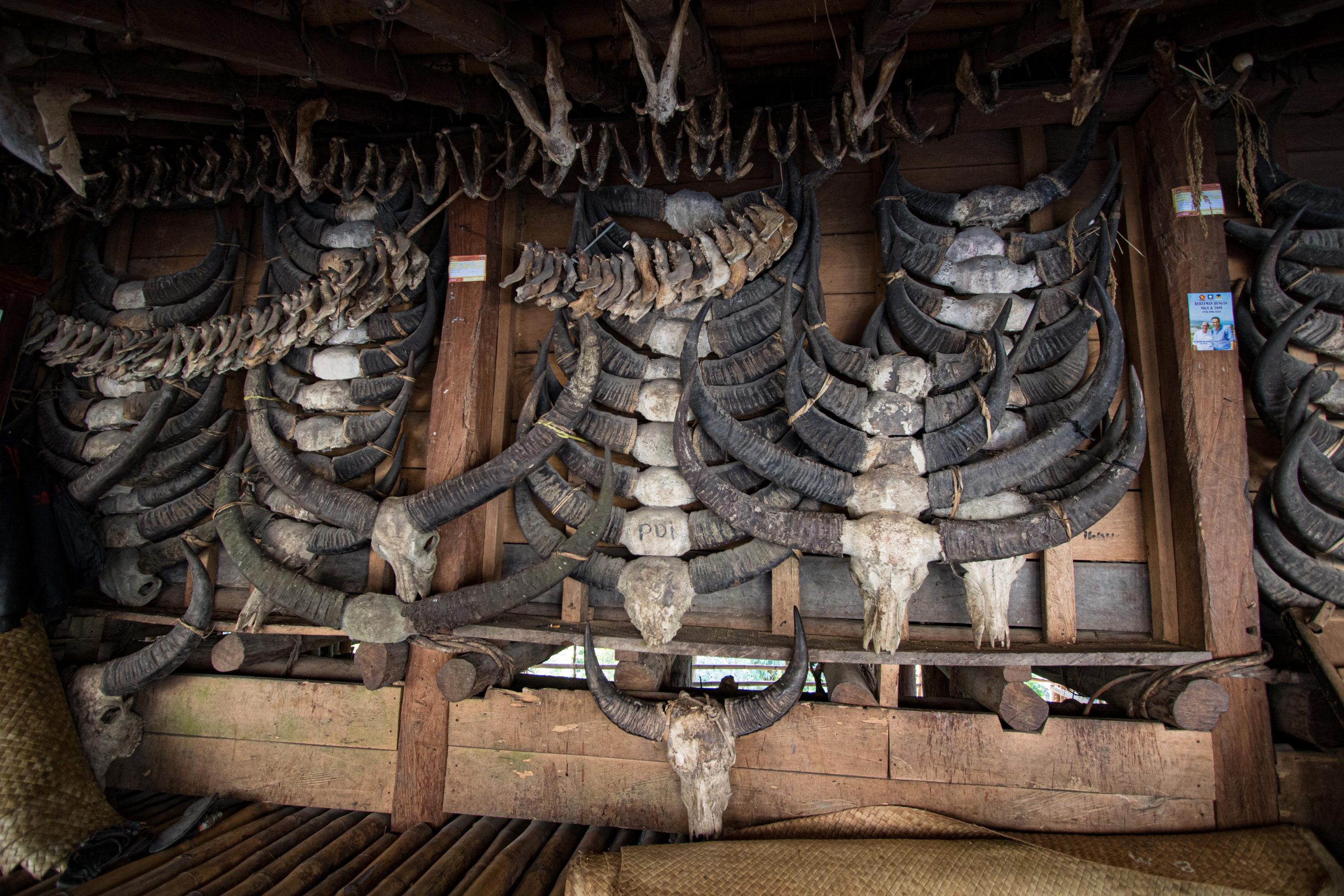
Many traditional houses also display rows of buffalo horns attached to the front façade. These horns are remnants of animals sacrificed during important ceremonies such as funerals and clan rituals. The number of horns reflects the wealth and social status of the family and serves as a visible record of ceremonial events associated with the house.
Buffalo horns displayed on a traditional Marapu house in Sumba, symbolizing status and past ceremonial sacrifices.
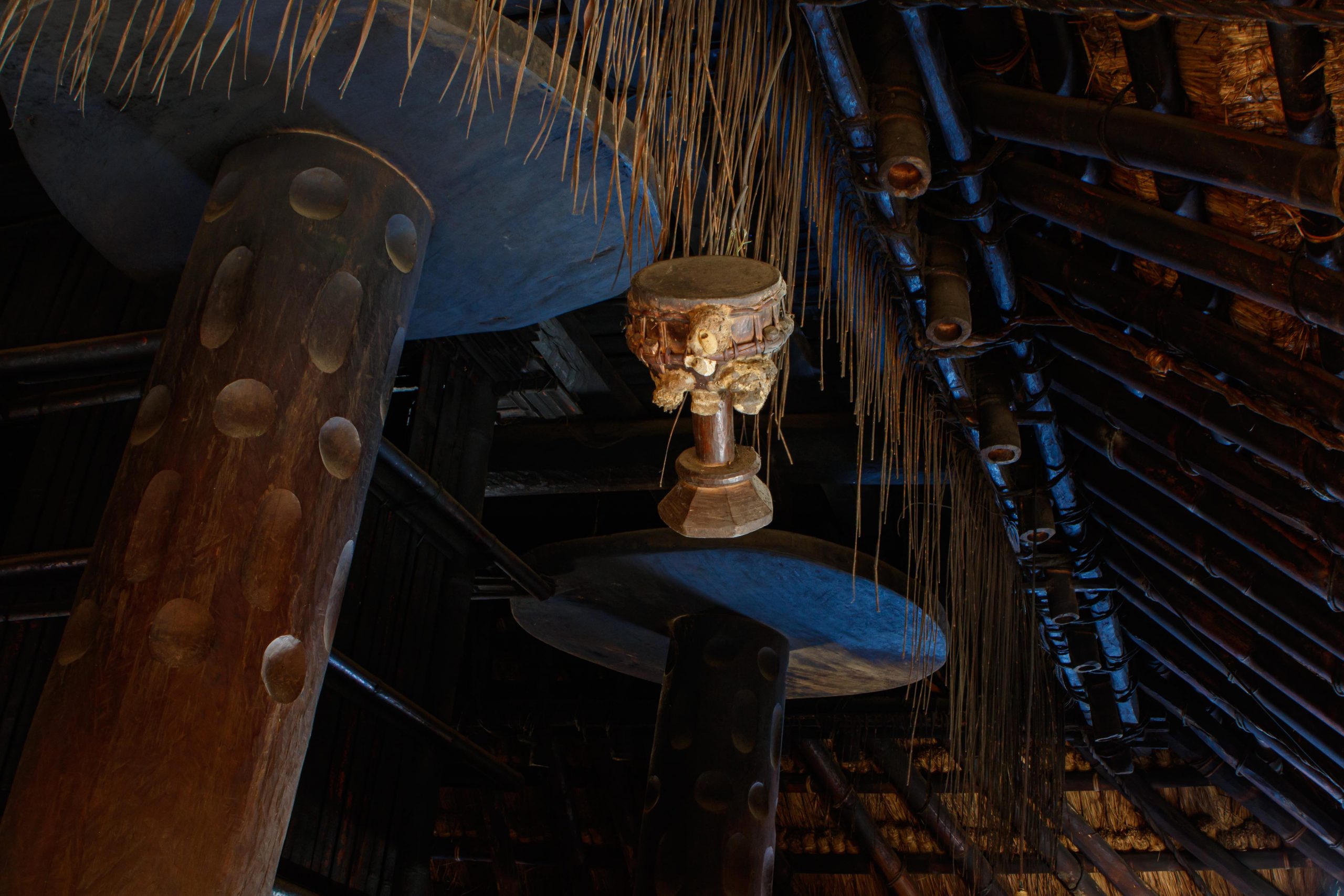
Traditional houses are divided into three symbolic levels, reflecting the cosmology of the Marapu belief system. The space beneath the raised floor represents the underworld, where animals are kept. The middle level forms the human world, where everyday life takes place. The upper part of the towering roof represents the spiritual realm, where ancestral relics, sacred objects and ritual items are stored.
Ancestral relics and sacred objects are stored in the upper part of the roof.
According to Marapu belief these levels reflect the harmonious relationship between humans, nature and the spirit world, making the traditional Sumba house not only a dwelling but also a spiritual structure connecting the living with their ancestors.
Megalithic Burial Traditions
Across Sumba, megalithic tombs are a defining feature of traditional villages. This burial tradition is believed to date back more than 4,500 years, making Sumba one of the few places in the world where megalithic practices from the Neolithic era have continued into the present day. The tradition is still followed today, not only by communities practicing the Marapu religion, but also by many Christian Sumbanese families.
Traditional Sumba village with Marapu houses and megalithic tombs in East Sumba, Indonesia.
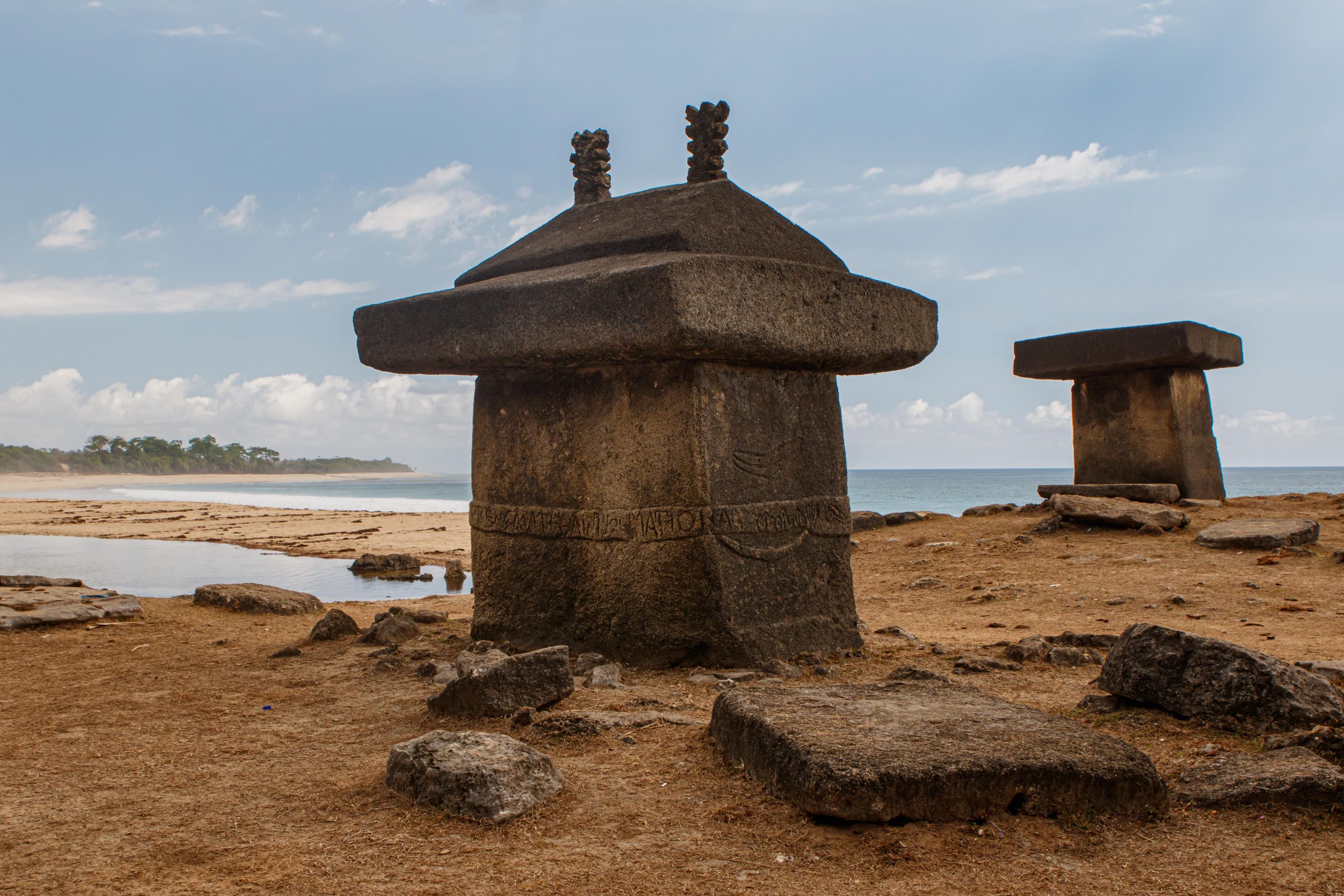
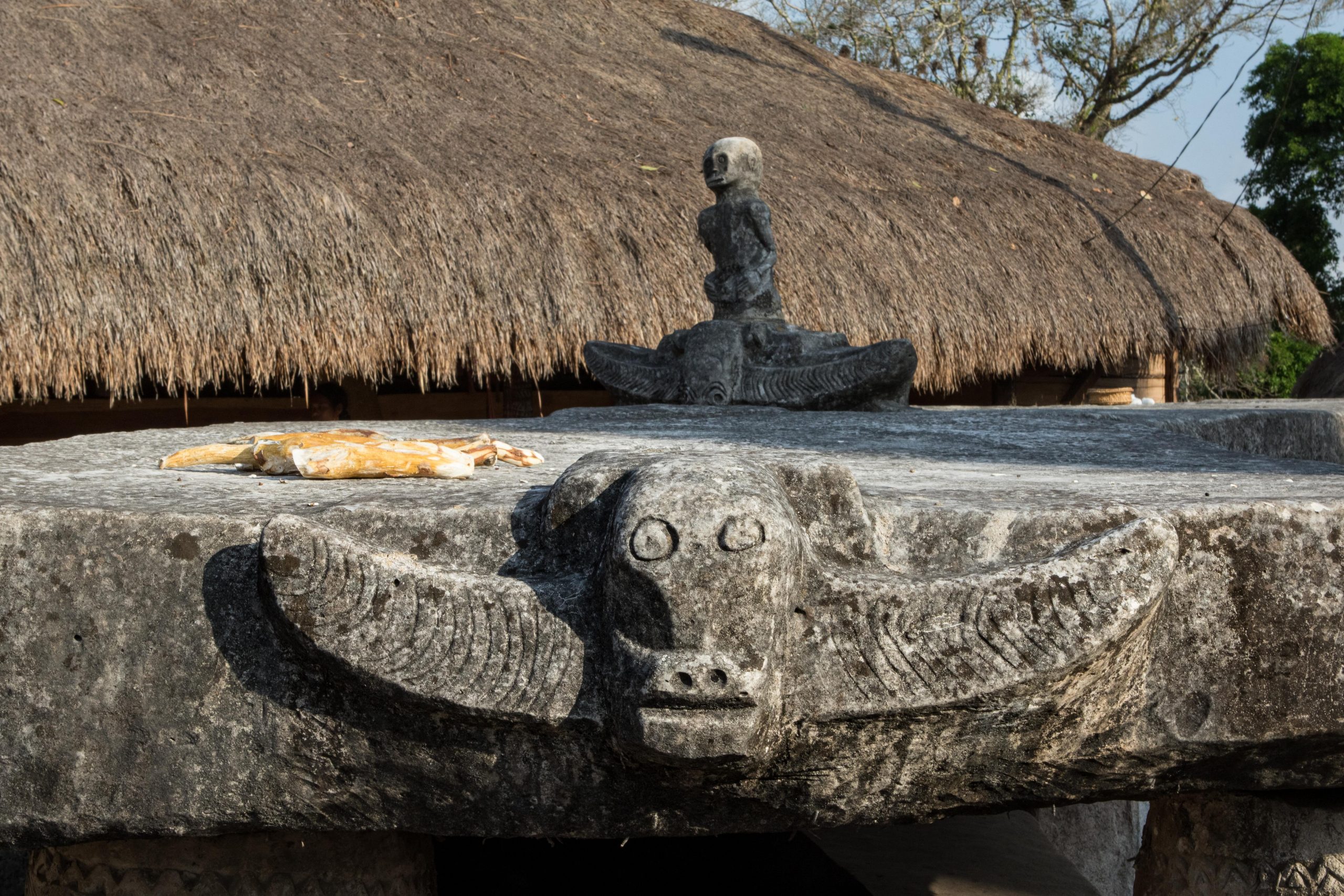
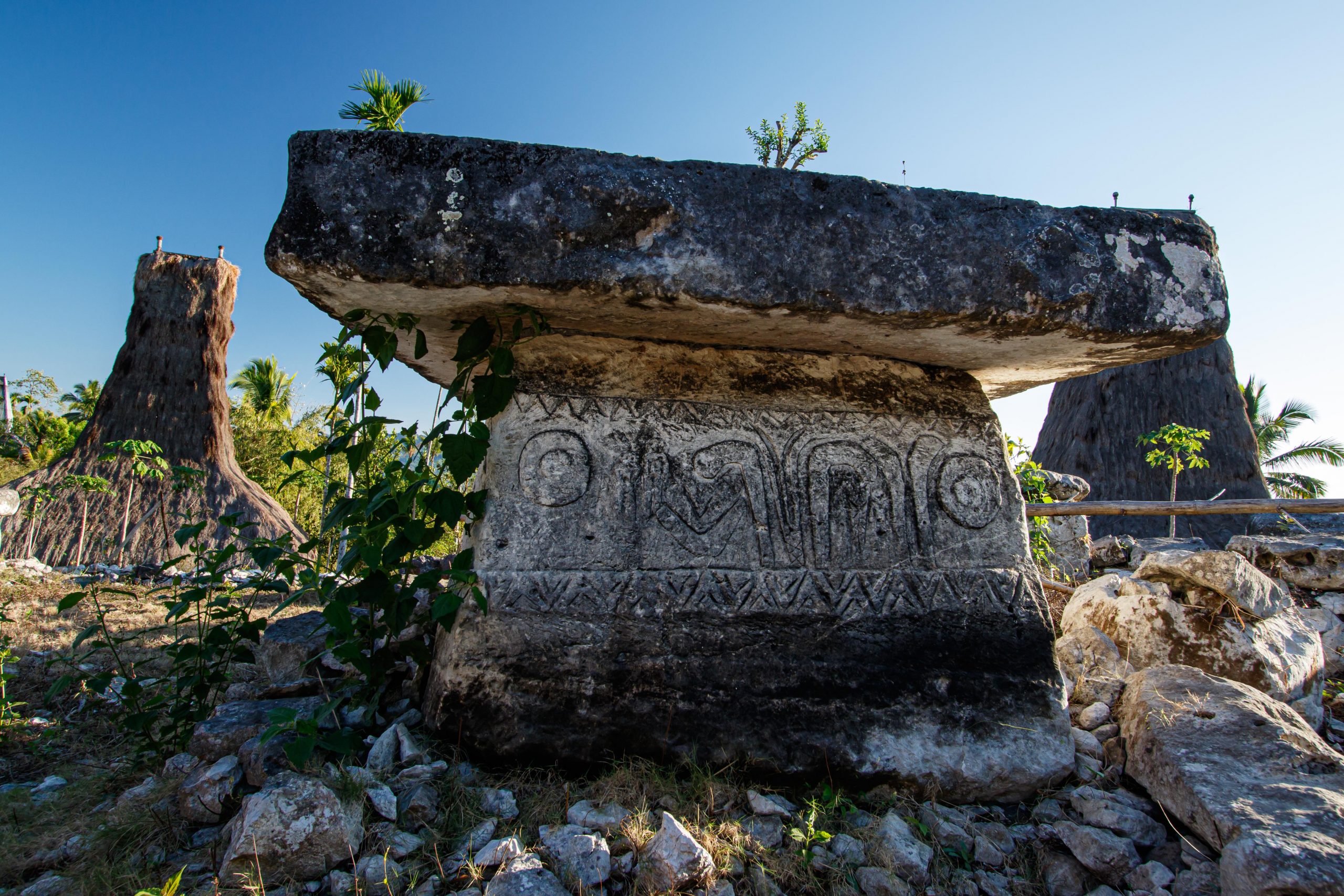
A typical Sumba megalithic tomb consists of a large rectangular stone slab placed over a burial chamber, often resembling a monumental stone altar. Some tombs contain a single chamber directly beneath the stone plate, while others consist of several smaller burial chambers, each covered with its own stone slab.
Massive limestone slabs covering traditional Sumbanese megalithic graves.
Older tombs were sometimes carved from a single block of limestone, with a perfectly fitting cover stone. The size, design and decoration of these graves usually reflect the status and importance of the family. Many of the stone slabs weigh several tons and must be transported from distant quarries using large communal efforts.
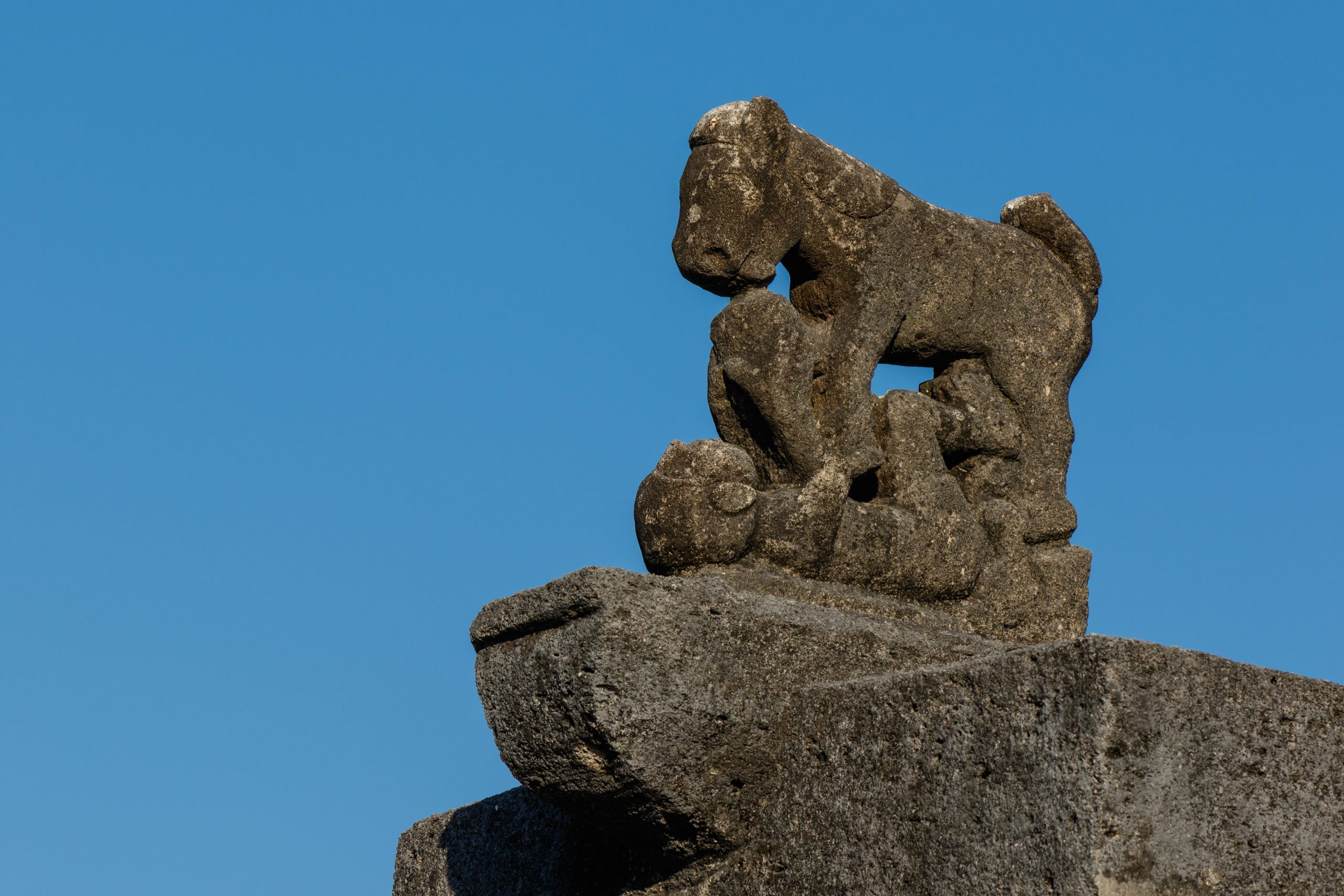
The surfaces of these tombs are often decorated with carvings and sculptural motifs, depicting elements of the deceased person’s life and their journey to the spiritual world according to Marapu belief.
A tomb decorated with sculptures depicting the life of the deceased.
Some tombs are carved from single blocks of limestone and decorated with sculptures depicting the life of the deceased and their journey to the spirit world.
Megalithic tombs of nobles are intricately decorated with sculptures.
Horses and Pasola
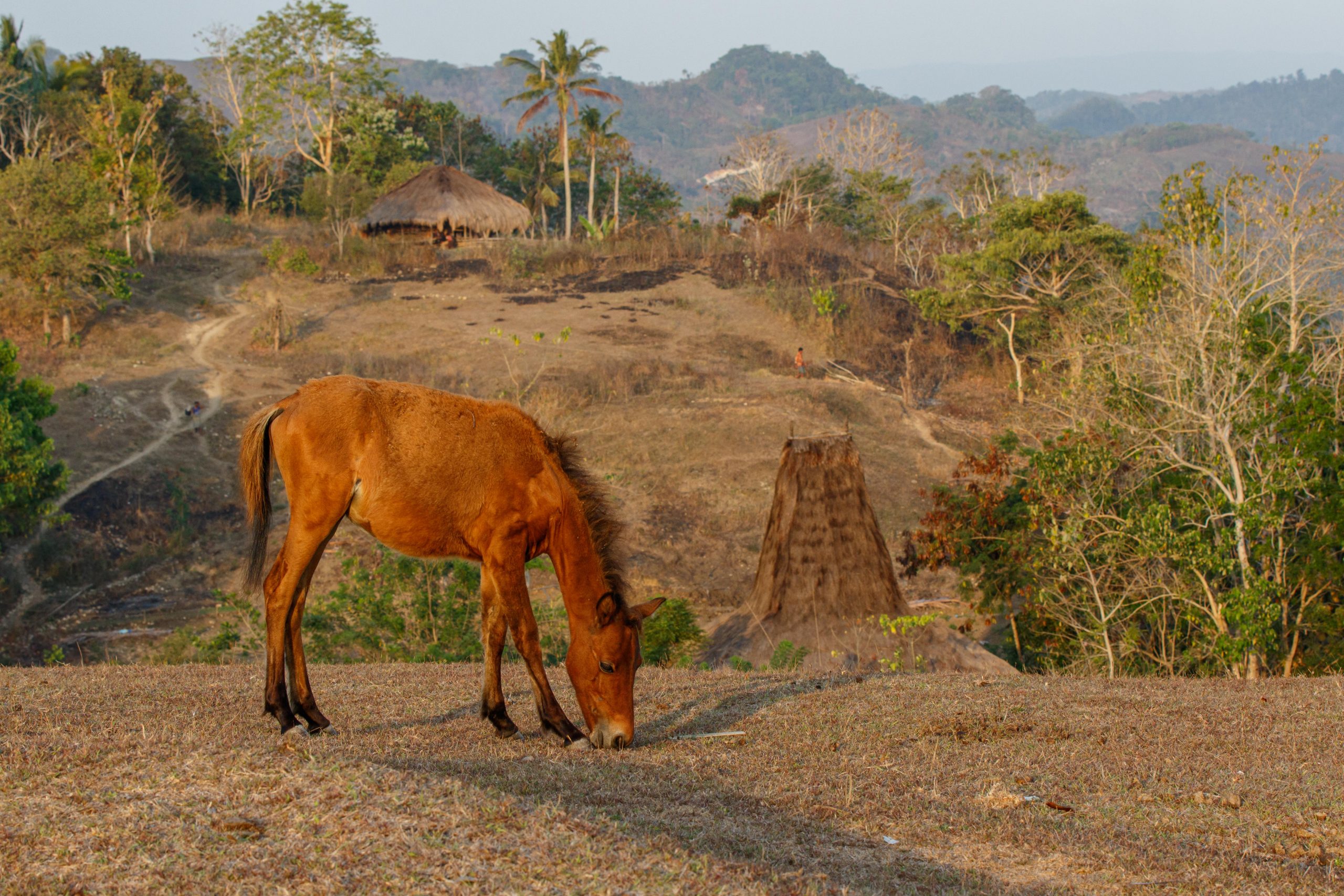
Horses are an essential part of Sumbanese culture and daily life.
The Sumba horse is both a practical means of transport and a symbol of status. Many children learn to ride at a young age, and horsemanship is deeply embedded in local traditions.
The most famous equestrian event is Pasola, a ritual spear-throwing battle fought on horseback between rival groups. The event forms part of traditional ceremonies connected to the agricultural calendar and Marapu beliefs.
A Sumba horse grazing on the dry savanna landscapes of eastern Indonesia.
Ikat Textiles
Sumba is internationally known for its highly intricate ikat textiles.
The process of creating these fabrics is extremely labour-intensive. Threads are dyed in complex patterns before weaving, and a single textile can take several months to complete.
Ikat cloths are not only used for clothing but also play important roles in ceremonies, exchanges of gifts and traditional rituals.
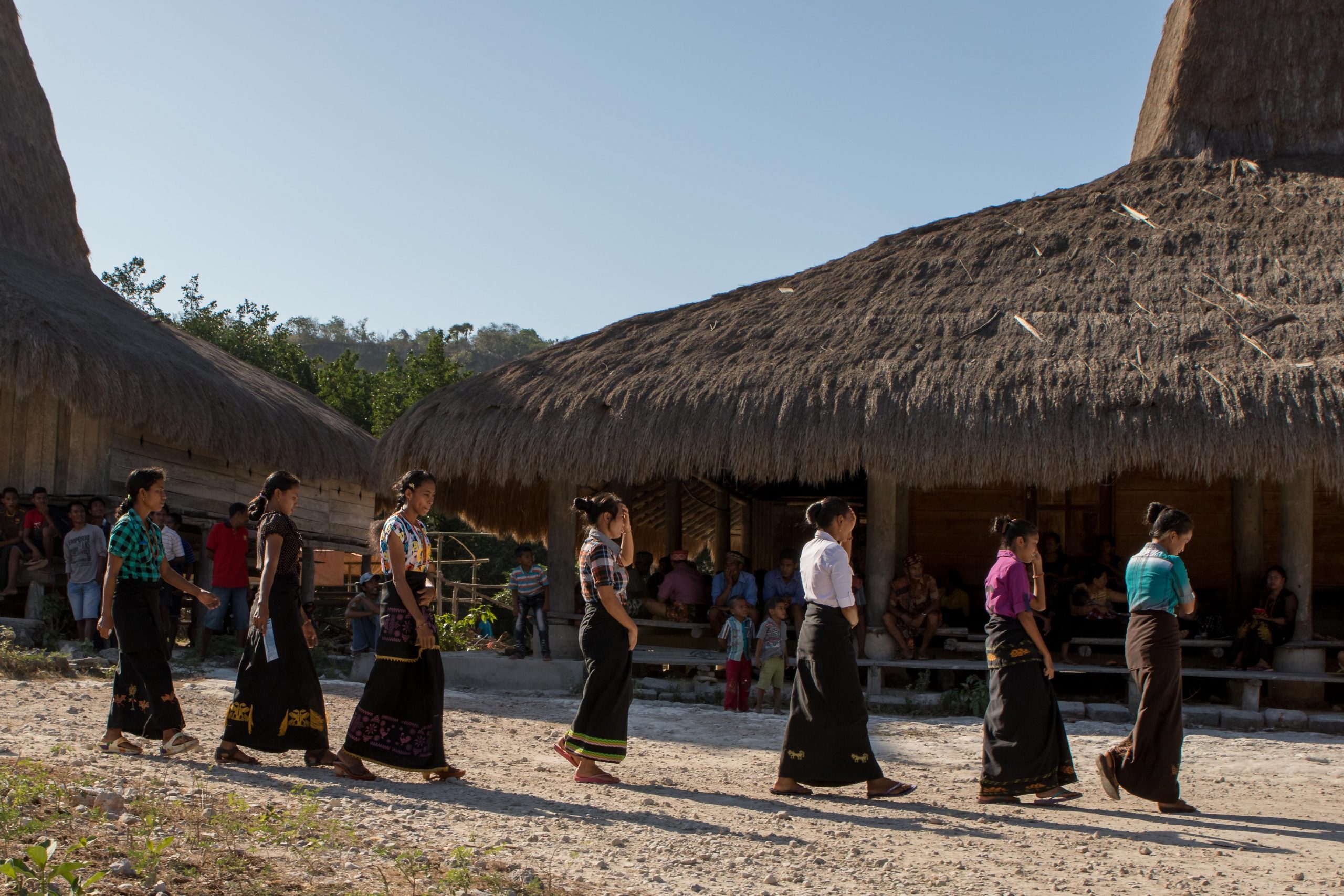
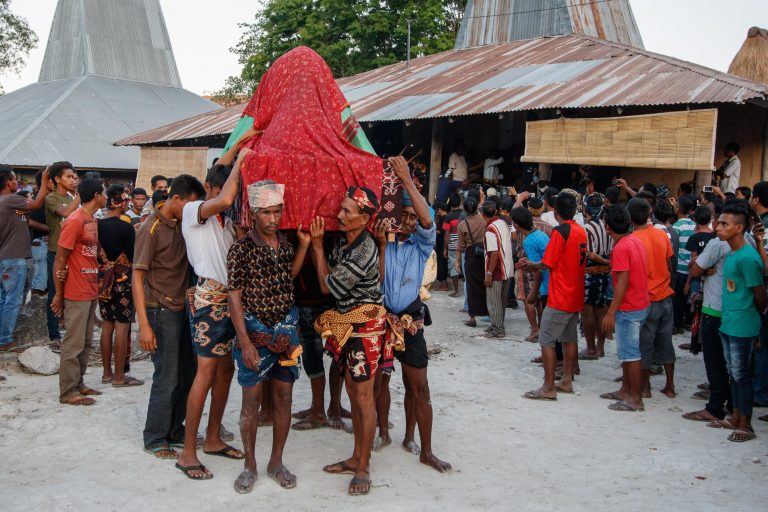
Women at a royal funeral wearing traditional hand-woven ikat textile from Sumba.
Exploring Sumba Through Photography
Sumba offers one of the most distinctive cultural landscapes in Indonesia. Traditional villages with towering Marapu houses, massive megalithic tombs, and wide savanna landscapes create a visual environment unlike anywhere else in the Indonesian archipelago.
Across the island, daily life is still closely connected to ancestral traditions. Ceremonies, ritual sacrifices, and the presence of horses in village life all reflect the continuing influence of the Marapu belief system, which shapes many aspects of Sumbanese culture.
For photographers, Sumba presents a remarkable combination of architecture, ritual and landscape. From hilltop villages and ceremonial gatherings to the quiet rhythms of rural life, the island offers endless opportunities to document a culture that has preserved many of its ancient traditions.c