Desert elephants, dry rivers and remote landscapes of northwestern Namibia
The remote landscapes of Damaraland and Kaokoland reveal one of the most striking desert ecosystems in Africa. Vast gravel plains, rugged mountains and wide sandy riverbeds shape a wilderness where wildlife survives under extreme conditions. Along dry river valleys, desert-adapted elephants move slowly between scattered trees, lions patrol immense territories, and traditional pastoral communities continue to live across the open desert.
For travelers and photographers, these regions offer a rare sense of scale and isolation. Wildlife, geology and culture remain closely connected here, unfolding across landscapes that feel both ancient and largely unchanged by modern development.
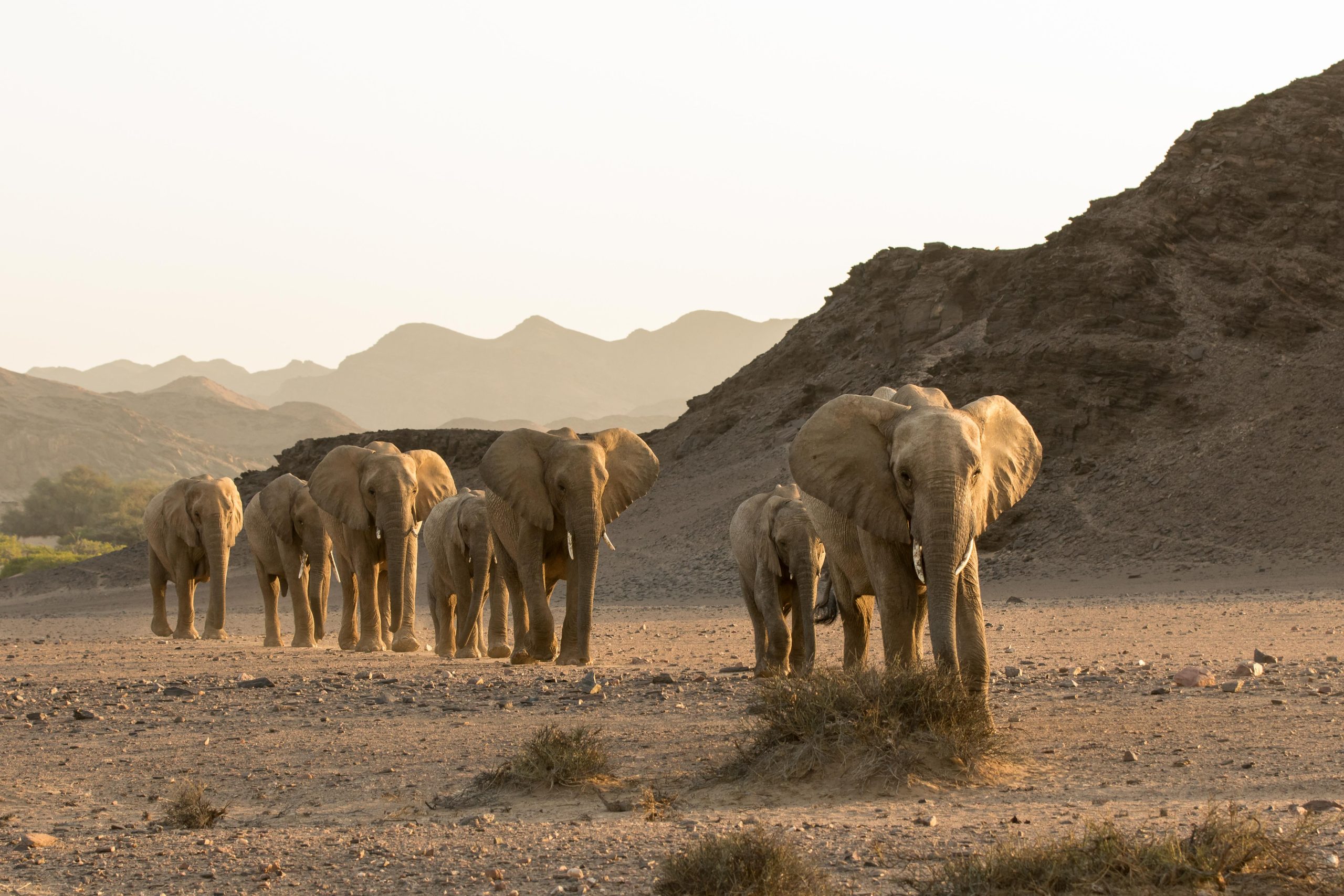
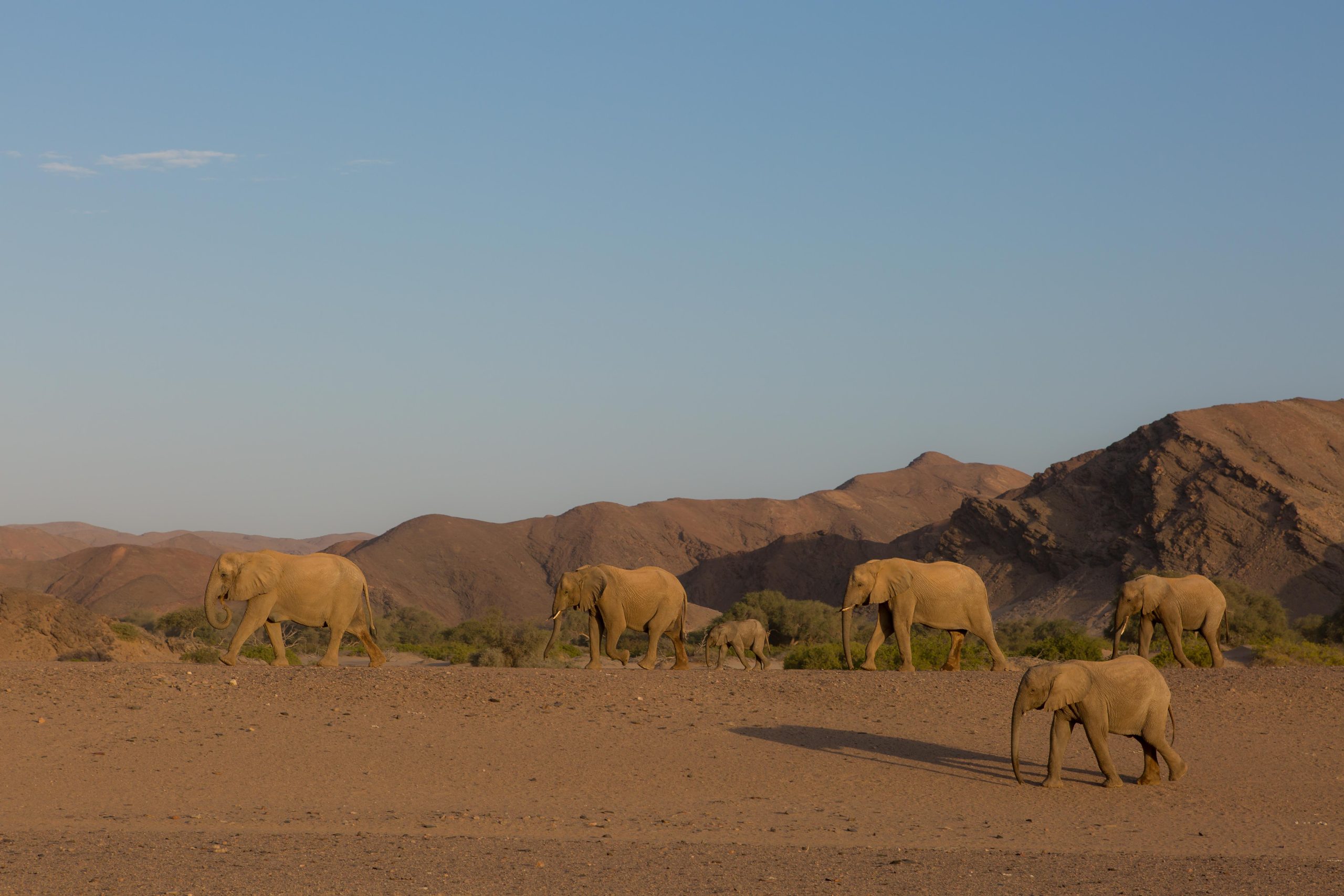
Desert-adapted elephants moving through the dry Hoanib riverbed in Kaokoland
Remote River Valleys of Northwestern Namibia
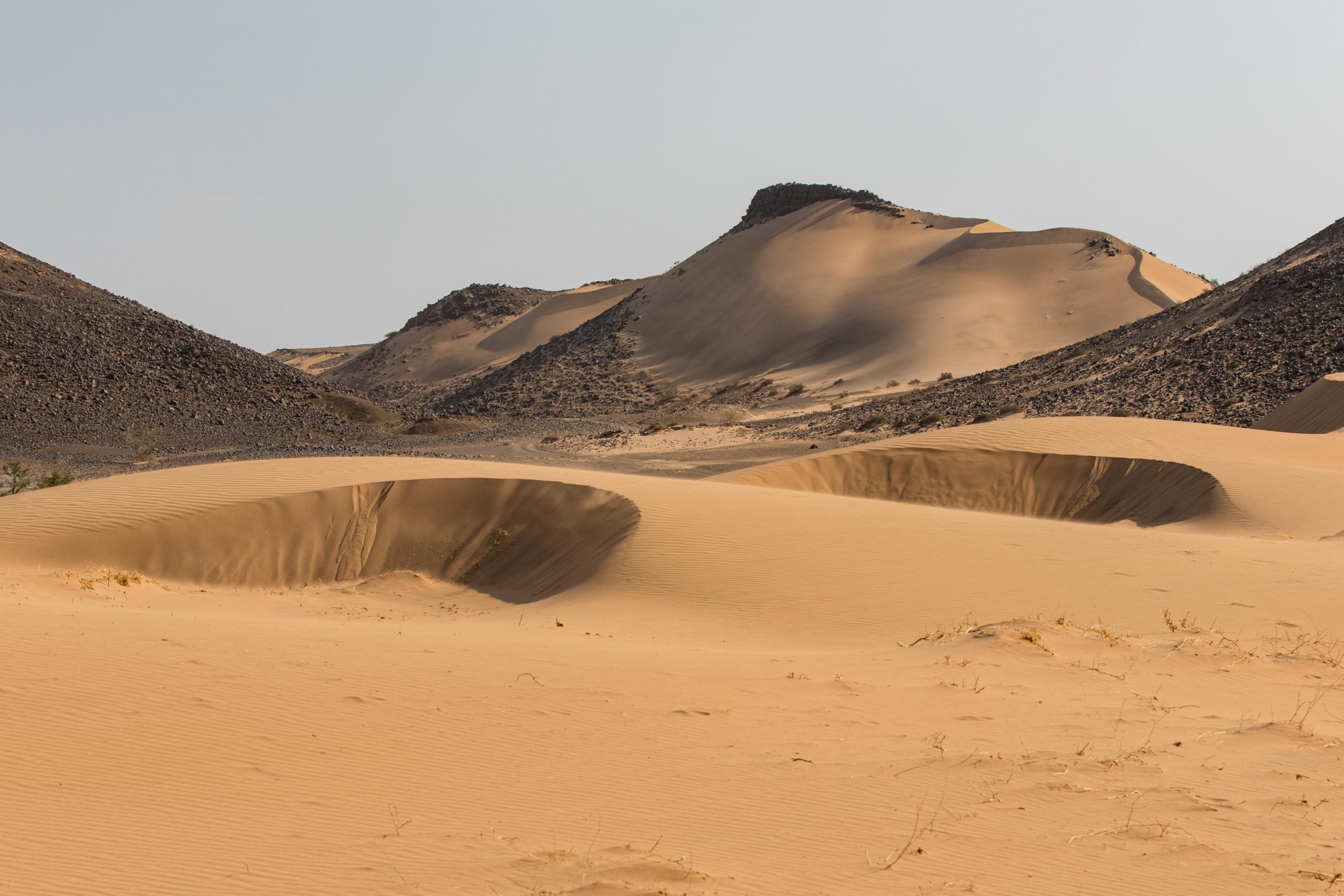
Much of northwestern Namibia is defined by ephemeral rivers — dry river systems that flow only after seasonal rains. For most of the year these rivers appear as wide sandy valleys winding through desert mountains and gravel plains.
Although they may seem empty, these riverbeds form vital ecological corridors across the arid landscape. Beneath the surface, moisture remains trapped in the sand, allowing vegetation such as ana trees and acacias to grow where the surrounding terrain is otherwise barren.
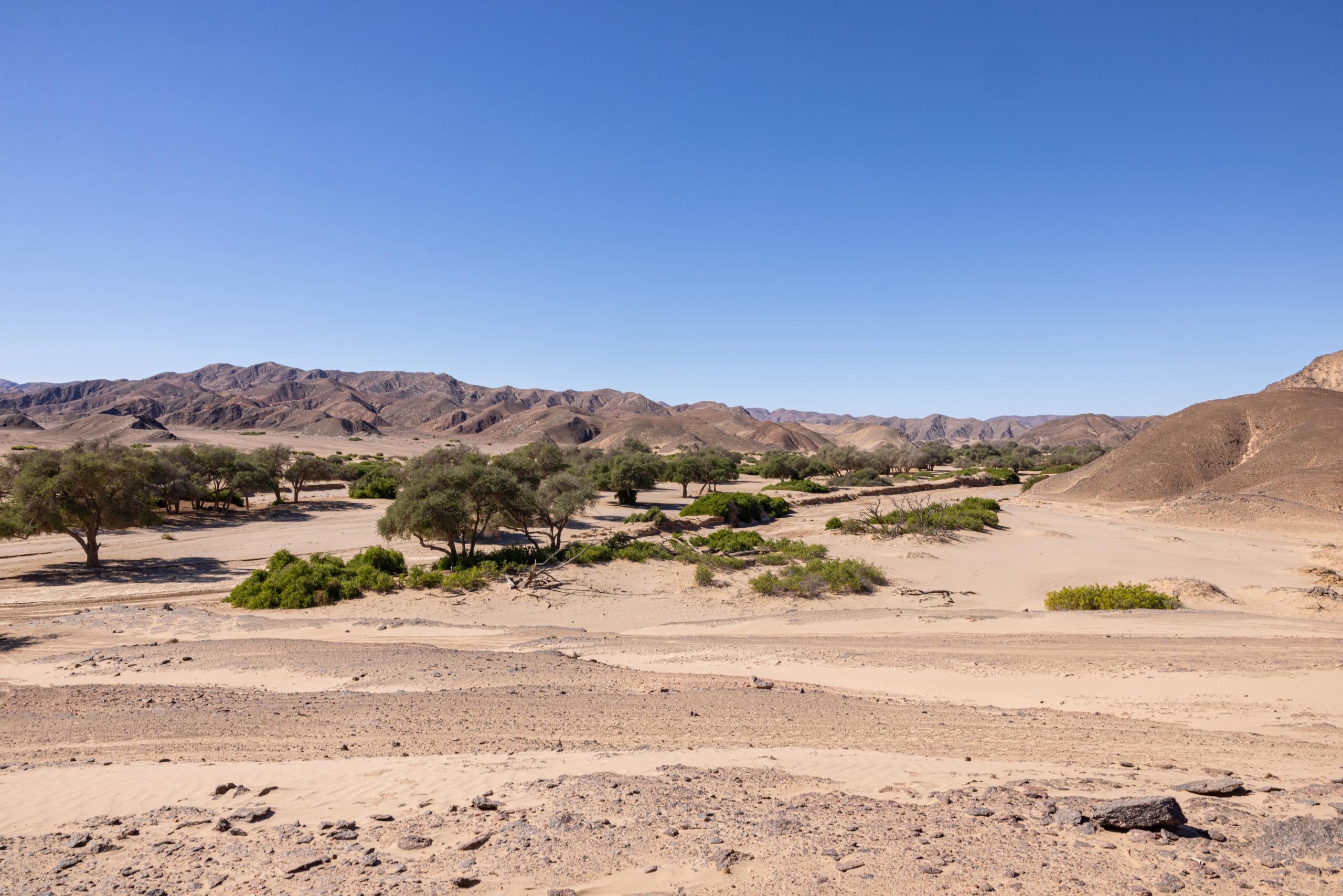
Dry river valleys shape much of the desert landscape in northwestern Namibia
Wildlife follows these corridors through the desert. Elephants move along the riverbeds in search of water and food, antelope gather where vegetation is most abundant, and predators track their movements across the open terrain.
For those exploring Damaraland and Kaokoland, these dry rivers become natural routes through the landscape — places where wildlife, vegetation and geology intersect in the vast deserts of northwestern Namibia.
The wide riverbed of the Aba Huab winds through the desert landscapes of Damaraland
Where Are Damaraland and Kaokoland?
Damaraland and Kaokoland are located in the Kunene Region of northwestern Namibia, forming one of the most remote landscapes in southern Africa. These vast desert regions stretch from the Skeleton Coast in the west to the interior highlands of northern Namibia and the border with Angola, covering immense areas of desert mountains, gravel plains and dry river valleys.
Among these valleys are some of Namibia’s most famous ephemeral rivers, including the Aba Huab, Hoanib and Hoarusib. For most of the year these rivers appear as broad sandy corridors through the desert, yet they form vital lifelines for wildlife moving across the arid landscapes.
Today, Damaraland and Kaokoland remain among the least populated regions in southern Africa. Wildlife still follows ancient migration routes through the dry river systems, while traditional pastoral communities such as the Himba continue to live across these vast open landscapes.
Damaraland and Kaokoland Landscapes
The remote northwestern corner of Namibia is often described using two names: Damaraland and Kaokoland.
Damaraland refers broadly to the rugged region between the Skeleton Coast and Etosha National Park. It is characterized by rocky mountains, open plains and scattered river systems such as the Aba Huab and Huab rivers. The area is known for its desert-adapted elephants and ancient cultural sites like Twyfelfontein.
Further north lies Kaokoland, one of the most isolated areas in southern Africa. The terrain becomes wilder and more remote, with dramatic valleys such as the Hoanib and Hoarusib rivers cutting through vast desert landscapes toward the Atlantic Ocean.
Desert-adapted elephants following the a dry riverbed in search for water
Both regions are part of Namibia’s Kunene Region, named after the Kunene River that forms the border with Angola. Yet the names Damaraland and Kaokoland remain widely used to describe the landscapes and travel routes of northwestern Namibia.
Together they form one of the most remarkable wilderness areas in Africa.
The Aba Huab River
The Aba Huab River is one of the most accessible dry river systems in Damaraland and offers a striking introduction to the region’s desert landscapes.
During most of the year the riverbed appears as a wide corridor of pale sand cutting through rocky hills and gravel plains. Tall ana trees grow along the banks, their deep roots reaching underground moisture hidden beneath the sand.
Driving through the Aba Huab riverbed reveals how wildlife adapts to the desert environment.
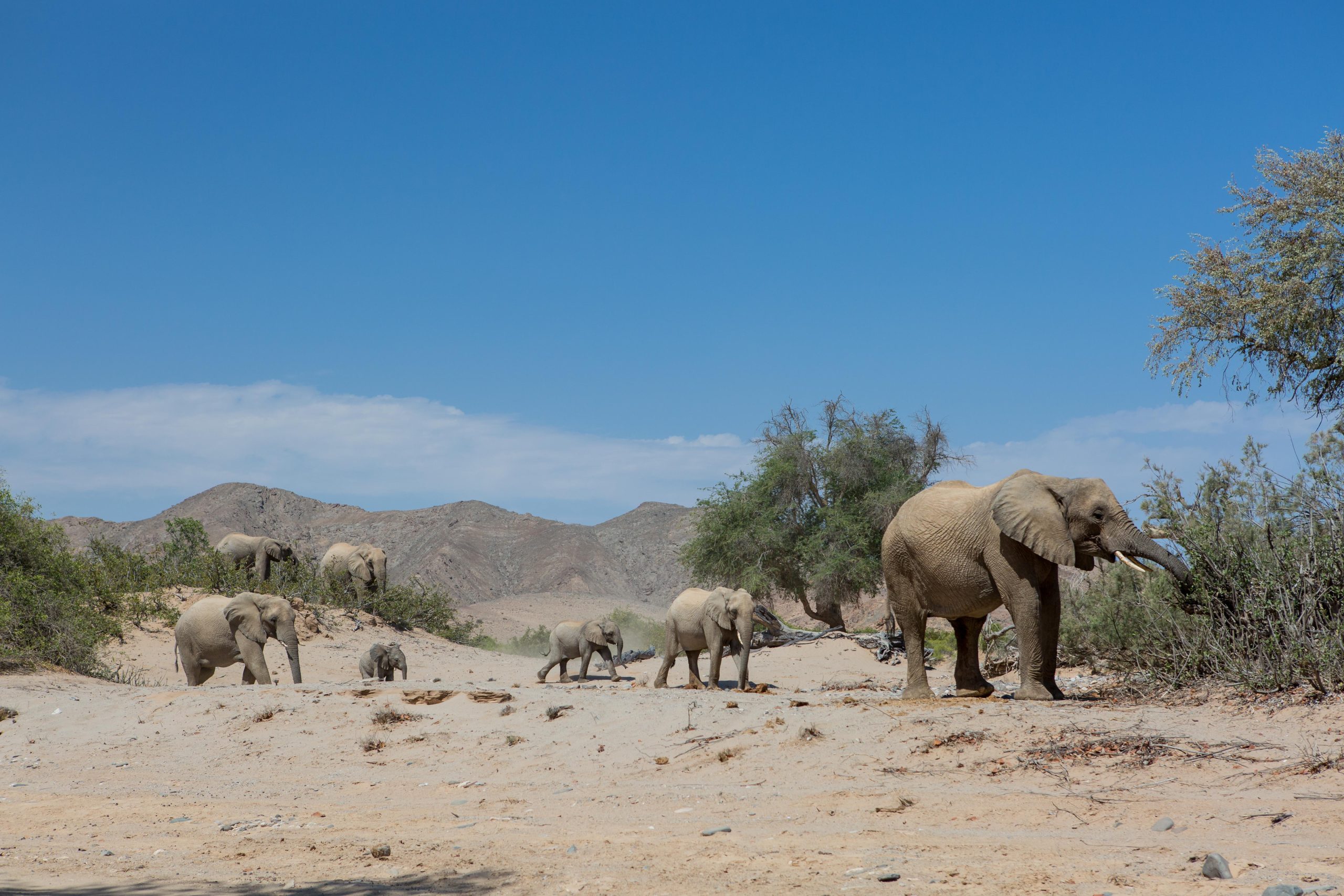
The Aba Huab riverbed winds through the rugged terrain of Damaraland, forming an important wildlife corridor
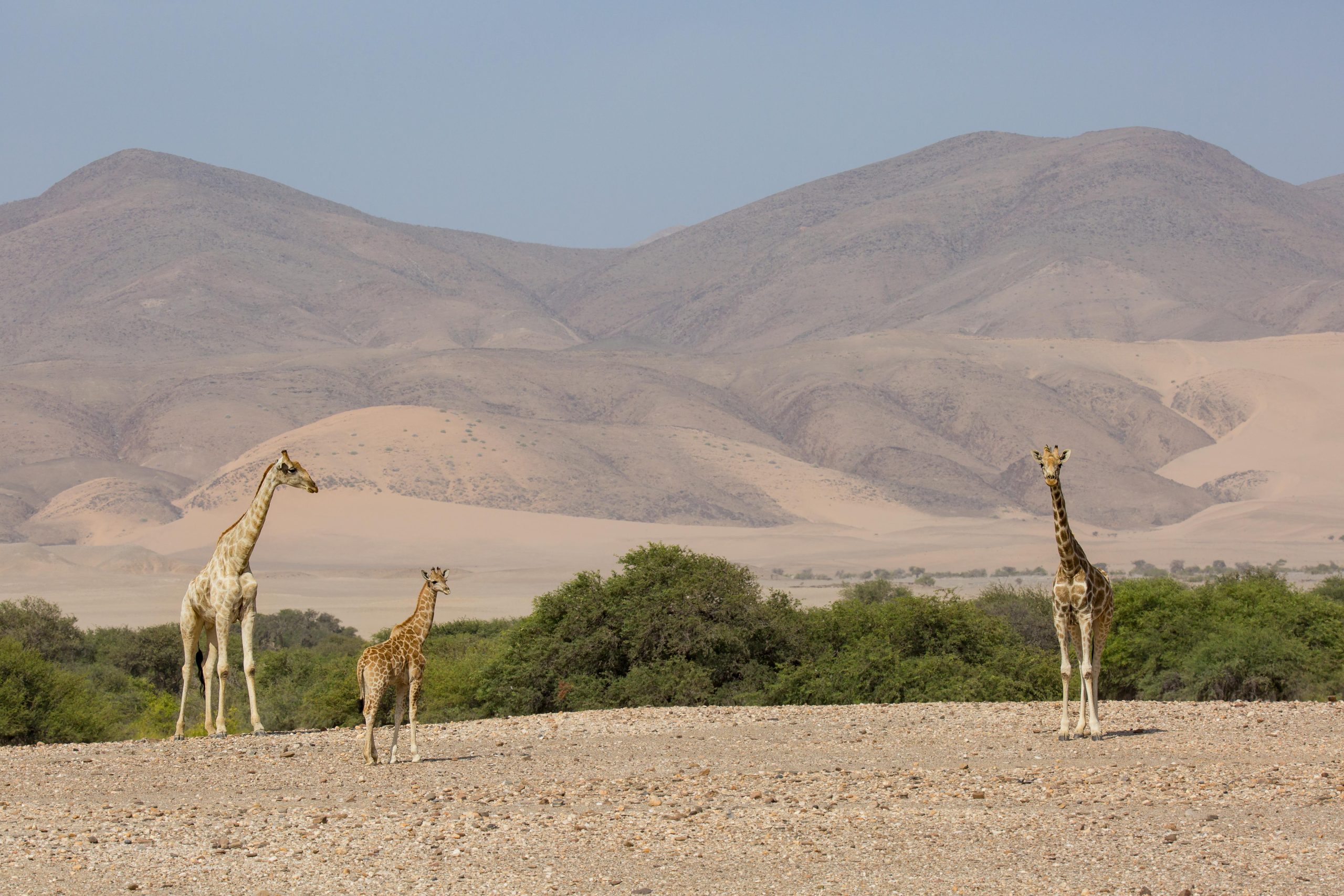
Desert-adapted elephants are frequently encountered moving slowly through the sandy valleys, feeding on tree bark and vegetation along the riverbanks. Giraffes and antelope occasionally appear among the scattered trees, while tracks in the sand reveal the presence of predators that move through the valley at night.
Further north, beyond areas such as De Riet, the landscape becomes increasingly remote. The riverbed winds through wide desert plains framed by distant mountains, creating scenes that feel both empty and alive at the same time.
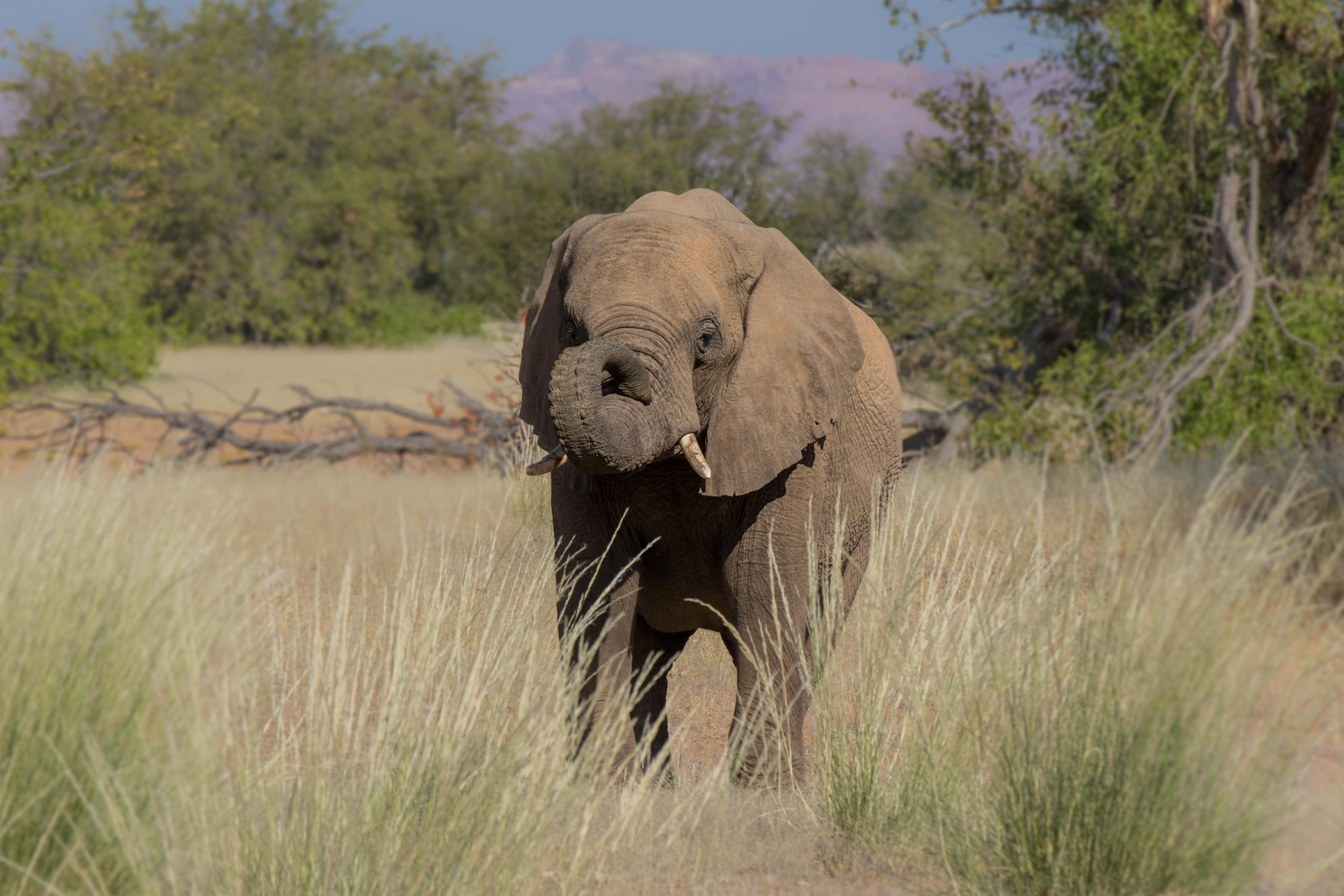
A desert-adapted elephant grazes on fresh green grass near a water source in the Aba Huab riverbed near De Riet, Damaraland
For photographers, the Aba Huab offers dramatic compositions: elephants moving between trees, animals silhouetted against open desert horizons, and the textures of sand and stone defining the landscape.
The Hoanib River and Amspoort
Among Namibia’s desert rivers, the Hoanib River is perhaps the most famous.
Originating in the mountains of Kaokoland, the river winds westward toward the Atlantic Ocean, carving a vast valley through the desert. For most of the year the Hoanib appears dry, but its sandy channels support remarkable biodiversity.
Tall ana trees line parts of the riverbed, creating green corridors across an otherwise barren landscape. Wildlife follows these routes as they move through the desert.
The Hoanib River valley cuts through the rugged desert landscapes of Kaokoland
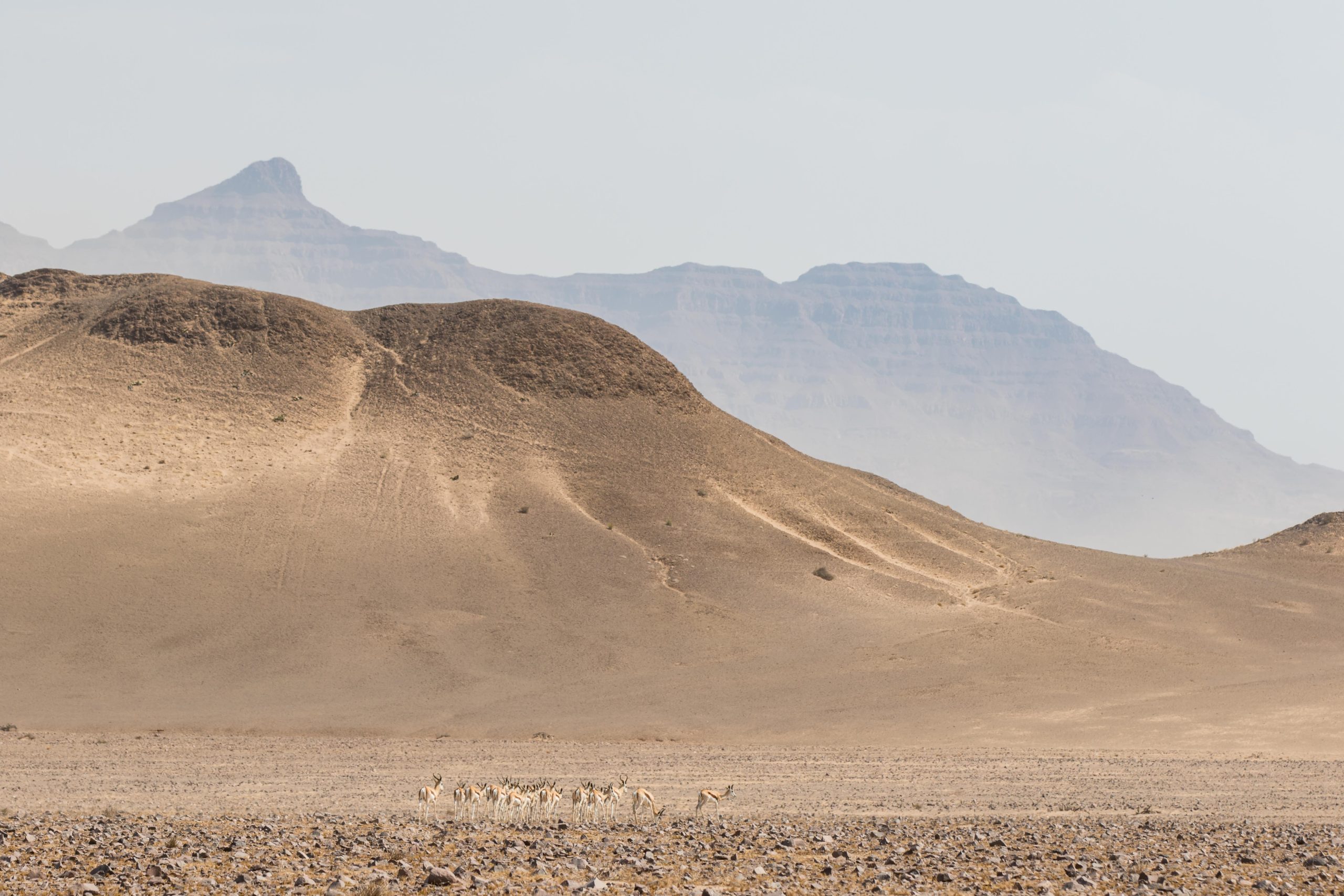
Desert-adapted elephants are regularly seen traveling through the Hoanib valley, digging into the sand to access hidden water sources. Giraffes, springbok and oryx graze in the surrounding plains, while predators such as lions and hyenas patrol the wider region.
Desert-adapted elephants follow the dry riverbeds of Kaokoland in search of water and vegetation
Near Amspoort, the Hoanib riverbed cuts dramatically between rugged mountains. The surrounding terrain becomes increasingly spectacular, with steep rocky slopes and wide sandy plains opening toward the Skeleton Coast.
In these remote valleys, the scale of Namibia’s desert landscapes becomes fully apparent.
Puros and the Hoarusib Valley
Far to the north, near the small settlement of Puros, the Hoarusib River flows through one of the most remote parts of Namibia.
The Hoarusib valley is a classic Kaokoland landscape: towering mountains, vast sandy riverbeds and scattered Himba settlements spread across an immense and sparsely populated region.
Wildlife here has adapted to the harsh desert conditions in remarkable ways.
Desert-adapted elephants move along the Hoarusib riverbed, traveling long distances between water sources. Even more famously, the region has been home to small populations of desert-adapted lions, which have learned to survive in one of the driest environments on the continent.
The Hoarusib valley near Puros is one of the most remote landscapes in Kaokoland
Encounters with wildlife in these landscapes feel different from those in more traditional safari destinations. Animals appear as part of the landscape rather than as isolated subjects, moving slowly across immense desert horizons.
For photographers, Puros and the Hoarusib valley offer some of the most dramatic desert scenery in southern Africa.
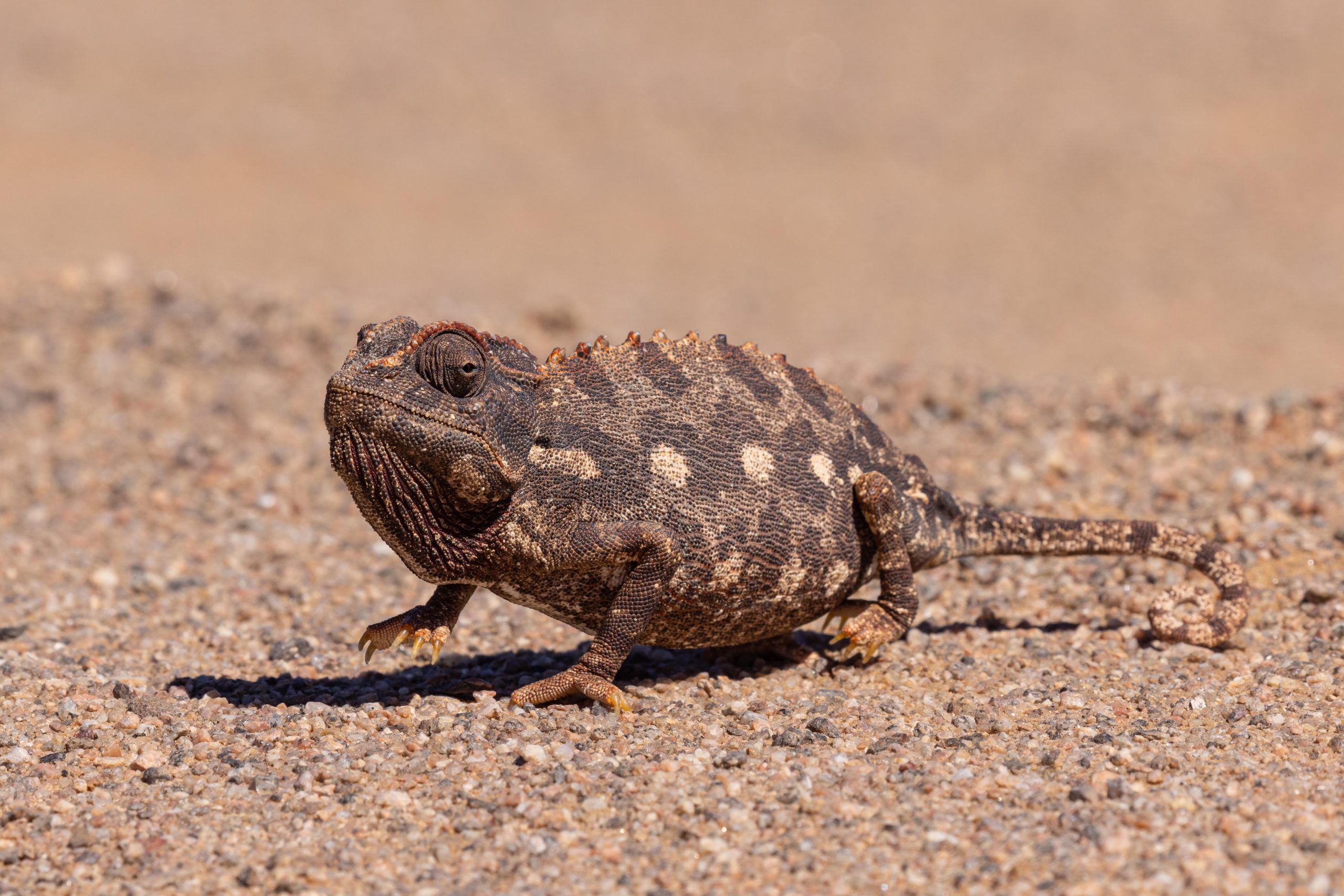
A chameleon in Puros' desert landscape in remote Kaokoland
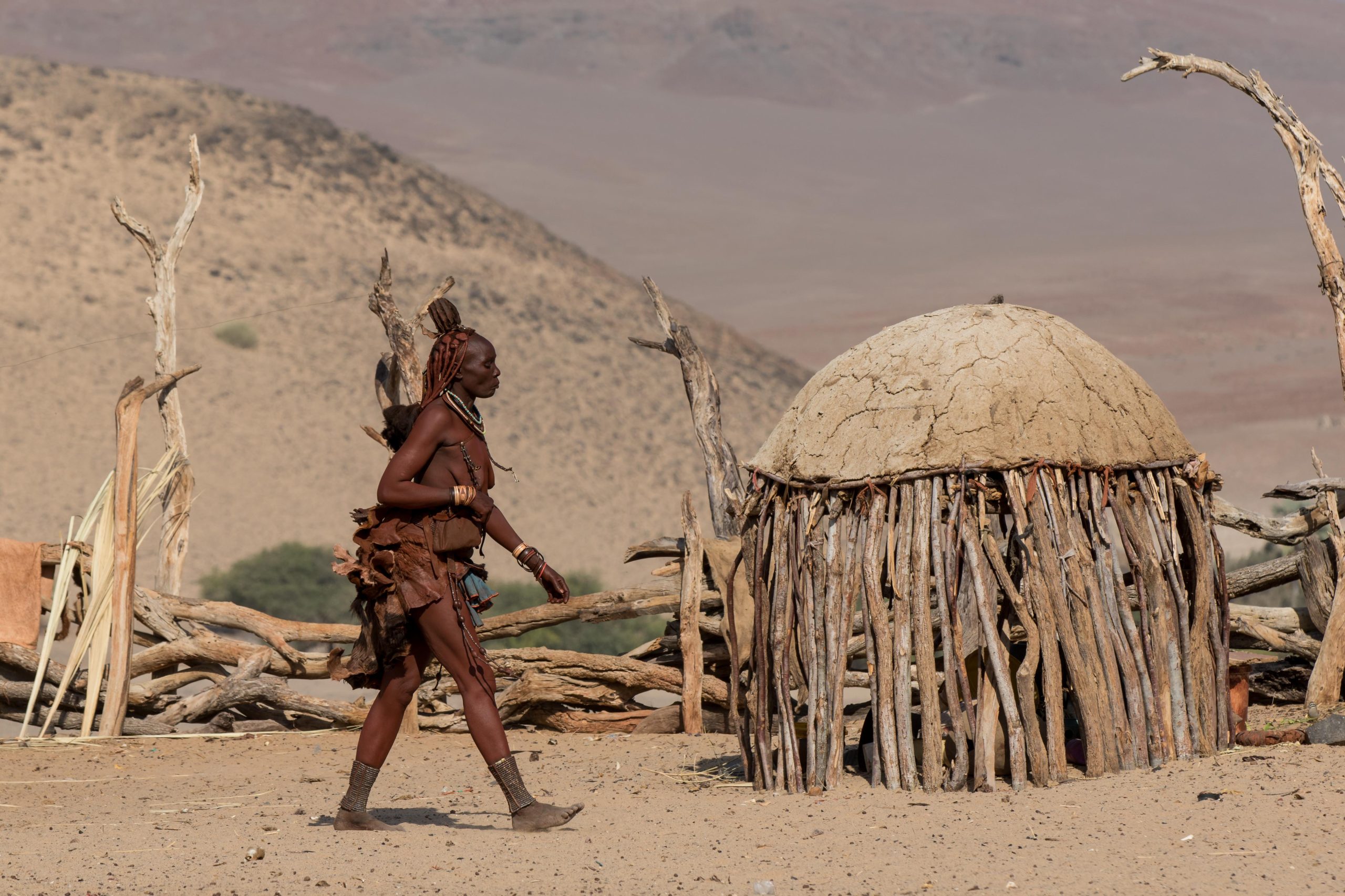
Beyond its dramatic landscapes and wildlife, the region around Puros is also home to Himba pastoral communities who have lived in the remote valleys of Kaokoland for generations. Small Himba settlements are scattered across the Hoarusib valley and surrounding mountains, where families herd goats and cattle across the arid terrain.
The Himba are known for their distinctive cultural traditions, including the use of otjize, a mixture of butterfat and red ochre applied to the skin and hair for protection against the desert climate. Despite the harsh conditions of the region, these pastoral communities continue to maintain a close relationship with the land and seasonal grazing routes.
Himba families maintain traditional lifestyles in the vast landscapes of Namibia’s Kunene Region
Encounters with Himba communities in this remote part of Namibia offer a glimpse into a way of life shaped by both desert landscapes and long-standing cultural traditions.
One of the most fascinating aspects of northwestern Namibia is the presence of desert-adapted wildlife.
Unlike typical savanna elephants, the elephants of Damaraland and Kaokoland have adapted to survive in extremely arid conditions. They travel long distances between food and water sources, often moving along dry riverbeds where vegetation is more abundant.
These elephants are not a separate species but rather a population that has developed behavioral adaptations suited to the desert environment.
They tend to move in smaller family groups and cover vast territories in search of food.
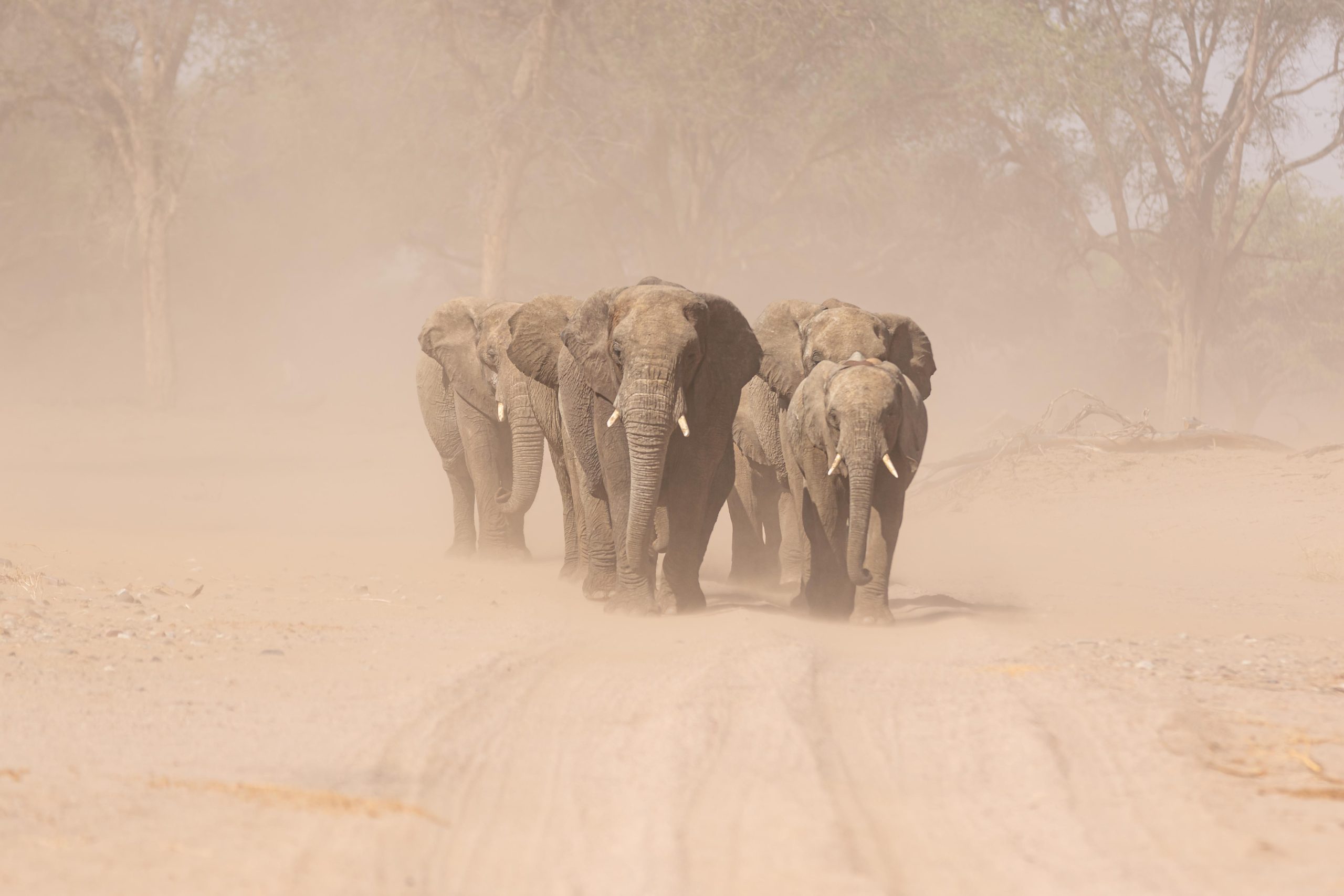
Desert-adapted elephants brace against a sandstorm while moving along a dry riverbed in Kaokoland
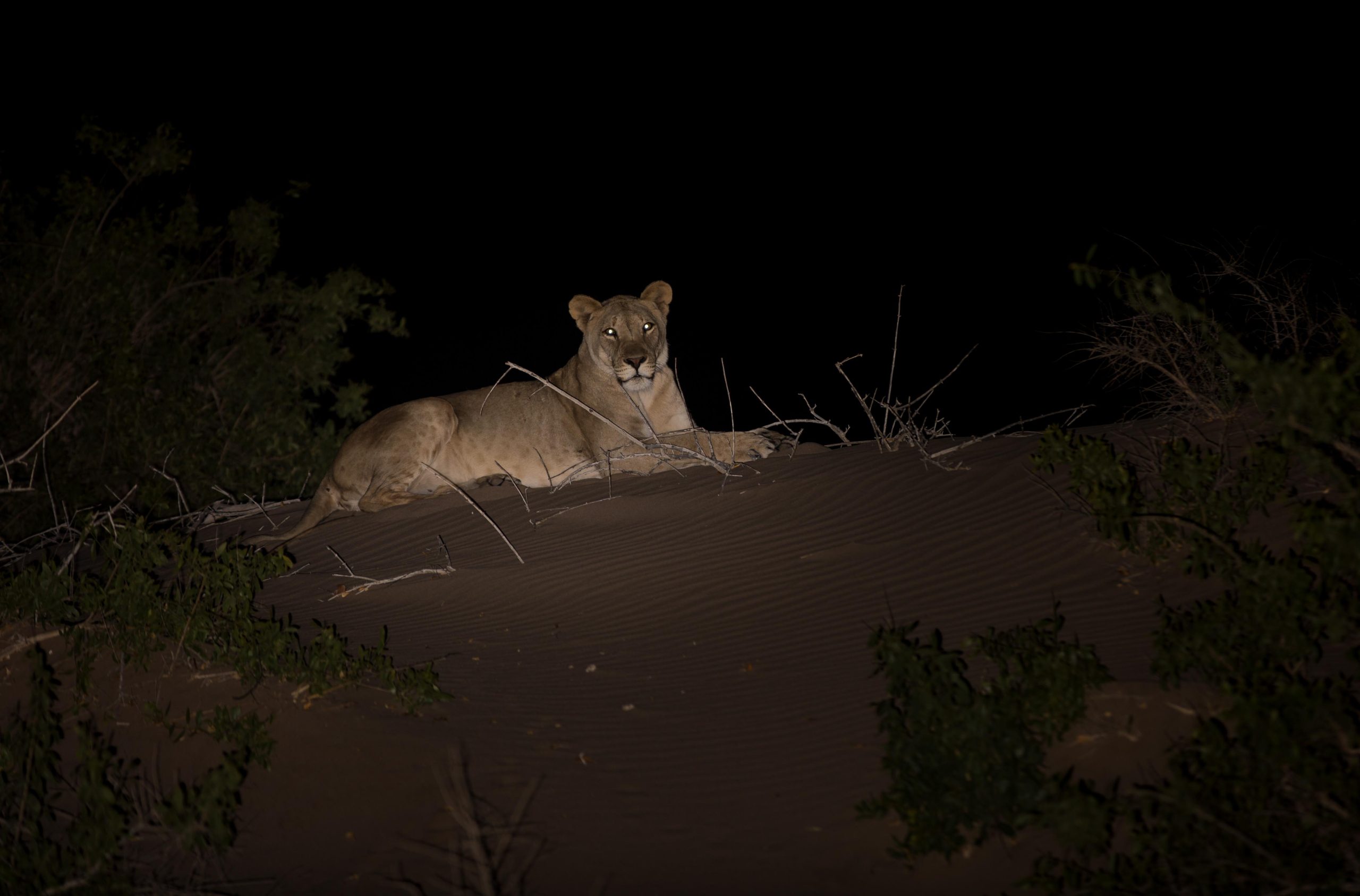
Even more extraordinary are the desert-adapted lions of the region. These lions roam the remote valleys of Kaokoland, hunting antelope, seals along the Skeleton Coast, and occasionally livestock near remote settlements.
Their survival in such harsh conditions is a testament to the resilience of wildlife in Namibia’s desert ecosystems.
A desert-adapted lion photographed in the Hoarusib valley near Puros
Related Destinations in Namibia
Several other regions explored on this site reveal different aspects of Namibia’s landscapes and cultures.
Etosha National Park Wildlife gathers around waterholes across vast salt pan landscapes in one of Africa’s great safari destinations.
The Himba Tribe of Namibia A pastoral culture living in the remote Kunene Region, known for their distinctive traditions and deep connection to the land.
The Zambezi Region (Caprivi Strip) A lush corridor of rivers and wetlands in northeastern Namibia where wildlife and birdlife gather along the Zambezi, Kwando and Chobe rivers.
Wildlife Photography in Kaokoland and Damaraland
For wildlife photographers, the river valleys of northwestern Namibia offer a very different experience from traditional safari destinations.
The landscapes are vast and open, and wildlife encounters often unfold slowly across immense distances.
Rather than dense vegetation, the environment is defined by sand, rock and sky. Animals appear as part of the landscape, often framed by dry riverbeds, scattered trees and distant mountain ranges.
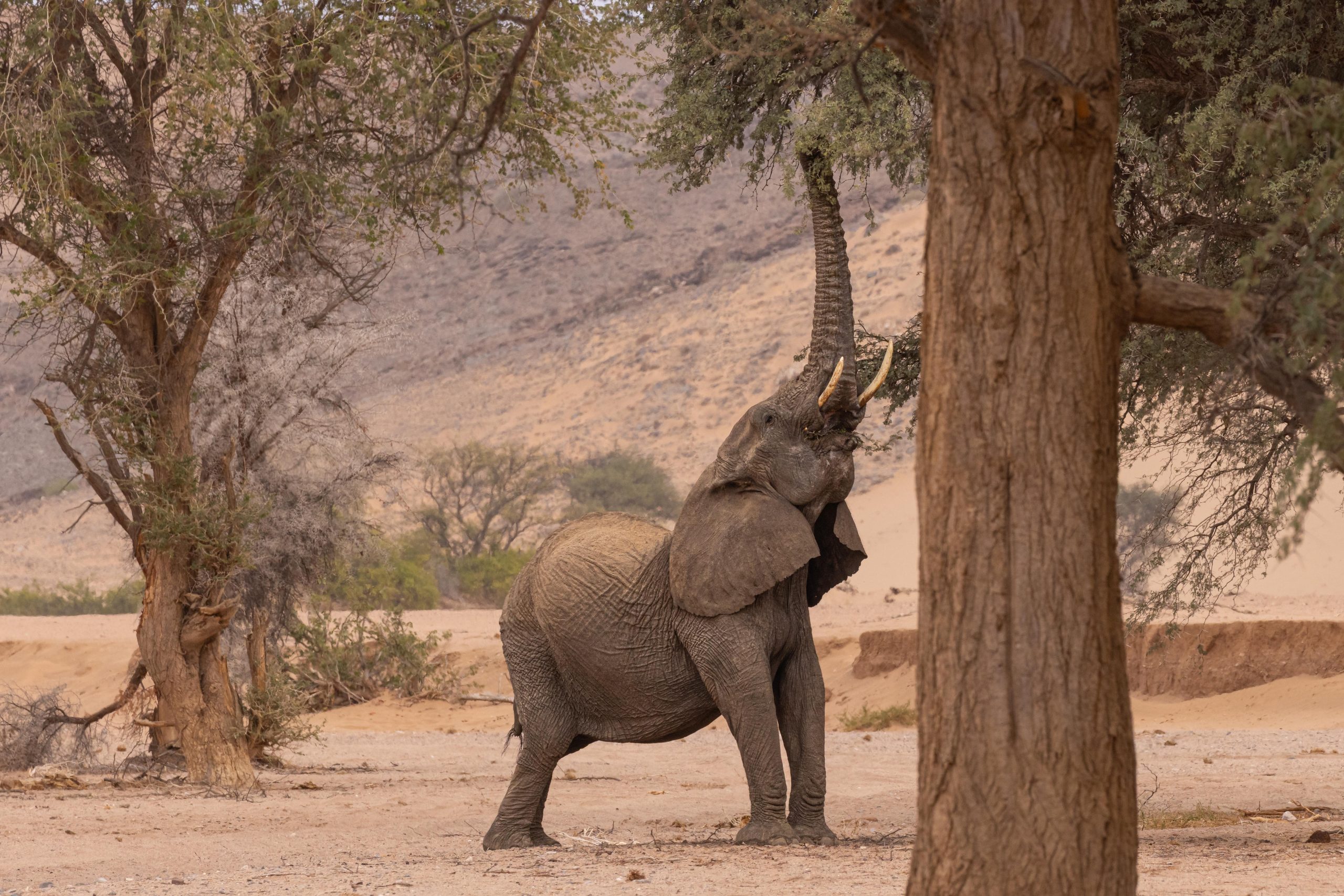
A desert elephant feeds on pods high in a thorn tree along a dry riverbed in northwestern Namibia
Photographing wildlife here requires patience and observation.
Long telephoto lenses are useful for isolating animals across wide plains, while wider focal lengths allow photographers to capture wildlife within the broader desert environment.
Light also plays an important role. Early morning and late afternoon often produce dramatic shadows and warm tones across the sandy riverbeds and rocky hills.
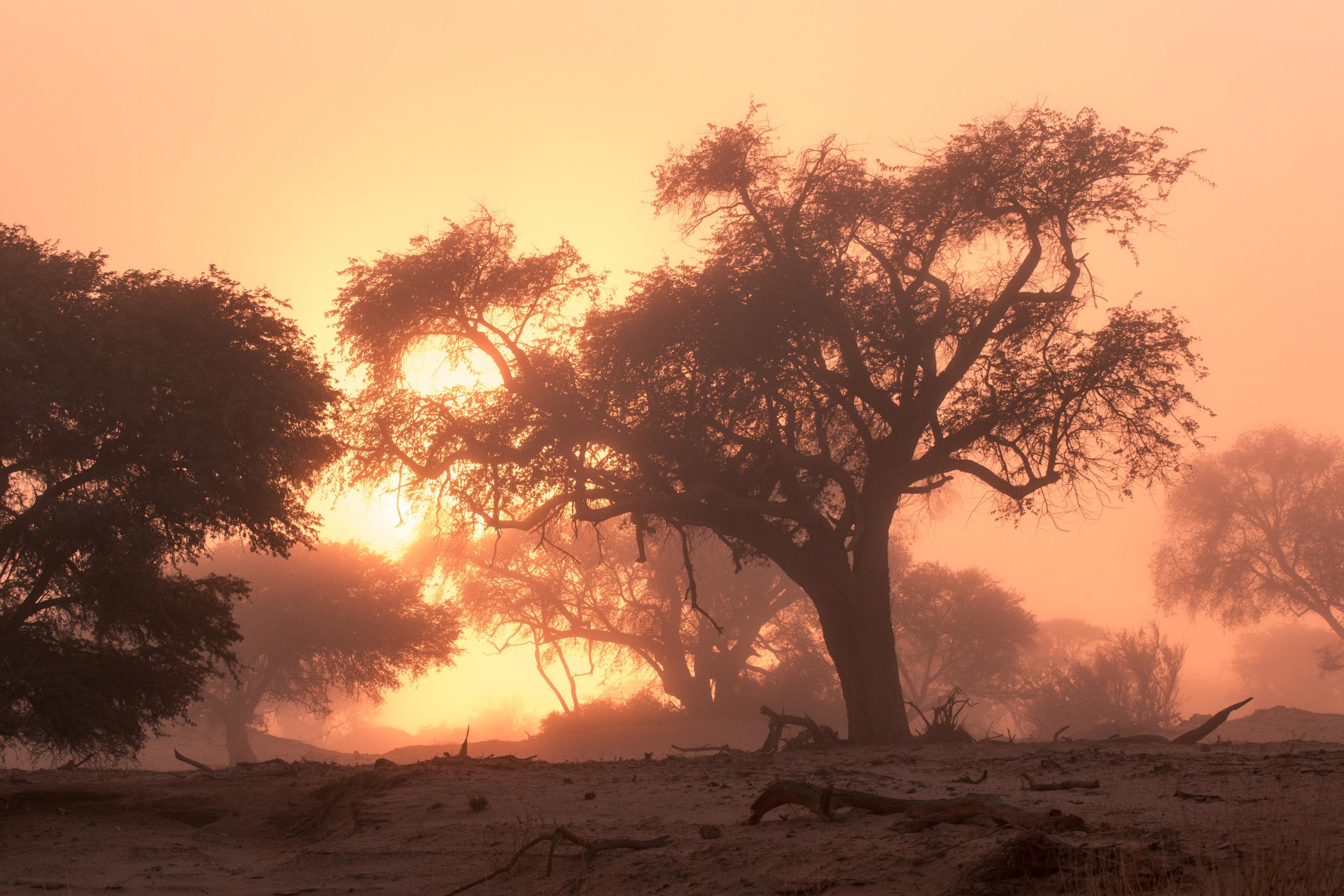
Sunrise light over the rugged desert landscapes of Kaokoland
Dust, dry air and immense horizons create images that feel raw and elemental — reflecting the harsh beauty of Namibia’s desert wilderness.
Stories from Damaraland and Kaokoland
Over several journeys through Namibia, I have explored many of the dry river systems of Damaraland and Kaokoland.
Each visit revealed different aspects of these landscapes — from encounters with desert elephants in the Aba Huab riverbed to the dramatic scenery of the Hoanib valley and the remote settlements around Puros.
The following stories document these journeys through some of Namibia’s most remote regions.
Photo Galleries from Kaokoland and Damaraland
The desert landscapes of northwestern Namibia offer extraordinary photographic opportunities.
From vast sandy riverbeds and rugged mountain ranges to intimate encounters with desert-adapted wildlife, the region presents a visual narrative shaped by geology, climate and survival.
The galleries below explore these landscapes through photography.