Wildlife, salt pans and waterholes in one of Africa’s great safari landscapes
Etosha National Park is one of the most remarkable wildlife destinations in northern Namibia and among the most distinctive national parks in Africa. The park is best known for its vast salt pan, dramatic dry landscapes and exceptional wildlife viewing around natural and man-made waterholes.
Unlike many African parks dominated by rivers and dense vegetation, Etosha is defined by openness. The immense Etosha Pan stretches across the center of the park like a pale horizon, visible even from space. Around its edges lie grasslands, mopane woodland and scattered waterholes that attract large numbers of animals during the dry season.
This combination of open terrain and concentrated water sources makes Etosha one of the best places in Africa to observe wildlife in relatively accessible conditions. Elephants, lions, giraffes, zebras, springbok and large herds of antelope gather at the waterholes, while black rhino and leopard also inhabit the park.
For photographers and wildlife enthusiasts, Etosha offers a rare mix of dramatic landscapes and intimate animal encounters.
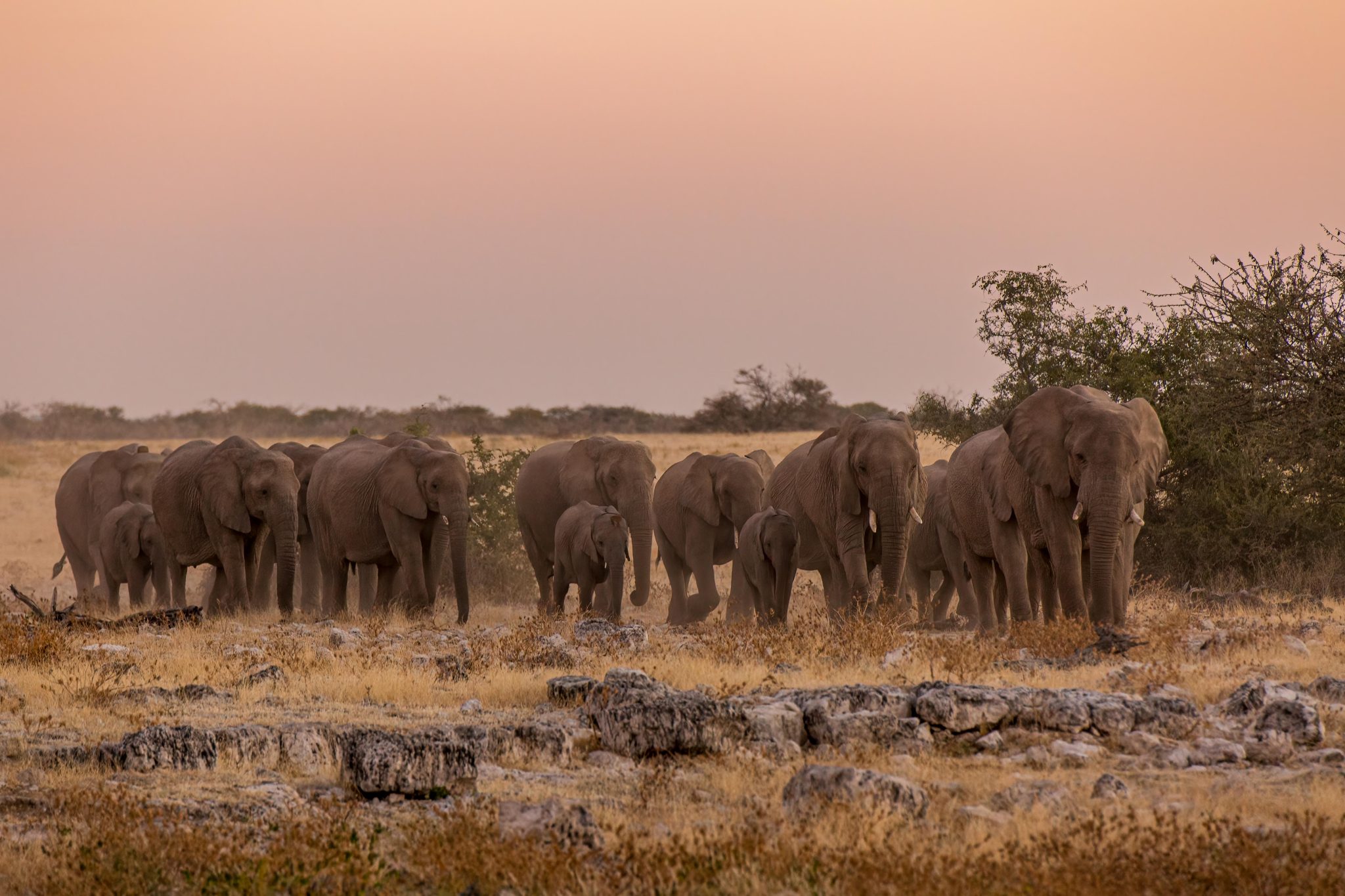
A herd of elephants approaching Etosha's Okaukuejo waterhole at dusk
Etosha National Park in the Landscape of Namibia
Etosha National Park lies in northern Namibia, forming one of the country’s most important wildlife regions. The park sits between the semi-arid savannas of central Namibia and the more tropical landscapes of the Zambezi Region to the northeast.
Together with destinations such as the remote river valleys of Kaokoland, the wetlands of the Zambezi Region (Caprivi Strip) and the cultural landscapes of the Kunene Region, Etosha forms part of a wider network of ecosystems that define northern Namibia.
While Etosha is primarily known for its wildlife and salt pan landscapes, these surrounding regions reveal a different side of the country — remote deserts, river systems and traditional communities such as the Himba people.
The Etosha Salt Pan
At the heart of the park lies the Etosha Pan, a vast expanse of white mineral crust covering more than 4,500 square kilometres. The pan formed millions of years ago when an ancient lake gradually dried out, leaving behind a shimmering salt surface that now dominates the landscape.
For most of the year the pan appears almost lifeless, a flat and blindingly bright horizon stretching into the distance. Yet this emptiness defines the ecosystem around it.
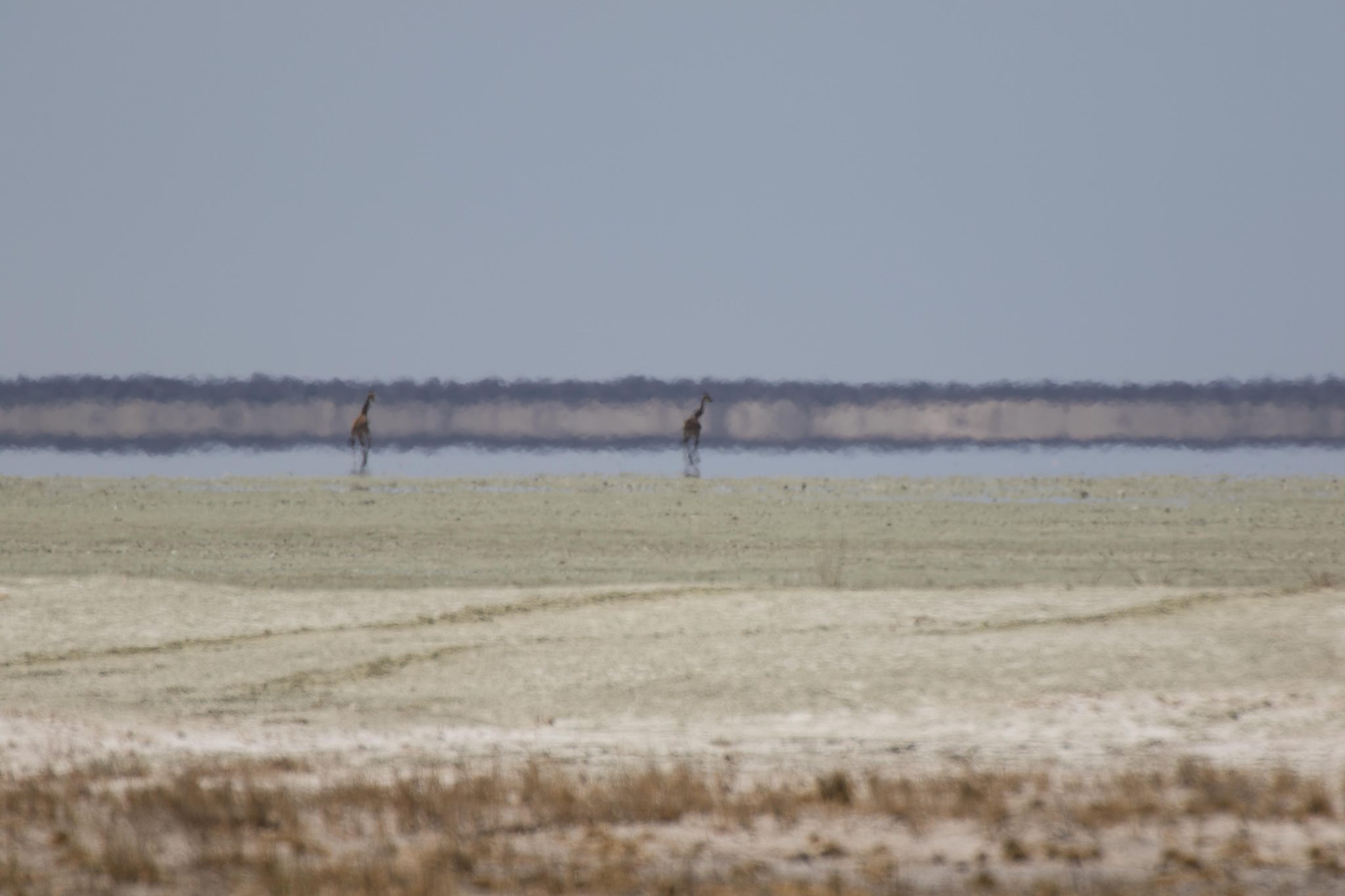
Etosha's large salt pan
Seasonal rains occasionally transform parts of the pan into shallow lagoons that attract flamingos and other waterbirds. During the long dry season, the surrounding grasslands become vital grazing areas for herbivores moving between waterholes.
From many viewpoints in the park, the pan creates a sense of immense scale. The horizon seems endless, broken only by distant animals crossing the pale surface.
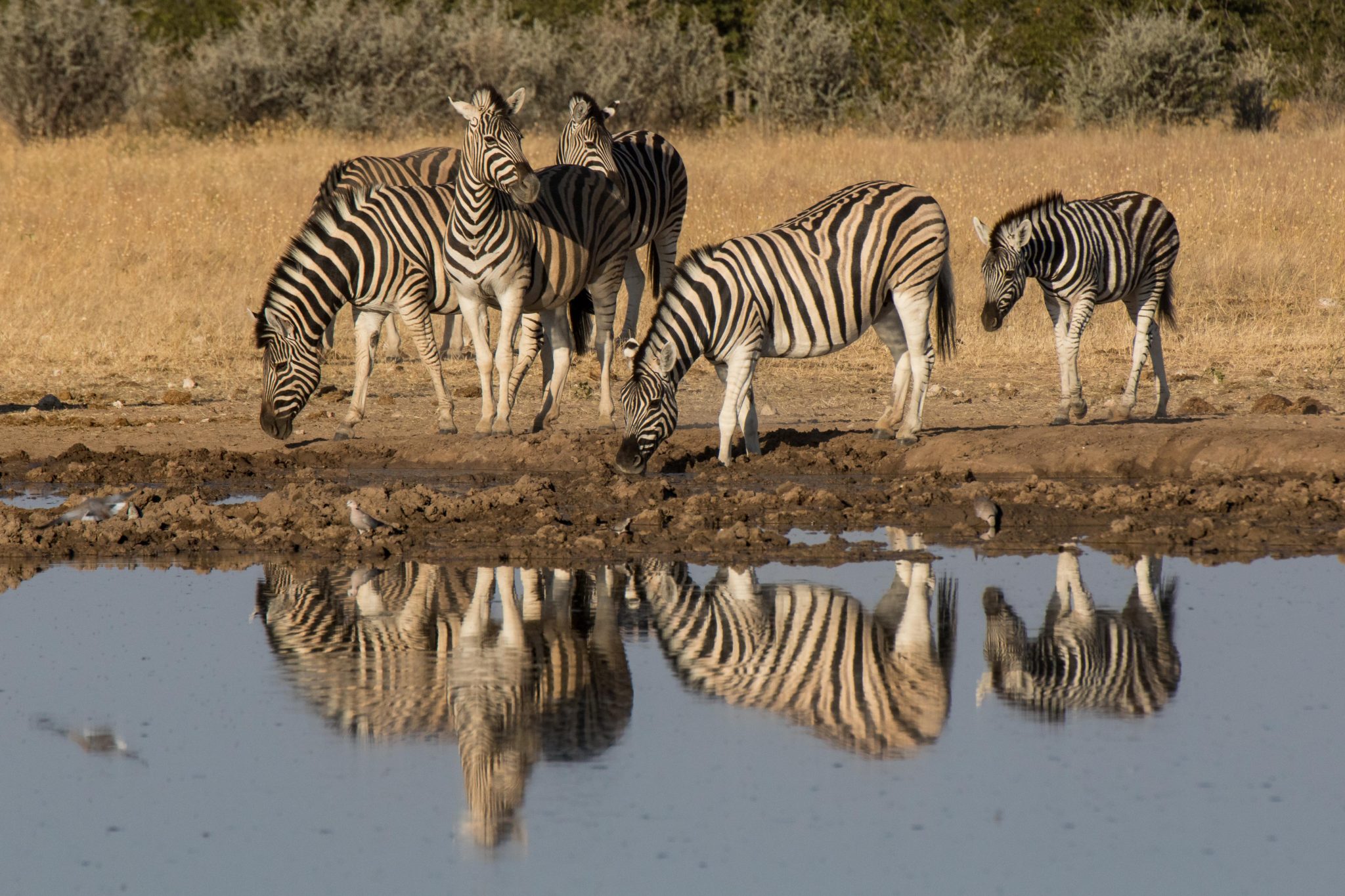
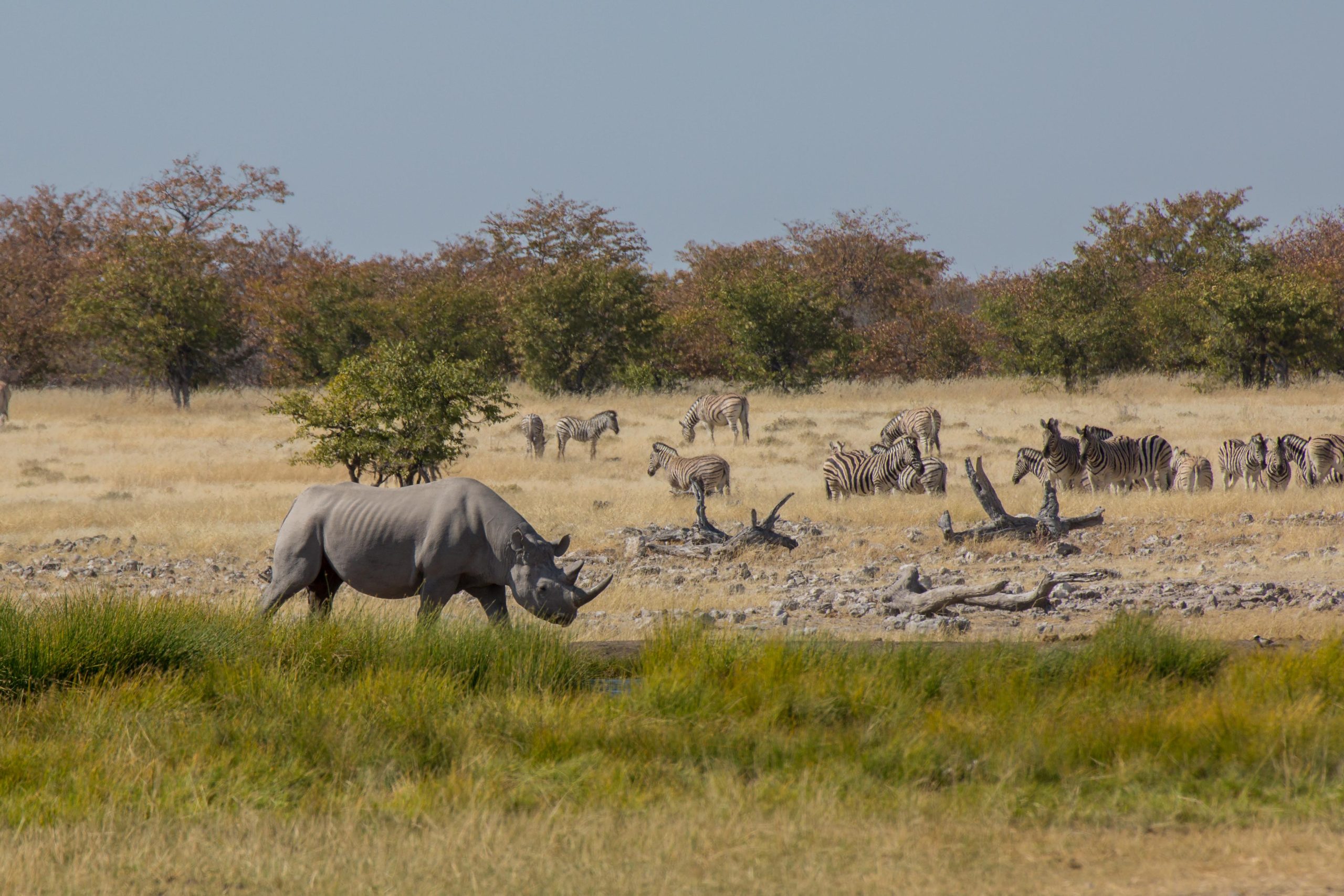
Zebras gathering at a waterhole in Etosha National Park during the dry season
Wildlife of Etosha National Park
Etosha supports an extraordinary diversity of wildlife adapted to semi-arid conditions. Large mammals are particularly visible during the dry months, when animals concentrate around water sources.
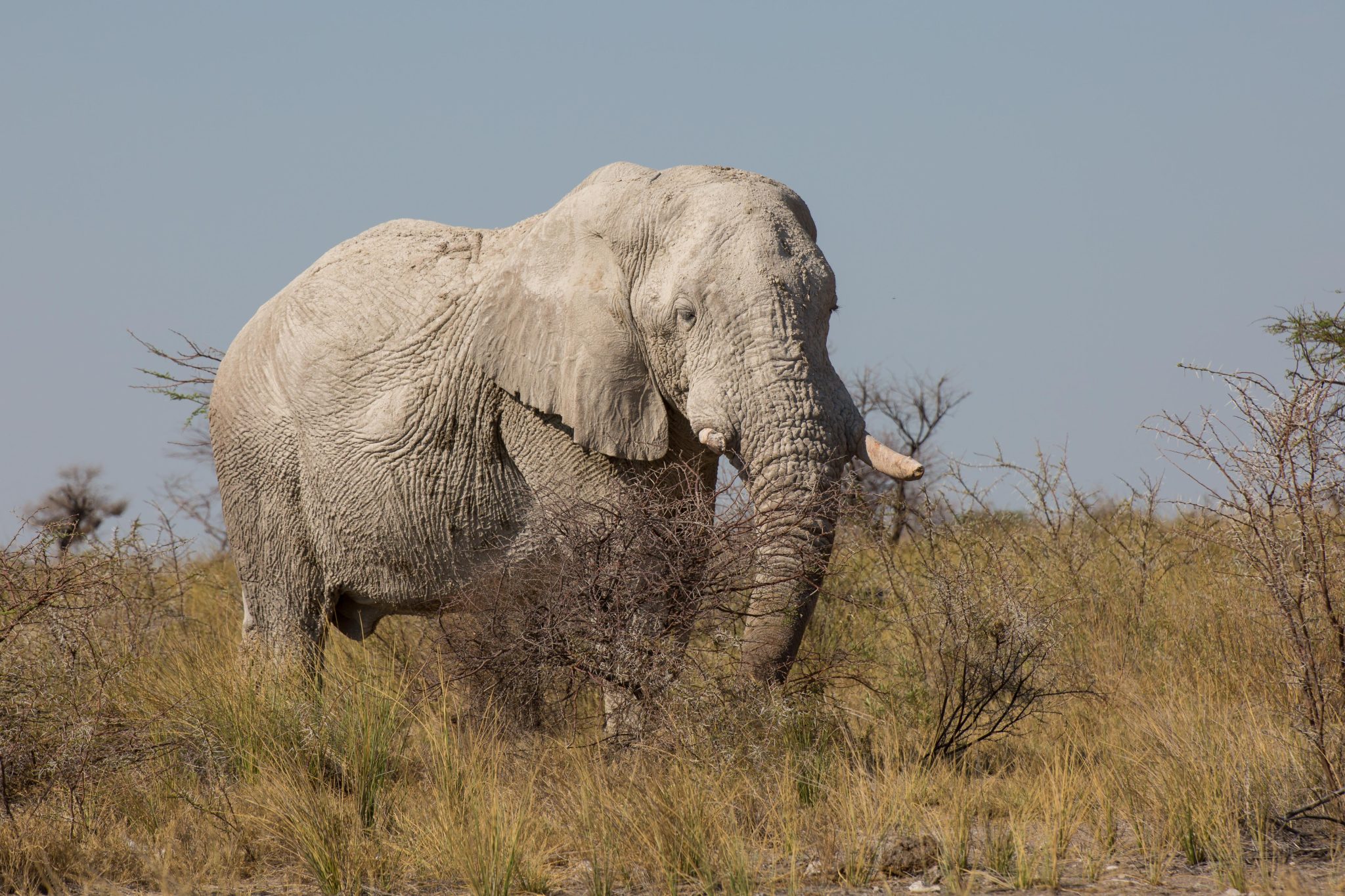
Elephants are among the park’s most iconic inhabitants. Their skin often appears pale grey or almost white, coated in mineral dust from the Etosha salt pan. This ghostlike appearance has earned them the nickname “ghost elephants” of Etosha.
A so-called “ghost elephant” of Etosha, its skin coated in pale mineral dust
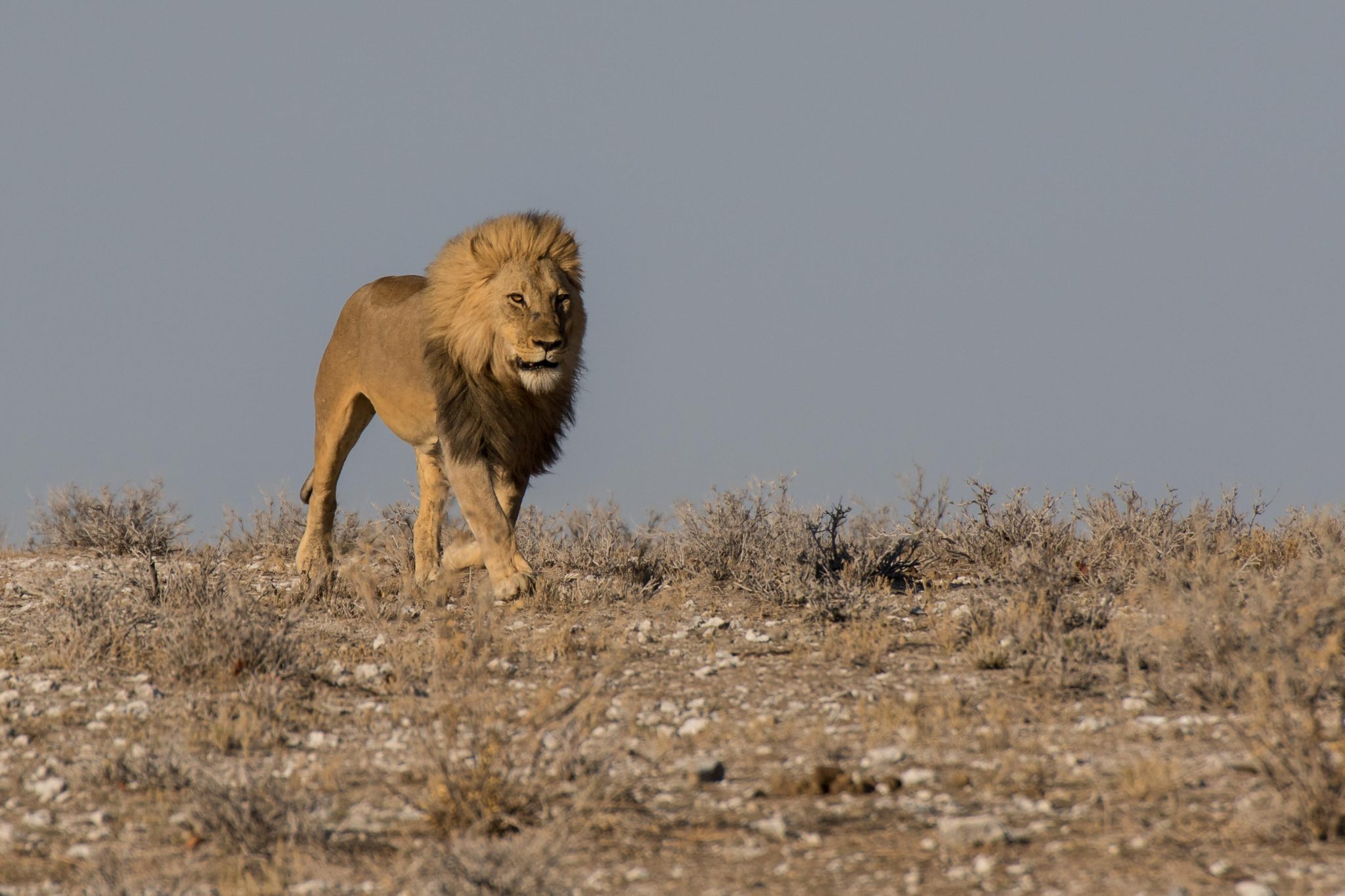
Lions are frequently seen resting in the shade during the heat of the day, becoming more active toward evening when hunting opportunities increase.
A male lion on a hunt during late afternoon
Other commonly observed species include plains zebra, springbok, blue wildebeest, giraffe, kudu, oryx, and spotted hyena.
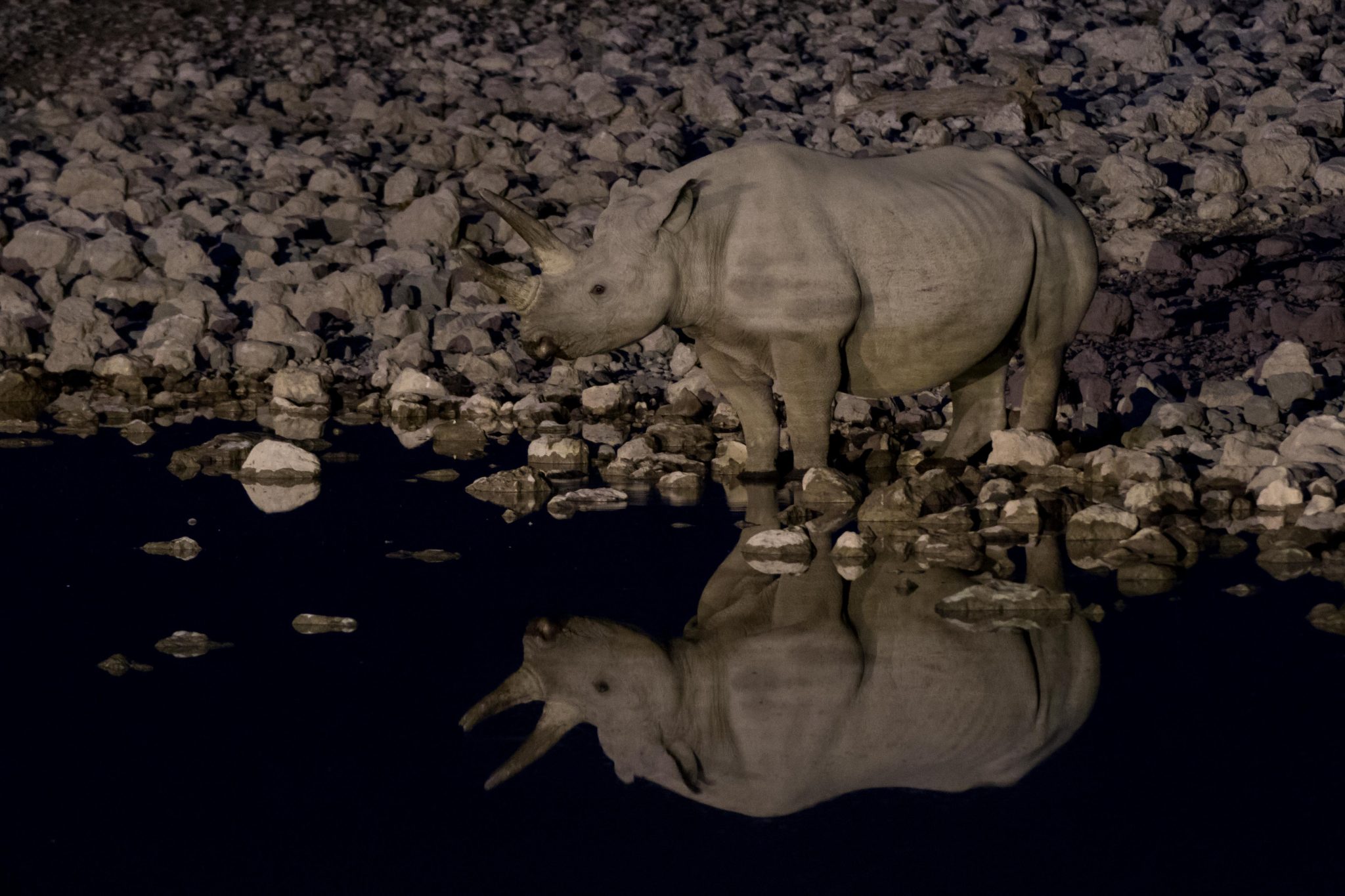
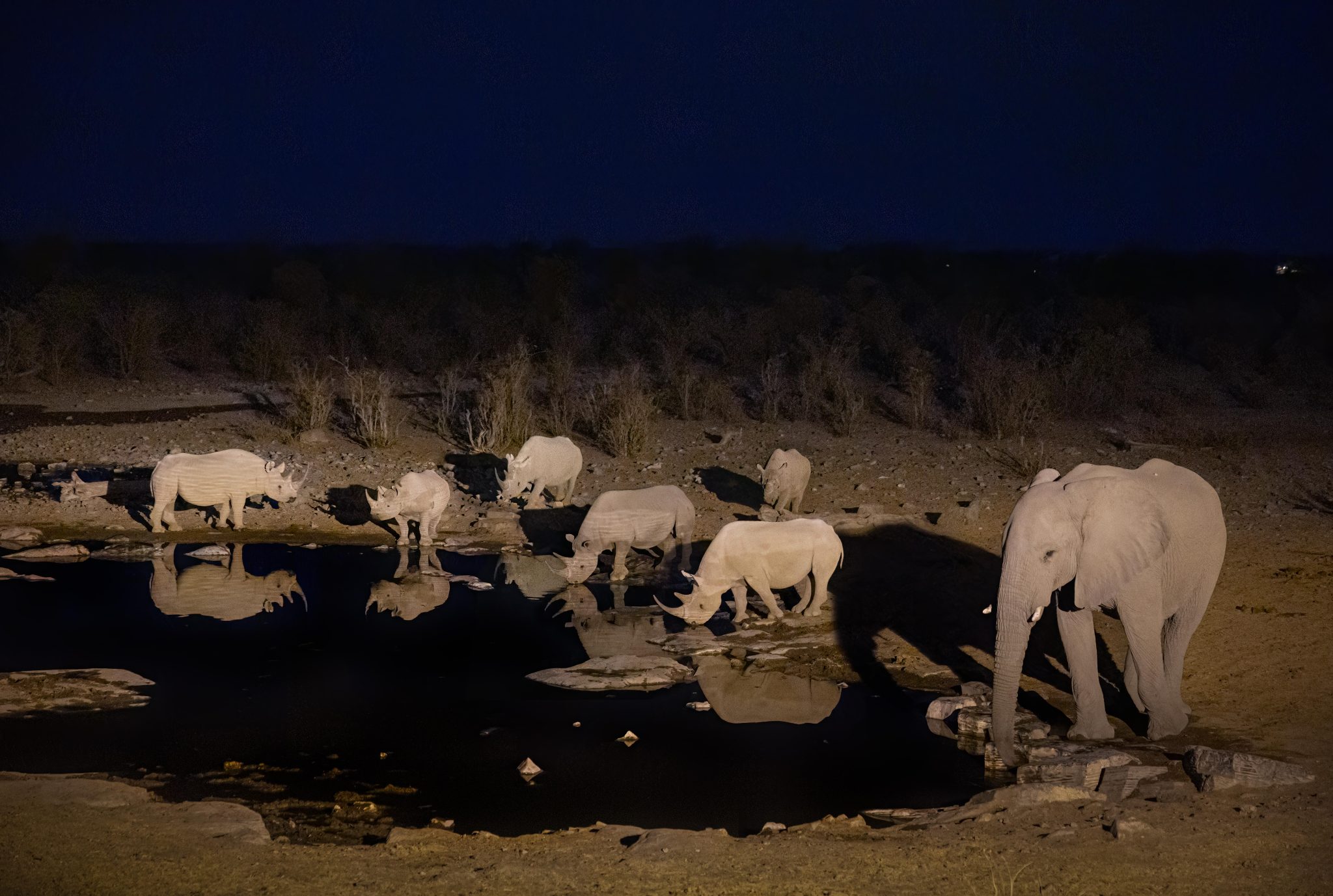
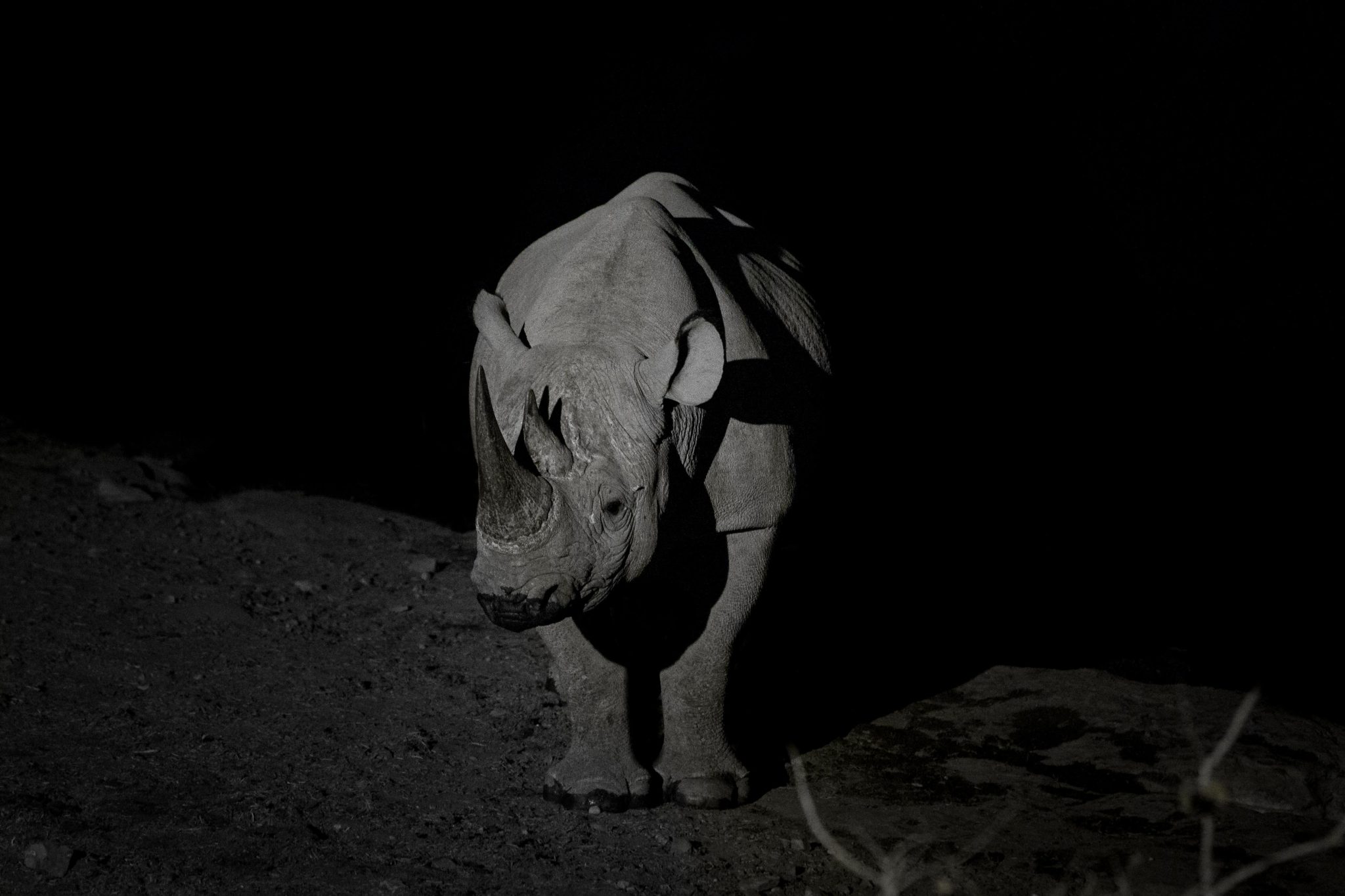
Etosha is also one of the few places in Africa where black rhinoceros can still be observed in the wild, particularly near protected waterholes during the night.
Birdlife varies seasonally. During rainy periods the park attracts large numbers of migratory birds, including flamingos, pelicans and numerous raptors.
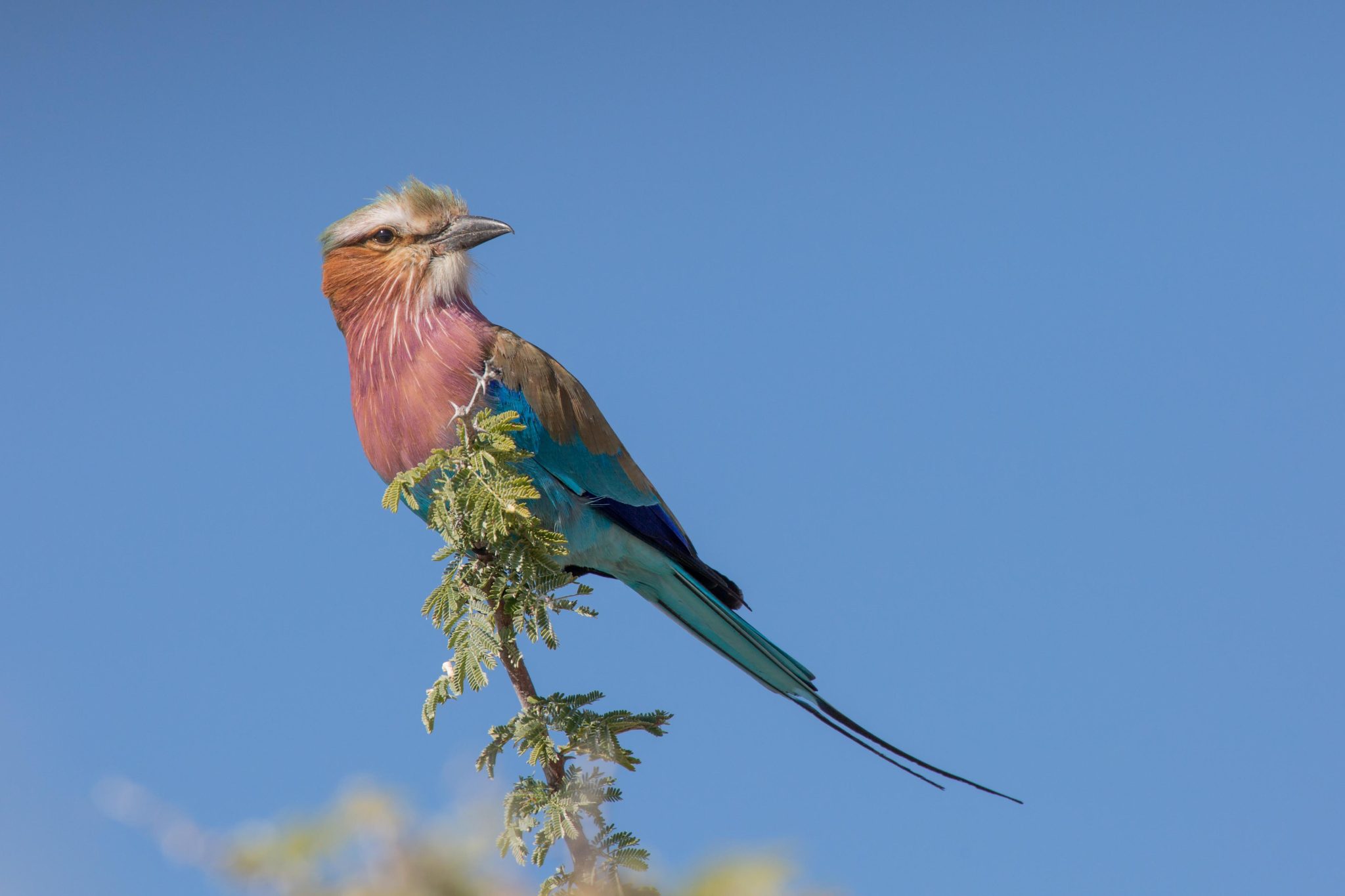
A Lilac-breasted Roller
Waterholes and Wildlife Encounters
Waterholes are the defining feature of the Etosha safari experience.
Because natural water is scarce across much of the park, animals depend heavily on permanent water sources. Some are natural springs, while others have been developed to support wildlife during prolonged dry seasons.
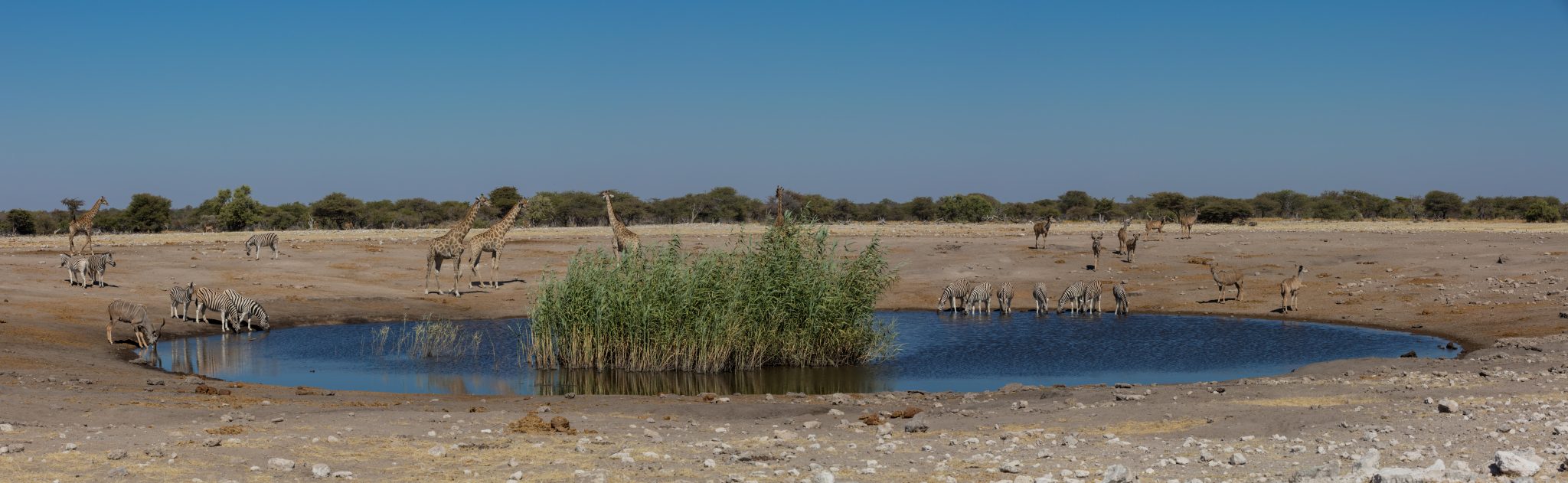
Diverse wildlife congregates at a waterhole
For visitors, these waterholes offer extraordinary opportunities to observe wildlife behavior. It is common to watch multiple species gather at the same location: elephants arriving cautiously, herds of zebra drinking quickly before moving on, antelope scanning the surroundings for predators.
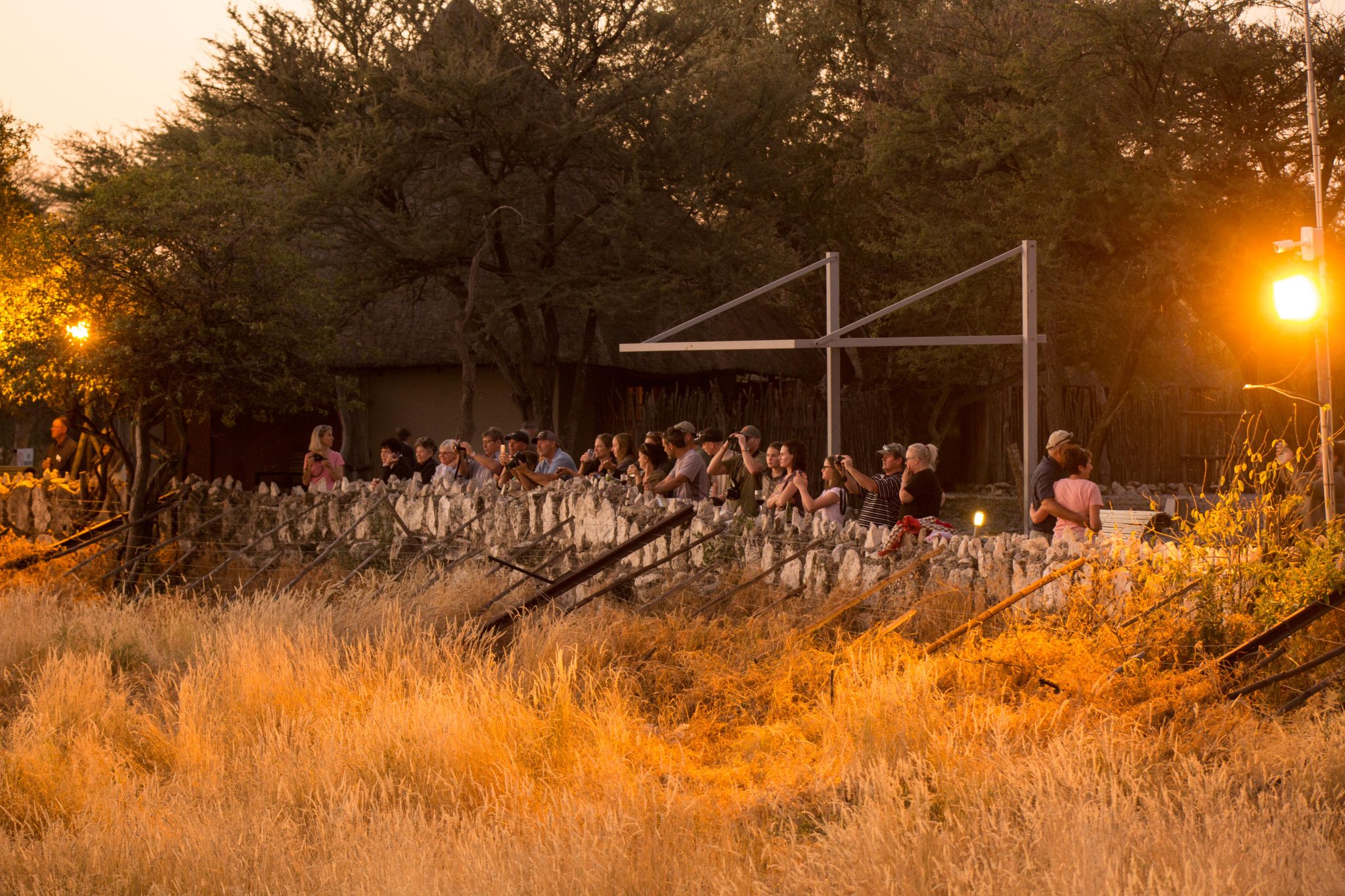
Visitors at Etosha's Okaukuejo waterhole at sunset time
One of the most famous locations in the park is Okaukuejo, where a floodlit waterhole allows visitors to observe wildlife after dark. Rhinos, elephants and lions are often seen approaching the water in the quiet hours of the night.
The rhythm of Etosha often revolves around these places — long periods of stillness suddenly broken by dramatic animal interactions.
A Black Rhino at the Okaukuejo waterhole
Related Destinations in Namibia
Namibia’s landscapes are incredibly diverse, ranging from coastal deserts and ancient dunes to river valleys and wildlife reserves. Several other regions explored on this site reveal different aspects of the country’s natural and cultural heritage.
Kaokoland Riverbeds Remote dry river valleys in northwestern Namibia where desert elephants and lions move through vast desert landscapes.
The Himba Tribe of Namibia A pastoral culture living in the remote Kunene Region, known for their distinctive traditions and deep connection to the land.
The Zambezi Region (Caprivi Strip) A lush corridor of rivers and wetlands in northeastern Namibia, where wildlife and birdlife gather along the Zambezi, Kwando and Chobe rivers.
Wildlife Photography in Etosha National Park
Etosha National Park offers exceptional opportunities for wildlife photography. The open landscapes, sparse vegetation and concentration of animals around waterholes create conditions where wildlife can often be observed and photographed at relatively close range.
Unlike many forested safari destinations, Etosha’s terrain allows long sight lines across plains and dry pan landscapes. Animals approaching waterholes are frequently visible well before they arrive, making it easier to anticipate behavior and prepare for the moment.
For photographers, patience at waterholes often produces the most rewarding encounters.
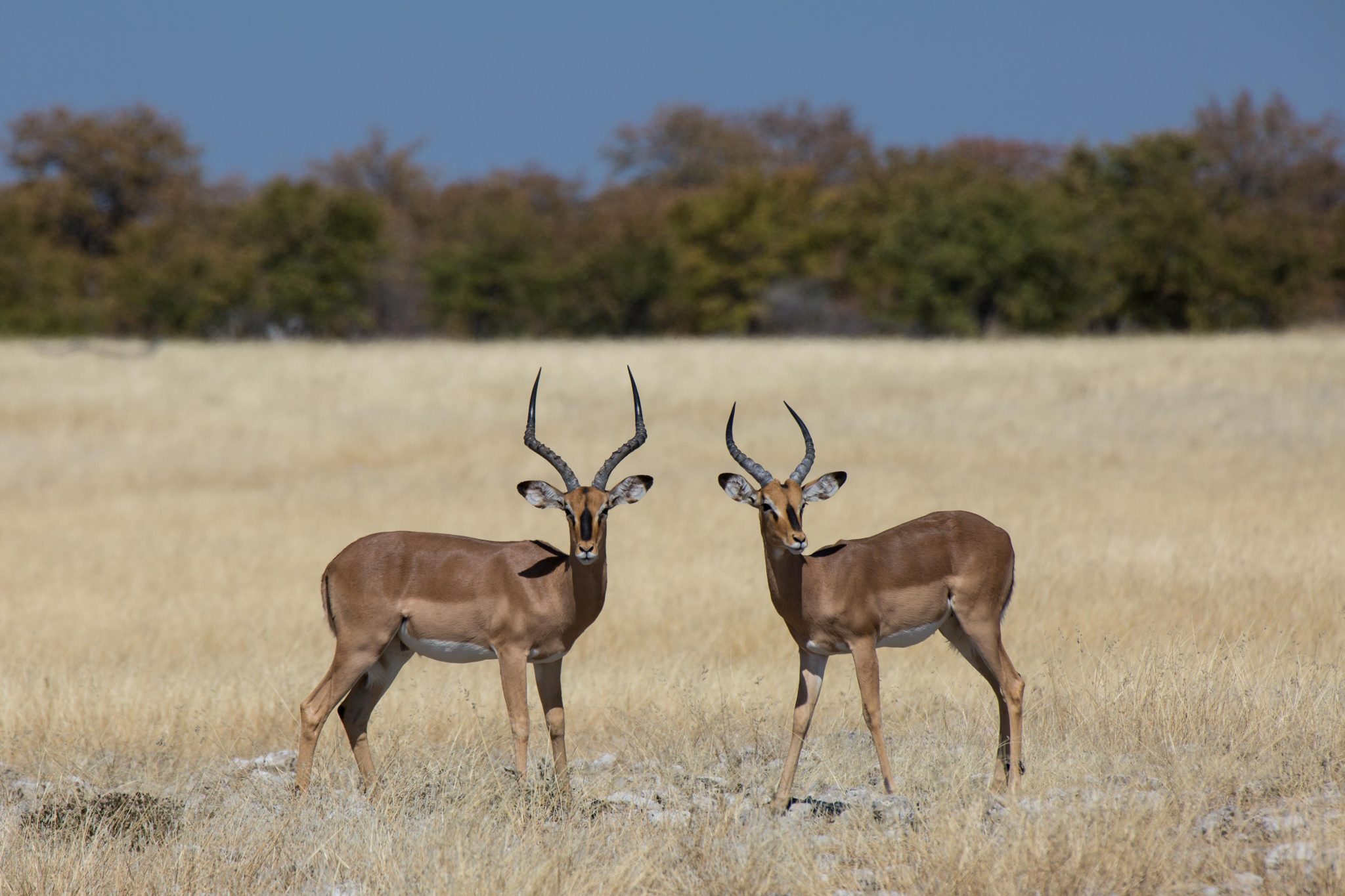
Impala on Etosha's savanna
Light and Timing at Waterholes
Waterholes define much of the photographic rhythm in Etosha.
During the dry season, many animals depend on permanent water sources scattered across the park. This creates natural gathering points where elephants, antelope, zebras and predators may appear throughout the day.
Light conditions change dramatically over the course of a day, and positioning yourself relative to the sun can make a significant difference.
Early morning and late afternoon usually provide the most favorable light. The low sun creates softer shadows and warmer tones, while animals tend to be more active during these cooler hours.
When arriving at a waterhole, it is often worth considering where the sun will move over the next hour. Parking on the side that places the sun behind you can greatly improve lighting on animals approaching the water.
Midday light can be harsh, but it can also produce dramatic contrasts against the pale dust and open sky that define Etosha’s landscape.
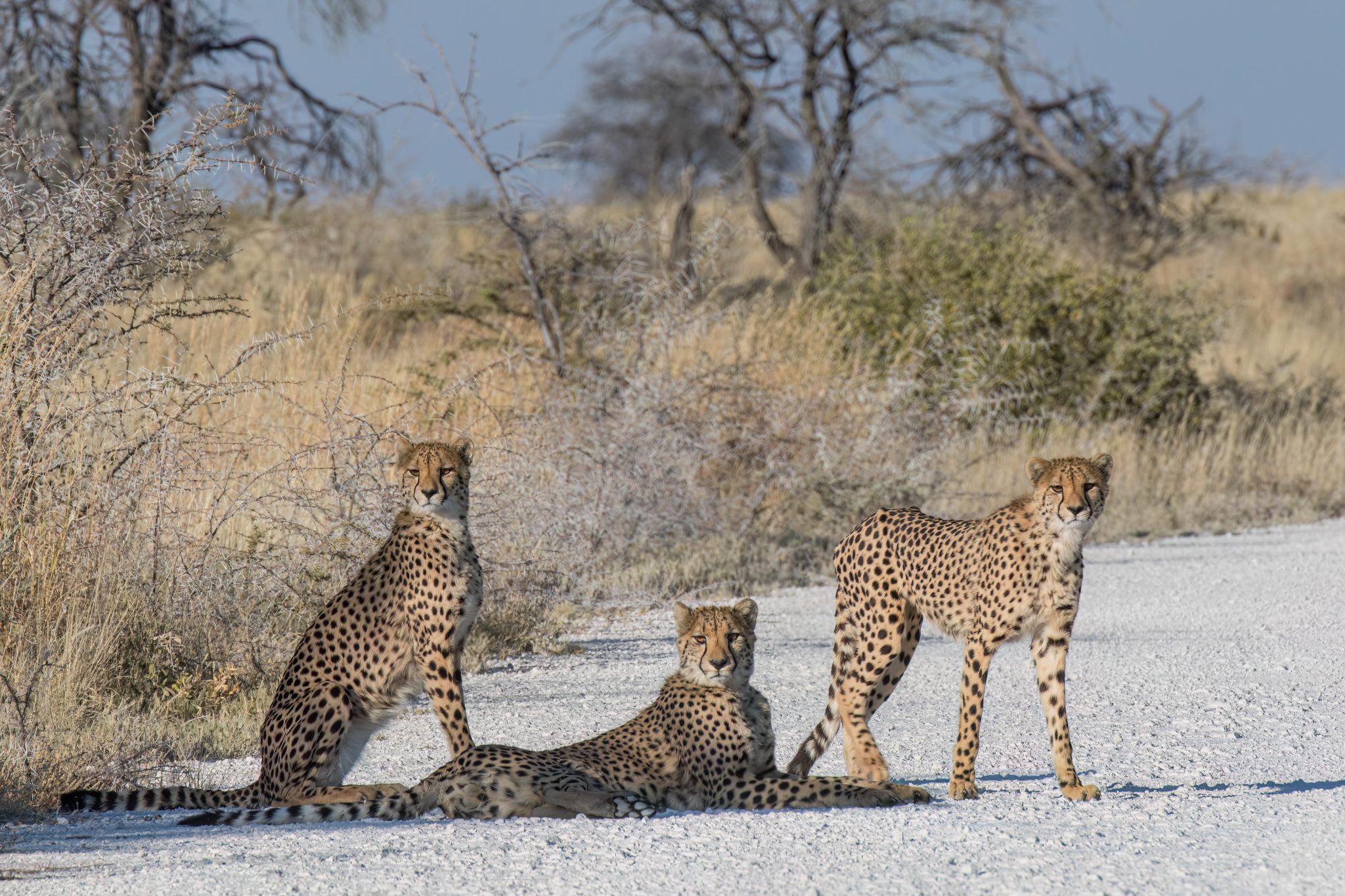
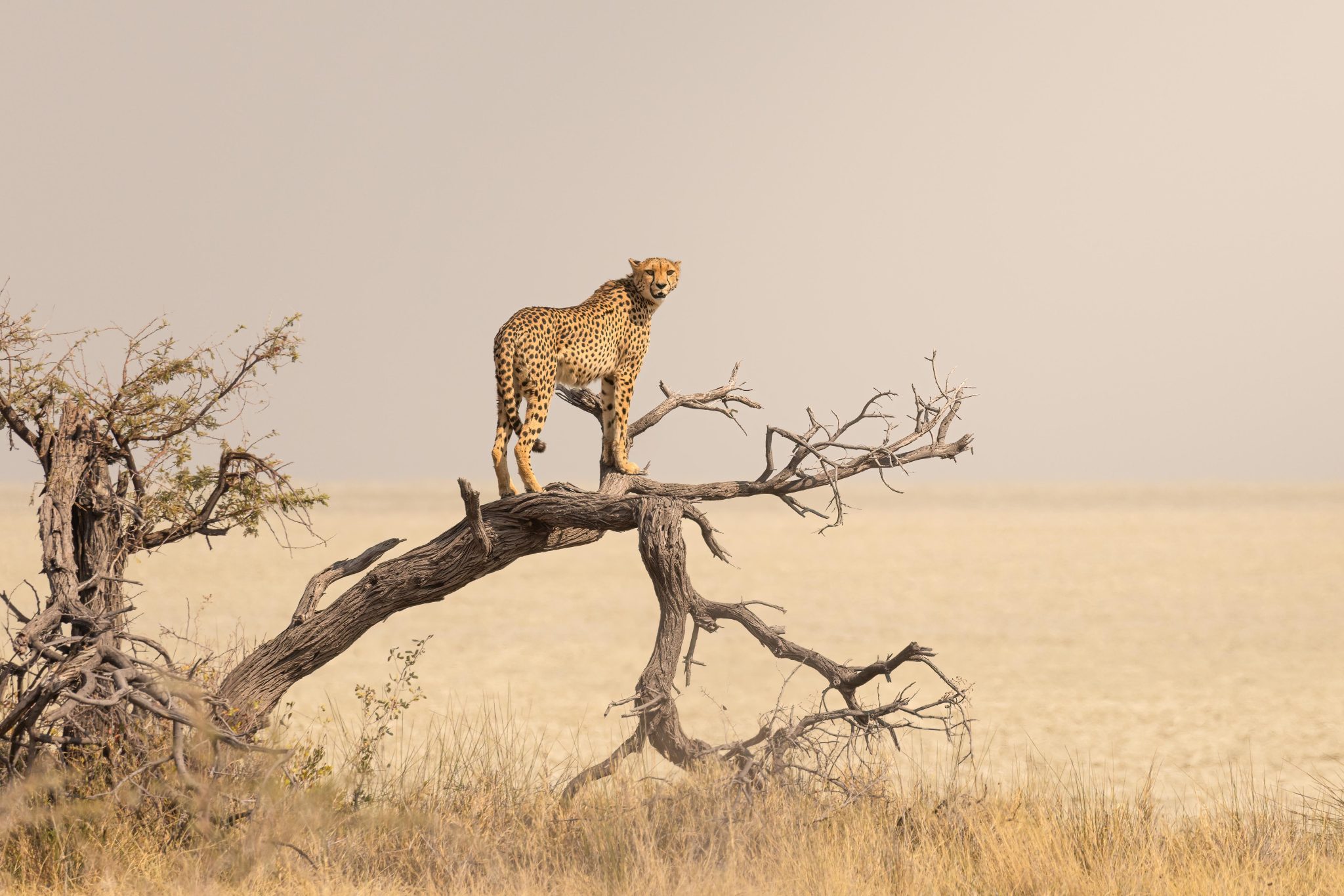
A female cheetah on the look-out for prey
Observing Animal Behavior
Wildlife photography in Etosha often rewards patience rather than constant movement.
Many encounters unfold slowly. A herd of elephants may approach a waterhole cautiously, drinking and interacting with one another before moving on. Antelope often arrive in waves, stopping repeatedly to scan the surroundings for predators.
Predators themselves frequently appear only after prey species have gathered.
Spending extended time at a single waterhole allows photographers to observe these patterns and anticipate moments of interaction — elephants spraying dust, zebras jostling at the water’s edge, or lions moving silently through nearby grass.
Black rhinos and an elephant at the Halali waterhole
Lens Choices and Photographic Approach
Because wildlife distances vary widely in Etosha, many photographers prefer a flexible combination of telephoto and medium-range lenses.
Long telephoto lenses in the 400–600mm range are ideal for isolating animals at greater distances or capturing portraits of wildlife approaching the waterholes.
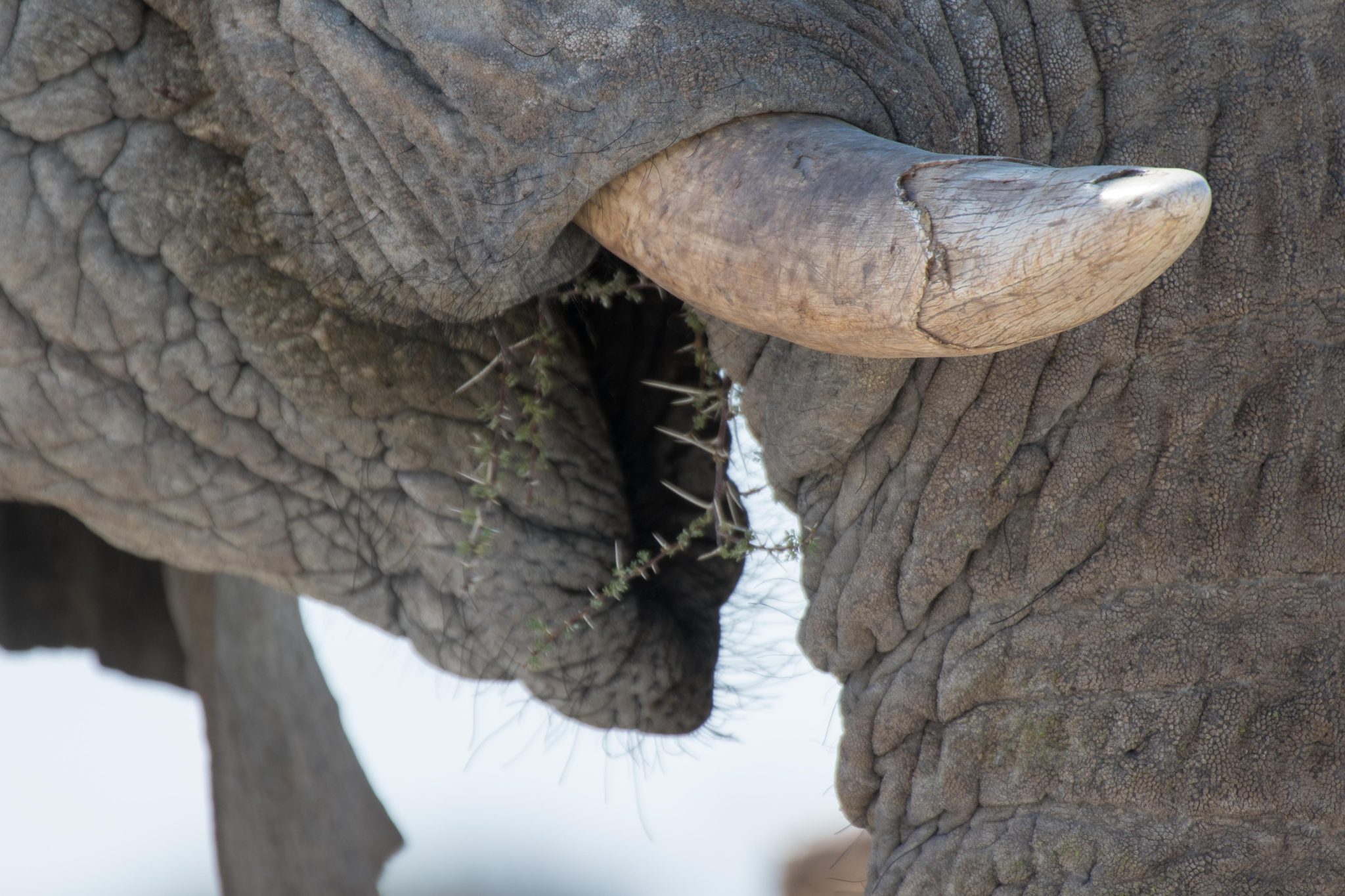
An elephant eating acacia
At the same time, the openness of the landscape occasionally allows opportunities for wider environmental images, where animals appear against the immense backdrop of the Etosha Pan or the surrounding savanna.
Dust, strong light and long viewing distances are part of the photographic character of the park. These conditions often produce images that feel raw and atmospheric, reflecting the harsh beauty of northern Namibia’s dry landscapes.
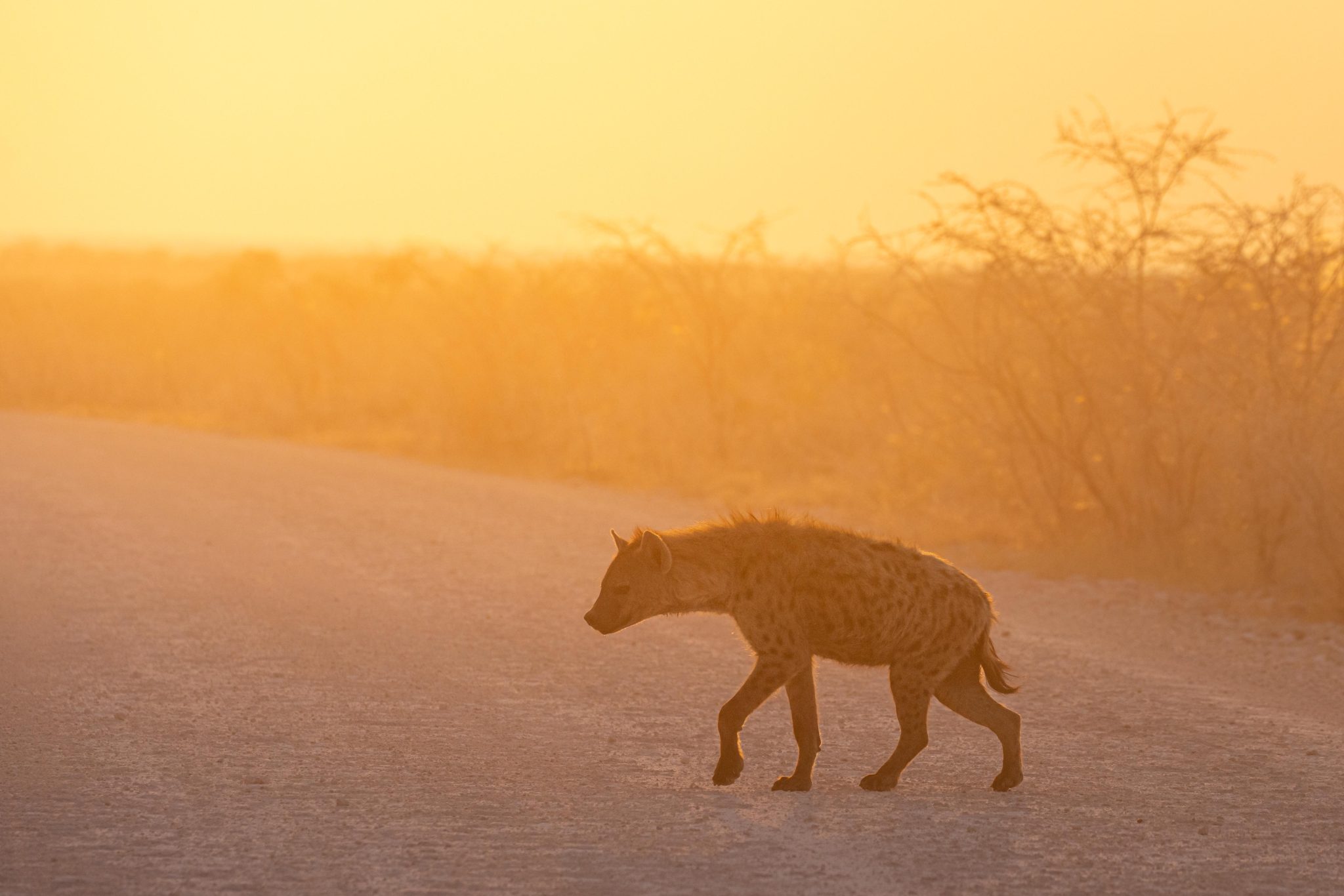
A Spotted Hyena crossing the road at sunrise
Night Photography at Okaukuejo
One of Etosha’s most unique photography opportunities can be found at the floodlit waterhole at Okaukuejo and Halali Camp.
After sunset, animals such as elephants, black rhino and occasionally lions approach the illuminated waterhole. Watching wildlife emerge quietly from the darkness toward the water can be a remarkable experience.
Photographing in these conditions requires higher ISO settings and careful attention to movement, but the atmosphere of nighttime encounters at Okaukuejo and Halali is unlike anything else in the park.
Black Rhino at the Halali waterhole
For wildlife photographers, Etosha combines dramatic landscapes with intimate animal encounters, making it one of the most rewarding destinations in southern Africa.
Safari Experience in Etosha
Etosha is well suited to self-drive exploration. A network of gravel roads connects the park’s main camps and waterholes, allowing visitors to move between different habitats over the course of a day.
Because the vegetation is generally sparse and the terrain open, wildlife sightings can occur at considerable distances across the plains. The landscape encourages patience and observation rather than fast movement.
Morning and late afternoon drives often provide the best conditions, when the light softens and animals become more active. During the hottest hours of the day, many species seek shade under sparse trees or rest near water.
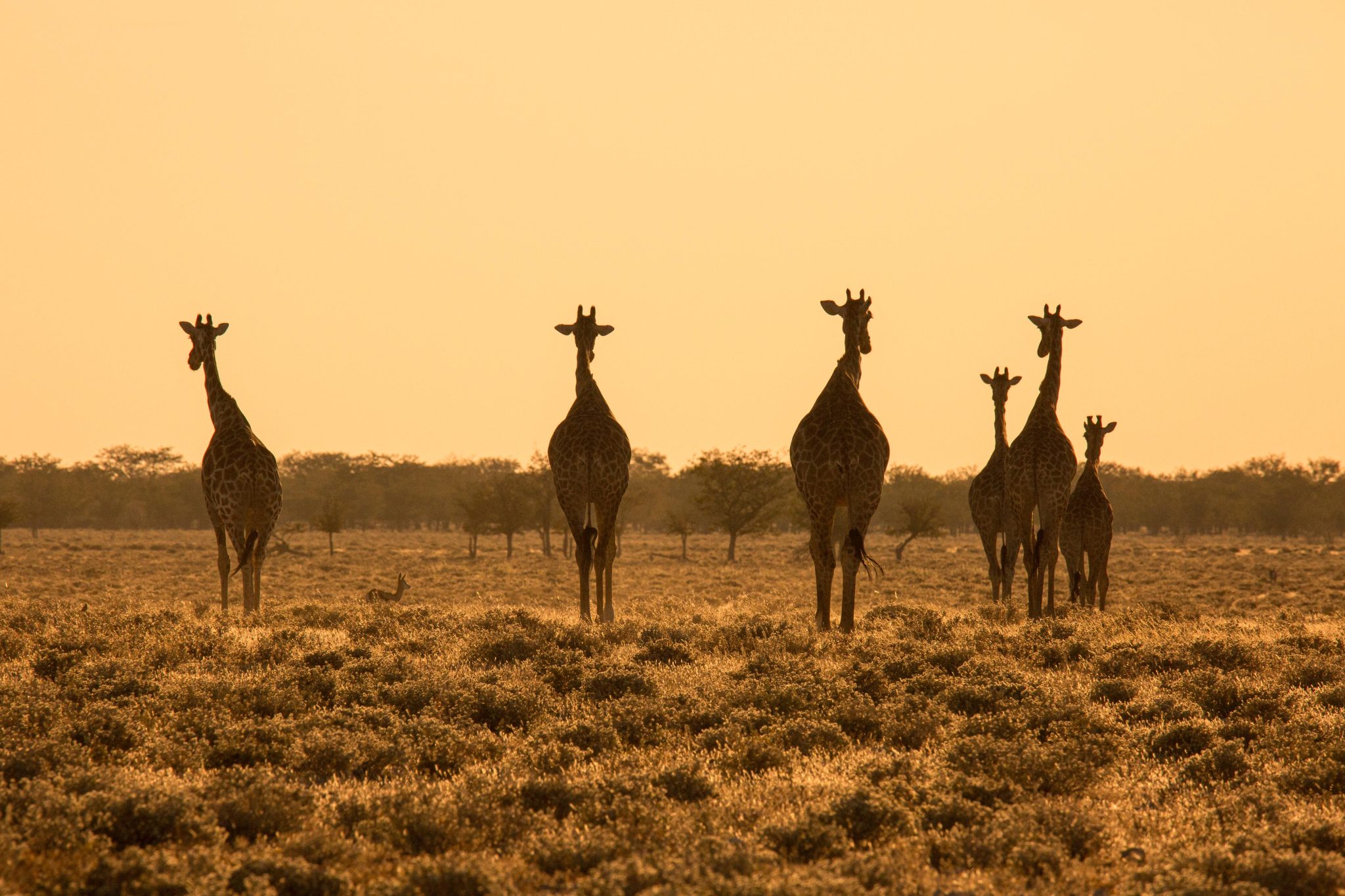
Giraffes at sunset near the Okaukuejo waterhole
Photographically, Etosha offers striking contrasts: pale dust, blue sky, dark silhouettes of animals and dramatic evening light over the pan.
Best Time to Visit Etosha National Park
Wildlife viewing in Etosha varies significantly between seasons. The dry season, from roughly May to October, is generally considered the best time for wildlife photography, as animals concentrate around permanent waterholes.
During the rainy season the landscape becomes greener and birdlife increases dramatically, although wildlife disperses more widely across the park.
Stories from Etosha National Park
Over several journeys through Namibia, I have visited Etosha multiple times, each experience revealing a different aspect of the park’s wildlife and landscapes.
The stories below document several visits to Etosha National Park across different years and seasons, exploring the waterholes around Okaukuejo, the central plains near Halali and the remote western regions of the park around Olifantsrus Camp.
Photo Galleries from Etosha
Beyond individual stories, Etosha’s wildlife and landscapes lend themselves naturally to photographic exploration.
The galleries below highlight some of the wildlife and landscapes that define Etosha National Park — from elephants and lions to the vast horizons of the Etosha salt pan.