The Ju’/Hoansi San of Namibia
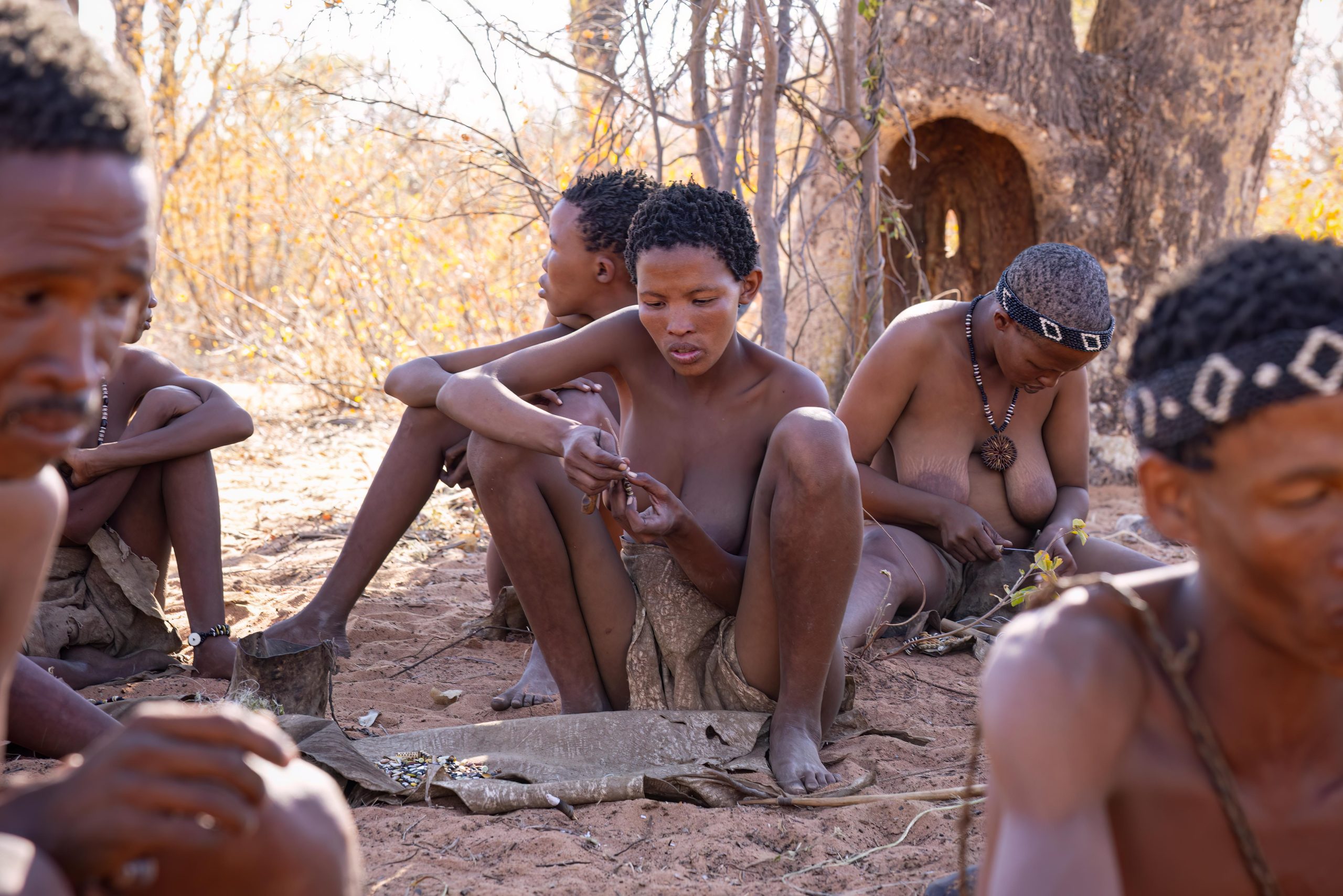
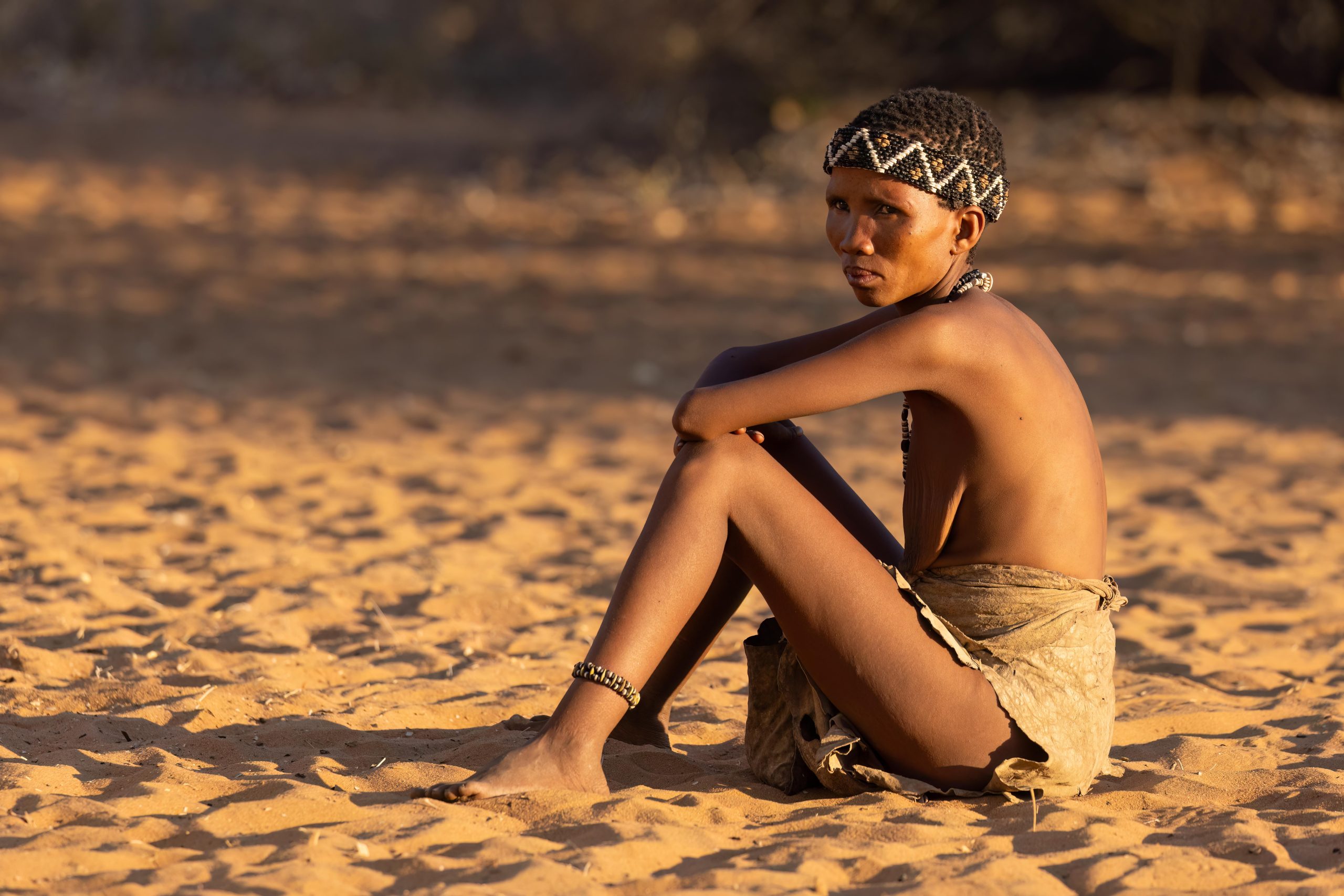
The Ju’/hoansi, often referred to historically as the !Kung San, are one of the Indigenous San peoples of southern Africa. Today they live primarily in northeastern Namibia, as well as parts of Botswana and southern Angola.
Anthropologists consider the Ju’/hoansi among the oldest continuous cultural groups on Earth, with ancestral roots stretching back tens of thousands of years. For most of their history they have lived as hunter-gatherers in the Kalahari region, adapting to a landscape that appears harsh yet supports a remarkable diversity of plant and animal life.
Their traditional way of life is deeply connected to the rhythms of the desert environment, relying on knowledge of seasonal plants, animal movements and water sources passed down through generations.
Hunter-Gatherers of the Kalahari Desert
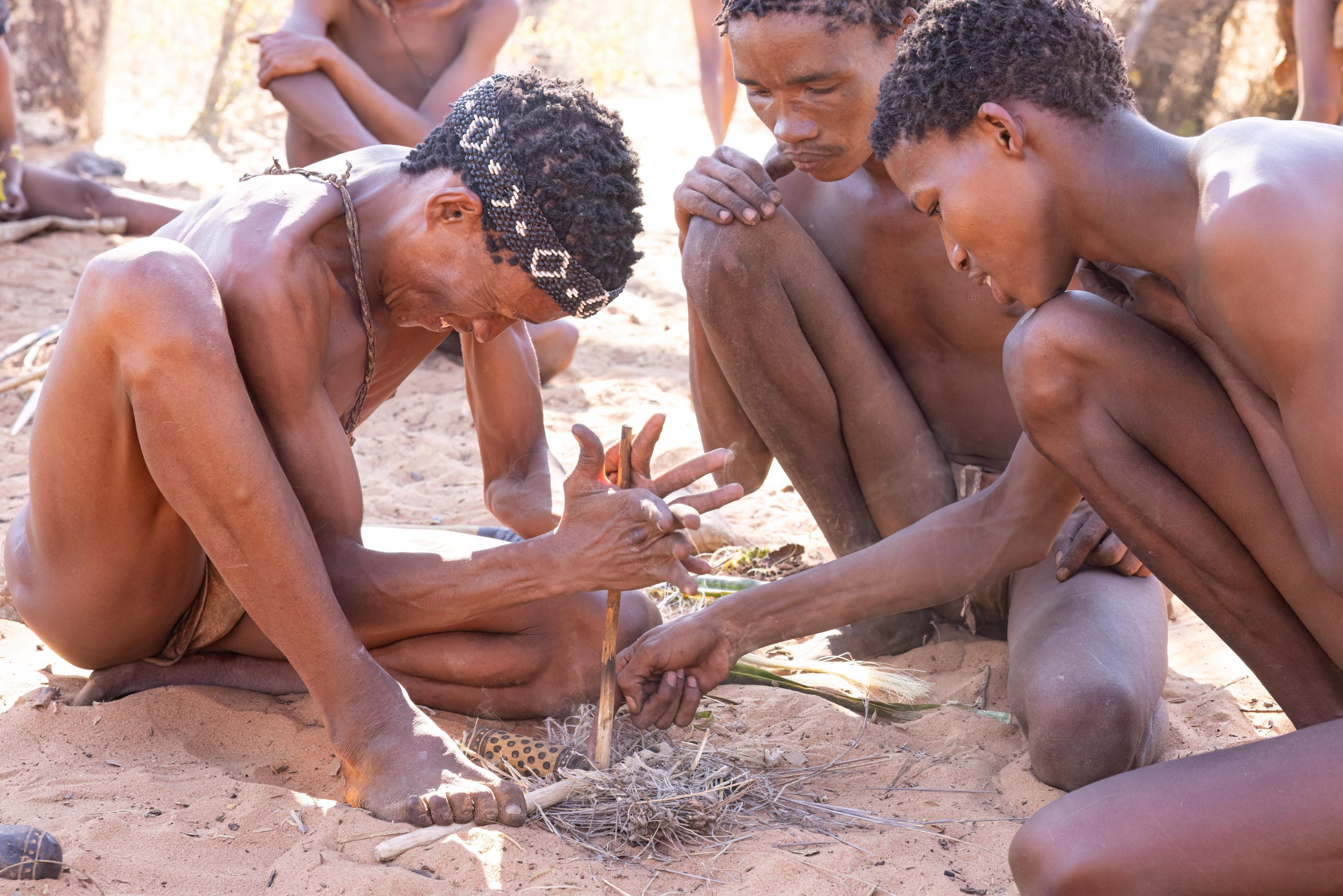
For thousands of years the Ju’/hoansi have survived through a sophisticated system of hunting and gathering.
Much of their diet comes from wild plants, roots, berries and nuts gathered across the savanna and dry woodland of the Kalahari. One of the most important traditional food sources is the mongongo nut, valued for its high protein and fat content.
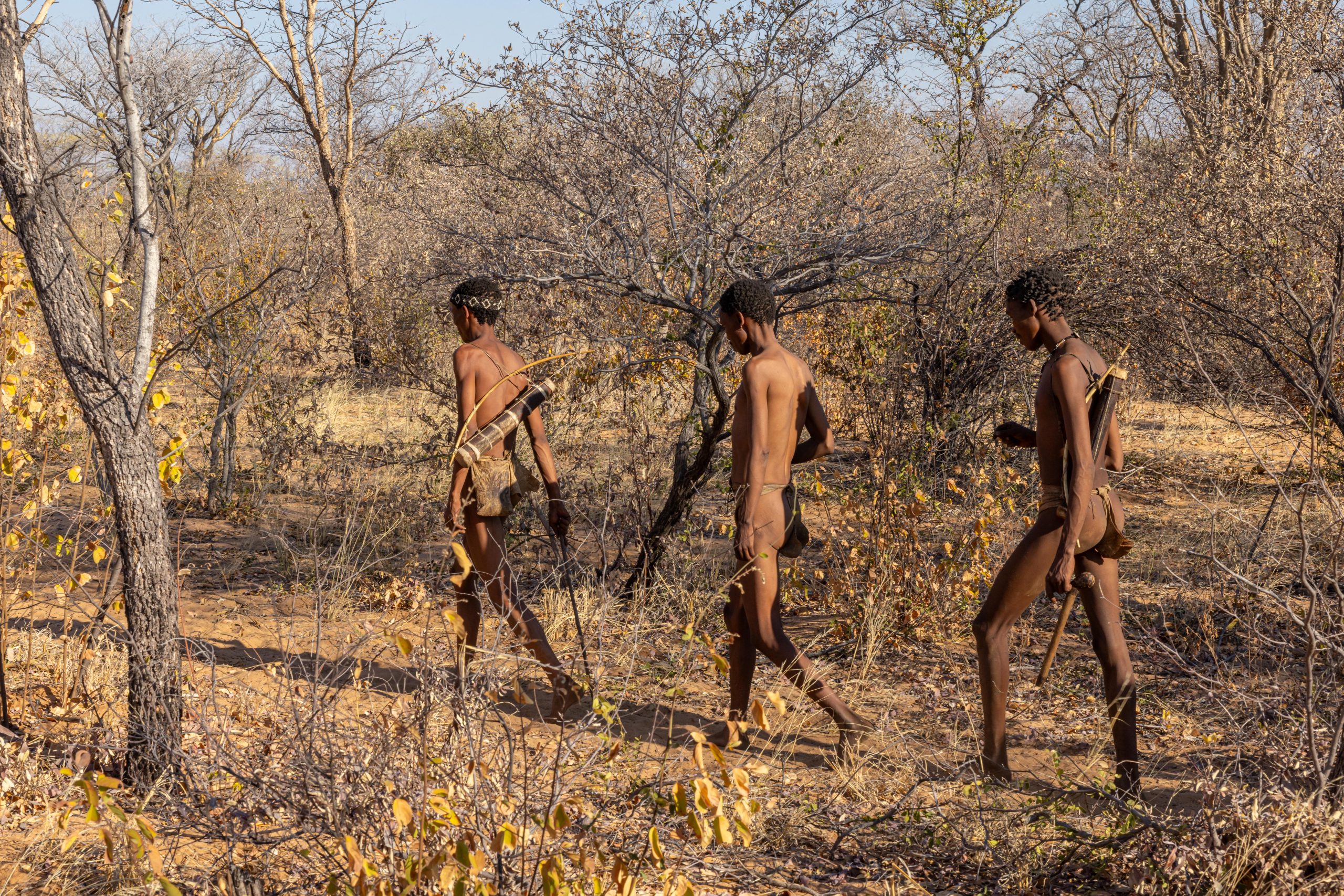
Men traditionally hunt game such as antelope and smaller animals using bows and poisoned arrows. Tracking is one of the Ju’/hoansi’s most remarkable skills. Experienced trackers can follow subtle signs across vast distances — faint footprints, disturbed sand or broken vegetation — often pursuing animals for many hours.
This intimate understanding of the landscape allows the Ju’/hoansi to live sustainably in environments that appear inhospitable to outsiders.
An Egalitarian Social Structure
Ju’/hoansi society is often described as one of the most egalitarian social systems documented by anthropologists.
Decisions are generally made collectively, and leadership is informal. Elders and experienced hunters may guide discussions, but authority is rarely enforced through hierarchy or status.
Sharing resources is central to community life. Meat from a successful hunt is distributed among the group, reinforcing cooperation and social bonds. Accumulation of wealth or strong social stratification is largely absent.
This emphasis on cooperation and mutual support has historically helped small communities survive in unpredictable environments.
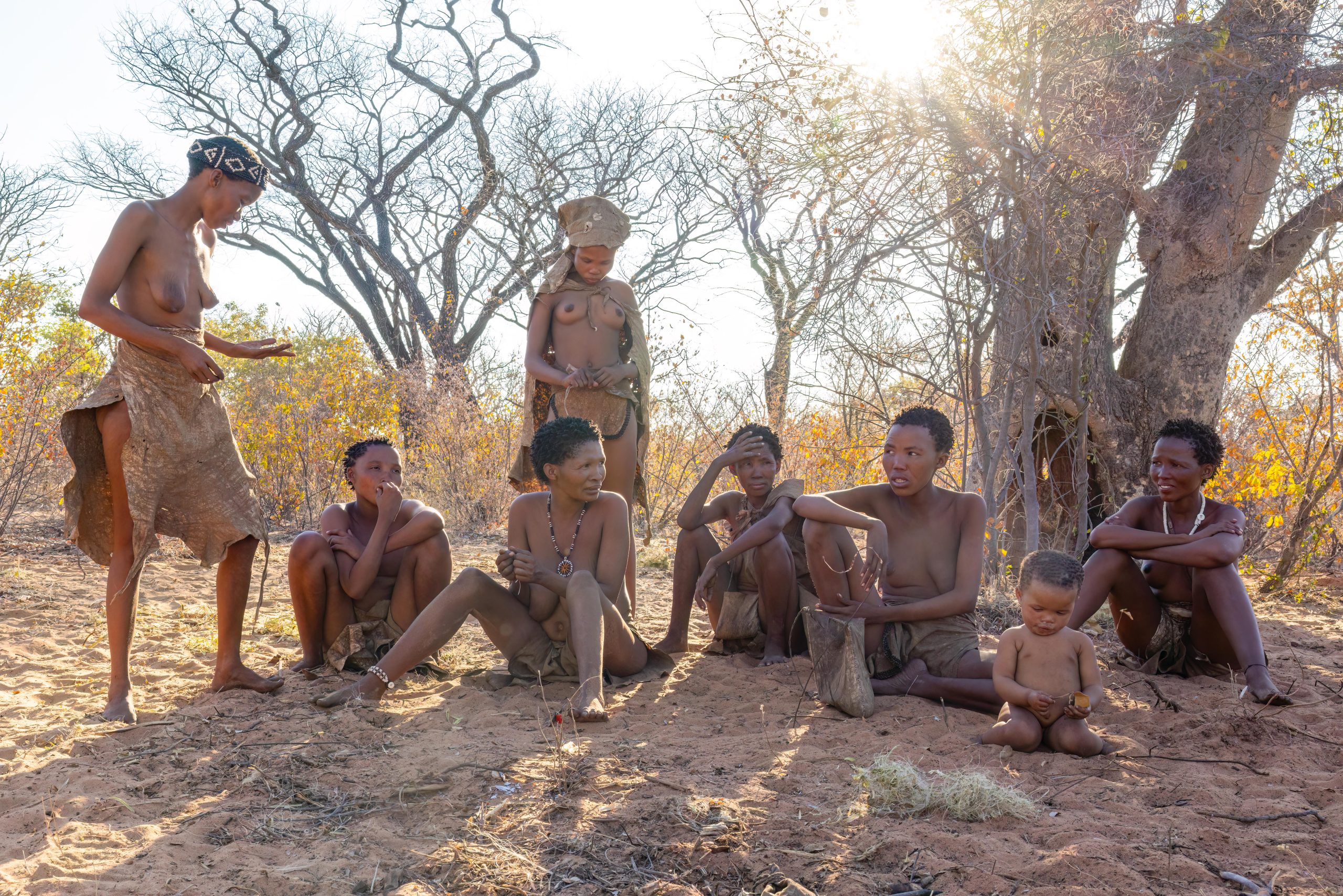
Language and Cultural Identity
Language is a defining element of Ju’/hoansi identity. They speak Ju|’hoan, a member of the Kx’a language family, often referred to as a “click language” because of the distinctive sounds produced with the tongue.
These clicks are not decorative sounds but fully integrated consonants within the language, forming an essential part of communication.
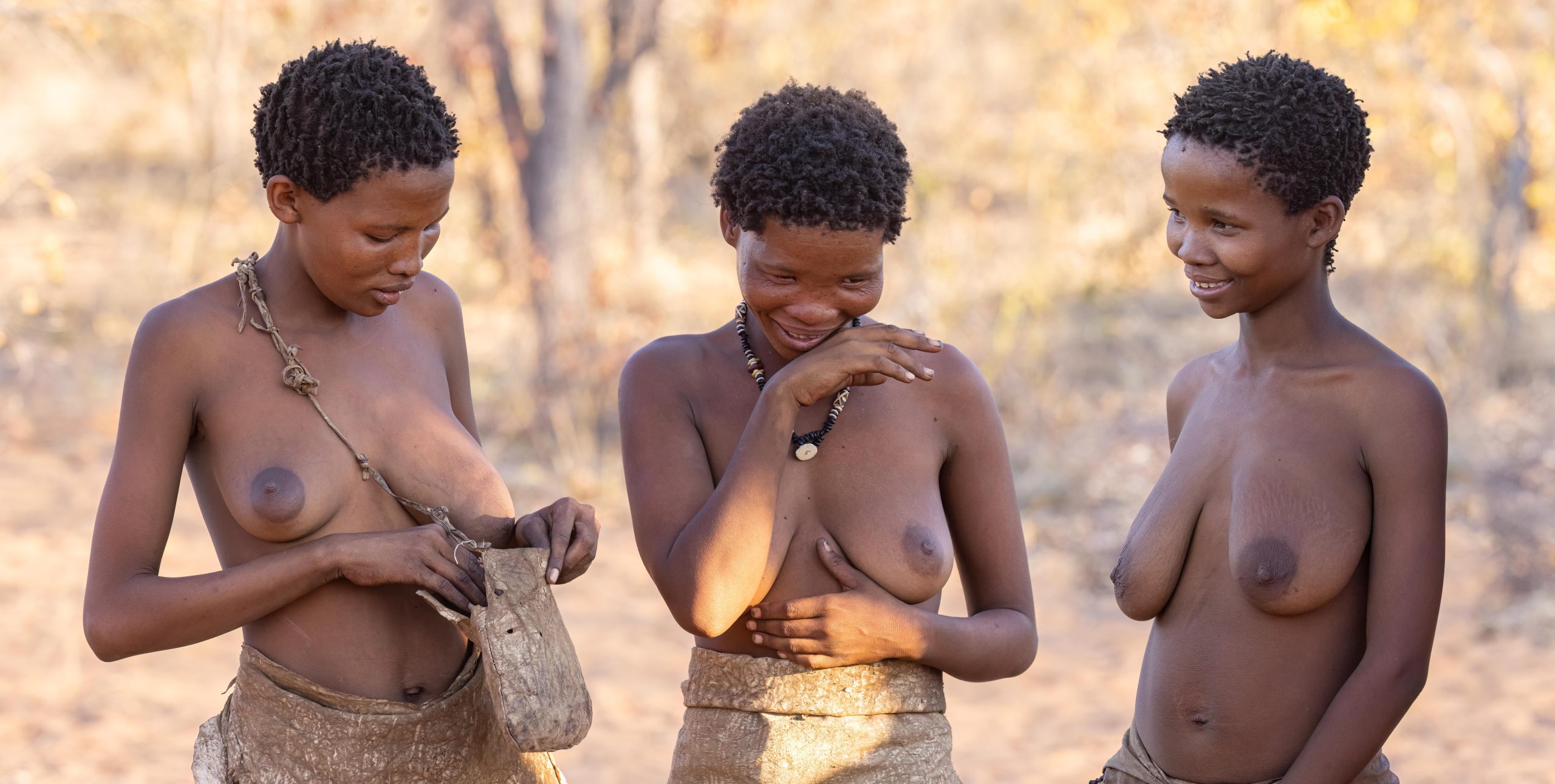
Beyond language, oral traditions remain central to cultural life. Storytelling, songs and dances are used to pass on knowledge about animals, landscapes and spiritual beliefs. Cultural knowledge is shared collectively, reinforcing identity and continuity across generations.
The Trance Dance and Healing Rituals
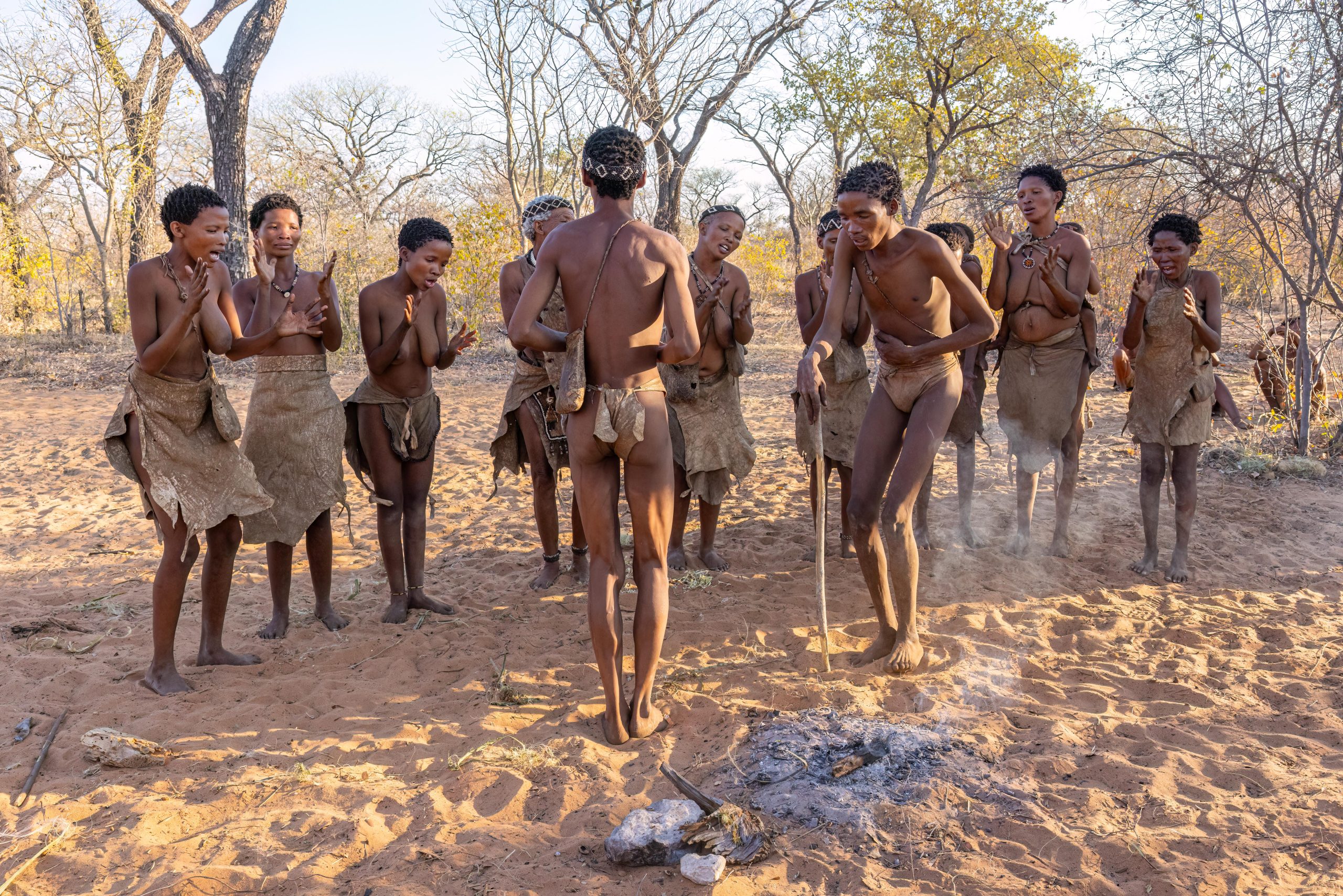
One of the most important cultural practices of the Ju’/hoansi is the trance dance, a traditional healing ritual.
During these ceremonies, community members gather around a fire while healers enter a trance-like state through rhythmic dancing and chanting. In this altered state, they are believed to access a spiritual energy known as n|om, which can be used to heal illness and restore balance within the group.
These rituals serve both spiritual and social purposes, addressing not only physical ailments but also tensions within the community.
Modern Challenges and Cultural Resilience
Like many indigenous communities, the Ju’/hoansi face significant challenges in the modern era.
Loss of ancestral lands, reduced access to traditional hunting areas and pressures from modernization have disrupted aspects of their traditional way of life. Government resettlement programs and conservation initiatives have also restricted mobility across parts of the Kalahari region.
At the same time, Ju’/hoansi communities continue to adapt. Cultural preservation initiatives, community-based tourism projects and support from non-governmental organizations aim to strengthen education, protect traditional knowledge and improve economic opportunities.
Despite these pressures, the Ju’/hoansi remain a powerful symbol of cultural resilience — preserving knowledge systems that reflect a deep and sustainable relationship with the natural world.