After the wildlife-rich days in Tarangire, Lake Eyasi marked a quiet but meaningful shift in our Tanzania journey.
This was no longer about large herds gathering at rivers or scanning acacia trees for predators. Lake Eyasi lies at the southern edge of the Ngorongoro Highlands, within the Great Rift Valley basin — a dry, open landscape where life follows a different rhythm.
We hadn’t come here for dramatic game drives.
We came for perspective.
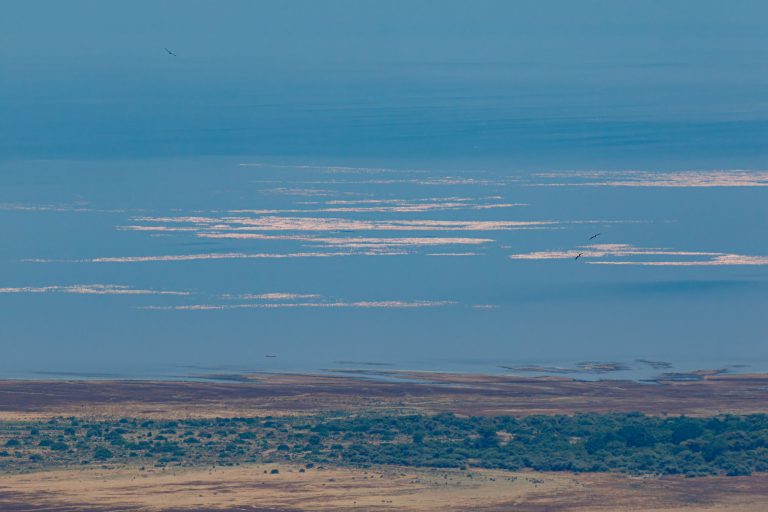
Lake Eyasi is best known as home to the Hadzabe — one of the last remaining hunter-gatherer communities in East Africa — as well as the Datoga pastoralists who live in the surrounding region. While the lake itself can be expansive and bird-filled during wetter periods, in the dry season it often retreats into pale salt flats and shimmering horizons.
For us, the destination was not the shoreline, but the wider basin.
The road to Lake Eyasi would take us past Rift Valley lakes, Maasai settlements, changing landscapes — and gradually away from the classic safari circuit into something quieter, more human, and deeply rooted in place.
The Road to Lake Eyasi
Leaving Tarangire behind, the landscape began to change almost immediately.
The road climbed gently toward the Great Rift Valley escarpment, opening up wide views across the plains.
Before turning toward Lake Eyasi, we passed along the edge of Lake Manyara.
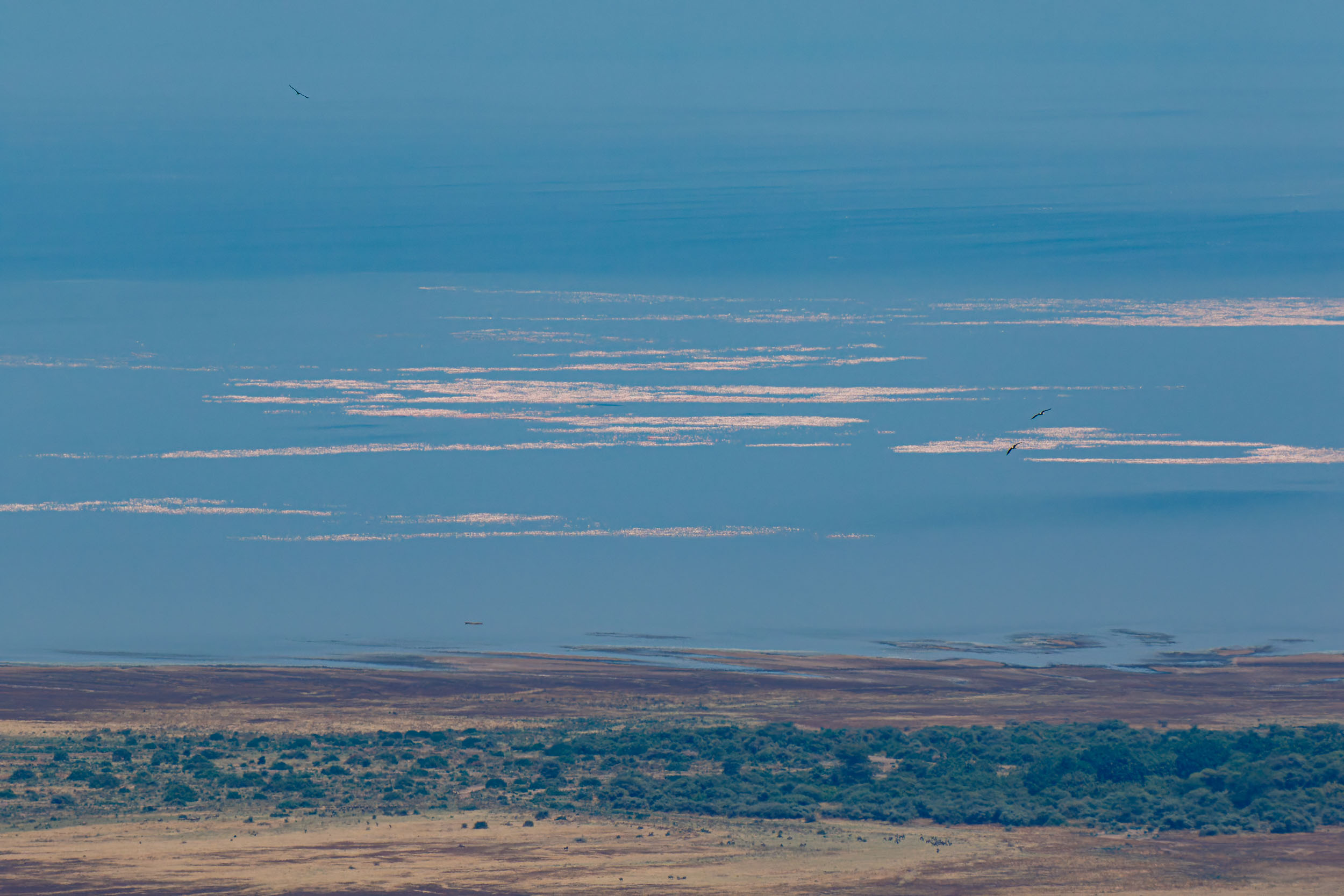
From a distance, the lake shimmered silver beneath the escarpment wall.
And then we saw them.
Flamingoes.
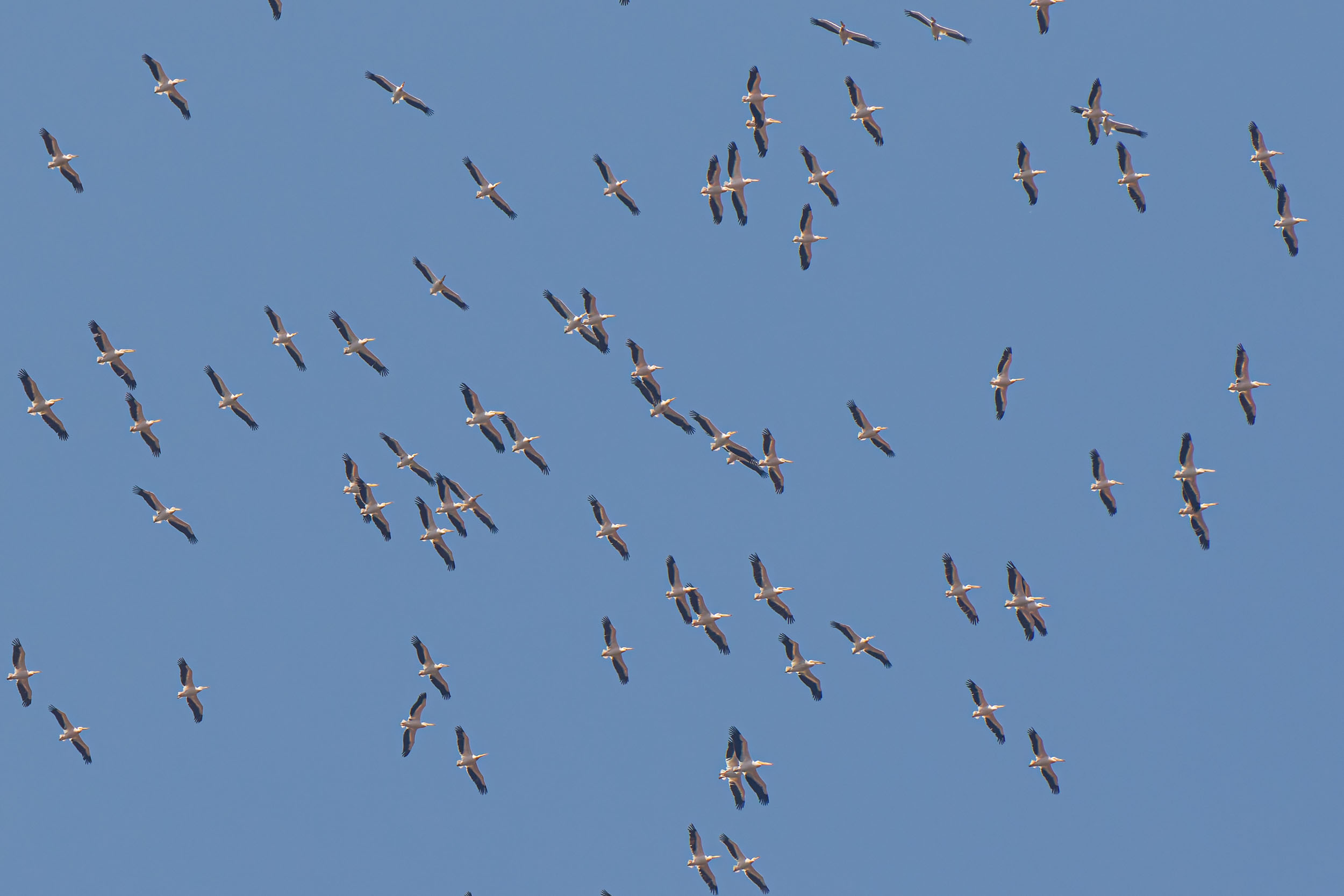
Thousands upon thousands gathered along the shallow shoreline — pale pink bands stretching across the water like brushstrokes. Mixed among them were large flocks of pelicans, their white bodies clustered together in quiet formation.
Even from the road, the scale was striking.
It felt almost surreal — a vast congregation of birds framed by the dramatic Rift Valley cliffs rising behind them. The lake seemed alive, shifting and moving in subtle waves of color.
We didn’t stop long.
But the image stayed with us.
From there, we continued southward, gradually leaving the main safari circuit behind and moving toward a more remote basin — Lake Eyasi.
We drove via Makayuni and passed through Mto wa Mbu — “River of Mosquitoes” — a lively market town where fruit stalls spilled onto the roadside and motorbikes wove between buses. It felt vibrant and grounded, a contrast to the protected quiet of the national parks.
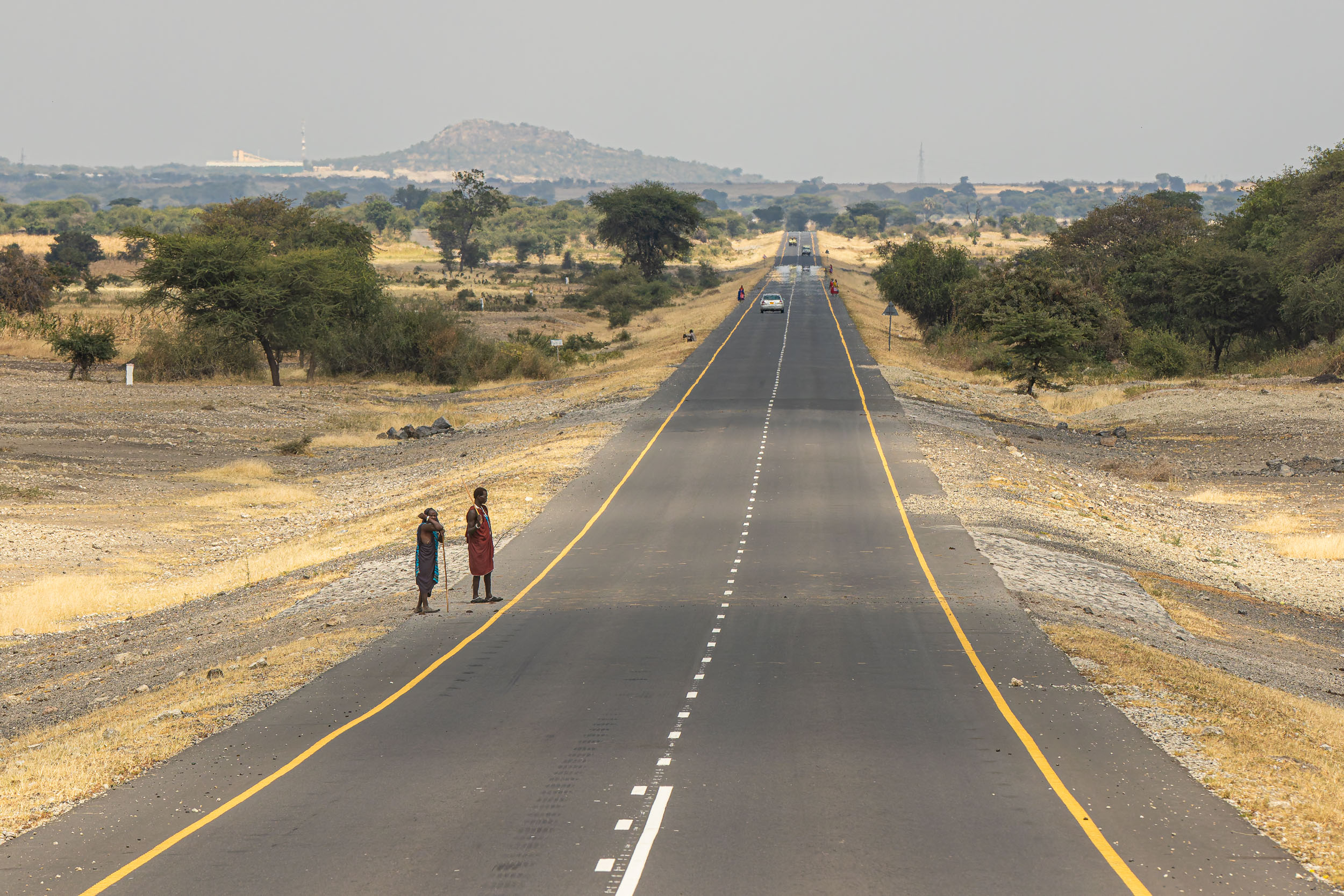
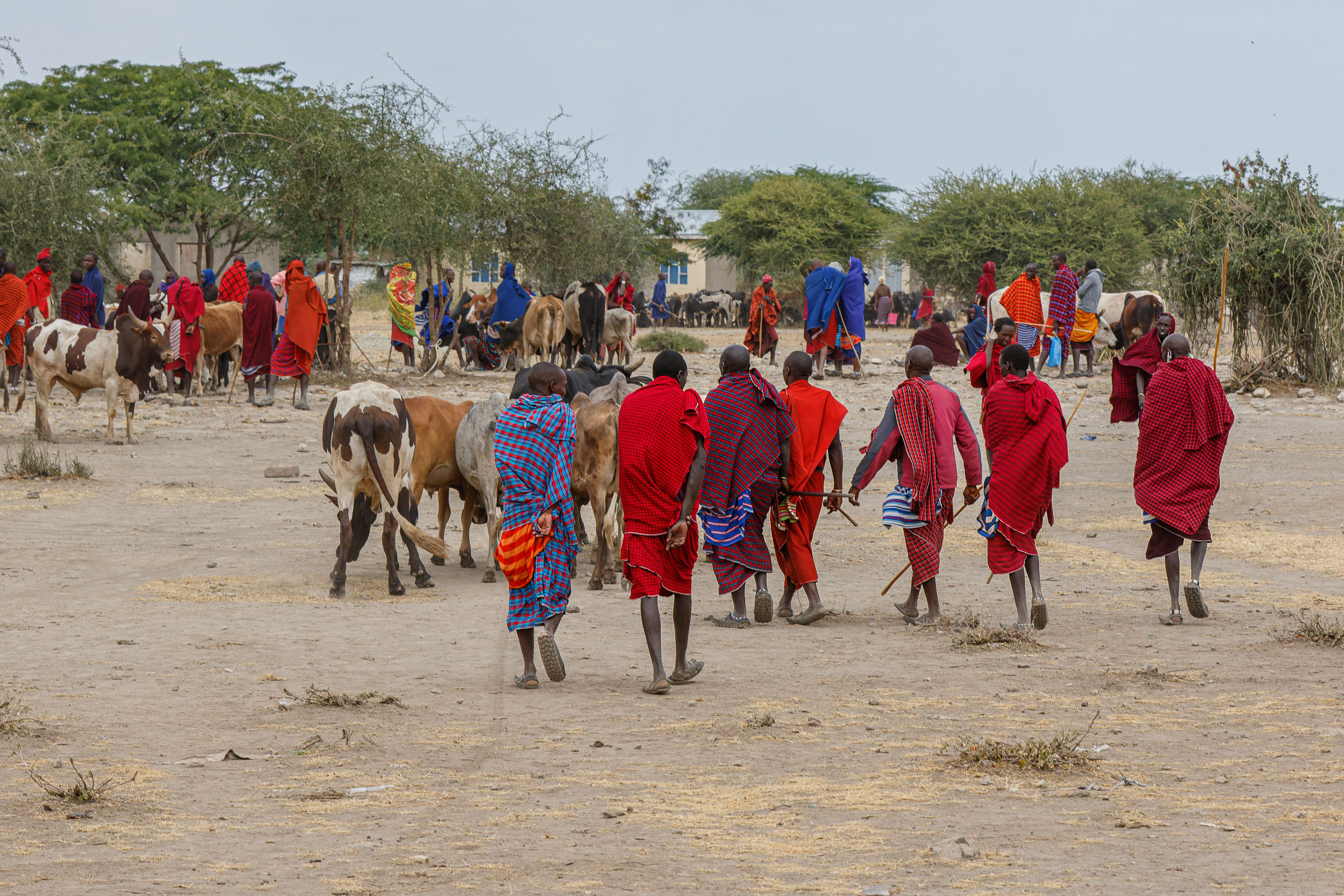
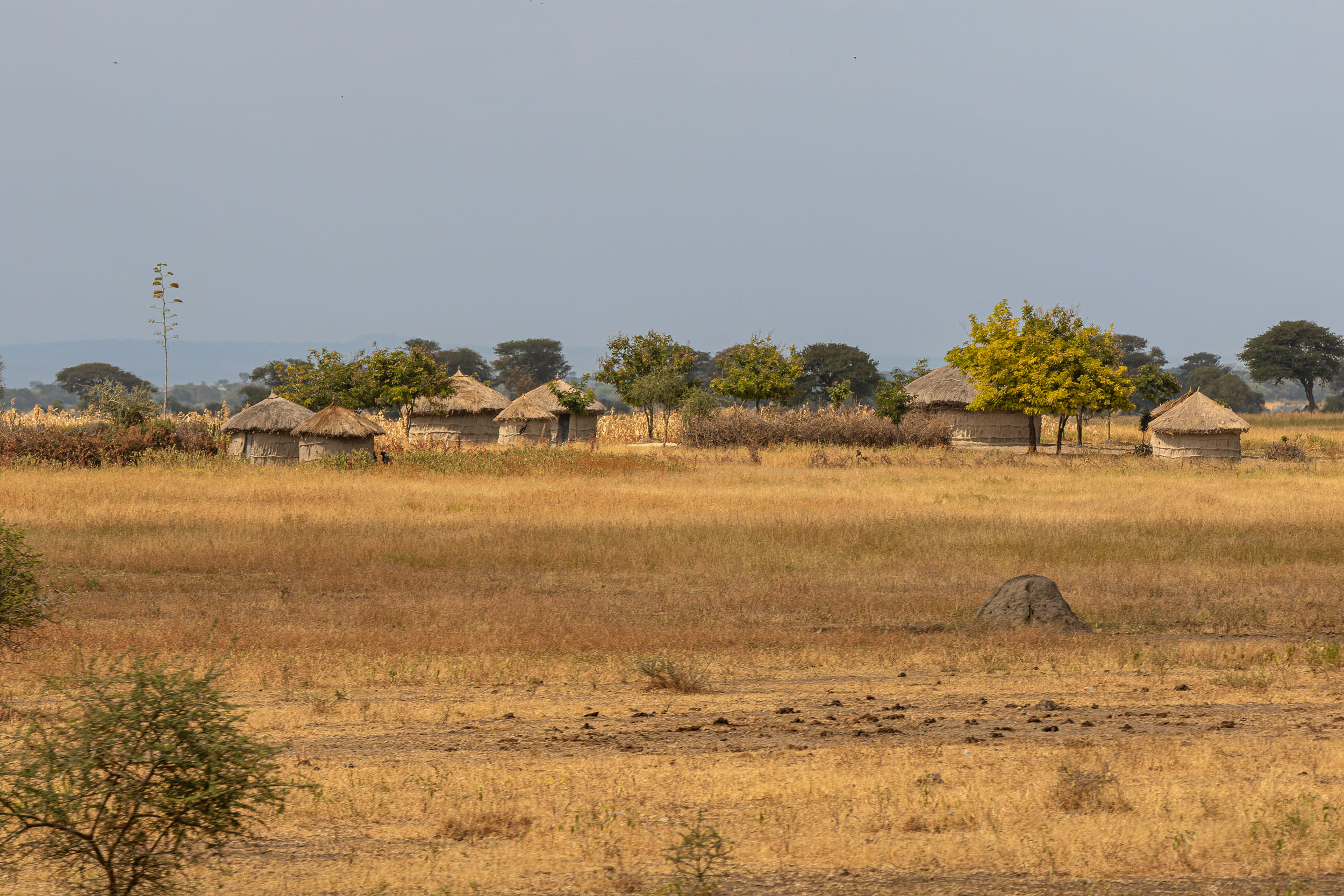
Villages became more frequent. Maasai bomas appeared in regular intervals — circular mud-and-stick homesteads enclosed by thorn fences. Women in bright red and cobalt blue shúkàs walked along the smooth asphalt road, an unexpected contrast between traditional dress and modern infrastructure.
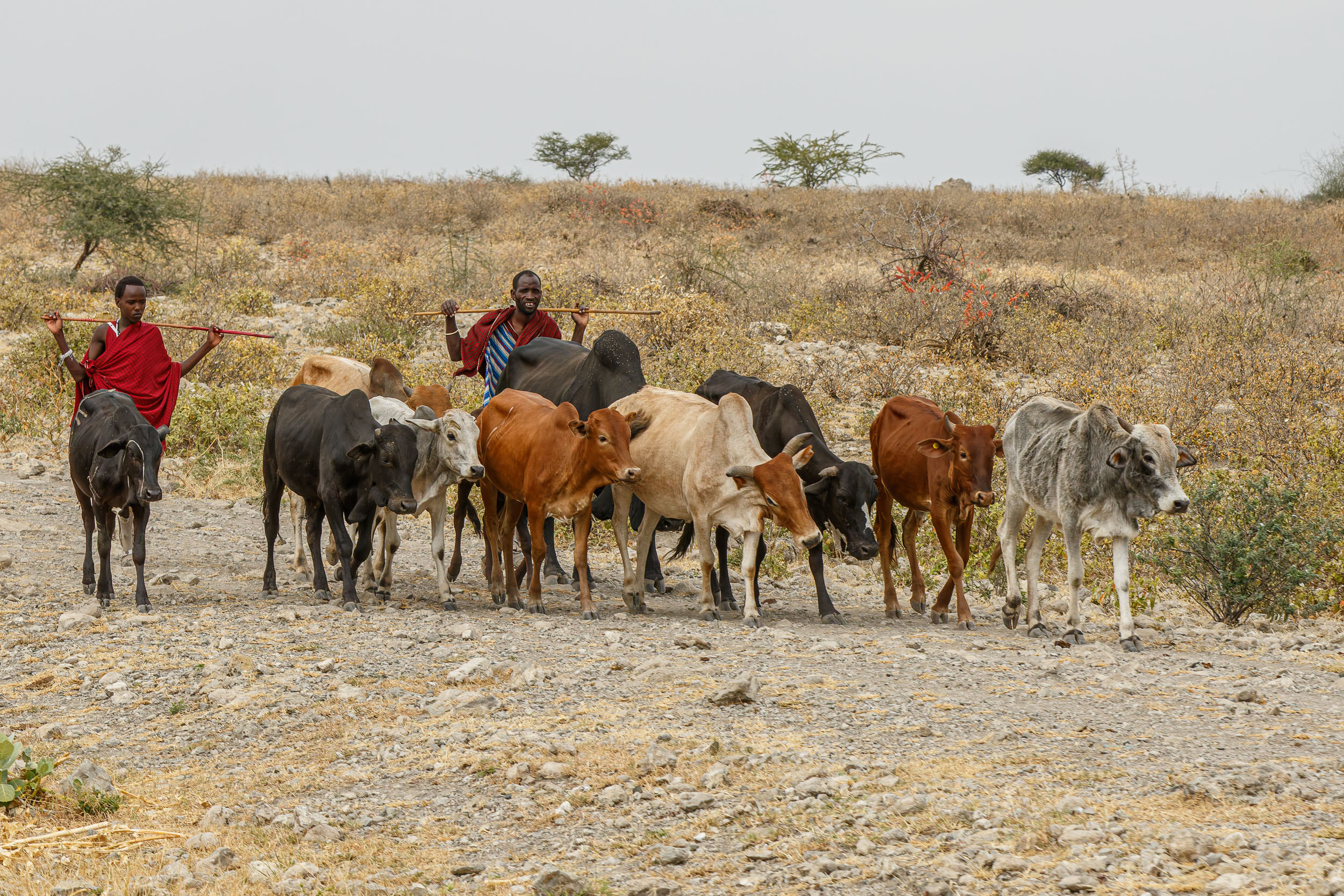
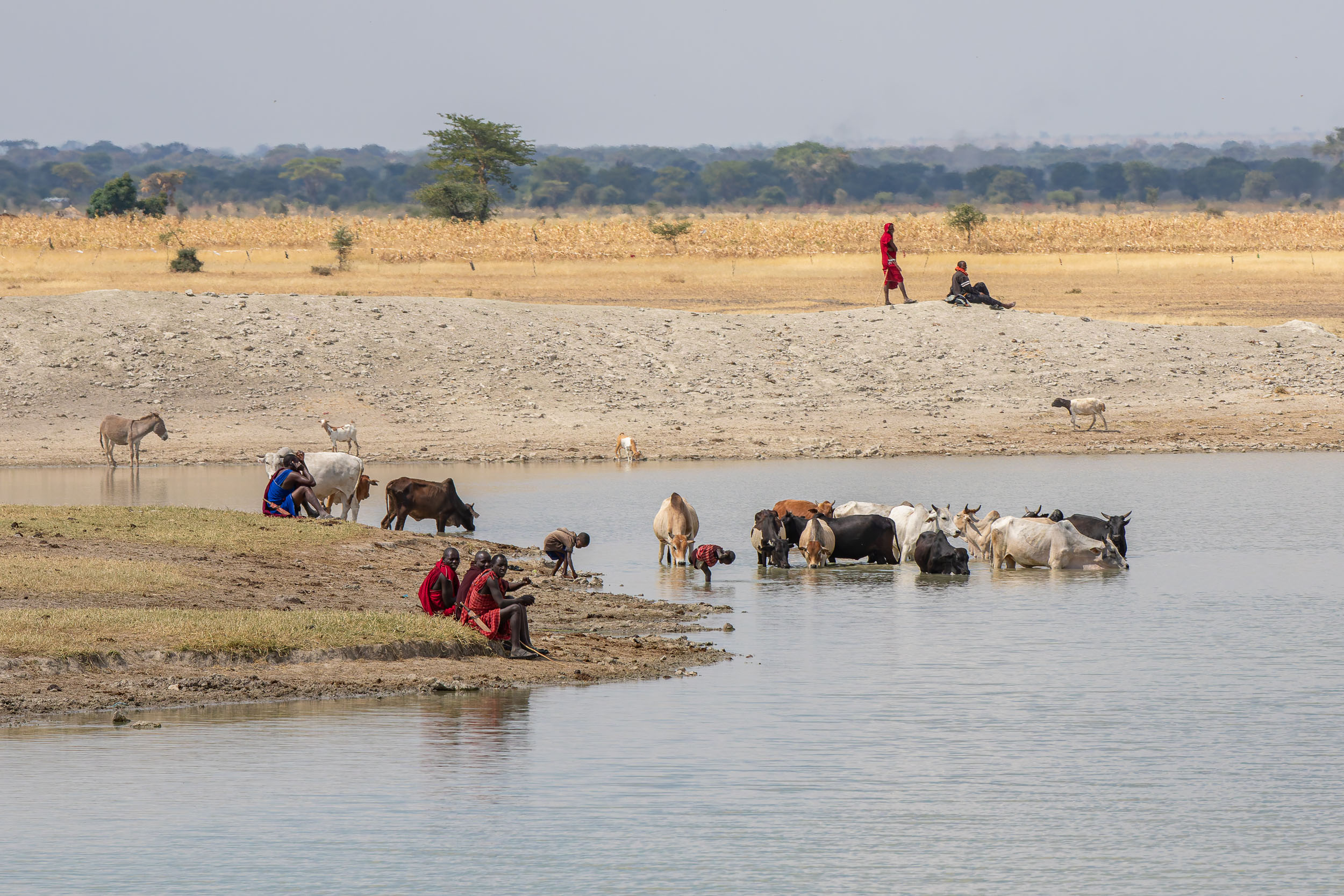
At roadside water basins, Maasai men bathed their cattle, the animals stepping carefully into the muddy pools as traffic passed along the smooth asphalt road.
The road itself was excellent. Fresh asphalt cutting cleanly through the landscape.
But the rhythm of life beside it felt unchanged by time.
Gradually, as we approached Lake Eyasi, the terrain flattened and the vegetation thinned. The vast seasonal lake basin lay ahead — wide, pale, and often receding during the dry season into shimmering salt flats rather than deep water.
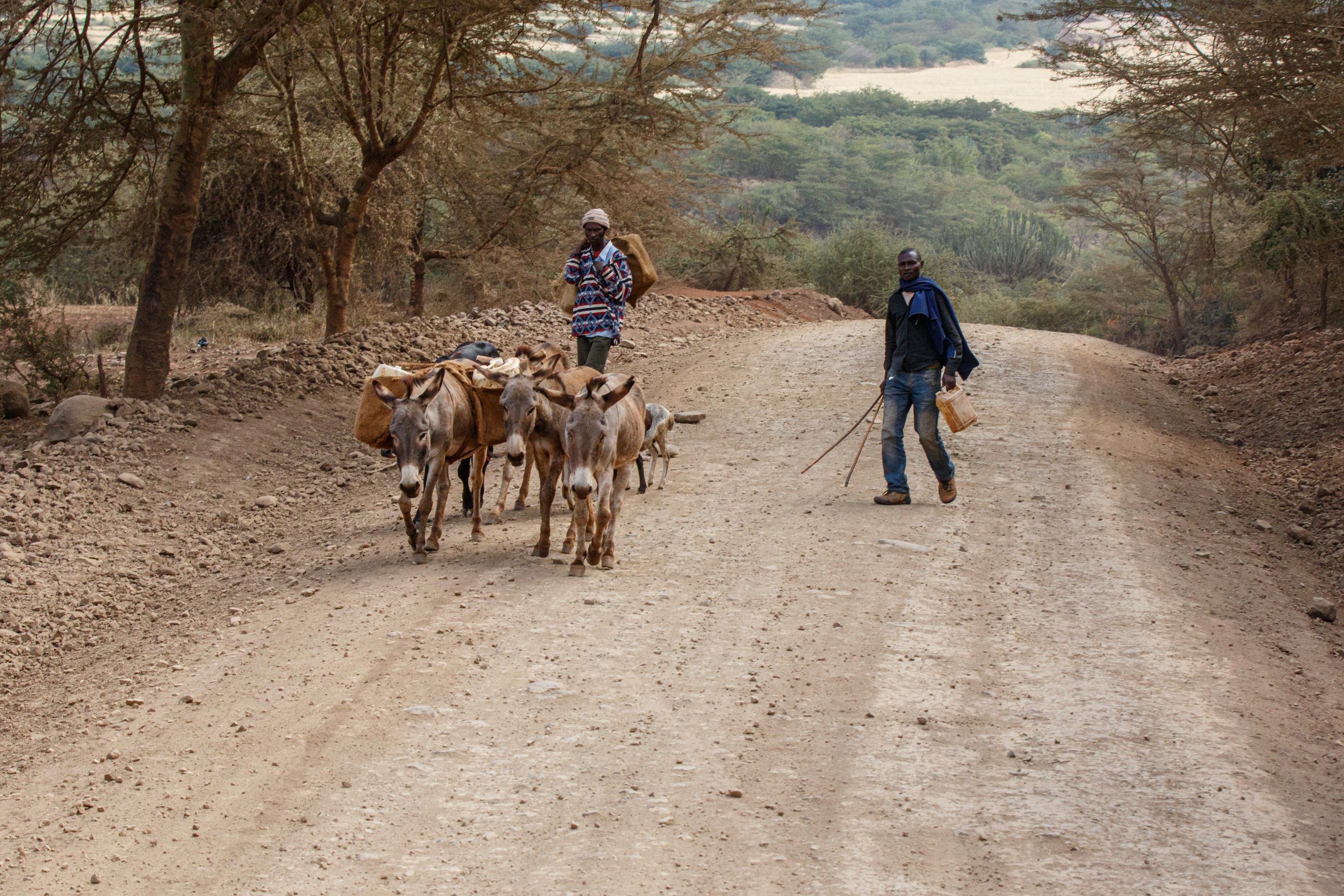
And somewhere along that stretch, the asphalt ended.
The road turned to gravel.
Dust returned.
The shift felt symbolic.
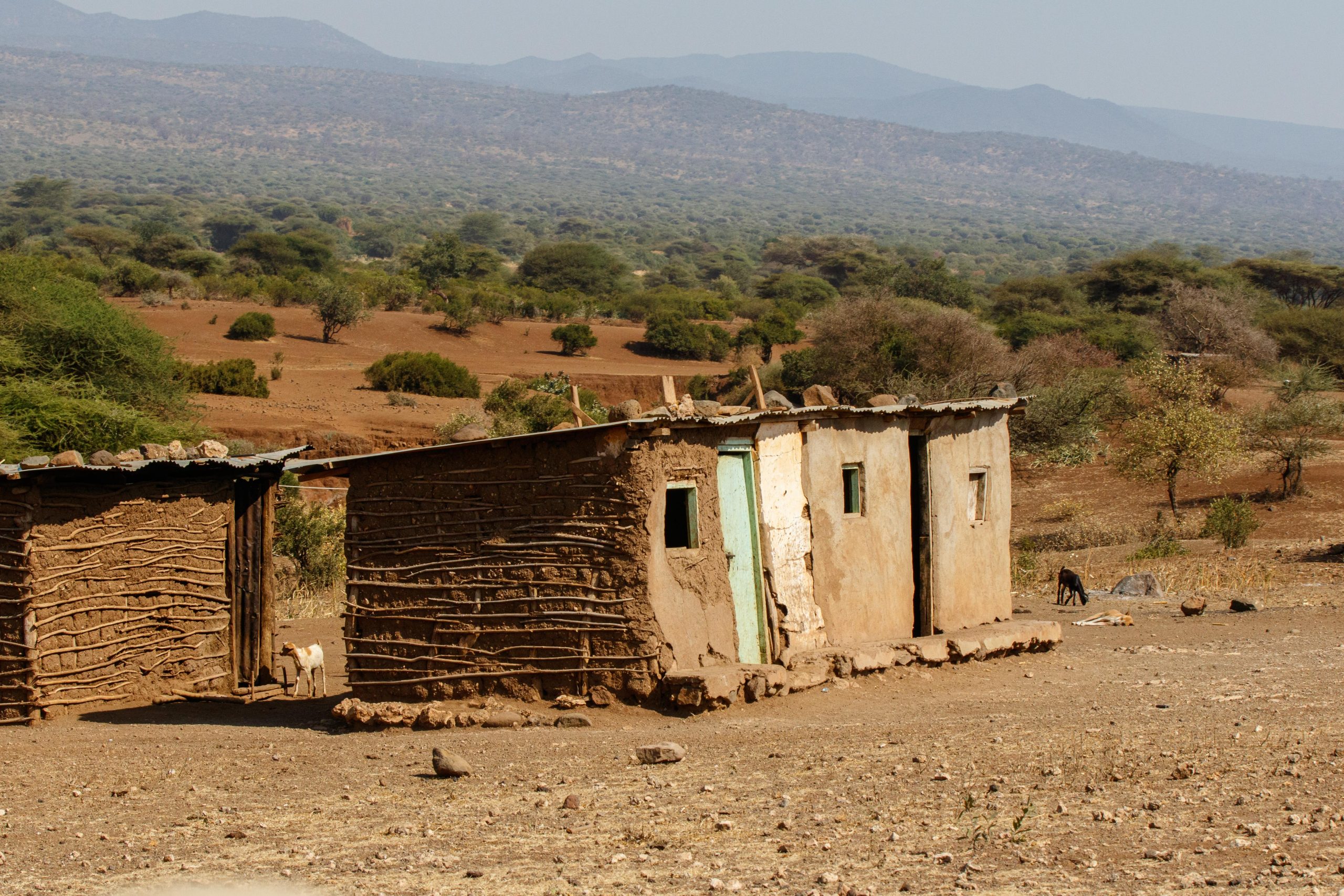
Maasai homesteads became fewer, replaced by the more solid mud homes typical of the Datoga people — low rectangular structures blending almost seamlessly into the earth tones of the basin. The Rift Valley escarpment stood quietly in the distance, forming a dramatic natural boundary around the lake.
By mid-afternoon, we reached Tindiga Camp.
The setting was modest and calm — a green refuge in an otherwise dry, expansive landscape. While Chris went out to locate a nearby Hadzabe settlement — as they move seasonally and are not fixed in one place — we explored the quiet surroundings.
Lake Eyasi – On the Edge of the Rift Valley
Lake Eyasi lies southwest of the Ngorongoro Highlands, in a dry basin framed by the escarpments of the Great Rift Valley.
Unlike the wildlife-rich parks of northern Tanzania, this region feels sparse and elemental. The lake itself is shallow and seasonal, often retreating during the dry months into pale salt flats and shimmering horizons.
Acacia scrub, dust, distant hills.
It is not a place of spectacle.
It is a place of stillness.
And it is within this quiet basin that both the Hadzabe and Datoga have lived for generations, shaped by water, season, and movement.
Tindiga Camp
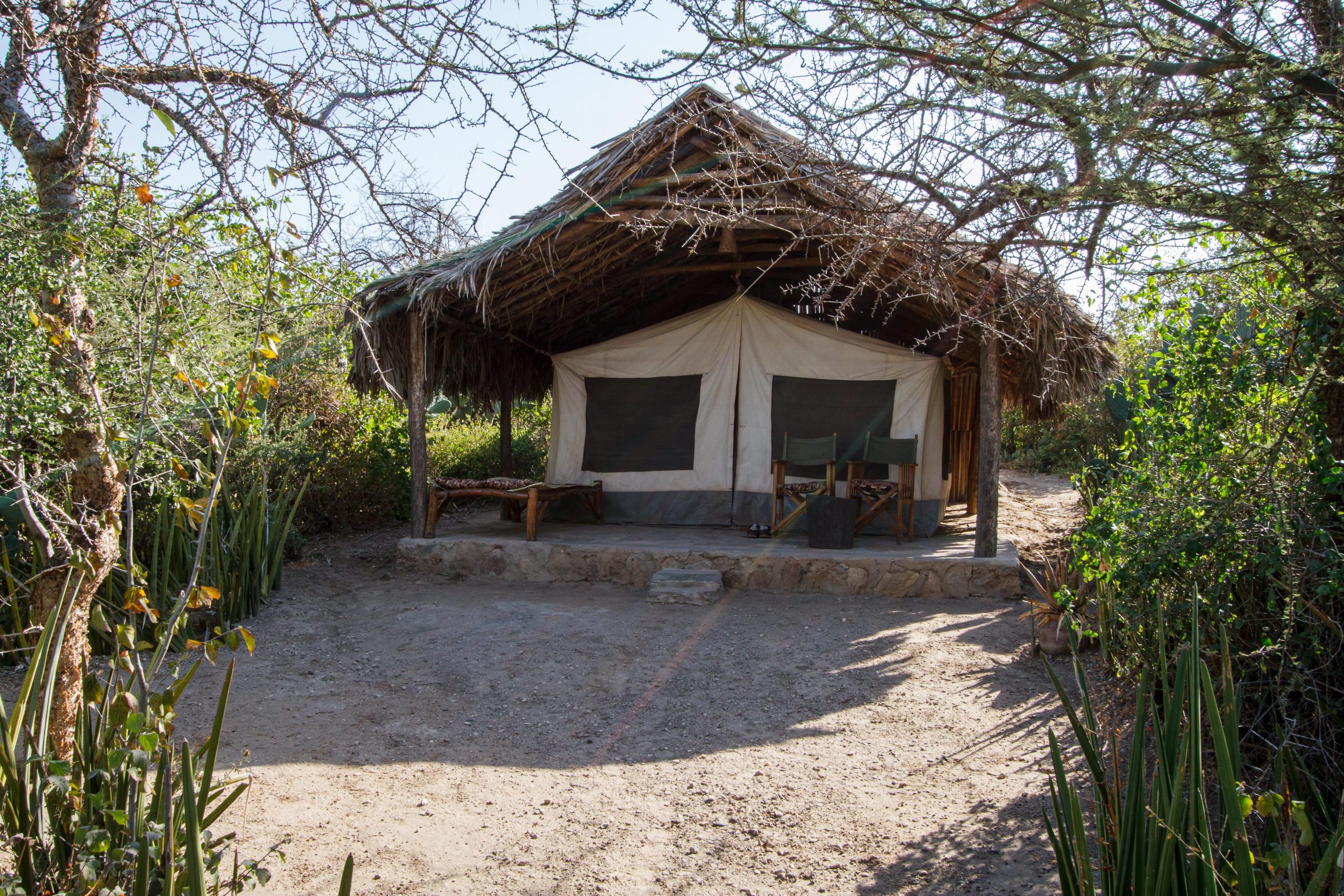
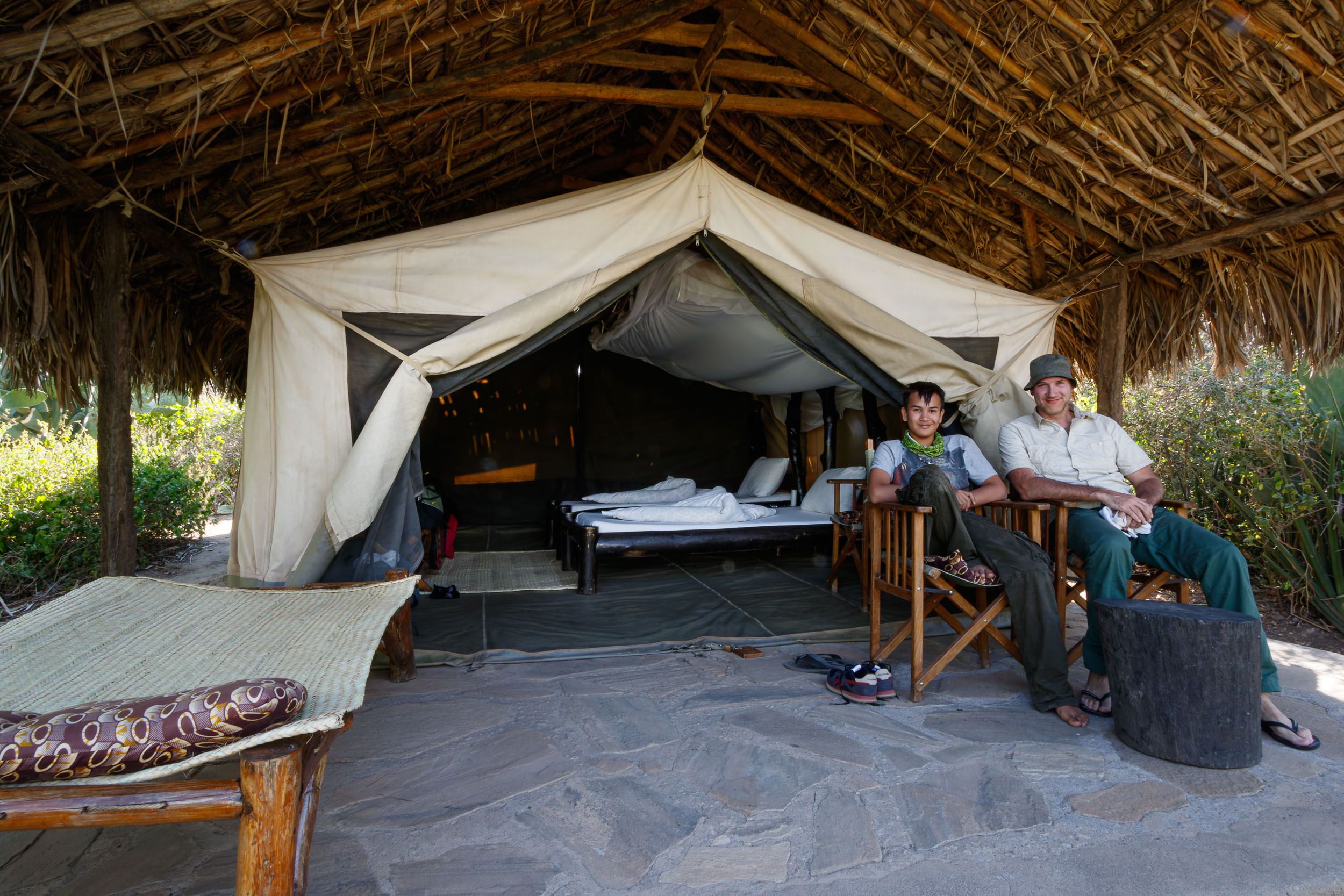
Tindiga Camp felt simple and unpretentious — a small oasis of green in an otherwise dry landscape. Our tent stood beneath scattered trees, with the escarpment faintly visible in the distance.
It was not about luxury here.
It was about proximity.
As evening settled, the basin grew quiet. No distant elephant rumbles. No predator calls echoing through woodland. Just open sky and a stillness that felt different from the national parks.
We turned in early.
Morning would come quickly.
Explore the Photo Gallery
A curated visual collection from Lake Eyasi and surroundings