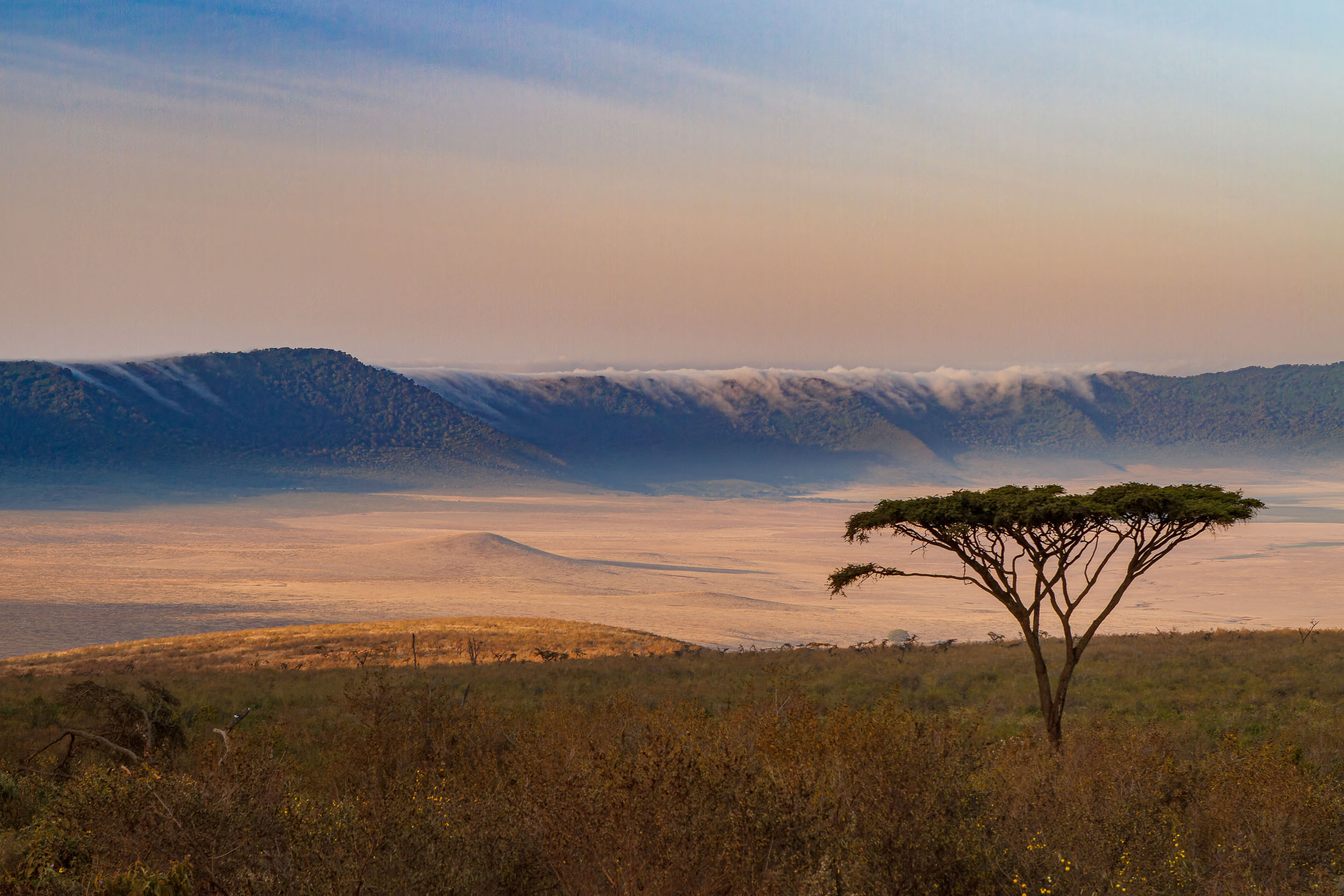
We left Rhotia Valley Tented Lodge before dawn. The air in the Ngorongoro Highlands was unexpectedly cold, and mist clung to the slopes as we drove toward the entrance gate of the Ngorongoro Conservation Area.
The gate sits along the crater rim, less than half an hour away. We waited in near silence, engines idling in the thin morning air, watching light slowly build over the highlands.
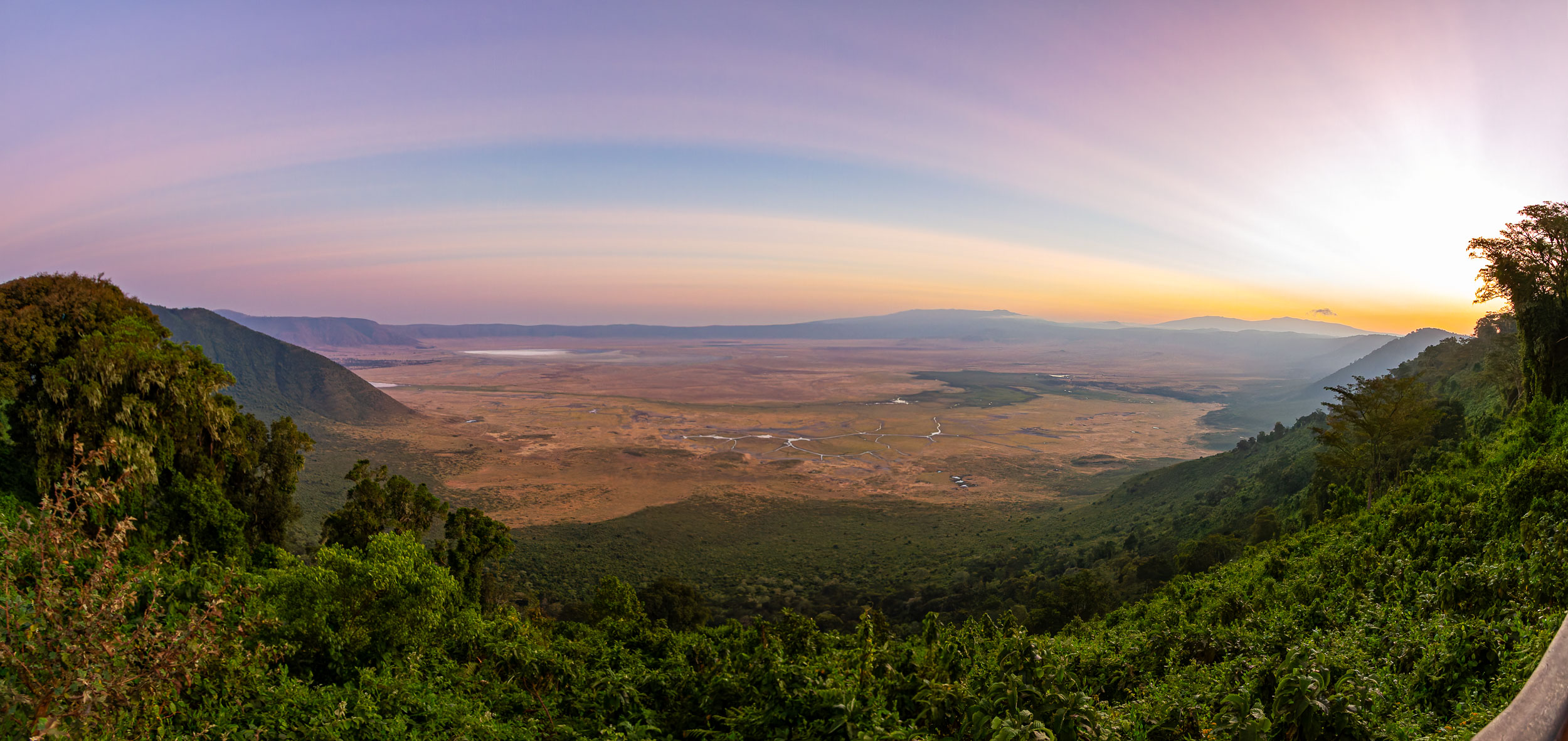
Below us lay the Ngorongoro Crater.
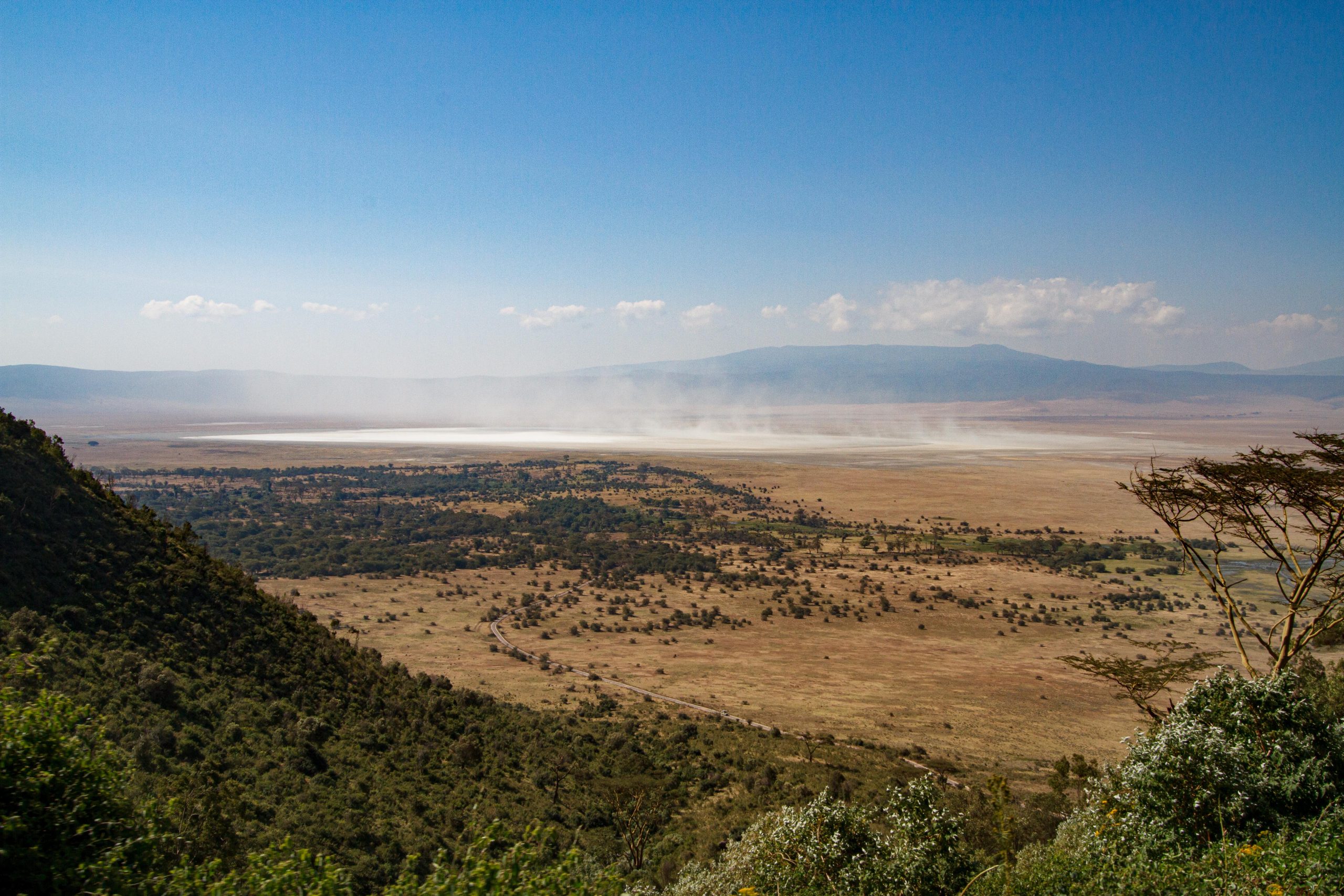
From the rim, the basin appears both vast and enclosed — grassland, marsh and soda lake contained within steep volcanic walls. It feels less like open wilderness and more like a world held in suspension.
Formation of the Ngorongoro Crater
A UNESCO World Heritage Site, the Ngorongoro Crater formed two to three million years ago when a massive volcano erupted and collapsed inward, creating a vast caldera.
Today, the crater measures approximately 610 metres deep and covers around 260 square kilometres. The entire basin rests at roughly 1,800 metres above sea level.
The name “Ngorongoro” is believed to echo the sound of cowbells — ngoro ngoro — used by Maasai pastoralists who historically grazed cattle in the region. The conservation area remains a cultural landscape as much as a geological one.
Nearby, at Olduvai Gorge, fossil discoveries have revealed evidence of early hominid species dating back millions of years. Human presence in this region is ancient, layered deeply into the volcanic terrain.
Ngorongoro is not only a collapsed volcano. It is a landscape shaped by both tectonic force and human continuity.
Descent into the Caldera
Driving down into the crater feels almost unreal. The road curves tightly along the forested inner wall before opening suddenly onto open grassland.
And almost immediately — wildlife.
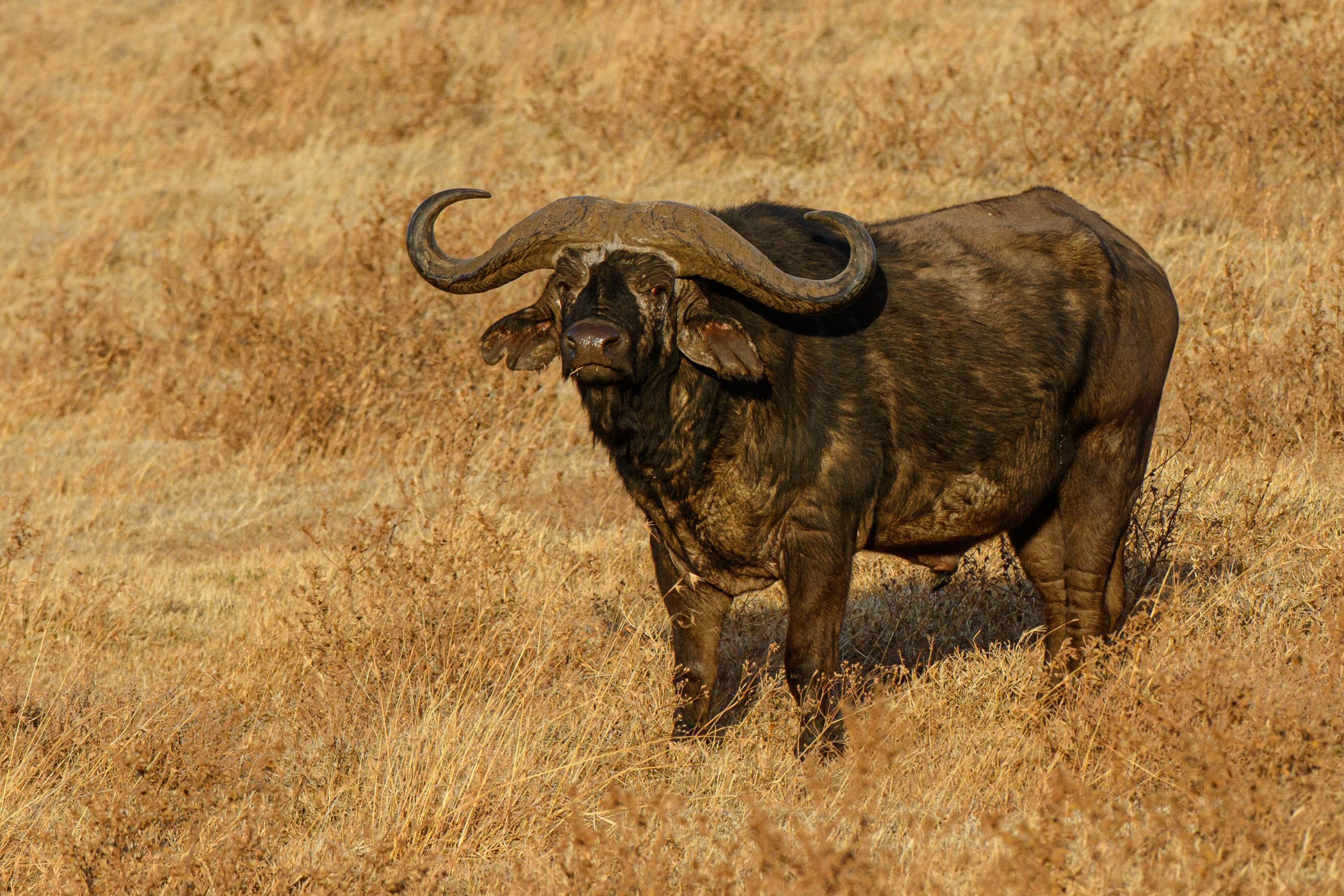
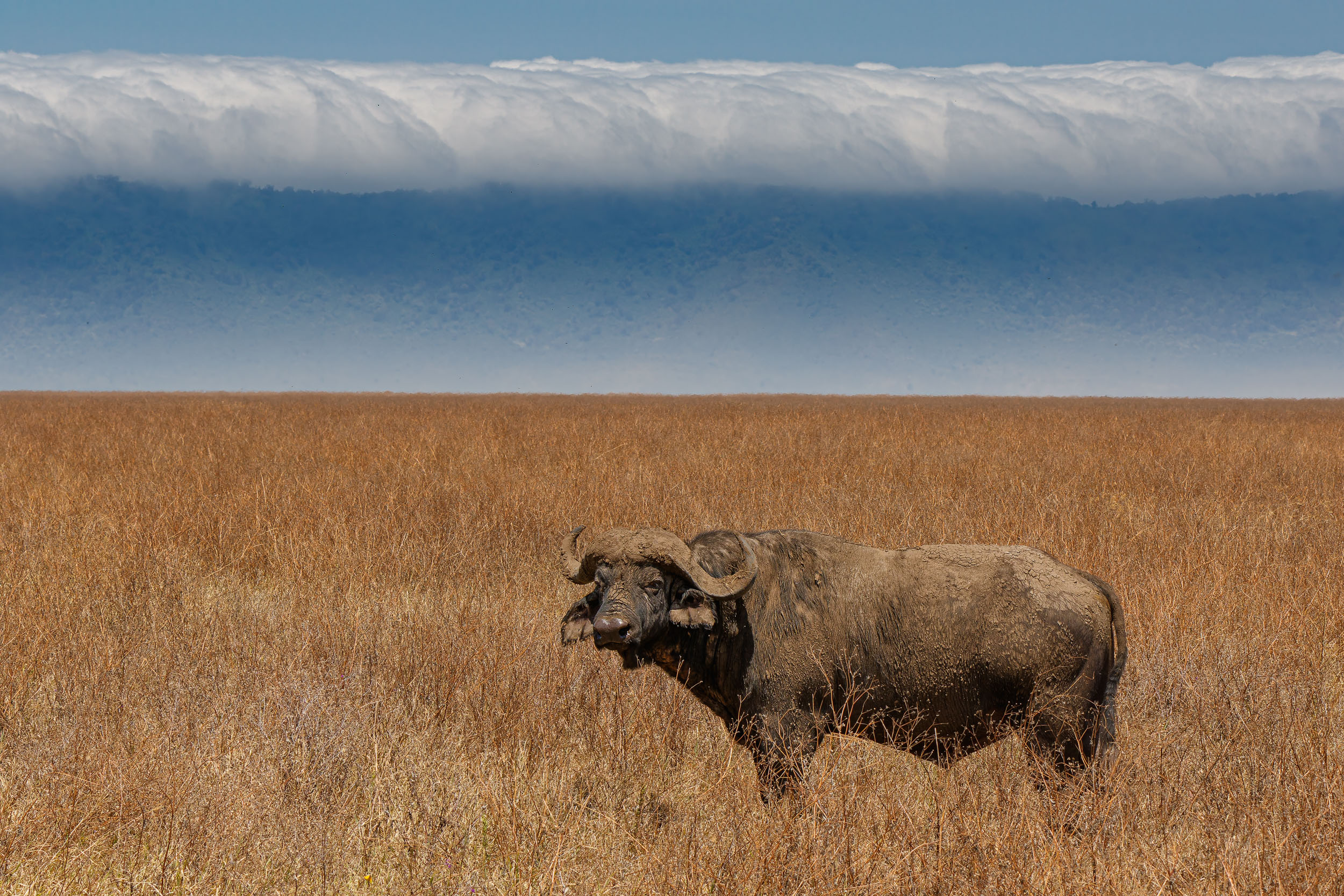
At the bottom of the descent, we were welcomed by a lone buffalo bull standing in beautiful golden morning light. Motionless. Heavy. Watchful.
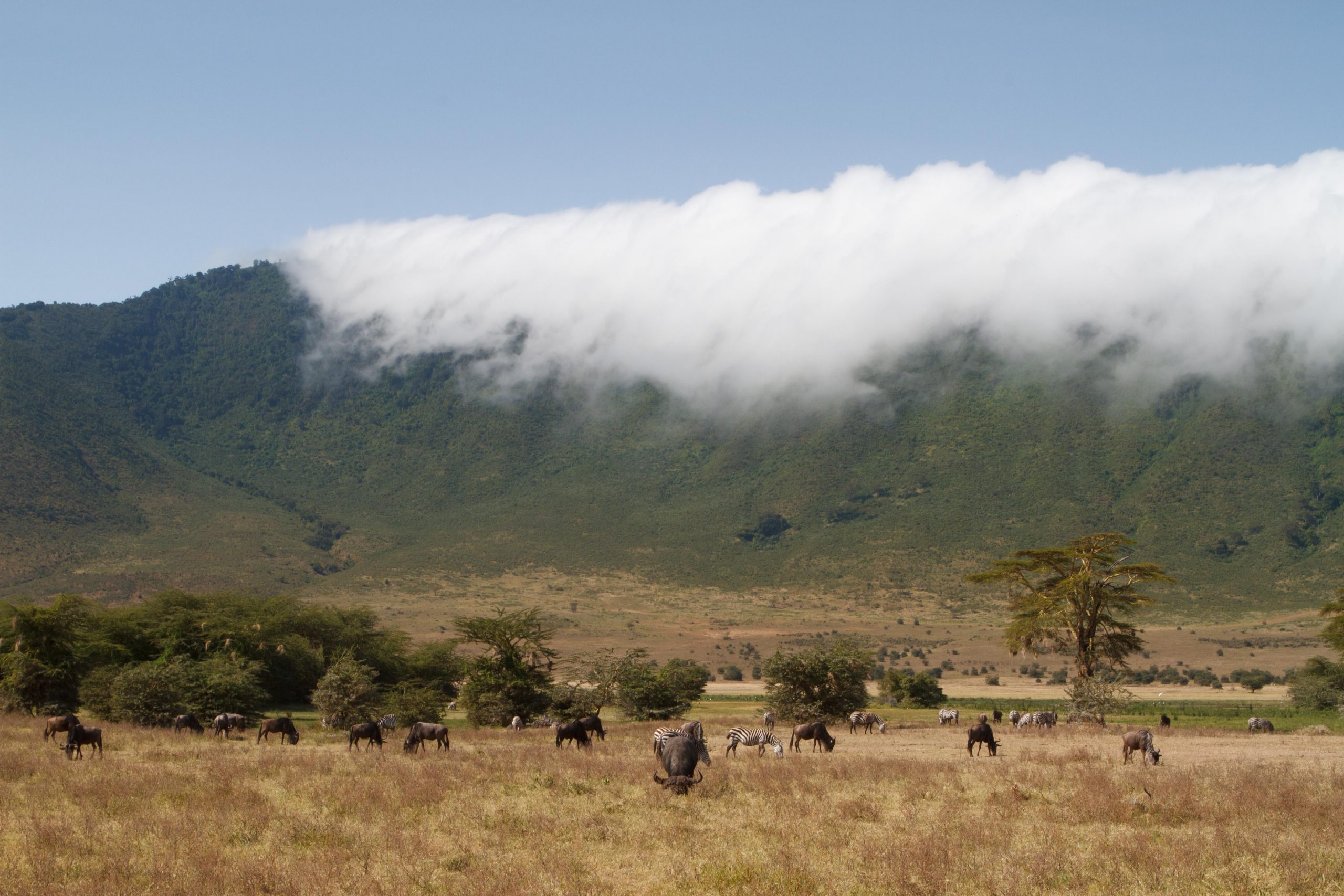
The scale felt compressed. Animals were visible in every direction, yet always framed by the crater walls.
Wildlife on the Crater Floor
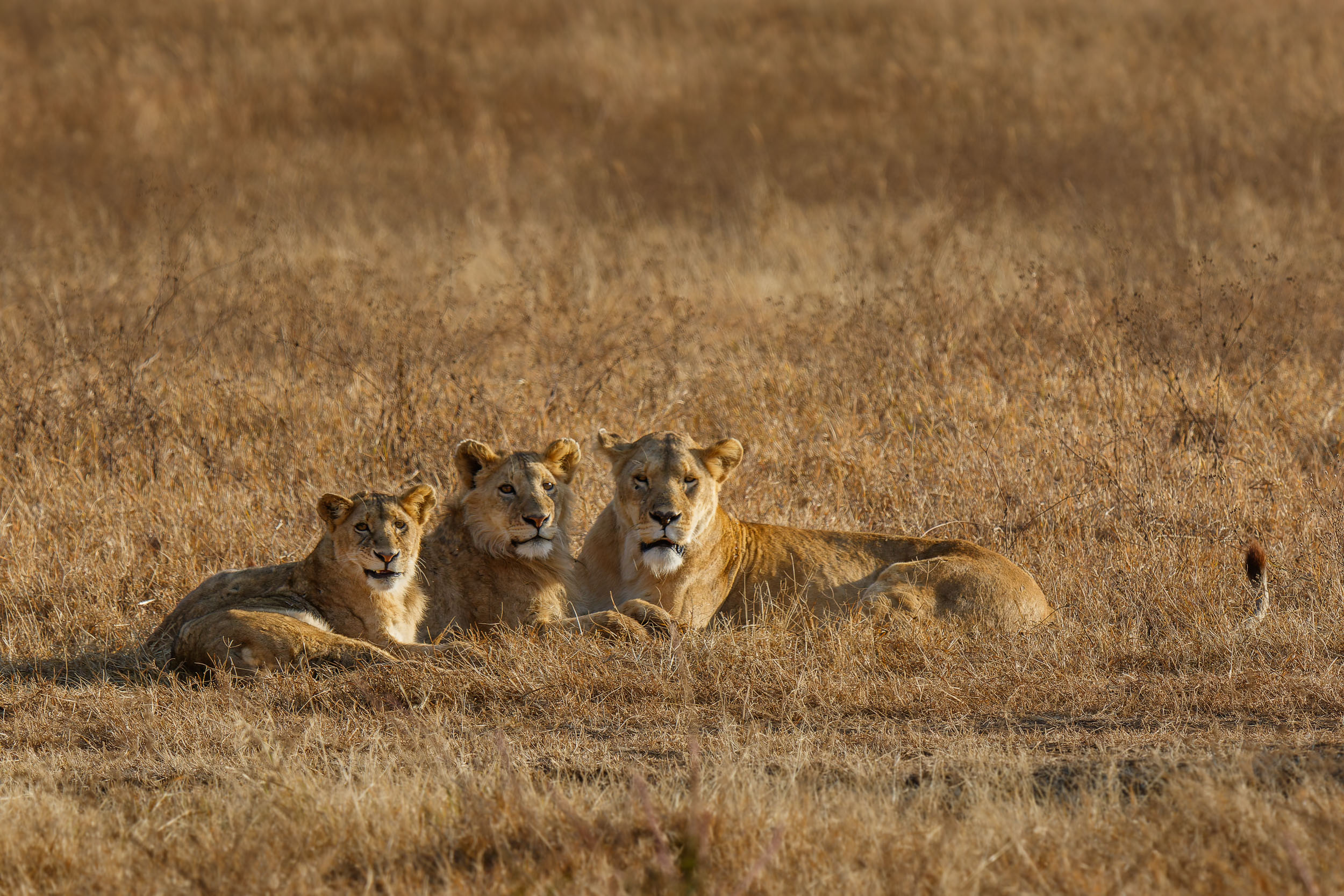
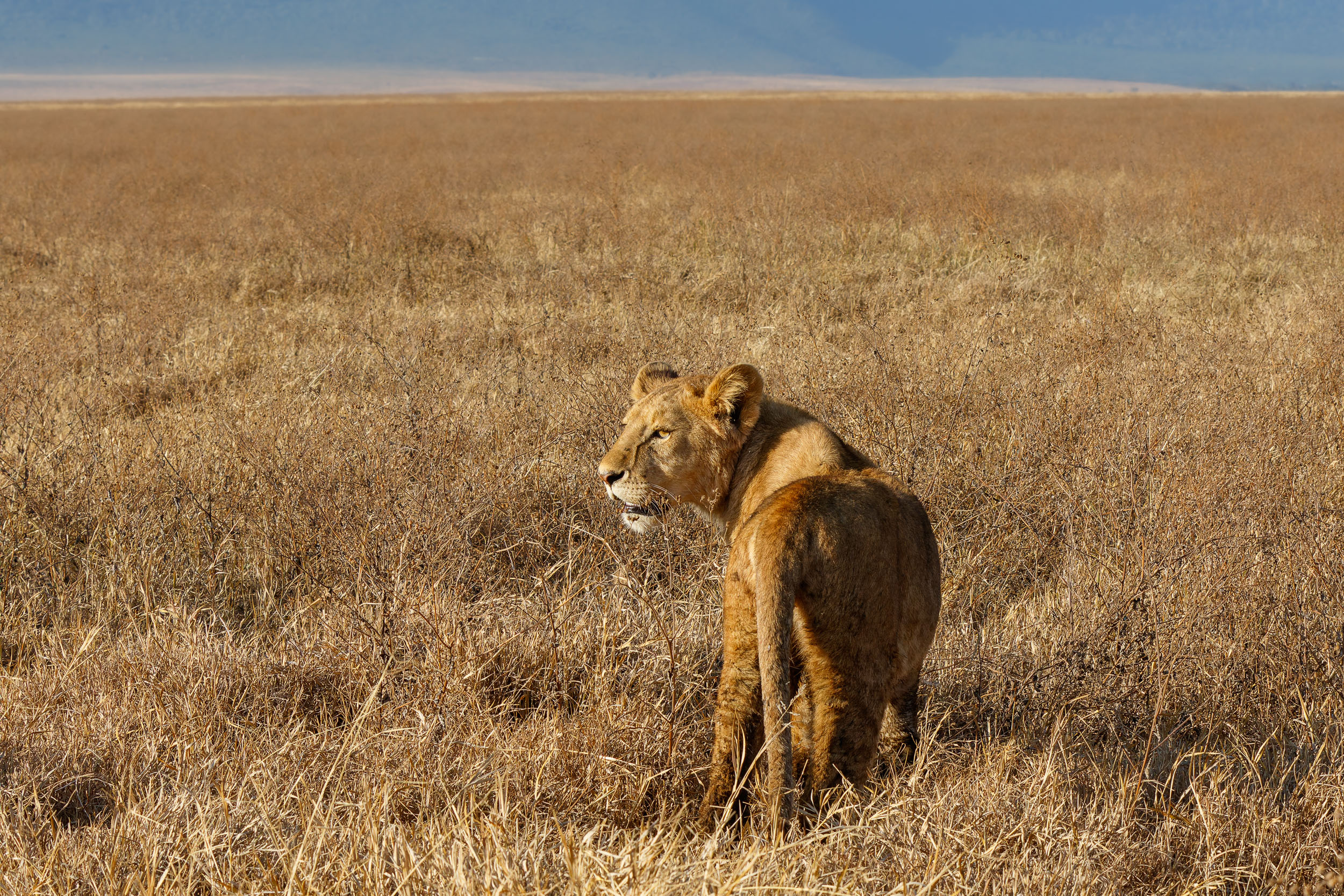
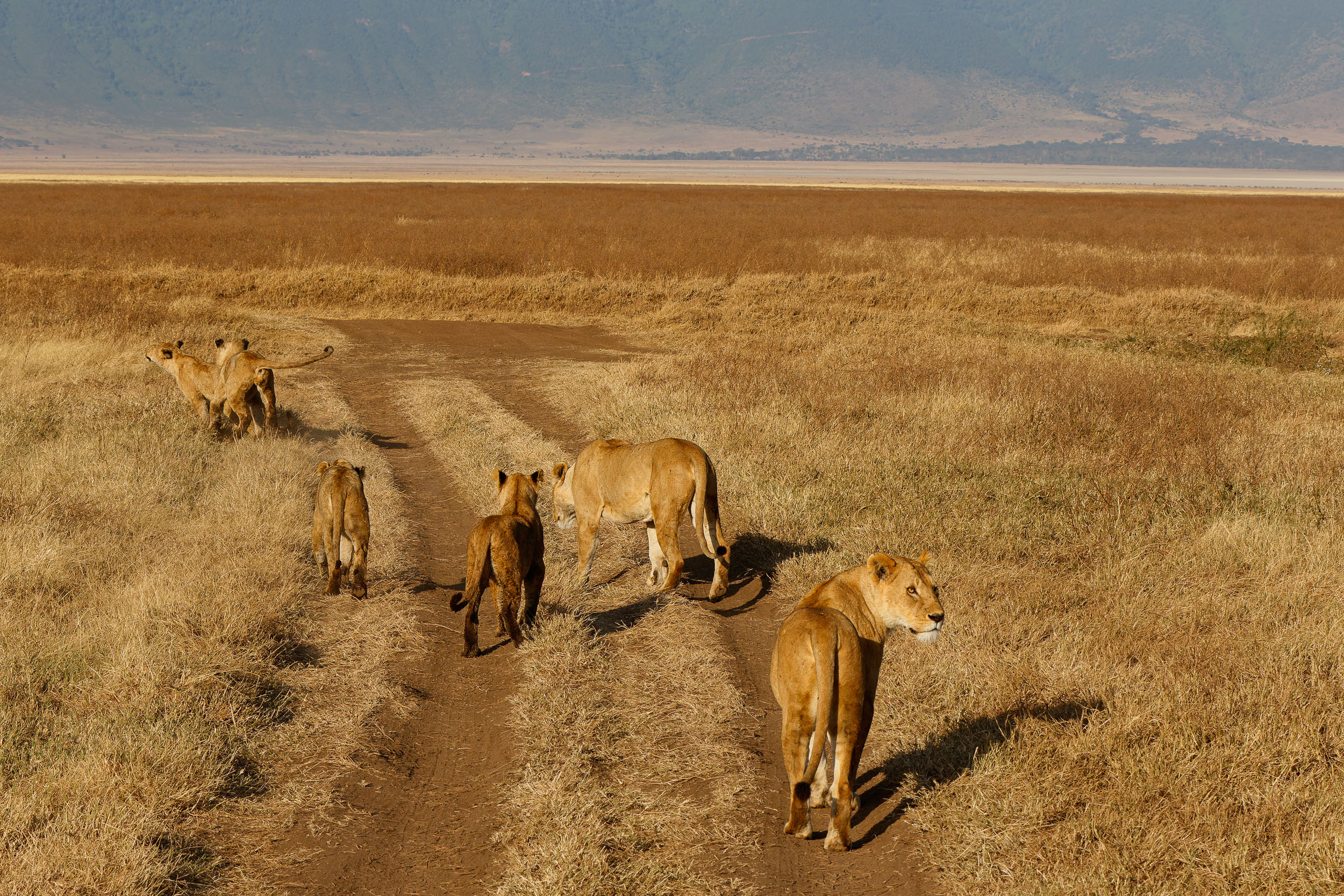
Soon after the buffalo, our first lion pride appeared.
They were spread across the grass, enjoying the early sun. Cubs tumbled over one another in play while the females remained alert, scanning the plains. After some time, the pride rose almost in unison and began moving with quiet purpose across the grassland.
We followed briefly. No prey was visible, and the lions moved without urgency. Eventually, we let them continue and drove on.
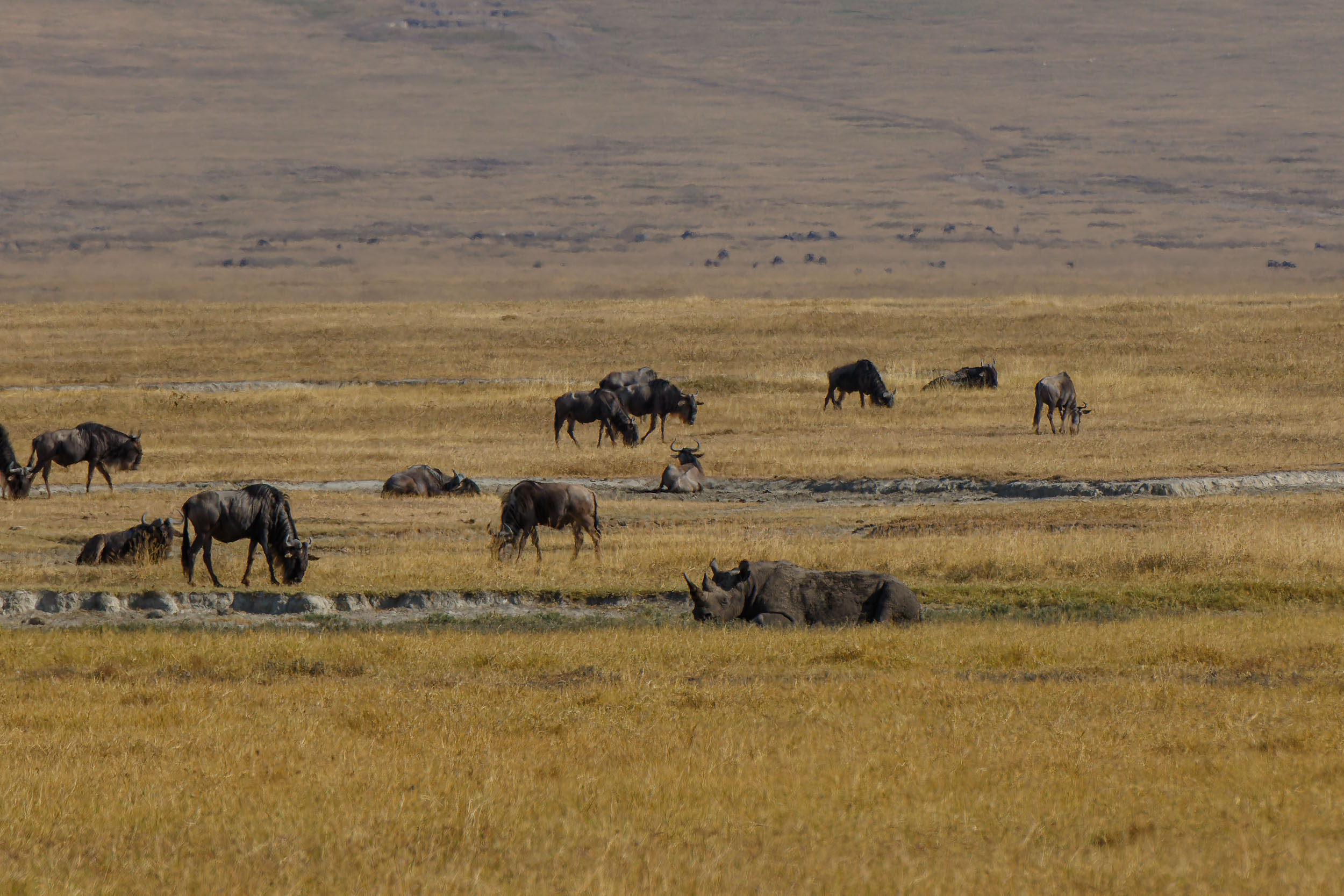
Then came one of the most significant sightings of the day — our first black rhino of the entire journey.
It lay partially submerged in a muddy pool in the middle of the savanna, blending almost seamlessly with a herd of wildebeest nearby. From a distance, it would have been easy to miss. Rhino sightings here are never guaranteed. This one felt rare and deliberate.
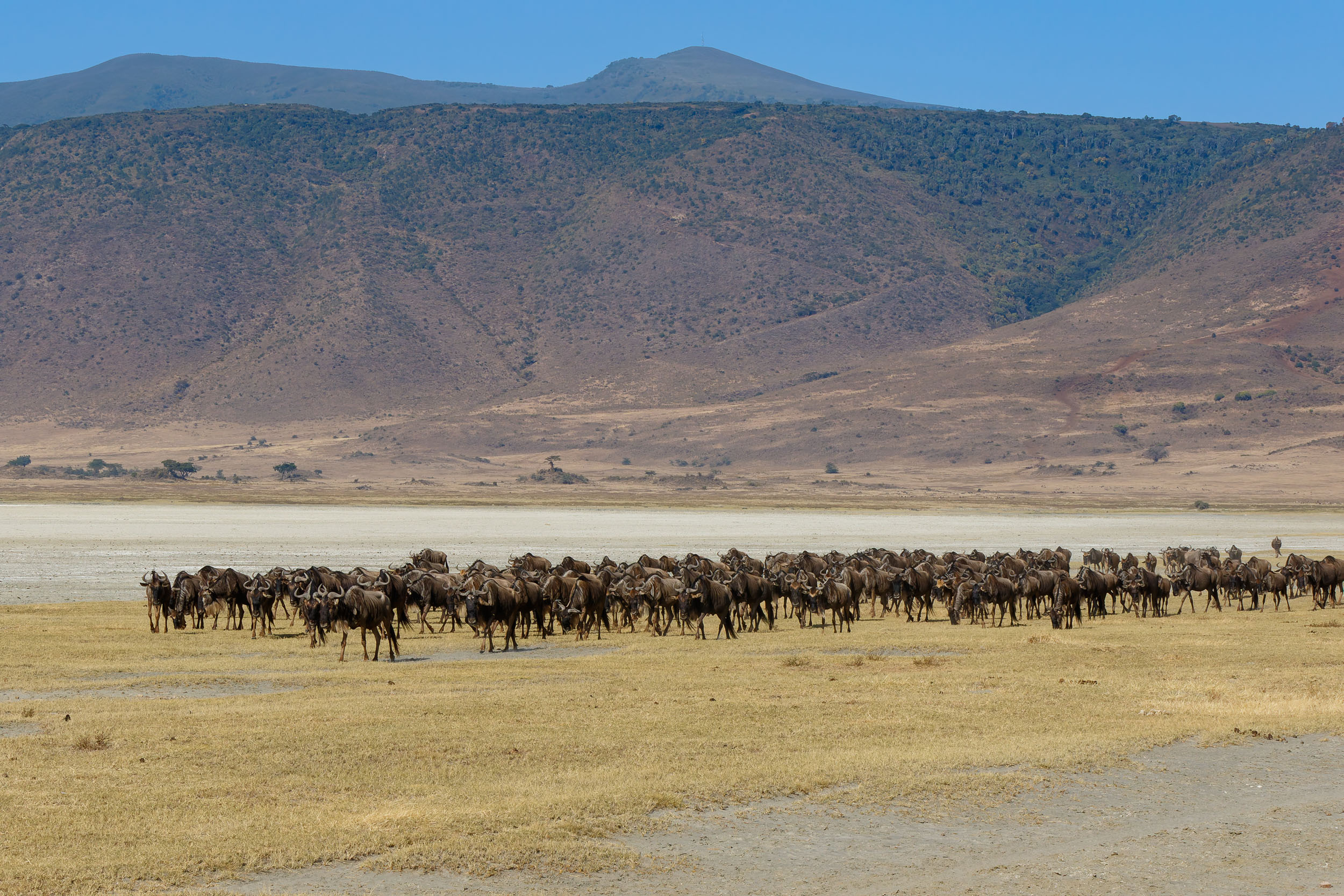
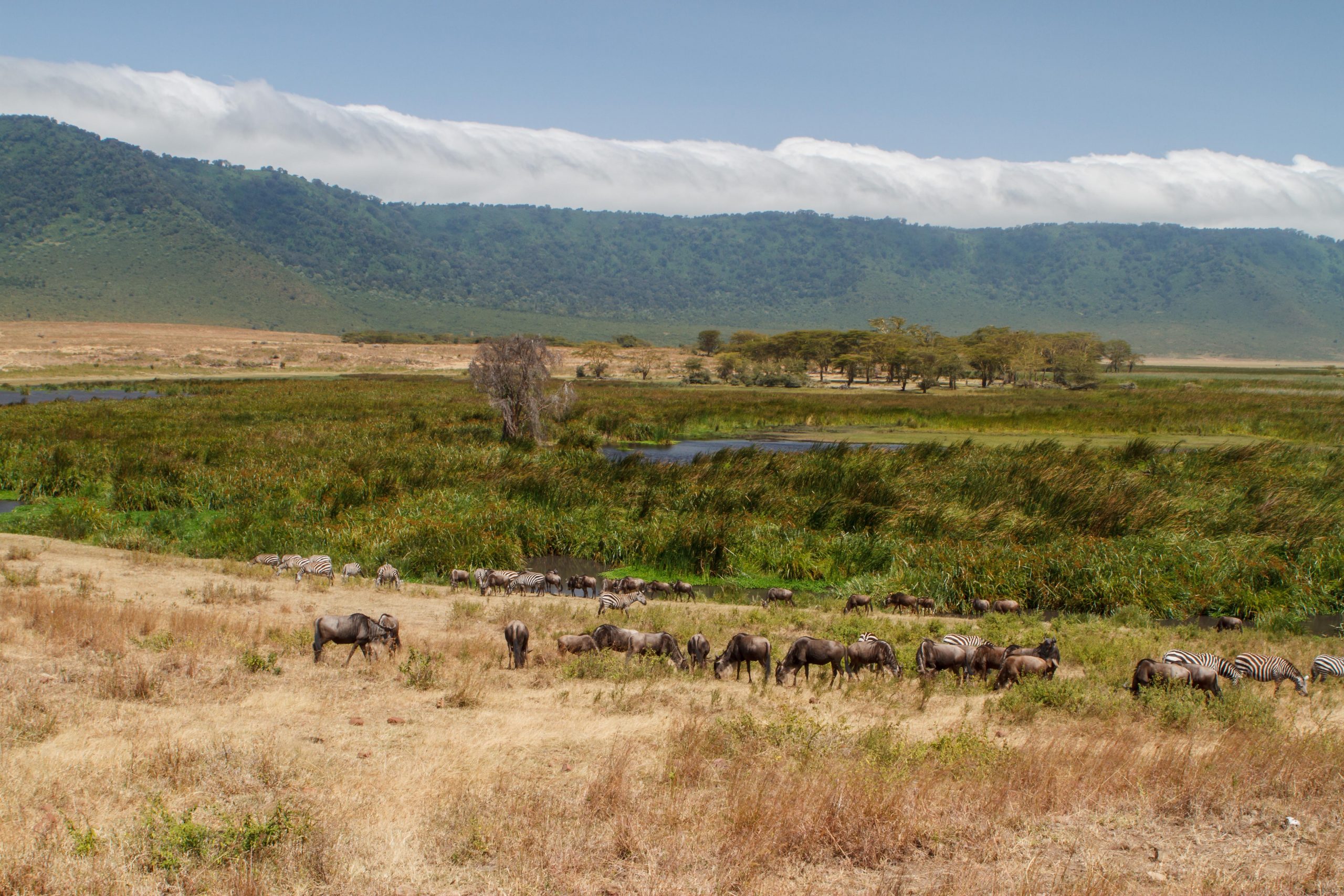
We continued along the edge of the central salt pan, where we encountered the crater’s localized seasonal wildebeest movement — a smaller echo of the great migration that unfolds across the wider Serengeti ecosystem.
Toward the marshlands, the landscape shifted again.
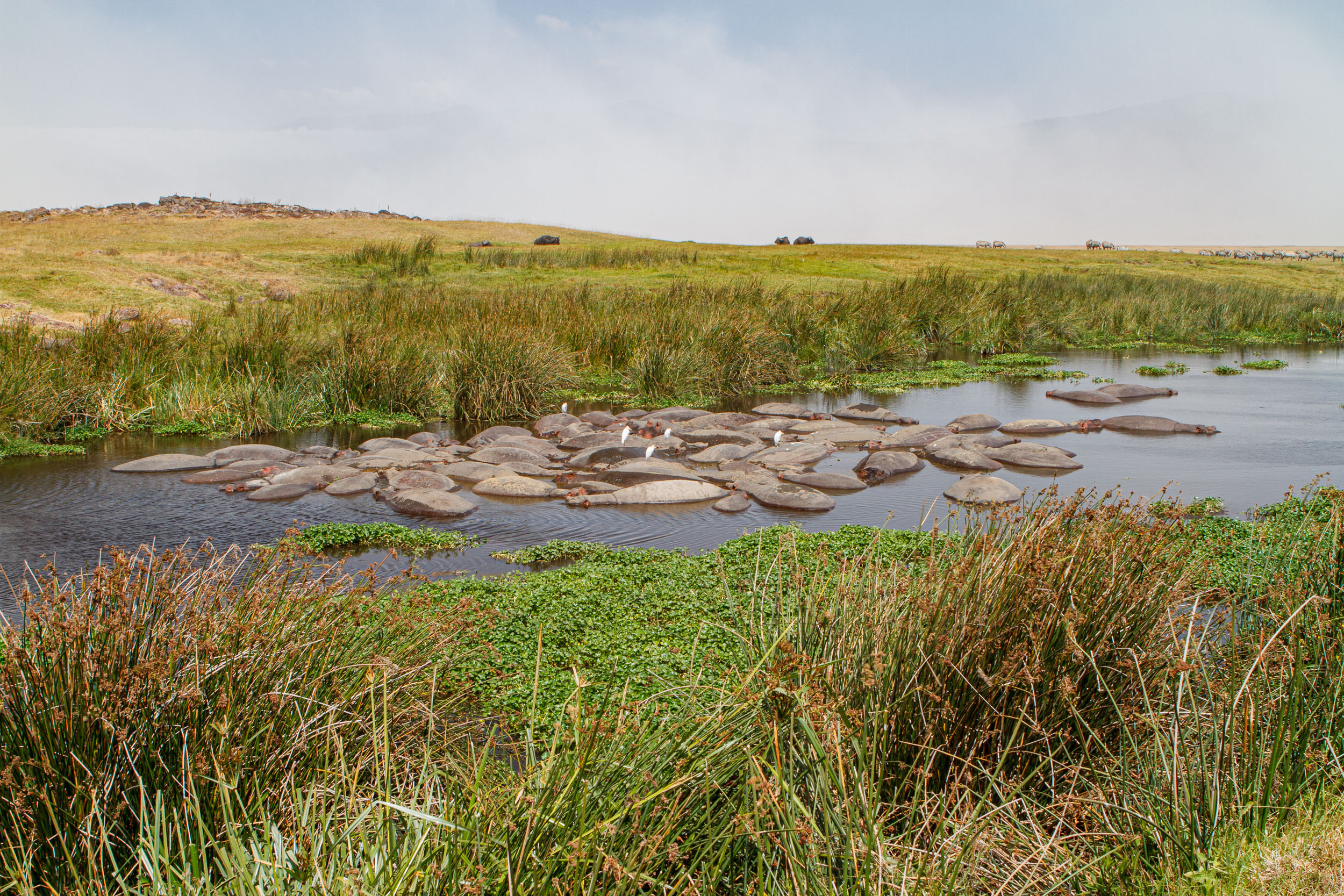
Wet swamps formed a stark contrast to the surrounding dry savanna. Here we found waterbuck, elephants, ostriches, and a large pod of hippos resting in shallow water. The air felt cooler near the marshes. Birdlife increased. Movement concentrated along the edges of green.
More buffalo appeared as the morning progressed, scattered across open grassland.
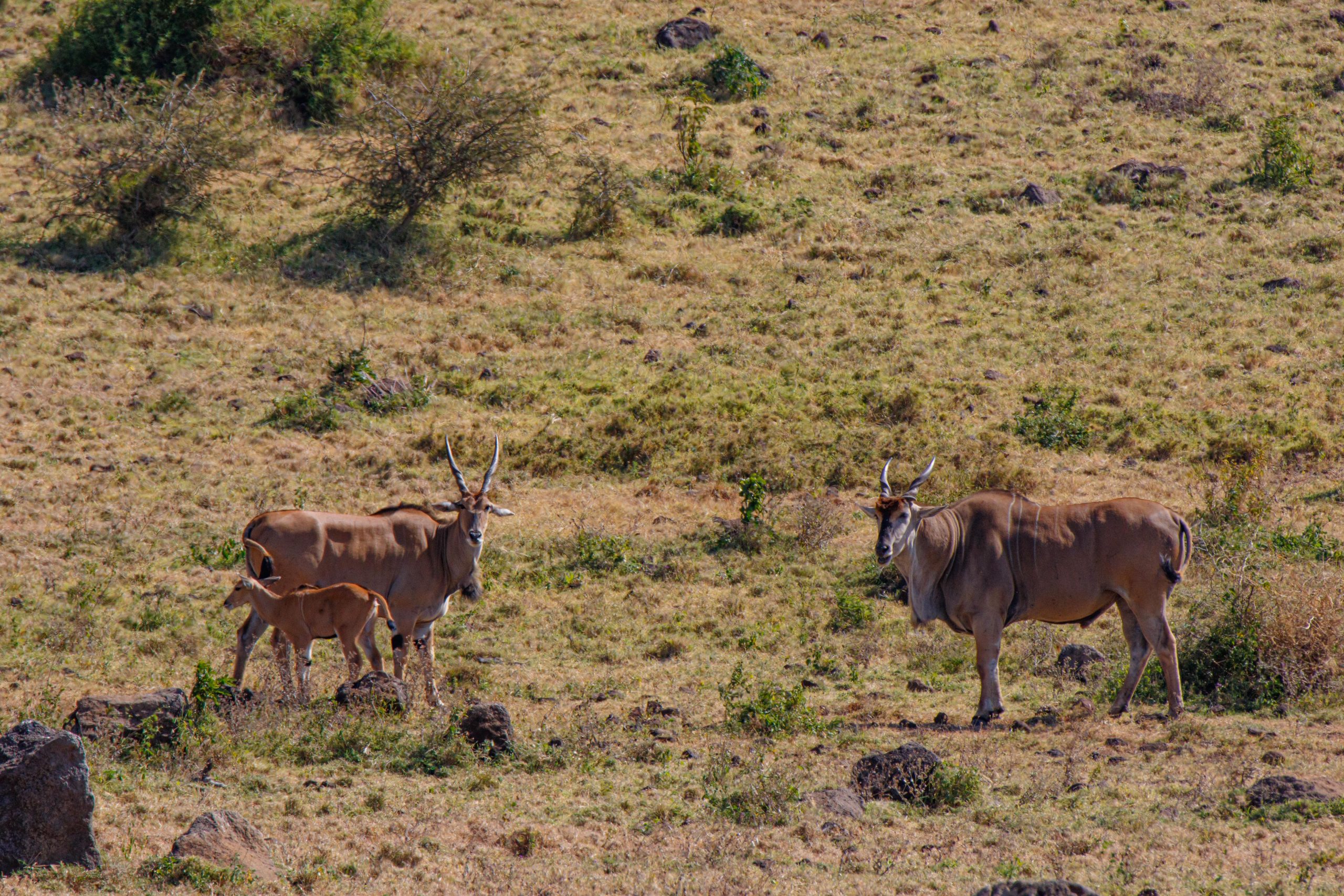
Shortly before beginning our ascent out of the crater on the opposite side, we encountered a small herd of eland — tall, calm, almost understated. A relatively rare sighting in this setting, and a quiet closing note to the drive.
A Contained Ecosystem
What makes Ngorongoro distinct is not simply the number of animals, but the enclosure.
Within a relatively small area, the crater contains multiple habitats — grassland, woodland, marsh and soda lake. Permanent water sources support year-round wildlife populations. Predators, grazers and scavengers exist in visible proximity.
Movement feels circular rather than migratory.
There is no distant horizon — only the steep walls rising on every side. The geology defines the rhythm. The boundaries shape behavior.
At times, the scene feels almost cinematic. Yet the sensation is rooted in volcanic history rather than spectacle.
Leaving the Crater
Climbing the steep forested road toward the rim, we stopped at a viewpoint overlooking the basin below.
From above, the crater floor appeared almost abstract — pale salt pan, green marshes, herds moving slowly across contained grassland.
Ngorongoro feels different from other landscapes in Tanzania. Not simply because of wildlife density, but because of its structure. It is a complete system, held within visible limits.
By early afternoon, clouds rolled across the rim as we continued westward toward Olduvai Gorge.
The crater disappeared behind us.
Ahead lay a landscape even older in story.
Explore the Photo Gallery
A curated visual collection from Ngorongoro Conservation Area and surroundings