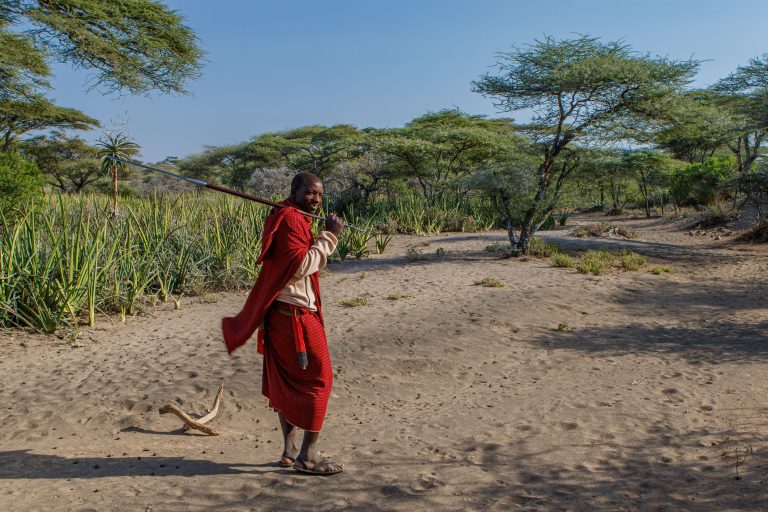
Olduvai Gorge and the Surrounding Plains
Day 6 of 12 – Tanzania Safari Trip
After leaving the Ngorongoro highlands behind, we continued west across increasingly open country toward Olduvai Gorge, arriving just in time for sunset.
The landscape shifted subtly — fewer trees, longer horizons, more sky. The crater lay behind us. Ahead stretched the plains that eventually merge with the Serengeti.
Olduvai Gorge had been a familiar name to me since childhood, back when becoming an archaeologist seemed like a real possibility. Standing here now, in northern Tanzania, that early fascination resurfaced quietly.
Few places on Earth carry such weight in the story of human origins.
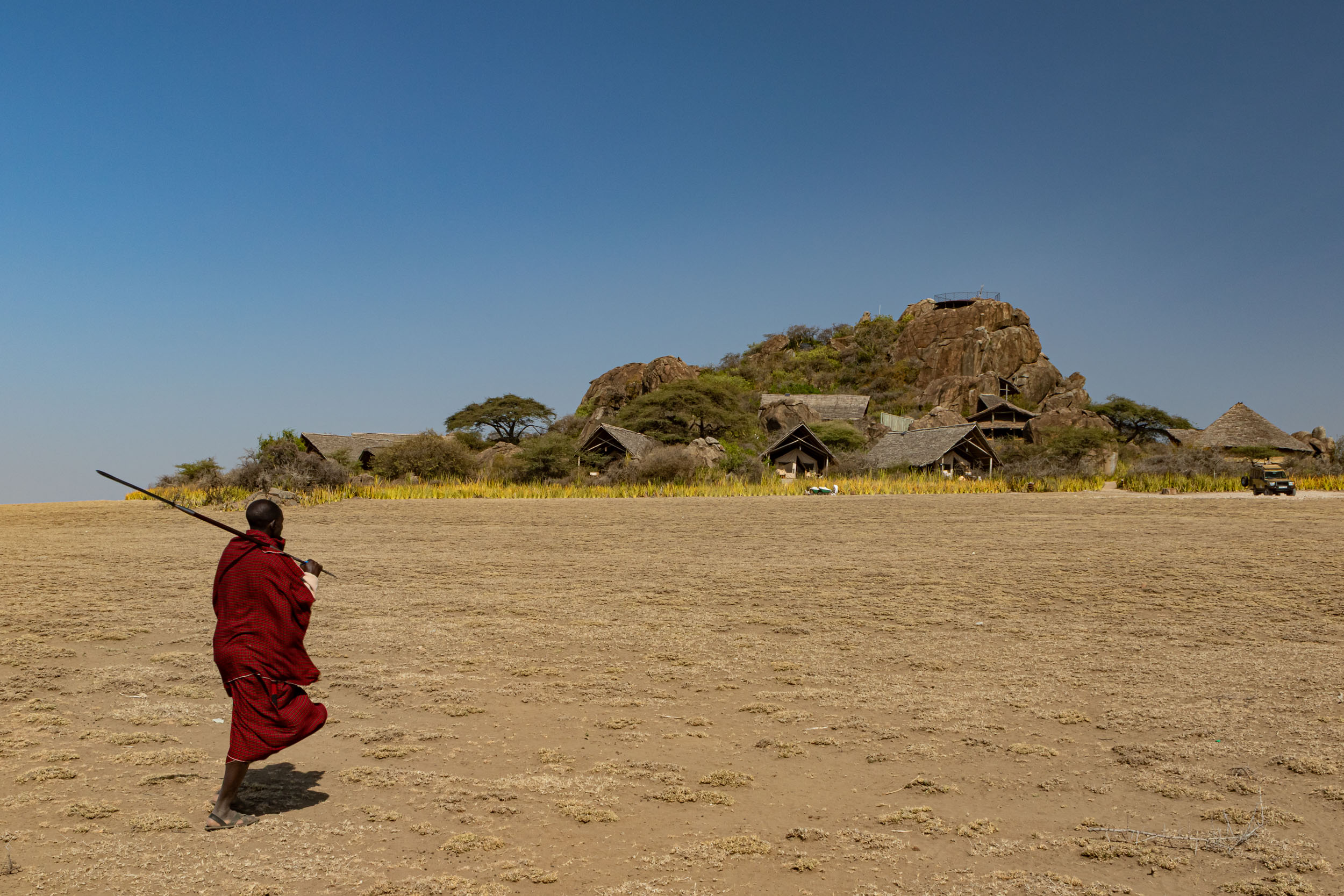
Arrival at Olduvai – Between Kopjes and Plains
As we approached our camp, we drove across vast open plains toward a cluster of large granite kopjes rising from the savanna. The camp is set among these rock formations, slightly elevated above the surrounding grassland.
Maasai herders were bringing their goats back toward their enclosures for the night. The livestock are kept close after sunset — lions still roam the nearby gorge and surrounding plains.
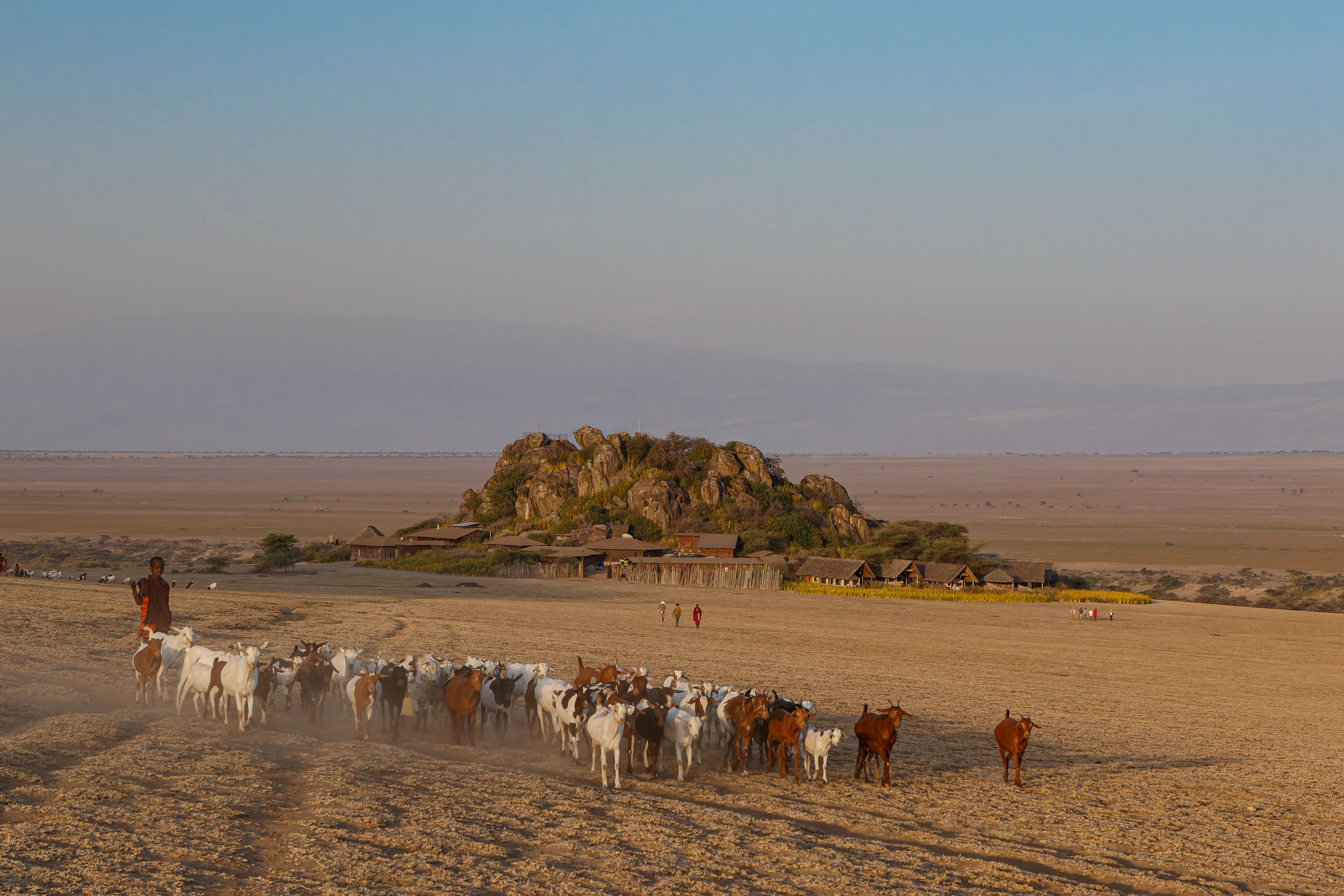
Olduvai Gorge – Layers of Human History
In the world of archaeology and paleoanthropology, few sites are more significant than Olduvai Gorge.
Beginning in the 1930s, Louis and Mary Leakey uncovered fossilized hominid remains and stone tools here — discoveries that helped establish Africa as the birthplace of humankind. Later work by Richard Leakey and others continued to deepen understanding of early human evolution.
What appears at first glance to be a modest cut in the earth has revealed millions of years of history.
The gorge itself is not dramatic in scale. It is layered — sediment stacked upon sediment, each stratum representing a different era. A river-carved incision exposing deep geological time.
Standing at its edge, the scale is intellectual rather than visual.
Olduvai compresses time.
Olduvai Tented Camp – Between Kopjes and Plains
We would spent the night at Olduvai Tented Camp, set among granite kopjes rising from the plains of the southern Serengeti ecosystem.
From the elevated viewing platform above the main building, the land stretched uninterrupted in every direction — no fences, no visible boundaries. Just open plains broken by scattered rock formations.
In the low angle of the setting sun, the dust stirred up by the herds of goats caught the light and glowed deep orange. For a moment, it looked as if scattered patches of the plains were on fire — small drifting clouds of flame moving slowly across the horizon.
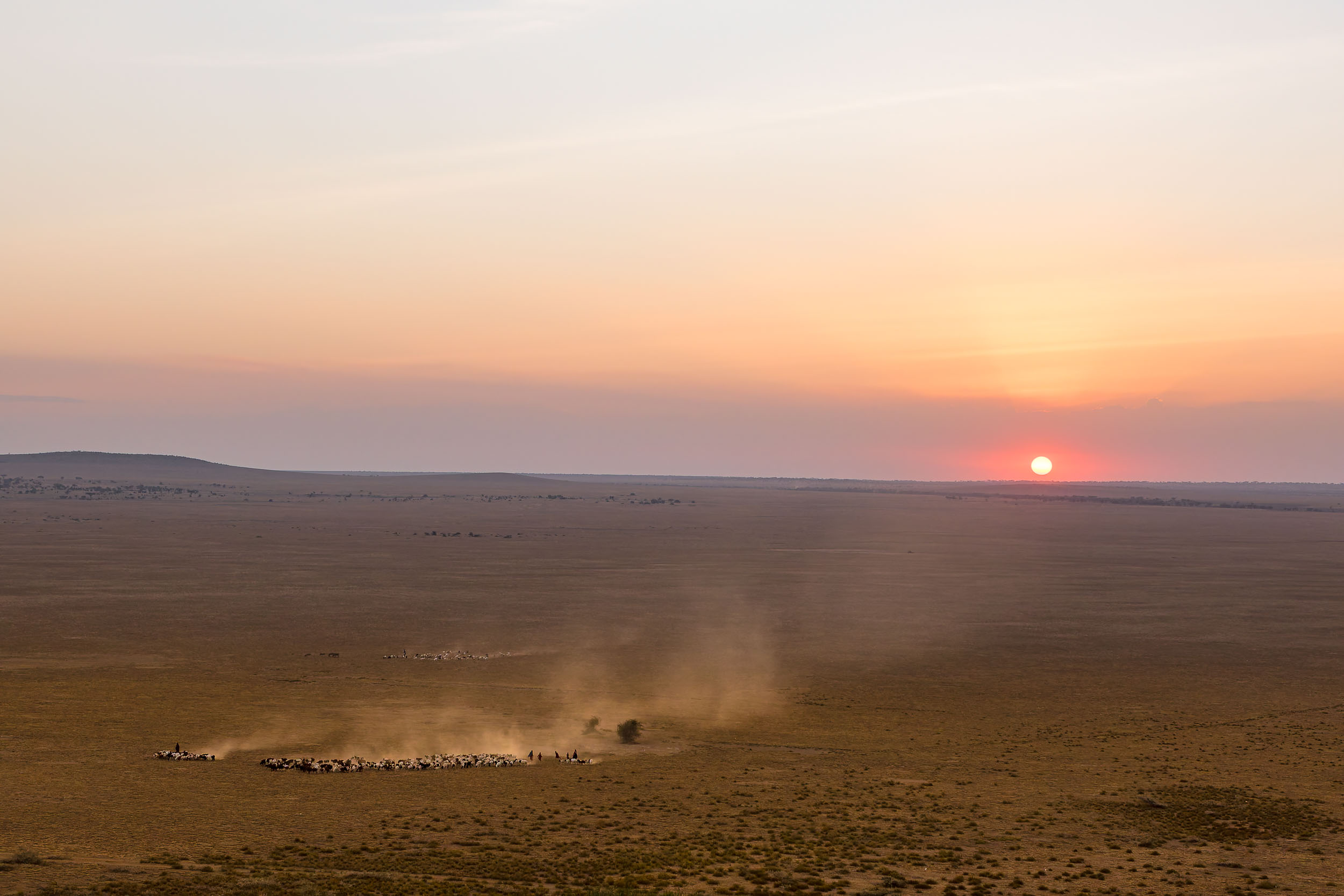
It was a striking scene: traditional pastoral life unfolding against a landscape shaped by volcanic time.
It felt transitional. No longer the enclosed world of Ngorongoro, not yet the endless horizon of the Serengeti.
A threshold landscape.
As the sun set, gold shifted to muted blue. The silence expanded, broken only by distant animal calls carried across the open ground.
Early Morning in Olduvai Gorge
First light brought cool air and soft illumination across the plains. Before breakfast, we set out on foot with a Maasai guide from the camp, descending into the dry riverbed of the gorge.
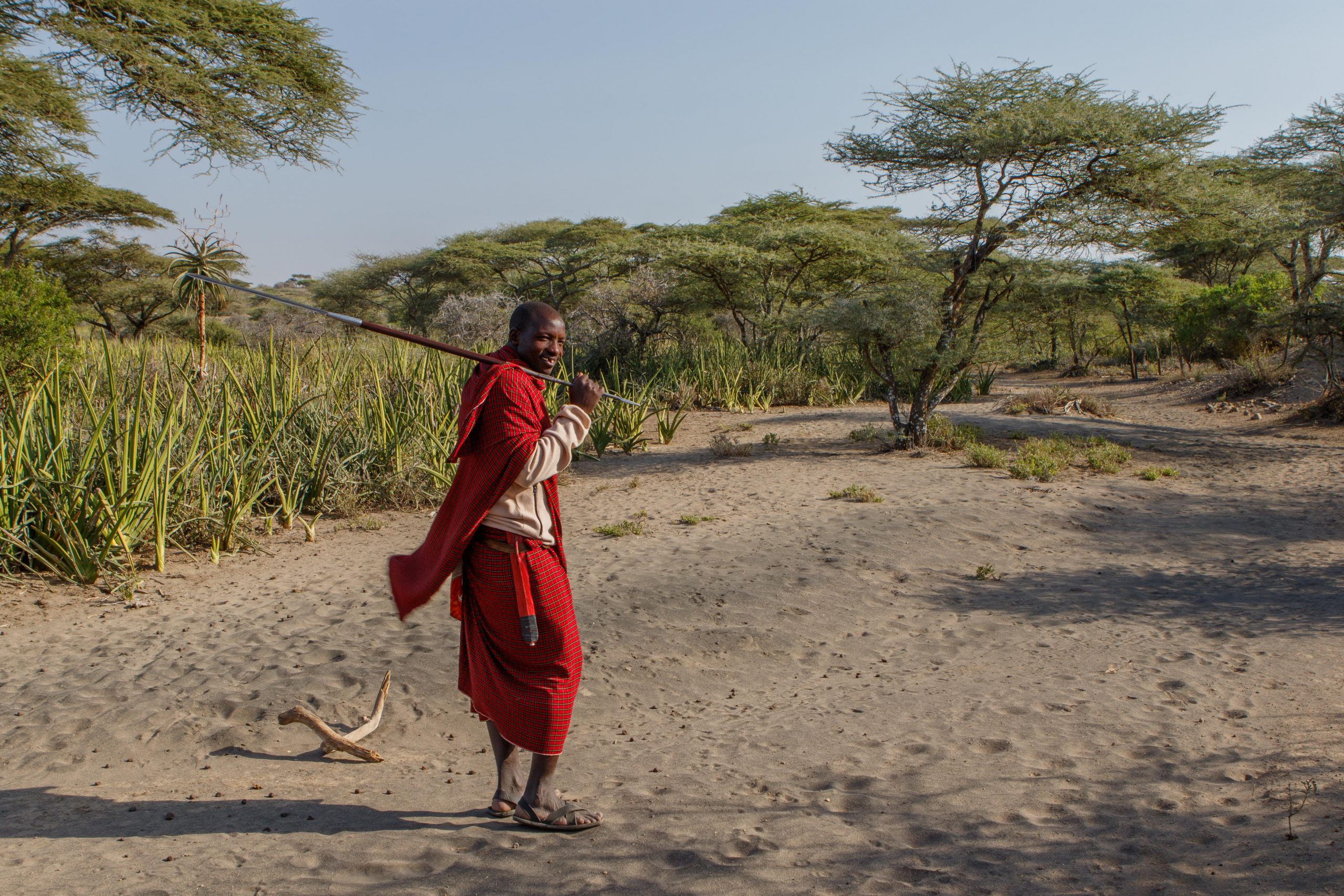
Lion tracks were visible in the sand — a reminder that even in a place defined by ancient history, present-day wildlife moves freely.
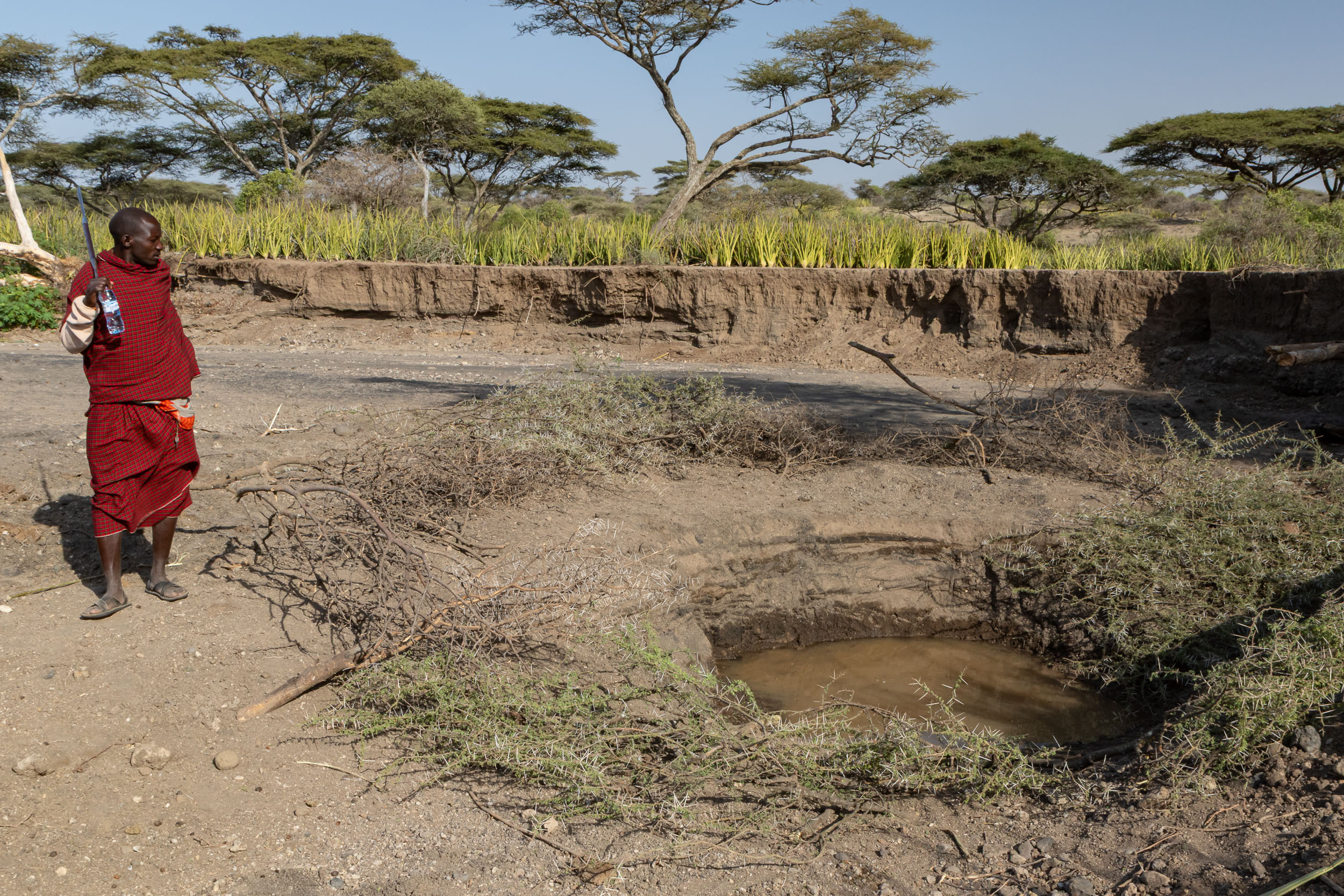
We passed small underground water sources seeping quietly through exposed sediment layers. These springs have likely sustained life here for millennia — long before recorded history, long before archaeology gave the place its global significance.
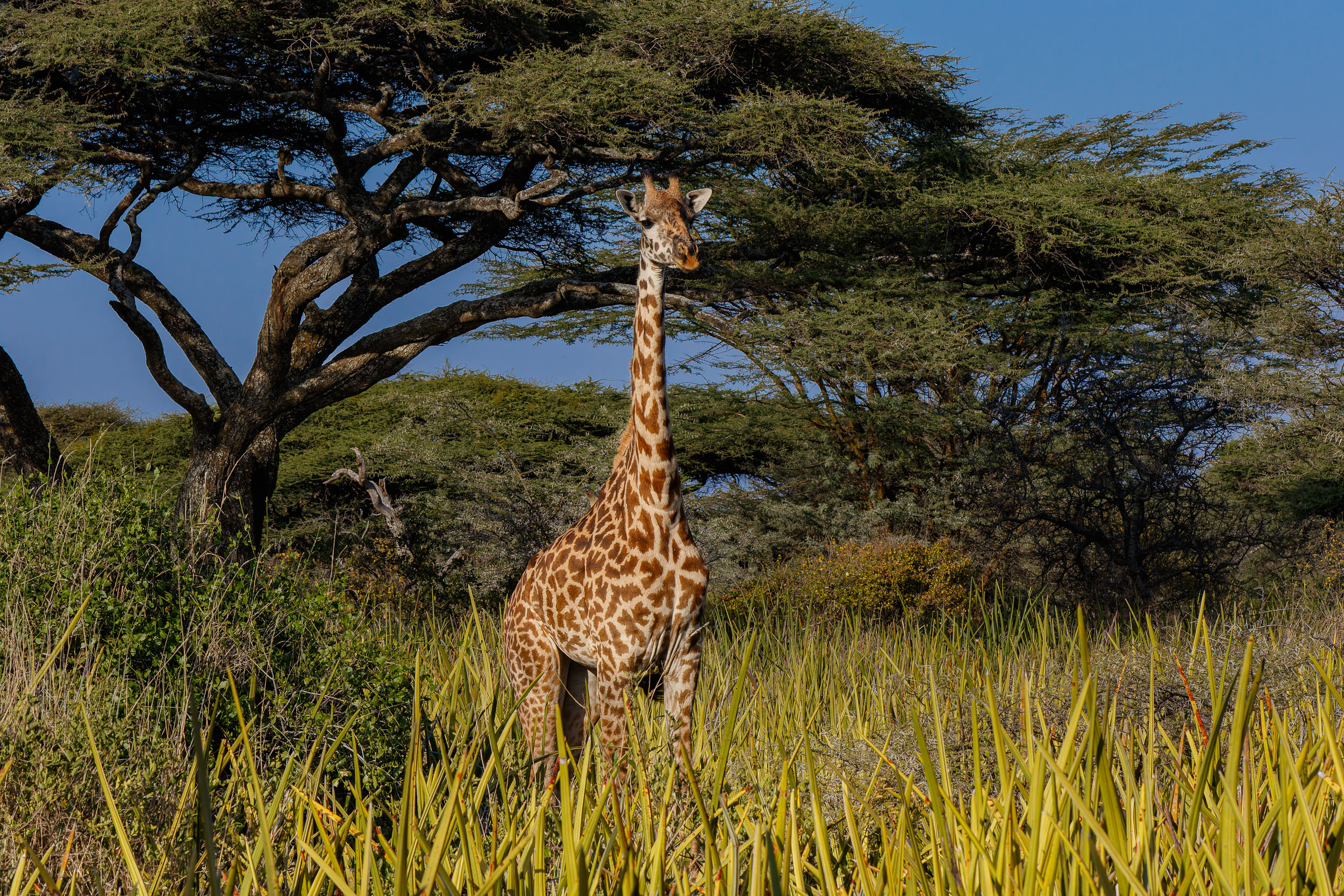
At one point we found ourselves unexpectedly close to giraffes moving across the plains above the gorge. On foot, distances feel different. The land seems larger. Sounds carry further.
Olduvai is not only about fossils.
It is about perspective.
Standing here, millions of years no longer feel abstract. They lie beneath your feet, embedded in sediment and stone.
Toward the Serengeti
After breakfast back at camp, it was time to continue west.
Excitement was building. The Serengeti — and especially the possibility of witnessing the Great Migration — had been the central anticipation of this journey.
The road ahead stretched across open country, with the occasional Maasai boma settlement visible in the distance.
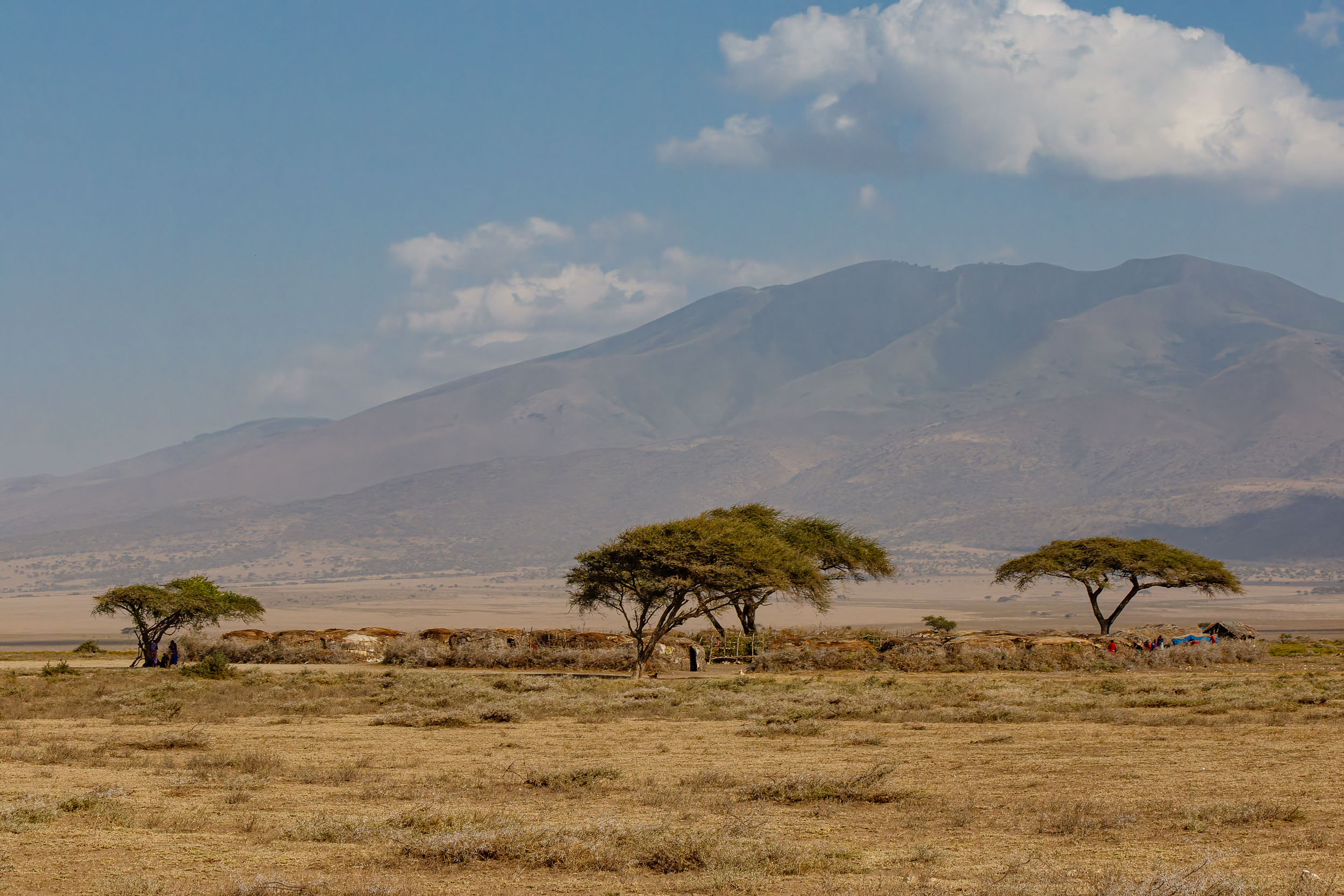
Behind us lay the cradle of human history.
Ahead, one of the greatest wildlife ecosystems on Earth.
But before reaching the vast plains of Seronera, we made one more stop.