Exploring the Wildlife Heart of the Central Serengeti
Day 7 & 8 of 12 – Tanzania Safari Trip
The Serengeti is one of the most iconic wildlife destinations in the world — a vast ecosystem of open plains, granite kopjes, scattered acacia trees and extraordinary predator density.
At its geographic and ecological center lies the Seronera region, often considered the beating heart of Serengeti National Park. Permanent water sources attract herbivores year-round, and where prey gathers, predators follow.
After leaving the Ngorongoro highlands behind, we entered the park at Seronera, curious whether reality could live up to the legend.
It did.
Entering Serengeti National Park at Seronera
We arrived at the Serengeti National Park gate just after noon.
At least two dozen safari vehicles were already lined up. So much for being alone. For the first time on this trip, it felt busy.
But we didn’t really mind.
We had been waiting for this moment. The Serengeti. The name alone carries weight.
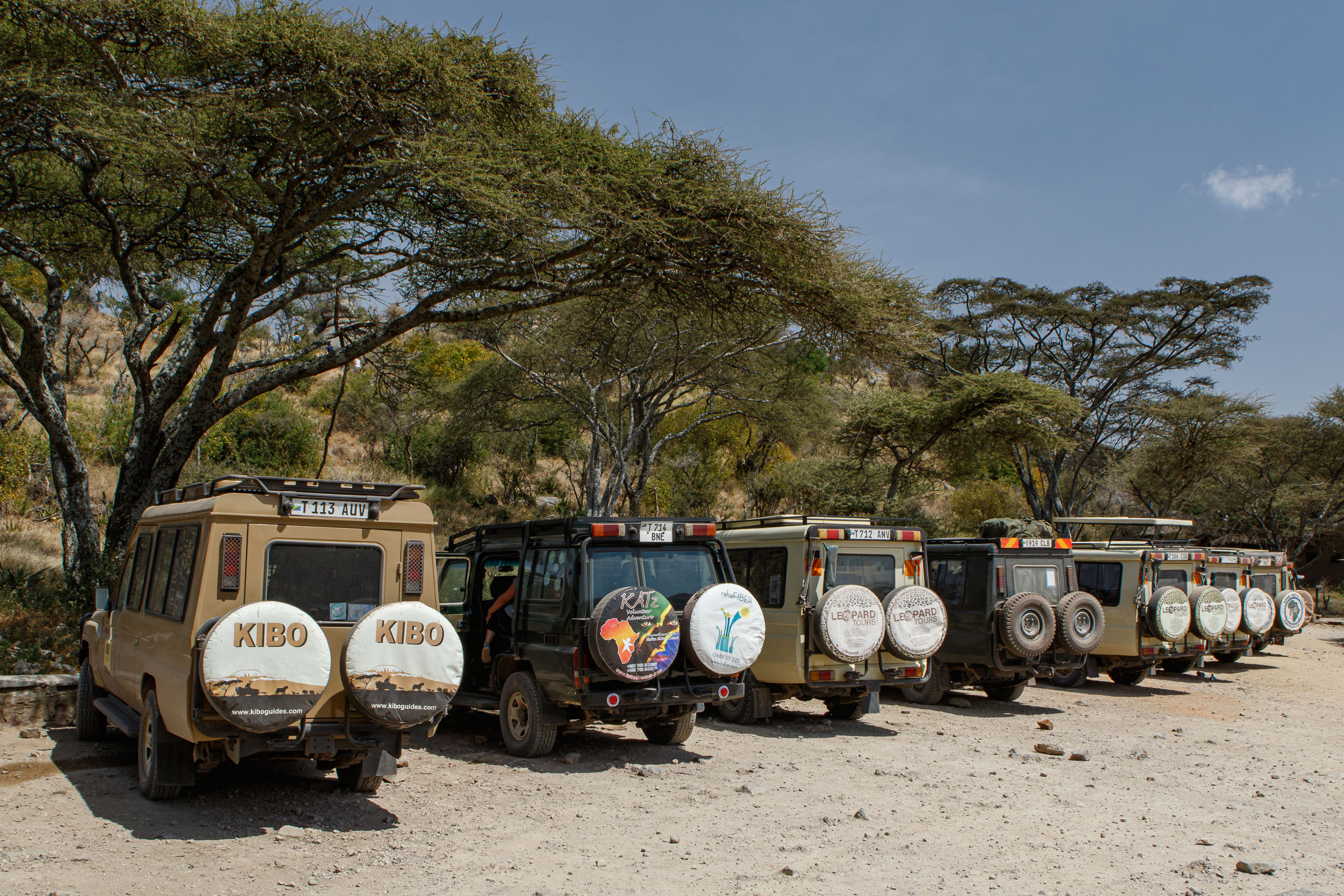
At 1 pm sharp the gate opened and a small convoy of jeeps rolled into the park together. For a brief moment, it felt like a race — everyone eager to be first, hoping to be ahead of the others for whatever might appear.
A bit of a bummer.
Or so we thought.
Less than a kilometre inside the park, Chris calmly turned off the main gravel road onto a narrow two-spoor sand track. No other vehicles followed.
Within ten minutes, we couldn’t see a single car anymore.
And it stayed that way for the next four hours.
The Serengeti may be popular — but it is also vast. Very, very vast.
At that moment we knew we were in good hands. Chris wasn’t just a driver. He was an animal tracker, a reader of landscapes. He seemed to know where to go before anything had even happened.
And we would soon find out just how good he really was.
Seronera – When Everything Happens at Once
Less than an hour after entering the Serengeti, Chris slowed and pointed toward a large granite kopje rising from the plains.
A lion pride.
They were draped across the warm rock as if sculpted into it — young adults everywhere, limbs overlapping, tails flicking lazily in the heat. It was the Serengeti exactly as you imagine it: lions on a kopje, endless grasslands behind them, sky impossibly wide.
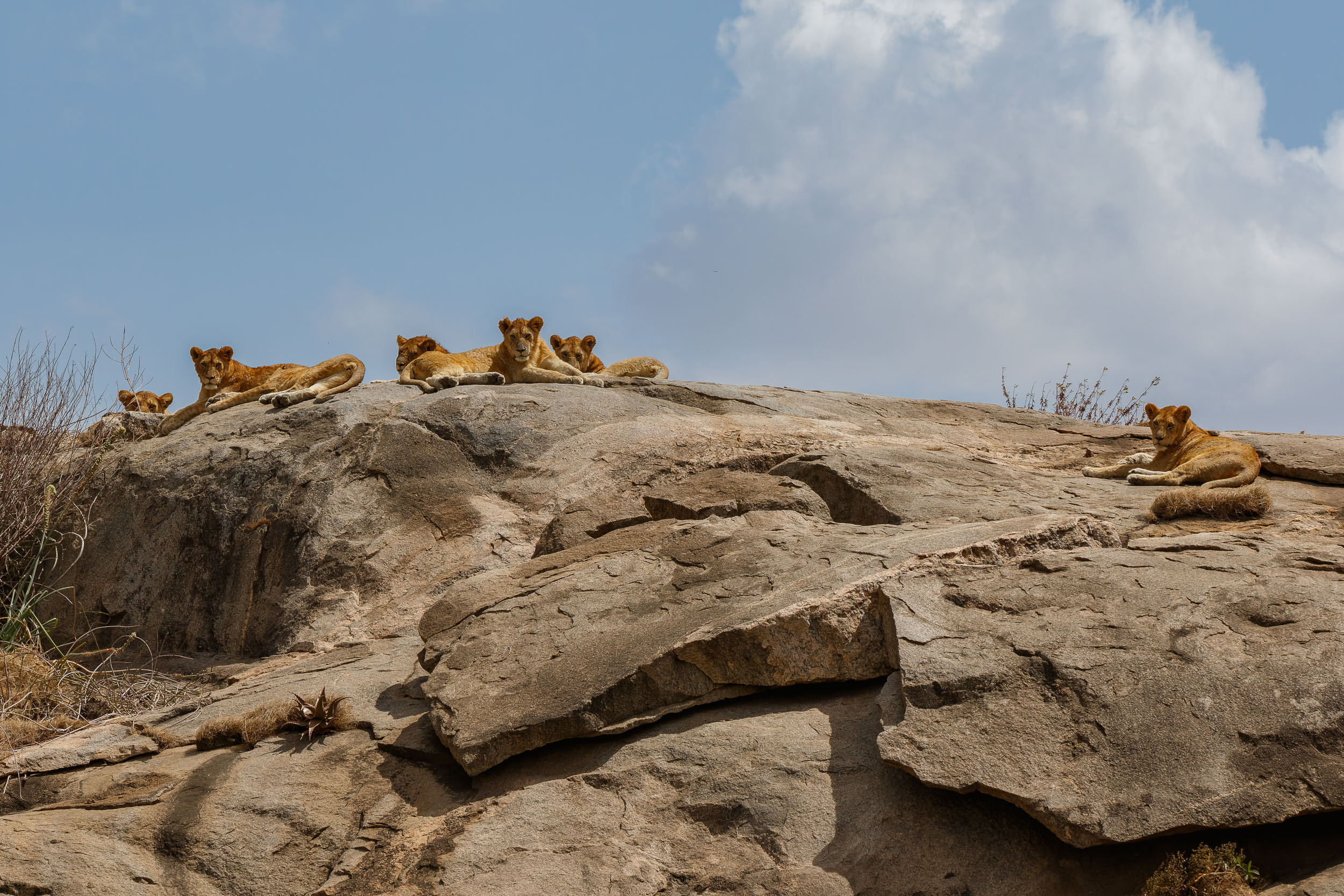
We edged closer.
At one point they were directly above us.
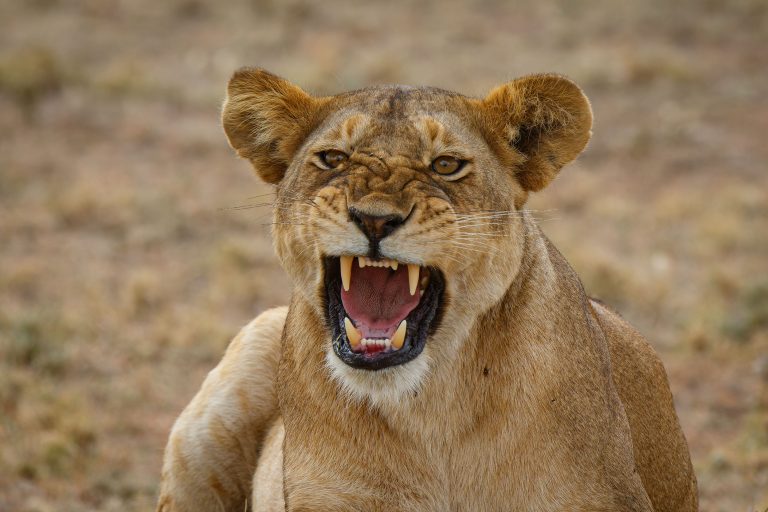
A large lioness rose slowly, locked eyes with us, and arched her back just slightly — enough to make herself look even more imposing. Not aggressive. Just a reminder.
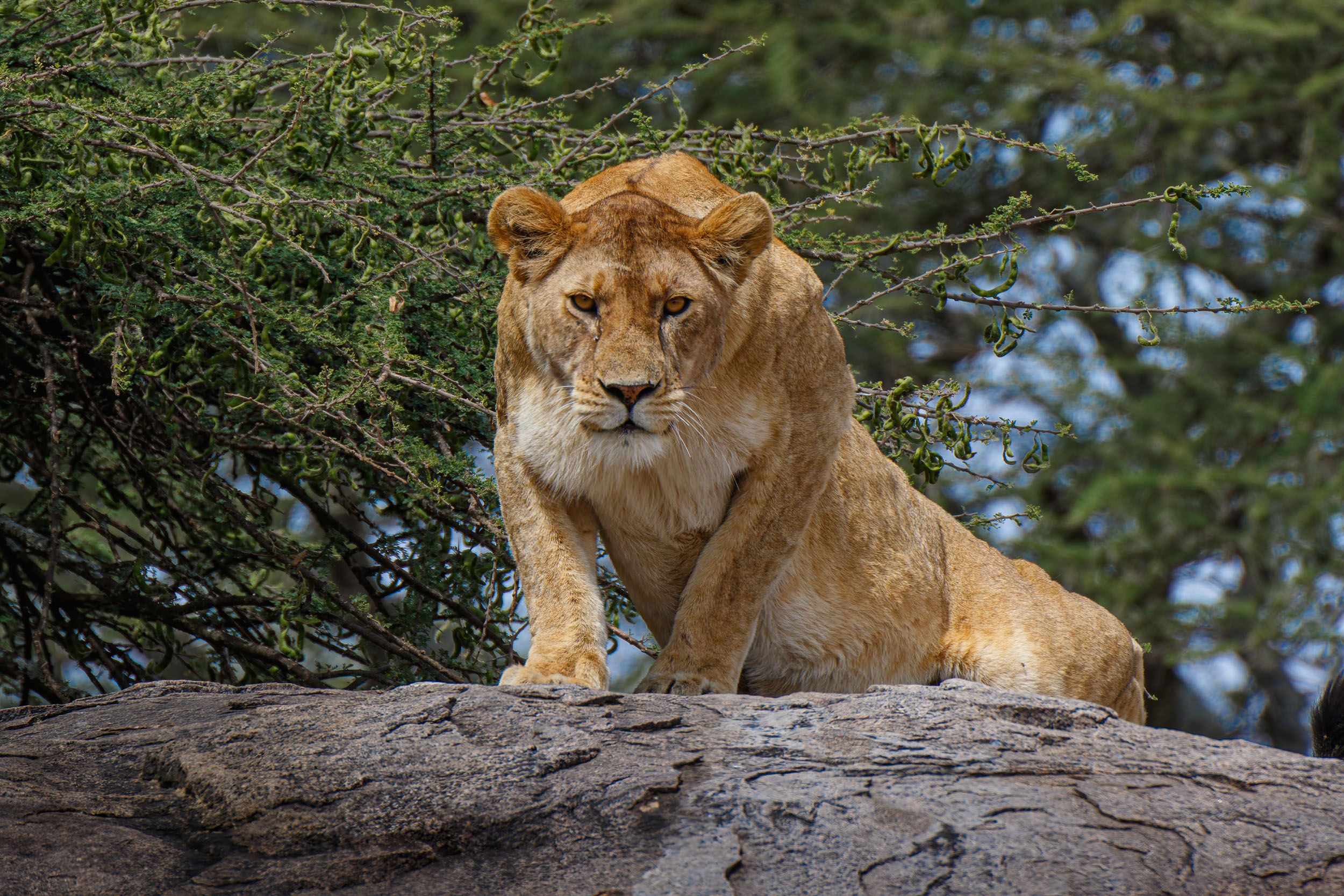
We were in their territory.
Surprisingly, a few lions had chosen a different resting place altogether — stretched across the thick branches of nearby trees, perfectly balanced in the shade.
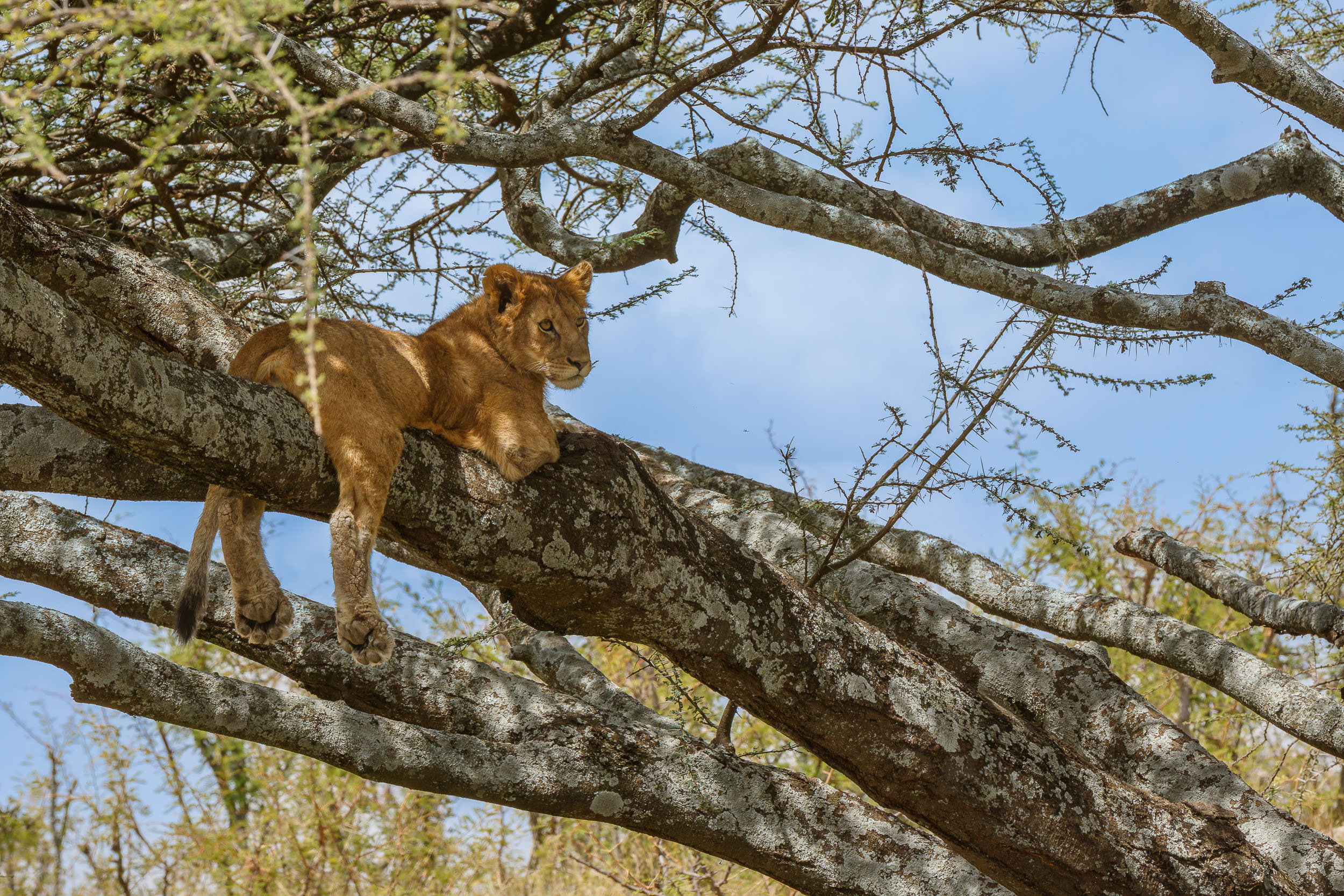
The Serengeti had welcomed us immediately.
Less than an hour later, we encountered another pride.
This time a male with two females, lazing in the grass right beside the road. When they lifted their heads and looked straight at us, the proximity felt almost unreal.
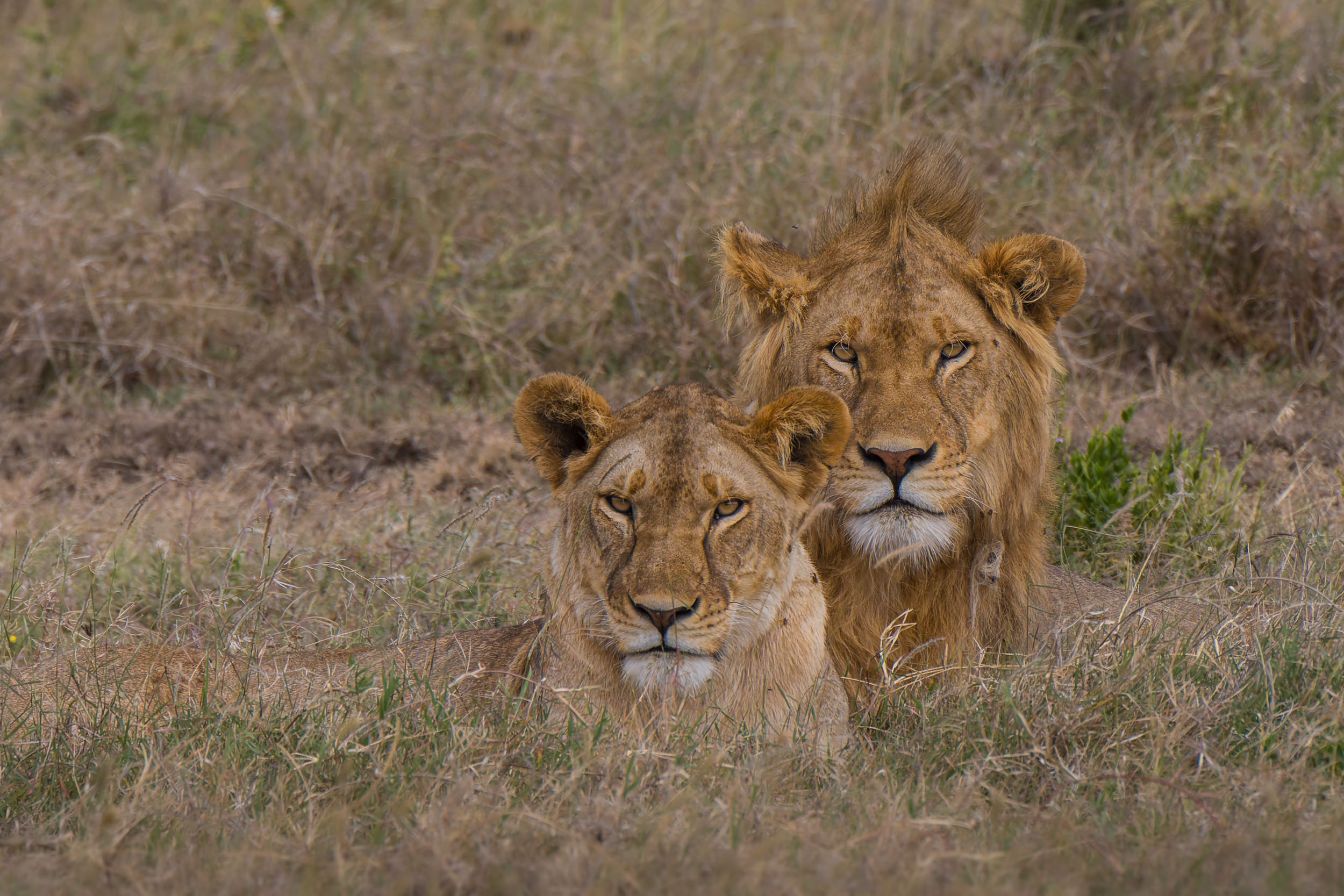
It quickly became obvious why predator density here is so high.
The surrounding savanna was full of prey — hartebeest, springbok, giraffe scattered across the plains. Life concentrated around water, and predators concentrated around life.
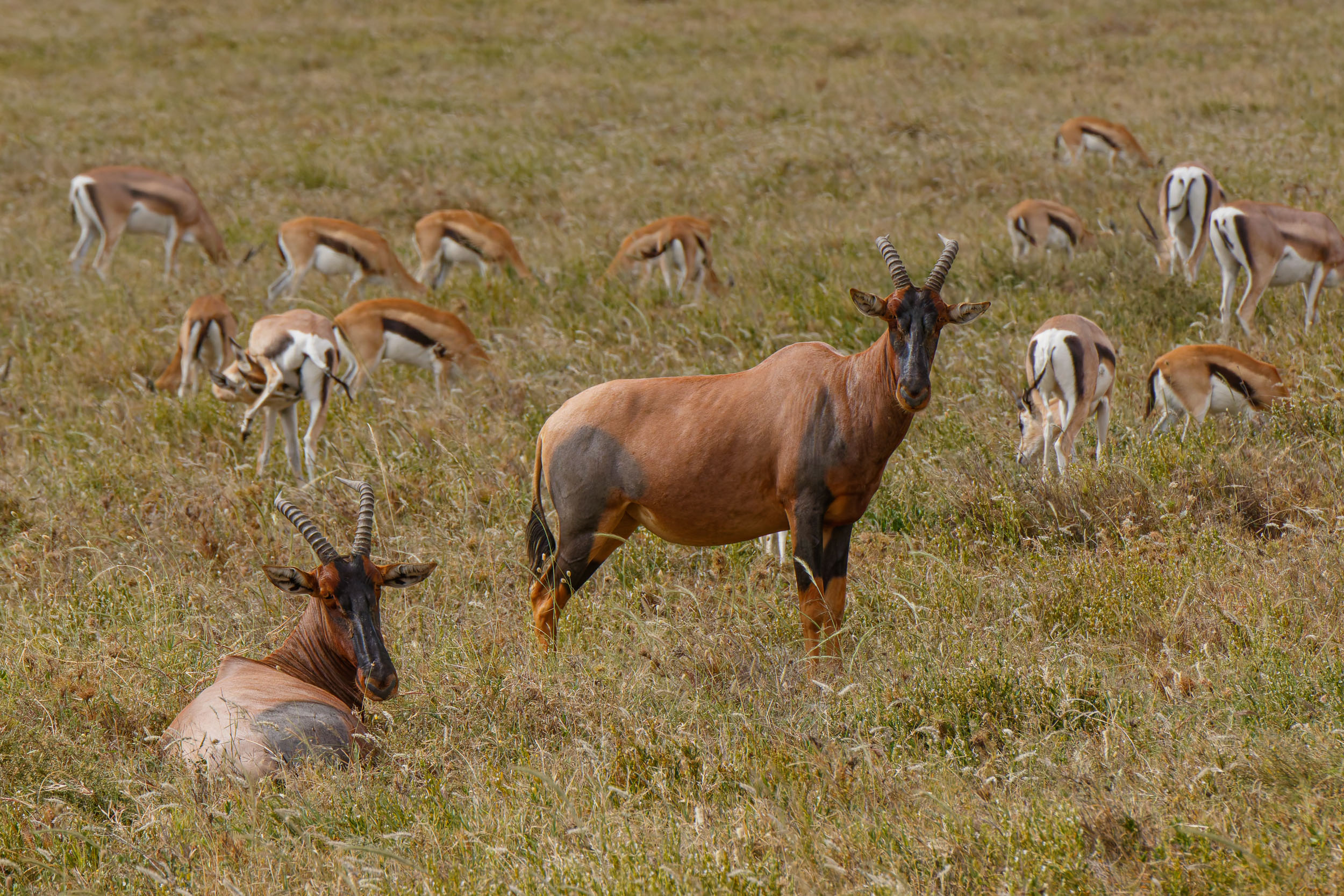
Barely half an hour after leaving the second pride, Chris suddenly became animated.
He pointed toward a distant termite mound.
“Cheetah.”
Before we fully processed it, he had done something guides technically aren’t supposed to do — he left the road and steered gently onto the savanna.
We didn’t ask.
Within minutes we were less than a dozen meters from two cheetahs — a mother and her nearly grown juvenile — resting atop the mound, using it as a natural lookout.
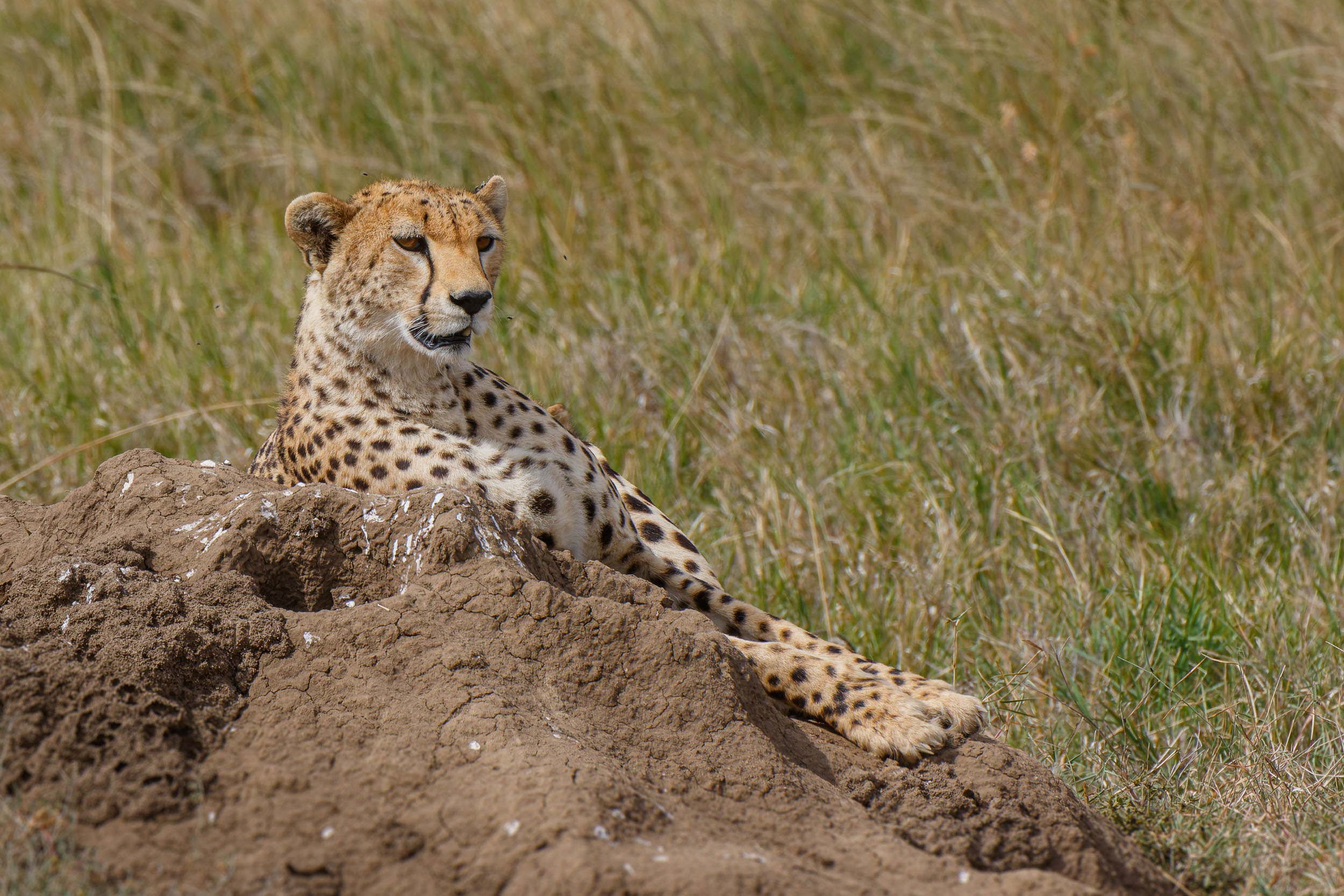
They scanned the grasslands methodically.
Built for speed. Built for calculation.
It felt outrageous that we were alone.
An hour later — as the light began turning golden — Chris stopped again.
Leopard.
A young individual draped elegantly in a tree, bathed in the soft glow of late afternoon. He groomed himself lazily, then paused to scan the horizon. Every movement deliberate. Every glance purposeful.
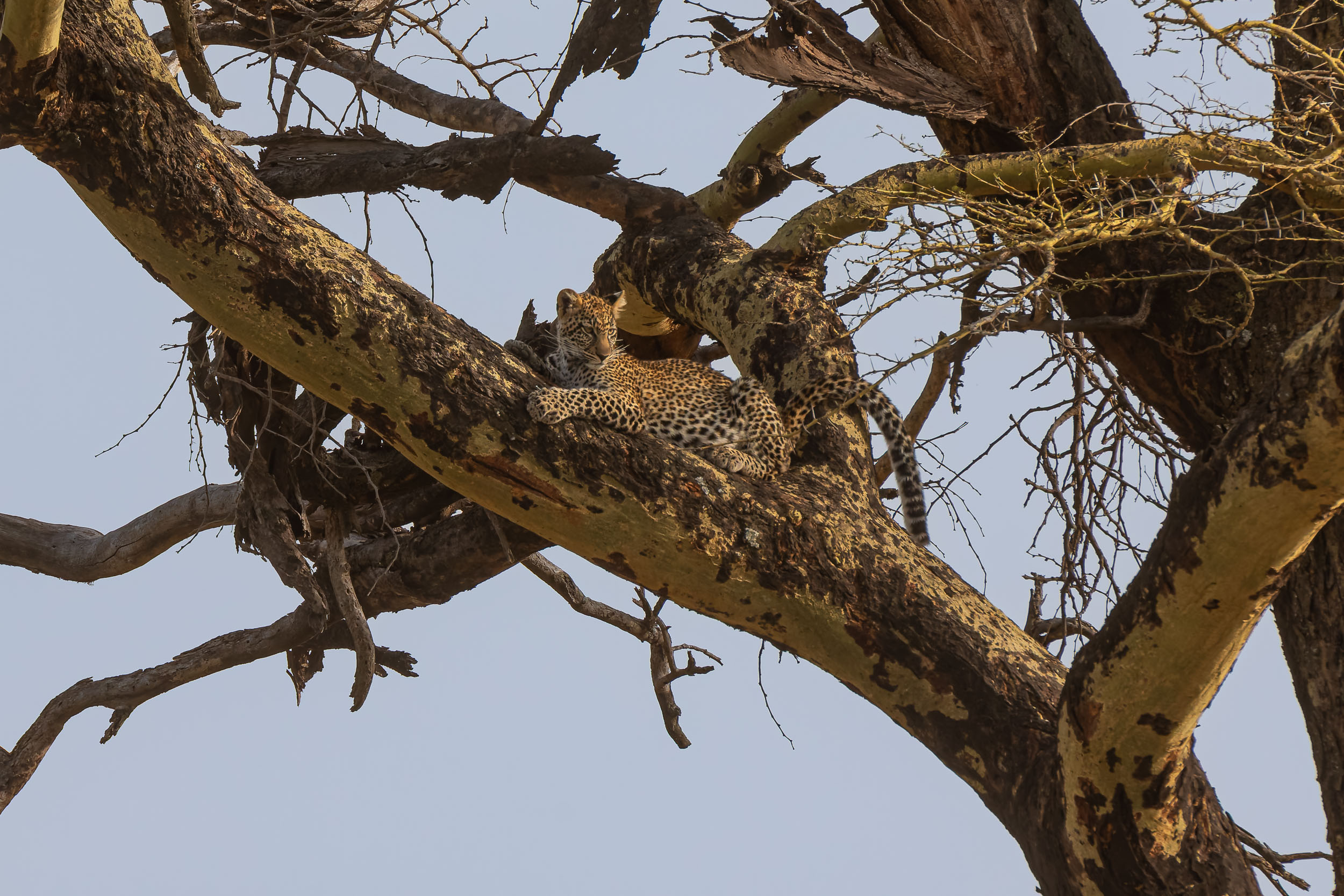
Chris whispered that if we were lucky, he might descend before sunset.
We waited.
And he was right.
The leopard flowed down the trunk with effortless grace, touched the ground, and disappeared into the tall grass — likely beginning his evening hunt.
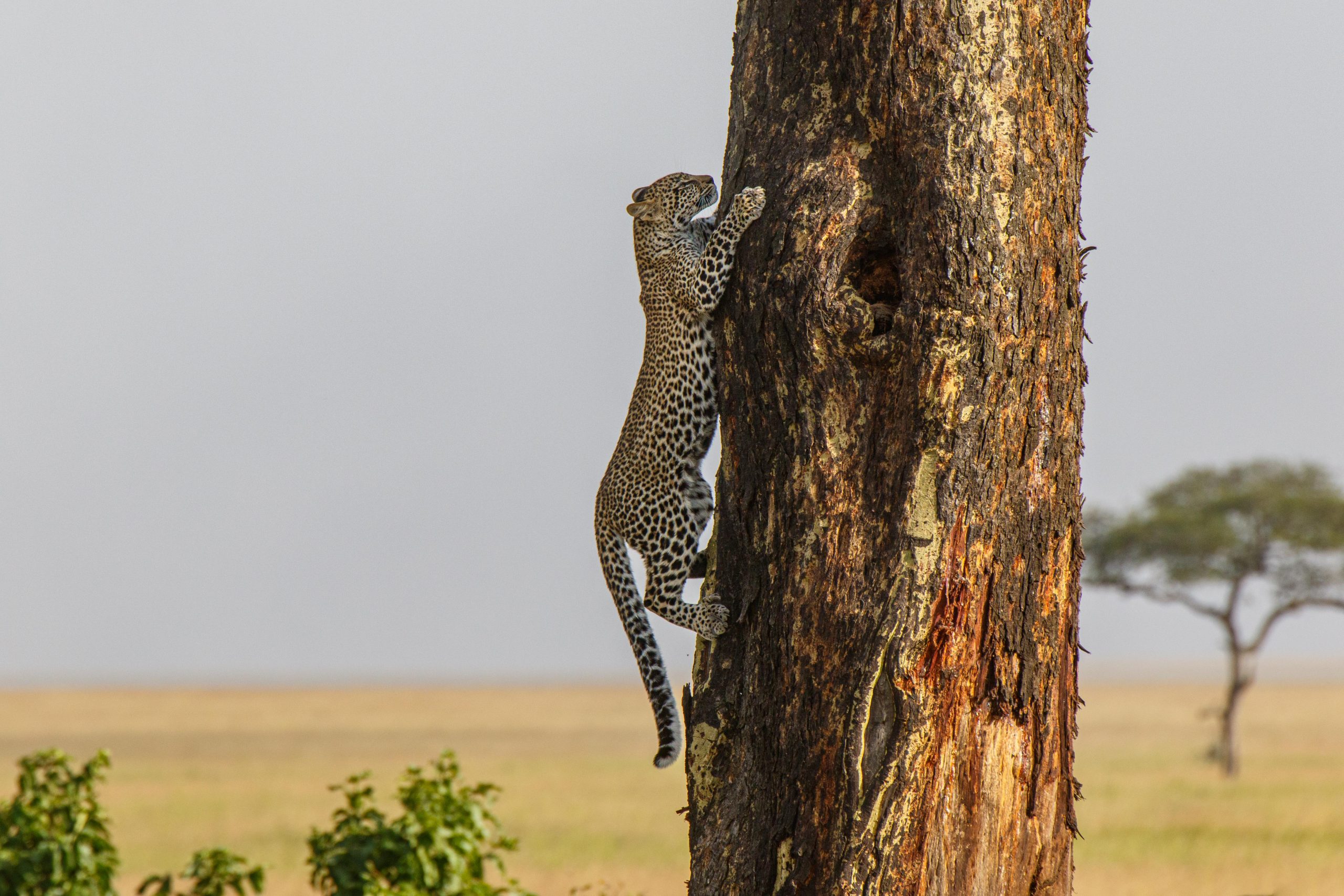
We finally had to move on. Camp regulations meant arriving before dark.
But barely thirty minutes later, Chris braked again.
Another leopard.
High in an acacia tree, enjoying the last light of the day while surveying the plains. The golden glow around him felt almost staged — too perfect.
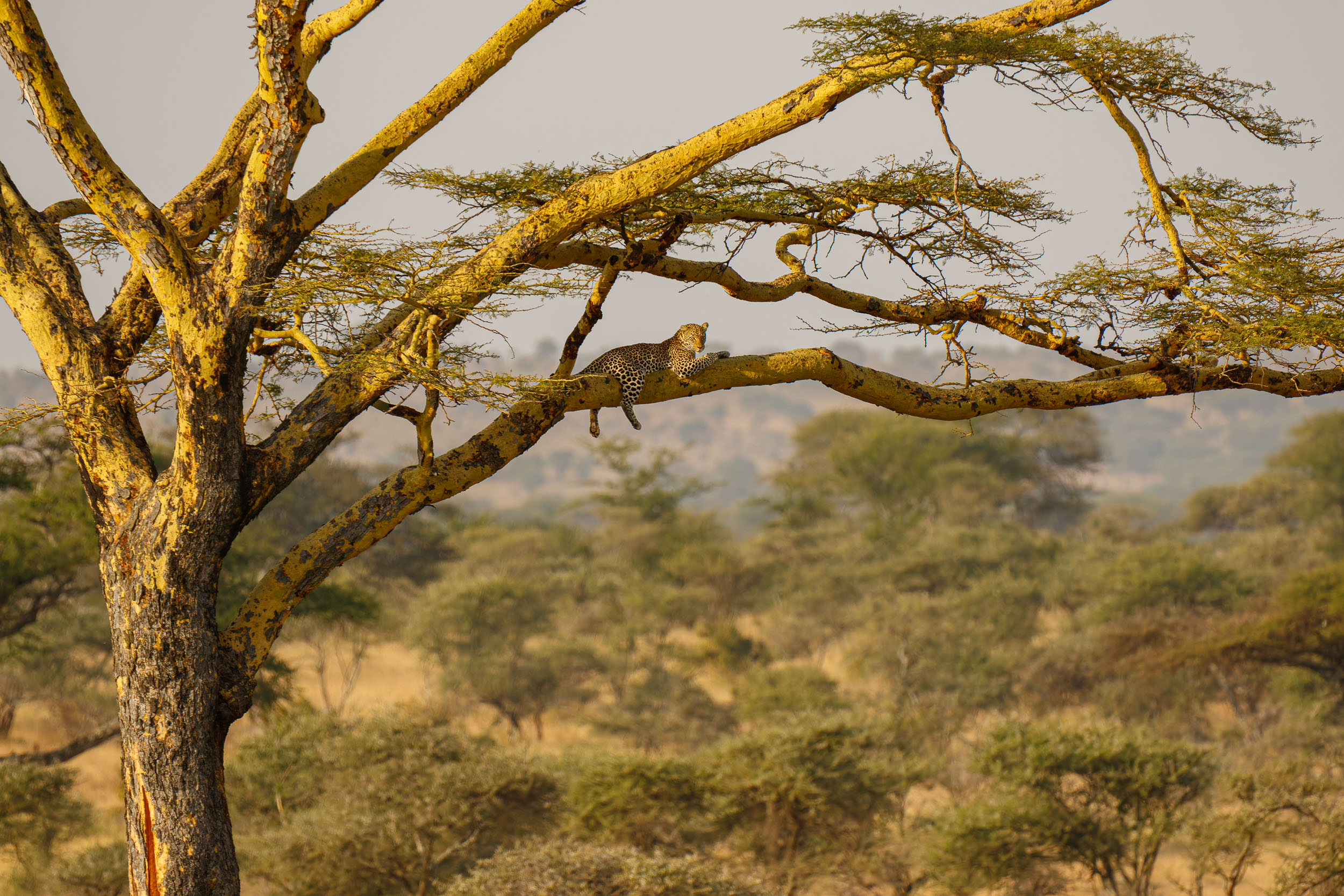
At that point we just looked at each other and laughed.
What was happening?
Then reality returned.
We still had to reach Ronjo Camp before sunset to avoid a fine.
Chris drove with calm urgency, the sky turning amber behind us, and we arrived just in time.
Two lion prides.
Cheetahs at close range.
Two separate leopards — one descending from a tree.
All within a single afternoon in Seronera.
Was this normal?
We had no idea.
But we were completely, utterly overwhelmed.
Why Seronera Is the Predator Capital of the Serengeti
The central Serengeti, known as the Seronera region, is widely regarded as one of the most wildlife-rich areas in East Africa.
Unlike the far southern plains, which depend heavily on seasonal rainfall, Seronera benefits from permanent water sources — most notably the Seronera River. Even in the dry season, water remains available. Where water persists, herbivores gather. And where prey gathers, predators follow.
The landscape itself also plays a role.
Open grasslands allow long-distance visibility for hunters like cheetahs. Scattered acacia trees provide shade and vantage points for leopards. Granite kopjes — those dramatic rock outcrops rising from the plains — offer lions both elevated lookouts and cool resting platforms during the heat of the day.
This combination of water, prey density, and varied terrain creates remarkably stable predator populations year-round.
While the Great Migration moves through the Serengeti in seasonal waves, Seronera remains productive regardless of timing. Even when the massive herds are elsewhere, resident wildlife ensures exceptional game viewing.
Perhaps that explains our afternoon.
Or perhaps we were simply lucky.
Ronjo Camp – An Unfenced Serengeti Experience
Ronjo Camp was small and intimate, set slightly away from the busier core of Seronera. Only half a dozen tents stood scattered across the grassland, blending almost invisibly into the surrounding savanna.
It was completely unfenced.
That was made very clear upon arrival.
Wildlife moved freely through the area — especially at night. Hyenas were common visitors, but lions and even leopards were known to pass through camp. The footprints in the dust around our tent were proof that this was not simply a dramatic introduction for effect.
After sunset, walking unescorted was not allowed. One of the Maasai staff would accompany guests between the tent and the dining area. All zippers and windows had to remain tightly closed.
And so we listened carefully.
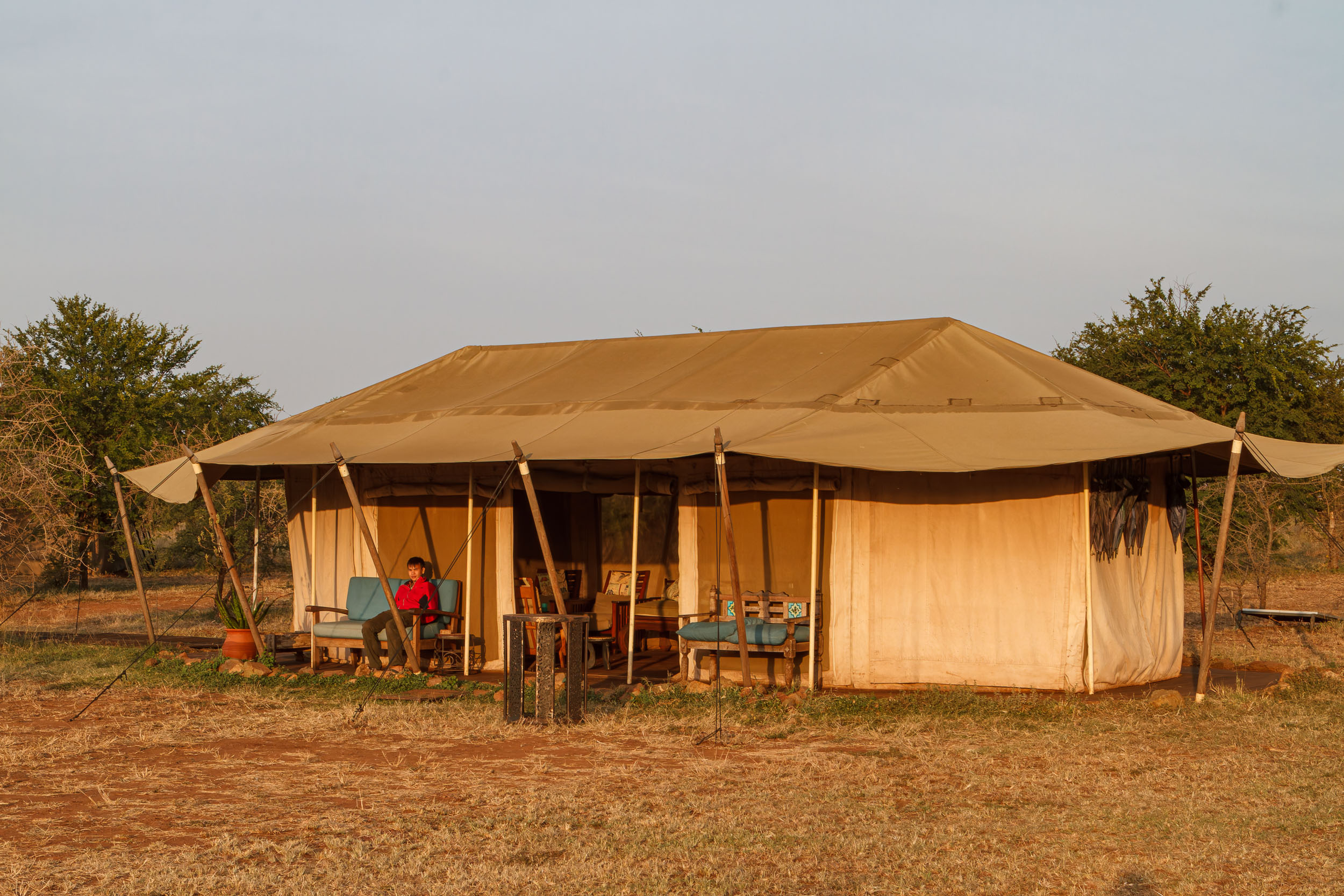
As darkness settled over the central Serengeti, the sounds of the bush replaced the silence of daylight — distant hyena calls, rustling grass, the occasional deep rumble carried by the wind.
There is something different about sleeping unfenced in the Serengeti.
You are not observing nature.
You are inside it.
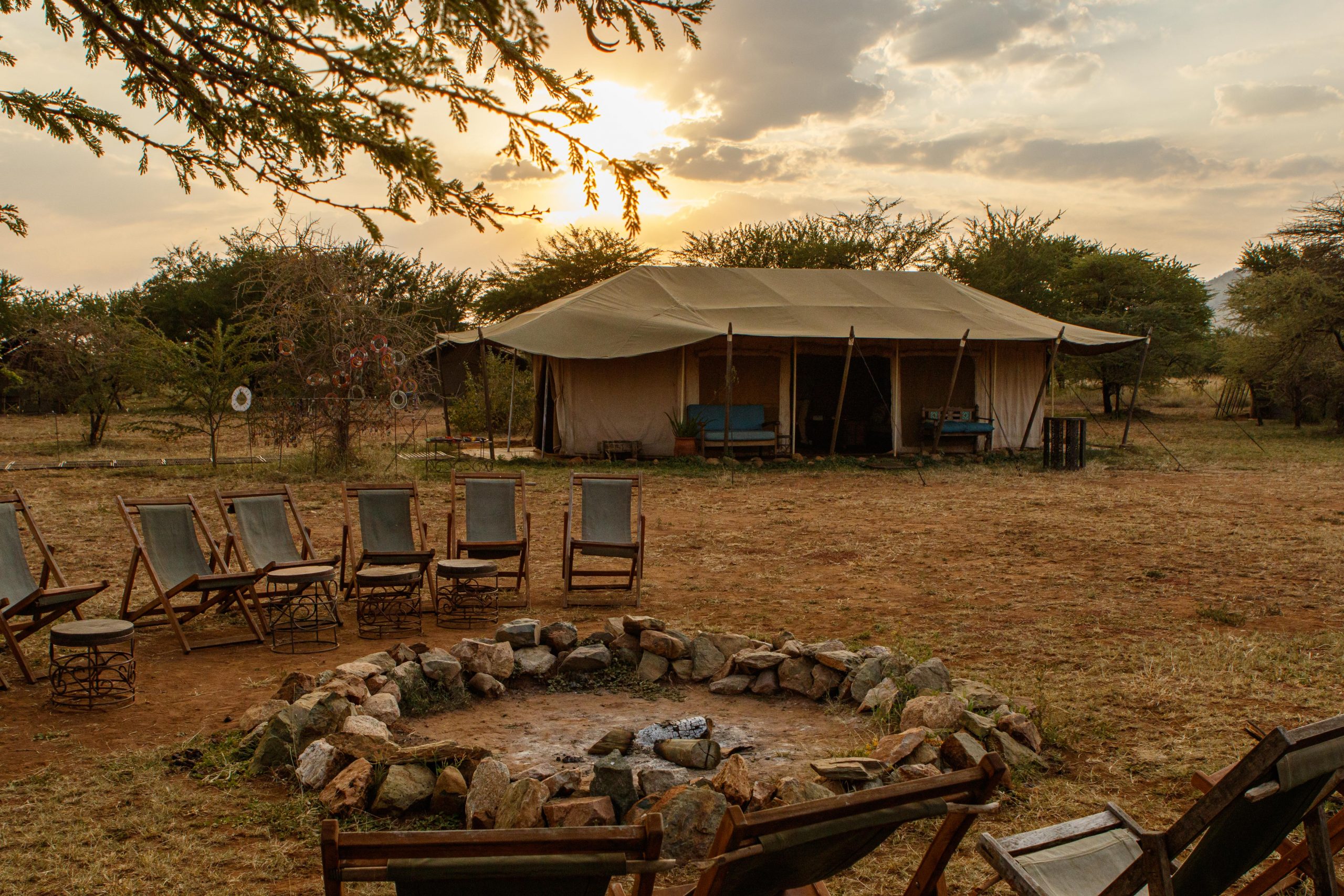
Only during dinner did the experience of our first afternoon in the Serengeti fully sink in.
We had barely spent five hours inside the park.
And yet:
Two lion prides.
A mother cheetah with young.
Two separate leopards.
Not just sightings — active sightings.
And the best part?
Until after the second leopard, we had not seen another vehicle.
Every single encounter had been ours alone.
Sitting there that evening, replaying it all in my head, I kept wondering:
Was this normal in the Serengeti? Was this simply what an afternoon here looks like?
I honestly have no idea.
But we were absolutely over the moon.
Spectacular doesn’t even begin to describe it.
A Full Day in Seronera – The Rhythm of the Central Serengeti
We spent our second full day in the Seronera area, the wildlife-rich heart of Serengeti National Park. While it’s one of the most accessible and visited regions of the park, the vast network of tracks meant it never felt crowded. Chris knew not only where to go — but when. More than once we noticed vehicles gathering in the distance while we quietly turned onto a smaller track, following instinct and experience rather than the obvious route.
Our first destination that morning was the Seronera River.
A large pod of hippos had claimed one of its deeper bends — easily more than a hundred animals compressed into muddy water. Massive grey backs surfaced and disappeared again. Calves stayed close to their mothers, occasionally scrambling onto the riverbank before sliding back into the safety of the group.
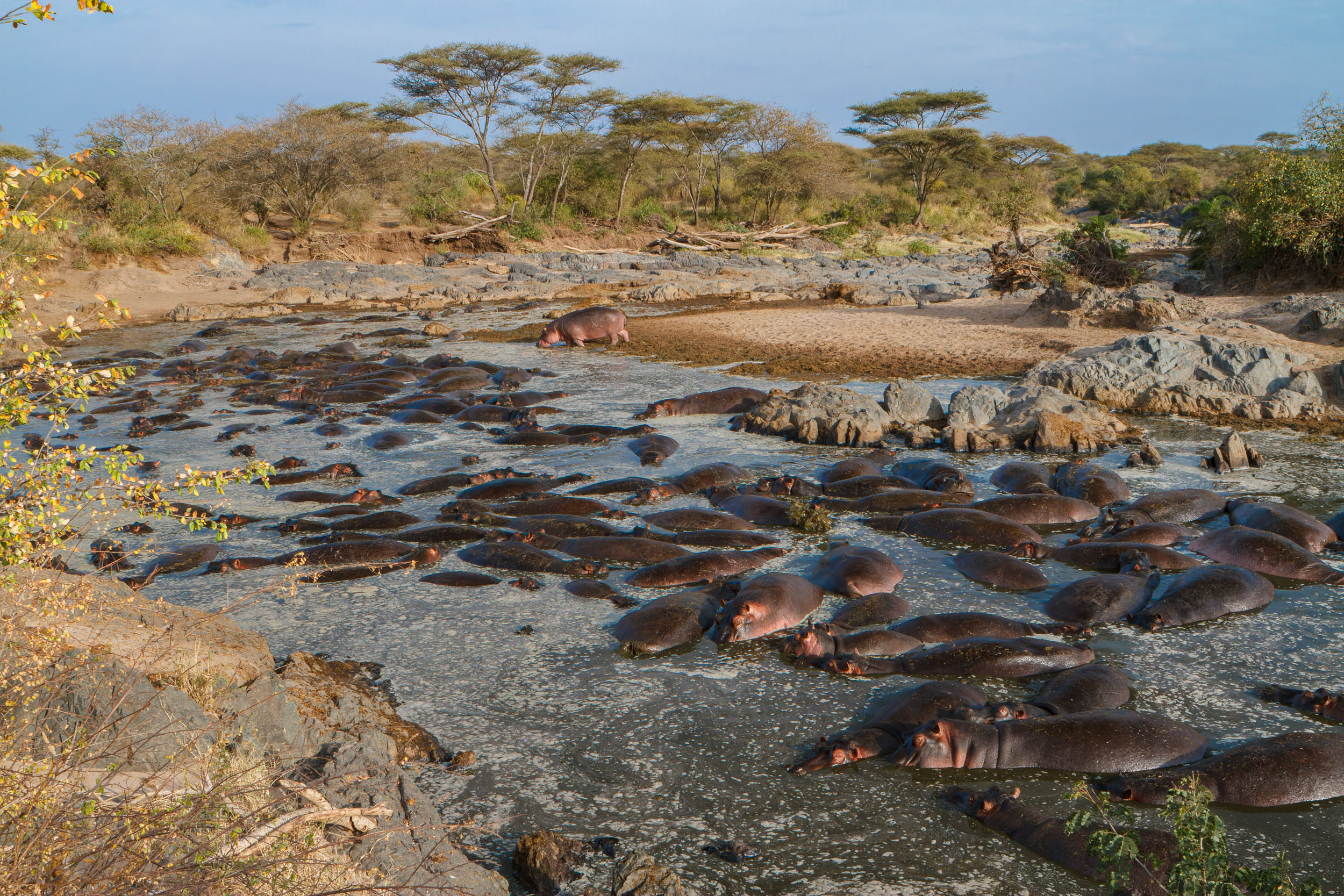
A few dominant bulls argued loudly in the shallows, jaws stretched wide in theatrical warnings. The noise echoed across the plains — grunts, splashes, sudden movement.
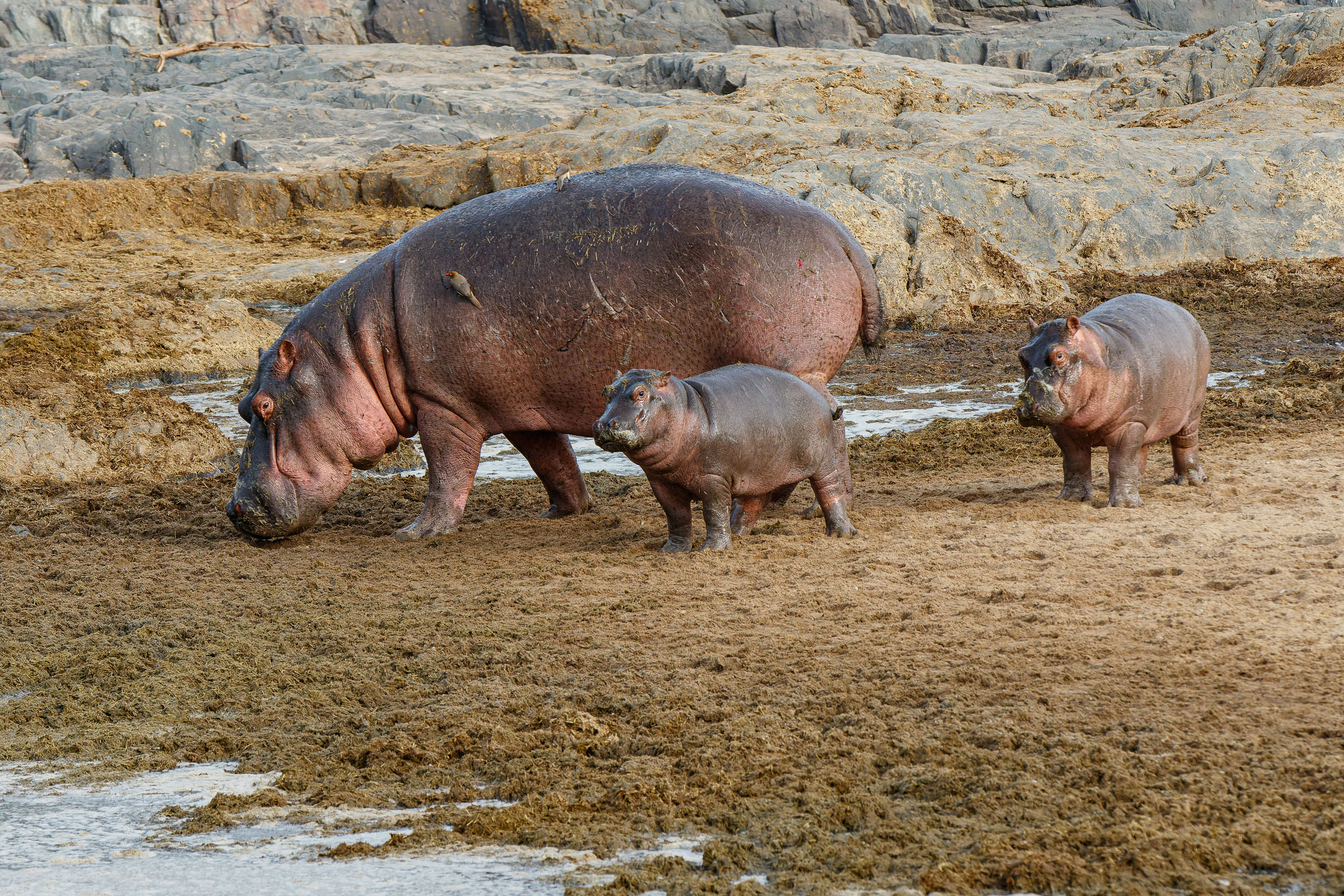
Permanent water is what makes Seronera so reliable year-round. Even when other areas dry out, this river sustains life — and life attracts everything else.
From there, we began a wide loop through the central Serengeti.
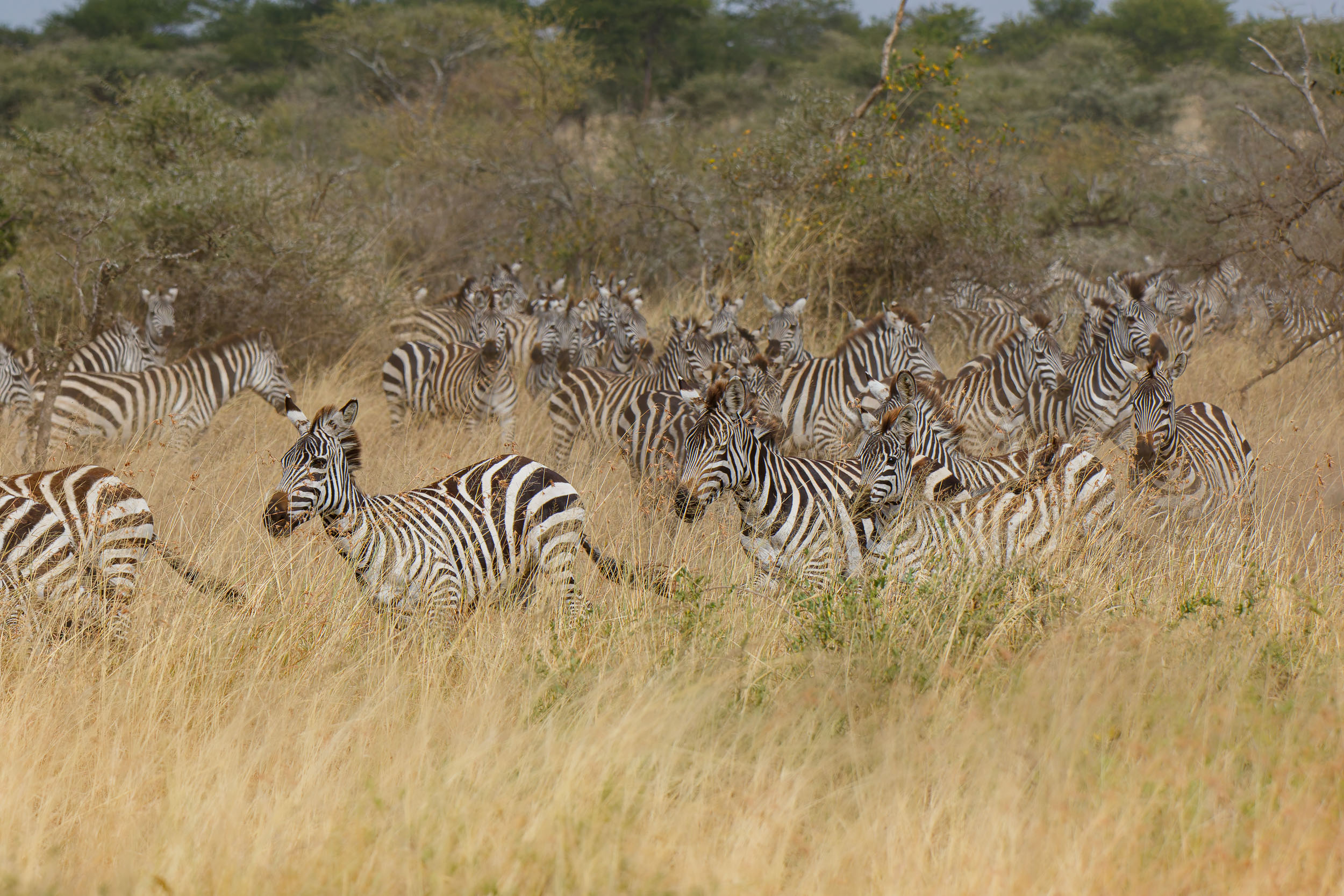
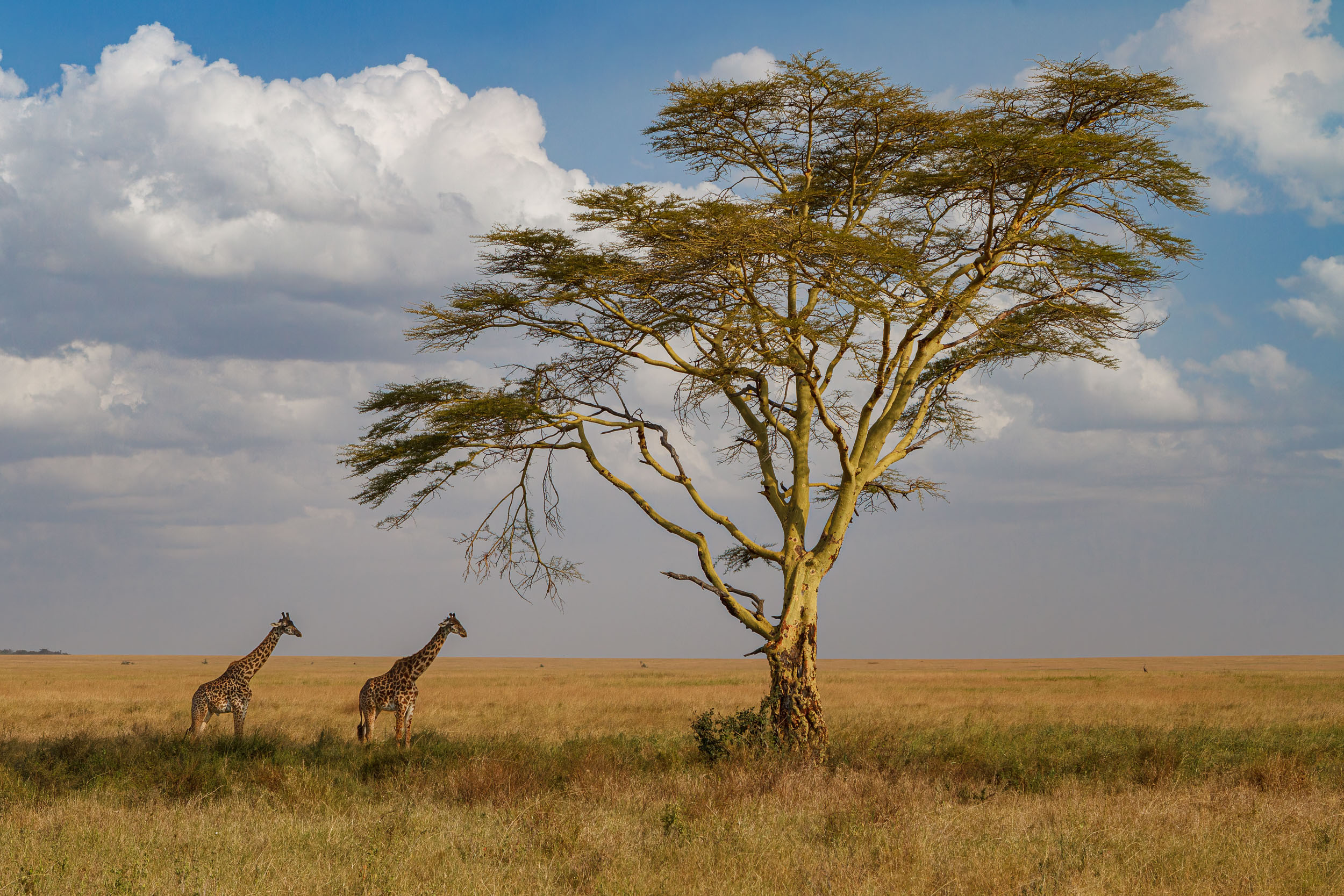
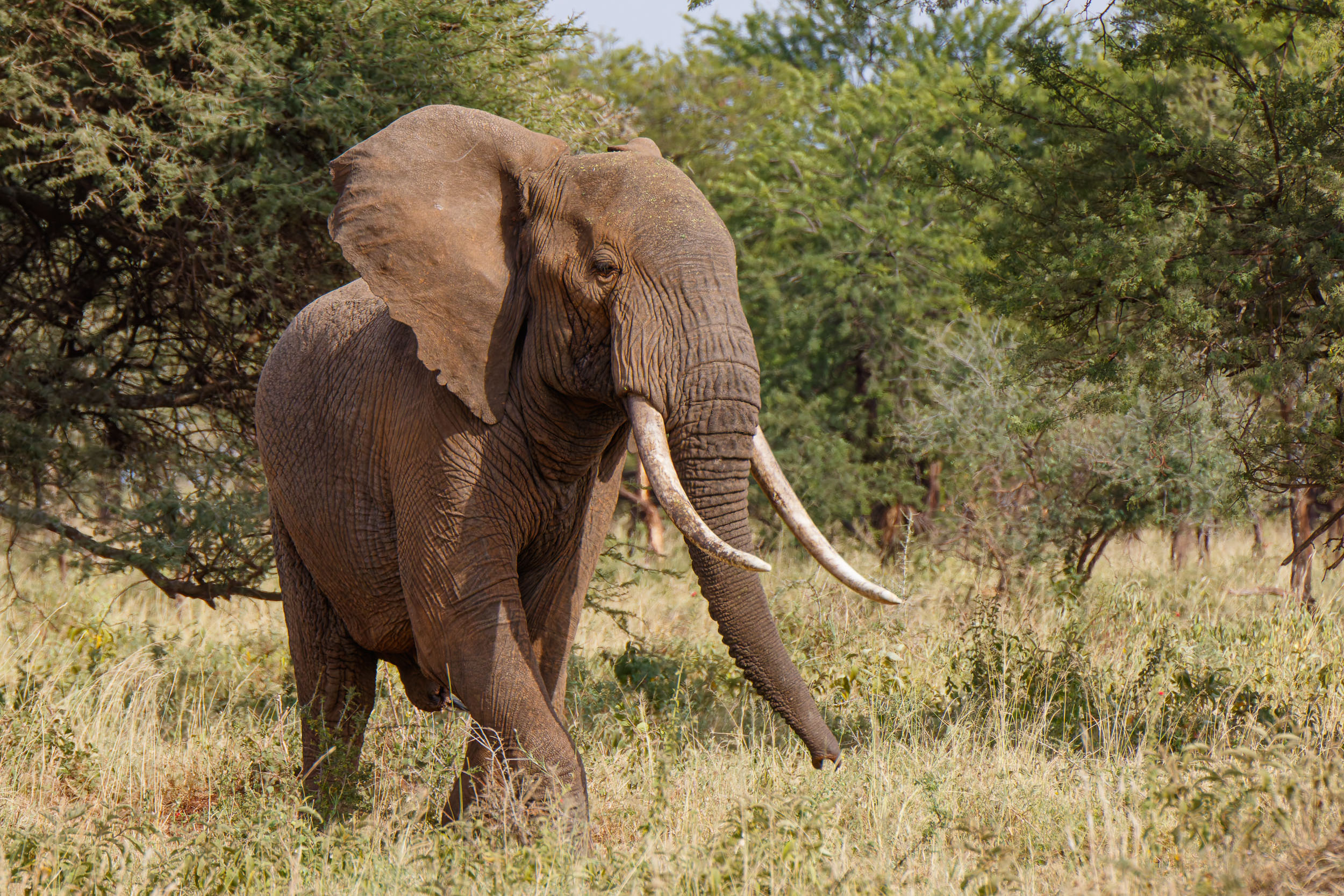
The plains felt expansive and alive. Herds of zebra moved in loose formation. Giraffes drifted between acacia trees. We had our first truly close encounter with elephants — enormous yet silent, crossing open ground with slow confidence.
Then lions appeared again.
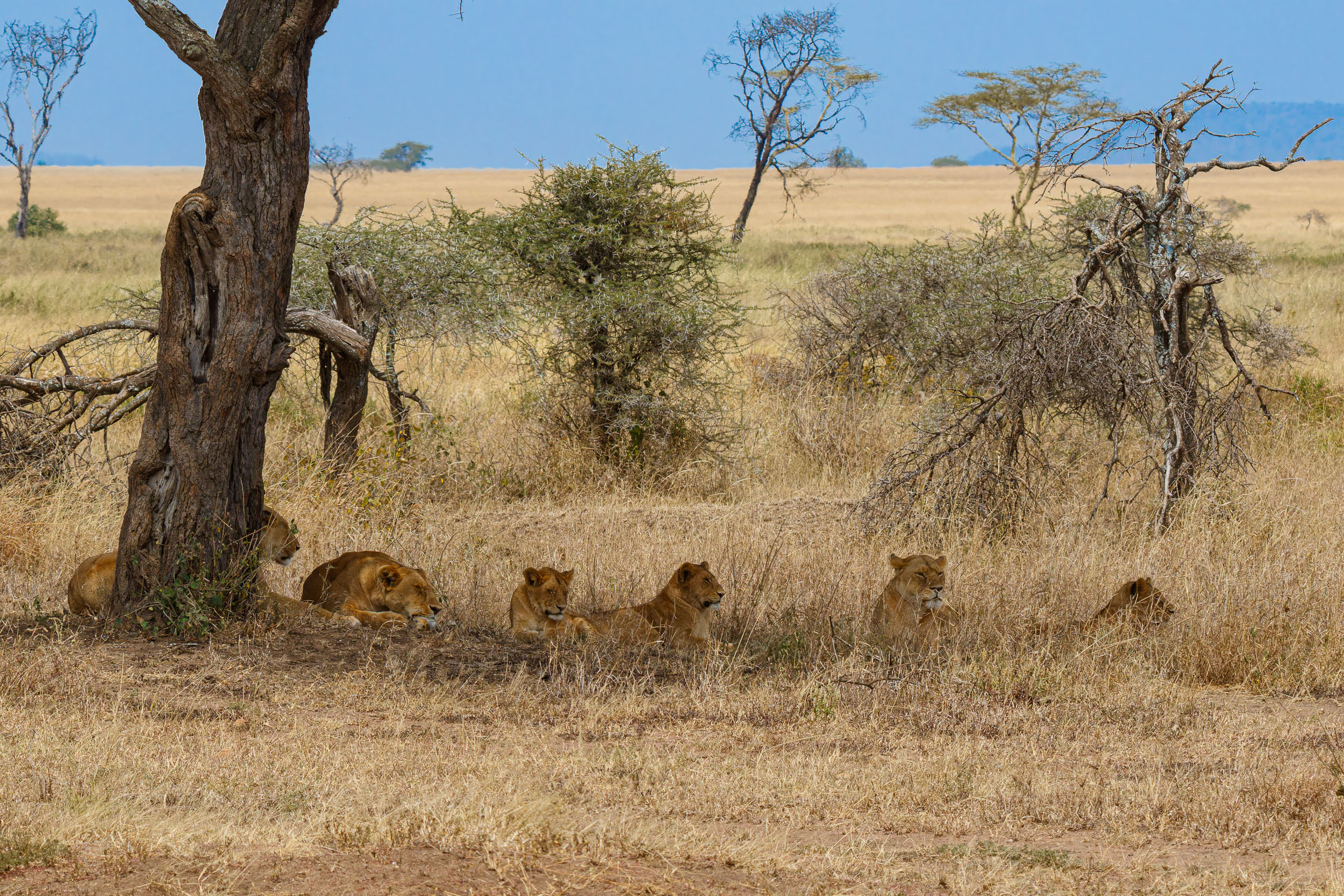
A pride rested in the shade of a solitary tree, stretched out in complete indifference. Full bellies. Half-closed eyes. Not much movement — just the steady rhythm of predators conserving energy.
We moved on.
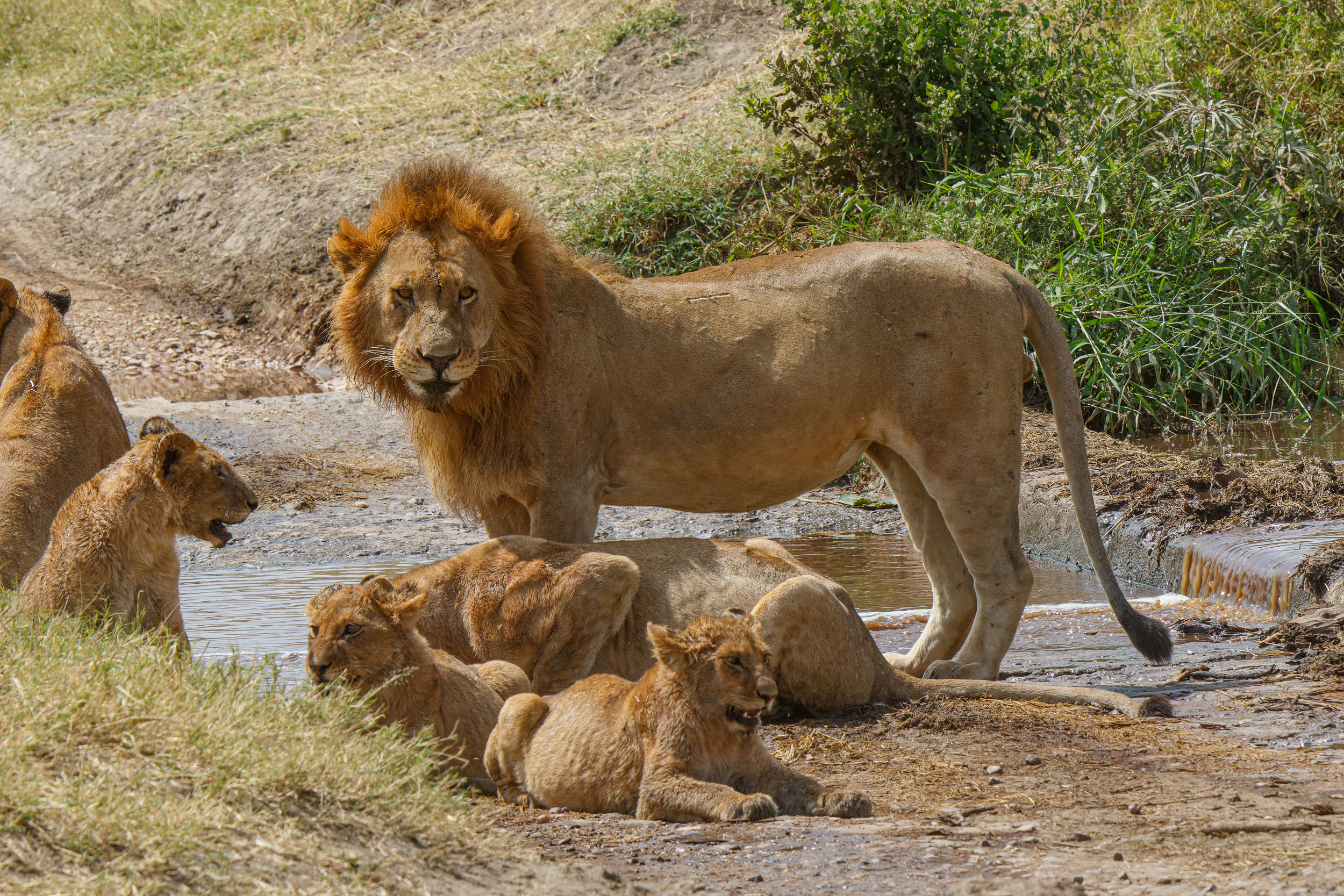
Soon after, another pride — perhaps a split from the first — gathered near a small creek. This group was far more active. One by one they approached the water to drink. Large males first. Then females. Then subadults and cubs weaving between them.
When they finished, they rose almost in unison and began walking toward a cluster of trees — directly past our vehicle.
For several quiet minutes, lions filled our entire field of view. Muscles rolling beneath their coats. Cubs stumbling slightly to keep up. Tails brushing the grass just meters away.
It is difficult to remain composed when that much power passes so close.
Right before reaching a designated picnic site for lunch, we encountered yet another pride — lazing beneath scattered trees.
By now we almost laughed.
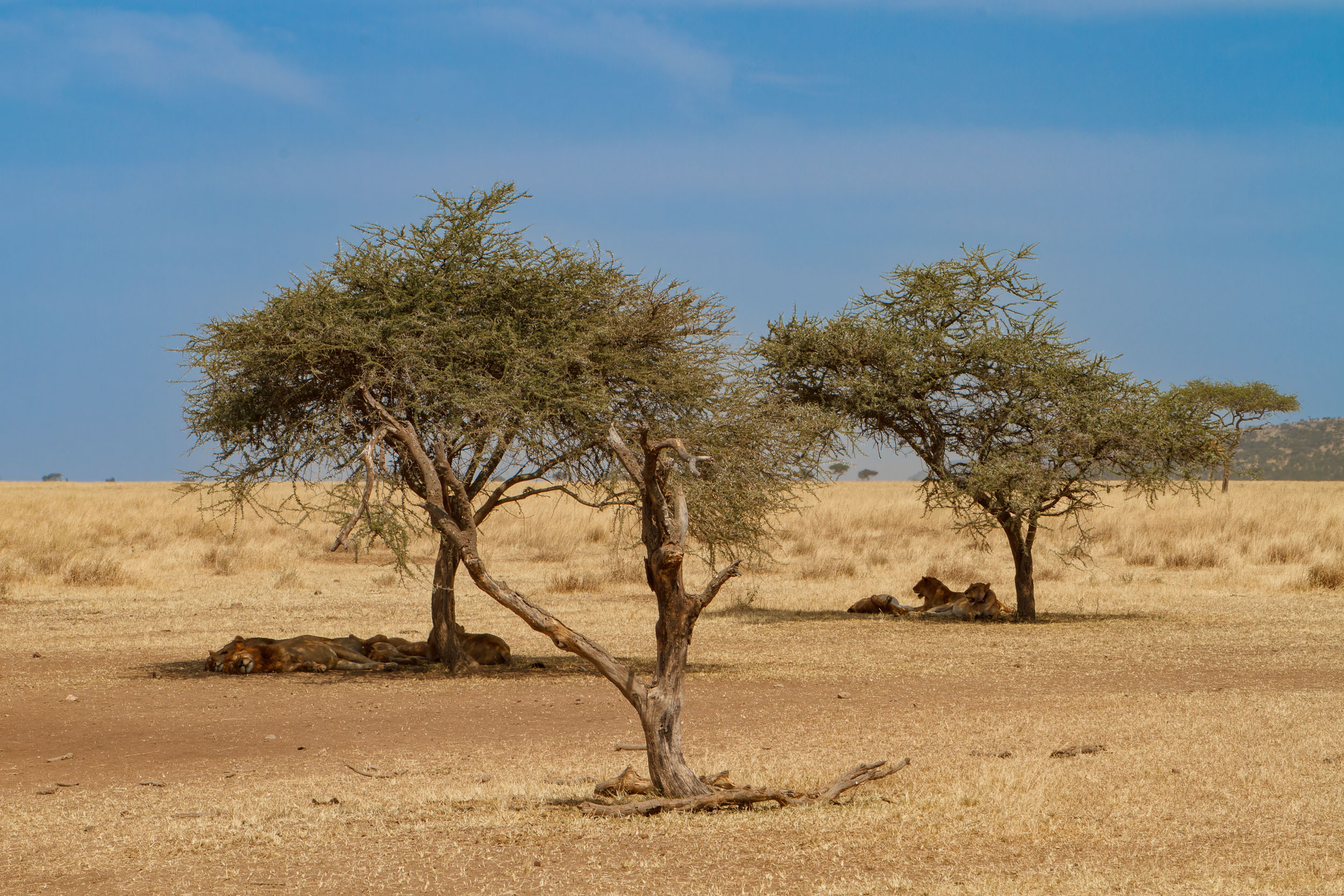
Was this simply what a typical day in the central Serengeti looked like?
After lunch, we continued.
Not far from the picnic area, we came across a long line of elephants moving through tall grass — a slow procession cutting across the savanna. Calves walked protected in the middle, older females forming a loose perimeter.
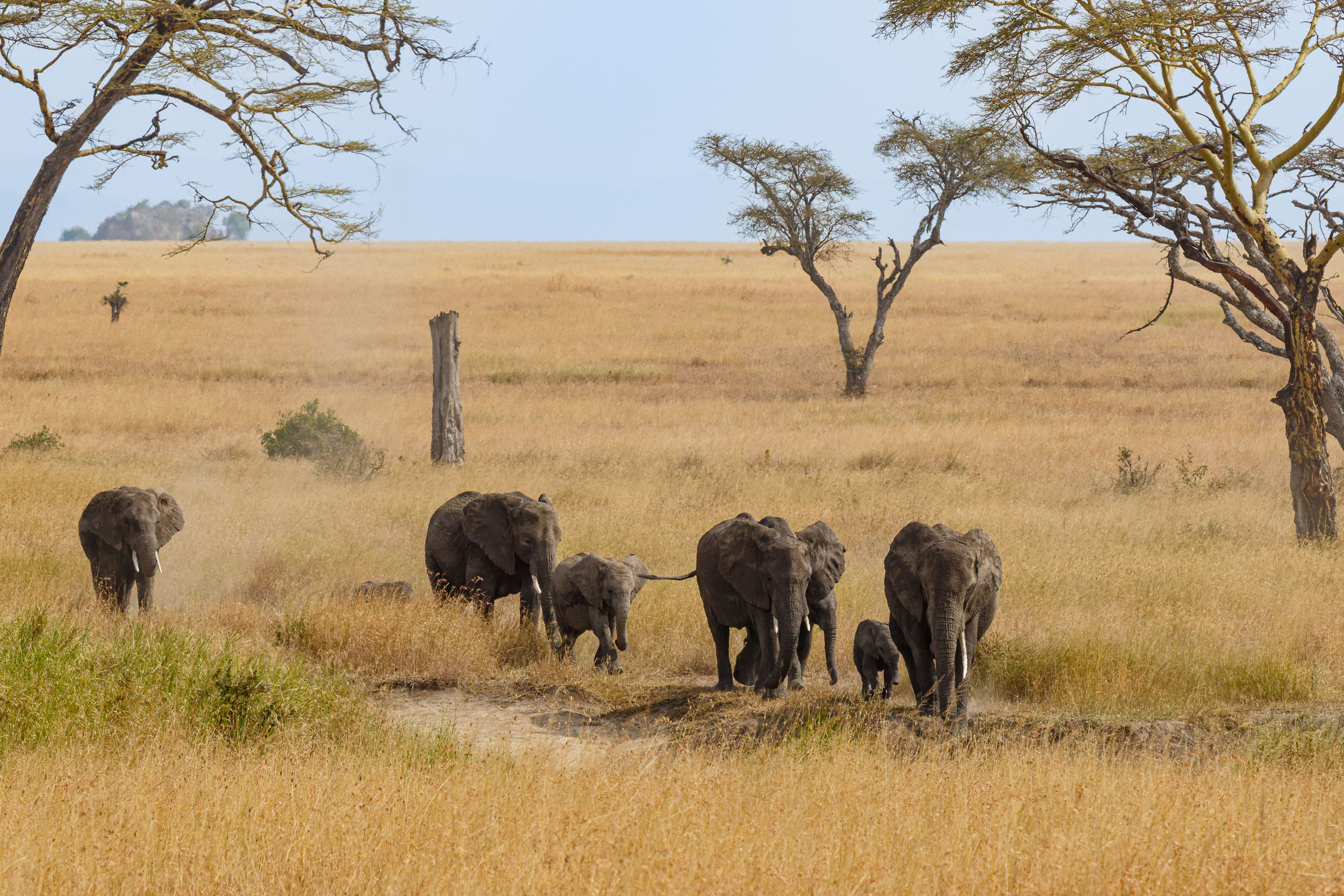
Among them, giraffes moved with unhurried elegance.
It was one of those classic African savanna scenes — elephants and giraffes sharing open space beneath an endless sky. The kind of moment that feels almost staged, yet unfolds casually in front of you.
Further along, more giraffes appeared. More elephants.
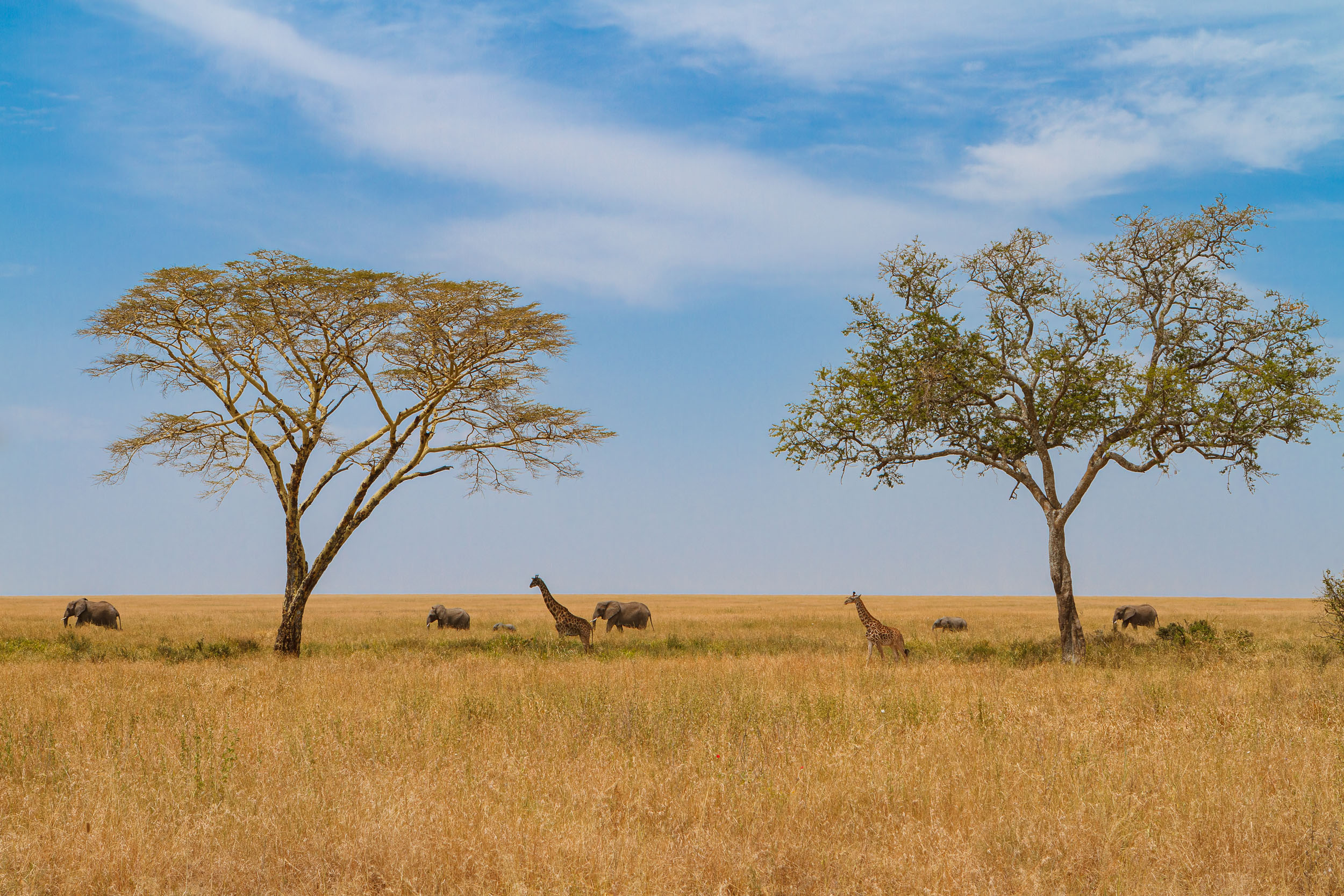
And then another hippo pool.
This one was even busier than the morning’s river bend. Many hippos had hauled themselves out onto the muddy banks to graze, their massive bodies surprisingly agile as they shifted between land and water. Others remained half-submerged, only eyes and nostrils visible above the surface.
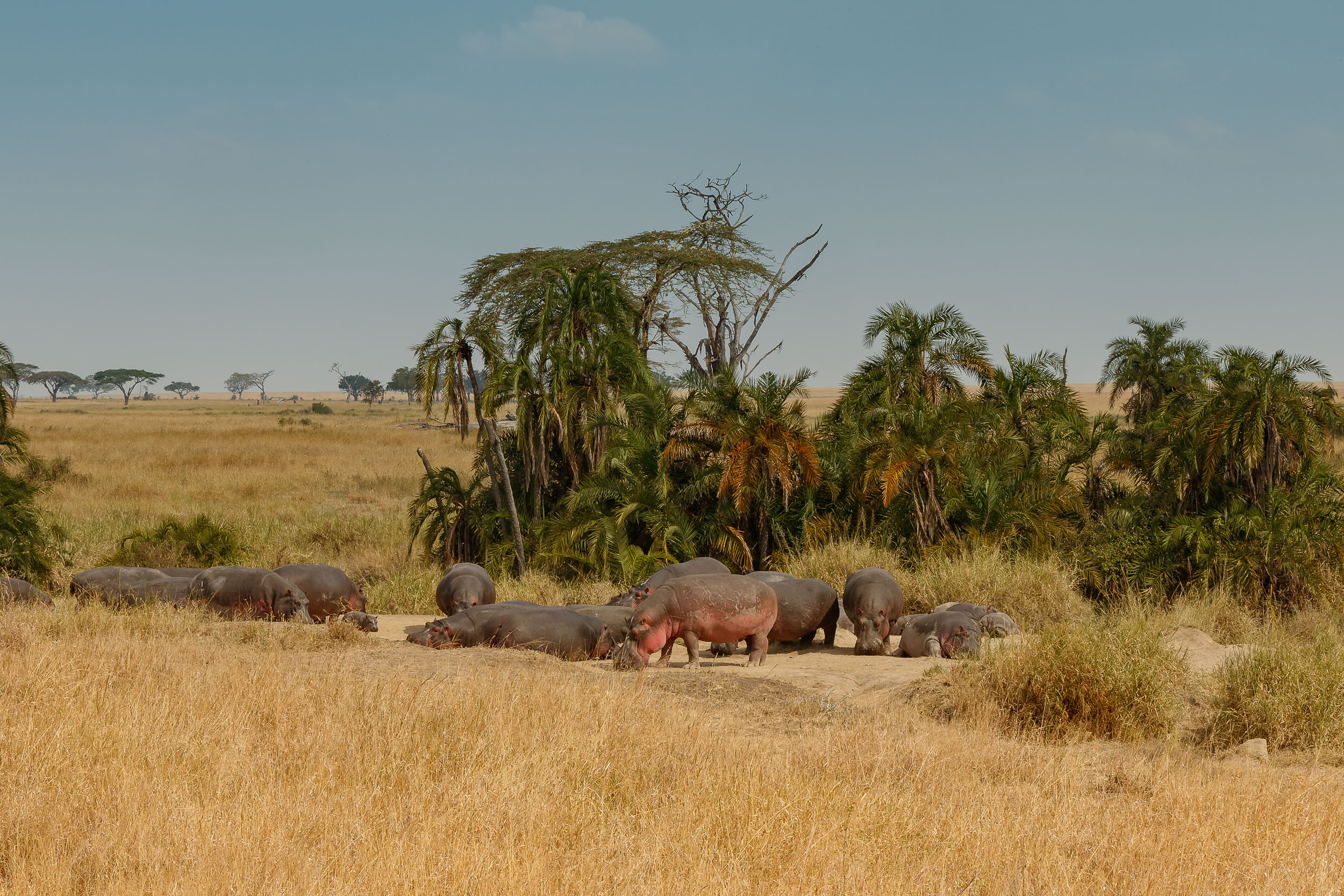
The abundance of wildlife in Seronera was becoming almost surreal.
Later in the afternoon, as the light softened, Chris slowed again.
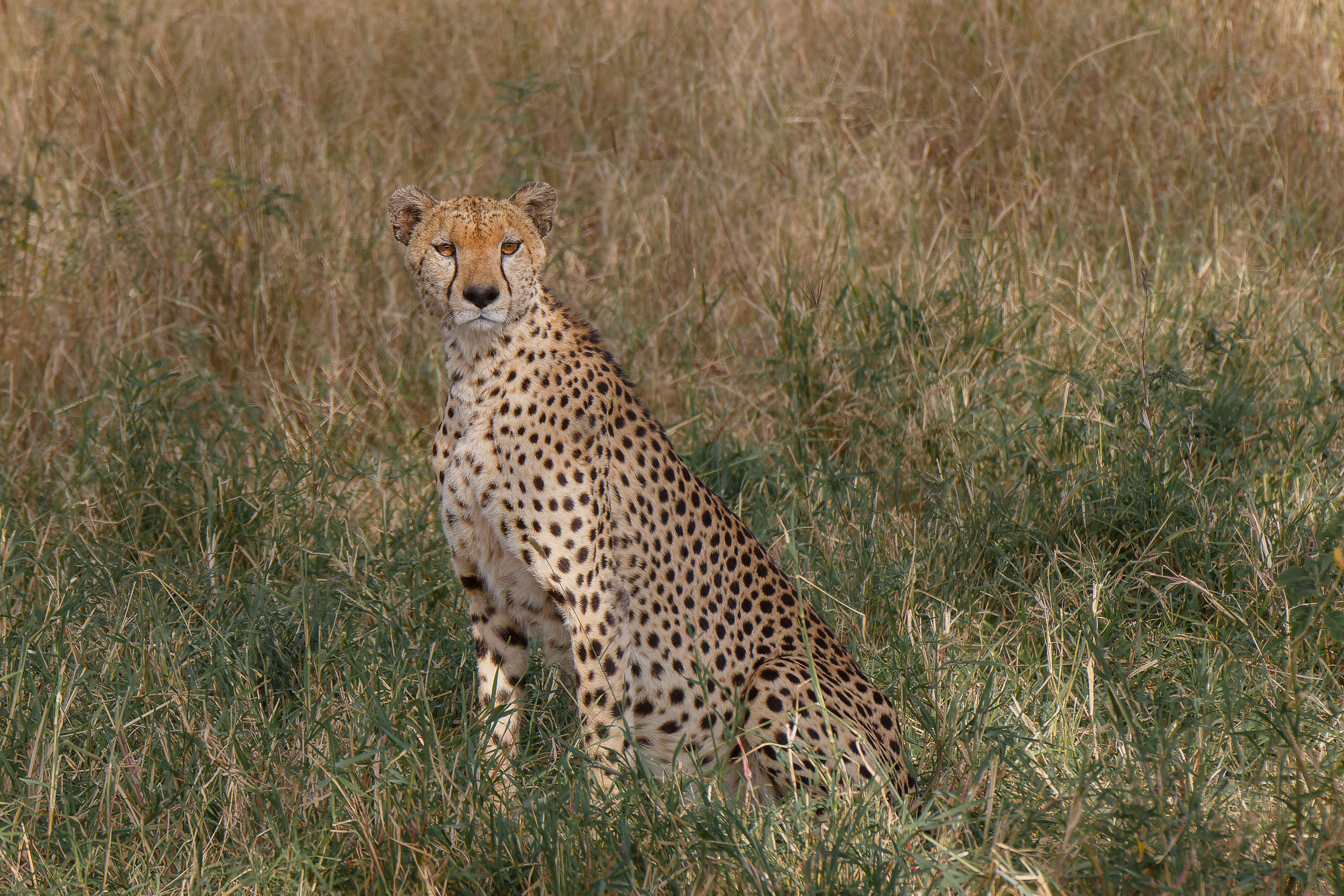
There — sitting upright in the grass right beside the road — was a cheetah.
No termite mound this time. No elevation. Just a slender silhouette rising above golden stems. Head high. Eyes scanning. Completely poised.
We stopped only meters away.
It felt improbable — the sheer number of sightings we were having, yet so few other vehicles around us. Occasionally a distant jeep appeared on the horizon, but most of the time we were alone.
Was Chris simply choosing smaller tracks others ignored? Was it timing? Instinct?
Whatever the reason, the central Serengeti felt vast and personal — not crowded, not chaotic, but expansive.
As the sun began its slow descent, the savanna turned gold.
Acacias cast long shadows across the grass. Scattered herds moved in silhouette. The air cooled, and the rhythm of the day slowed once more.
We returned to Ronjo Camp just before dusk, once again grateful to arrive before park closing hours.
Another evening around the campfire.
Another Serengeti sunset.
Tomorrow, we would begin moving north.