Arriving in Tanzania – The Journey to Tarangire National Park
Day 2 & 3 of 12 – Tanzania Safari Trip
We arrived in Arusha in the late afternoon, tired from the long journey from Bali but quietly aware that we had entered a different landscape altogether. At the small airport we were welcomed by Chris, our guide for the coming days. His calm presence felt reassuring — we were about to begin our Tanzania safari, and everything from here on would move at a different pace.
Because of our late arrival, we stayed overnight at a lodge near Arusha before heading into the bush. It turned out to be a welcome pause. The air felt cooler than expected, Mount Meru hidden somewhere beyond the clouds, and the city carried a gentle hum rather than urgency.
Early the next morning, we left Arusha for Tarangire National Park — our first real safari drive in Tanzania.
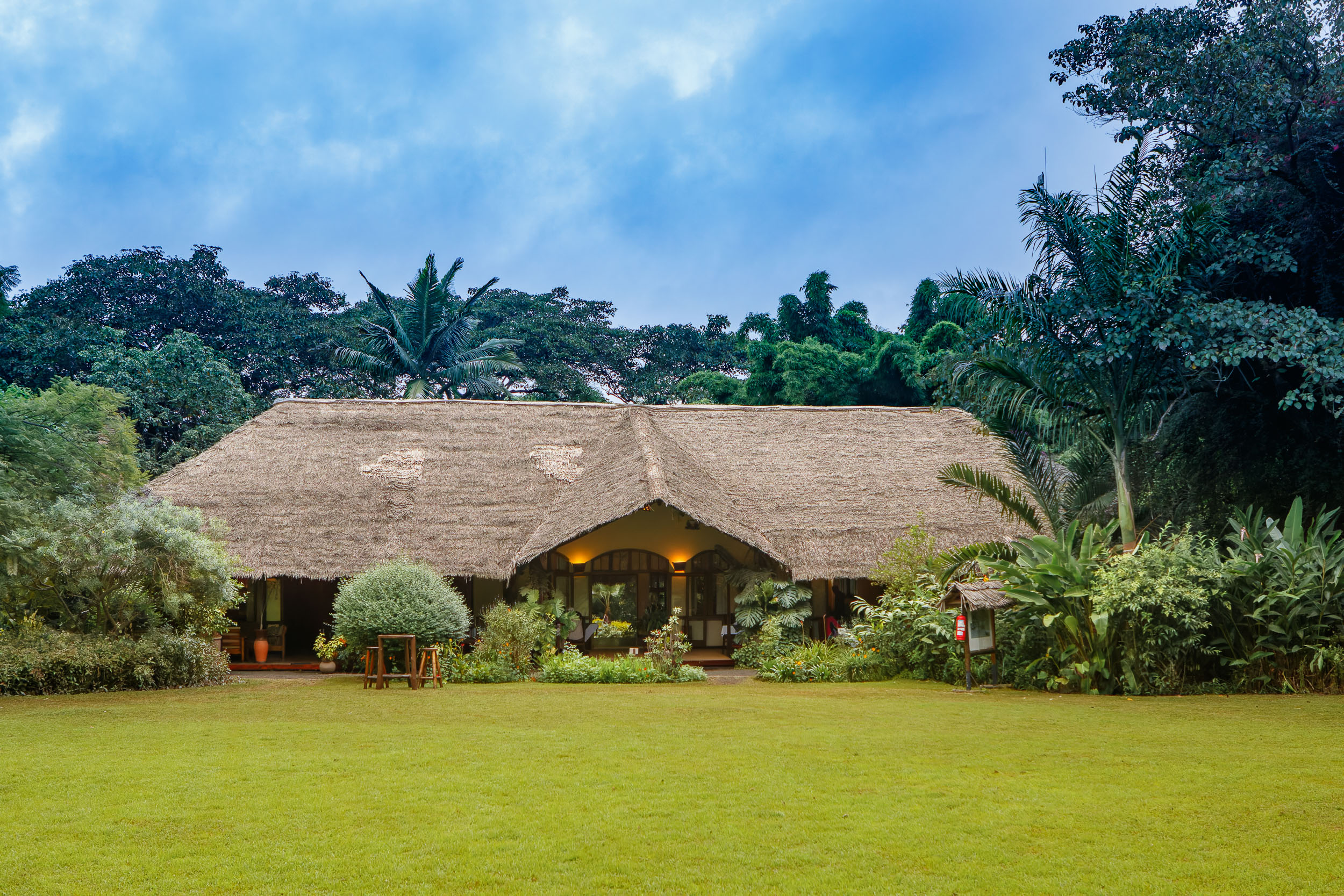
The Road to Tarangire
The drive from Arusha to Tarangire takes roughly two hours, gradually shifting from busy town edges to open countryside. Villages appeared and disappeared along the road. Maasai herders moved slowly with their cattle. Markets gathered dust in the morning light. Before even reaching the park, Tanzania had already begun to unfold in subtle, everyday scenes.

Tarangire National Park lies between the Masai Steppe to the southeast and the lakes of the Great Rift Valley to the north and west. It is named after the Tarangire River, the lifeline that crosses the park and becomes essential during the dry season, when wildlife concentrates along its banks.
The landscape felt immediately distinct — granite ridges, wide valleys, swamps and rolling woodland dotted with ancient baobab trees. Compared to the open plains many associate with a Tanzania safari, Tarangire feels more enclosed, more textural, almost layered.
After completing the entrance formalities, our safari truly began.
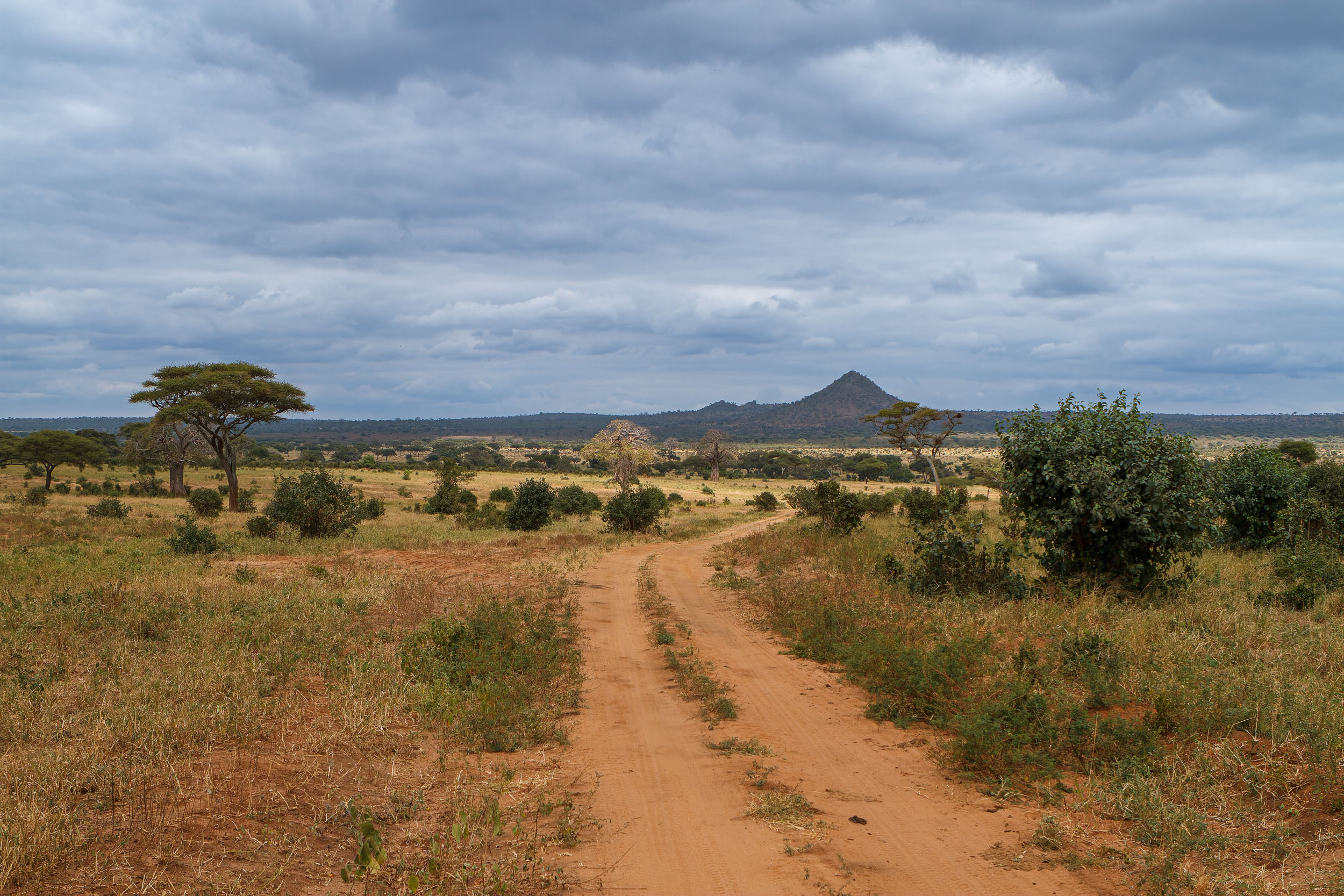
First Impressions in Tarangire National Park
Crossing the gate into Tarangire National Park felt like a quiet threshold moment.
Until then, Africa had been landscape. Culture. Anticipation.
Now it became wildlife.
And almost immediately, it became unmistakably Tarangire.
Scattered across the yellow-golden savanna stood the park’s most iconic feature — the giant baobab trees. Massive, ancient, almost surreal in appearance, their swollen trunks rising like natural monuments from the dry grasslands. Some looked as if they had been planted upside down, roots reaching into the sky. They stood solitary and proud in the open fields, casting long shadows in the late afternoon light.
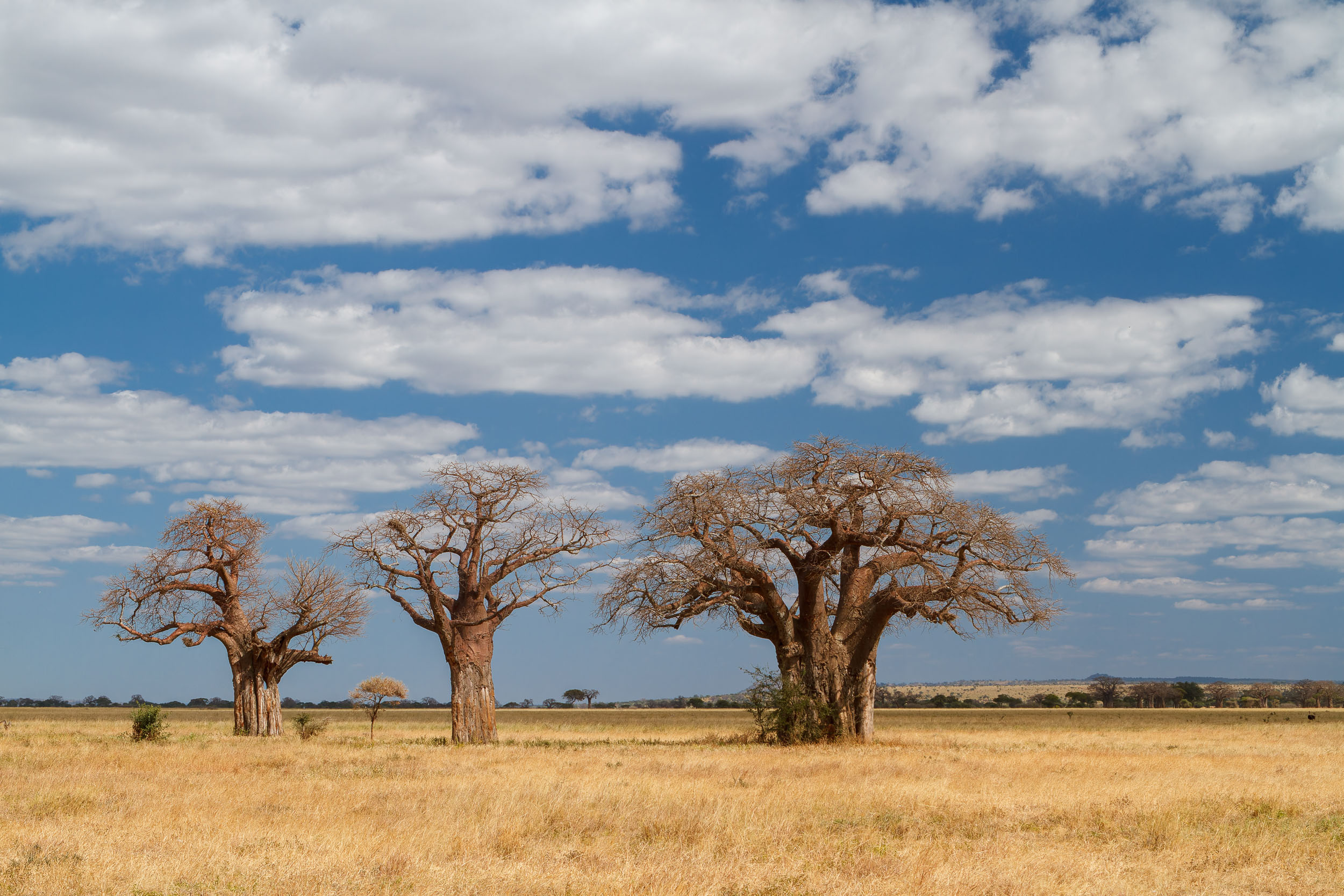
It was our first encounter with these legendary African trees — and they felt timeless.
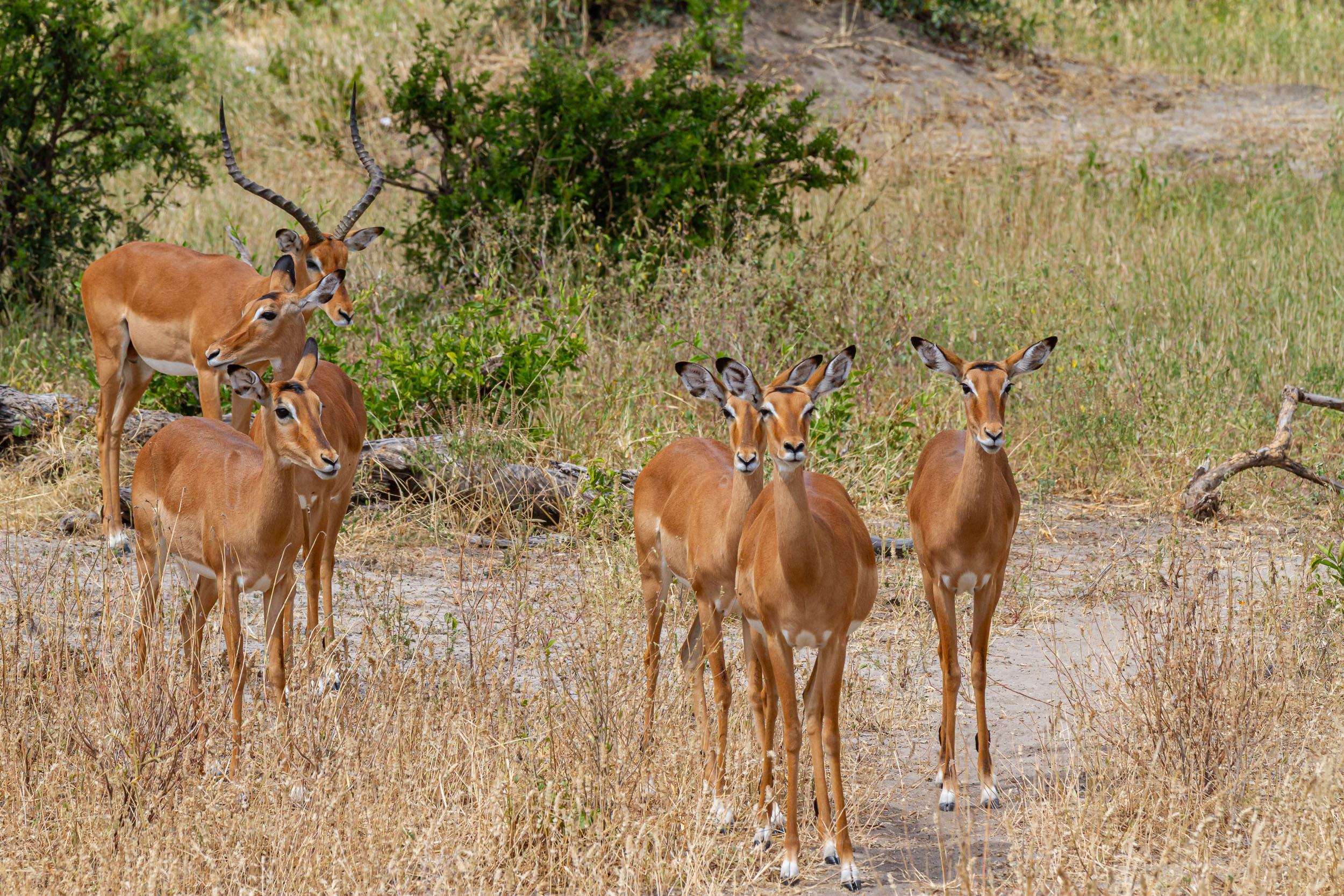
Within minutes, we saw our first herd of impala grazing peacefully between the baobabs. Elegant and alert, they lifted their heads in synchrony, ears twitching at every distant sound.
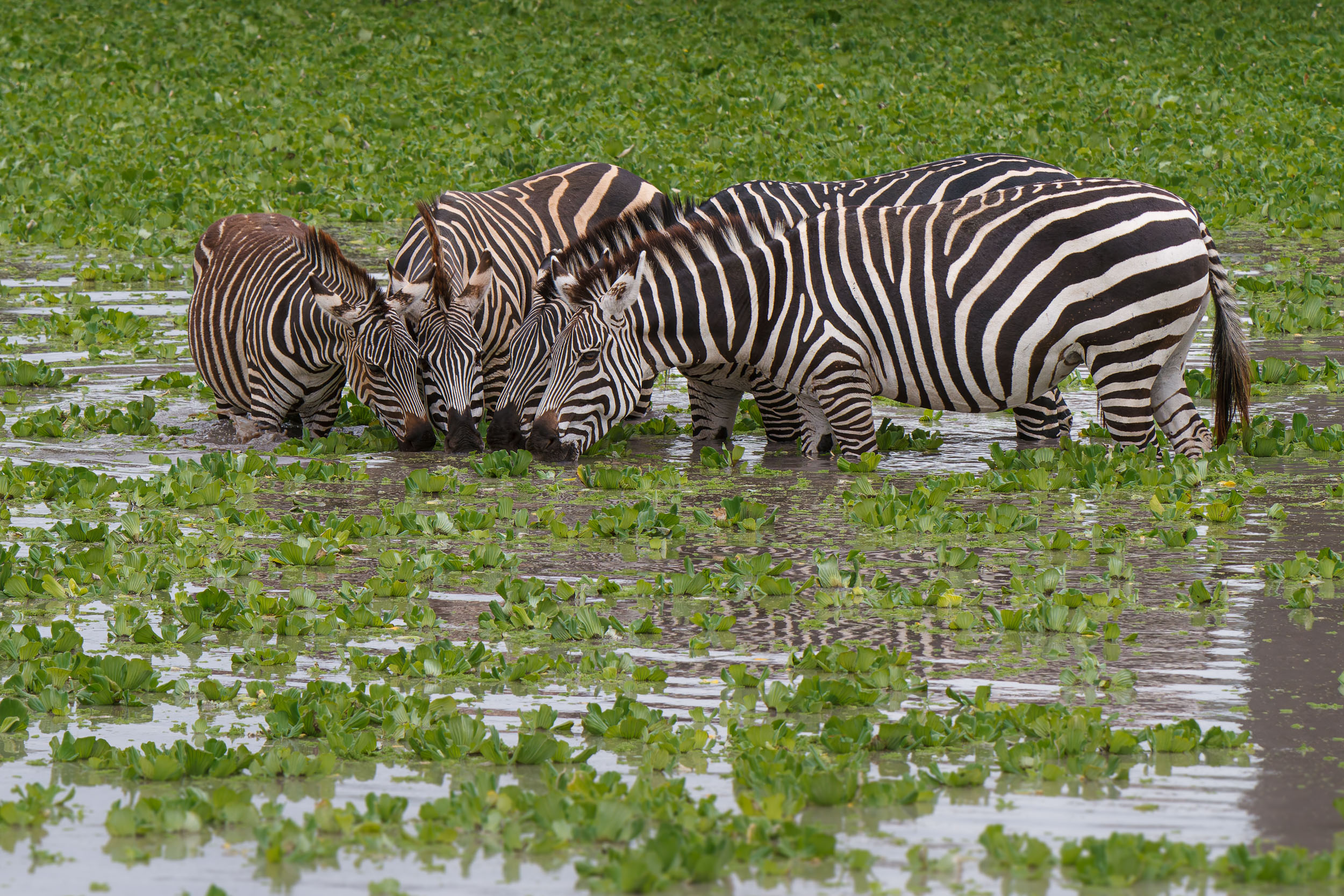
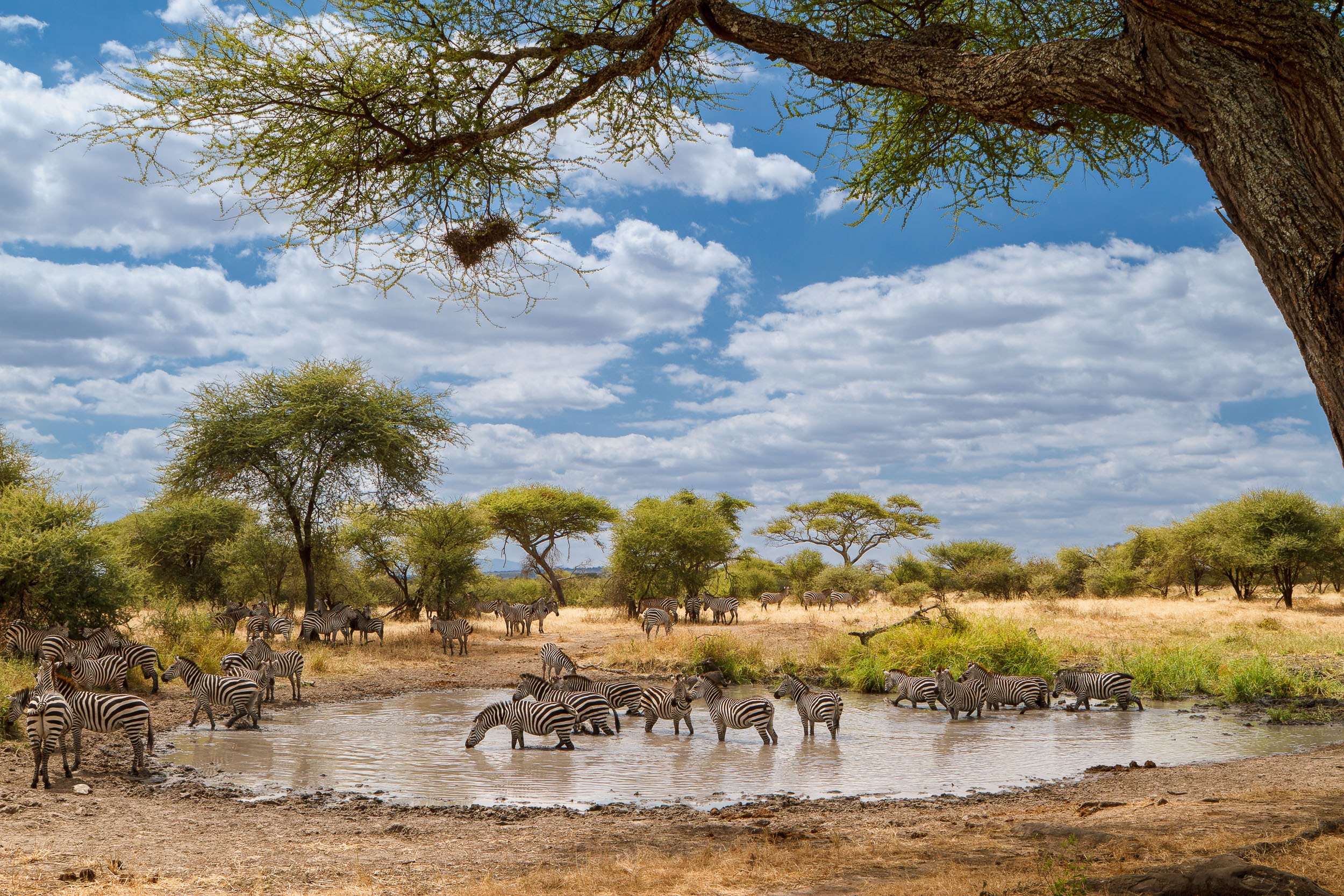
Not far beyond, a group of zebras stood knee-deep in a shallow pond, pulling at water hyacinth. Their black-and-white stripes shimmered in the reflected light, distorted by gentle ripples.
And then — elephants.
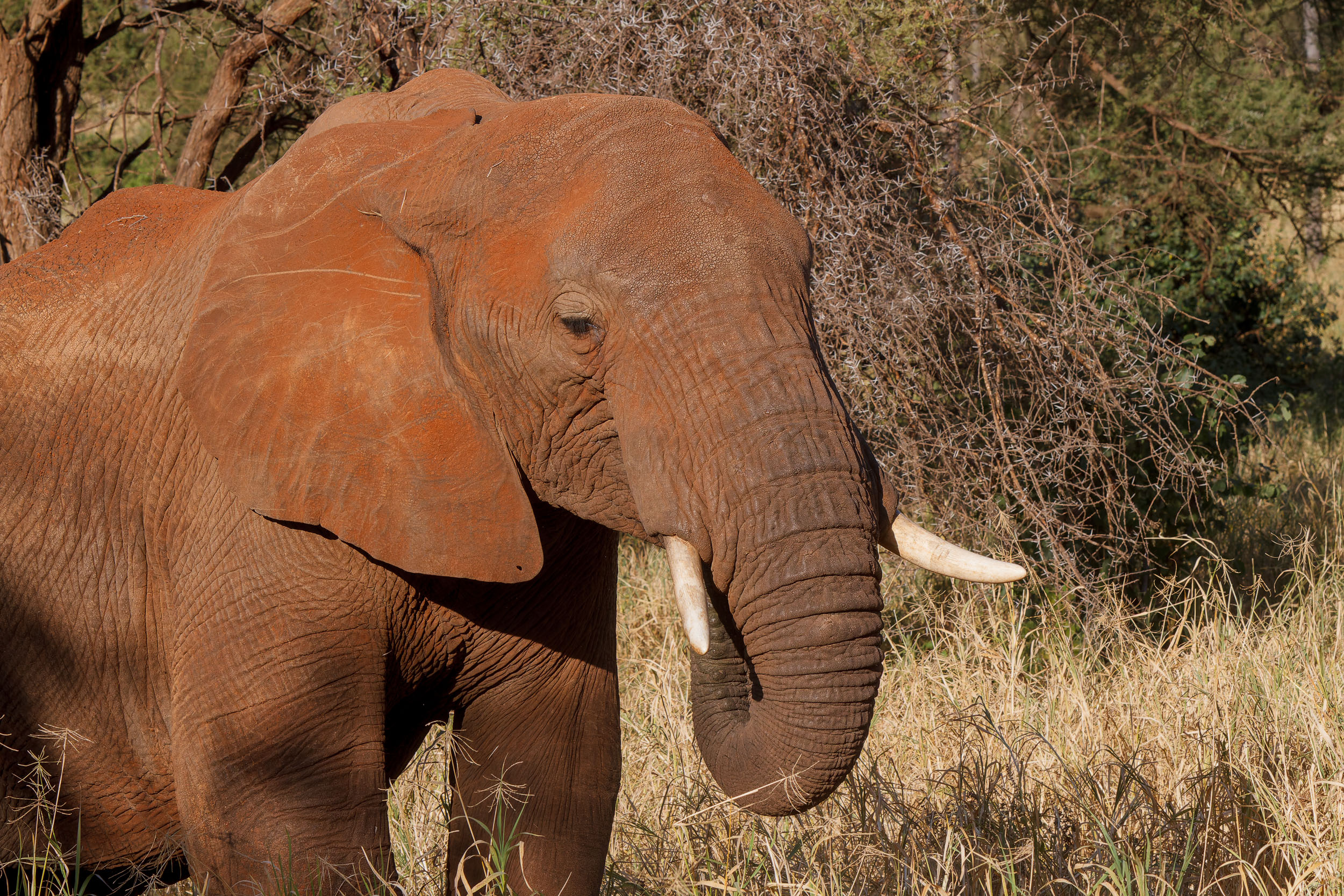
Our first herd appeared slowly through the dry savanna grass, walking in a long line toward us. Large females in front, calves partly hidden between them. Their immense bodies moved with surprising silence. Dust rose softly around their feet as they passed beneath the towering baobabs — a scene so archetypically African it almost felt staged.
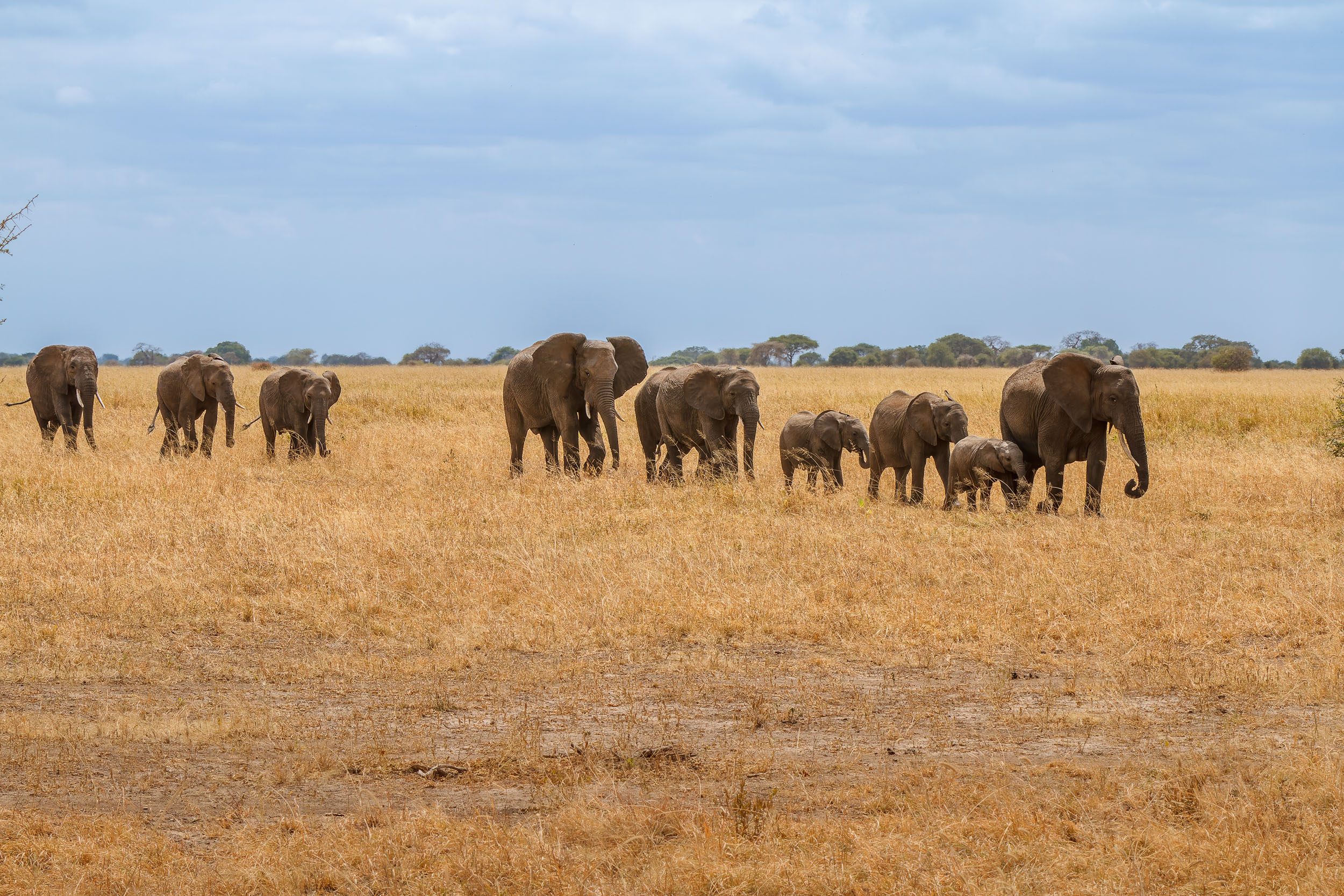
Seeing elephants in a zoo is one thing. Watching them roam freely across open savanna, framed by ancient baobabs, is something entirely different.
We were still absorbing that encounter when Chris slowed again.
Lions.
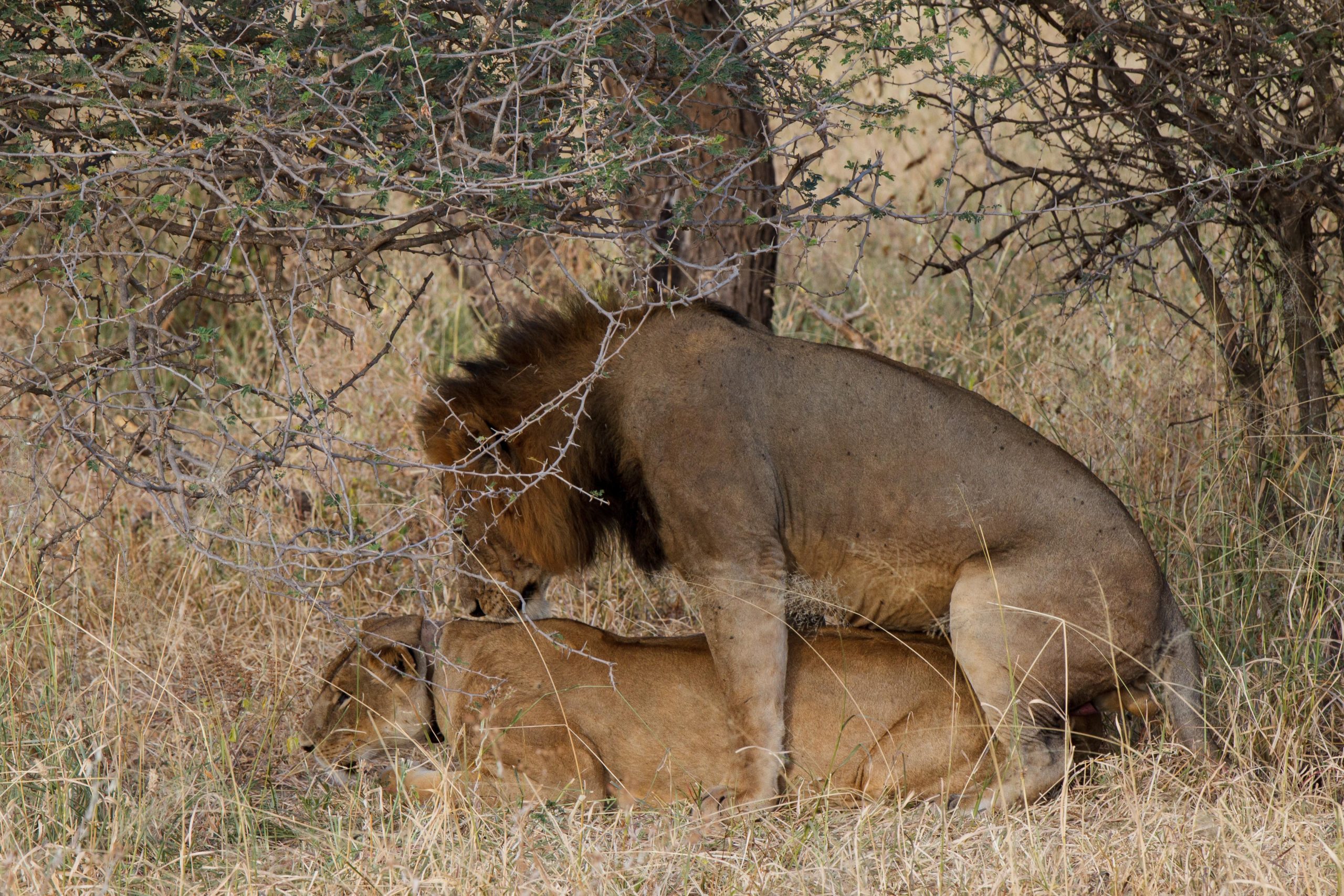
A mating pair lay right beside the road. First afternoon. First lions. How lucky could we be? The male barely acknowledged us. The lioness flicked her tail lazily, golden eyes half closed in the warmth of the day.
Wildlife kept unfolding around us as we slowly made our way south toward Mawe Ninga Camp.
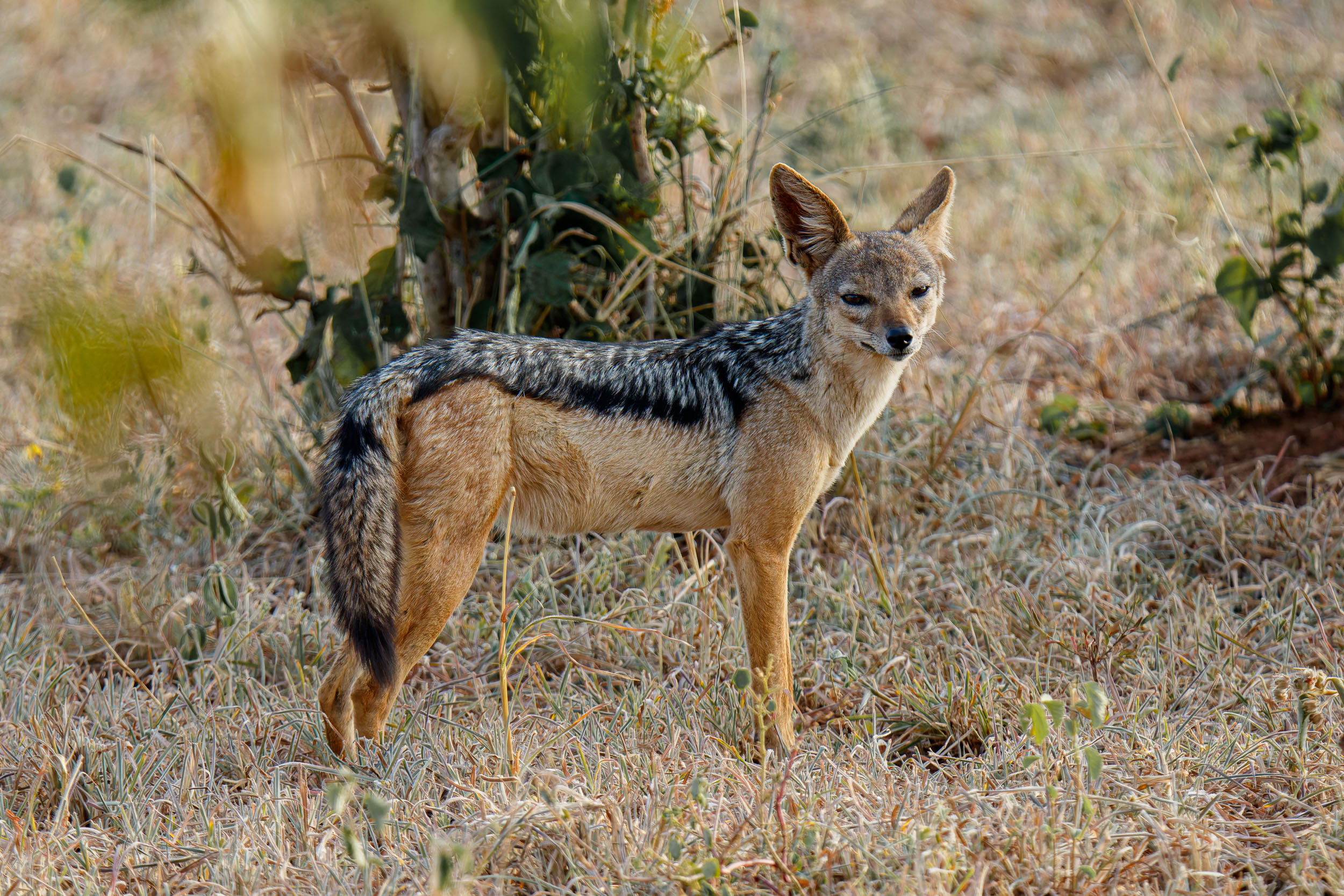
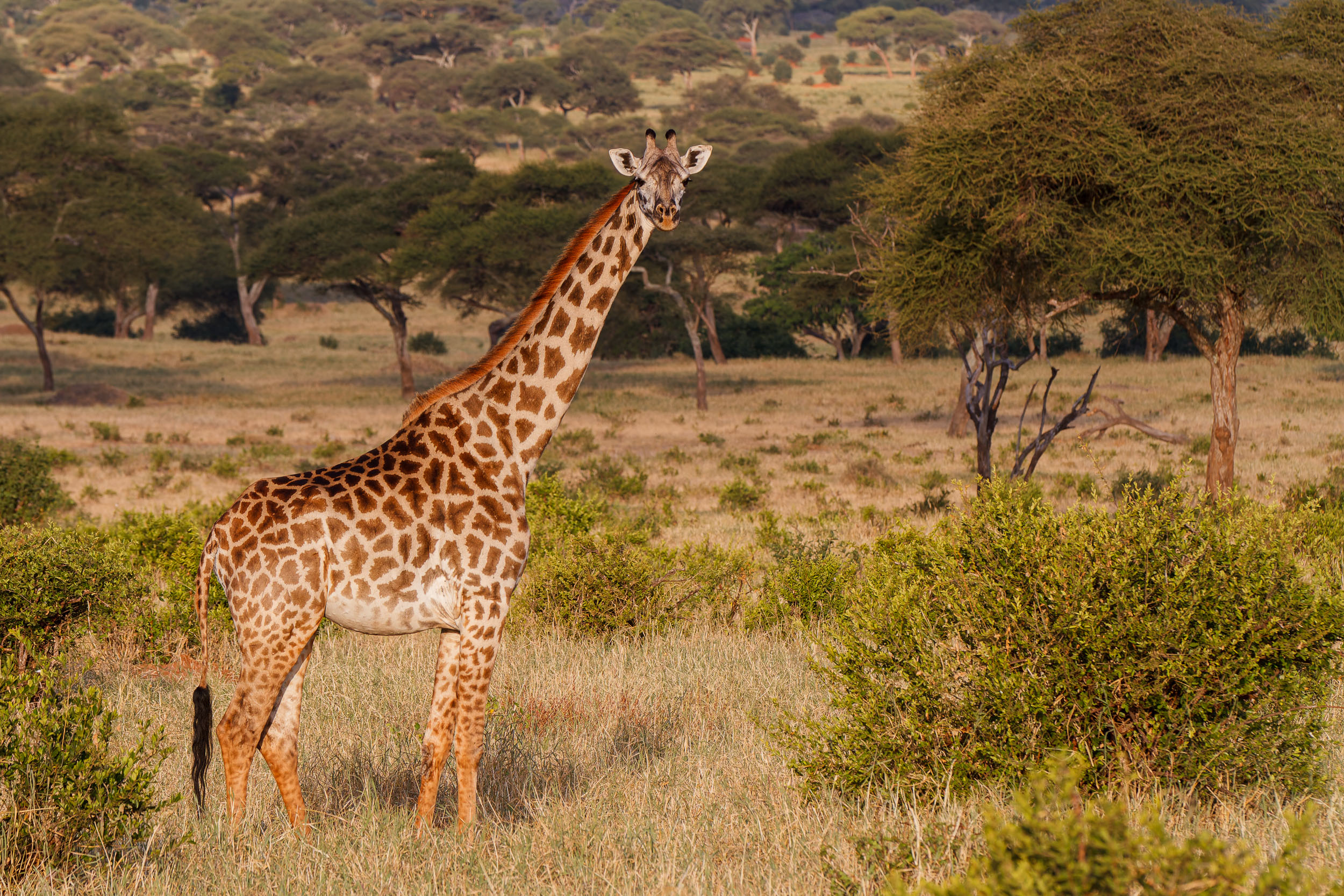
A lone jackal trotted along the roadside. Warthogs knelt awkwardly to graze. Waterbuck lingered near thicker vegetation. Giraffes moved gracefully between trees, their long necks silhouetted against the softening sky.
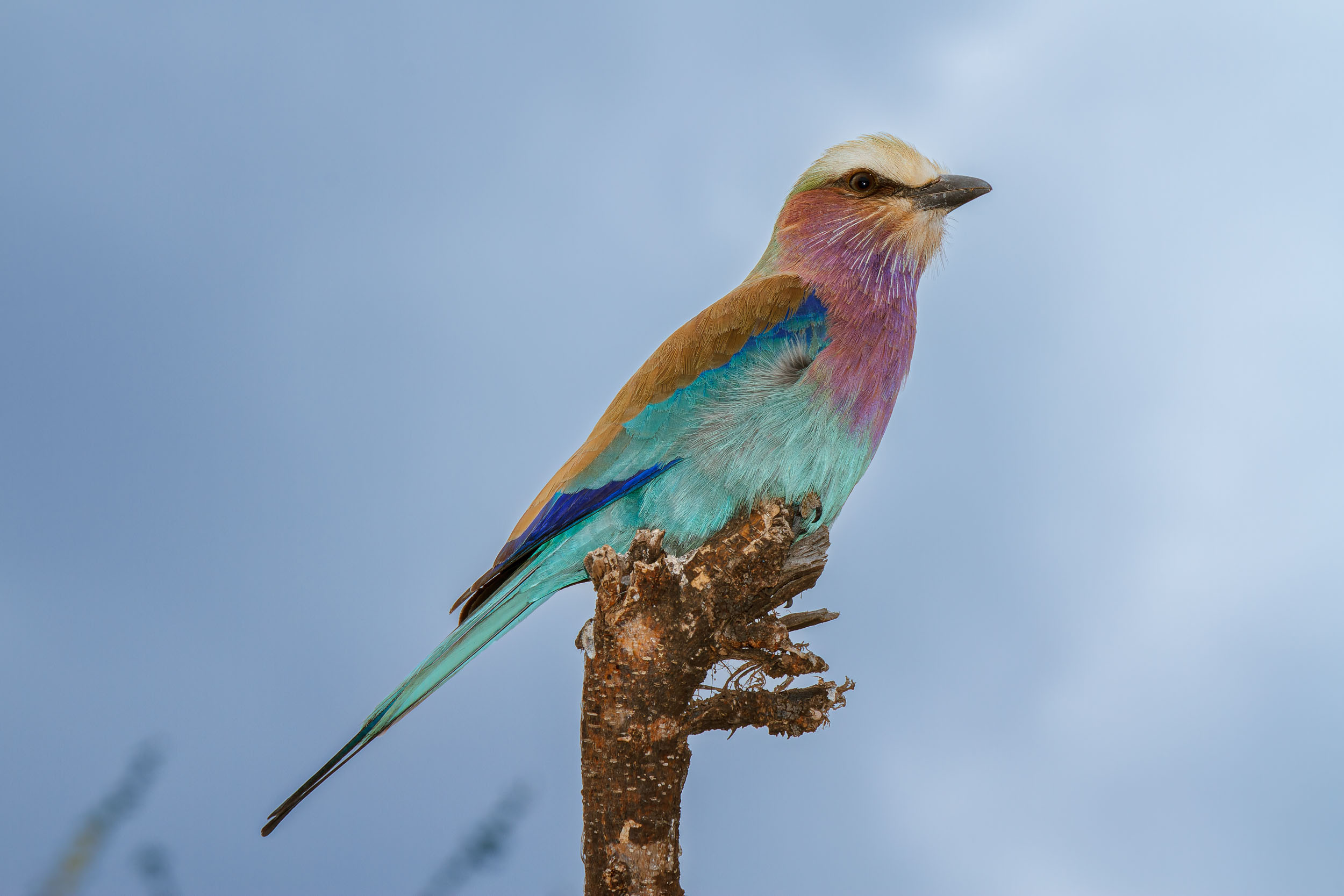
Above us, birds added flashes of color — hornbills hopping between branches, parrots darting overhead, hoopoes probing the dry soil. And then the unmistakable brilliance of a lilac-breasted roller, glowing in purple, turquoise and blue — perhaps Africa’s most photographed bird — perched perfectly in golden light.
By late afternoon the sun had dropped lower, casting long shadows beneath the baobabs. The entire landscape seemed to slow down.
There was no rush.
And yet there was movement everywhere — elephants emerging quietly from behind ridges, impala tightening their formations, giraffes drifting toward evening feeding spots.
Tarangire does not overwhelm you all at once.
It reveals itself gradually.
And for us, on that first afternoon, it marked the true beginning of our safari.
As sunset approached, we had to continue toward camp — vehicles must reach their lodges before dark — but the fading light only intensified the atmosphere.
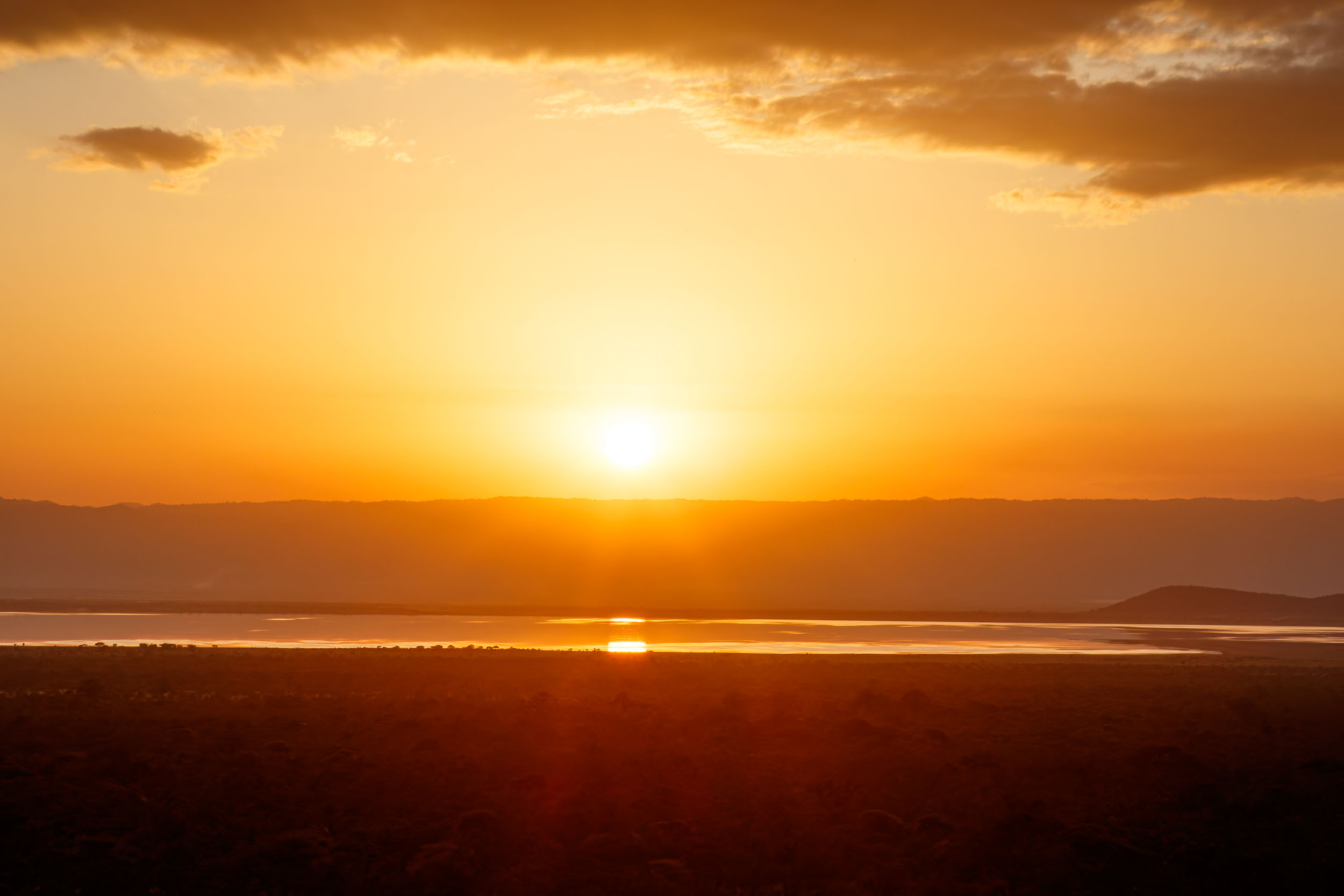
The first safari day in Tanzania was ending with scale and silence. By the time we reached Mawe Ninga Camp, the light had softened into warm amber tones.
Mawe Ninga Camp – Our First Night in the Wild
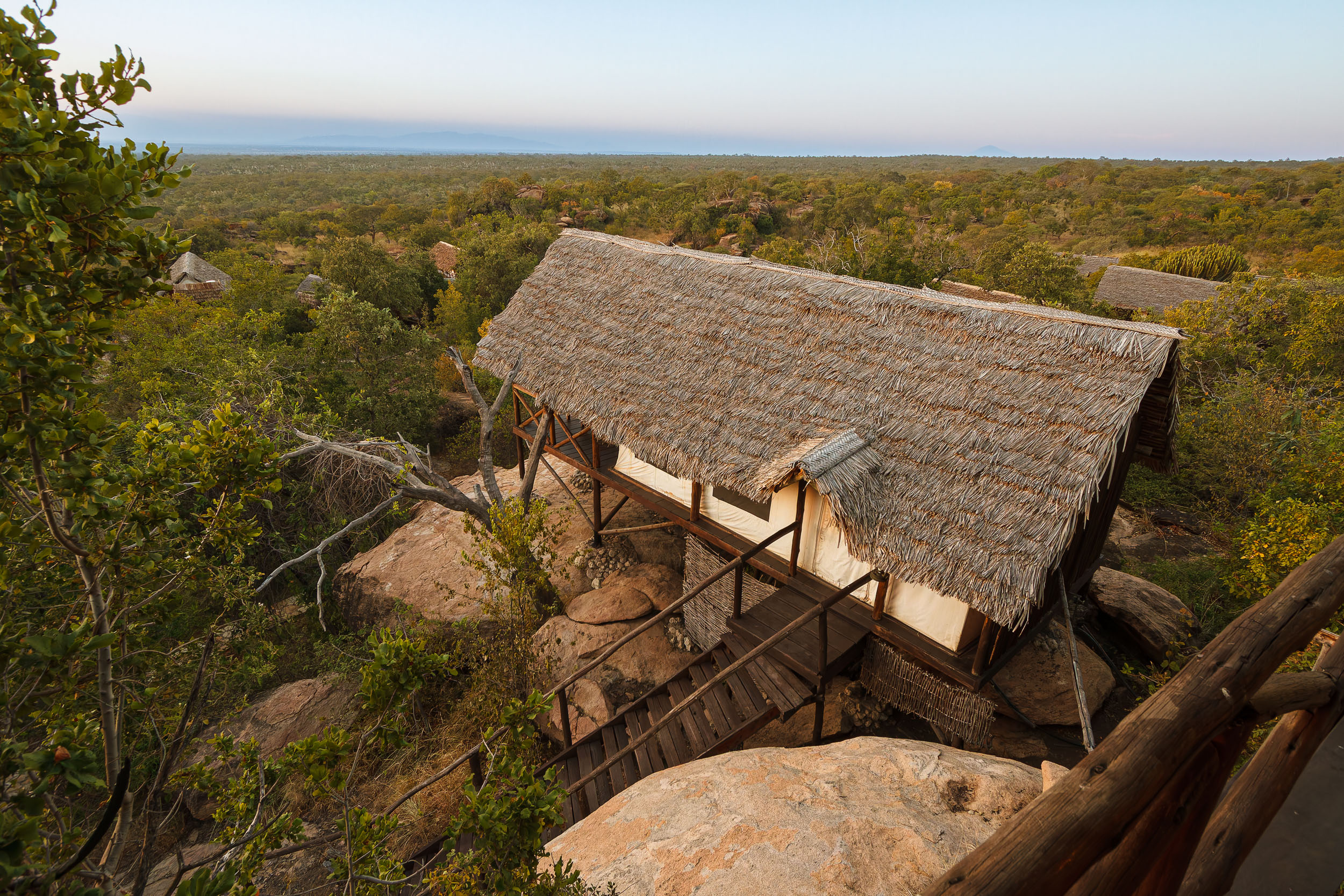
The camp sits elevated on a rocky kopje in the southern part of Tarangire National Park, overlooking a wide valley and a seasonal lake below. From the entrance alone, the view stretched endlessly — yellow savanna fading into blue distance.
This was our first real safari lodge.
And it felt exactly as we had imagined — and yet better.
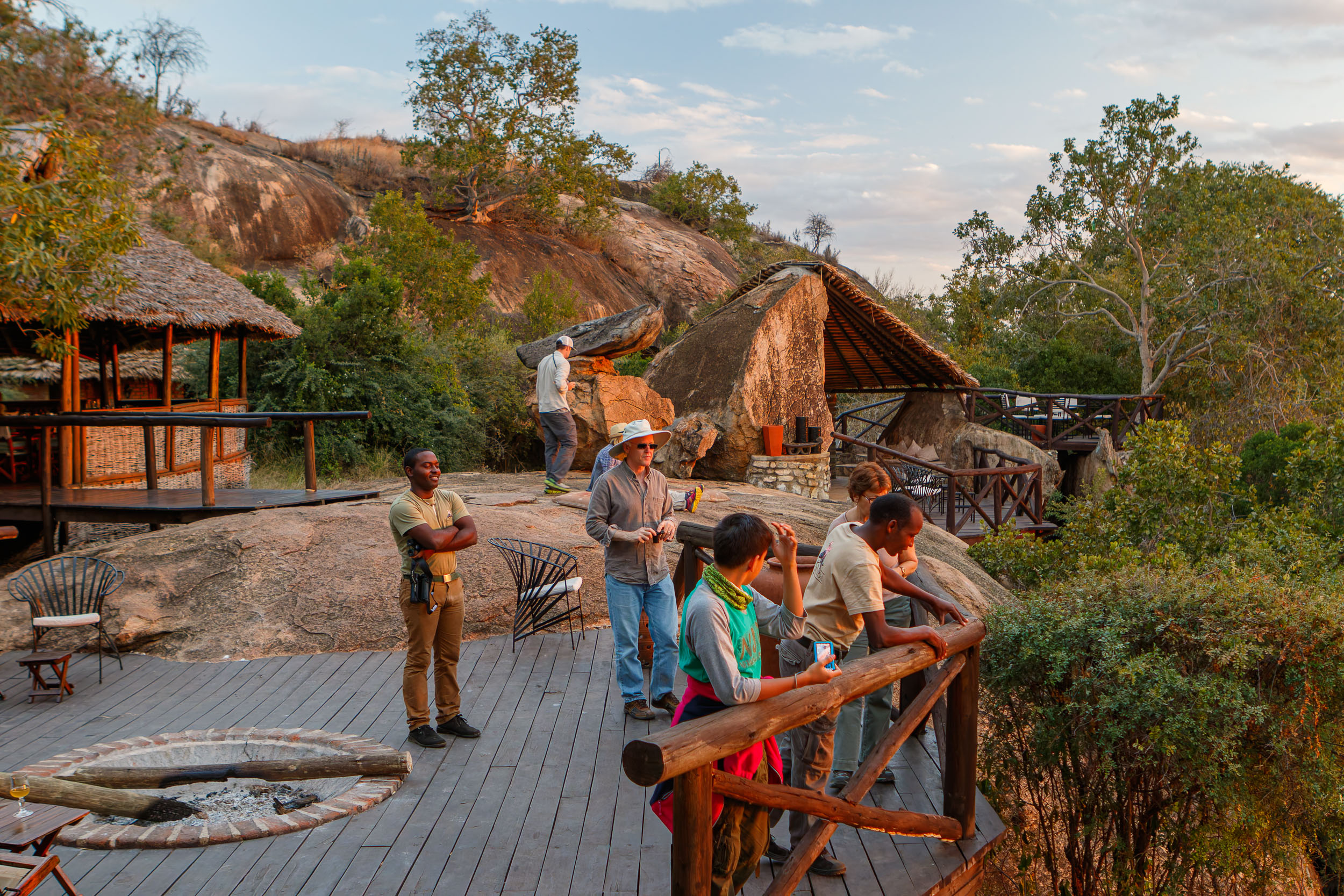
Our tent stood slightly apart from the others, built on a raised wooden platform. Canvas walls, proper beds, an open-air bathroom at the back. Simple, but beautiful. Comfortable, yet completely connected to the landscape.
From the small veranda we could look straight across the valley toward the lake. In the late afternoon light, animals appeared as small moving silhouettes below. The baobabs stood scattered across the plains like ancient guardians.
It was quiet.
Not city quiet — but African quiet. Wind in dry grass. Distant bird calls. The occasional low rumble from far away that made you wonder what exactly was moving out there.
As darkness settled, the atmosphere changed completely.
There are no fences around Mawe Ninga. No barriers separating you from the park. Once the sun sets, guests are escorted between tent and dining area — a reminder that this is not a theme park version of wilderness. This is real.
That first night in the tent felt both thrilling and strangely peaceful. Every sound seemed amplified — a branch snapping somewhere in the distance, rustling in the grass, something calling into the night.
You lie there listening.
Aware.
Excited.
Grateful.
It was the moment we truly understood that this safari was not just about sightings. It was about immersion.
Sleeping in a canvas tent, elevated above Tarangire’s vast valley, with wildlife moving unseen below — it felt like stepping into the Africa we had always imagined.
And this was only the beginning.
A Full Day in Tarangire – Wetlands, Predators and Endless Savanna
The following morning began early.
A full day in Tarangire National Park lay ahead.
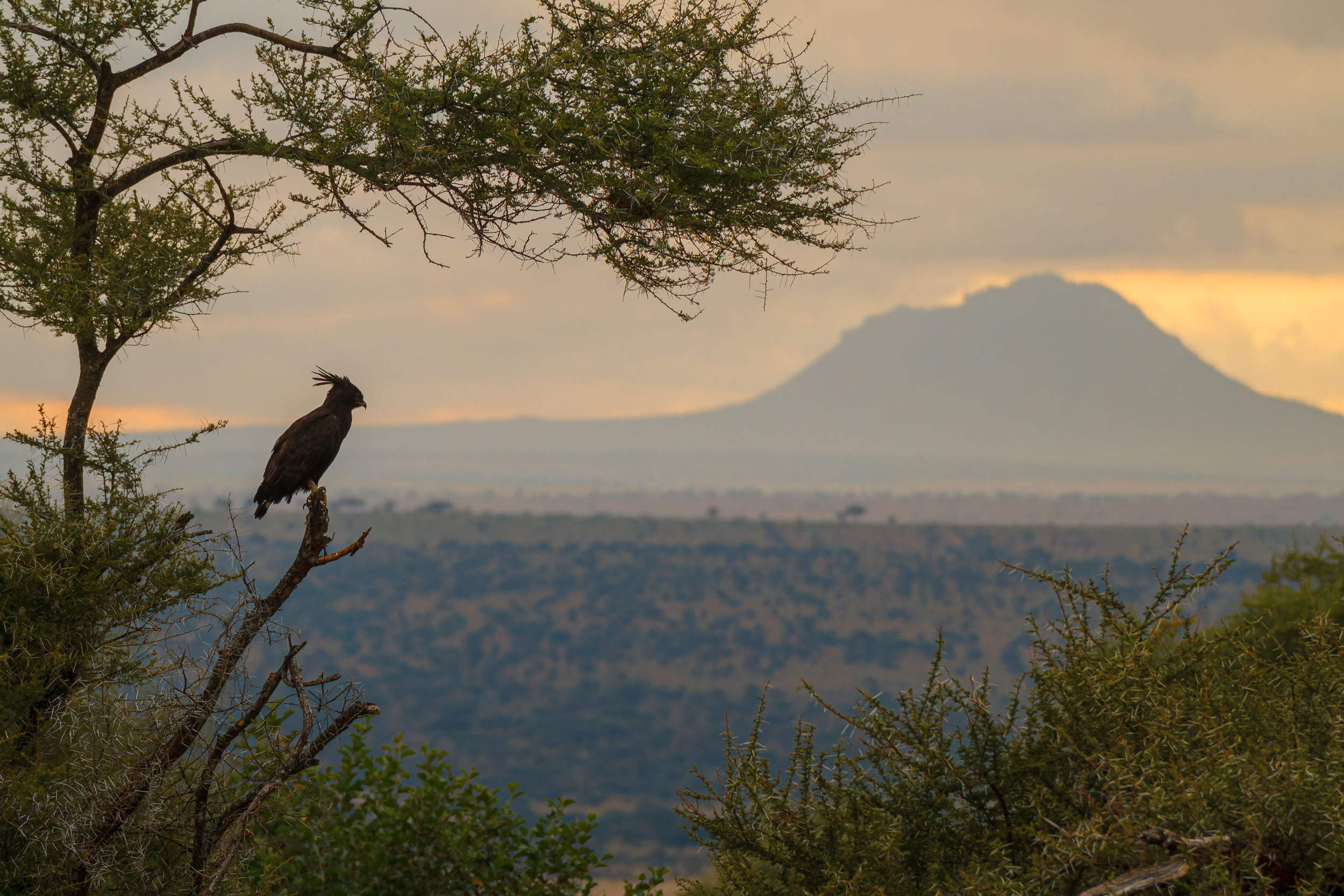
We first drove down from Mawe Ninga’s rocky elevation into the wetlands of the valley below, toward the southern stretches of the Tarangire River. In the dry season, these marshes become magnets for wildlife — one of the reasons Tarangire is so renowned for its elephant concentrations.
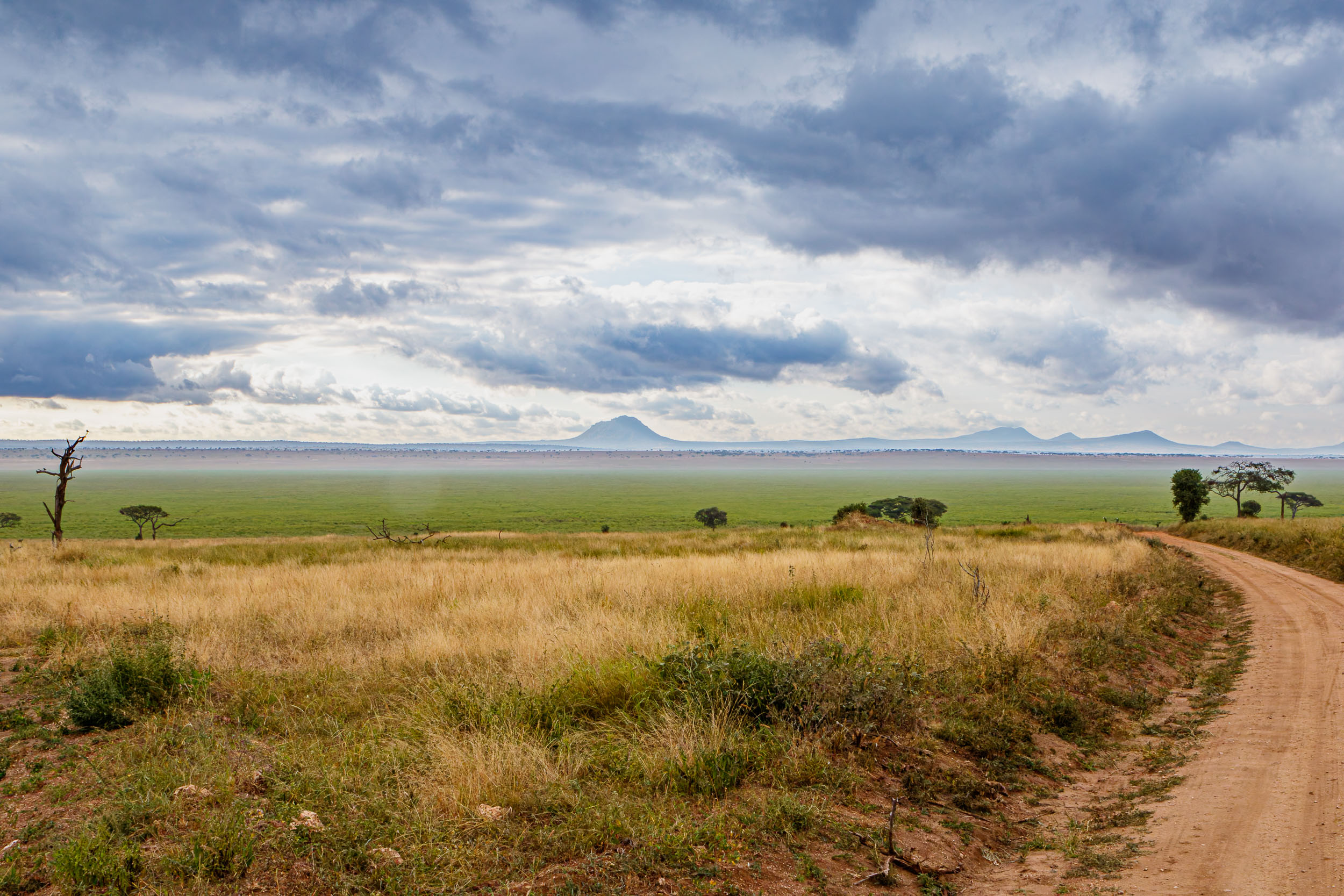
The air felt cooler here, greener.
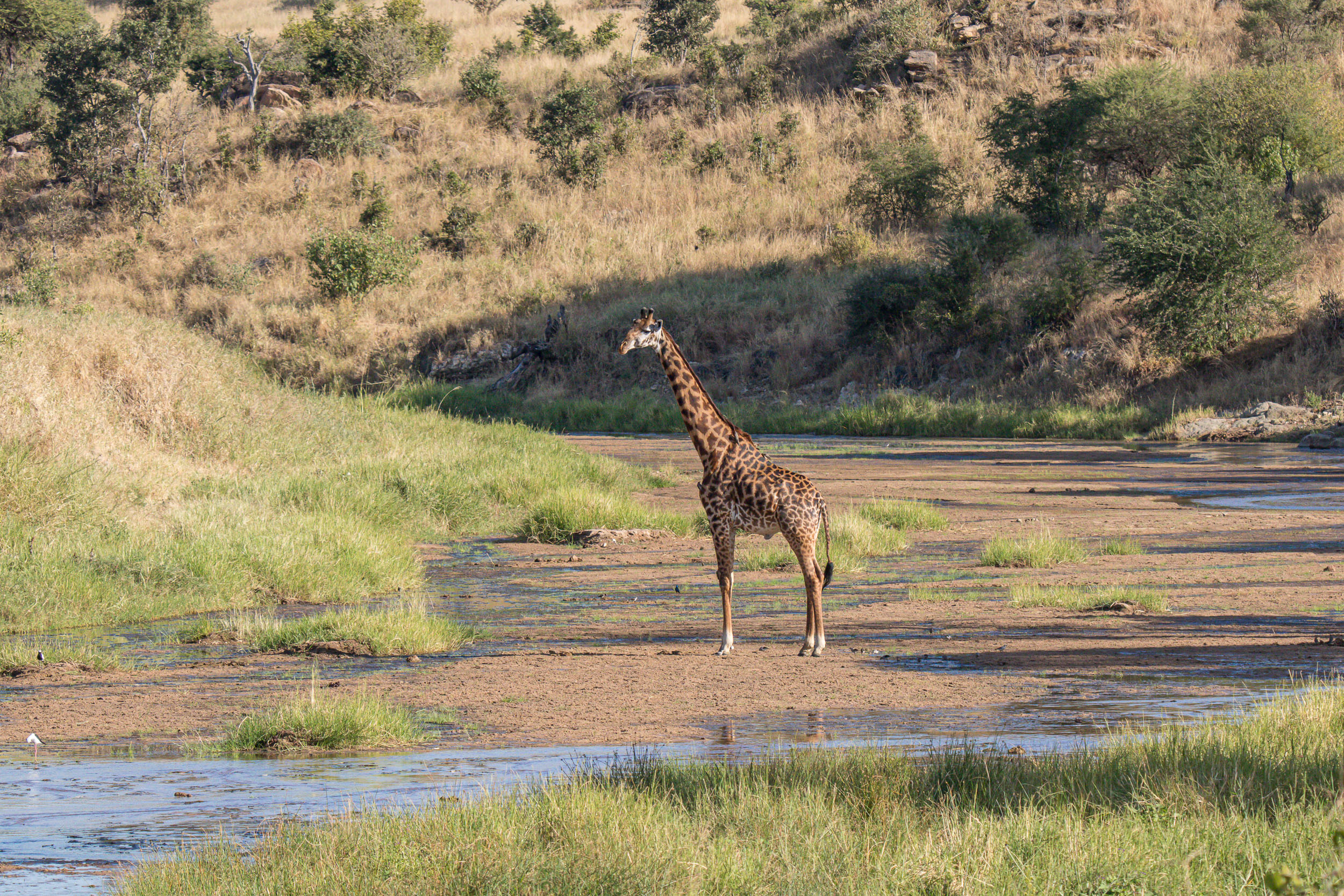
Herds gathered in natural patterns. Zebra and wildebeest grazed in open patches. Giraffes fed on fresh leaves in the river valley below, their long necks rising above the vegetation like periscopes scanning the horizon. Elephants moved in slow formation through damp grass.
Birdlife shifted constantly between water and woodland.
And then came the leopard.
It was still early when Chris stopped and pointed toward a tree. There, draped across a thick branch, lay a leopard with its kill secured high above the ground. The scene was almost silent. No chase. No drama. Just quiet dominance.
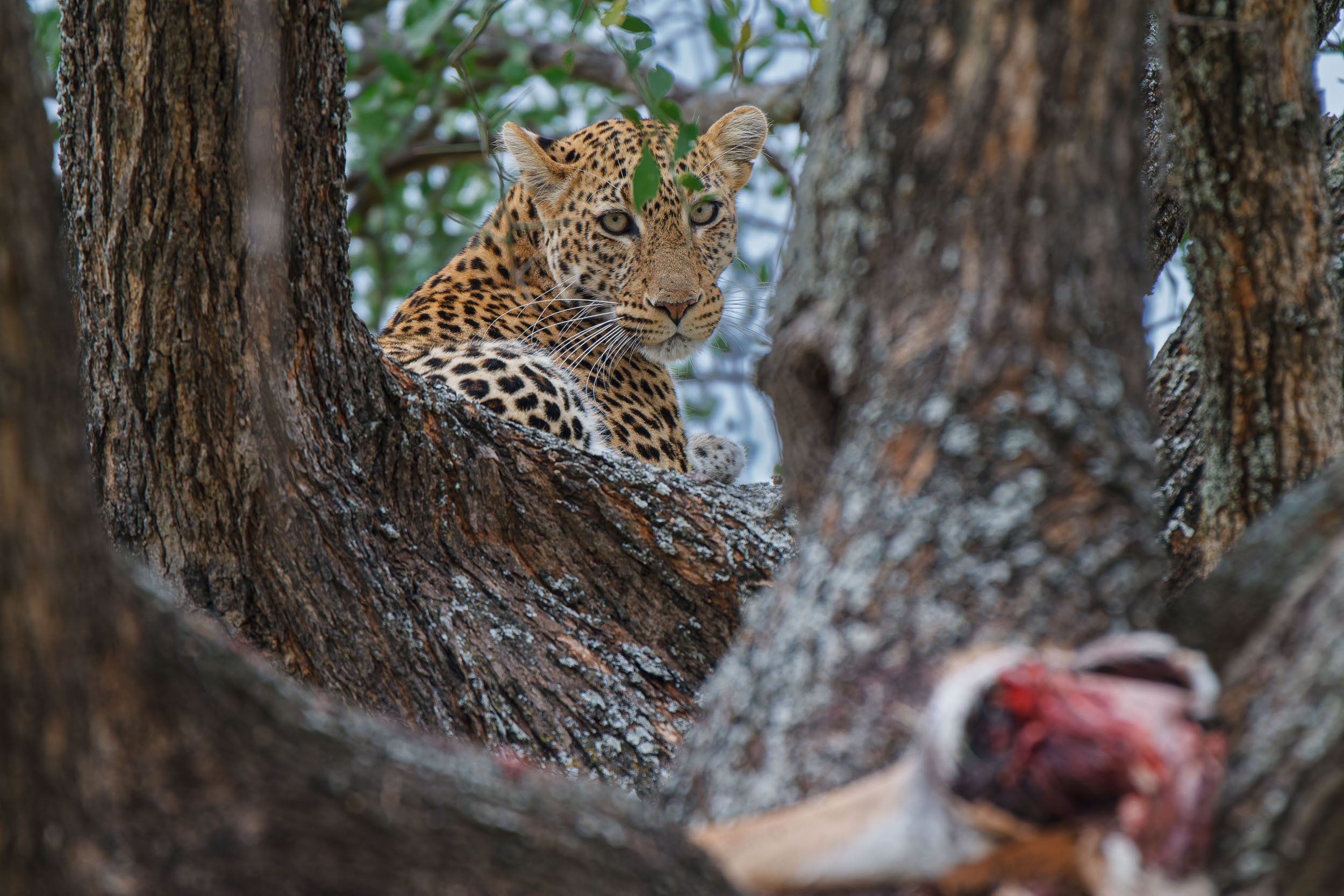
The carcass hung carefully positioned, safe from scavengers. The leopard rested, alert but composed, golden coat blending perfectly with bark and shadow.
It was one of those sightings you never assume will happen — and yet there we were, watching.
By now we were certain: we had an exceptional guide.
From the wetlands, we began a wide loop through increasingly drier terrain.
The landscape shifted almost subtly at first — lush green giving way to pale yellow grass, open plains replacing riverine vegetation. The transformation revealed another side of Tarangire.
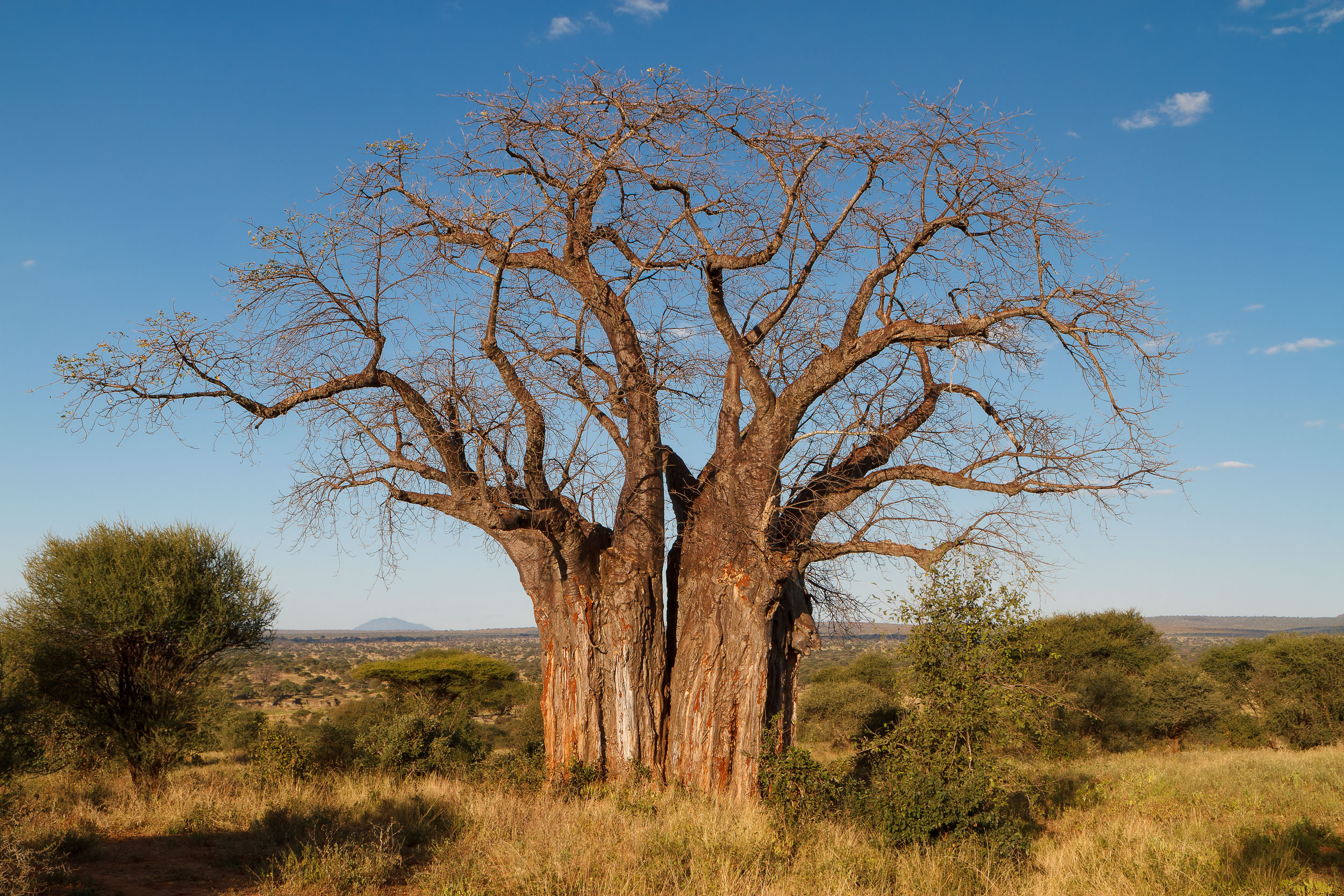
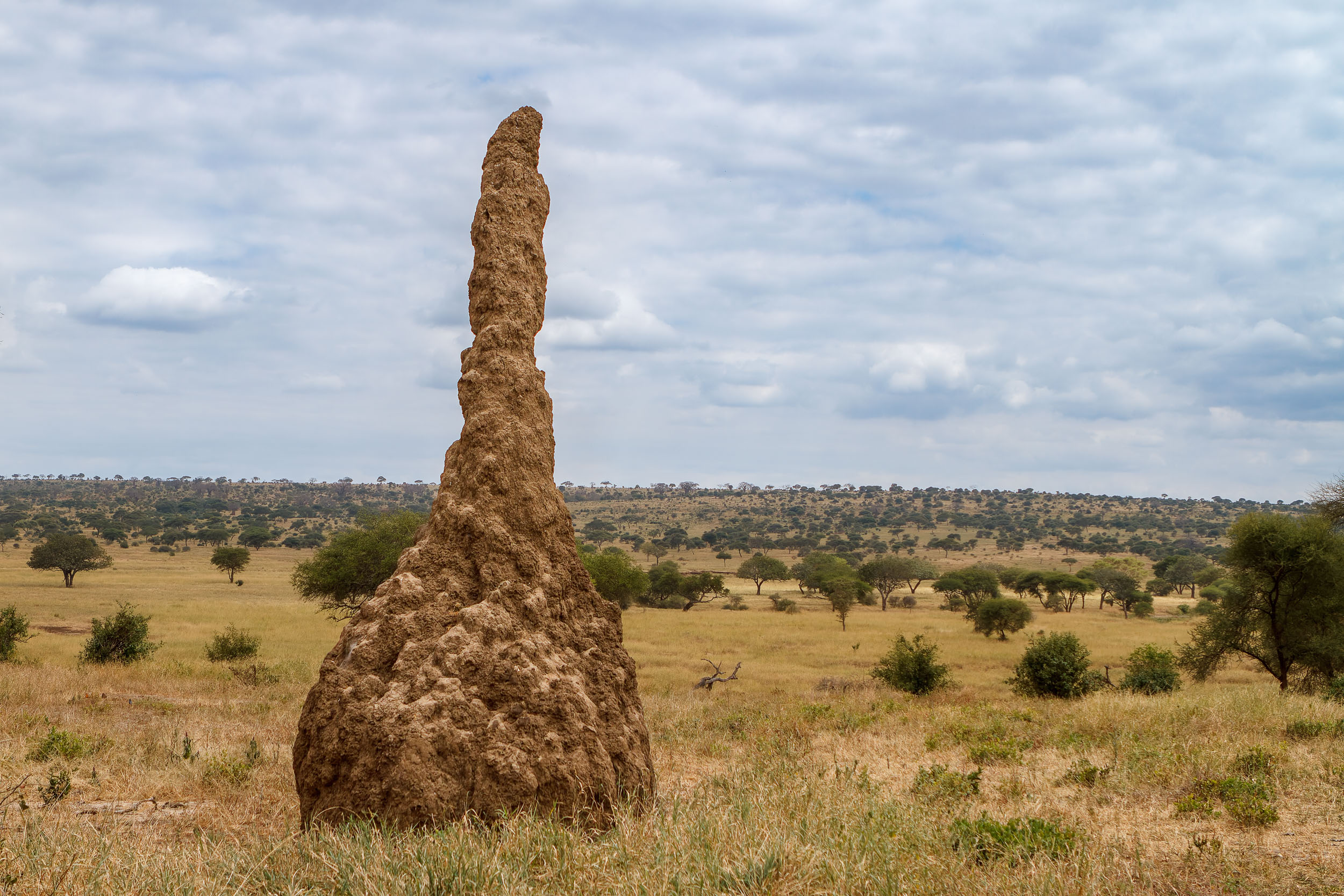
Baobabs stood scattered across the golden savanna, monumental and solitary. Around them rose towering termite mounds — some several meters high — shaped like natural mud pillars rising from the earth. The scale of everything felt amplified.
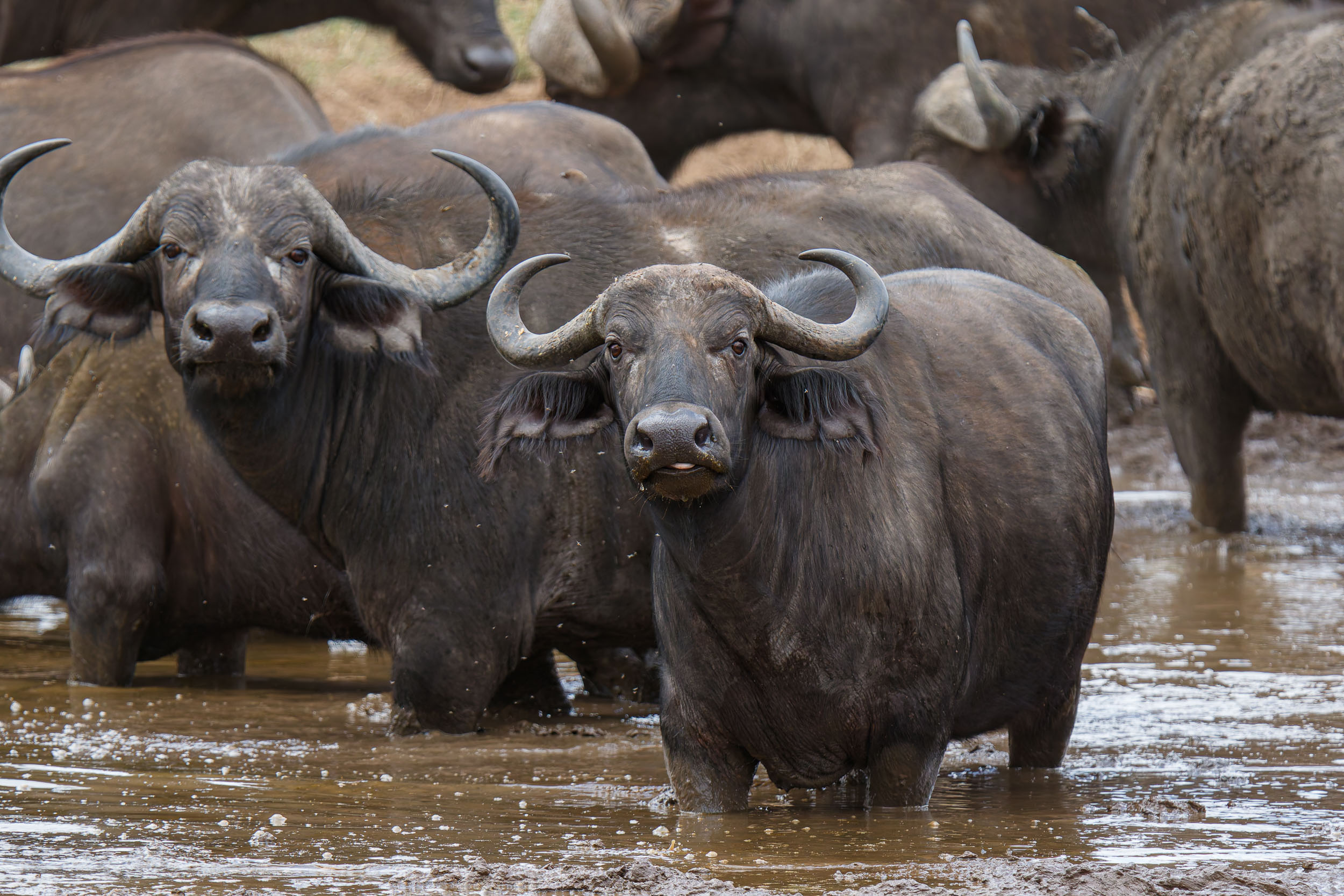
Further along, a large herd of Cape buffalo gathered at a pool to drink. Heavy, muscular bodies pressed close together, curved horns forming a defensive wall of bone and mass. Often called one of Africa’s most dangerous animals, they radiated quiet intensity. Even from the vehicle, their presence felt different — less graceful than antelope, less predictable than elephants.
We kept a respectful distance.
Zebras drank cautiously at another waterhole, lifting their heads in synchrony between sips. Nearby, elephants moved steadily across the savanna once more — Tarangire’s constant companions.
Giraffes lingered in greener pockets of the valley.
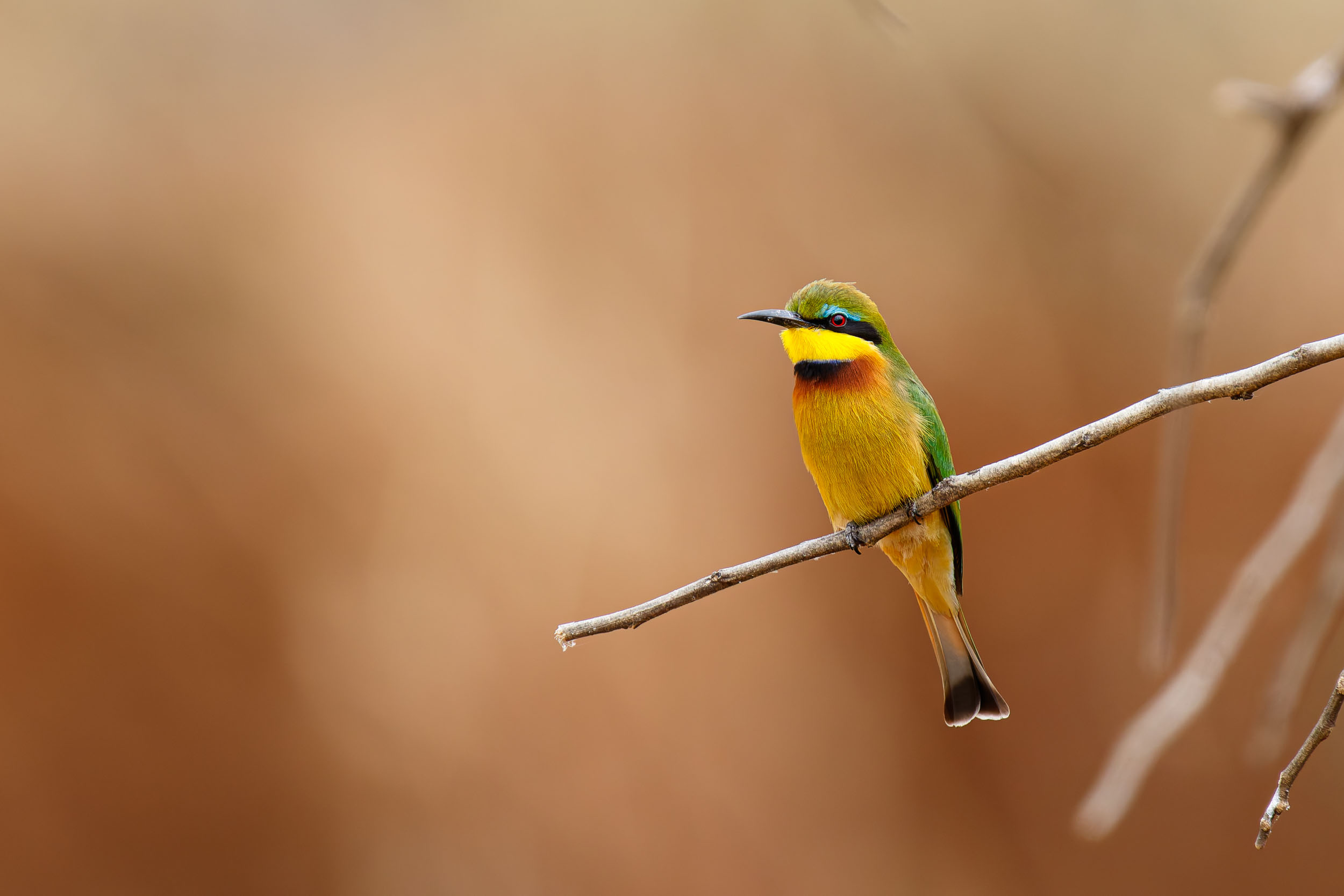
Birds added flashes of color and character: ground hornbills striding with prehistoric seriousness, and bright bee-eaters perched delicately before launching into swift aerial arcs.
The day unfolded without urgency but never without interest.
By late afternoon we began looping back toward camp.
The light turned warmer, shadows lengthened beneath baobabs, and the dry grass glowed almost bronze.
Then, not far from Mawe Ninga, the road simply stopped.
A herd of buffalo had taken possession of it.
There was no dramatic standoff — just an unspoken understanding that we would wait. The animals moved slowly, deliberately, occasionally glancing toward us but never hurried. We were on their schedule now.
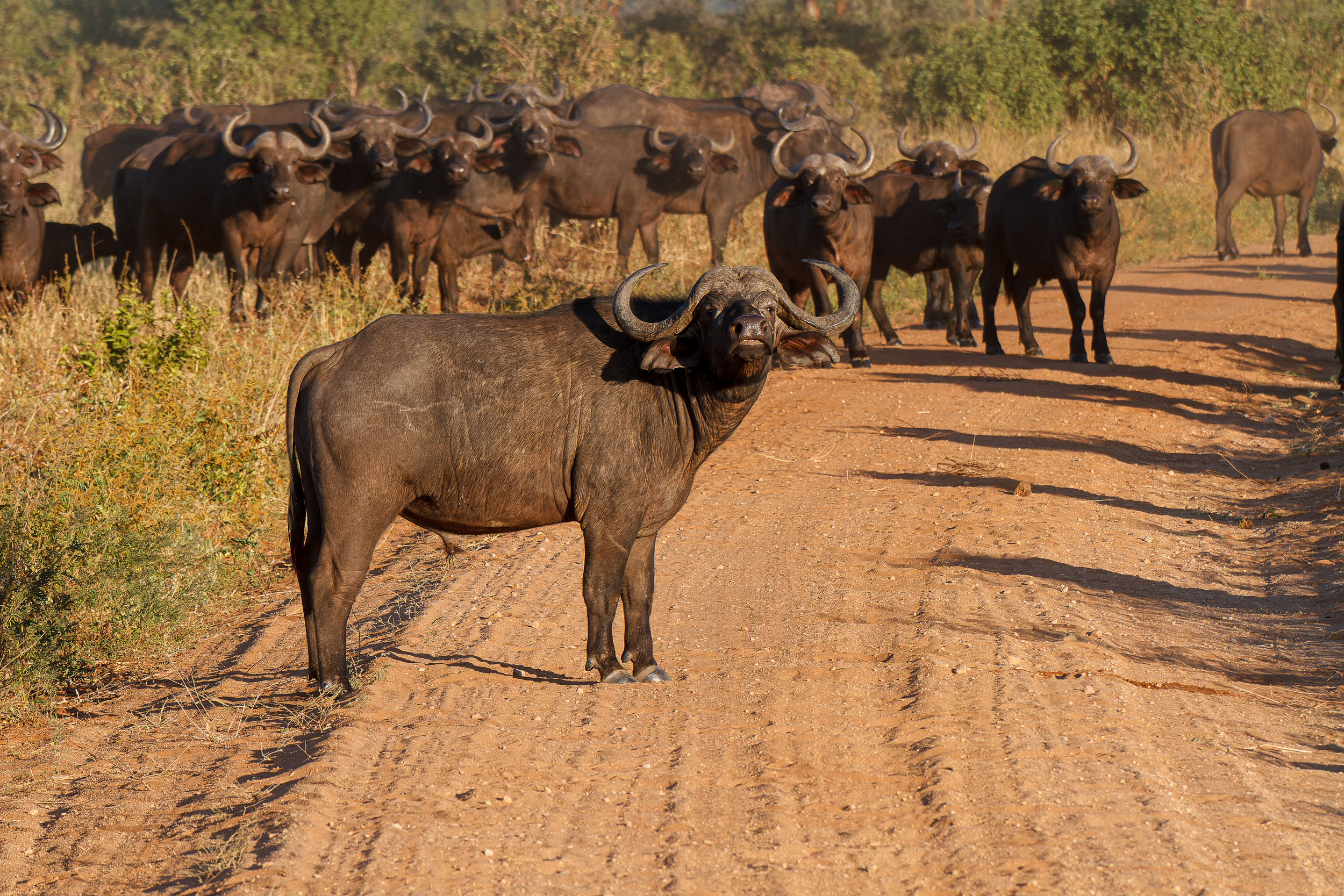
For a moment we wondered if we might actually arrive late to camp.
Eventually, the herd shifted aside just enough to allow passage, and we continued upward toward our tent.
We arrived in time.
From the terrace, overlooking the valley and distant lake, we watched another Tarangire sunset dissolve into soft gold and grey-blue.
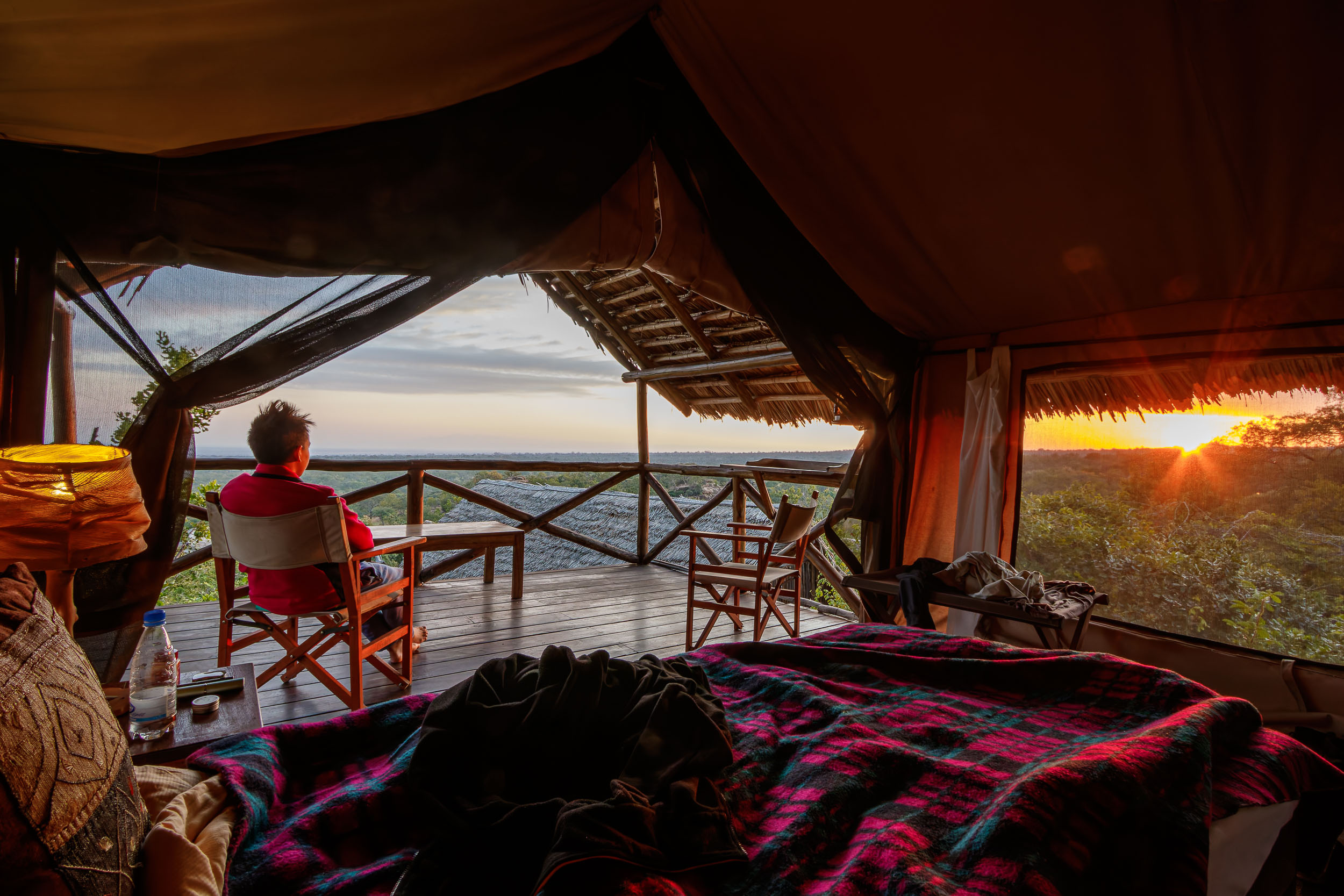
Two full days in the park, and already it felt expansive, varied, and quietly powerful.
Tarangire does not shout.
It unfolds.
Final Morning in Tarangire
We left Mawe Ninga Camp just after sunrise, driving slowly for a final game drive before exiting the park.
There was no urgency. Just a quiet desire to absorb a few last impressions.
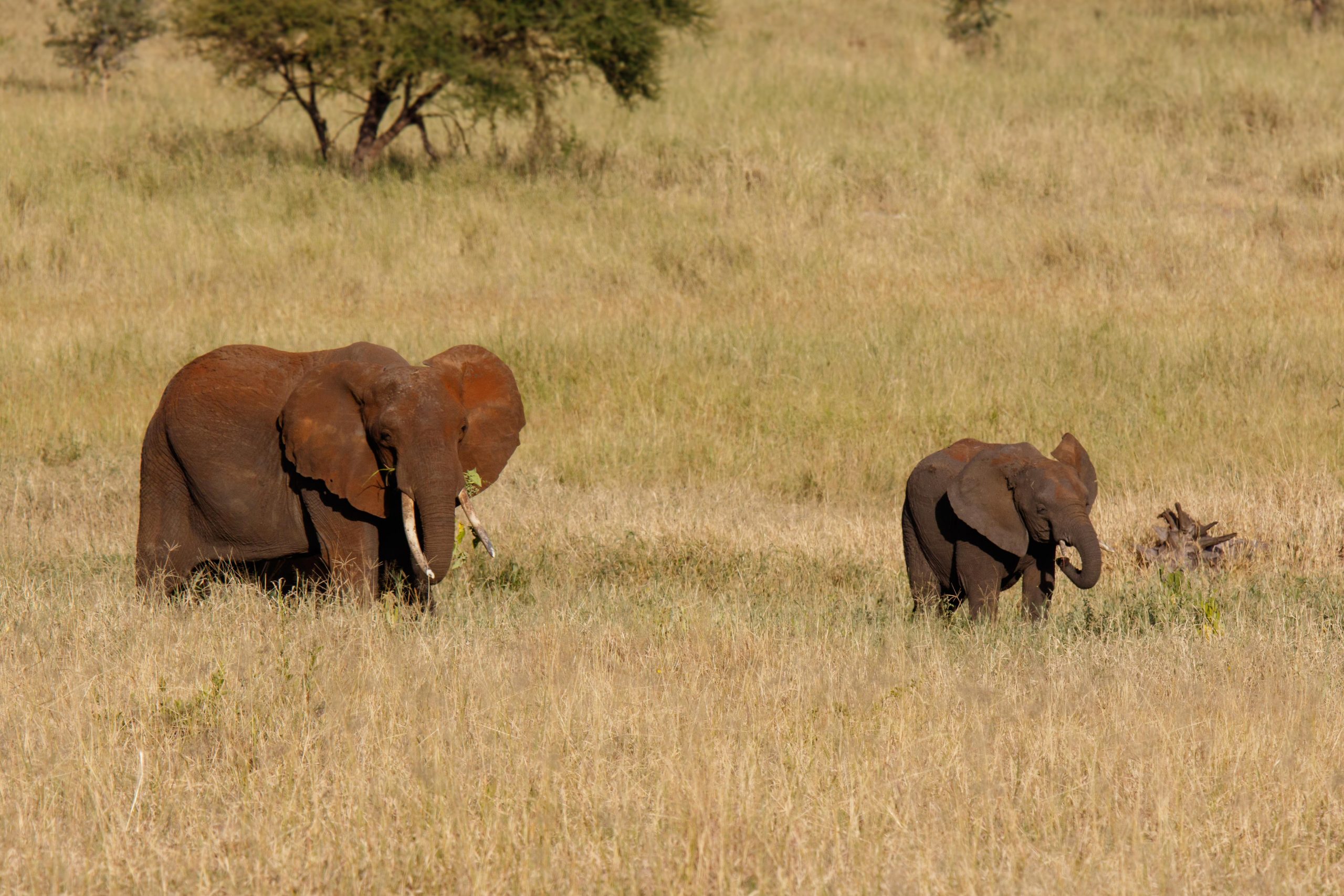
Not far from camp, we encountered another herd of elephants — this time directly on the road. Large females and smaller calves moved calmly across our path, completely unbothered by our presence. We switched off the engine and waited.
Dust rose softly around their feet. One young elephant lingered slightly behind, hesitating before hurrying to rejoin the group.
It felt like a fitting farewell.
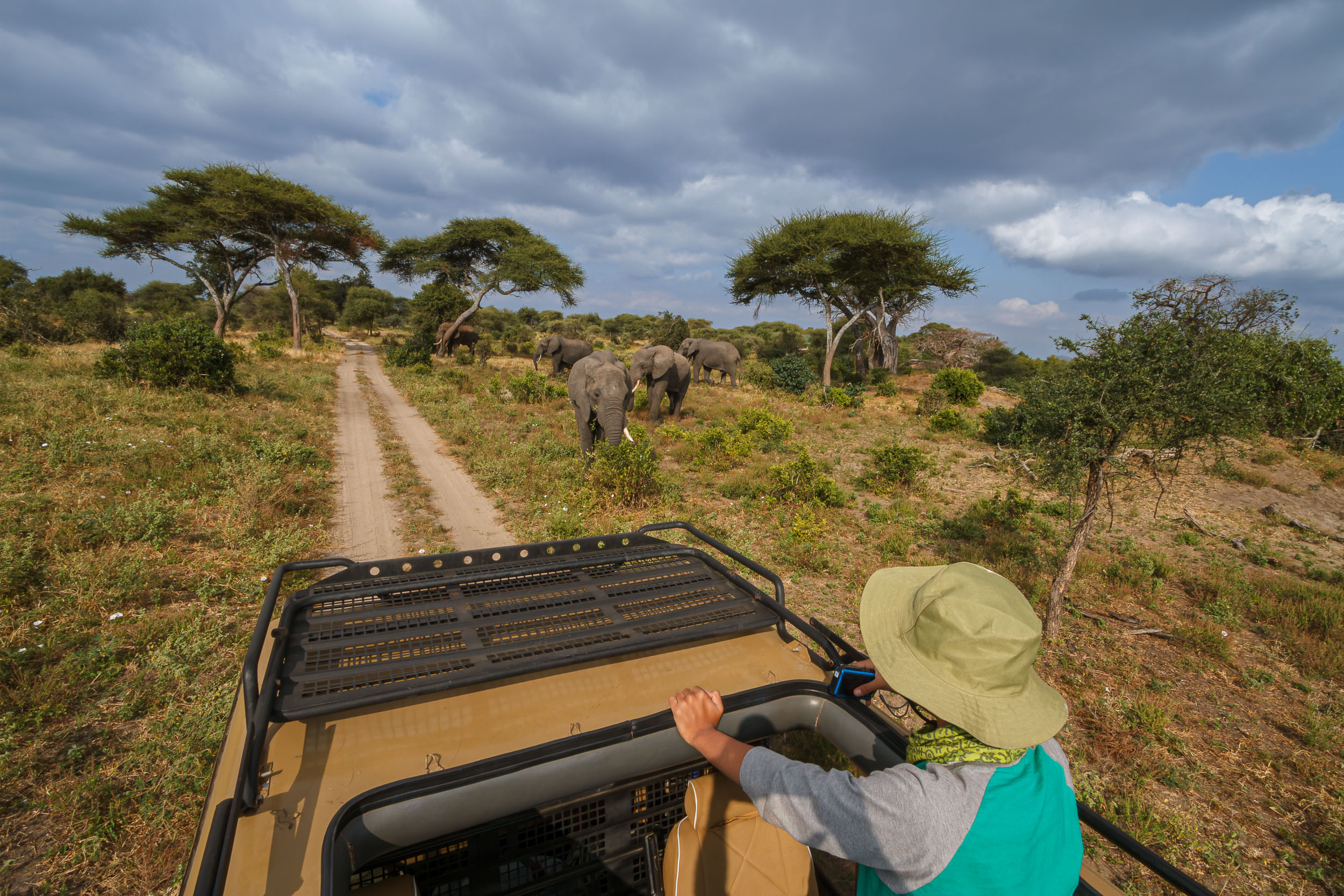
As we continued toward the park gate, the landscape already seemed familiar — baobabs standing steady in the morning light, dry grass glowing pale gold.
Our final sighting before leaving Tarangire was a group of vultures gathered around a wildebeest carcass.
There was no chaos. No dramatic tension. Just efficiency. Heads dipping, wings occasionally spreading to assert space. Nature completing its cycle.
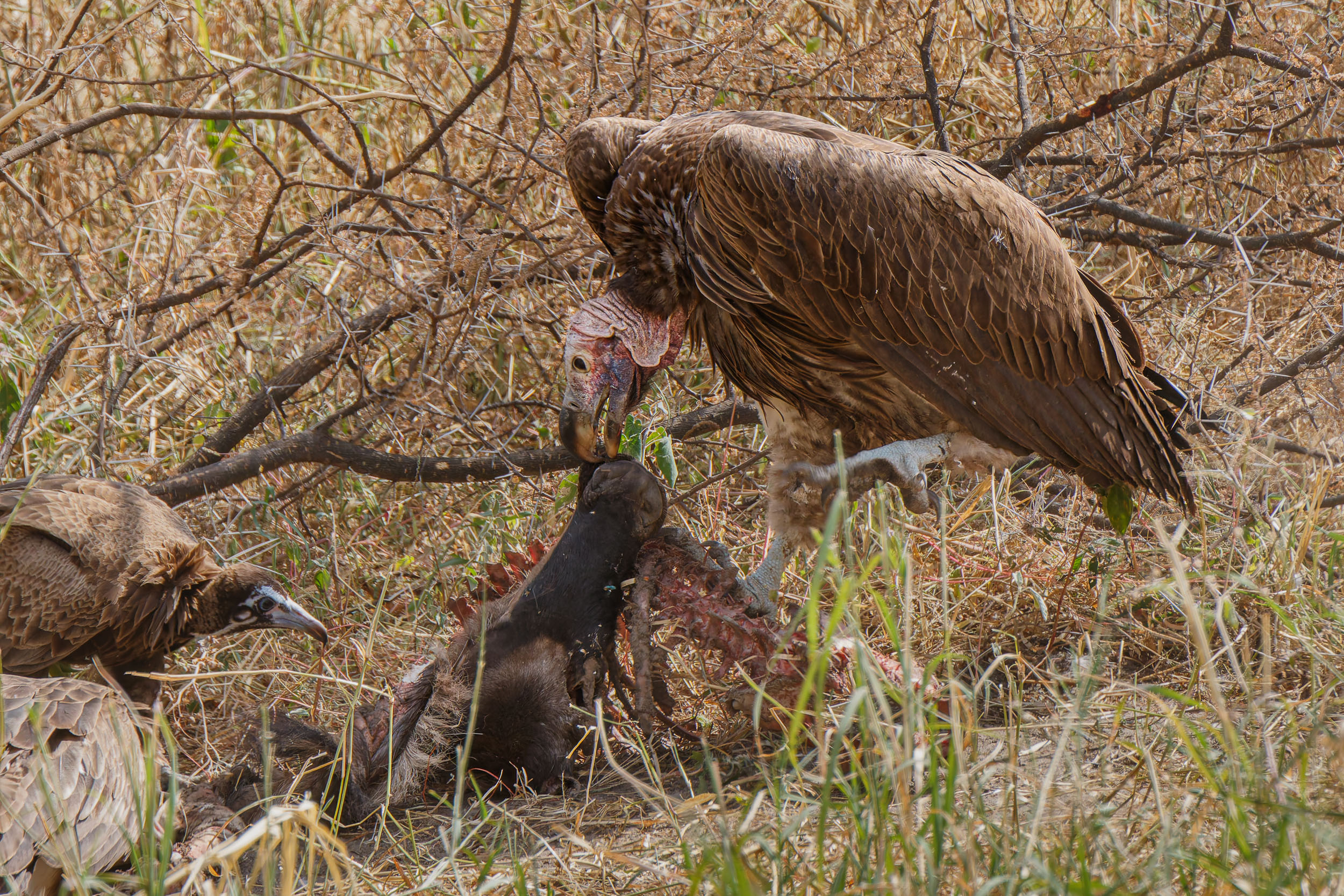
It was not glamorous.
But it was real.
And somehow, it felt like an honest ending.
Tarangire and the Rhythm of the Dry Season
Tarangire National Park is particularly known for its dry season wildlife concentrations.
As surrounding areas grow increasingly arid, animals migrate toward the Tarangire River. Water becomes the organizing principle. Elephants in particular gather here in remarkable numbers — the park holds one of the largest elephant populations in northern Tanzania.
During our stay, we saw herds daily.
Wildebeest and zebra were abundant. Lions appeared with growing familiarity. Buffalo moved in heavy formations. Birds shifted between wetland and woodland.
But what stood out most was not a single sighting — it was the sense of rhythm.
Wildlife following water.
Following ancient patterns.
Following something far older than tourism.
Tarangire felt less crowded than some of the other northern Tanzania parks. More intimate in scale, yet expansive in atmosphere. It did not overwhelm with spectacle — it unfolded gradually.
Reflections on Our First Days in the African Wilderness
Looking back, Tarangire felt like an initiation.
It was our first true immersion in the African wilderness. Our first nights in a safari tent. Our first elephants passing close enough to hear them breathe. Our first lions, our first leopard in a tree.
Yes, the leopard with its kill will always remain a highlight.
But equally memorable were the quieter moments — elephants in long formation across dry grass, the graphic silhouettes of baobabs against golden skies, dust hanging weightless in late afternoon light.
Tarangire was not defined by drama.
It was defined by atmosphere.
It set the rhythm for everything that followed — slow observation, respect for scale, and an understanding that landscape shapes wildlife just as much as instinct does.
When we finally exited the park and turned toward Lake Eyasi, it felt like we were leaving something foundational behind.
Tarangire had quietly defined the tone of our safari.
And this was only the beginning.