Architecture and Village Structure
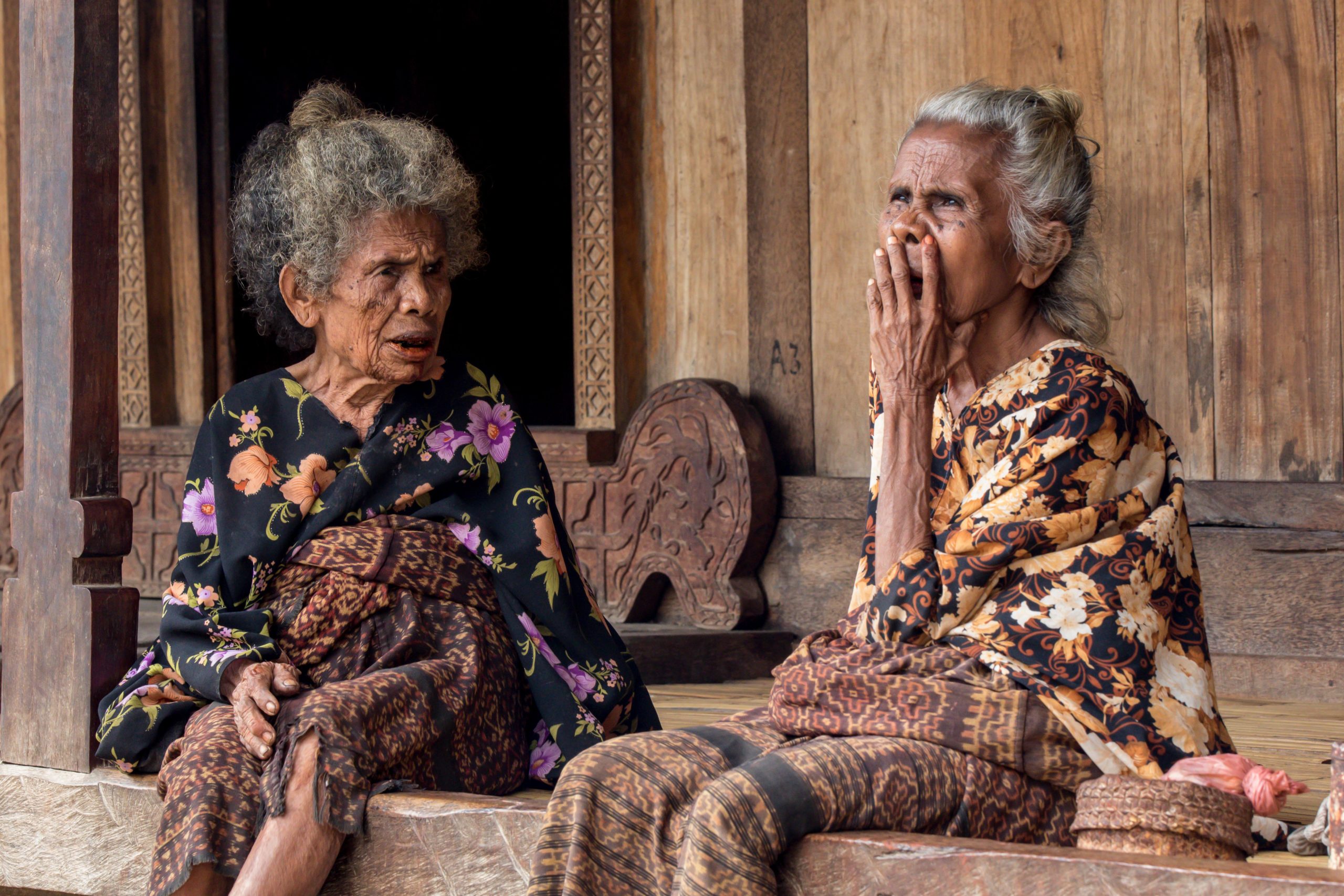
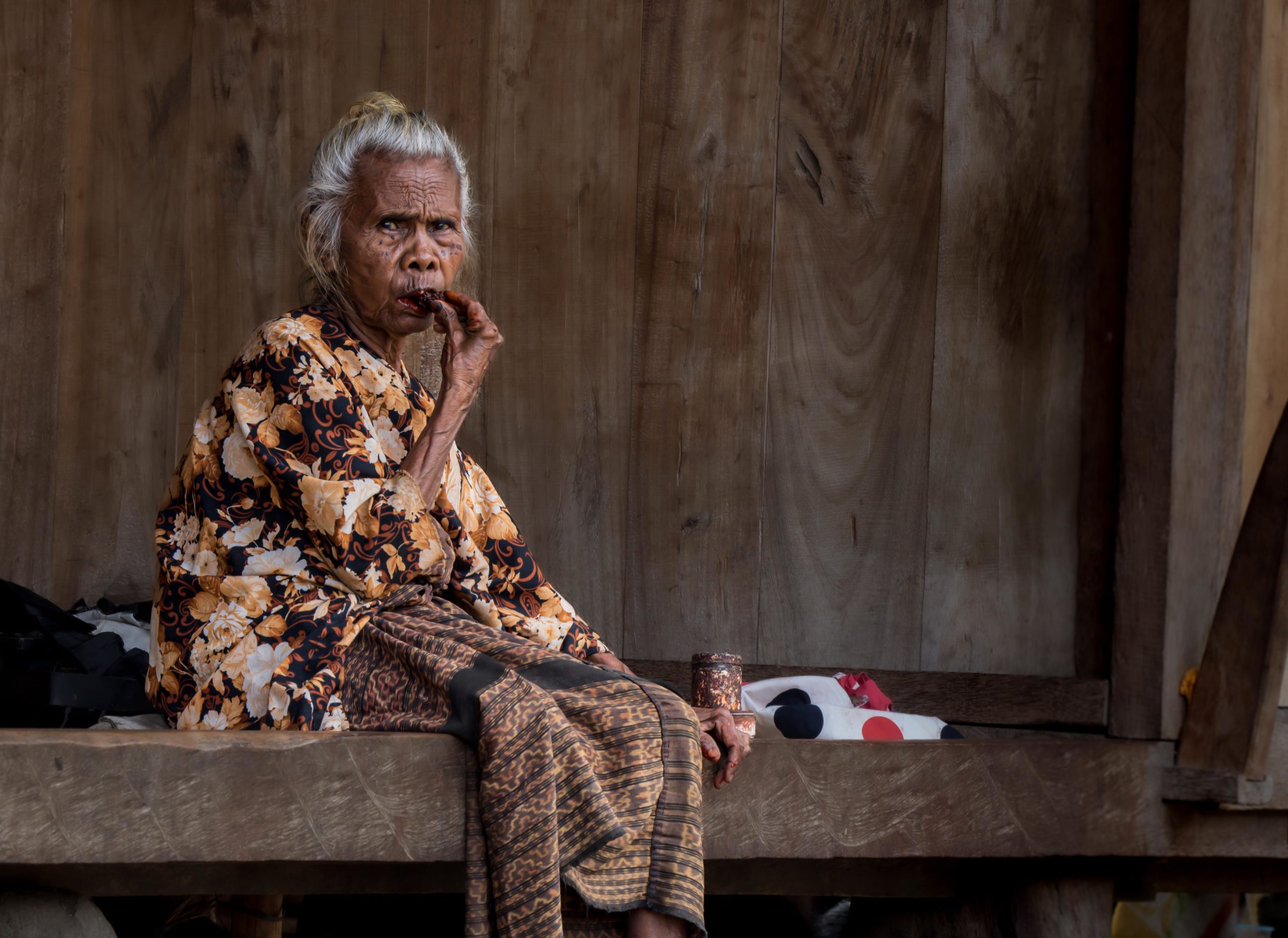
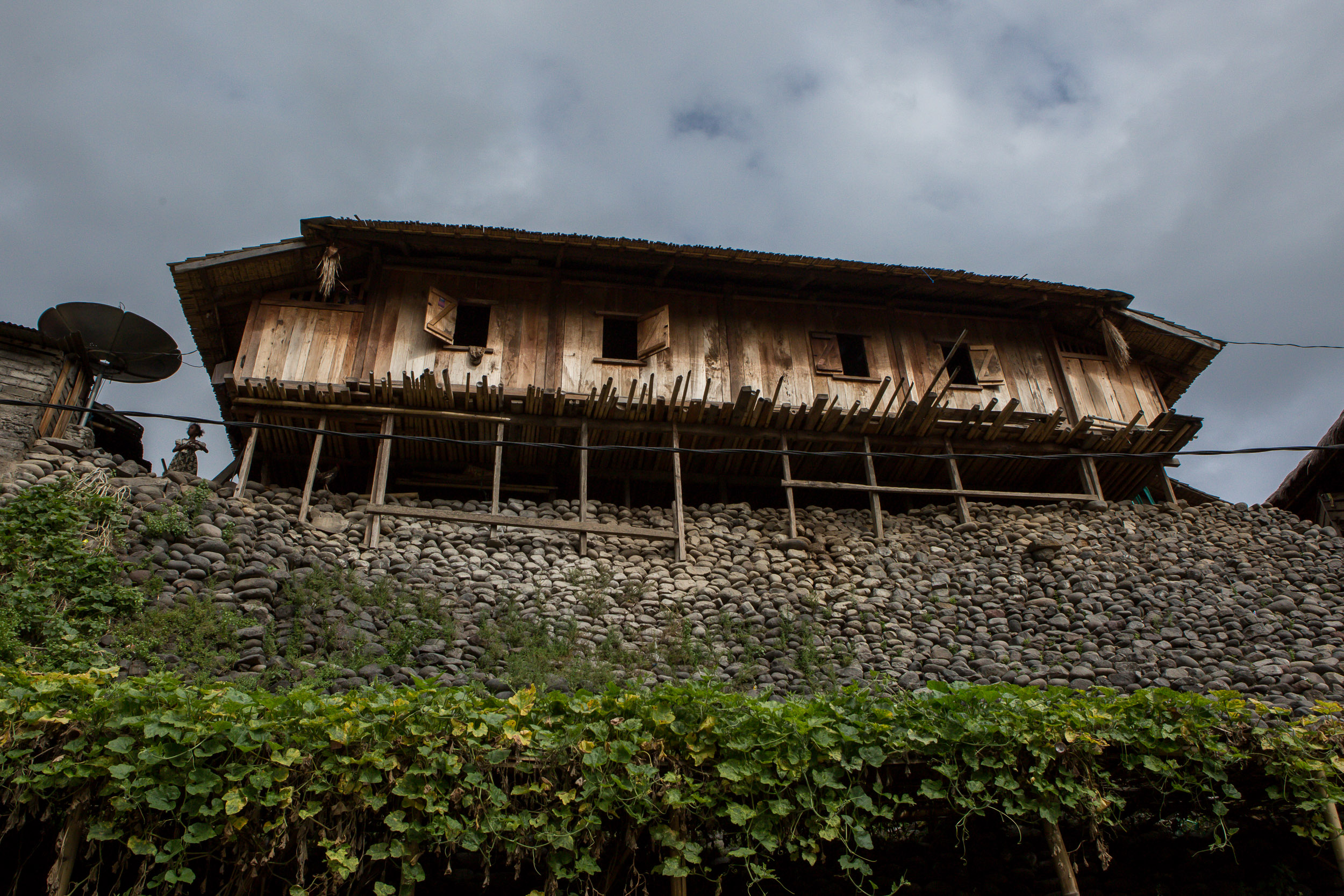
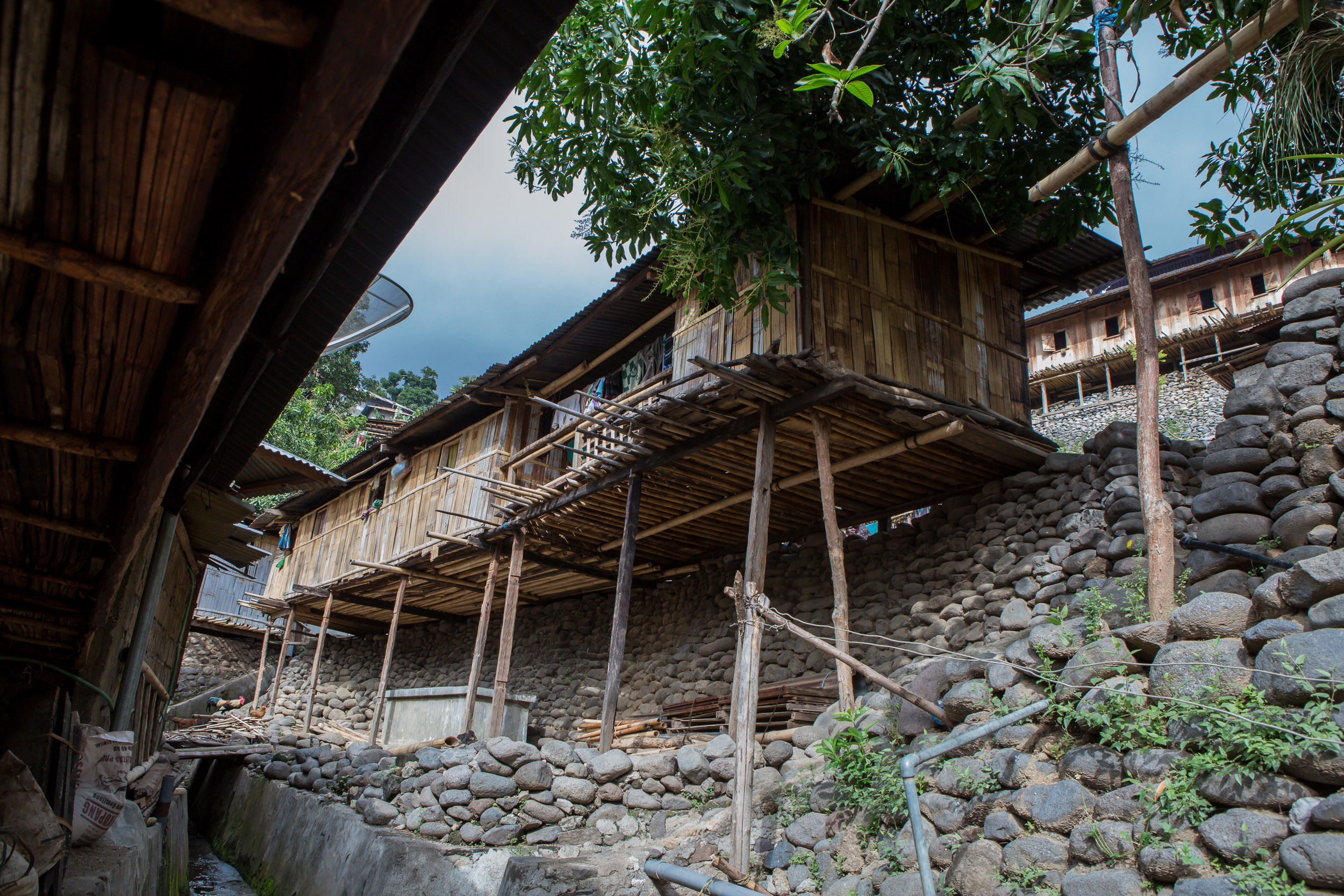
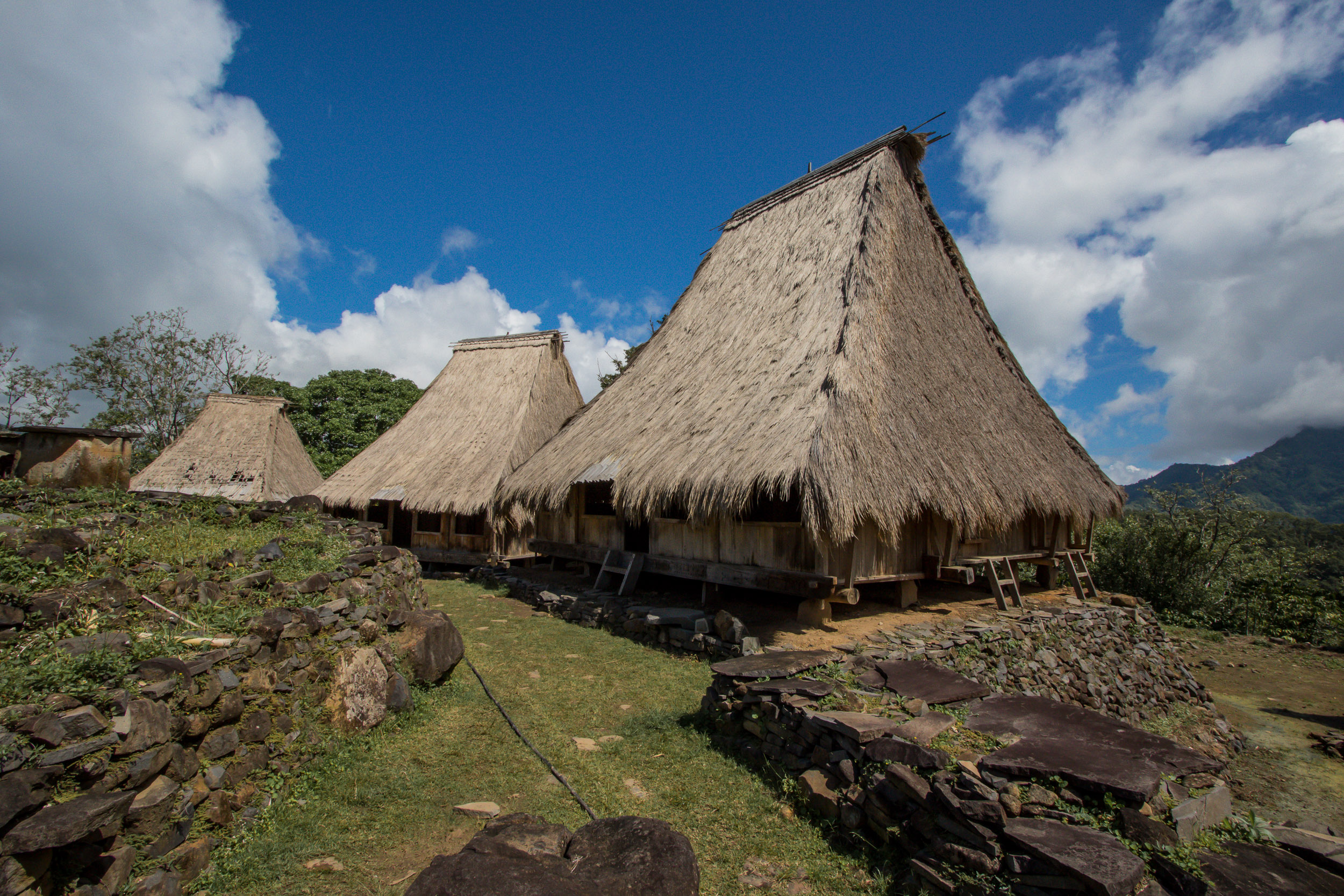
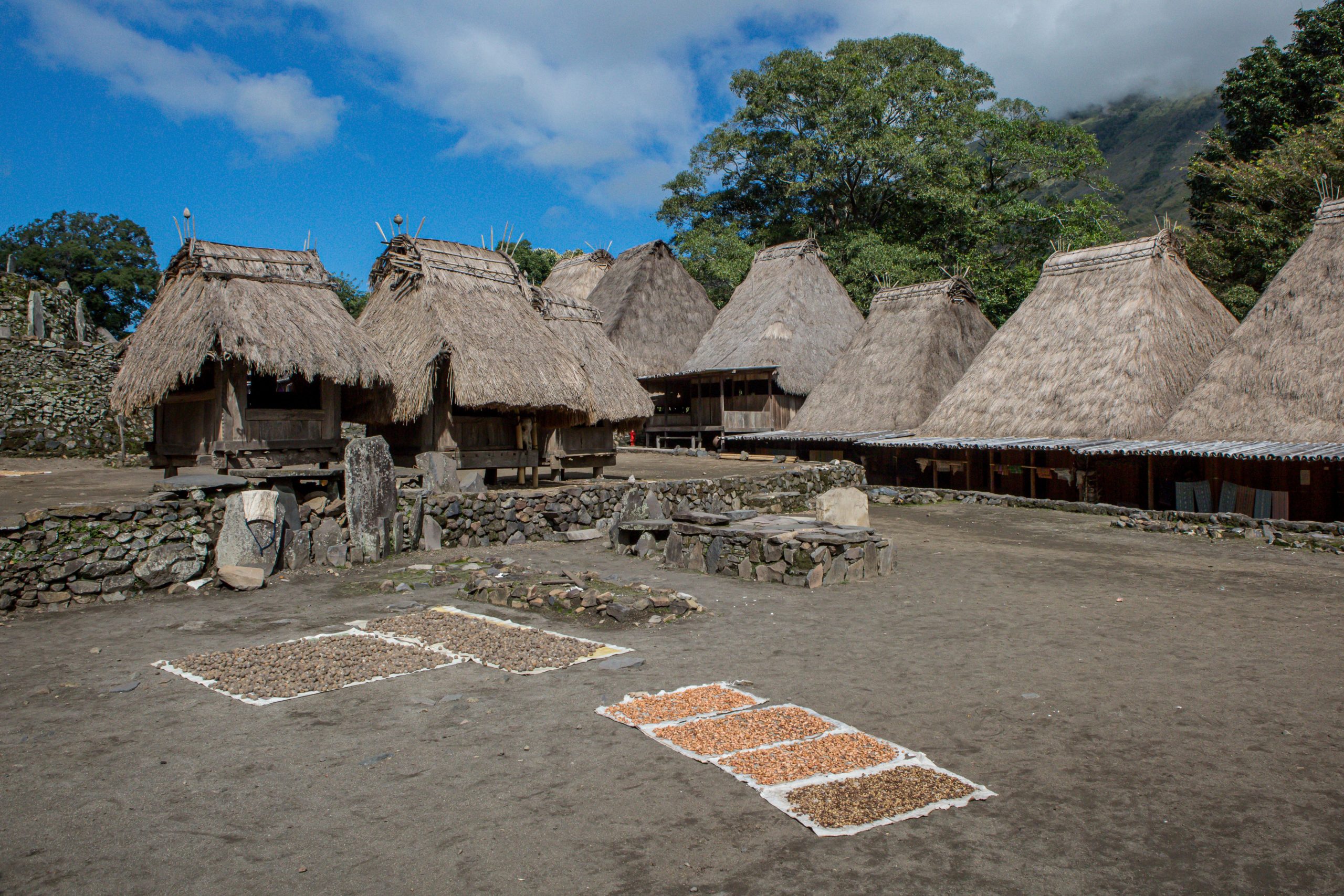
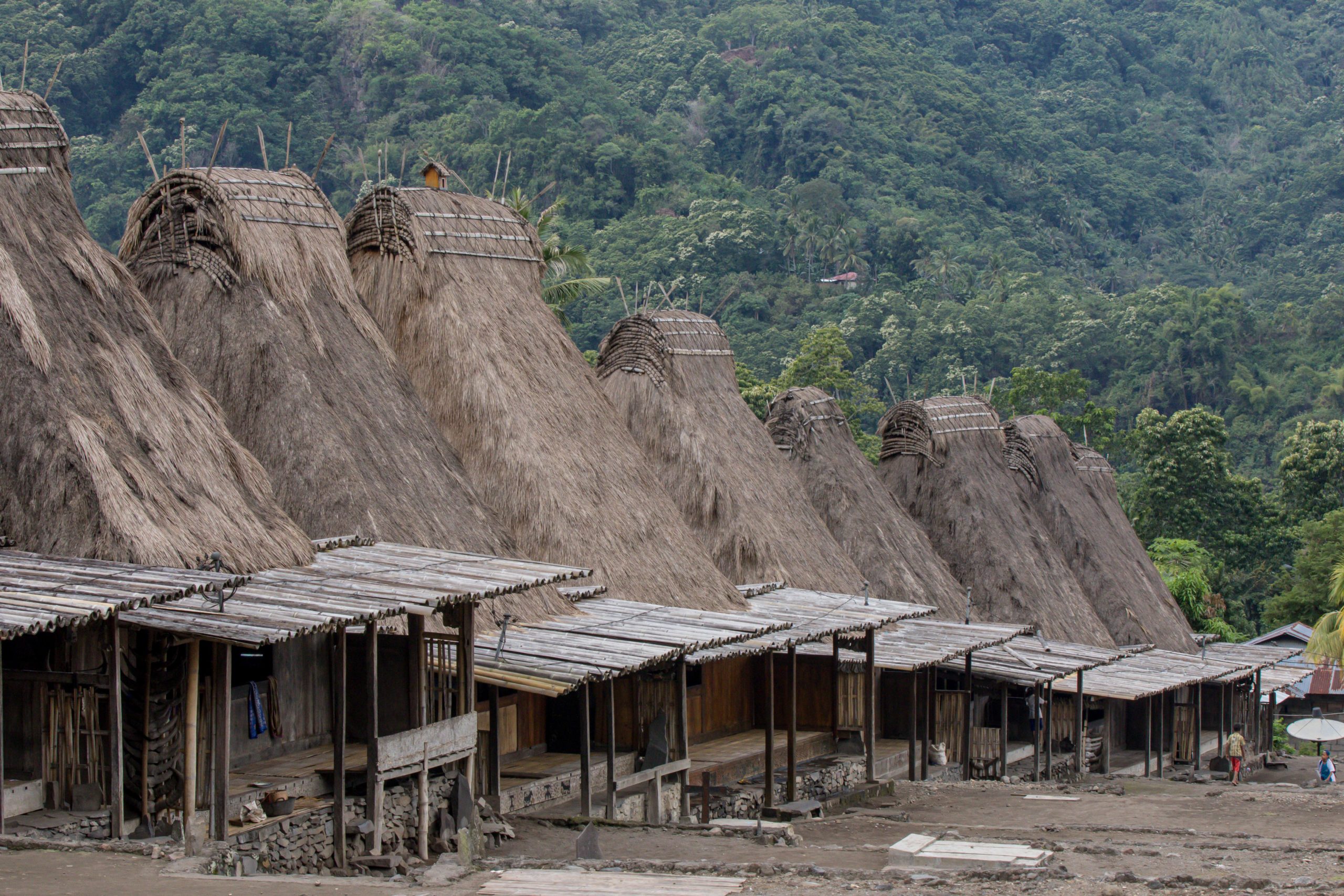
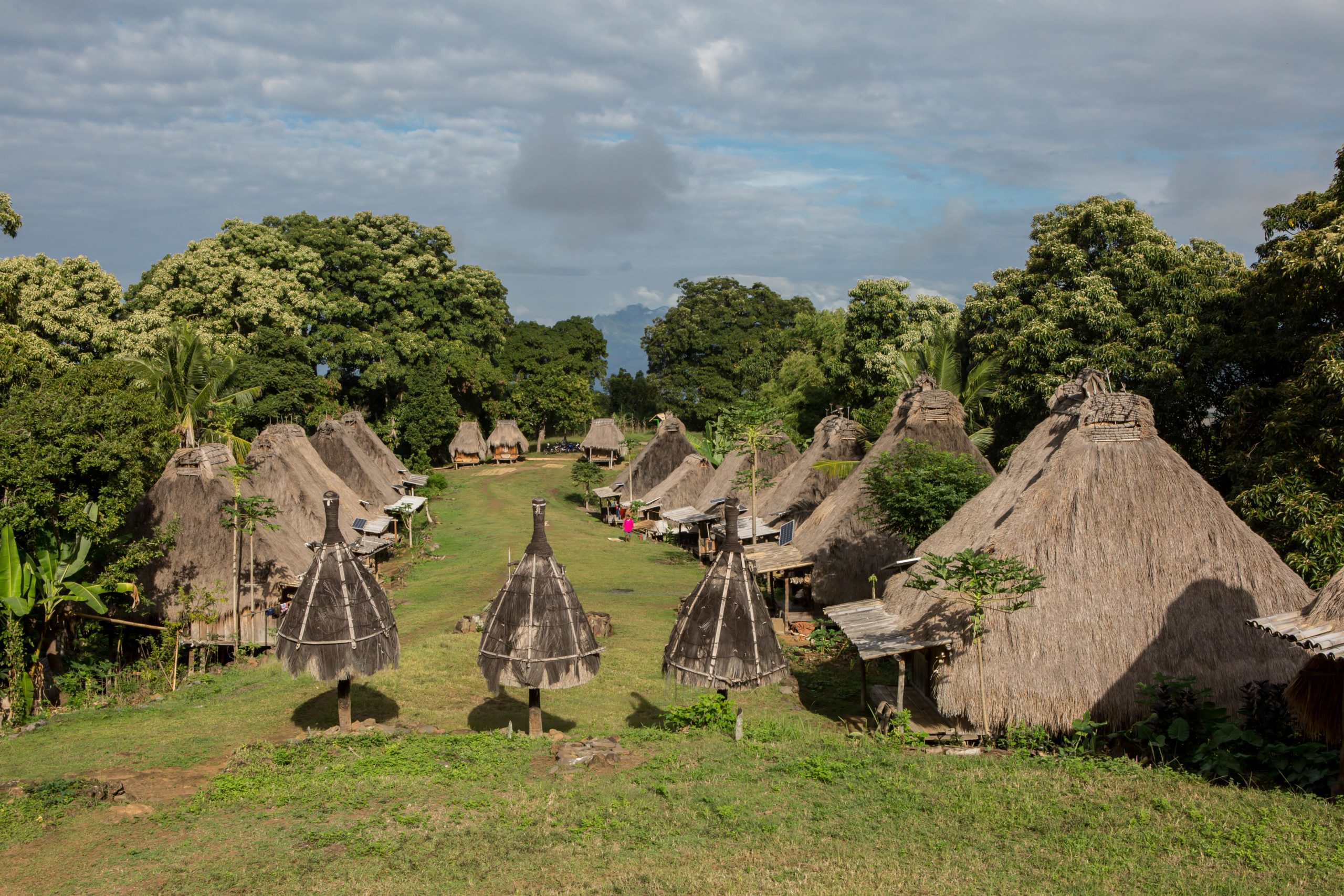
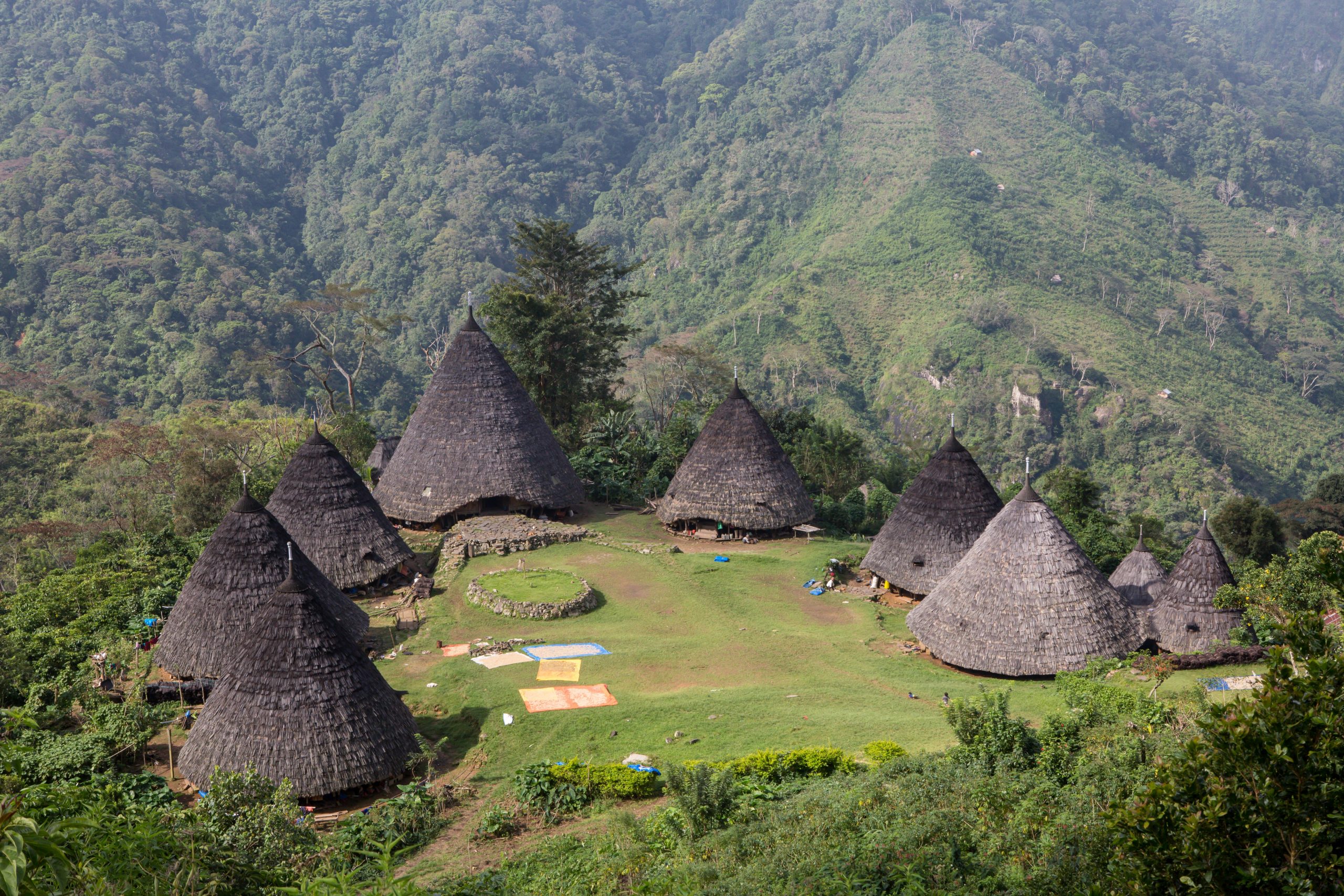
Wolotopo is arranged along a central stone-paved axis climbing the hillside. The ceremonial houses face inward toward the communal space, reflecting the traditional social order of the Lio people.
One of the most important structures is the keda kanga, a small elevated wooden building used to store ancestral bones. It stands at the upper end of the village. Carvings on its central pillar depict a horse and a boat, important symbols in Lio cosmology. On the corners hang blue wooden seko, stylised fruit symbols representing abundance. Inside the keda kanga is the bhaku, a carved wooden box containing ancestral remains.
The Ceremonial Houses
The sao ria (“big house”) functions as the centre of adat authority and is inhabited by the ria bewa, the village’s traditional decision-maker.
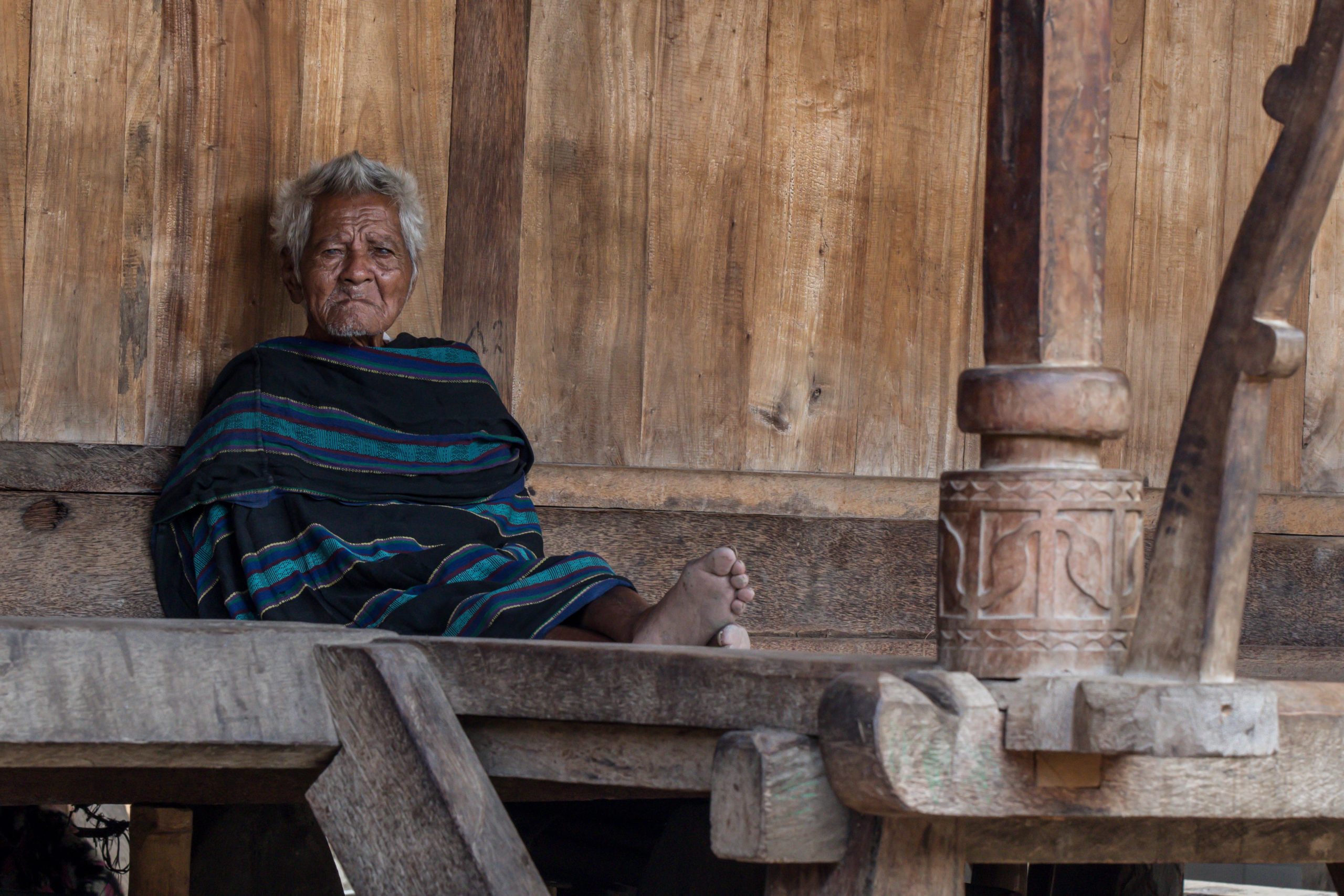
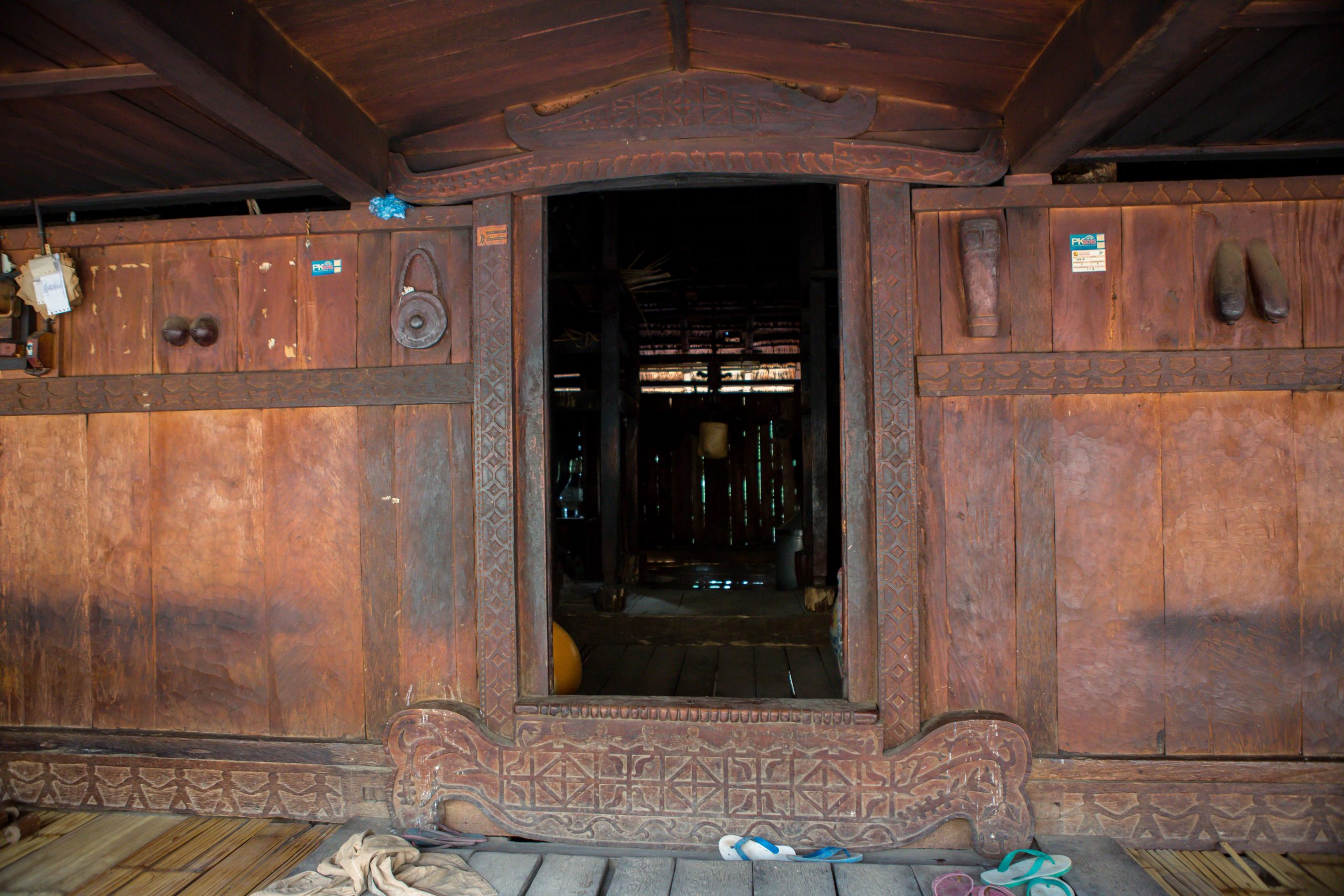
The sao ata laki stands elevated on stone pillars and houses several families, including two mosalaki (traditional leaders). Its structure symbolically represents the female body. Drum and gong motifs at the entrance refer to its role as a communal gathering place.
Adjacent to it is the sao su’e, used for major rituals and ceremonies. Inside stands an elephant tusk surrounded by stones. Villagers visit this place after disturbing dreams, placing a stone near the tusk and praying to prevent misfortune.
Throughout the village, Catholic graves stand alongside traditional elements, illustrating the coexistence of Christian belief and adat traditions.
Ikat Weaving
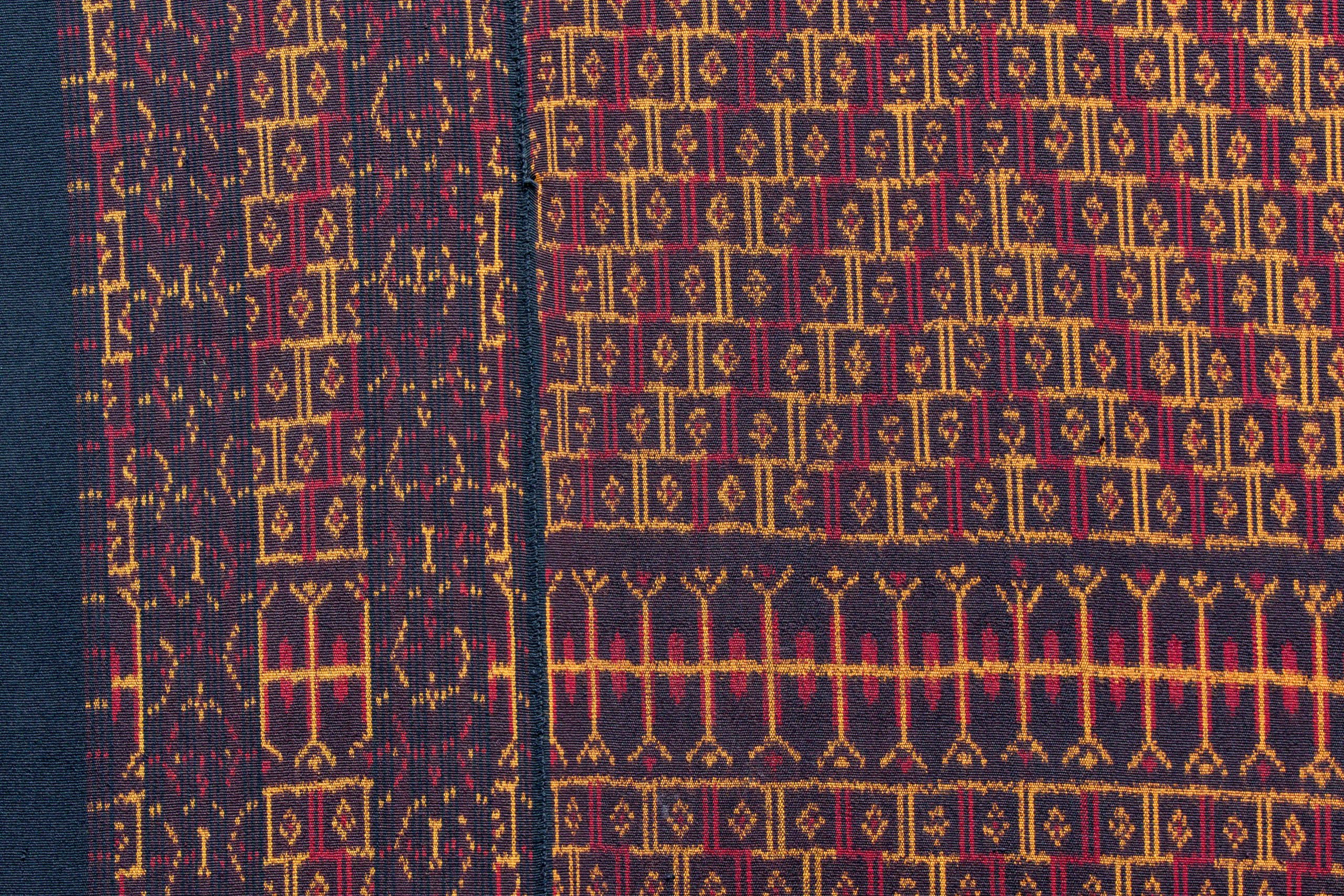
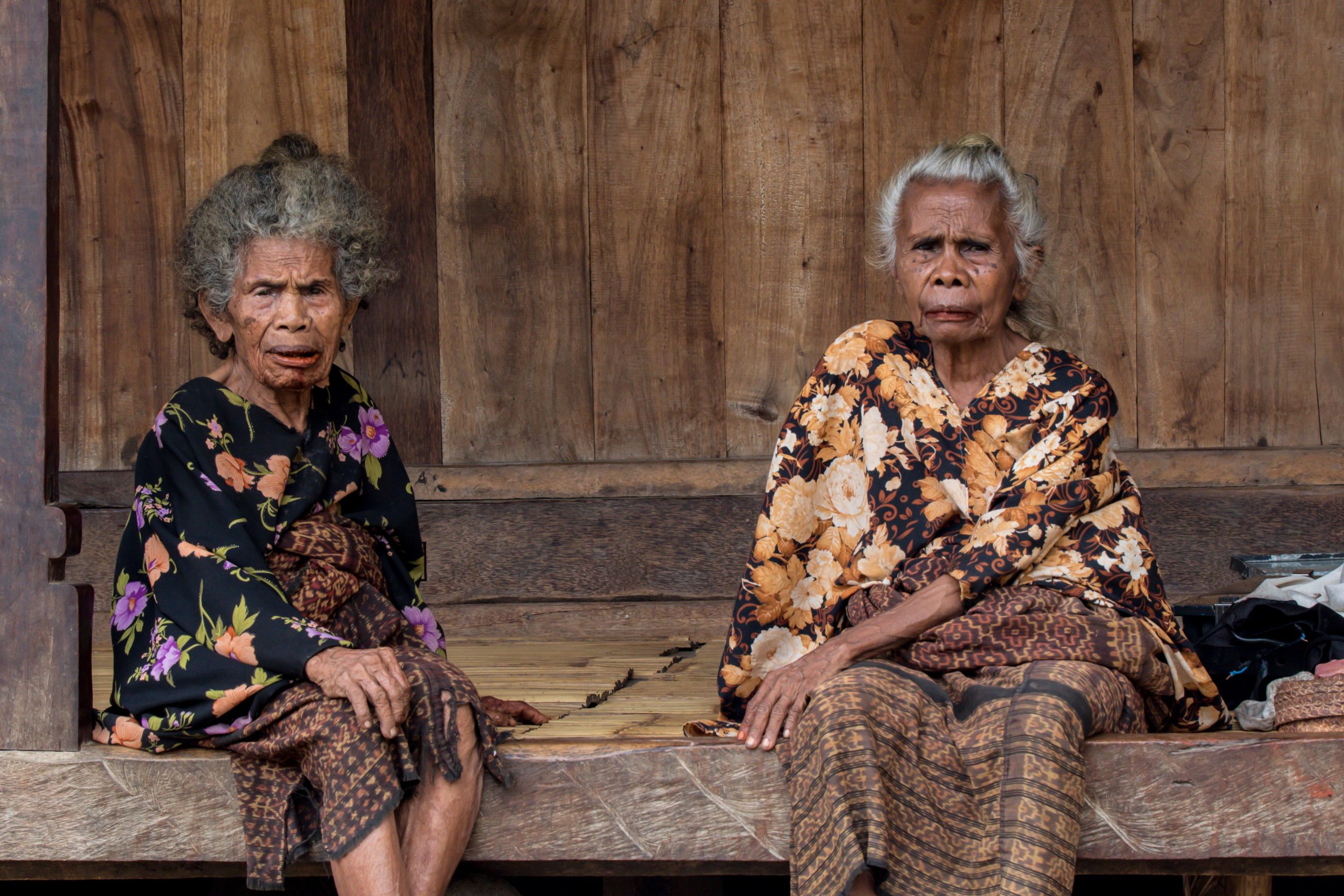
Ikat weaving is practiced by many households in Wolotopo. The weaving tradition remains part of everyday life rather than being performed solely for visitors.
For those interested in Lio textiles, Wolotopo can be combined with a visit to nearby Ndona, known for its distinctive Lionese ikat patterns.
Visiting Wolotopo
Visitors are asked to register in the guestbook at the village office upon arrival and to leave a small donation. Contributions may also be made at the sao su’e.
Wolotopo is best visited respectfully and without rushing. A quiet walk through the village provides insight into daily life, weaving activities, and the architectural symbolism of the houses.
How to Get There
Wolotopo is located approximately 12 km east of Ende.
From Ende, follow the road east toward Wolowona Market. At the roundabout, turn right and continue to Wolotopo Timur (East Wolotopo). The traditional village is a short walk beyond the modern settlement.
Ende is the nearest city offering accommodation and restaurants.