An ancient Bali Aga ritual honouring the god Indra
Hidden in the hills of East Bali, the ancient village of Tenganan Pegringsingan preserves traditions that reach back to the earliest layers of Balinese culture. Here live the Bali Aga, descendants of Bali’s original inhabitants, whose customs and social rules differ markedly from those of the later Balinese Hindu kingdoms.
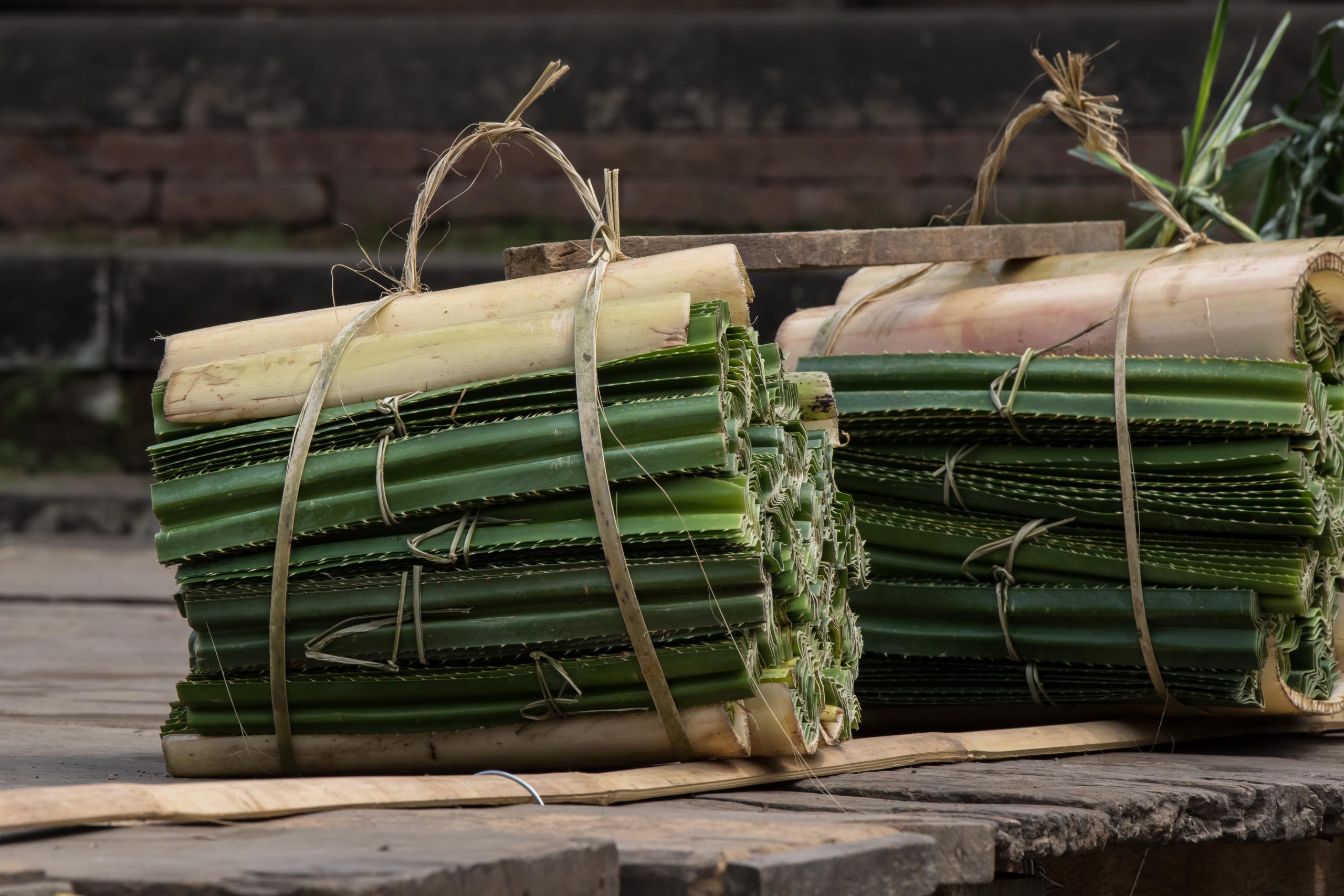
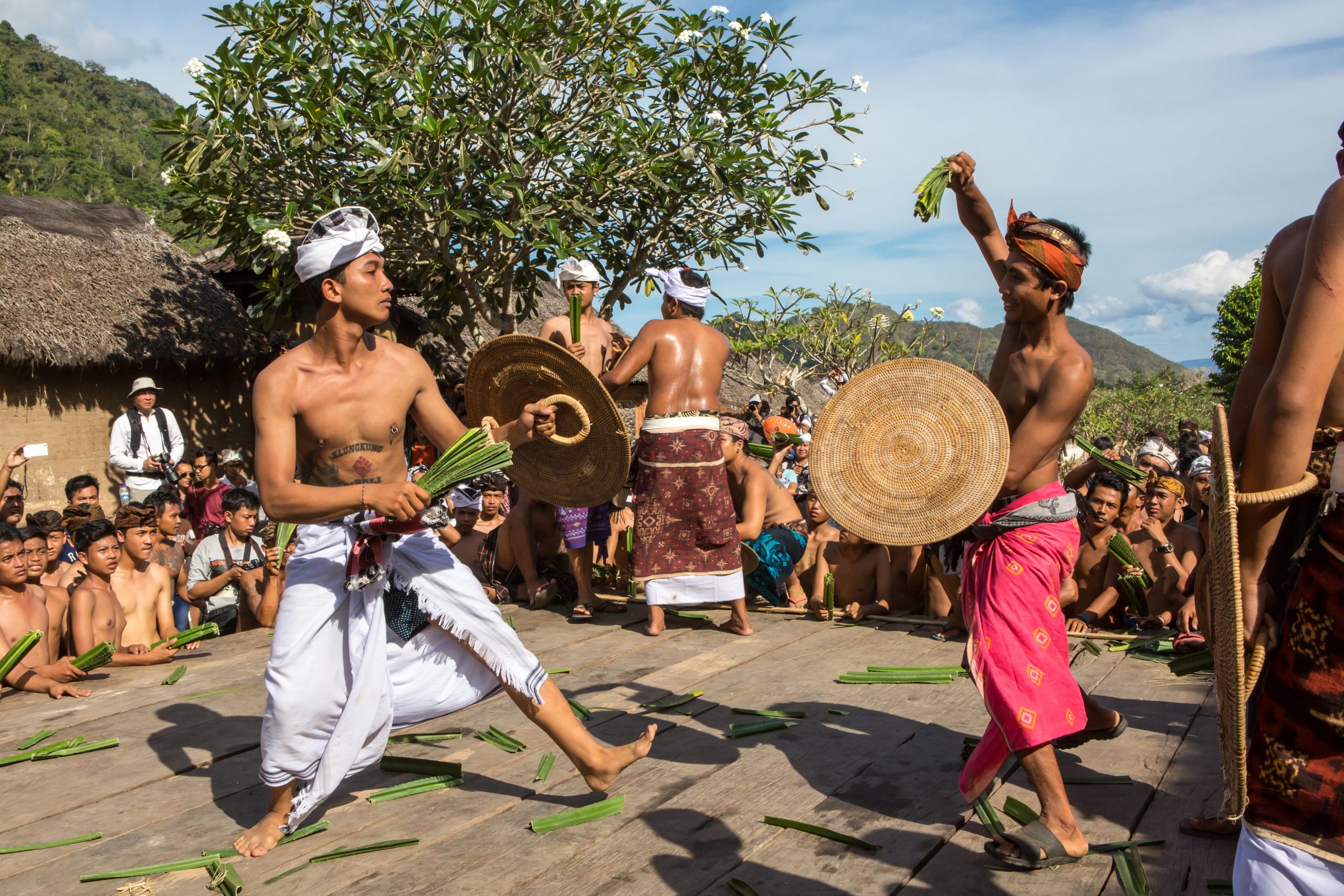
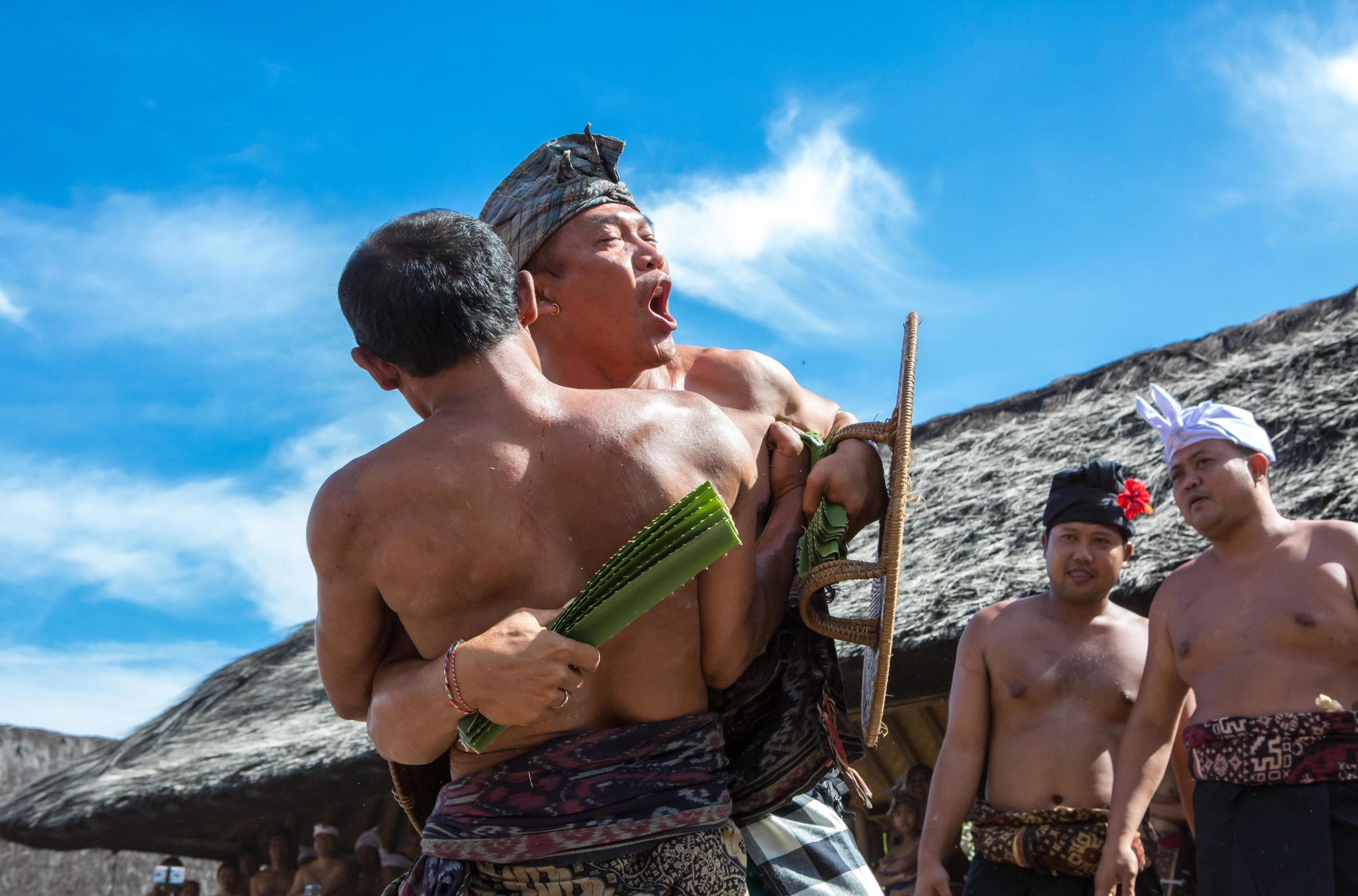
Once a year the quiet village becomes the stage for one of Bali’s most remarkable rituals: Mekaré-kare, the Pandan War. Armed with bundles of thorn-covered pandan leaves, young men engage in ceremonial combat to honour Dewa Indra, the god of war. The ritual is not about victory or defeat, but about devotion, courage, and the renewal of community bonds.
Pandanus thorn leaves used in Mekare-kare ritual fight.
The Bali Aga of Tenganan
The Bali Aga of Tenganan Pegringsingan still follow ancient village laws known as awig-awig, written rules passed down through generations. These regulations govern many aspects of daily life and preserve the traditions of the community.
Unlike most Balinese societies, the Bali Aga do not follow the Hindu caste system. They believe their village was a gift from Dewa Indra to their ancestors, the wong peneges, and the community remains strongly bound by lineage and tradition. Only those born in the village may remain members of the community, and villagers who marry outsiders must leave, ensuring the continuity of the ancestral bloodline.
Ngusaba Sambah – A Month of Ceremonies
The Pandan War is the highlight of Ngusaba Sambah, a month-long ceremonial cycle held during Sasih Kelima, the fifth month of the Balinese calendar (usually June or July).
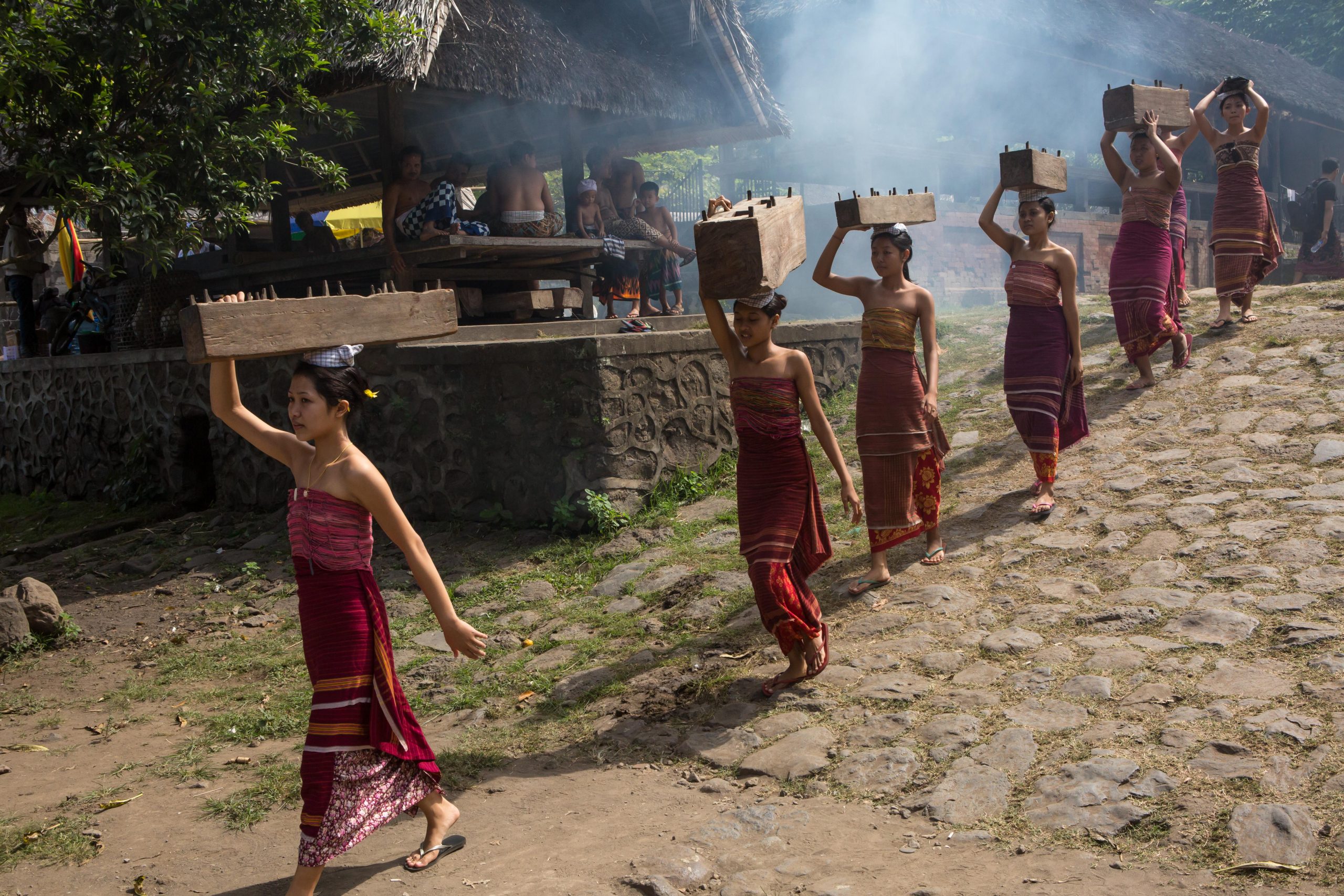
The rituals include elaborate offerings to the ancestors and the gods, sacred processions, and traditional music performed on ancient gamelan instruments. Several ceremonies are held before the actual combat takes place, preparing both the village and its inhabitants for the ritual.
Young virgin women carrying sacred gamelan instruments in Tenganan before Mekare-kare ritual
Trance and the Spirit World
During the lead-up to the main event, some village elders enter a deep trance. In this state they serve as intermediaries between the human and spirit worlds, ensuring that the gods accept the ceremonial offerings.
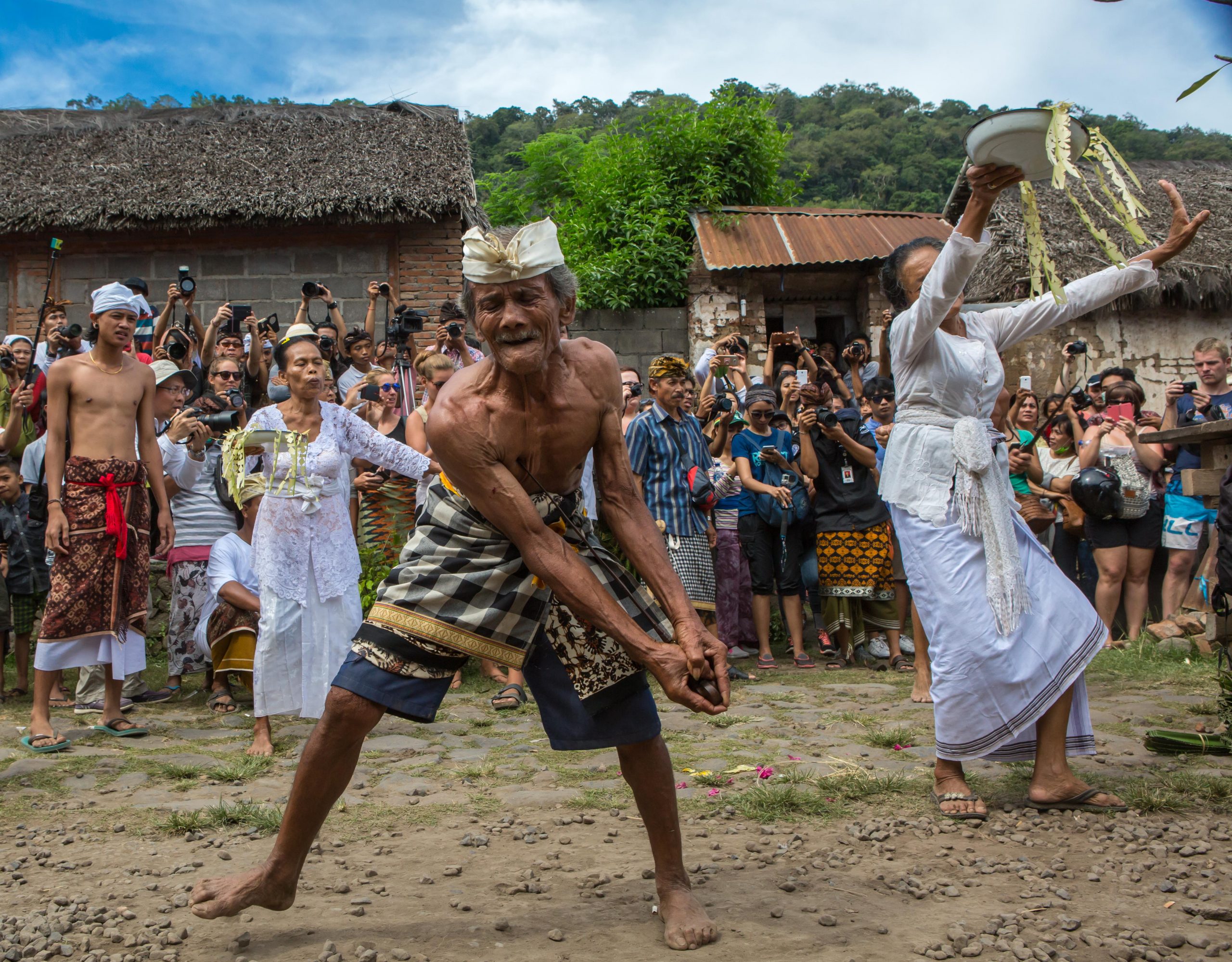
One dramatic ritual involves the mythical battle against Rangda, the embodiment of evil. Men attempt to attack Rangda with their keris, the traditional Balinese dagger. But Rangda turns the blades against them, and the men attempt to stab themselves in a trance-like state. This ritual act is known as ngurek.
A man in trance performs the ngurek ritual.
Mekaré-kare – The Pandan War
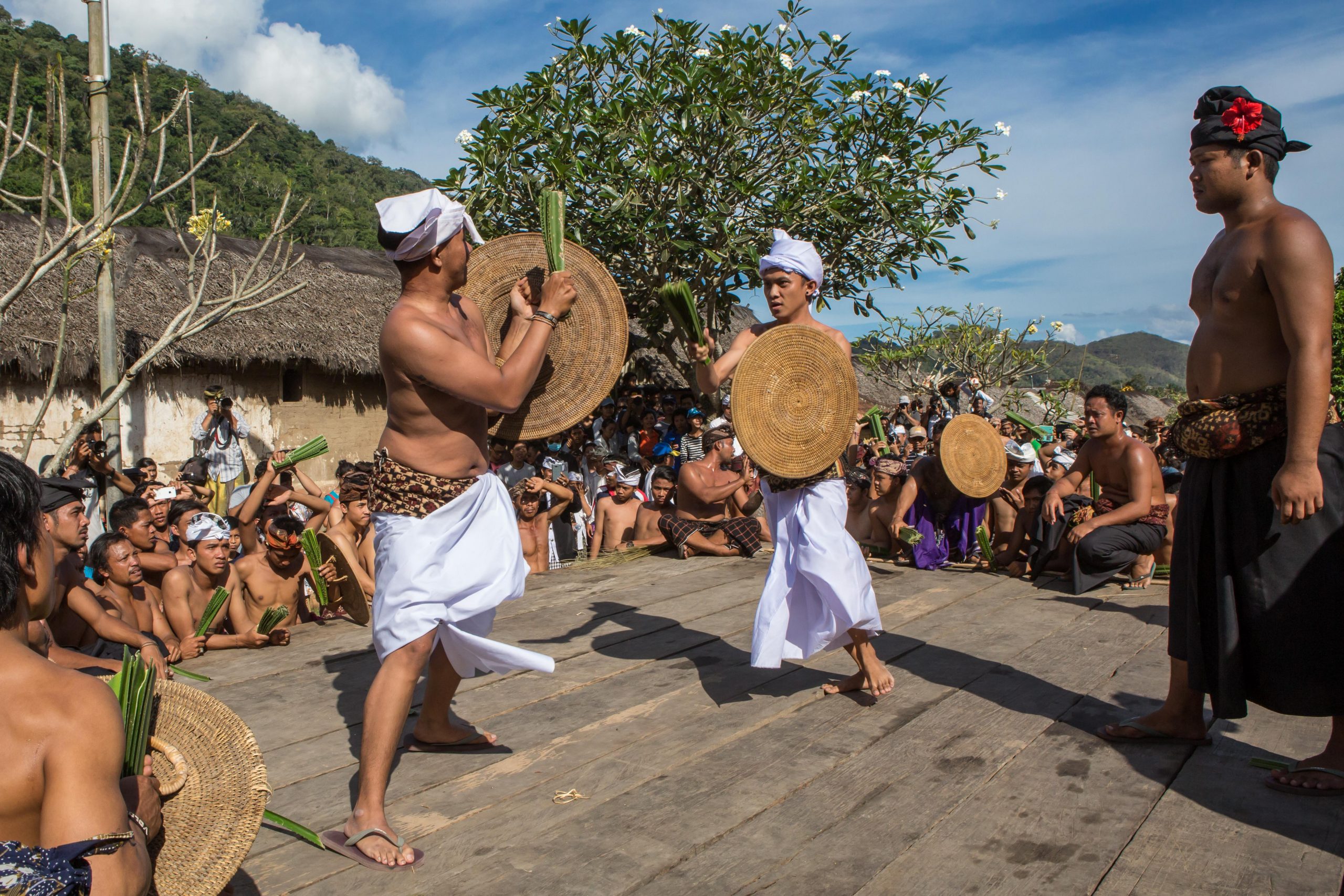
Men and boys alike take part in Mekaré-kare, fighting bare-chested while wearing a traditional kamen, saput, and udeng headband.
Before the battles begin, participants drink tuak, a traditional Balinese palm wine made from fermented palm sap.
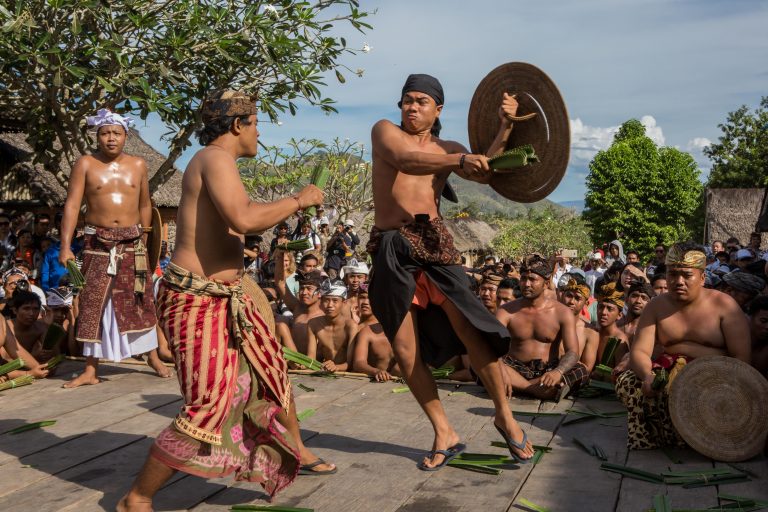
Young fighters during the Mekaré-kare Pandan War.
The combat itself is simple but intense. Fighters wield bundles of pandanus leaves, whose sharp thorns easily tear the skin, while carrying small rattan shields for protection.
The goal is not to defeat an opponent but to draw blood as an offering to the gods.
Geringsing – Sacred Textiles
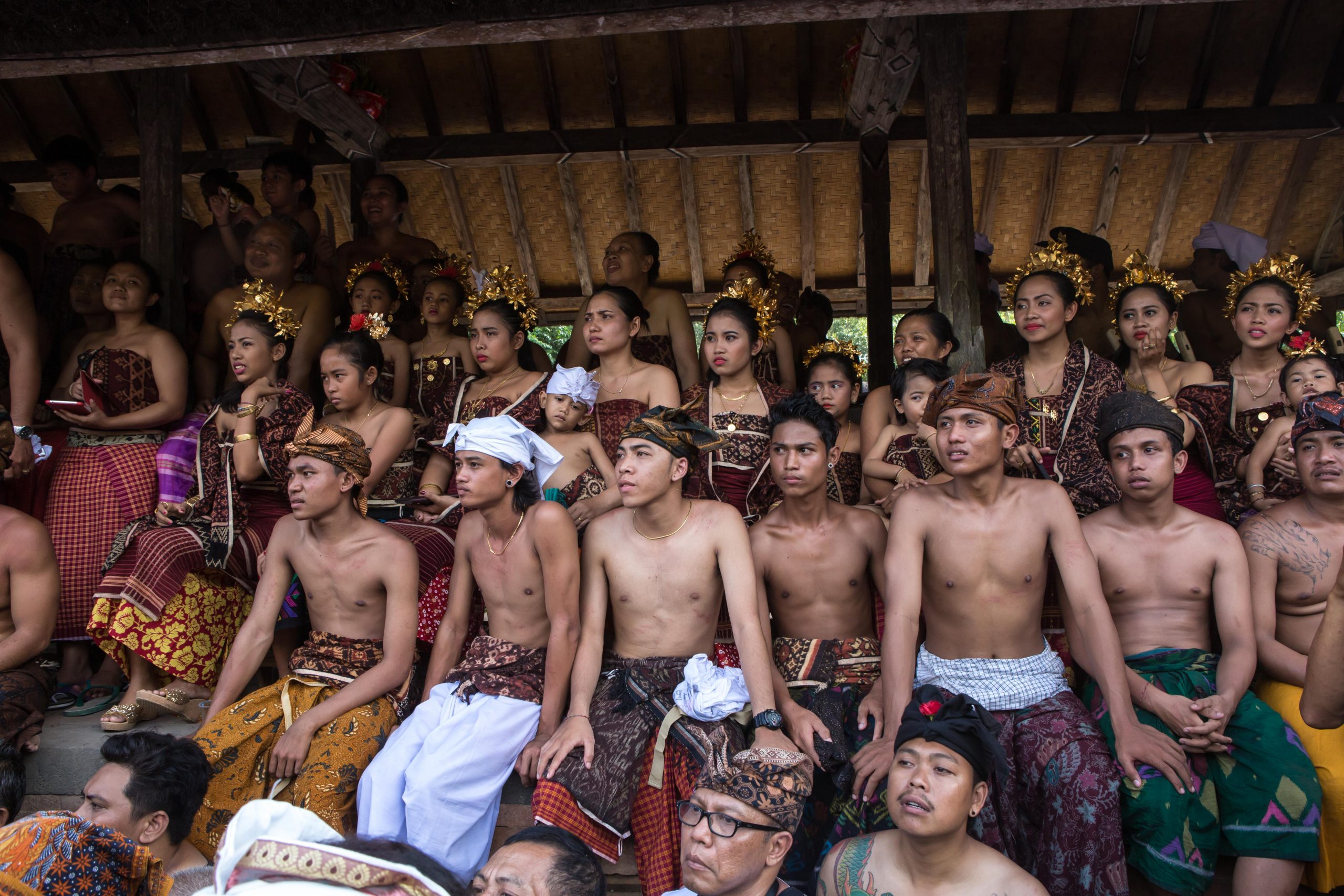
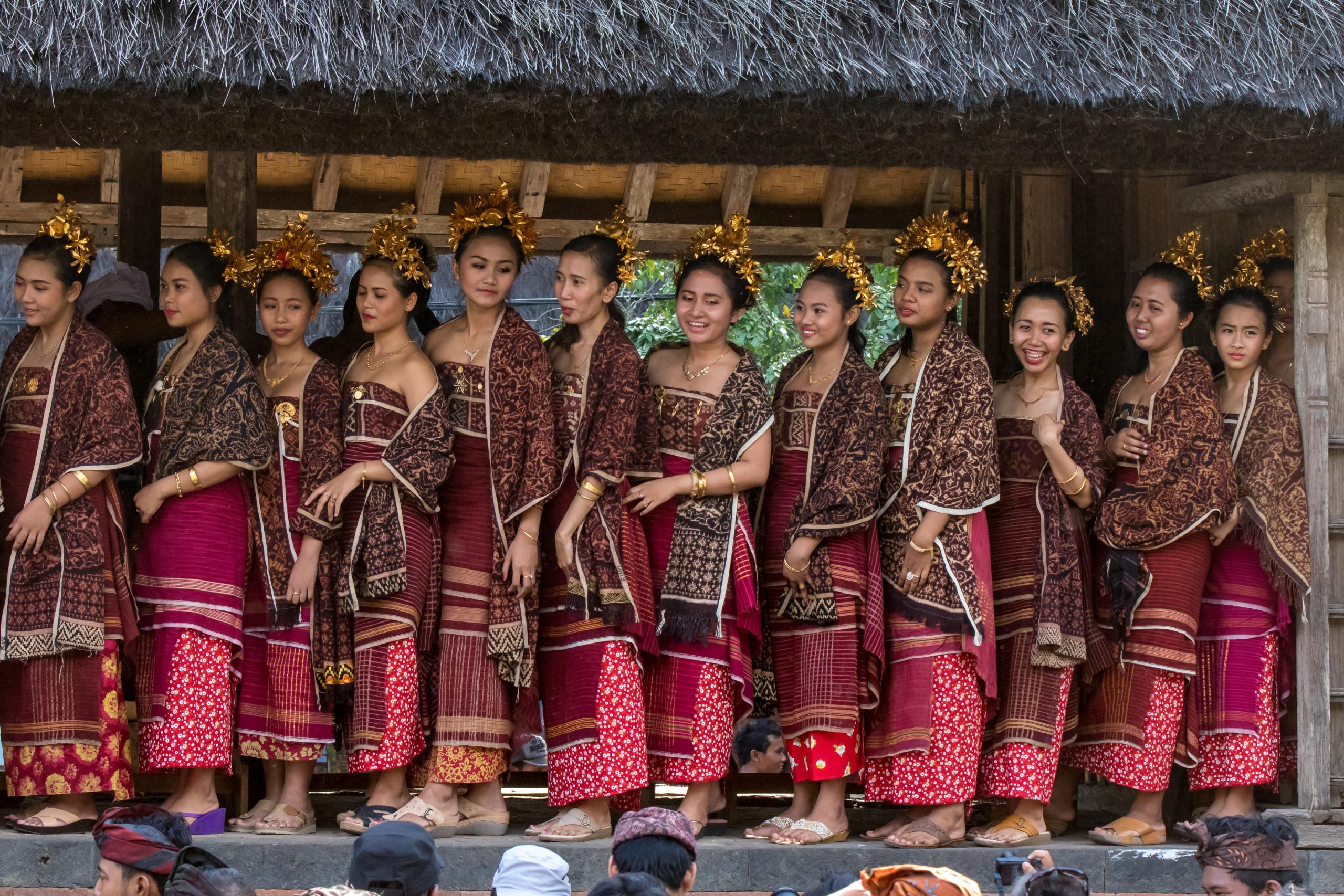
From the Bale Patemu, the young women of the village watch the battles and cheer on the fighters.
They wear the famous Geringsing textiles, rare double-ikat fabrics woven only in Tenganan. These textiles are believed to possess protective powers that guard the wearer against sickness and evil spirits.
After the Battle
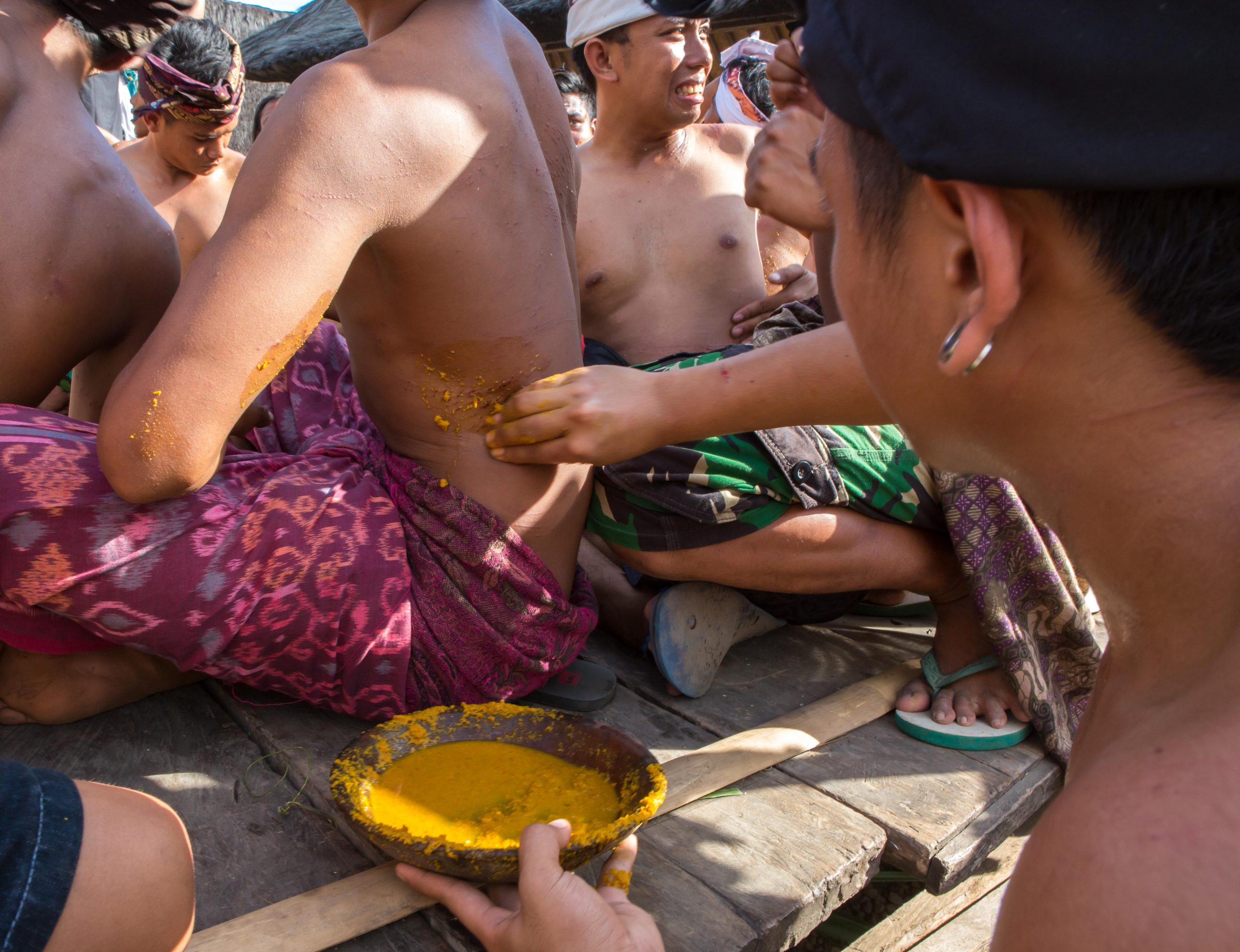
Once the fights are over, the wounds of the combatants are treated with traditional medicine made from turmeric, galangal, and vinegar.
Traditional herbs used to treat the fighters’ wounds.
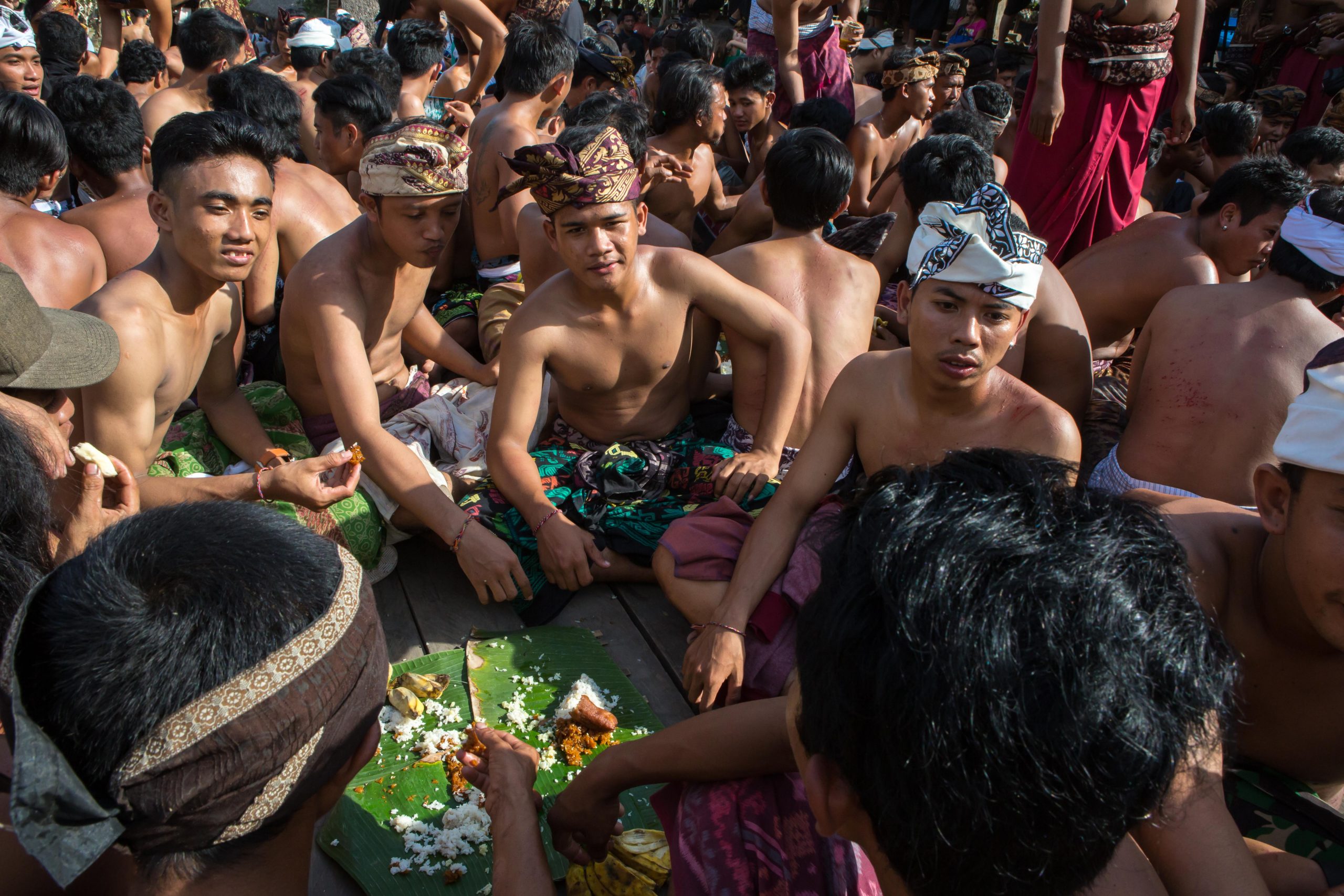
The men then gather to eat and drink together in a communal meal known as megibung, a symbol of unity and friendship after the ritual combat.
Sharing food together after the ritual battle - megibung.
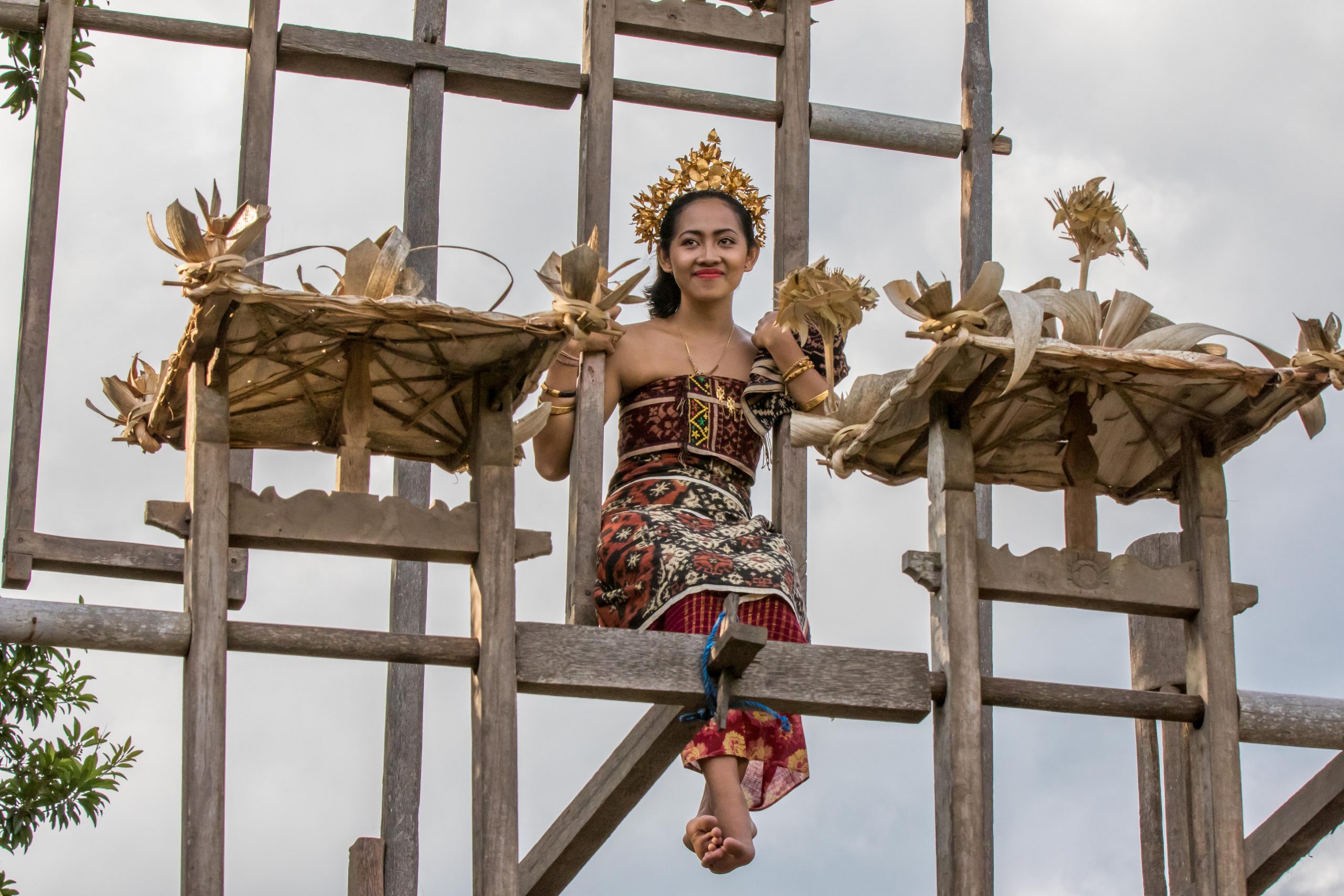
Later, the atmosphere becomes festive. Young women ride one of the village’s traditional wooden ferris wheels, while children play games and watch traditional gambling games that accompany the celebrations.
Young women ride the traditional village ferris wheel.
Explore the Photo Gallery
A curated visual collection from Mekare-kare – Tenganan, East Bali