Ancient Bali Aga traditions and the open-air cemetery of Lake Batur
Trunyan is one of the most unusual and culturally significant villages in Bali. Located on the eastern shore of Lake Batur at the foot of Mount Abang, the village is home to the Bali Aga, communities considered to represent some of the oldest cultural traditions on the island.
Unlike most of Bali, where Hindu cremation rituals dominate funeral practices, Trunyan is known for a very different tradition: the deceased are not cremated or buried, but placed in an open-air cemetery beneath a sacred Taru Menyan tree. This rare burial custom has made Trunyan one of the most intriguing cultural sites in Bali.
Trunyan lies on the shore of Lake Batur, in Northeast Bali.
The Bali Aga Community of Trunyan
The inhabitants of Trunyan belong to the Bali Aga, communities often regarded as the original “mountain Balinese” who preserve some of the island’s oldest cultural traditions. Isolated for centuries in the volcanic highlands around Lake Batur, these communities maintain social structures linked to the ancient Gelgel kingdom as well as spiritual beliefs that predate the arrival of Hinduism in Bali. As a result, many customs in Trunyan differ markedly from those found in the rest of the island, offering a rare glimpse into cultural traditions that reach back to Bali’s pre-Hindu past.
One of the last remaining traditional Bali Aga houses in Northeast Bali.
The interior of a traditional Bali Aga house.
Social Structure in Trunyan
Trunyan society traditionally recognises two main social groups: Banjar Jero and Banjar Jaba.
Unlike the caste system found in most parts of Bali, which is largely based on Hindu ideas of ritual purity, the social divisions in Trunyan are connected to historical lineage and the influence of the ancient Gelgel kingdom.
The Banjar Jero are considered descendants of rulers who were historically appointed by the kings of Gelgel to govern the village. The Banjar Jaba, in contrast, are the descendants of the common people who lived under their authority.
This structure reflects an older political and social order tied to Bali’s historical kingdoms rather than the later Hindu caste hierarchy that dominates much of the island today.
The Trunyan Cemetery and the Taru Menyan Tree
The most famous tradition associated with Trunyan is its unique burial practice.
Instead of cremation, the bodies of the deceased are placed on the ground in a sacred cemetery known as Sema Wayah, located roughly 500 meters north of the village near Banjar Kuban. The site can only be reached by boat across Lake Batur.
A bamboo cage protecting a recently deceased body placed in the open-air cemetery of Trunyan.
After ritual cleansing with rainwater, the body is laid beneath a simple bamboo cage. The cage protects the body from animals while allowing natural decomposition to occur.
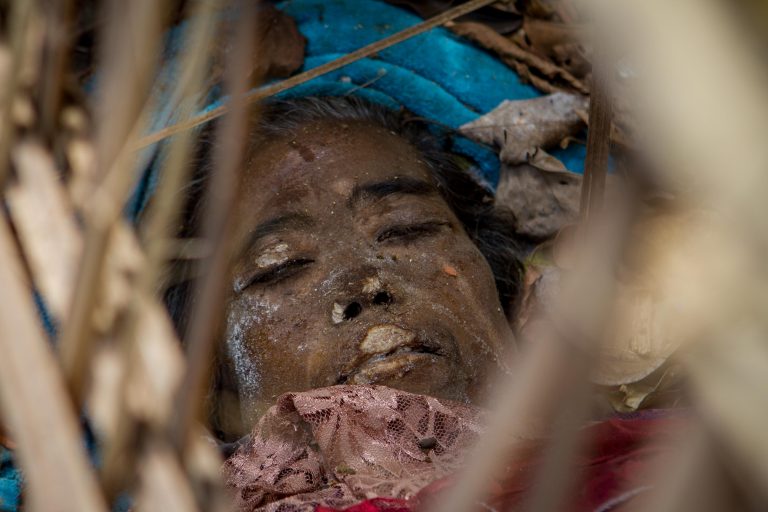
A recently deceased villager placed beneath a bamboo cage at the Trunyan cemetery near Lake Batur.
The deceased young woman above was laid to rest a month earlier. A month in the open air, no smell, no animals… Below is the same body, 4 months later.
Remarkably, the cemetery produces little odor despite the open-air decomposition.
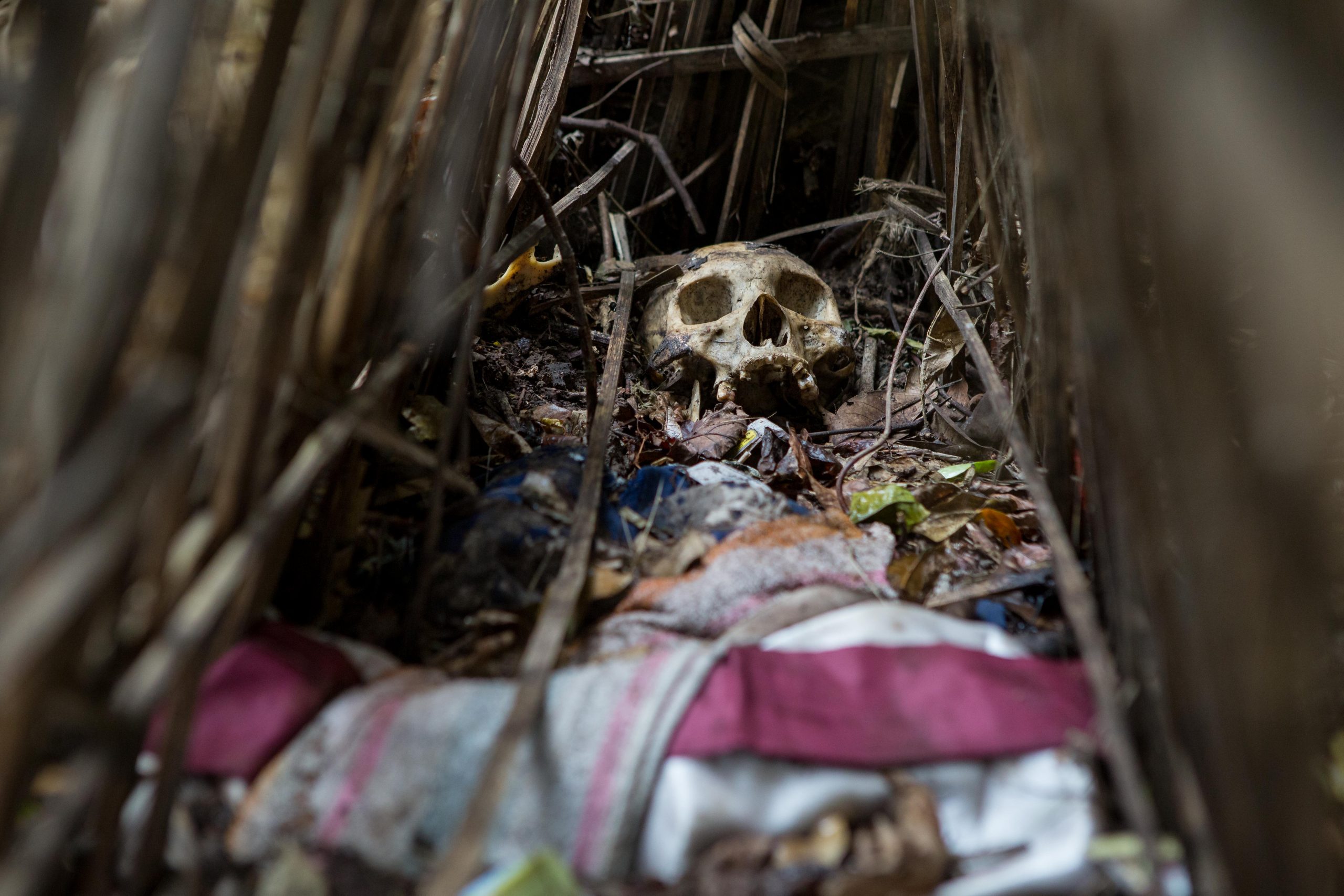
After several months only the bones remain, protected beneath the sacred Taru Menyan tree in Trunyan.
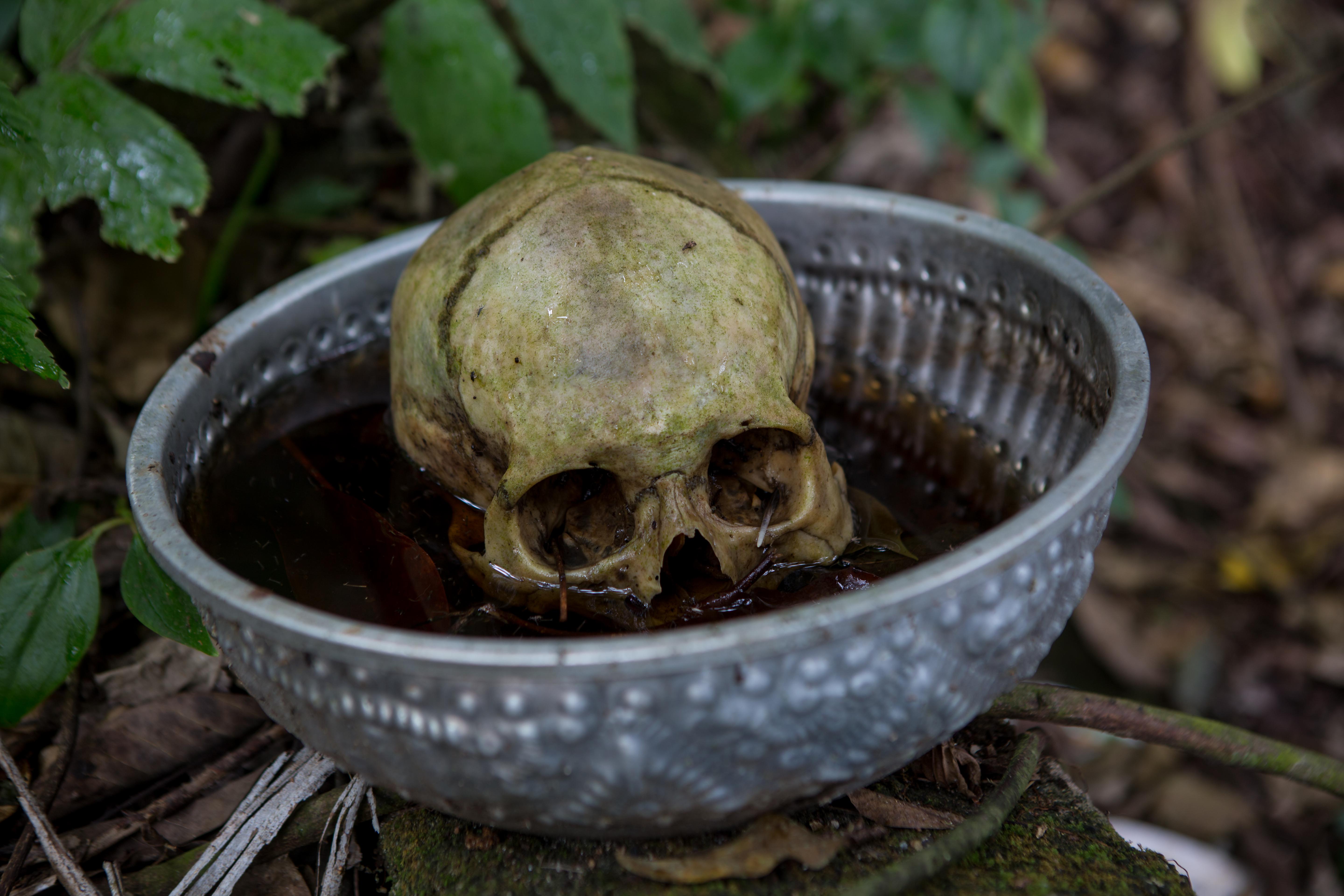
Over time, the soft tissue disappears and only the bones remain. The skull is then placed on a stepped stone platform near the sacred Taru Menyan tree.
Skulls arranged on a stone platform beneath the Taru Menyan tree at the ancient Trunyan cemetery.
The Sacred Taru Menyan Tree
Taru Menyan literally means “fragrant tree”. According to local belief, the tree releases a natural scent that neutralises the smell of decomposing bodies, which explains why the cemetery around it is said to produce little odor despite the open-air burial practice. The scent is said to protect the sacred site and maintain balance between the natural and spiritual worlds.
The Taru Menyan tree is therefore not only a botanical curiosity but also a central element of Trunyan’s spiritual traditions.
The Trunyan cemetery beneath the sacred Taru Menyan tree, where bodies are placed in the open air according to the ancient traditions of the Bali Aga people.
Who Can Be Buried in Trunyan
Not all members of the community are placed in the open-air cemetery.
The tradition is reserved primarily for married adults. Other groups follow different burial practices, including:
unmarried individuals
infants and young children
people who died under unusual circumstances
These individuals are typically buried in separate cemeteries.
Ancient Religious Traditions and the Agama Bayu Sect
The burial practices of Trunyan are believed to originate from the ancient Agama Bayu tradition, one of the major spiritual sects that existed in Bali before the widespread adoption of Hinduism.
Agama Bayu was one of the six important religious traditions that shaped early Balinese belief systems during pre-Hindu times. The sect placed particular emphasis on natural forces and cosmological elements, especially the stars and the wind, known locally as angin ngelinus.
Elements of these early beliefs are still reflected in the rituals surrounding death and burial in Trunyan. The connection between wind, natural decomposition and the sacred environment of the Taru Menyan tree illustrates how ancient cosmological ideas continue to influence the cultural traditions of the village.
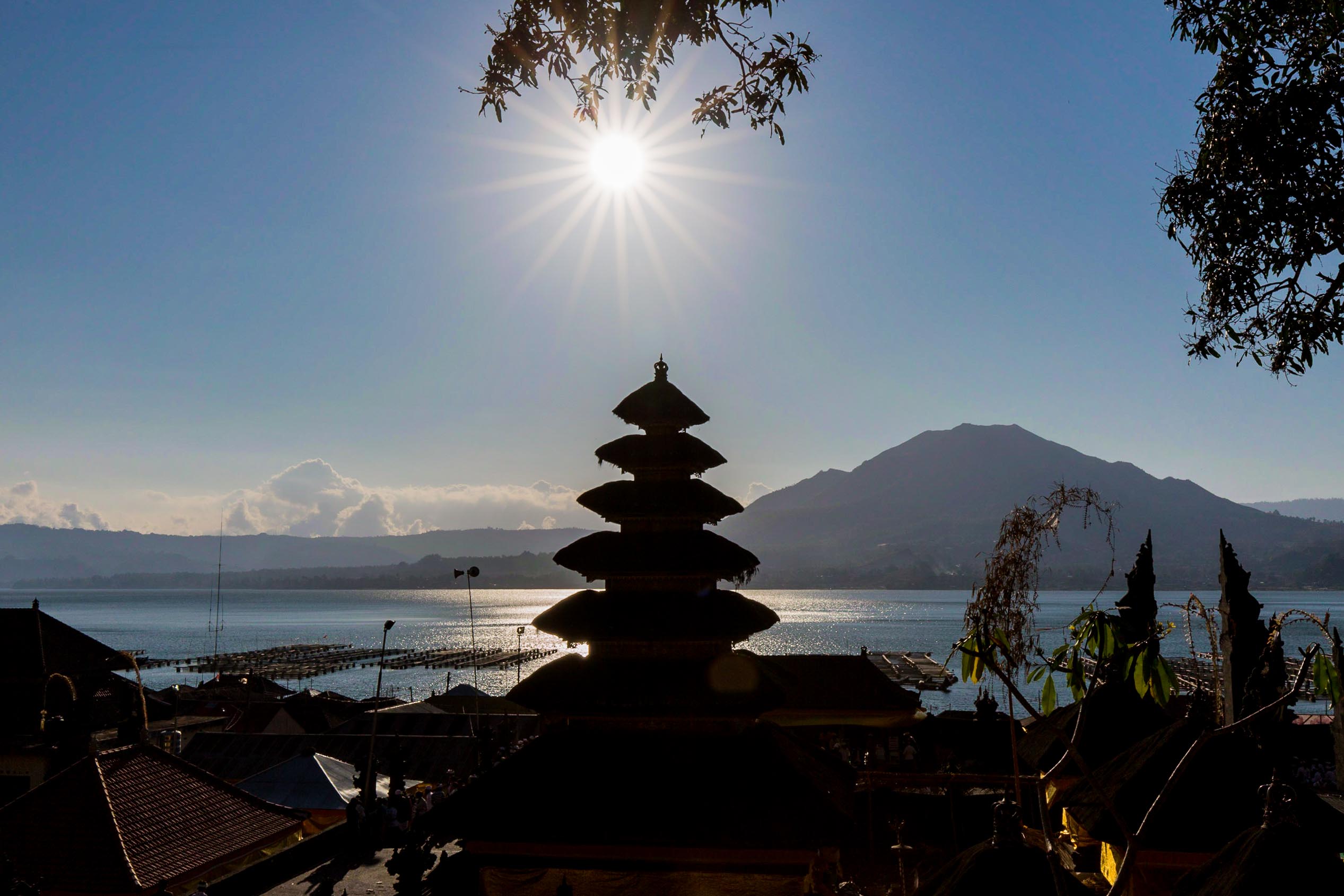
Trunyan village, overlooking Lake and Mount Batur.
Visiting Trunyan Village on Lake Batur
The village of Trunyan and its cemetery are located on the eastern shore of Lake Batur, within the volcanic caldera of Mount Batur in northeast Bali. The cemetery itself lies about 500 meters north of the village near Banjar Kuban and can only be reached by boat across the lake.
While Trunyan has become known among travellers interested in Balinese culture, the cemetery remains a sacred place. Visitors are expected to behave respectfully and follow local guidance when entering the site.
Explore the Photo Gallery
A curated visual collection from Trunyan – Bali Aga village & cemetery